Why This Camera & Lens Are Great for Panoramas
If you’re learning how to shoot panorama with Sony A7R III & Tamron 17-28mm f/2.8 Di III RXD, you’ve picked a powerhouse combo for high-resolution 360 photos. The A7R III’s 42.4MP full-frame BSI sensor (approx. 7952×5304 pixels, ~4.5µm pixel pitch) offers excellent dynamic range at base ISO (about 14–15 stops), clean tones up to ISO 800–1600, and 5-axis IBIS for handheld or pole work. Paired with the Tamron 17–28mm f/2.8—a sharp, lightweight rectilinear ultra-wide zoom with robust coatings and low lateral CA—you get flexible framing from broad interiors at 17mm to detail-rich multi-row panoramas at 24–28mm.
Because the Tamron is rectilinear (not fisheye), lines stay straight and real estate shots look natural, but you’ll capture more frames than you would with a fisheye. That’s a good trade if you want clean edges, less stretching near borders, and higher overall resolution. The Sony E-mount compatibility, responsive autofocus, and easy manual override make it quick to lock focus and exposure consistently across a full rotation—critical for seamless stitches.
Quick Setup Overview
- Camera: Sony A7R III — Full-frame 42.4MP BSI-CMOS (approx. 4.5µm pixel pitch), excellent DR at ISO 100–200, solid ISO up to 1600.
- Lens: Tamron 17–28mm f/2.8 Di III RXD — Rectilinear ultra-wide zoom, sharp from f/4–f/8, good flare resistance, modest barrel/pincushion distortion at ends, minimal lateral CA after profile correction.
- Estimated shots & overlap (full 360×180 sphere, rectilinear, 20–25% overlap target):
- At 17mm: 2 rows × 6–8 shots each (+ zenith + nadir). For speed, 2×6; for safer stitching, 2×8.
- At 24mm: 3 rows × 8–10 shots each (+ zenith + nadir) for higher resolution.
- At 28mm: 3–4 rows × 8–12 shots each (+ zenith + nadir) for gigapixel-grade output.
- Difficulty: Intermediate (easier if you already use a panoramic head)
Tip: With rectilinear lenses, aim for 20–25% overlap horizontally and vertically. More overlap (30–35%) helps in tricky lighting or moving crowds. For background on spherical coverage and resolution planning, see the PanoTools spherical resolution reference. Reference: PanoTools spherical resolution
Planning & On-Site Preparation
Evaluate Shooting Environment
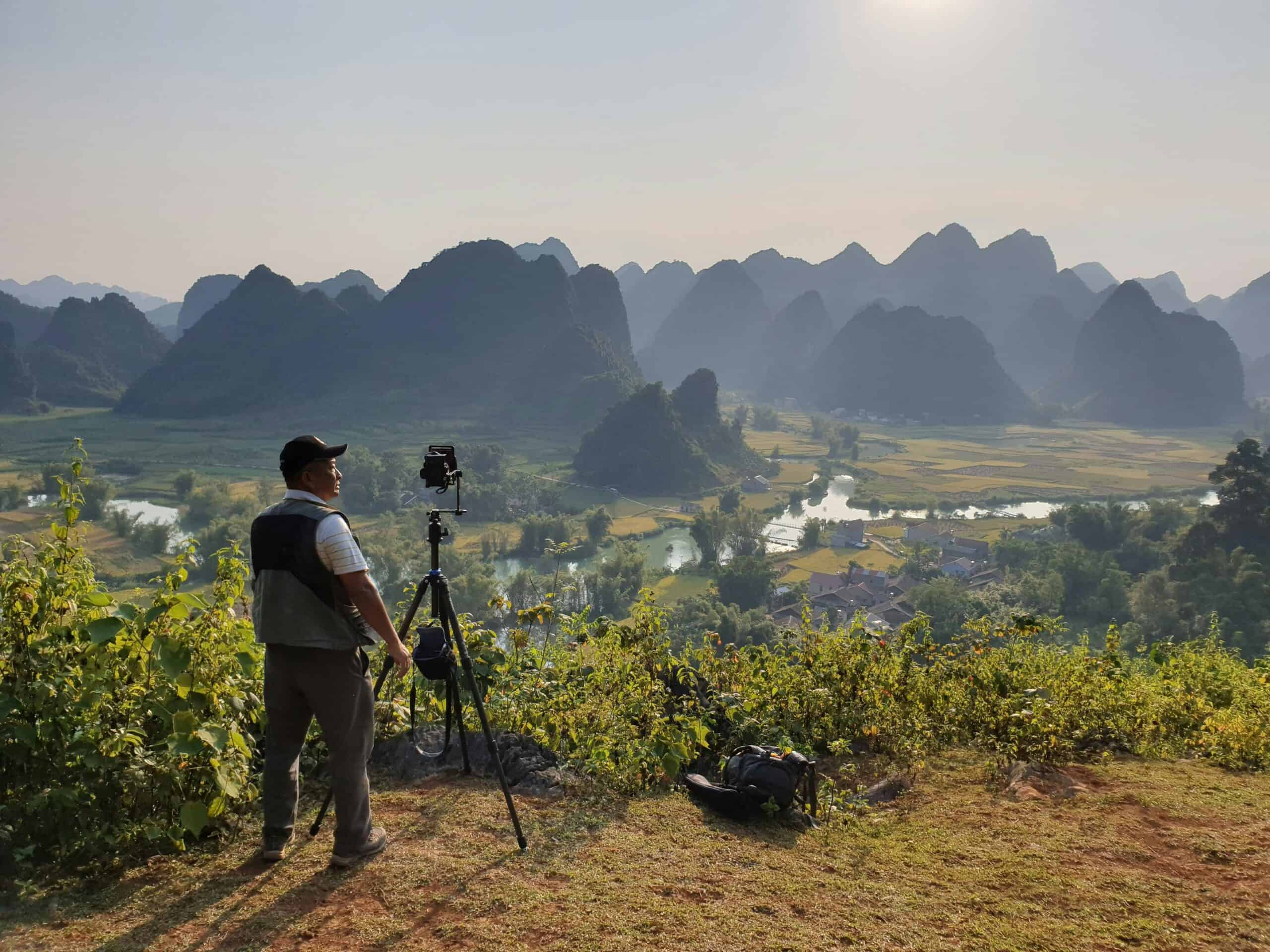
Walk the scene first. Note light direction, brightness range, and potential parallax hazards (nearby foreground objects, railings, furniture). For interiors with glass or mirrors, position the tripod at least 1–1.5 meters away from reflective surfaces and avoid direct lights hitting the front element to reduce flare and ghosting. Outdoors at sunset, prepare for high-contrast edges—consider HDR bracketing ±2EV for window or sky detail.
Match Gear to Scene Goals
The Sony A7R III’s dynamic range at ISO 100–200 preserves highlights and shadow color depth, ideal for landscapes and real estate windows. Indoors, it stays clean up to ISO 800–1600 if you must raise sensitivity; with a tripod, keep ISO at 100–200 and lengthen shutter instead. The Tamron 17–28mm keeps straight lines for architecture, so you can avoid fisheye defishing artifacts and maintain believable room proportions. For moving crowds or windy rooftops, 17mm reduces total frames, minimizing time and motion artifacts.
Pre-shoot Checklist
- Batteries charged, dual card slots configured (RAW to both for redundancy), lens and sensor cleaned.
- Tripod leveled; panoramic head calibrated for your chosen focal length (17, 20, 24, or 28mm).
- Safety checks: weigh down tripod, use a sandbag or strap in wind; attach a safety tether on rooftops or car rigs.
- Backup workflow: capture a second full round if time allows. If crowds move, shoot two passes to ease masking later.
Essential Gear & Setup
Core Gear
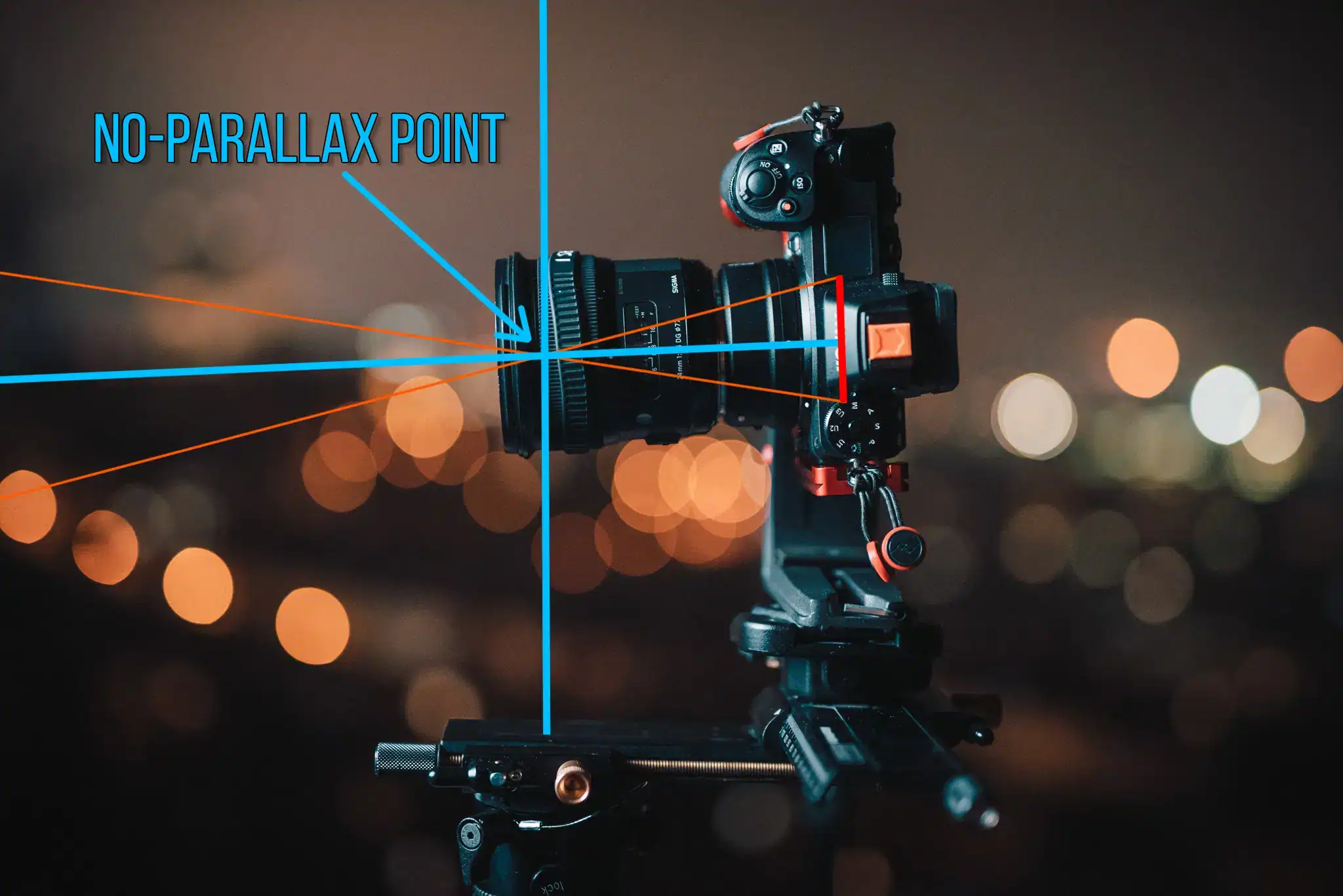
- Panoramic head: Enables rotation around the lens’s entrance pupil (nodal point), eliminating parallax when foreground and background overlap. This is essential for perfect stitches, especially in interiors with nearby objects.
- Stable tripod with a leveling base: A leveled pano head keeps yaw increments consistent and reduces roll/pitch correction later.
- Remote trigger or Imaging Edge Mobile app: Fire shots without touching the camera. Use a 2-second self-timer if needed.
Optional Add-ons
- Pole or car mount: Use only with safety tethers. Check wind and speed; IBIS can help, but keep shutter speeds short to minimize shake.
- LED panels for dim interiors: Bounce light off ceilings for even illumination without hotspots.
- Weather covers: Protect the A7R III and lens in rain/snow; wipe the front element often to avoid water droplets in the stitch.
Want a deeper dive into pano head principles? This panoramic head tutorial explains alignment and best practices clearly. Read: Panoramic head tutorial
Step-by-Step Shooting Guide
Standard Static Scenes
- Level the tripod and align the nodal point: Calibrate the panoramic head for a chosen focal length (e.g., 17mm). Point the lens at two vertical objects (one near, one far) and rotate—adjust the fore-aft slider until there’s no relative shift. Mark that setting on your rail so you can return to it quickly.
- Manual exposure and locked white balance: Set Manual mode. Meter a mid-tone area and expose to protect highlights. Lock WB (e.g., Daylight 5600K outdoors; a fixed Kelvin or custom WB indoors) to avoid color shifts that complicate stitching.
- Capture with overlap: For 17mm, shoot 2 rows of 6–8 images each at ±30–45° pitch with ~20–25% overlap, then add a zenith and a nadir. Rotate consistently (use click-stops if available).
- Nadir shot for tripod removal: After the main set, offset the camera over the tripod footprint (or raise on a pole) and shoot the ground plate. This makes patching easier in post.
HDR / High Dynamic Range Interiors
- Bracket ±2EV (3 or 5 frames) at each position to preserve windows, lamps, and shadow detail.
- Keep WB fixed and use a consistent aperture (e.g., f/8). Avoid auto ISO or auto exposure; consistency is key.
Low-Light / Night Scenes
- Use longer exposures on a stable tripod: f/4–f/5.6, ISO 100–400 when possible. On the A7R III, ISO 800–1600 remains clean for web/VR; reserve ISO 3200 for limited circumstances.
- Disable IBIS on a locked tripod to prevent micro-blur. Use a remote or 2s timer to avoid vibrations.
Crowded Events
- Shoot two passes: First pass for coverage, second pass waiting for gaps. Capture extra frames around moving areas.
- In post, mask people between passes to reduce ghosting. Faster rotations at 17mm help reduce subject movement between frames.
Special Setups (Pole / Car / Drone)
- Secure everything: Use safety tethers, lock clamps, and ensure the lens cap is off before elevating. On a pole, keep shutter speeds short (1/250s+), use burst mode if needed.
- Expect vibrations and wind: Rotate slower and take multiple takes. Consider slightly higher ISO to maintain safe shutter speeds.
Watch a Quick Pano-Head Setup Walkthrough
Seeing the alignment flow once makes your first field session much smoother.
For a full DSLR/mirrorless 360 workflow overview, see Oculus’ guide for creators. Using a mirrorless camera to shoot and stitch a 360 photo
Recommended Settings & Pro Tips
Exposure & Focus
| Scenario | Aperture | Shutter | ISO | Notes |
|---|---|---|---|---|
| Daylight outdoor | f/8–f/11 | 1/100–1/250 | 100–200 | Lock WB (daylight 5600K) |
| Low light/night | f/4–f/5.6 | 1/30–1/60 (tripod) | 100–400 | Remote trigger; disable IBIS on tripod |
| Interior HDR | f/8 | Bracket ±2 EV (3–5 frames) | 100–400 | Balance windows and lamps |
| Action / moving subjects | f/5.6–f/8 | 1/200+ | 400–800 | Freeze motion; consider two passes |
Critical Tips
- Manual focus at hyperfocal: At 17mm, f/8 gives a hyperfocal around ~1.2 m on full frame, keeping everything from ~0.6 m to infinity sharp. At f/11, depth increases further. Use MF and don’t refocus mid pano.
- Nodal point calibration: Zooms shift the entrance pupil as you change focal length. Pick one focal (17, 20, 24, or 28mm), calibrate once, and stick to it for the entire pano.
- White balance lock: Mixed lighting can vary frame to frame. Set a fixed Kelvin or create a custom WB to avoid stitching seams.
- RAW over JPEG: The A7R III’s RAW files retain highlight and shadow detail for cleaner HDR merges and better color matching across frames.
- IBIS usage: Turn IBIS OFF on a solid tripod. Turn it ON for handheld or pole work to help with micro-shakes (but keep shutter speeds safe).
Field-Proven Frame Counts
For the Tamron 17–28mm on the A7R III, these recipes work reliably:
- Fast 360 at 17mm: 2 rows × 6 shots (±30–40° pitch) + 1 zenith + 1 nadir. 20–25% overlap. Great for crowds and time-sensitive scenes.
- Clean real estate at 17–20mm: 2 rows × 8 shots (±35° pitch) + Z/N, 25–30% overlap for safer stitching over glossy floors and windows.
- High-resolution at 24–28mm: 3 rows (e.g., +45°, 0°, −45°) × 8–10 shots each + Z/N. Use a panoramic head with click stops to avoid mistakes.
For an industry perspective on focal lengths and panoramas, see this overview. Panoramas, focal lengths, and Photoshop
Stitching & Post-Processing
Software Workflow
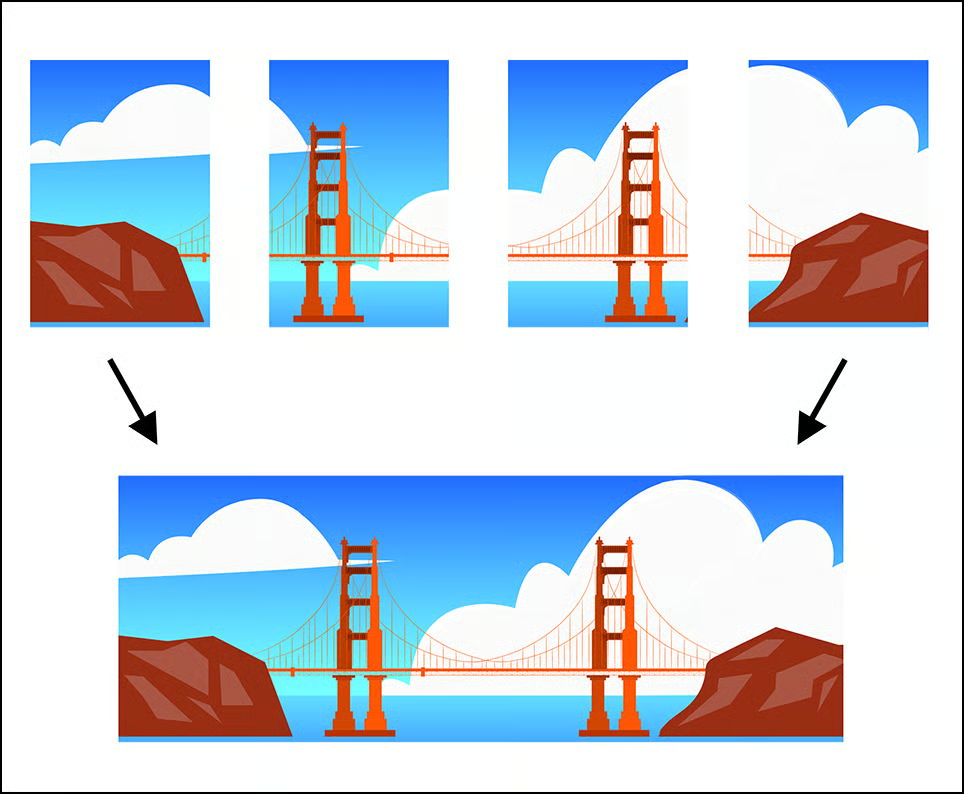
Import RAWs to Lightroom or Capture One. Apply identical color profile, WB, and lens corrections (enable Tamron 17–28mm profile). For HDR panos, pre-merge brackets by position (HDR DNGs) or let PTGui handle exposure fusion. Stitch in PTGui or Hugin. Fisheyes need fewer frames but require mapping; with this rectilinear lens, expect more frames, cleaner edges, and natural geometry. Industry overlap guidelines: ~25–30% for fisheye, ~20–25% for rectilinear. PTGui review and why pros rely on it
Cleanup & Enhancement
- Nadir patch: Export with a hole under the tripod, then patch using a clean ground shot. Use AI content-aware fill or manual cloning.
- Color consistency: Check for WB shifts; unify balance across rows. Apply subtle contrast curves and local dodging/burning.
- Noise reduction: For night panos, apply mild NR on shadows; preserve texture in mid-tones.
- Leveling: Correct yaw/pitch/roll. Make sure horizons are straight; use vertical references in architecture.
- Export: Save as 16-bit TIFF master and a final 8-bit JPEG in equirectangular 2:1 for web/VR (e.g., 12000×6000 or higher for A7R III multiro w).
For a thorough, high-end workflow explanation of panoramic head setup and 360 capture, this guide is excellent. Set up a panoramic head for high-end 360 photos
Disclaimer: Software evolves—always check each tool’s latest documentation for updated features and best practices.
Useful Tools & Resources
Software
- PTGui panorama stitching
- Hugin (open-source)
- Lightroom / Photoshop (RAW development, masking, nadir patch)
- AI tripod removal tools (Content-Aware Fill, Generative Fill)
Hardware
- Panoramic heads: Nodal Ninja, Leofoto
- Carbon fiber tripods with hooks for sandbags
- Leveling bases or half-balls
- Wireless remotes or app-based shutters
- Pole extensions / car mounts with tethers
Disclaimer: Names are provided for research; check official sites for specs and compatibility.
Real-World Case Studies
Indoor Real Estate at 17mm
Goal: true-to-life room proportions with clean verticals. Mount the A7R III on a leveled pano head, 17mm at f/8, ISO 100. Capture 2 rows × 8 images with 25–30% overlap, plus zenith and nadir. Bracket ±2EV for windows. Lock WB to a custom Kelvin (e.g., 4000–4500K under warm LEDs). In PTGui, enable lens profile and use vertical control points to keep lines straight.
Outdoor Sunset 360 at 20mm
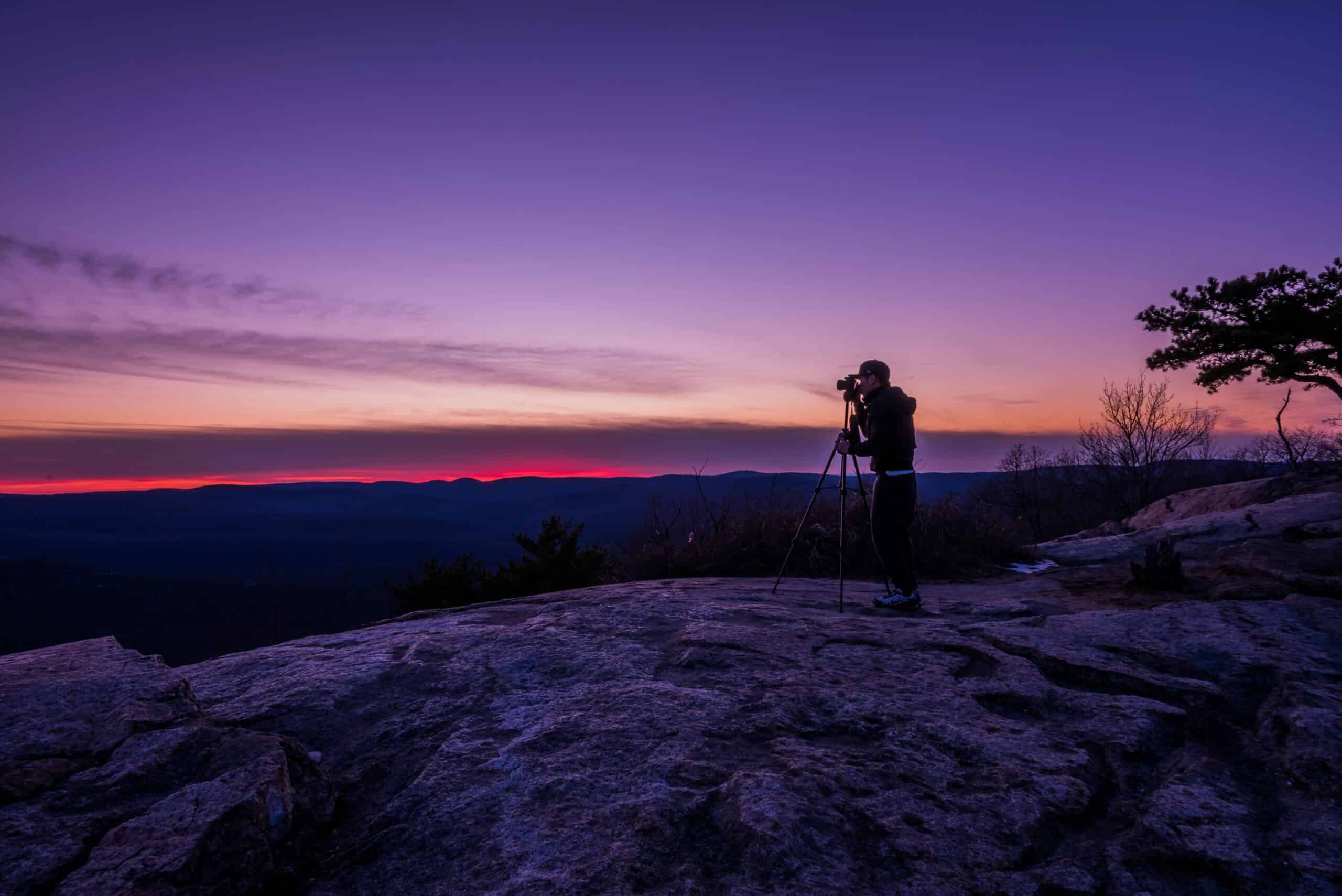
Goal: balanced sky and foreground color. Shoot at f/8, ISO 100, manual exposure set to preserve highlights in the brightest sky. If the ground is 2–3 stops darker, bracket ±2EV. Capture 2 rows × 8 images + Z/N. Merge HDRs, then stitch. Finish with a subtle S-curve, color harmonization, and horizon leveling.
Crowded Event at 17mm
Goal: minimize ghosts. Use faster shutter (1/200–1/400), ISO 400–800, f/5.6–f/8. Perform two full passes. In post, mask frames with fewer people to replace crowded overlaps. The 17mm view keeps frame count under control so you complete rotations quickly.
Rooftop or Pole Capture
Goal: high vantage without nearby parallax traps. Use 17–20mm, IBIS on, shutter ≥1/250s, burst a few frames at each angle. Watch wind; keep the pole vertical. Safety tethers are mandatory. Expect to fix minor stitching errors due to unavoidable sway.
Visual Examples
Common Mistakes & How to Avoid Them
- Parallax error: Always align the entrance pupil. Don’t change focus or focal length mid-pano.
- Exposure flicker: Use full manual exposure and locked WB. Avoid auto ISO or auto white balance.
- Tripod shadows or footprints: Capture a clean nadir and patch later.
- Ghosting from moving subjects: Shoot extra frames and mask during post-processing.
- Night noise: Keep ISO low and use longer exposures on a tripod; the A7R III handles ISO 800–1600 well but expose carefully.
Frequently Asked Questions
- Can I shoot handheld panoramas with the Sony A7R III?
Yes for partial panos; for full 360×180, a tripod and pano head are strongly recommended. Handheld single-row stitches can work outdoors at 17–20mm with ~30% overlap, but expect alignment errors around close objects and the nadir.
- Is the Tamron 17–28mm wide enough for a single-row 360?
Single row at 17mm won’t cover the zenith and nadir because the vertical FOV is ~71°. Plan on two rows plus separate zenith and nadir frames for a complete sphere.
- Do I need HDR for interiors with bright windows?
Usually yes. Bracket ±2EV (3–5 frames) to preserve window highlights and interior shadows. Merge before stitching or let PTGui blend exposures.
- How do I avoid parallax issues with this zoom?
Pick one focal length for the entire pano (e.g., 17mm), calibrate the entrance pupil on your pano head, and don’t refocus mid-rotation. Keep near objects away from the tripod if possible.
- What ISO range is safe on the A7R III for low light?
For tripod-based panos, ISO 100–400 is ideal. If motion forces shorter exposures, ISO 800–1600 remains clean for web and most prints. ISO 3200 is usable with careful noise reduction.
- Can I assign Custom Modes for pano on the A7R III?
Yes. Save Manual exposure, fixed WB, RAW, IBIS OFF (for tripod), MF, 2s timer/remote to a custom mode. Create a second custom mode for pole work with IBIS ON and higher shutter speeds.
- How do I reduce flare with the Tamron 17–28mm?
Avoid direct bright light hitting the front element; shade with your hand or a flag off-frame. Slightly change yaw to move the sun off an edge, and keep the front glass clean.
- What’s the best tripod head type for this setup?
A two-axis panoramic head with fore-aft sliding rails (e.g., Nodal Ninja-style) lets you set entrance pupil precisely. Add a click-stop rotator and a leveling base to speed up field work.
Safety, Care, and Data Integrity
Use sandbags or hang weight from the tripod center hook in wind. On rooftops or vehicles, tether the camera and avoid overreaching to capture nadirs—move the rig instead. Keep spare batteries warm in cold weather. Back up immediately: use dual recording, copy to a second card/SSD on-site, and verify files before leaving. Consider capturing a full second set if time and conditions allow.
Wrap-up: Your Best Path to a Seamless 360
The formula for how to shoot panorama with Sony A7R III & Tamron 17-28mm f/2.8 Di III RXD is straightforward: lock down exposure and WB, rotate around the entrance pupil, capture consistent overlap in a reliable multi-row pattern, and stitch with a pro tool. Start at 17–20mm for a manageable frame count, then move to 24–28mm when you want ultra-high resolution. With careful planning and a clean workflow, this combo produces crisp, natural-looking 360° results for real estate, travel, and creative VR experiences.
Want more details and gear comparisons for DSLR/mirrorless 360? This deep-dive FAQ is a solid resource. DSLR/mirrorless 360 FAQ and lens guide