
Why This Camera & Lens Are Great for Panoramas
If your goal is speed, coverage, and serious resolution, the Fujifilm GFX 100 II paired with the Samyang 8mm f/3.5 UMC Fish-Eye CS II is a surprisingly powerful panorama combo. The GFX 100 II’s 102MP 43.8 × 32.9 mm medium-format sensor (approx. 3.76 µm pixel pitch, 14+ stops of dynamic range at base ISO) produces incredibly clean files with deep shadow latitude. Meanwhile, the Samyang 8mm is a compact manual fisheye that, when adapted, renders a circular fisheye image on the GFX sensor. This gives you an ultra-wide 180° field of view across the circle, allowing a full 360° capture in just a few shots.
A few practical notes: the Samyang 8mm f/3.5 CS II is an APS-C fisheye. On the GFX 100 II it will not cover the entire sensor; instead, you get a circular image that’s ideal for fast, low-shot-count 360° work. Select a version with a manual aperture ring (e.g., Nikon F) and use a simple F-to-GFX adapter. Remove the lens hood (the CS II hood is removable on many mounts) to maximize the usable circular image. Set “Shoot Without Lens” ON in the GFX menu because this is a fully manual lens.
Compared to rectilinear lenses, a circular fisheye drastically cuts the number of frames needed, lowering stitching errors and saving time—especially helpful for fast-changing light, crowded scenes, or pole-mounted work. The tradeoff is the characteristic fisheye distortion and a smaller effective resolution than the entire GFX frame. But with 102MP behind your capture, the final equirectangular output is still very high quality.
Quick Setup Overview
- Camera: Fujifilm GFX 100 II — 43.8 × 32.9 mm medium-format BSI CMOS, ~102MP, ~3.76 µm pixel pitch, base ISO 80, excellent DR and color depth.
- Lens: Samyang 8mm f/3.5 UMC Fish-Eye CS II — circular/diagonal fisheye (APS-C). Manual focus, manual aperture, best across the frame at f/5.6–f/8. CA is moderate; correctable in post.
- Estimated shots & overlap (circular fisheye on GFX):
- Fast capture: 3 shots around at 120° yaw + 1 zenith + 1 nadir (with 30–35% overlap between frames).
- Safe capture: 4 shots around at 90° yaw + zenith + nadir for robust stitching and cleaner zenith coverage.
- Difficulty: Moderate. Low shot count simplifies field work; nodal calibration and careful exposure management are key.
Planning & On-Site Preparation
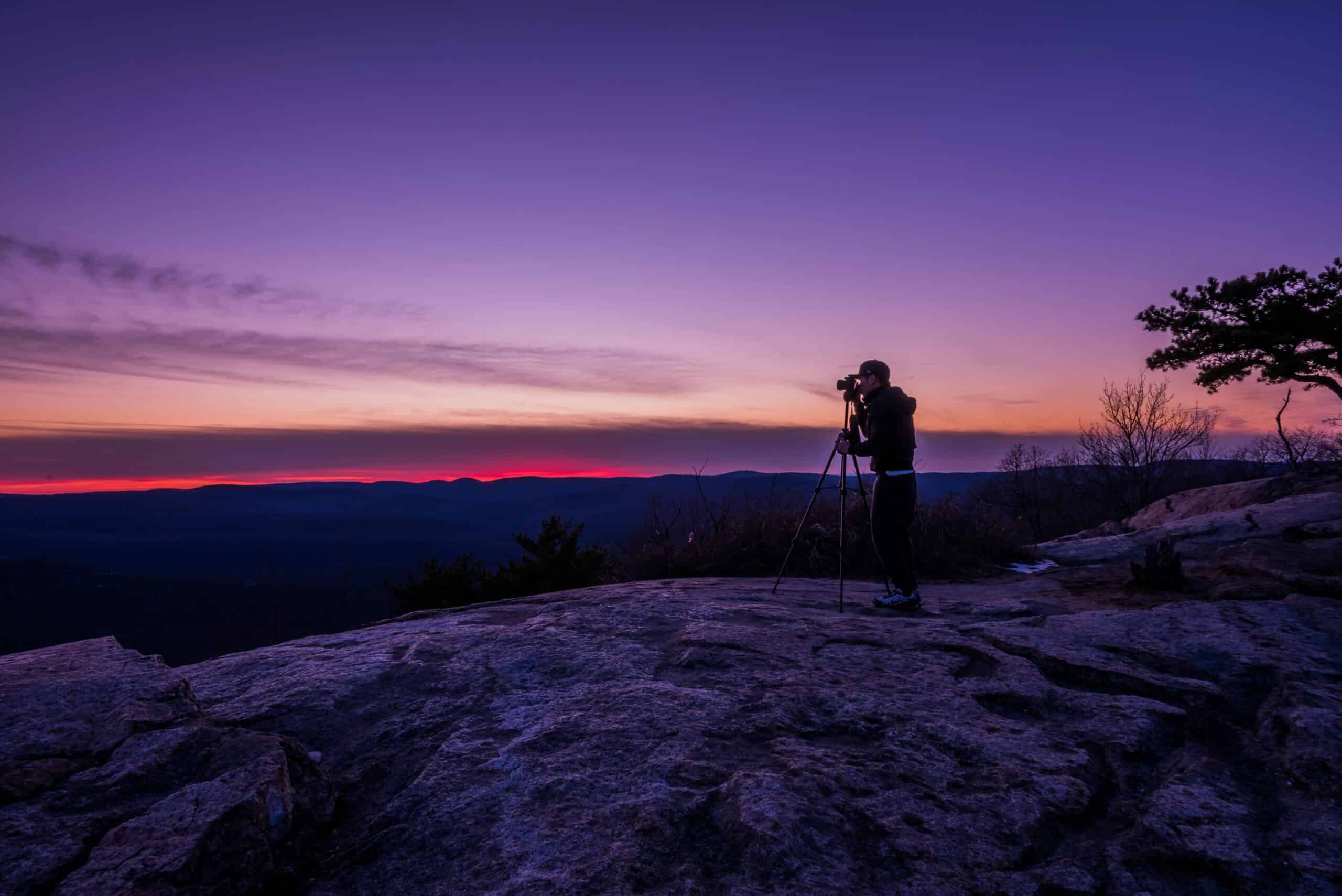
Evaluate Shooting Environment
Before you set up, scan the scene for the usual panorama pitfalls: moving subjects, reflective glass, bright windows, and dynamic light (sun peeking through clouds). For interiors with glass, place the lens as close to the glass as possible to minimize reflections, or use a rubber hood. Angle slightly to avoid direct reflections and flare. Outdoors, note the sun’s position; with a fisheye, the sun can easily enter the frame—use your body, your hand, or plan your rotation to keep flare under control.
Match Gear to Scene Goals
The GFX 100 II’s low base ISO (80) and strong dynamic range mean you can keep ISO low for clean shadows and detailed highlights. Realistically, ISO 100–800 remains exceptionally clean; ISO 1600 is often usable for night panoramas with careful exposure and noise reduction. The Samyang 8mm’s fisheye coverage is a major advantage for speed and consistency (fewer frames to stitch), especially indoors or at dusk when light changes quickly. Distortion is expected, but that’s handled in stitching. This combination is especially effective for HDR interior work, quick outdoor 360s, and pole or rooftop captures where stability windows are short.
Pre-shoot Checklist
- Battery & storage: The GFX produces large RAWs—carry spare batteries and high-speed, high-capacity cards.
- Clean optics: Dust on a fisheye is infuriating—it appears everywhere. Clean the front element and sensor.
- Tripod leveling: Use a leveling base. Calibrate your panoramic head’s nodal point for this lens (details below).
- Safety checks: Wind conditions (especially on rooftops); verify clamps and tethers if using a pole or vehicle mount.
- Backup plan: For critical jobs, shoot a second pass at a different yaw offset for redundancy.
Essential Gear & Setup
Core Gear
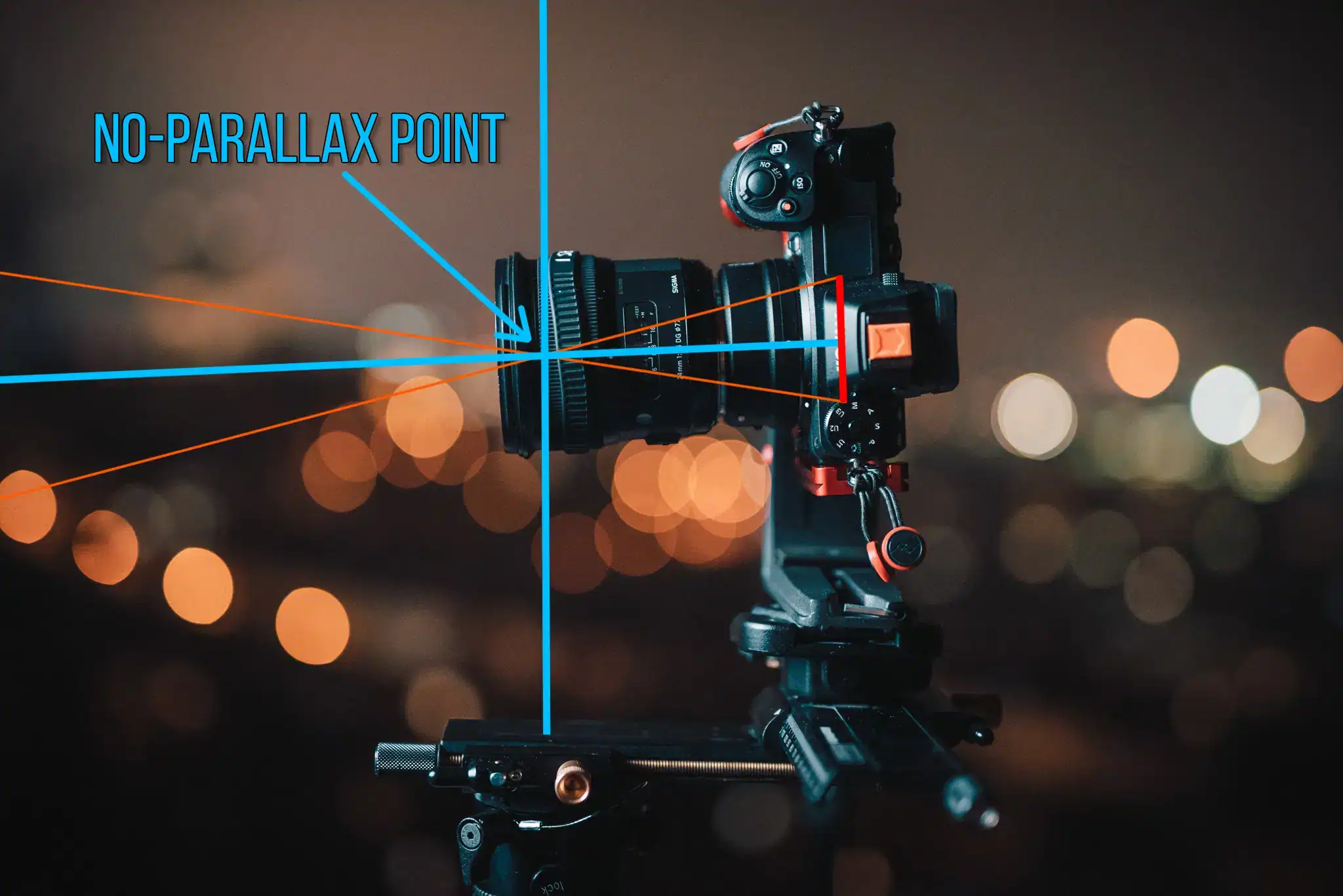
- Panoramic head: Align the lens’s entrance pupil (often called the “nodal point”) over the rotation axis to remove parallax. This is crucial when nearby objects intersect across frames.
- Stable tripod with leveling base: A leveling base speeds setup and keeps your horizon consistent around the yaw.
- Remote trigger or app: Fire the GFX without touching it. Use a 2s timer or remote release to avoid vibrations.
Optional Add-ons
- Pole or car mount: Great for elevated or moving viewpoints. Always add a safety tether and mind wind/vibration. Rotate slower and consider more overlap.
- Lighting aids: Small LED panels for dark interiors; aim for even, ambient fill if needed.
- Weather protection: Rain covers and microfiber cloths—fisheye front elements are magnets for drizzle and fingerprints.
For a clear, visual walkthrough of panoramic head principles and why nodal alignment matters, see this panoramic head tutorial. Panoramic head basics and alignment
Step-by-Step Shooting Guide
Standard Static Scenes
- Level the tripod & align the nodal point. Set your panoramic head so the rotation axis passes through the lens’s entrance pupil. With the Samyang 8mm, start by aligning the tripod plate so the front element sits just above the rotation axis. Fine-tune using the parallax test below.
- Set manual exposure and lock white balance. Choose an aperture around f/5.6–f/8 for peak sharpness and good depth. Meter the scene, then switch to full manual exposure so all frames match. Lock WB (e.g., Daylight 5600K outdoors; custom K for interiors) to avoid color shifts.
- Focus manually and disable IBIS on tripod. Focus close to hyperfocal or at ~1 m on the Samyang 8mm and stop down to f/8. On the GFX 100 II, turn IBIS off when the camera is tripod-mounted to avoid sensor micro-shifts during rotation.
- Capture with proper overlap. For speed: 3 frames around (120° yaw increments) + zenith + nadir. For safety: 4 frames around at 90° yaw, then zenith and nadir. Maintain ~30–35% overlap between lateral frames.
- Take a nadir (ground) shot for tripod removal. After the around shots, shift the camera off-axis (or handhold over the same point) and shoot a clean patch of the ground for easy tripod removal in post.
HDR / High Dynamic Range Interiors
- Bracket ±2 EV (3 or 5 frames). Windows vs. interior lights often exceed a single exposure’s DR. On the GFX 100 II, use AE Bracketing and keep WB locked. Bracket each yaw position before rotating.
- Keep ISO low. ISO 100–400 is ideal. The GFX’s wide DR at base ISO gives clean, blendable shadows and highlights when tone-mapping or exposure-fusing.
- Maintain exact framing. A sturdy head and remote shutter keep brackets perfectly aligned, reducing ghosting across the bracketed set.
Low-Light / Night Scenes
- Use longer exposures with low ISO. Start at ISO 100–400 and lengthen shutter (1–10s or more) on a stable tripod. The GFX 100 II files handle long exposures well.
- Trigger remotely and use EFCS. Electronic first curtain shutter minimizes vibrations. Avoid full electronic shutter under flickering artificial lights; use EFCS or mechanical if banding appears.
- Consider 4-around instead of 3-around. Slightly more overlap helps stitching on star fields and dark, low-contrast edges.
Crowded Events
- Two passes. First, capture the complete set quickly. Second, repeat frames as gaps open in the crowd to give yourself clean areas to mask in post.
- Higher shutter speed. Use 1/200s+ when possible and raise ISO to 800–1600 if needed; the GFX handles it well and you’ll fix minor noise later.
Special Setups (Pole / Car / Drone)
- Secure everything. Use a safety tether, clamp locks, and a controlled, gradual rotation. The GFX is heavy—respect inertia and wind.
- Increase overlap. Use 4-around and slightly slower pans. Keep IBIS off; IBIS can introduce inconsistencies between frames while rotating.
Recommended Settings & Pro Tips
Exposure & Focus
| Scenario | Aperture | Shutter | ISO | Notes |
|---|---|---|---|---|
| Daylight outdoor | f/8–f/11 | 1/100–1/250 | ISO 80–200 | Lock WB to Daylight; keep overlap ~30% |
| Low light/night | f/4–f/5.6 | 1/30–10s | ISO 100–800 (1600 if needed) | Tripod + remote; use EFCS to reduce vibrations |
| Interior HDR | f/8 | Bracket ±2 EV (3–5 frames) | ISO 100–400 | Lock WB; fuse HDR before stitching or stitch then fuse |
| Action / moving subjects | f/5.6–f/8 | 1/200+ | ISO 400–800 | Two-pass method for clean subject placement |
Critical Tips
- Manual focus at hyperfocal. With an 8mm fisheye, set focus ~1 m and stop down to f/8 for near-to-infinity sharpness.
- Nodal point calibration. Place a light stand close and a vertical object far away. Rotate and adjust fore-aft on the pano head until their relative position stays fixed. Mark this setting on your rail for repeatability.
- White balance lock. Mixed lighting can shift color frame-to-frame; use a fixed Kelvin or a custom preset.
- RAW over JPEG. The GFX 100 II’s 16-bit RAW gives maximum latitude; it’s ideal for tricky HDR interiors and night skies.
- IBIS and stabilization. Turn IBIS off on tripod. For handheld or monopod shots, IBIS can help, but avoid panning during exposure.
Stitching & Post-Processing
Software Workflow
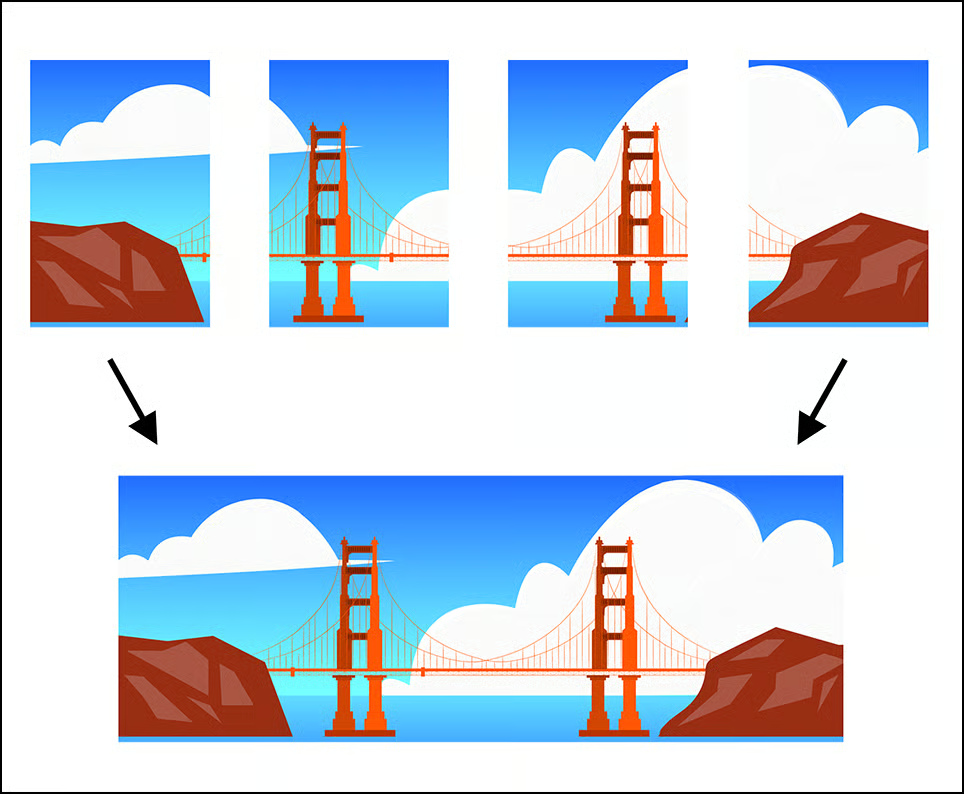
For the quickest, most accurate stitches with fisheyes, PTGui is a top choice. Import your bracketed sets (if any), set lens type to Circular Fisheye and focal length 8 mm, then generate control points automatically. With this combo, expect minimal control point cleanup. Alternatives like Hugin are capable and free, while Lightroom/Photoshop are best for simpler panoramas. If you’re creating 360 content for VR, export an equirectangular 2:1 image (e.g., 12k–16k wide) and verify alignment and horizon. Why PTGui is preferred for complex fisheye panos
When targeting VR viewers and virtual tours, follow platform recommendations for metadata and file size to ensure smooth playback on headsets and web players. VR-friendly export tips for DSLR/mirrorless 360 photos
Cleanup & Enhancement
- Nadir patch: Use a dedicated nadir shot. Clone or use AI tools to remove the tripod cleanly.
- Color and noise: Balance color temperature across frames; apply luminance noise reduction sparingly, especially in the shadows.
- Level horizon: In PTGui/Hugin, adjust roll/pitch/yaw so verticals are vertical and the horizon is straight.
- Final output: Save a 16-bit TIFF master and export a JPEG for delivery. Embed proper 360 metadata where needed.
For deeper background on shooting and stitching fundamentals, this Q&A thread is a good general reference. Best practices for 360 panoramas
Useful Tools & Resources
Software
- PTGui panorama stitching
- Hugin (open-source stitching)
- Lightroom / Photoshop for RAW development and clean-up
- AI tripod removal tools (e.g., content-aware fill, generative tools)
Hardware
- Panoramic heads (Nodal Ninja, Leofoto, Sunwayfoto) with fore/aft rails
- Carbon fiber tripods + leveling bases
- Wireless remote shutters
- Pole extensions / vehicle mounts with safety tethers
Disclaimer: Product names are for reference—verify current specs and compatibility on official sites.
Common Mistakes & How to Avoid Them
- Parallax errors: Always align the nodal point; test with near/far objects before the real shoot.
- Exposure flicker: Manual exposure and locked WB across all frames, including brackets.
- Tripod shadows and self-appearance: Take a dedicated nadir, and plan rotation to keep your body out of glare.
- Ghosting from motion: Use two-pass capture and mask in post; increase shutter speed if necessary.
- High-ISO noise at night: Keep ISO low and extend exposure on tripod; rely on the GFX’s DR instead of pushing ISO too far.
- IBIS artifacts: Turn IBIS off for tripod panos; sensor shifts can cause stitching inconsistencies.
Frequently Asked Questions
-
Can I shoot handheld panoramas with the Fujifilm GFX 100 II?
Yes, but it’s not ideal with a fisheye panorama. The GFX is heavy, and even with IBIS, slight parallax and framing shifts make stitching less reliable. For casual outdoor 360s you can try 3-around handheld at fast shutter speeds, but for professional results, use a leveled tripod and a panoramic head.
-
Is the Samyang 8mm f/3.5 CS II wide enough for a single-row 360 on GFX?
Yes. It yields a circular fisheye on the GFX 100 II with ~180° FOV across the circle. You can cover a full 360×180 with 3–4 shots around plus zenith and nadir. For safety or complex scenes, use 4-around for more overlap.
-
Do I need HDR for interiors with bright windows?
Usually yes. Even with the GFX’s strong dynamic range, interiors with direct window light benefit from ±2 EV bracketing (3 or 5 frames). Fuse exposures before stitching or stitch first and blend exposures within the stitcher, depending on your software workflow.
-
How do I avoid parallax issues with this lens?
Use a panoramic head and align the entrance pupil (no-parallax point). With the Samyang 8mm, find and mark the fore-aft position on your rail so the lens’s entrance pupil sits over the yaw axis. Perform the near/far alignment test and lock the rail for repeatable results.
-
What ISO range is safe on the GFX 100 II in low light?
ISO 100–800 delivers superb quality; 1600 is often usable with modest noise reduction. For night panos, prioritize longer exposures over pushing ISO; the GFX sensor rewards low-ISO, tripod-based techniques.
-
Can I create a custom panorama setup on the GFX 100 II?
Yes. Save a custom mode (C1–C7) with Manual exposure, EFCS, IBIS OFF, fixed WB, RAW+JPEG, and a 2s self-timer. You’ll recall your pano-ready settings instantly at the next shoot.
-
How do I reduce flare with a fisheye?
Plan your rotation to keep the sun just outside the frame edge when possible, shade the lens with your hand or body (keeping them out of the frame), and clean the front element. Removing the hood increases the circular image size but can make the lens more flare-prone—balance accordingly.
-
Which tripod head pairs best with this setup?
A compact, precise panoramic head with fore/aft and vertical adjustment (e.g., Nodal Ninja or Leofoto) is excellent. Ensure it’s rated for the GFX’s weight and has a reliable, repeatable nodal rail scale.
Real-World Case Studies
Interior Real Estate, Midday
Use 4-around at f/8, ISO 100, and bracket ±2 EV (3–5 frames per yaw). Lock WB to 4000–4500K to balance warm lamps and cool window light without shifting. Stitch in PTGui as a circular fisheye, then fuse exposures. The GFX’s shadow depth preserves furniture texture and soft details around windows even after tonemapping.
Outdoor Sunset, Windy Rooftop
Stability is everything. Set a low stance on the tripod, add weight to the center column, and trigger remotely. Go for 4-around at 1/125s, f/8, ISO 200. The low shot count keeps pace with changing light. If flare spikes, shield the lens during each frame while staying out of view, and fix any reflections in post.
Event Crowd, Golden Hour
Shoot a fast 3-around pass at 1/250s, f/5.6, ISO 400–800. Then pause and re-shoot frames as gaps open. In stitching, choose frames with fewer moving subjects and mask to avoid ghosting. The fisheye’s huge coverage reduces frame count, making it more likely to catch clean slices through the crowd.
References for Deeper Learning
Want to explore panoramic technique standards and expected resolutions with different lenses and sensors? This community-maintained resource is helpful context for planning shot counts and output sizes. Panotools: DSLR spherical resolution
Visual Samples
Below are a few visuals that mirror the concepts above—tripod-based capture, nodal point alignment, and the stitching process:
-
Tripod + panoramic head = consistent overlap and cleaner stitches. -
Entrance pupil alignment removes parallax—the number one cause of stitching errors. -
Stitch as circular fisheye frames and export to an equirectangular 2:1 panorama.
Safety, Limitations & Trust Notes
Lens compatibility: The Samyang 8mm f/3.5 CS II is designed for APS-C. On the GFX 100 II it renders a circular image. This is expected and useful for fast 360 capture. Prefer a version with a manual aperture ring (e.g., Nikon F) and adapt with a solid mechanical adapter. Confirm that your adapter clears the rear element and allows infinity focus. Enable “Shoot Without Lens” in the GFX menu.
Wind and elevated work: The GFX is heavy—secure it with a tether on rooftops or poles. When in doubt, don’t elevate. Weather-seal your setup as needed, and clean the fisheye front element frequently.
Backup workflow: On paid jobs, shoot a second pass with a yaw offset or extra overlap. Keep redundant cards, verify files on-site, and maintain a consistent, documented folder structure for bracketed sets.