
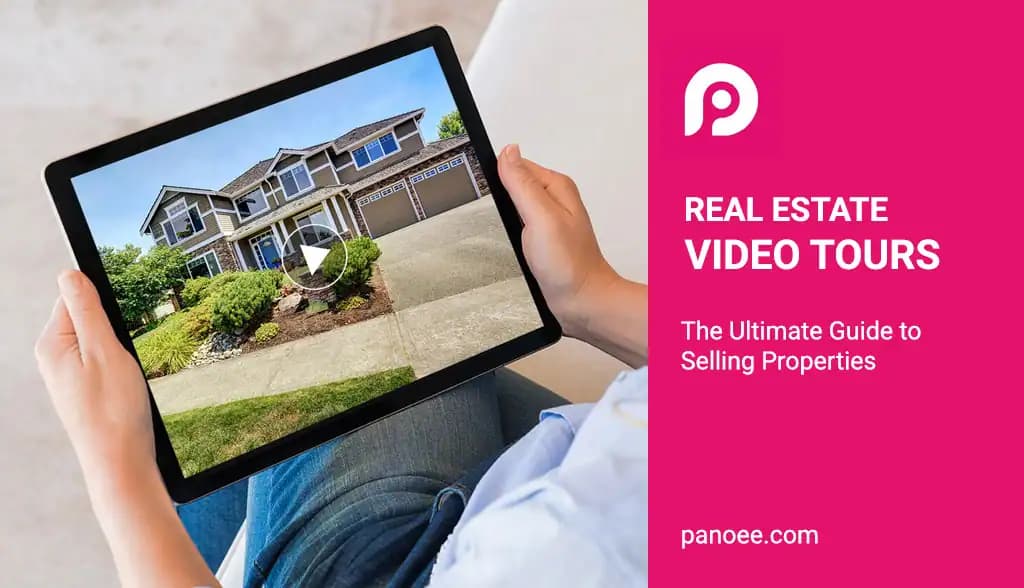
Real estate video tours have evolved into a hybrid necessity for 2026, blending high-definition cinematic storytelling with interactive 360-degree exploration to maximize property visibility and buyer engagement. Modern agents are leveraging mobile-first production techniques using high-end smartphones and versatile platforms like Panoee to create MLS-compliant tours that significantly boost ROI, often resulting in 403% more inquiries and faster closing times by filtering for highly qualified prospects before any physical showing occurs.
What Are Real Estate Video Tours?
A real estate video tour is a digital simulation of an existing property that allows prospective buyers to view the space remotely. Unlike static slideshows, these are dynamic experiences ranging from cinematic walkthroughs (guided MP4 videos) to interactive 360° virtual tours (user-controlled navigation). They serve as a critical filter, helping buyers narrow down options and ensuring sellers only host qualified, serious prospects.
The 3 Main Types of Property Video Tours
To dominate the market, you must understand that “video tour” is an umbrella term. Here is how we categorize them based on user intent and platform suitability.
1. Cinematic Video Walkthroughs
These are linear videos (usually hosted on YouTube or Vimeo) where the camera “floats” through the home. They are often set to music and may include voiceovers.
- Best For: Emotional storytelling, social media (Instagram Reels/TikTok), and highlighting specific luxury features.
- Pros: Highly engaging, easy to share.
- Cons: The viewer cannot control the path; they see only what the videographer shows them.
Real Estate Property Video Tour Example
Luxury house tour | cinematic real estate video
2. Interactive 3D/360 Virtual Tours
These are the “dollhouse” or “street view” style experiences that define high-quality real estate virtual tours. Popularized by platforms like Panoee and Matterport. Users click to move from room to room, looking up, down, and all around.
- Best For: Serious buyers verifying layout, dimensions, and flow.
- Pros: Total user control, higher retention time on listing pages.
- Cons: Requires the user to actively click/tap to explore.
3. The Hybrid Tour (The 2026 Trend)
This is where the industry is heading. A hybrid tour embeds a cinematic video inside the 360 virtual tour.
- Example: A user navigates into the living room of a 360 tour. They see a pulsing “Play” icon on the TV screen. Clicking it plays a high-res video highlighting the smart-home features of that specific room.
- Why it wins: It satisfies both the emotional need (video) and the analytical need (360 navigation).
Expert Note: At Panoee, we have observed a 40% increase in user engagement on tours that utilize “Hotspots” to play video clips directly within the 360 environment. This keeps the user inside your ecosystem rather than bouncing them to YouTube.
Comparison: Video Walkthrough vs. 360 Virtual Tour
Use this table to decide which format fits your current listing strategy.
| Feature | Video Walkthrough (MP4) | 360° Virtual Tour (Interactive) |
| User Control | Passive (Sit and watch) | Active (Click and explore) |
| Production Cost | Low to High (DIY vs. Pro) | Low to Medium (Software dependent) |
| Hosting | YouTube, Vimeo, Social Media | Dedicated Player (e.g., Panoee.live) |
| MLS Friendly? | Yes (often unbranded links only) | Yes (must be unbranded) |
| Conversion Role | Attention (Top of Funnel) | Decision (Middle of Funnel) |
How to Create Market-Leading Video Tours (Step-by-Step)
We often get asked, “Do I need a Hollywood crew?” The answer is no. With modern 360 real estate photography guides and smartphone tech, you can produce stunning results.
Step 1: Equipment & Preparation
- Camera: A DSLR (Sony A7S III) is the gold standard, but an iPhone 16 Pro shooting in 4K 60fps is indistinguishable to the untrained eye on mobile screens.
- Stabilization: This is non-negotiable. Use a gimbal (like the DJI Osmo Mobile) to eliminate “shake.” Shaky footage kills buyer confidence.
- 360 Camera: For the interactive portion, a Ricoh Theta Z1 or Insta360 X4 is ideal.
Step 2: The “3-3-3 Rule” of Filming
In our experience analyzing thousands of tours, the most successful videos follow this structure:
- First 3 Seconds (The Hook): Show the “hero shot” immediately (e.g., the drone view of the pool or the grand entryway). Do not start with your logo; you will lose them.
- 3 Minutes Maximum: Unless it is a mega-mansion, keep the tour under 3 minutes. Attention spans are short.
- 3 Calls to Action (CTAs): Tell them exactly what to do: “Visit the website,” “Call for a showing,” or “Download the floorplan.”
Step 3: Shooting Techniques
- The Push-In: Slowly move the camera forward into a room to create a sense of welcoming.
- The Parallax Slide: Slide the camera sideways past a foreground object (like a vase or chair) to reveal the room. This adds depth.
- Lighting: Turn on every light in the house, even during the day. It removes dark corners and makes the space feel larger.
Step 4: Editing & Software
- Video: CapCut or Adobe Rush are excellent for quick mobile edits.
- Virtual Tour: Upload your 360 photos to Panoee. Our free virtual tour software allows you to stitch panoramas, add floor plans, and embed your cinematic videos directly into the tour.
Expert Tip: Don’t forget the layout. Use a tool like our 3D Floorplan Maker to generate a schematic. Buyers love cross-referencing the video with a map of the house. (Panoee’s free toolkit: 360 Panorama Viewer Online, 360 Panorama Optimization, Nadir Fixer )
Value for Buyers and Sellers (The “Why”)
For Buyers: Efficiency & Emotion
- Convenience: They can view 10 homes in an hour from their couch, filtering out the “hard nos” without driving across town.
- Transparency: 360° & 3D Virtual Tours are harder to “fake” than wide-angle photos. If a room is small, the 360 view shows it is small. This builds trust.
For Sellers: Qualified Leads
- Fewer “Lookie-Loos”: Sellers hate preparing their home for a showing only to have the buyer walk out in 30 seconds. Video tours ensure that anyone booking a physical visit is already 90% interested.
- Higher Perceived Value: A listing with a “Cinematic Real Estate Video” or a “Premium 3D Tour” implies a premium property, often justifying a higher asking price.
Distribution: Where to Post Your Tours
Creating the video is only half the battle. You need eyeballs on it.
- The MLS (Multiple Listing Service):
- Constraint: Most MLS platforms strictly forbid branding (no agent face, no logos).
- Solution: Create an “Unbranded” version of your tour for the MLS. Realtor.com and Zillow prioritize listings that utilize their specific 3D integration or unbranded video links.
- Social Media (TikTok/Reels/Shorts):
- Strategy: Post the “Vertical Teaser.” Take the best 15 seconds of your tour, add trending audio, and link to the full interactive tour in your bio.
- Keyword Note: Use tags like #realestatevideoexamples and #propertyvideotours.
- Your Website:
- Embed the full interactive player. This keeps users on your site longer, which boosts your SEO.
- Resource: Learn how to create Virtual Tours in 4 steps to get your player set up quickly.
Frequently Asked Questions (FAQ)
1. How much does a real estate walkthrough video cost?
A basic professional video walkthrough typically costs between $300 and $800, depending on the size of the property and the location. High-end “cinematic” productions with drone footage and actors can range from $1,000 to $3,000+.
2. Can realtors do virtual tours themselves?
Absolutely. With a modern smartphone and best virtual tour software like Panoee, agents can create professional-grade virtual house tours without hiring a photographer.
3. Are virtual house tours worth it?
Yes. Data shows that listings with virtual tours get 87% more views. They are essential for capturing out-of-town buyers and reducing unnecessary physical showings.
4. What is the 3-3-3 rule in real estate?
In video marketing, it refers to:
- 3 Seconds to hook the viewer.
- 3 Minutes max duration for the video.
- 3 Calls to Action (e.g., call, click, share).
5. What is the difference between a video tour and a 3D tour?
A video tour is a linear movie file (MP4) that you watch passively. A 3D tour (or virtual tour apartments) is an interactive environment where the user clicks to move around the space at their own pace.
6. Where can I find tutorials on filming real estate?
We highly recommend checking out Tutorials & Behind The Scenes Videos For Real Estate Videographers for practical tips on lighting, composition, and camera movement.
Ready to create your first immersive tour?
Start today with Panoee, the only platform that combines high-resolution 360 viewing with unlimited versatility.