
Why This Camera & Lens Are Great for Panoramas
The Sony a7R V and the Canon RF 15–35mm f/2.8L IS USM are both top-tier tools, and together they can deliver extremely detailed, low-noise, rectilinear panoramas—if you plan your workflow correctly. The a7R V’s 61MP full-frame BSI sensor (approx. 35.7×23.8 mm, ~3.76 µm pixel pitch) offers outstanding resolving power and class-leading dynamic range at base ISO, which means cleaner skies, deeper shadows, and more flexible post-processing. The RF 15–35mm is a pro-grade rectilinear ultra-wide zoom with crisp corners by f/5.6–f/8, excellent coatings, and controlled CA, which all help stitching software find reliable control points and preserve straight lines.
Because the RF 15–35mm is rectilinear (not a fisheye), you’ll need more images for a full 360×180° sphere compared to fisheye lenses, but you’ll avoid fisheye defishing compromises and maintain straight architectural lines—ideal for real estate, interiors, and cityscapes.
Compatibility Alert (Read This First)
Canon RF lenses cannot be directly mounted or adapted (with electronic focus/aperture control) to Sony E-mount bodies. The flange distances and protocols make a practical RF→E adapter unavailable. To shoot panoramas with this exact lens, use a Canon RF-mount body (e.g., EOS R5/R6) OR choose a Sony-native equivalent (e.g., FE 16–35mm GM, FE 12–24mm) on the a7R V. The techniques in this guide apply to the Sony a7R V body paired with a rectilinear UWA zoom of similar focal length. If you must use the RF 15–35mm specifically, plan to mount it on a Canon RF camera. We’ll still reference this lens’s behavior (distortion/field-of-view) because it mirrors what you should expect from comparable Sony UWA zooms.
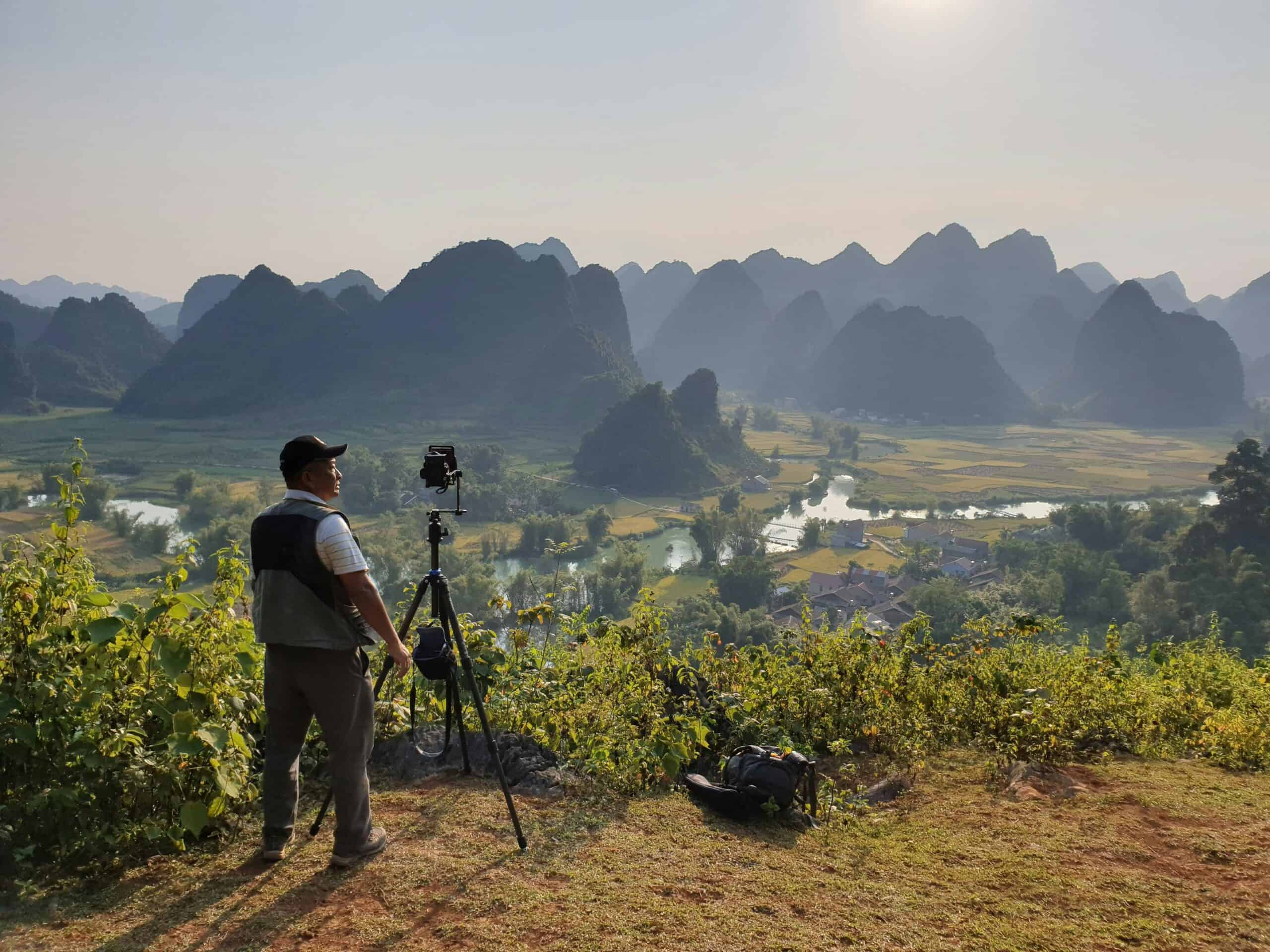
Quick Setup Overview
- Camera: Sony a7R V — Full-frame 61MP BSI sensor (~3.76 µm pixel pitch), excellent base-ISO dynamic range, 8-stop IBIS rating, Pixel Shift Multi Shooting for ultra-high-res scenes.
- Lens: Canon RF 15–35mm f/2.8L IS USM — rectilinear UWA zoom, best between f/5.6–f/8, good flare resistance, mild barrel distortion at 15mm (correctable), minimal axial CA; built-in IS (turn off when on tripod).
- Estimated shots & overlap (full-frame, rectilinear):
- At 15mm: spherical 360 — 3 rows of 8 around (yaw 45°) at +45°, 0°, −45° plus 2–3 zenith frames and 1–3 nadir frames (≈28–32 images). Overlap target ~30%.
- At 20–24mm: 10–12 around per row, 3 rows (+45°, 0°, −45°), plus zenith/nadir (≈36–42 images).
- At 35mm: 14–16 around per row, 3 rows, plus zenith/nadir (≈48–54 images). Best for gigapixel detail.
- Difficulty: Intermediate — rectilinear wide requires careful nodal calibration and more frames than fisheye.
Planning & On-Site Preparation
Evaluate Shooting Environment
Walk the site and look for reflective glass, glossy floors, and moving elements (people, cars, trees in wind). In interiors with windows, expect strong contrast—plan HDR brackets. If shooting through glass, clean both sides, turn off interior lights behind you, press the hood close to the pane, and keep the front element at a shallow angle; distance from glass reduces ghosting and reflections.
Match Gear to Scene Goals
The a7R V’s base-ISO dynamic range allows clean window recoveries and deep shadow pulls. Indoors, safe ISO is typically 100–400 for critical detail; 800–1600 is usable with modern denoise. The RF 15–35 (or Sony FE 16–35 equivalent) at 15–18mm reduces the number of frames per row and preserves straight lines—perfect for real estate and architecture. If you need sky-to-ground coverage in fewer shots, a fisheye is faster but introduces defishing steps and may curve straight lines.
Pre-shoot Checklist
- Charge batteries; carry spares and empty, fast cards.
- Clean lens, sensor, and filters; bring microfiber cloth and blower.
- Level tripod; verify panoramic head indices and nodal alignment marks.
- Weather/wind safety: sandbag the tripod; tether gear on rooftops; avoid extended center columns in strong wind.
- Glass/metal structures: mind magnetic and safety restrictions; respect property rules.
- Backup workflow: shoot a second full pass at different yaw offset; bracket one extra stop if unsure.
Essential Gear & Setup
Core Gear
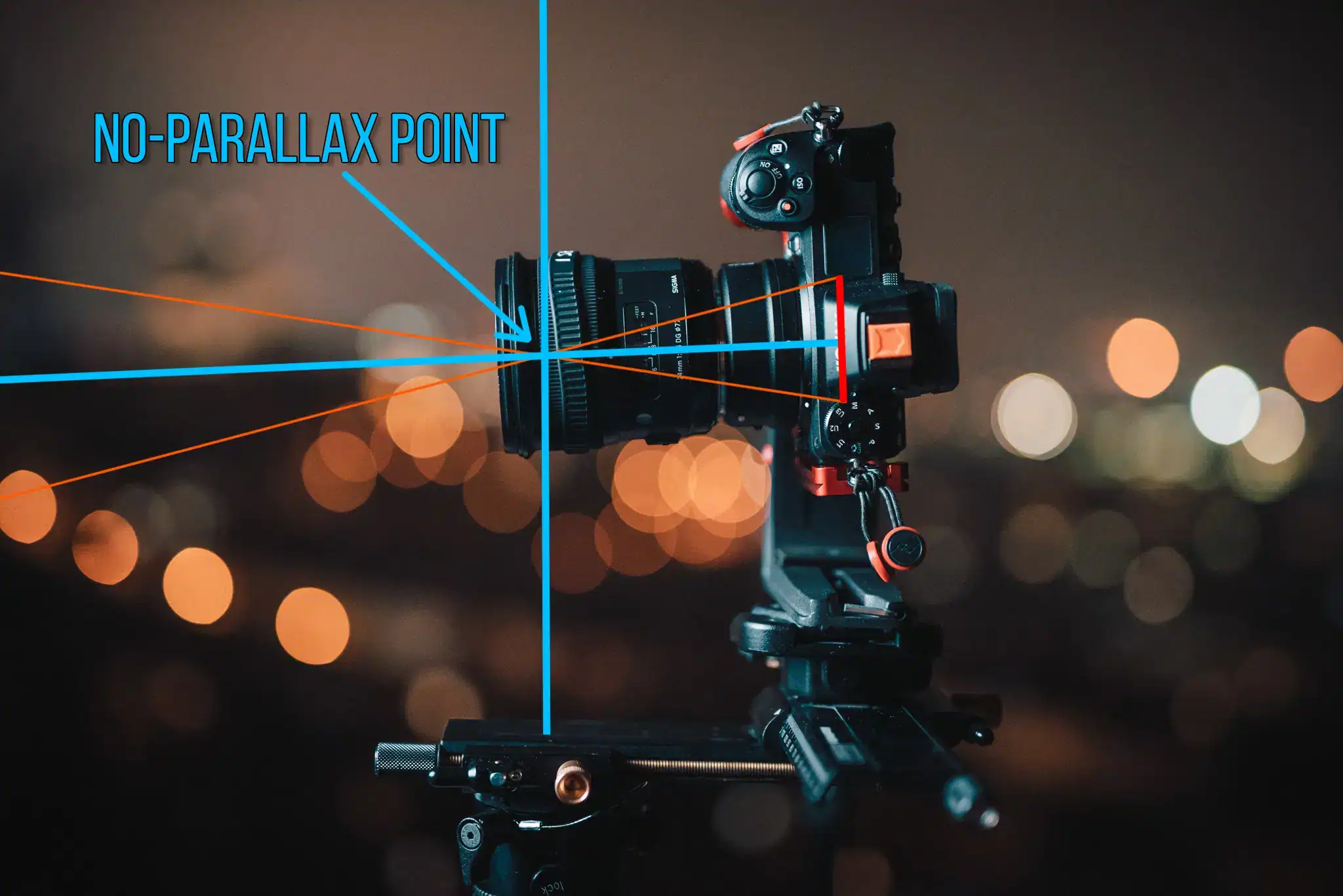
- Panoramic head: Use a two-axis head that lets you place the lens’s entrance pupil (no-parallax point) right over the rotation axis. Doing so eliminates parallax between foreground and background and makes stitching clean and fast.
- Leveling base + stable tripod: A leveling base speeds setup and keeps your pitch rows even. A carbon tripod with a wide stance reduces vibration.
- Remote trigger or app: Use a cable release, intervalometer, or camera app to avoid touching the camera.
Optional Add-ons
- Pole or car mount: Use a safety tether; watch wind loads and vibrations. Shorter exposures and higher shutter speeds help on flexible poles.
- Lighting aids: Small LED panels for dark corners; bounce cards to open shadows in interiors.
- Weather protection: Rain cover, lens hood, microfiber towels; a small umbrella can block flare or drizzle.
New to panoramic heads? This illustrated tutorial covers the essentials of setup, leveling, and alignment. Panoramic head alignment tutorial
Finding the No-Parallax Point (Starting Values)
For a rectilinear UWA like the RF 15–35mm at 15mm, the entrance pupil typically sits near the front optical group. As a starting point, place the rotation axis roughly 110–120 mm forward of the sensor plane symbol (⦿ on the camera top) at 15mm, ~100 mm at ~24mm, and ~90 mm at 35mm. Fine-tune: put a light stand 0.5–1 m in front and a building edge 20–50 m behind, then pan—adjust fore-aft until there’s no relative shift between near and far objects.
Step-by-Step Shooting Guide
Standard Static Scenes
- Level and align: Level the tripod with the leveling base. Mount the pano head and set the fore-aft rail to your calibrated entrance pupil value. Lock all knobs firmly.
- Manual settings: Switch to Manual exposure, Manual white balance (Daylight, Cloudy, or a custom Kelvin). Turn off IBIS and lens IS when on a tripod to avoid micro-vibrations.
- Focus: Use manual focus. Set at or near hyperfocal distance for the chosen aperture (e.g., at 15mm and f/8, focusing ~0.8–1.2 m keeps most scenes sharp). Magnify live view to confirm.
- Capture sequence:
- At 15mm: shoot 8 frames around at 0° pitch, yaw every 45°. Then tilt +45° and repeat 8 around. Tilt −45° and repeat 8 around. Add 2–3 frames at +75° (zenith) and 1–3 at −75° (nadir or offset for tripod patch).
- Overlap: aim for ~30% overlap horizontally and ~30% vertically between rows.
- Nadir strategy: After the main set, shift the tripod slightly or use a handheld nadir shot with the camera roughly over the tripod center for easier patching.
HDR / High Dynamic Range Interiors
- Bracket ±2 EV (3–5 frames): For bright windows and dark interiors, use AEB. Keep shutter varying while aperture and ISO remain fixed.
- White balance: Keep WB locked across brackets to avoid stitching color shifts.
- Sequence: Either bracket per angle (e.g., 0, −2, +2, then rotate) or shoot all base exposures first, then a second pass at −2 EV, then +2 EV. The latter can reduce ghosting if people move.
Low-Light / Night Scenes
- Exposure: f/4–f/5.6, ISO 100–400 if possible, and longer shutter speeds on a stable tripod. The a7R V handles ISO 800–1600 well if you need to shorten shutter times in wind.
- Stabilization off: Turn off IBIS and lens IS on tripod; turn them back on only for pole/handheld work.
- Remote/Timer: Use 2s self-timer or a remote to prevent vibration; use electronic first curtain shutter to minimize shock, and avoid electronic shutter under LED lighting to reduce banding risk.
Crowded Events
- Two-pass approach: First pass for coverage; second pass to capture empty gaps. Mark your yaw index so frames align.
- Post blending: In PTGui/Photoshop, mask out moving people and keep the clean areas from the second pass.
Special Setups (Pole / Car / Drone)
- Pole: Tether your camera, keep exposures short (1/250–1/500 if possible), and rotate slowly. Expect some parallax if the entrance pupil isn’t over the rotation axis.
- Car mount: Avoid highways; shoot in safe, static conditions. Use high shutter speeds and consider single-row coverage to minimize time.
- Drone: Use the drone’s built-in pano mode when available; otherwise, yaw in place with consistent pitch steps. Watch for prop shadow near the sun.
Recommended Settings & Pro Tips
Exposure & Focus
| Scenario | Aperture | Shutter | ISO | Notes |
|---|---|---|---|---|
| Daylight outdoor | f/8–f/11 | 1/100–1/250 | 100–200 | Lock WB (Daylight); maintain 30% overlap |
| Low light/night | f/4–f/5.6 | 1/10–1/60 | 100–800 | Tripod + remote; stabilization OFF on tripod |
| Interior HDR | f/8 | Bracket ±2 EV | 100–400 | Maintain fixed aperture/ISO; vary shutter only |
| Action / moving subjects | f/5.6–f/8 | 1/200+ | 400–800 | Two-pass strategy; mask in post |
Critical Tips
- Manual focus at hyperfocal distance to keep everything sharp; confirm with magnified live view.
- Nodal calibration: Mark your fore-aft rail values for 15, 20, 24, and 35mm on tape so you can switch focal lengths reliably.
- White balance lock: Set Kelvin or a custom WB for consistent color across frames and brackets.
- RAW capture: 14-bit RAW maximizes dynamic range and color headroom for stitching and grading.
- Stabilization: Turn off IBIS/lens IS on tripod; turn on IBIS if you must handhold or shoot on a pole.
- Pixel Shift Multi Shooting: For ultra-detailed still scenes, consider Sony’s pixel shift on the a7R V, but only if absolutely no movement (trees/people/clouds) and the head is rock solid.
Video walkthrough: set up a panoramic head
Stitching & Post-Processing
Software Workflow
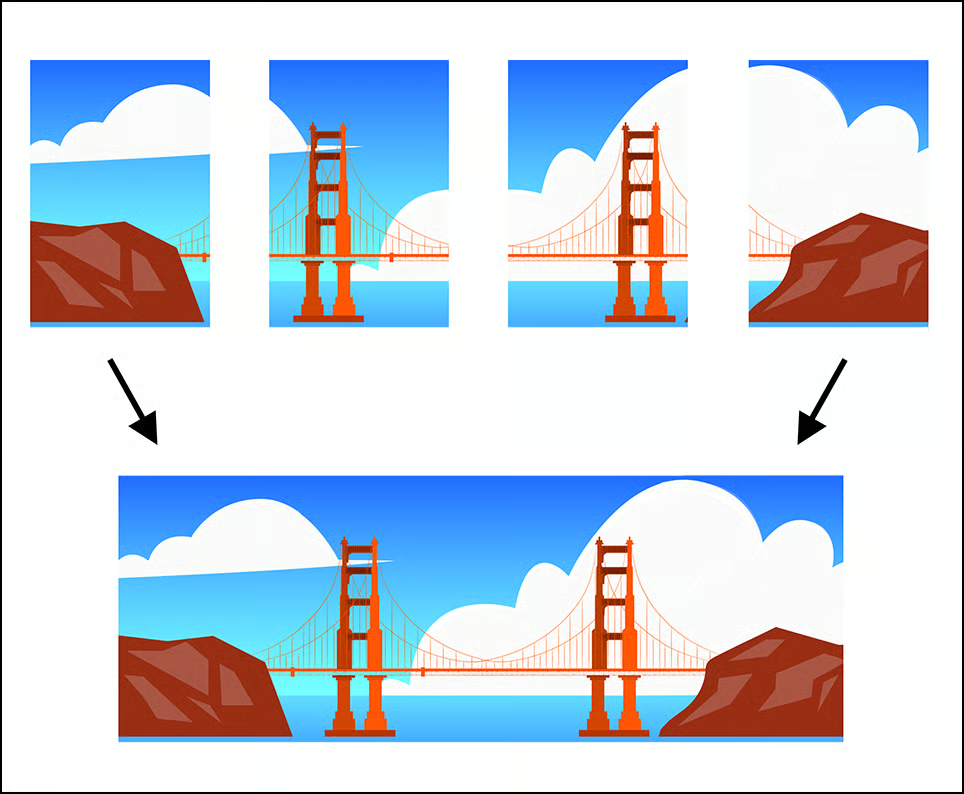
Import your RAWs, apply a neutral profile, correct lens distortion if needed (moderately for rectilinear ultrawides), and sync settings across the set. For stitching, PTGui is the fastest and most robust for complex multi-row sets; Hugin is a solid open-source alternative. Target ~25–30% overlap. Rectilinear ultrawides are straightforward to stitch with enough overlap and good nodal alignment. If you shot multi-row, ensure vertical control points between rows are well-distributed. For export, choose equirectangular 2:1 for VR platforms.
Deep dive: a pro review of PTGui’s strengths for multi-row HDR and masking. PTGui review and why it excels for panoramas
Meta’s guide covers end-to-end DSLR/mirrorless 360 capture and stitching considerations. Using a mirrorless camera to shoot and stitch a 360 photo
Cleanup & Enhancement
- Nadir patch: Use a separate nadir shot or an AI tripod removal tool; heal/clone in Photoshop if needed.
- Color and noise: Balance window highlights and interior shadows; apply selective denoise for night scenes.
- Leveling: Set horizon in the stitcher; correct yaw/pitch/roll before exporting to avoid tilted scenes in VR.
- Export: Equirectangular JPEG (8–12k wide) or TIFF for further grading; embed XMP metadata for 360 platforms when available.
Want more on pano head setup fundamentals? Comprehensive panoramic head setup guide
Useful Tools & Resources
Software
- PTGui panorama stitching
- Hugin (open source)
- Lightroom / Photoshop for RAW and retouch
- AI tripod/nadir removal tools
Hardware
- Panoramic heads (Nodal Ninja, Leofoto, Sunwayfoto)
- Carbon fiber tripods with leveling bases
- Wireless remotes or intervalometers
- Pole extensions / vehicle suction mounts with safety tethers
Disclaimer: names provided for research; check official sites for specifications and compatibility.
Common Mistakes & How to Avoid Them
- Parallax error: Always align the entrance pupil; mark your rail positions for each focal length.
- Exposure flicker: Manual exposure and locked white balance; avoid auto ISO and auto WB.
- Tripod shadows and footprints: Plan a clean nadir or shoot an offset nadir to patch later.
- Ghosting from movement: Use masks across passes; select the cleanest instance of moving subjects.
- Noisy night frames: Favor low ISO and longer exposures on a stable tripod; denoise selectively in post.
- Insufficient overlap: Keep ~30% overlap horizontally and vertically; add a safety pass if in doubt.
Field Cases: What Works and Why
Indoor Real Estate (Mixed Light, Windows)
Set f/8, ISO 100–200, bracket ±2 EV (3 or 5 frames). Place the camera about room center. Shoot 3 rows of 8 at 15–18mm. Use a custom WB (e.g., 4000–5000K) to avoid green/magenta shifts from mixed lighting. In PTGui, group brackets and enable exposure fusion or HDR merge. Mask window reflections if needed.
Outdoor Sunset Cityscape
At 15mm, f/8, ISO 100, vary shutter 1/60–1s as the light falls. Shoot a quick base pass then a highlight-preserving pass as the sun dips. This ensures a clean sky and detailed shadows. A second pass at slightly different yaw offsets helps with moving cars/pedestrians.
Event Crowds
Use 1/200–1/400 at ISO 400–800, f/5.6–f/8. Two-pass method: one for coverage, one timing gaps. In post, mask crowd areas to keep the cleanest tiles.
Rooftop/Pole Shooting
Wind is your enemy. Use a short, stiff pole, shoot at 15–18mm to reduce total shots, and expose at 1/250+ to minimize motion blur. Tether the rig and consider a safety spotter. Accept that parallax may increase; overlap generously and use control point cleanup in the stitcher.
Frequently Asked Questions
- Can I shoot handheld panoramas with the Sony a7R V?
Yes for simple cylindrical panos and even basic 360s in bright light, but expect more stitching errors. Keep shutter fast (1/250+), use 15–20mm, overlap 40%+, and rotate around your body’s approximate nodal point. For professional 360s, use a tripod and panoramic head.
- Is the Canon RF 15–35mm wide enough for a single-row 360?
For a complete 360×180° sphere, no. At 15mm rectilinear you’ll need multiple pitch rows plus zenith/nadir shots. A single row can make a cylindrical pano, not a full sphere.
- Do I need HDR for interiors with bright windows?
Usually yes. Bracket ±2 EV (3–5 shots) to retain window detail and clean interior shadows. Merge to HDR per angle or fuse exposures in PTGui.
- How do I avoid parallax issues with this setup?
Calibrate the entrance pupil at your chosen focal length using a near and far object test. Mark the fore-aft rail so you can quickly return to that value on location.
- What ISO range is safe on the a7R V for low light panoramas?
ISO 100–400 is ideal. ISO 800–1600 is still very usable on the a7R V and cleans up well with modern denoise, especially for night cityscapes. Prefer longer shutter on tripod over pushing ISO.
- Can I store a “Panorama” preset on the a7R V?
Yes. Save Manual mode, manual WB, RAW, IBIS OFF, self-timer 2s, and bracket settings to a Recall Memory (MR) slot. It speeds up on-site setup.
- What’s the best tripod head choice?
A two-axis panoramic head with fore-aft and lateral rails (e.g., Nodal Ninja/Leofoto) so you can align the entrance pupil precisely and pitch for multi-row coverage.
Safety, Limitations, and Honest Notes
Lens/body compatibility matters: you cannot natively mount Canon RF lenses to Sony E-mount. Either use a Canon RF body with the RF 15–35mm or use a Sony-native UWA on your a7R V. On rooftops or poles, always tether the camera, avoid gusty conditions, and keep bystanders clear of the setup. On a tripod, turn off stabilization. Expect more frames with rectilinear UWA than with fisheye; plan enough time and storage. Always shoot a backup pass.
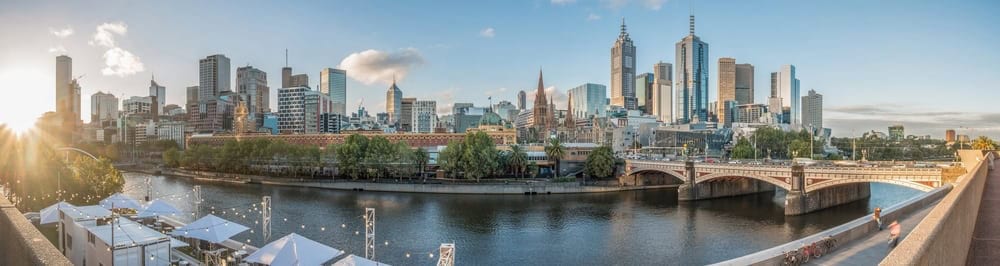
Wrap-up: How to shoot panorama with Sony a7R V & Canon RF 15–35mm f/2.8L IS USM
To master how to shoot panorama with Sony a7R V & Canon RF 15–35mm f/2.8L IS USM, focus on fundamentals: nodal alignment, consistent manual exposure and white balance, adequate overlap, and a disciplined capture sequence. The a7R V’s high-resolution sensor and wide dynamic range reward careful technique with extraordinary detail. The RF 15–35mm (or a Sony-native 16–35mm equivalent) keeps lines straight and edges sharp, delivering clean stitches for pro work. For deeper learning on end-to-end DSLR/mirrorless pano workflows, see this creator-focused guide. DSLR/mirrorless 360 capture and stitching guide