
Why This Camera & Lens Are Great for Panoramas
If you want to know how to shoot panorama with Sony a7R V & Canon EF 8-15mm f/4L Fisheye USM, you’re pairing a high-resolution, full-frame mirrorless body with a professional fisheye that can cover 180° either as a circular frame (8mm) or diagonally across the full frame (15mm). The Sony a7R V’s 61MP BSI sensor (approx. 35.7×23.8mm, ~3.76µm pixel pitch) delivers excellent detail with roughly 14.8 stops of dynamic range at base ISO, while its in-body stabilization (rated up to 8 stops) helps when shooting handheld overlap segments or low-light scouting. The Canon EF 8-15mm f/4L is a versatile fisheye zoom: at 8mm it produces a 180° circular fisheye image ideal for minimal-shot 360s; at 15mm it becomes a 180° diagonal fisheye that fills the frame for higher-resolution spheres with a few more shots.
On Sony E-mount, you’ll need a reliable EF-to-E adapter (e.g., Metabones, Sigma MC-11). Autofocus may be slower or inconsistent compared with native lenses, but for panoramas you’ll almost always switch to manual focus and lock it. The lens is sharpest around f/5.6–f/8 with moderate lateral CA that stitches cleanly and is easily corrected in post. Fisheye distortion is expected and actually helpful—fewer frames cover the full sphere quickly. Just remember: when shooting at 8mm on full-frame, remove the lens hood to avoid blocking the circular image.
Quick Setup Overview
- Camera: Sony a7R V — Full-frame 61MP BSI sensor, ~14.8EV DR at ISO 100, IBIS up to 8 stops, 14-bit RAW.
- Lens: Canon EF 8-15mm f/4L Fisheye USM — fisheye zoom; circular at 8mm (180°), diagonal fisheye at 15mm (180° across the frame). Sharpest around f/5.6–f/8; moderate CA corrected in post.
- Estimated shots & overlap (on full-frame):
- 8mm (circular fisheye): 4 around (90° apart) + 1 zenith + 1 nadir; advanced users can do 3 around + zenith + nadir.
- 12mm: 6 around (60° apart) + zenith + nadir for robust coverage.
- 15mm (diagonal fisheye): 6–8 around + zenith + nadir for higher resolution and cleaner edges.
- Recommended overlap: 25–35% between frames.
- Difficulty: Intermediate (easy if you’ve used a panoramic head; beginner-friendly with careful practice).
Planning & On-Site Preparation
Evaluate Shooting Environment
Survey the scene for reflective surfaces, moving subjects, and lighting contrasts. Glass and glossy floors cause flare and ghosting—keep the lens clean and shoot slightly off-axis to strong light sources. If shooting through glass, press a rubber lens hood gently against the pane (avoid pressure on the fisheye’s front element) and keep the front element as close as possible to reduce reflections. Assess wind and ground vibration; long exposures on rooftop decks or metal balconies can blur a frame and complicate stitching.
Match Gear to Scene Goals
The a7R V’s high resolution helps create detailed equirectangular outputs for VR or large prints. Indoors and at dusk, you can safely work at ISO 100–400 on tripod for clean results; ISO 800 is acceptable for night scenes when you need to freeze motion or shorten exposure. The EF 8-15’s fisheye coverage means fewer shots and faster capture—perfect when crowds are moving or the wind is strong. At 15mm, you’ll collect more pixels across the sphere with 6–8 shots around plus zenith/nadir—ideal for real estate and architecture where clarity matters.
Pre-shoot Checklist
- Power & storage: fully charged battery, spare battery, and high-speed, large-capacity cards.
- Optics & sensor: clean the front element; check for sensor dust at f/16 sky test (dust is obvious on fisheyes).
- Tripod & head: ensure leveling base and panoramic head are tight; verify nodal/entrance pupil alignment marks.
- Adapter: confirm the EF-to-E adapter passes aperture control; test manual focus and peaking.
- Safety: secure straps and tethers, check wind gusts on rooftops or poles, avoid overhanging traffic.
- Backup capture: do a second full round of frames (and an extra nadir) as insurance.
Essential Gear & Setup
Core Gear
- Panoramic head: A multi-row or ring-based panoramic head aligns the lens’s entrance pupil (no-parallax point) over the rotation axis to eliminate parallax, the #1 stitching killer. Calibrate once, mark the rails, and repeat consistently.
- Stable tripod with leveling base: A leveling base speeds setup and keeps your horizon consistent, reducing corrections in post.
- Remote trigger or app: Use a remote, intervalometer, or the Imaging Edge app to avoid vibration. Enable a 2-second timer if you forget the remote.
Optional Add-ons
- Pole or car mount: Great for overhead or moving perspectives. Use safety tethers and mind wind loads—a fisheye sees everything, including flex.
- Lighting aids: Small LED panels can fill shadows for interior detail, but be cautious of mixed color temperatures; lock white balance.
- Weather protection: Lens coat, rain cover, and silica gel packs. Fisheye elements are exposed—carry a microfiber cloth at all times.
Step-by-Step Shooting Guide
Standard Static Scenes
- Level tripod & align nodal point: Mount the a7R V + EF 8-15 on your panoramic head. Slide the rails so the entrance pupil sits over the yaw axis. A good starting offset for this combo typically falls around 60–75mm forward on many compact heads, but always calibrate your own setup (adapter depth affects it). See the nodal method below.
- Manual exposure & WB: Switch to Manual mode. Meter the brightest part you need detail in (e.g., sky) and compromise to protect highlights, or plan on bracketing. Lock white balance (Daylight outside; a single preset indoors) to prevent color shifts across frames.
- Capture sequence: At 8mm, shoot 4 frames around at 90° intervals, keeping 30% overlap. Add 1 zenith and 1 nadir frame. At 12–15mm, shoot 6–8 frames around plus zenith/nadir. Rotate systematically (clockwise each time) to stay organized.
- Nadir capture: After the main sequence, tilt the camera down to shoot a clean ground plate (or move the tripod slightly and shoot a patch). You’ll use this to remove the tripod in post.

HDR / High Dynamic Range Interiors
- Bracket ±2 EV: For bright windows and dark interiors, capture a 3- or 5-shot bracket per angle. Keep the camera and head perfectly still as the shutter cycles.
- Fixed settings: Lock ISO (100–200), aperture (often f/8), and white balance to maintain consistency. Only shutter speed should vary across brackets.
- Stitching approach: Either merge HDR per-angle first, then stitch the HDR frames; or stitch each exposure set and blend afterward. PTGui and other tools handle both workflows well.
Low-Light / Night Scenes
- Use tripod and longer shutters: Aim for ISO 100–400 to preserve detail on the a7R V. If motion blur is a concern, consider ISO 800 and faster shutter speeds; noise reduction in post is excellent today.
- Remote or timer: Avoid touching the camera. Use EFCS (electronic first-curtain shutter) to reduce shutter shock; turn off SteadyShot (IBIS) on tripod to prevent micro-blur.
- Watch for flicker: Under LED or fluorescent lights, electronic shutter can band. Use mechanical or EFCS and a matching shutter speed to the mains frequency when possible.
Crowded Events
- Two-pass method: First pass prioritizes composition; second pass captures gaps when people move. You’ll mask and blend in post.
- Fewer frames help: At 8–12mm you can complete a sphere quickly before the scene changes. Keep overlap consistent to make masking easier.
Special Setups (Pole / Car / Drone)
- Pole work: Use a lightweight carbon pole; keep rotations slow and controlled, and secure safety tethers. Beware of wind torque with fisheye fronts.
- Car-mounted: Lock everything down with suction cups rated for your load, plus a secondary tether. Shorten exposure times to mitigate vibration—raise ISO if needed.
- Drone? This lens is not drone-compatible directly; use drone-native workflows instead.
Real-World Scenarios
- Indoor real estate: 15mm, f/8, ISO 100–200, 6–8 around + Z/N; add HDR ±2 EV for windows.
- Outdoor sunset: 12mm, f/8, ISO 100, 6 around + Z/N; meter for highlights and lift shadows in post.
- Event crowd: 8mm, f/5.6–f/8, ISO 200–400, 4 around + Z/N; shoot two passes and mask movement later.
- Rooftop/pole: 8–10mm for fewer shots, ISO 200–400, 1/100–1/250 to freeze sway; safety first.
- Car-mounted: 8mm for minimum shots; 1/500 or faster, ISO 400–800 if needed; plan for motion blur.
Recommended Settings & Pro Tips
Exposure & Focus
| Scenario | Aperture | Shutter | ISO | Notes |
|---|---|---|---|---|
| Daylight outdoor | f/8–f/11 | 1/100–1/250 | 100–200 | Lock WB (Daylight) for consistent color |
| Low light/night | f/4–f/5.6 | 1/30–1/60 (or slower on tripod) | 400–800 | Use remote and EFCS; SteadyShot OFF on tripod |
| Interior HDR | f/8 | Bracket ±2 EV | 100–400 | Protect highlights; consistent WB across brackets |
| Action / moving subjects | f/5.6–f/8 | 1/200+ | 400–800 | Freeze motion, consider two-pass capture |
Critical Tips
- Manual focus at hyperfocal: On a fisheye at f/8, focus just shy of infinity to keep foregrounds acceptably sharp. Use focus magnification/peaking on the a7R V to set it, then turn AF off.
- Nodal calibration: Place two vertical objects (one near, one far) aligned in frame. Rotate the camera. If alignment shifts relative to each other, move the camera forward/back on the rail until there’s no shift. Mark your rail settings for 8mm and 15mm separately.
- White balance lock: Mixed lighting is common; pick the dominant temp and stick with it to prevent color seams. RAW files make later corrections easier.
- RAW vs JPEG: Shoot RAW (14-bit) for maximum dynamic range and color latitude, especially with HDR and night scenes.
- IBIS and shutters: On tripod, disable IBIS (SteadyShot). Use EFCS to reduce vibrations; mechanical shutter if LED banding appears with electronic modes.
- Remove the hood at 8mm: The EF 8-15’s hood will vignette the circular fisheye on full-frame—remove it for full coverage.
Stitching & Post-Processing
Software Workflow
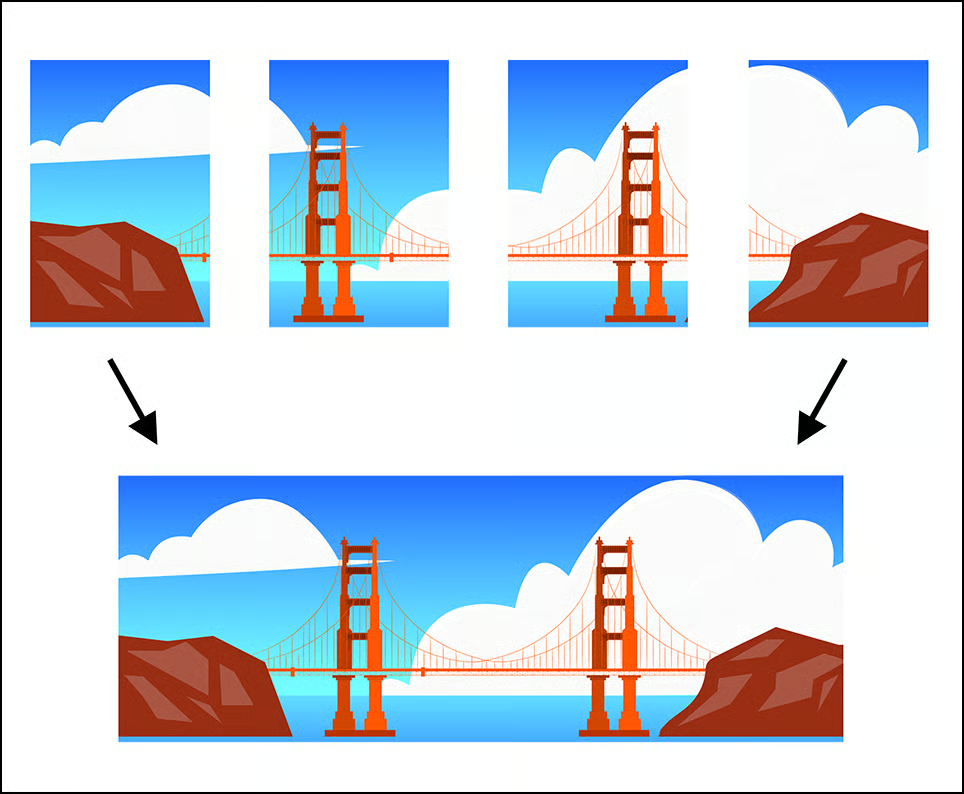
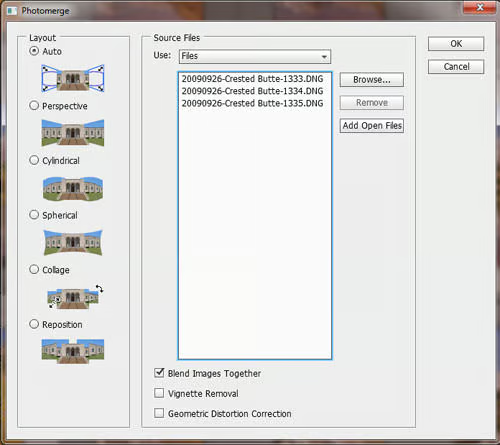
Fisheye panoramas stitch very reliably in PTGui, Hugin, and other pro tools. Import your frames (or pre-merged HDRs), set lens type to fisheye, and let the control point optimizer run. Aim for ~25–35% overlap for fisheye sequences. Rectilinear lenses generally want 20–25% overlap, but with this EF 8-15 you’ll almost always work in fisheye mode. PTGui is popular for its speed, masking tools, and excellent HDR pipeline. Hugin is a capable open-source alternative. See this hands-on review of PTGui for a deep dive into features and workflows at the end of this paragraph. PTGui in-depth review and workflow insights.
Cleanup & Enhancement
- Nadir patching: Export a layered panorama and patch the tripod via cloning/healing, or use an AI tripod removal tool. Keep a dedicated nadir tile in your library for fast branding.
- Color and noise: Harmonize color temperature across the sphere. Apply selective noise reduction to shadow regions if you used ISO 800 at night.
- Leveling: Correct roll/pitch/yaw so horizons are true. Use the vertical line tool in your stitcher for architecture.
- Export: Deliver an equirectangular 2:1 aspect ratio (e.g., 16384×8192 for high-end VR). Keep a 16-bit TIFF master; export JPEG for web and VR platforms.
For best practices on capturing and stitching 360 photos with interchangeable-lens cameras, this VR-oriented guide is concise and practical. Using a DSLR/Mirrorless to shoot and stitch a 360 photo.
Video: Panoramic Head Setup Essentials
Visual learners will appreciate a quick refresher on head setup and nodal alignment. Watch this recommended tutorial:
Useful Tools & Resources
Software
- PTGui panorama stitching (fast, powerful optimizer with masking and HDR)
- Hugin open source (robust control-point engine)
- Lightroom / Photoshop (RAW development, color, retouching)
- AI tripod removal tools (speeds nadir patching)
Hardware
- Panoramic heads (Nodal Ninja, Leofoto, or a ring-based head for fisheyes)
- Carbon fiber tripods (stability with light weight)
- Leveling bases (faster setup, cleaner horizons)
- Wireless remote shutters (avoid vibration)
- Pole extensions / car mounts (with safety tethers and rated suction systems)
Disclaimer: software/hardware names provided for search reference; check official sites for details.
If you’re new to panoramic heads, this illustrated tutorial is a great starting point. Panoramic head basics and setup guide.
Common Mistakes & How to Avoid Them
- Parallax error → Always align the entrance pupil over the rotation axis; mark your rail positions for 8mm and 15mm zoom settings.
- Exposure flicker → Manual mode and locked WB; for interiors with windows, use bracketing instead of varying ISO/aperture.
- Tripod in frame → Shoot a dedicated nadir tile and plan to patch it in post.
- Ghosting from motion → Use fewer shots (8–12mm) to capture quickly; mask moving subjects later.
- Night noise → Keep ISO as low as practical (100–400 on tripod); raise to 800 only when shutter speeds must stay short.
- Fisheye flare → Avoid direct sun in the frame when possible; shade the lens with your hand just outside the FOV (check edges carefully).
Frequently Asked Questions
- Can I shoot handheld panoramas with the Sony a7R V?
Yes, for quick 360s outdoors. Use 8–10mm to minimize shots, set a fast shutter (1/200–1/500), and keep at least 30% overlap. Expect minor stitching errors from parallax—tripod and a panoramic head still provide the best results.
- Is the Canon EF 8-15mm f/4L wide enough for single-row 360?
Absolutely. At 8–12mm on full-frame, a single row of 4–6 shots around plus zenith/nadir will cover a full sphere. At 15mm, plan on 6–8 around for higher resolution and cleaner edges.
- Do I need HDR for interiors with bright windows?
Usually, yes. Bracket ±2 EV (3 or 5 shots) at each position to retain window detail and interior shadows. Merge HDR before or during stitching in PTGui/Hugin for natural results.
- How do I avoid parallax issues with this lens and adapter?
Calibrate the entrance pupil with your specific EF-to-E adapter and head. Place near/far verticals, rotate the rig, and adjust the rail until their relative alignment doesn’t change. Mark the rail for 8mm and 15mm; keep the same setup every time. A concise primer is here: panoramic head setup tutorial.
- What ISO range is safe on the a7R V in low light?
For tripod-based panoramas, ISO 100–400 preserves maximum dynamic range. ISO 800 is still usable when you need faster shutter speeds (e.g., wind or crowds). Expose to protect highlights and denoise gently in post.
Safety, Limitations & Data Integrity
The EF 8-15 has a bulbous front element—use the cap whenever you’re not shooting and be mindful around crowds. On rooftops and poles, wind can push your setup; always tether and never position gear over public walkways. Remember that EF adapters vary: aperture control is typically reliable, but AF performance can be inconsistent; lock focus manually for panoramas. For data safety, shoot a full second pass, back up to dual cards or an external device if possible, and maintain a consistent folder/naming convention so bracket groups stay together through the edit.
Behind the Scenes: Visualizing the Workflow
Further Learning
For a broader look at 360 capture with interchangeable-lens cameras, including common pitfalls and field tricks, this Q&A and guide collection is worth saving. Best techniques to take 360 panoramas (community Q&A).
