Why This Camera & Lens Are Great for Panoramas
The Sony a7R V paired with the AstrHori 12mm f/2.8 Fisheye is a powerful combo for 360° and ultra-wide panoramas. The a7R V’s 61MP full-frame Exmor R BSI sensor (approx. 9504×6336 resolution, ~3.76 µm pixel pitch) captures immense detail and excellent tonality, with roughly 15 stops of dynamic range at base ISO—ideal for high-contrast scenes like interiors with bright windows or golden-hour landscapes. Its 5-axis in-body stabilization (rated up to 8 stops CIPA) and robust weather sealing help in the field, though for tripod-based panoramas you should turn IBIS off to avoid micro-shift blur during long exposures.
The AstrHori 12mm f/2.8 is a full-frame, diagonal fisheye lens that covers about 180° diagonally. As a manual-focus, manual-aperture lens, it encourages deliberate, repeatable settings—perfect for consistent multi-frame panoramas. The fisheye projection greatly reduces the number of shots needed compared to rectilinear ultra-wides, speeding up capture and minimizing stitch seams. Expect strong edge distortion (inherent to fisheye), some lateral CA toward the edges, and best sharpness stopped down to f/5.6–f/8. On Sony E-mount, the combination is compact, lightweight for field work, and very cost-effective for high-resolution 360° capture.
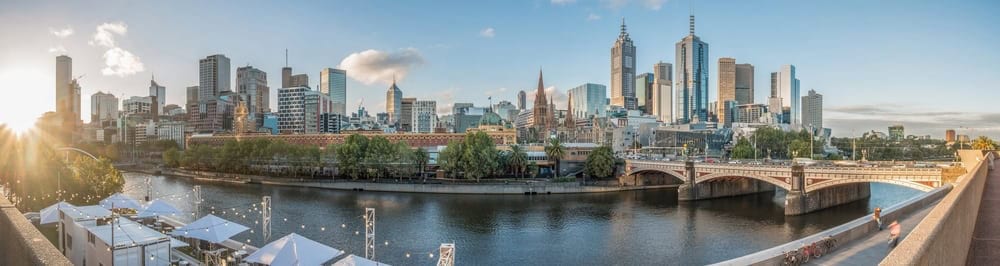
Quick Setup Overview
- Camera: Sony a7R V — Full-frame (36×24mm), 61MP BSI sensor, ~15-stop DR at ISO 100, native ISO 100–32,000 (expandable 50–102,400).
- Lens: AstrHori 12mm f/2.8 Fisheye — diagonal fisheye, approx. 180° diagonal FOV; best edge-to-edge sharpness at f/5.6–f/8; moderate CA at edges.
- Estimated shots & overlap: 6 around (60° steps) + 1 zenith + 1 nadir with ~30% overlap; advanced users can attempt 4 around + zenith + nadir outdoors with clear sky, but 6+2 is safer for interiors.
- Difficulty: Intermediate — fewer shots than rectilinear lenses, but requires precise nodal alignment and thoughtful exposure control.
Planning & On-Site Preparation
Evaluate Shooting Environment
Start by scanning the scene for flare sources, reflective surfaces (glass, polished floors), moving elements (people, vehicles, foliage), and vibration risks (bridges, rooftops in wind). If shooting through glass, press the hood gently against it and keep at least a few centimeters from internal lights to reduce internal reflections. For interiors, note dynamic range: windows can be 5–10 stops brighter than interior walls, so HDR bracketing is often necessary.
Match Gear to Scene Goals
The a7R V’s dynamic range and 14-bit RAW depth help recover window highlights and interior shadows when bracketing. ISO performance is strong: ISO 100–400 delivers pristine files; ISO 800–1600 remains very usable with careful noise reduction; ISO 3200 can work for night scenes on a tripod. The AstrHori 12mm fisheye covers large angles with fewer frames, saving time in wind or during events, but embrace the fisheye look and correct it in stitching software. For editorial and real estate work, the fisheye’s speed advantage often outweighs the distortion because PTGui or Hugin will remap it.
Pre-shoot Checklist
- Power & storage: fully charged batteries; high-speed UHS-II or CFexpress Type A cards; carry spares.
- Optics: clean lens front element; carry microfiber cloth; check sensor for dust before sky-heavy shoots.
- Support: level tripod, calibrated panoramic head/rail; quick check nodal alignment on-site.
- Safety: tether gear on rooftops/poles; monitor wind; avoid traffic edges; use a spotter when elevated.
- Workflow: shoot an extra safety round; consider a bracketed pass for insurance; log settings for each location.
Essential Gear & Setup
Core Gear
- Panoramic head: lets you align the lens’s entrance pupil (nodal point) over the rotation axis to eliminate parallax. This is critical for clean stitches, especially indoors with close objects.
- Stable tripod with leveling base: a leveling base speeds setup; level first, then rotate the pano head horizontally for even overlap.
- Remote trigger or Imaging Edge Mobile app: prevents vibration and helps maintain consistent timing between frames.
Optional Add-ons
- Pole or car mount: for elevated or moving shots. Use safety tethers and be conservative with speed and wind; vibrations can ruin overlap and sharpness.
- Lighting aids: small LED panels for dark corners of interiors; avoid mixed color temps or gel to match ambient.
- Weather gear: rain cover, microfiber towels, lens hood to reduce flare; sandbag the tripod in wind.
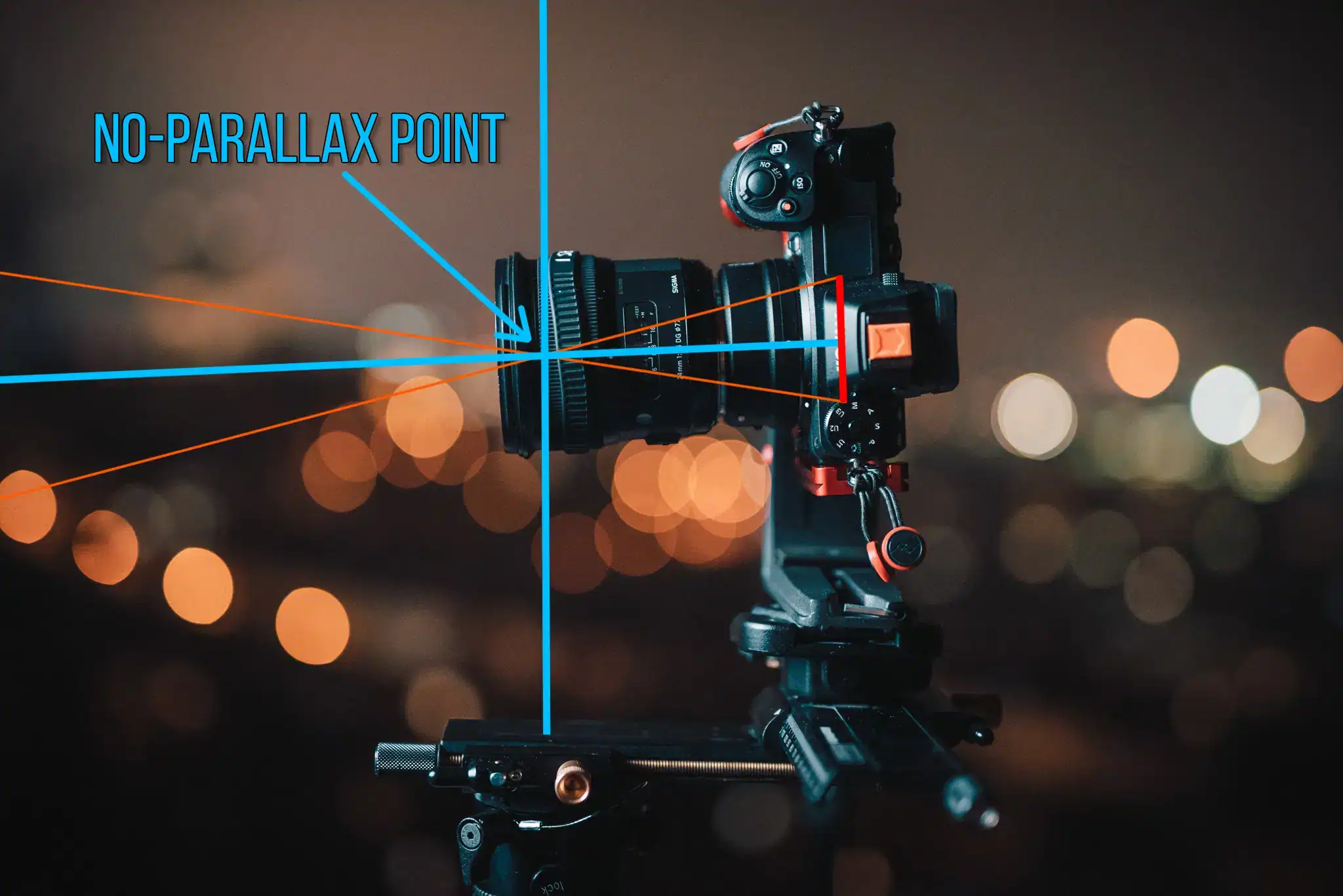
For a deeper primer on panoramic heads and why nodal alignment matters, see this panoramic head tutorial from 360 Rumors. Panoramic head basics and setup
Step-by-Step Shooting Guide
Standard Static Scenes
- Level and lock: Set the tripod on firm ground. Level using the tripod bubble or leveling base; then ensure the pano head’s horizontal rail is also level.
- Align the nodal point: With the AstrHori 12mm, a practical starting point is placing the entrance pupil roughly 55–65 mm in front of the camera’s sensor plane mark (Φ symbol on the body). Fine-tune by aligning two vertical objects (one near, one far) and rotating the camera—adjust the fore–aft rail until there’s no relative shift.
- Switch to manual settings:
- Mode M: set aperture f/5.6–f/8 for edge sharpness; choose shutter speed for correct exposure; ISO 100–200 for daylight, 400–800 indoors.
- White balance: lock to Daylight (outdoors) or a fixed Kelvin value indoors to avoid stitching color shifts.
- Focus: manual focus at or near hyperfocal. At 12mm and f/8, hyperfocal is ~0.6–0.7 m, giving near-to-infinity sharpness.
- Stabilization: turn IBIS off on tripod; use a 2s self-timer or remote.
- Capture sequence:
- 6 shots around at 60° increments with ~30% overlap. Keep the lens exactly level for the main ring.
- Add 1 zenith shot by tilting up ~60–75° (or rotate the head’s vertical arm).
- Add 1 nadir shot for tripod removal; you can offset the camera or shoot a handheld patch.
- Keep a rhythm: Rotate, settle vibrations, shoot. Note frame numbers or voice memo so you know where each pano begins/ends.
HDR / High Dynamic Range Interiors
- Bracket for windows: Use AEB with 3–5 frames at ±2 EV (or a 9-frame set at smaller steps if needed). Keep aperture fixed and let shutter vary.
- Lock color: Use a fixed Kelvin WB (e.g., 4000–4500K for mixed interiors) to prevent bracket-to-bracket shifts.
- Sequence discipline: Shoot each angle’s entire bracket set before rotating. Consider using continuous bracketing with a remote for speed.
- Noise control: ISO 100–400 is best for interiors when bracketing; use longer shutter times on tripod rather than pushing ISO.
Low-Light / Night Scenes
- Exposure strategy: f/4–f/5.6, shutter 1–8s on tripod, ISO 100–800. The a7R V files tolerate ISO 1600 when needed, but prioritize longer shutter over ISO for cleaner stitches.
- Stability: IBIS off; use remote trigger; avoid fully electronic shutter under LED lighting to reduce banding—try electronic first curtain.
- Long exposure NR: generally off if you plan to stitch many frames; handle hot pixels in post.
Crowded Events
- Two-pass method: first pass for structure, second pass waiting for gaps. Mark the pano start so you can align in post.
- Overlap generosity: increase overlap to 35–40% to give your stitcher more options for moving subjects.
- Post masking: plan to mask people in PTGui/Hugin using layer masks and exposure fusion to minimize ghosts.
Special Setups (Pole / Car / Drone)
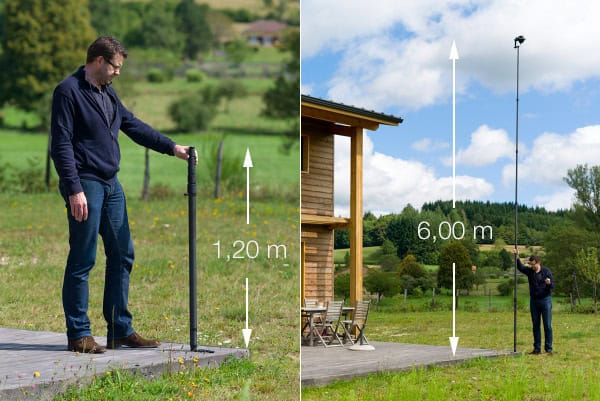
- Safety first: on poles, tether the rig, wear a helmet if operating near crowds, and avoid high winds. On cars, mount low and secure; keep speeds minimal to reduce vibration.
- Orientation: shoot a minimal set (e.g., 4–6 around) to reduce time aloft. Use higher shutter speeds (1/200–1/500) and ISO 400–800 to freeze vibration.
- Stitch margin: use generous overlap; expect to fix small parallax issues from slight deflection.
Recommended Settings & Pro Tips
Exposure & Focus
| Scenario | Aperture | Shutter | ISO | Notes |
|---|---|---|---|---|
| Daylight outdoor | f/8–f/11 | 1/100–1/250 | 100–200 | Lock WB to Daylight; avoid clipping highlights |
| Low light/night | f/4–f/5.6 | 1/4–2s (tripod) | 400–800 | Remote trigger; IBIS off; EFCS on |
| Interior HDR | f/8 | Bracket ±2 EV | 100–400 | Expose for midtones; fuse/merge later |
| Action / moving subjects | f/5.6–f/8 | 1/200+ | 400–800 | Freeze motion; shoot two passes |
Critical Tips
- Manual focus at hyperfocal: at 12mm and f/8, set around 0.6–0.7 m to keep everything sharp from near foreground to infinity.
- Nodal point calibration: mark your rail once you find the correct fore–aft position for the AstrHori 12mm; keep a note in your phone for fast repeatability.
- White balance lock: prevents ugly color seams across frames and brackets; use a preset or Kelvin, not Auto.
- RAW over JPEG: the a7R V’s 14-bit RAW files provide maximum latitude for HDR, noise reduction, and color correction.
- IBIS behavior: switch IBIS off on a tripod to avoid sensor micro-corrections during long exposures that can soften fine detail.
- Shutter mode: use Electronic First Curtain Shutter to reduce vibration; avoid full electronic under artificial lighting due to potential banding.
Stitching & Post-Processing
Software Workflow
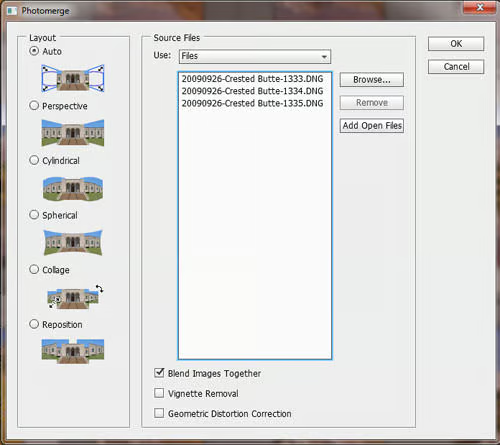
Import RAW files into Lightroom or Capture One for basic exposure and color consistency, then stitch with PTGui or Hugin. With a diagonal fisheye, select “Full-frame fisheye” lens type in your stitcher. Because fisheyes need fewer images, control points are often robust, but edges can be soft—keep overlap at 25–35% as an industry baseline. Rectilinear lenses demand more frames and can be less distorted at the edges but take longer to shoot. PTGui remains a top choice for speed and masking, while Hugin is a powerful open-source alternative. For a thoughtful take on PTGui, see this Fstoppers review. Why PTGui excels for complex panoramas
Cleanup & Enhancement
- Nadir patch: shoot a handheld nadir or use content-aware fill/AI tools to remove the tripod. Clone stamp for small repeats.
- Color and noise: match color across frames; apply light luminance NR at ISO 800–1600; beware over-smoothing textures.
- Leveling: ensure pitch/roll/yaw are correct; set horizon via vertical lines or auto horizon tools.
- HDR fusion: if bracketed, merge per viewpoint first (exposure fusion or HDR merge) before stitching, or use PTGui’s built-in HDR fusion.
- Export: Equirectangular 2:1 ratio (e.g., 16000×8000 px) for VR platforms; save a master TIFF and a web-ready JPEG.
For a broader overview of DSLR/mirrorless 360 pipelines, Meta’s Creator docs offer sound guidance from capture to stitch. DSLR/mirrorless 360 capture & stitching fundamentals
Useful Tools & Resources
Software
- PTGui panorama stitching
- Hugin open source stitcher
- Lightroom / Photoshop for RAW and cleanup
- AI tripod/nadir removal utilities
Hardware
- Panoramic heads: Nodal Ninja, Leofoto
- Carbon fiber tripods with leveling bases
- Wireless remotes or app control
- Pole extensions / car suction mounts with tethers
Disclaimer: product and software names are for reference; always check official documentation for the latest features and best practices.
For more discussion of panoramic techniques and pitfalls, this Q&A thread is a helpful supplement. Techniques to take 360° panoramas
Common Mistakes & How to Avoid Them
- Parallax error: always align the entrance pupil; verify with near/far object test before you start the sequence.
- Exposure flicker: shoot in full Manual mode and lock WB; avoid Auto ISO or Auto WB for multi-frame sets.
- Tripod shadows and footprints: capture a dedicated nadir; plan your own shadow position relative to the sun.
- Ghosting in crowds: shoot multiple passes; increase overlap; use masks in PTGui/Hugin to control foreground subjects.
- Night noise and blur: favor longer exposures at lower ISO on tripod; use remote/burst to avoid shake; IBIS off.
- Lens flare: shade the front element with your hand or hood; avoid facing the sun unless intentionally backlit.
Real-World Scenarios with This Setup
Indoor Real Estate (Bright Windows)
Mount the a7R V on a leveled pano head, set f/8, ISO 100–200, and shoot 5-frame brackets at ±2 EV for each of the 6 around + zenith + nadir frames. The a7R V’s dynamic range preserves highlights; merging to HDR per angle yields smooth tonality. Keep WB fixed (4000–5000K). Mask out moving drapes or ceiling fans if needed.
Outdoor Sunset
Shoot a single exposure set per angle at ISO 100, f/8, and vary shutter for proper midtone exposure. Consider a second darker set to preserve the sun disk and blend later. Watch for flare; position the sun near a seam where overlap helps cover ghosts during stitching.
Event Crowds
Increase overlap to ~40% to give the stitcher more leeway. Use 1/200s at f/5.6, ISO 400–800. Shoot one fast pass for structure, then another where you time gaps in foot traffic for cleaner seams. Mask conflicted areas in PTGui’s panorama editor.
Rooftop or Pole
Rig the pole carefully with clamps and tethers. Use a shorter sequence (4–6 around + zenith) to minimize time in the air. Increase shutter speed (1/250–1/500) to counter sway; ISO 800 is acceptable on the a7R V for this. Expect minor parallax; it’s normal when the rig is not perfectly steady.
Safety, Data Integrity & Backup Workflow
On rooftops or near traffic, secure your tripod and use a safety tether. For car mounts, use redundant suction points and a lanyard. In wind, lower your center column and add a sandbag. Protect your files: write RAW+RAW to dual cards or back up to a phone/SSD between locations. Consider a second capture pass whenever conditions are changing quickly—especially for commercial jobs where redundancy saves reshoots.
For a complete step-by-step guide to setting up a panoramic head and shooting high-end 360 photographs, the Meta Creator learning path is concise and practical. Set up a panoramic head for perfect high-end 360 photos
Frequently Asked Questions
- Can I shoot handheld panoramas with the Sony a7R V?
Yes for simple panos, but for full 360×180 with nearby objects, handheld introduces parallax that’s hard to fix—even with the a7R V’s excellent resolution. Use a leveled tripod and pano head for reliable results. Handheld works in open landscapes if you keep the lens rotating around your body pivot and use generous overlap.
- Is the AstrHori 12mm f/2.8 wide enough for single-row 360?
Usually yes: 6 shots around at 60° plus zenith and nadir is dependable. In open skies, you can attempt 4 around + zenith + nadir, but watch for small zenith gaps. For interiors, stick with 6 around for clean seams and coverage.
- Do I need HDR for interiors with bright windows?
Often yes. Bracket ±2 EV with 3–5 frames to balance window highlights and interior shadows. The a7R V’s DR helps, but true window retention generally requires bracketing and careful tone mapping or exposure fusion.
- How do I avoid parallax issues with this lens?
Calibrate the entrance pupil using a fore–aft rail on a pano head. For the AstrHori 12mm, start ~55–65 mm in front of the sensor plane and fine-tune by checking foreground/background alignment during rotation. Mark the rail for quick repeatability.
- What ISO range is safe on the a7R V for low light?
ISO 100–400 is pristine; ISO 800–1600 remains very usable with light noise reduction; ISO 3200 can work at night if you need faster shutter but expect to denoise. On tripod, prefer longer exposures over higher ISO.