Why This Camera & Lens Are Great for Panoramas
When people search how to shoot panorama with Sony A7R IV & Canon RF 14-35mm f/4L IS USM, they’re really after two things: extraordinary detail and reliable coverage. The Sony A7R IV delivers a class-leading 61MP full-frame sensor with fine 3.76 μm pixels, excellent base-ISO dynamic range (~14.5 stops), and 14-bit RAW for robust tonal latitude. The Canon RF 14–35mm f/4L IS USM is a sharp, rectilinear ultra-wide with constant f/4, excellent weather sealing, and a highly useful 14mm field of view for efficient multi-row 360° capture.
Important compatibility note: The Canon RF lens cannot be practically adapted to the Sony E-mount A7R IV. The RF’s flange distance and fully electronic aperture/focus control mean there’s no reliable RF-to-E adapter with full functionality as of this writing. If your goal is specifically to use this RF lens, pair it with a Canon R-series body. If you want to keep the A7R IV body, choose an equivalent Sony E-mount ultra-wide (e.g., FE 12–24mm F4 G, FE 16–35mm F4, or a 14mm prime). The techniques below apply directly to the A7R IV body and to the 14–35mm focal range—simply substitute the compatible E-mount lens if you’re staying with Sony.
Why this combo concept works: a 61MP sensor gives you the possibility of 150–250MP+ final equirectangular panoramas (depending on shot count), while a 14–35mm rectilinear zoom lets you choose between efficient single-row sweeps and ultra-detailed multi-row gigapixel captures. The trade-offs are classic: rectilinear ultra-wide lenses reduce shot count but demand careful nodal alignment to avoid parallax, and the corners typically sharpen up when you stop down to f/8–f/11.
Quick Setup Overview
- Camera: Sony A7R IV — Full-frame (35.7 × 23.8 mm), 61MP (9504 × 6336), ~3.76 μm pixel pitch, ~14.5-stop DR at base ISO, 14-bit RAW, IBIS rated up to 5.5 stops.
- Lens: Canon RF 14–35mm f/4L IS USM — Rectilinear ultra-wide zoom, constant f/4, weather-sealed, optical IS, strong barrel distortion at 14mm (software-correctable), best corner sharpness at f/8–f/11.
- Estimated shots & overlap (full frame, rectilinear):
- At 14mm:
- Efficient spherical: 8 around at 0° + 6 at +45° + 6 at −45° + zenith + nadir (≈22) for ironclad coverage in complex scenes.
- Lean spherical: 10 around at 0° + zenith + nadir (≈12) in open spaces (watch top/bottom coverage).
- At 24mm: two rows of 10 (±30°) + zenith + nadir (≈22).
- At 35mm (gigapixel intent): three rows of 12 (−45°, 0°, +45°) + zenith + nadir (≈38) for extremely high resolution.
- At 14mm:
- Difficulty: Intermediate (requires nodal-point calibration and methodical workflow).
Planning & On-Site Preparation
Evaluate Shooting Environment
Scan the scene for moving subjects, reflective surfaces, and potential wind vibration. For glass viewpoints, keep the front element as close as safely possible to the glass (1–3 cm) and use a black cloth around the lens hood to prevent reflections. In interiors with mixed lighting, note color temperatures—lock white balance to one setting to avoid patchwork color during stitching.
Match Gear to Scene Goals
If you’re committed to the Sony A7R IV, pair it with an E-mount ultra-wide to mimic 14–35mm coverage. The A7R IV’s base ISO (100) is clean; ISO 100–800 is the practical “sweet range” for 360° work. With rectilinear lenses at 14mm, you can keep shot counts reasonable while still capturing a full sphere, though you’ll need top and bottom coverage. Stop down to f/8–f/11 for corner sharpness and consistent stitching control points.
If you’re using the Canon RF 14–35mm f/4L IS USM, mount it to a Canon R-body. The lens’s optical IS is helpful handheld but switch IS off on a tripod to avoid micro-oscillation during long exposures.
Pre-shoot Checklist
- Power & storage: fully charged batteries, ample fast cards, dual-slot backup if available.
- Optics: clean lens and sensor; pack a blower and microfiber cloth.
- Support: level the tripod; confirm panoramic head settings for this lens’s nodal point.
- Safety: secure strap/tether on rooftops, monitor wind; for car mounts, use safety cables and verify legal/traffic conditions.
- Workflow insurance: shoot an extra safety round, and consider a second pass for crowd-free plates.
Essential Gear & Setup
Core Gear
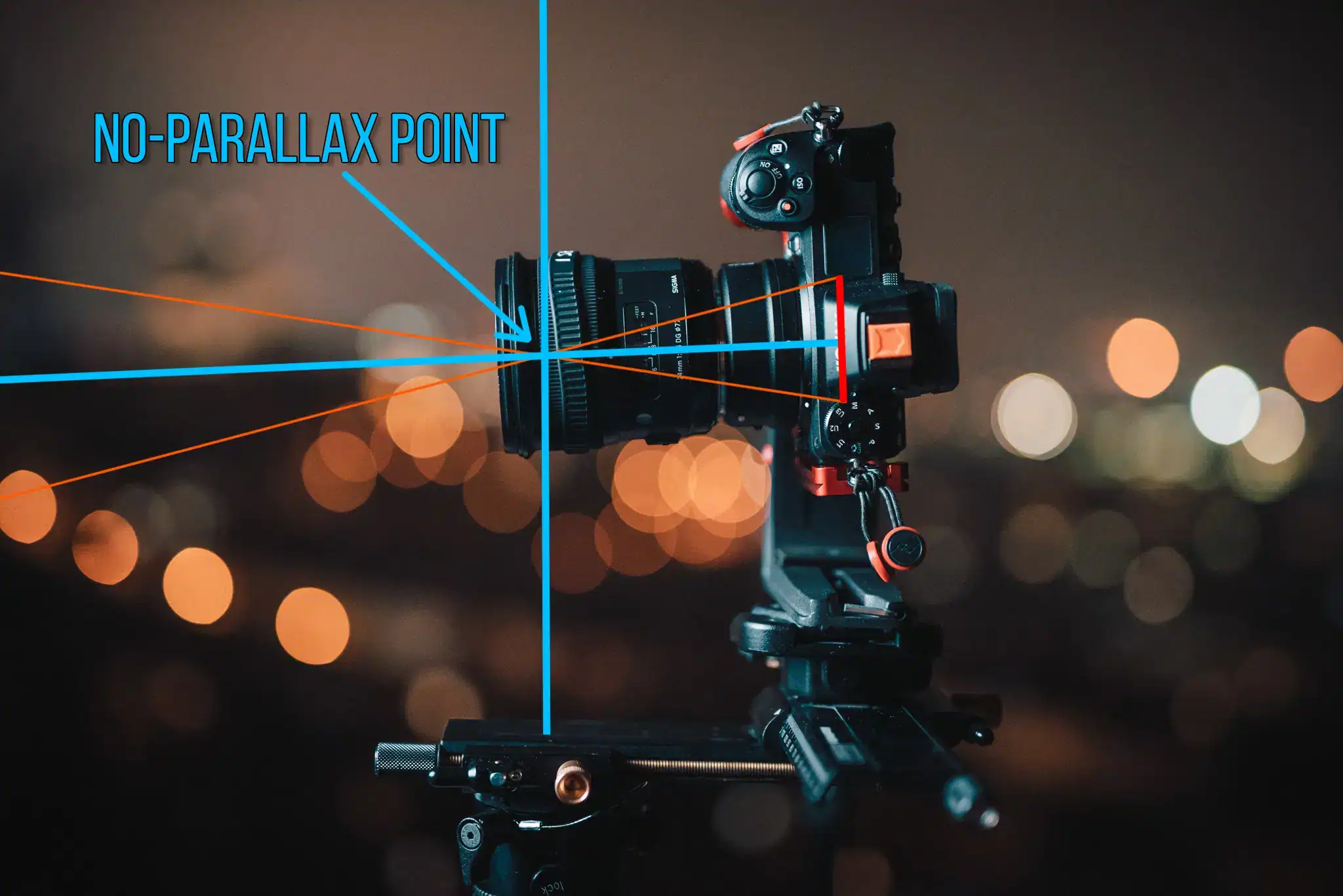
- Panoramic head with fore-aft and left-right adjustments: lets you align the no-parallax (nodal) point so foreground and background don’t shift relative to each other as you rotate.
- Stable tripod with leveling base: a 75mm half-ball or dedicated leveling base speeds setup and helps maintain consistent pitch across frames.
- Remote trigger or camera app: minimizes vibration; set a 2s delay if needed.
Optional Add-ons
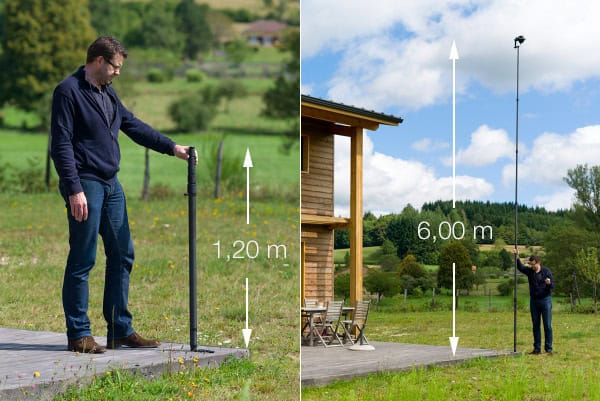
- Pole or car mount: prioritize safety. Use guy lines on poles in wind; add safety cables for car rigs and drive slowly on smooth roads.
- Lighting aids: small LED panels or bounced flash for dark interiors (keep WB consistent).
- Weather protection: rain covers, lens hood, gaffer tape for glass reflections.
For a deeper primer on panoramic heads and alignment, see this panoramic head tutorial. Panoramic head setup guide
Video: Solid Pano Technique
Short walkthroughs can help visualize the rotation process and overlap discipline.
Step-by-Step Shooting Guide
Standard Static Scenes
- Level the tripod and align the nodal point: on your panoramic head, adjust fore-aft until near/far objects stay aligned as you pan left/right. Mark this position for 14mm and for 24/35mm so you can return quickly.
- Manual exposure and locked white balance: set M mode; choose a single Kelvin (e.g., 5600K daylight outdoors, 3200–4200K indoors) to avoid color shifts that complicate stitching.
- Capture sequence with consistent overlap:
- At 14mm: 10 shots around at 0° pitch with ~25% overlap, then one zenith, one nadir. In dense interiors or near objects, add an extra top/bottom row (+45° and −45°) to reduce stitching strain.
- At 24–35mm: use two or three rows with ~25–30% overlap horizontally and vertically.
- Nadir (ground) shot: tilt down and shoot the tripod area. You’ll patch this later or use a handheld offset shot to make cleanup easier.
HDR / High Dynamic Range Interiors
- Bracket ±2 EV (3 or 5 frames): balance bright windows and shadowed interiors. Keep shutter speed variable; lock aperture and ISO.
- Lock WB and turn off auto lighting optimizer-type features. Merge HDR per angle before stitching in PTGui/Hugin, or use exposure fusion inside your stitching app.
Low-Light / Night Scenes
- Use a tripod, turn off IBIS/IS on tripod, and enable EFCS (electronic first curtain) on the A7R IV to minimize vibration. Avoid full electronic shutter under flickering artificial light.
- Typical starting point: f/4–f/5.6, ISO 400–800, shutter 1/10–1/30s. Increase exposure time rather than ISO whenever possible to preserve A7R IV dynamic range.
Crowded Events
- Two-pass method: first pass for complete coverage; second pass to capture gaps when people clear a sector. Keep the tripod fixed and rotate only the head so geometry aligns.
- Blend in post with masks to remove ghosts and moving subjects.
Special Setups (Pole / Car / Rooftop)
- Pole: guy lines and a safety tether. Use faster shutter speeds (1/250s+) to combat sway. Rotate slower and shoot more overlap (30–40%) for stitching robustness.
- Car mount: use vibration-damped suction mounts and safety lines. Park legally in a safe zone; avoid traffic hazards. Consider a shorter sequence with more overlap to counter micro-vibration.
- Rooftop: sandbag the tripod and stay away from edges. Wind gusts can topple light carbon fiber legs—stability comes first.
Mini Case Studies
Indoor Real Estate
At 14–16mm, shoot two rows (±30°) plus zenith/nadir. Bracket ±2EV for windows. Lock WB around 4000K for mixed LED/tungsten and correct globally later.
Outdoor Sunset
Manual exposure based on the brightest sky region, then add a shadow-lifting bracket if needed. Work quickly to avoid moving light gradients; consider 8–10 frames around at 14mm for speed.
Event Crowds
Two-pass technique with masks in post. Faster shutter (1/200s+), f/5.6–f/8, ISO 400–800. Expect to hand-paint some areas during stitching.
Rooftop/Pole
Use wider overlap and lower rows count to reduce time aloft. Avoid long exposures; shoot at 14–18mm to maximize coverage per shot.
Recommended Settings & Pro Tips
Exposure & Focus
| Scenario | Aperture | Shutter | ISO | Notes |
|---|---|---|---|---|
| Daylight outdoor | f/8–f/11 | 1/100–1/250 | 100–200 | Lock WB (daylight 5200–5600K); IBIS/IS off on tripod |
| Low light/night | f/4–f/5.6 | 1/10–1/60 | 400–800 | Tripod & remote; EFCS on; avoid high ISO to preserve DR |
| Interior HDR | f/8 | Bracket ±2 EV | 100–400 | Merge per angle, then stitch for clean edges |
| Action / moving subjects | f/5.6–f/8 | 1/200+ | 400–800 | Freeze motion; consider two-pass crowd cleanup |
Critical Tips
- Focus: set manual focus near the hyperfocal distance. At 14mm and f/8 on full frame, hyperfocal is roughly 0.8 m; focusing ~0.8–1.0 m keeps most of the scene acceptably sharp.
- Nodal calibration: aim the lens at a near object and a distant object in the same line. Pan left/right while adjusting the rail fore-aft until the near object doesn’t “slide” against the far object. Mark that position for 14, 24, and 35mm on your rail.
- White balance lock: choose a Kelvin value or custom WB and stick to it through the entire sequence. Mixed WB across frames causes color seams during stitching.
- RAW over JPEG: 14-bit RAW from the A7R IV preserves highlights and shadow detail, essential for HDR panoramas and tricky lighting.
- Stabilization: turn off IBIS (camera) and IS (lens) on a tripod to prevent micro-blur from stabilization drift.
- Timing features: disable long exposure NR (dark-frame subtraction) during capture—it doubles exposure time and can break cadence across a row. Apply noise reduction in post.
Stitching & Post-Processing
Software Workflow
Import RAWs, perform global white balance and lens corrections (mind that some ultra-wide profiles can over-correct—check edges), HDR-merge each viewpoint if bracketing, then stitch in a dedicated panoramic tool. PTGui is a gold standard for spherical work with precise control points and masking; Hugin is a strong open-source alternative. With rectilinear ultra-wide lenses, maintain 20–30% overlap and build robust control points across the frame (not just center). Fisheye lenses require fewer shots but need defishing; rectilinear requires more shots but delivers natural straight lines. Why many pros rely on PTGui
For publishing to VR players, export an equirectangular 2:1 image (e.g., 16000 × 8000 px or higher). With a 61MP sensor at 14–24mm and multi-row capture, final stitched sizes commonly land between 150MP and 300MP. For background on spherical resolution and coverage, see this technical reference. Spherical resolution fundamentals
Cleanup & Enhancement
- Tripod/nadir patch: shoot a handheld offset nadir or use a logo patch; most pano tools allow patching directly, or clone in Photoshop.
- Color and noise: apply global color correction to unify tone; use noise reduction on shadow brackets from HDR sequences.
- Geometry: level horizon, correct roll/pitch/yaw, and verify straight lines if the space demands architectural accuracy.
- Export: save master TIFF (16-bit) and delivery JPEGs; for virtual-tour platforms export equirectangular JPEGs at the target platform max.
For end-to-end DSLR/mirrorless 360 workflow, this guide from Meta’s Creator resources is concise and practical. DSLR/mirrorless 360 photo workflow
Useful Tools & Resources
Software
- PTGui panorama stitching
- Hugin (open source)
- Lightroom / Photoshop for RAW and retouching
- AI-based tripod/nadir removal tools
Hardware
- Panoramic heads (Nodal Ninja, Leofoto, Really Right Stuff)
- Carbon fiber tripods with leveling bases
- Wireless remote shutters
- Pole extensions / car mounts with safety tethers
Disclaimer: product names are for research convenience; verify current specs and compatibility on official sites.
For more panoramic shooting FAQs and gear considerations around virtual tours, this overview is helpful. DSLR/virtual tour gear overview
Common Mistakes & How to Avoid Them
- Parallax error: misaligned nodal point causes wavy seams—calibrate and mark your rail positions for each focal length.
- Exposure flicker: auto exposure or WB between frames leads to visible bands—use manual mode and locked WB.
- Tripod shadows and missing nadir: plan a nadir shot or patch with a handheld offset to cleanly remove the tripod.
- Ghosting from movement: shoot two passes and mask in post; increase shutter speed to freeze motion where feasible.
- High ISO noise at night: keep ISO low (100–800) and lengthen shutter on a sturdy tripod; apply noise reduction in post.
Frequently Asked Questions
- Can I physically mount the Canon RF 14–35mm on the Sony A7R IV?
Practically, no. There is no robust RF-to-E adapter with full electronic control. Use a Canon R-series body with the RF lens, or pair the A7R IV with a native E-mount ultra-wide (e.g., 12–24mm, 14mm prime, or 16–35mm).
- Is the 14–35mm wide enough for a single-row 360?
At 14mm on full frame, one row around the horizon won’t fully cover zenith and nadir. You can do 10 around at 0° plus a separate zenith and nadir (≈12 shots) in open spaces. For interiors, add ±45° rows for more reliable top/bottom coverage.
- What ISO range is safe on the A7R IV for low-light panoramas?
ISO 100–800 is the sweet spot. ISO 1600 is usable, but dynamic range drops. Favor longer shutter times on a tripod over pushing ISO.
- How do I avoid parallax issues with an ultra-wide?
Use a panoramic head and align the entrance pupil. Adjust the fore-aft position until near and far objects don’t shift while panning. Mark positions for 14/24/35mm so you can repeat quickly on future shoots.
- Can I shoot handheld panoramas with the A7R IV?
Yes, for partial panos and scenes without close foreground. For full 360° with nearby objects, a pano head on a tripod is strongly recommended to prevent parallax and ensure a clean stitch.
- Can I save a pano setup as a custom mode on the A7R IV?
Yes. Use the A7R IV’s Memory Recall (1/2/3 on the mode dial). Store manual exposure, WB, MF, and drive mode. This speeds up consistent pano setup in the field.
- Do I need HDR for interiors with bright windows?
Often yes. Bracketing ±2 EV per view preserves both highlight detail and shadow interiors. Merge the brackets per angle before stitching for best results.
- What tripod head should I get for this setup?
Choose a two-axis panoramic head with precise rails (e.g., Nodal Ninja, Leofoto PG series, RRS). Make sure it supports the weight of your body+lens and has repeatable scales for nodal positions.
Safety, Limitations, and Honest Advice
Lens/body compatibility matters more than any single setting. If you cannot mount the RF lens on the Sony body, do not force adapters; you may damage mounts and you won’t get aperture control. In wind, lower your tripod, add weight, or postpone the shoot—no panorama is worth a toppled rig. On rooftops and roadside shoots, safety lines and a spotter are non-negotiable. Always keep a duplicate card set or shoot a second sequence to safeguard your project against card failure or stitching surprises.
If you’re new to 360°, practice simple two-row sequences at 14–18mm outdoors first, then progress to interiors and high-detail multi-row captures. For further reading on pano fundamentals and community-tested techniques, see these Q&A resources. Community techniques for 360 panoramas