Why This Camera & Lens Are Great for Panoramas
If you want to know how to shoot panorama with Sony A7R III & Sigma 14-24mm f/2.8 DG DN Art, you’re pairing a proven high-resolution full-frame body with a class-leading rectilinear ultra‑wide zoom. The Sony A7R III’s 42.4MP backside-illuminated full-frame sensor (35.9×24mm, ~4.5µm pixel pitch) delivers excellent dynamic range at base ISO (around 15 stops), clean low noise through ISO 800–1600, and 14-bit RAW for smooth tonal gradients—key ingredients for seamless panoramic stitching. The body also offers dual card slots for in-camera backup, reliable battery life (NP-FZ100), and 5-axis IBIS (turn it off on tripod).
The Sigma 14-24mm f/2.8 DG DN Art (Sony E-mount) is a sharp, rectilinear ultra-wide with excellent edge-to-edge performance by f/5.6–f/8, low coma/astigmatism, and well-controlled CA. At 14mm you get a diagonal FOV of ~114° (HFOV ~104°, VFOV ~81°), perfect for multi-row panoramas and interiors without the extreme distortion of fisheye lenses. Weather sealing, a constant f/2.8 aperture, and internal zooming help in the field. The bulbous front element means no front screw-in filters; if needed, the lens supports rear gel filters, but for 360 photos you’ll most often shoot filter-free.
Quick Setup Overview
- Camera: Sony A7R III — Full Frame, 42.4MP BSI CMOS, 14-bit RAW, dual SD slots (slot 1 UHS-II), 5-axis IBIS.
- Lens: Sigma 14-24mm f/2.8 DG DN Art — rectilinear ultra-wide zoom; very sharp by f/5.6–f/8; good control of CA/flare; bulbous front, weather-sealed.
- Estimated shots & overlap (tested starting points, portrait orientation on pano head, ~25–30% overlap):
- At 14mm for a full 360×180: 3 rows (about +45°, 0°, −45°) × 6–8 around per row + 2–3 zenith + 2–3 nadir. Typical robust set: 3×8 + 2Z + 2N ≈ 28–30 frames.
- At 24mm for a full 360×180: 3–4 rows × 8 around + 3 zenith + 3 nadir ≈ 35–40+ frames.
- For single-row cylindrical panos (non-360): 14–18mm, 6–10 shots around often suffice (scene-dependent).
- Difficulty: Intermediate (rectilinear multi-row requires careful nodal calibration and overlap discipline).
Planning & On-Site Preparation
Evaluate Shooting Environment
Look for shifting light, moving subjects, and reflective surfaces. Interiors with glass, mirrors, and polished floors can amplify parallax and ghosting. Keep a clean lens and shoot slightly off-axis from strong light sources to reduce flare. If shooting through glass, get as close as possible (1–2 cm) and use a hood/cloth to block reflections.
Match Gear to Scene Goals
The Sony A7R III’s wide dynamic range at ISO 100–200 is ideal for sunset gradients and interior HDR. Indoors, ISO 400–800 remains clean; ISO 1600 is usable with noise reduction. Using the Sigma at 14–18mm keeps frame count manageable while preserving straight lines for real estate and architecture. Unlike fisheye lenses (fewer shots, more distortion), the rectilinear Sigma yields more natural lines and less edge warping, at the cost of more frames.
Pre-shoot Checklist
- Power & storage: Charge NP-FZ100, carry a spare, set dual-card recording (slot 1+2) for redundancy.
- Clean optics: Front element and sensor dust will multiply across the pano. Carry a blower and cloth.
- Tripod leveling: Use a leveling base and a panoramic head; verify nodal alignment for the chosen focal length.
- Safety: On rooftops or poles, tether everything; avoid high winds; never shoot over crowds without secondary safety lines.
- Backup workflow: After your main pass, shoot a “safety pass” with slightly wider overlap. Offload to an SSD before leaving.
Essential Gear & Setup
Core Gear
- Panoramic head: Enables rotation around the lens’s entrance pupil (nodal point) to eliminate parallax. Calibrate at the focal length you’ll use (14mm vs 24mm differ!).
- Leveling base + stable tripod: Fast, precise leveling saves time and reduces stitching errors.
- Remote trigger or app (Sony Imaging Edge) and 2-sec self-timer: Prevents vibrations and micro-blur.
Optional Add-ons
- Pole/car mount: Great for elevated or moving shots; use safety tethers, torque-rated clamps, and slow, smooth rotations to combat wind/vibration.
- Continuous LED panels for dim interiors; avoid mixing many color temperatures.
- Rain covers and lens hood/flag for drizzle or low-angle sun to reduce flare on the bulbous front element.
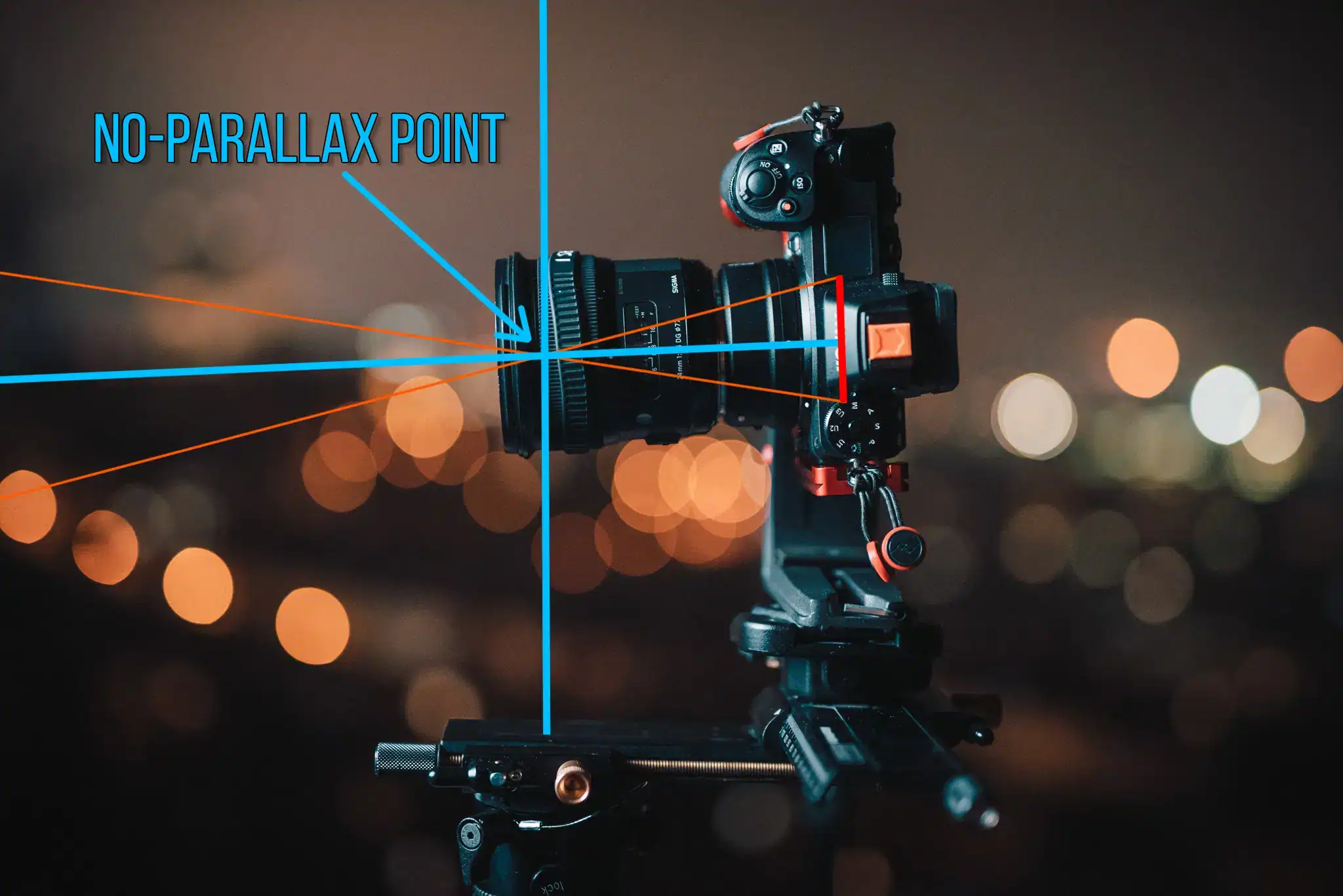
For deeper reading on panoramic heads and no‑parallax alignment, see this panoramic head tutorial by 360Rumors. Panoramic head basics and setup
Step-by-Step Shooting Guide
Standard Static Scenes
- Level and lock: Level the tripod with a leveling base. Mount the panoramic head, clamp the camera in portrait orientation to maximize vertical coverage.
- Nodal alignment: Start with the lens at your chosen focal length (e.g., 14mm). A practical starting estimate for the Sigma 14-24 DN Art is that the entrance pupil sits roughly 70–80 mm forward of the sensor mark at 14mm. Use two vertical test objects (near/far) and rotate—adjust the rail until the objects don’t shift relative to each other.
- Manual exposure and WB: Switch to M mode, set a consistent exposure (e.g., f/8, 1/125, ISO 100–200 outdoors). Lock white balance (Daylight/Kelvin) so colors don’t drift between frames.
- Focus: Manual focus slightly beyond the hyperfocal. At 14mm, f/8 hyperfocal is around 0.8–1.0 m; at f/11, ~0.6–0.8 m. Use focus magnification and peaking if needed.
- IBIS and shutter: Turn IBIS OFF on tripod. Use electronic first curtain shutter (EFCS) to reduce shutter shock. Avoid silent shutter under LED lighting (risk of banding).
- Capture sequence: For a full 360, shoot three rows (e.g., +45°, 0°, −45°) with 6–8 shots per row at 25–30% overlap. Add 2–3 zenith shots (tilt up) and 2–3 nadir shots (tilt down). Use click-stops on the head if available.
- Nadir frame for tripod removal: Take an extra nadir frame by offsetting the tripod or using a handheld nadir shot aligned over the same rotation point.
HDR / High Dynamic Range Interiors
- Bracketing: Enable AEB. The A7R III supports up to 9 frames; a solid starting point is 3–5 frames at ±2 EV to balance windows and interiors.
- Consistency: Lock WB and focus; keep aperture constant (f/8 is a sweet spot). Use a remote trigger to avoid shifting the setup between brackets.
- Workflow options: Either merge brackets per angle to 32‑bit (Lightroom) before stitching, or let PTGui do Exposure Fusion/HDR. Keep the same approach for all frames.
Low-Light / Night Scenes
- Exposure: Open to f/4–f/5.6, lengthen shutter as needed (1–10 s on tripod). Keep ISO in the 100–800 range for best quality; ISO 1600–3200 is usable with careful noise reduction.
- Stability: Use a sturdy tripod, IBIS off, remote trigger, and wind shielding. Enable long-exposure NR off in-camera if you plan to apply NR in post for faster capture.
- City lights: Expect flare with bright point sources; shade the lens if possible and capture an extra clean frame to clone in later if needed.
Crowded Events
- Two passes: First pass for complete coverage; second pass waiting for subject movement to clear key areas. You’ll mask between passes during stitching.
- Faster shutter: 1/200 s or faster at f/5.6–f/8, ISO 400–800. The A7R III’s detail lets you downsample slightly to hide residual ghosting.
Special Setups (Pole / Car / Drone)
- Pole: Keep total weight low. Tether the camera. Use higher shutter speeds (1/250–1/500 s) even in daylight to freeze sway. Rotate slowly.
- Car mount: Use vibration-damping mounts and safety cables. Avoid highways—choose controlled environments and obey local laws. Shoot at lower focal lengths (14–16mm) to reduce frame count.
- Drone: This combo is too heavy for consumer drones; consider dedicated gimbal/suspension systems or a different capture strategy.
Recommended Settings & Pro Tips
Exposure & Focus
| Scenario | Aperture | Shutter | ISO | Notes |
|---|---|---|---|---|
| Daylight outdoor | f/8–f/11 | 1/100–1/250 | 100–200 | Lock WB (Daylight/Kelvin); EFCS on; IBIS off (tripod) |
| Low light/night | f/4–f/5.6 | 1/30–10 s | 100–800 (1600–3200 if needed) | Remote trigger; beware of wind; NR in post |
| Interior HDR | f/8 | Bracket ±2 EV (3–5 frames) | 100–400 | Merge HDR consistently before or during stitching |
| Action / moving subjects | f/5.6–f/8 | 1/200+ | 400–800 | Two-pass method; mask in post to remove ghosts |
Critical Tips
- Manual focus at (or just beyond) hyperfocal to keep everything sharp; avoid refocusing between frames.
- Nodal calibration: Mark the rail position for 14mm and 24mm on your panoramic head. Recheck if you change focal length or add filters.
- White balance lock: Prevents color shifts frame-to-frame that can complicate blending.
- RAW capture: Gives maximum latitude for HDR and color correction. Disable in-camera lens corrections for consistent RAW processing.
- Stabilization: Turn IBIS OFF on tripod. Use EFCS; avoid silent shutter under flickery LED lights to prevent banding.
- Diffraction: On the 42MP sensor, f/11 is fine; avoid f/16–f/22 unless you absolutely need deeper DOF.
Field-Proven Case Studies
Indoor Real Estate
Use 14–16mm at f/8, ISO 100–200. Shoot 3–5 bracketed exposures ±2 EV at each angle. Keep verticals upright by leveling meticulously. Stitch with lens profile corrections and apply subtle vertical/horizontal transforms to keep architecture natural.
Outdoor Sunset 360
Base ISO 100, f/8, shutter ~1/125 s for the first pass; then a second darker pass for the bright sky if needed. Blend manually or use exposure fusion to protect highlights while retaining shadow detail.
Event Crowds
Go to 18–20mm to reduce edge stretching of people. Shoot faster shutter (1/250+). Mask moving subjects during stitching to eliminate ghosting and stitch breaks.
Rooftop / Pole
Favor 14mm and fewer frames. Increase overlap to 30% for safety. Use a safety tether to the pole and one to your camera. Keep the rig above your center of gravity; plan rotations between gusts.
Car-Mounted Drive-By
Choose controlled, low-speed environments. Use 14mm, 1/500 s, ISO 400–800, f/5.6. Expect to discard frames with vibrations—shoot extra coverage to fill gaps.
Stitching & Post-Processing
Software Workflow
PTGui is the industry workhorse for complex multi‑row panoramas; Hugin is a capable open-source alternative. For rectilinear ultra-wide lenses, keep overlaps around 20–25% (30% if you expect moving subjects or tricky geometry). Process RAWs consistently (same lens profile, same color settings) before stitching, or hand the RAWs to PTGui and export a 16-bit TIFF for finishing. Why PTGui excels for advanced panoramic stitching
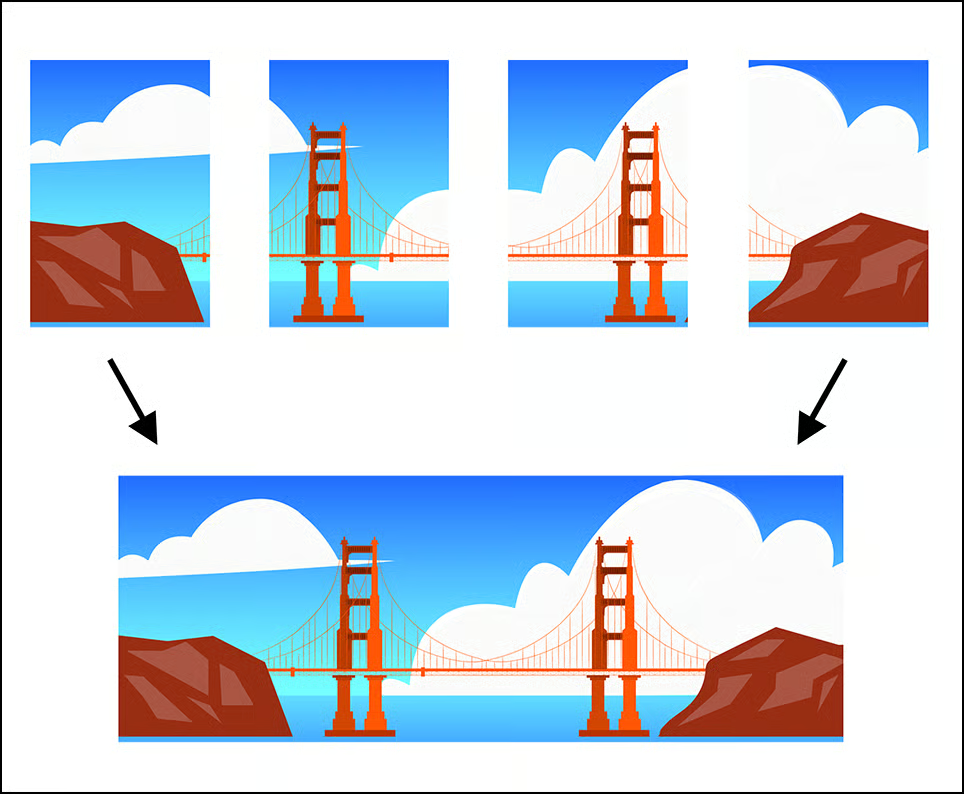
For VR delivery, export an equirectangular 2:1 image (e.g., 12,000×6,000px or 16,384×8,192px). If your scene is static and you need ultimate detail, you can push multi-row gigapixels—just expect longer capture and heavier processing. Oculus’ creator docs outline DSLR-to-VR workflows succinctly. DSLR/mirrorless to 360 photo pipeline
Cleanup & Enhancement
- Nadir patch: Capture a clean extra ground plate or use the mask/clone tools to remove the tripod. Many apps now include AI-assisted nadir patching.
- Color and noise: Equalize white balance if needed; apply selective noise reduction to shadows (ISO 1600–3200 frames).
- Horizon leveling: Use PTGui’s panorama editor to correct yaw/pitch/roll. Keep verticals straight for architecture.
- Output: Save a master 16-bit TIFF; export JPEGs for web with quality ~90. Add XMP metadata for pano viewers if required.
For an excellent primer on head setup and best practices, see this guide from Meta’s Creator resources. Set up a panoramic head for high-end 360s
Useful Tools & Resources
Software
- PTGui panorama stitching
- Hugin (open source) for budget workflows
- Lightroom / Photoshop for RAW and retouching
- AI tripod removal and sky enhancement tools
Hardware
- Panoramic heads (Nodal Ninja, Leofoto, Sunwayfoto)
- Carbon fiber tripods with leveling bases
- Wireless remotes or intervalometers
- Pole extensions and vibration-damped car mounts
Disclaimer: product names are for search reference only—verify specs on official sites.
Common Mistakes & How to Avoid Them
- Parallax error: Not aligning the entrance pupil. Solution: calibrate at the working focal length and mark rail positions.
- Exposure flicker: Auto exposure/WB between frames. Solution: manual exposure, fixed WB, fixed focus.
- Tripod shadows and nadir holes: Forgetting a nadir frame. Solution: shoot offset nadir or a dedicated nadir patch.
- Ghosting from movement: Crowds, clouds, water. Solution: two-pass capture and masking in PTGui.
- High-ISO noise: Overreliance on ISO at night. Solution: longer shutter on tripod; keep ISO low; denoise in post.
- Diffraction softness: Stopping down too far. Solution: stay around f/5.6–f/8 (f/11 max) on the 42MP sensor.
Frequently Asked Questions
- Can I shoot handheld panoramas with the Sony A7R III?
Yes—for simple cylindrical panoramas and quick outdoor scenes. Use high shutter speeds (1/250+), lock exposure/WB, and aim for 30–40% overlap. For full 360×180 with multi-row accuracy and minimal parallax, a tripod and panoramic head are strongly recommended.
- Is the Sigma 14-24mm f/2.8 DG DN Art wide enough for single-row 360s?
It’s rectilinear, not fisheye, so single-row won’t cover the full sphere. Plan on multi‑row at 14mm: typically three rows plus zenith/nadir. For fewer frames, a 12–15mm fisheye could work, but you’ll trade straight lines for fisheye distortion.
- Do I need HDR for interiors with bright windows?
Often yes. The A7R III has strong dynamic range, but bright windows usually exceed a single exposure. Bracket ±2 EV (3–5 frames) and merge in Lightroom or PTGui to balance highlights and shadows.
- How do I avoid parallax issues with this combo?
Mount the A7R III in portrait orientation on a panoramic head, then calibrate the entrance pupil at your chosen focal length (start ~70–80 mm forward of the sensor mark at 14mm). Verify by rotating past near/far objects; adjust until there’s no relative shift.
- What ISO range is safe on the A7R III for low light panos?
On tripod, prioritize shutter speed over ISO. Stay at ISO 100–800 for best quality. ISO 1600–3200 is usable with good noise reduction, but expect to do more cleanup, especially in shadow regions.
Gallery & Field Examples
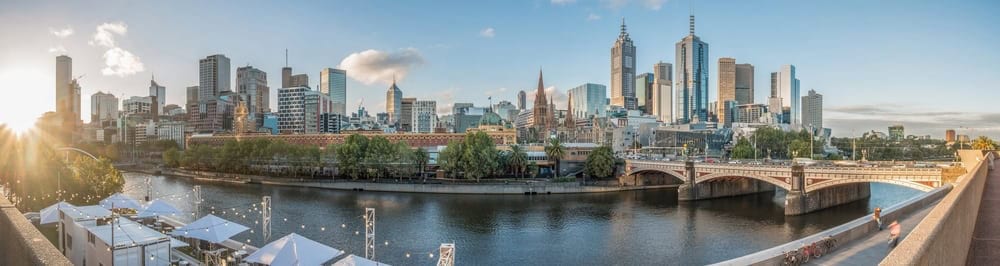
Want more perspectives on DSLR/mirrorless pano techniques? This long-running StackExchange thread gathers time-tested tips from many shooters. Techniques to take 360 panoramas
Safety, Reliability & Backup Workflow
Rooftops, poles, and car mounts require a conservative safety mindset. Always use rated clamps, redundant tethers, and avoid shooting above crowds. Check wind forecasts; if gusts exceed your tripod/pole rating, postpone. The A7R III supports simultaneous recording to both SD cards—enable it. After the shoot, clone cards to two separate SSDs, keep one physically separate from your bag, and don’t format cards until the project is fully delivered.
Limitations to acknowledge: pixel-shift on the A7R III is great for static scenes but impractical for 360s with moving clouds/foliage. The Sigma’s bulbous front element is flare-prone under strong point light sources; capture an extra shaded frame if you need a clean patch in post.
Final Thoughts
Mastering how to shoot panorama with Sony A7R III & Sigma 14-24mm f/2.8 DG DN Art is about consistency: rock-solid leveling, accurate nodal alignment, fixed exposure/WB, and disciplined overlap. This full-frame, high-resolution combo rewards you with remarkable detail and clean, straight lines—ideal for real estate, architecture, and immersive 360 experiences. With careful planning, safe operation, and a robust stitching workflow in PTGui or Hugin, you’ll produce panoramas that look seamless and professional.