Why This Camera & Lens Are Great for Panoramas
If you’re learning how to shoot panorama with Sony A7R III & Nikon AF-S 8-15mm f/3.5-4.5E ED Fisheye, you’re pairing a high-resolution full-frame mirrorless body with one of the most flexible fisheye zooms ever made. The Sony A7R III’s 42.4 MP back-illuminated sensor (7952 × 5304 px, ~4.5 μm pixel pitch) delivers excellent detail and wide dynamic range at base ISO (about 14+ EV). It also brings 5-axis in-body image stabilization (IBIS), a crisp EVF for precise manual focus, and robust battery life with the NP-FZ100—great for multi-frame panoramas.
The Nikon AF-S 8–15mm f/3.5–4.5E ED Fisheye is a dual-mode fisheye: at 8mm it renders a circular 180° image on full frame; at 15mm it covers the full frame with a diagonal 180° field of view. This flexibility means you can choose between ultra-efficient 4-around spherical capture at 8mm (plus zenith/nadir) or higher-resolution multi-row options at 12–15mm. It’s sharp by f/5.6–f/8, focuses internally, and is surprisingly flare-resistant for a fisheye (still, strong point light sources can provoke ghosts). On a Sony body you’ll need a Nikon F to Sony E “smart” adapter that supports E-type electromagnetic aperture control—otherwise the lens will be stuck wide open. When properly adapted, this combo is a powerful, travel-friendly solution for immersive 360 photos, real estate, and virtual tour work.
Quick Setup Overview
- Camera: Sony A7R III — Full-frame 35mm (42.4 MP BSI CMOS), ~14.7 EV DR at ISO 100, IBIS.
- Lens: Nikon AF-S 8–15mm f/3.5–4.5E ED Fisheye — circular fisheye at 8mm, diagonal fisheye at 15mm; sharp from f/5.6–f/8; moderate lateral CA typical of fisheyes; removable hood for 8mm circular shots.
- Adapter: Smart Nikon F to Sony E adapter with electronic aperture support (E-type compatible). Test for play/backlash before field use.
- Estimated shots & overlap (tested baselines on full frame):
- 8mm (circular): 4 around at 0° tilt (90° between shots) + 1 zenith + 1 nadir. Overlap ~30–35%.
- 12–15mm (diagonal): 6 around at 0° tilt + zenith + nadir; for higher resolution use 8 around or a 2-row (e.g., 6 around at +15°, 6 around at -15°, plus zenith/nadir) with ~30% overlap.
- Difficulty: Intermediate (adapter + fisheye workflow), Beginner if you’ve used a panoramic head before.
Planning & On-Site Preparation
Evaluate Shooting Environment
Scan the scene for reflective surfaces (glass, glossy tiles, cars), moving elements (people, trees in wind, traffic), and light sources (sun, practical lamps, LEDs that can flicker). If shooting through glass, get the front element as close as safely possible to reduce reflections and ghosting—ideally within a few millimeters using a rubber lens hood when practical. For sunsets, expect extreme dynamic range; plan to bracket ±2 EV (or more in high-contrast interiors).
Match Gear to Scene Goals
For indoor real estate or fast field work, the 8mm circular fisheye keeps shot count low (4+2), speeding capture and reducing stitch errors from moving subjects. Outdoors when you want higher final resolution, zoom to 12–15mm and run 6–8 shots around (with zenith/nadir) or 2-row capture. The A7R III’s clean ISO 100–800 range and wide DR let you hold shadow detail without noisy blends. In very low light, ISO 1600 is still workable with careful exposure and modern denoising, but a tripod beats pushing ISO.
Pre-shoot Checklist
- Power & storage: charged NP-FZ100 batteries; dual cards if you need backup (RAW on both or RAW+JPEG).
- Clean optics: front/rear elements and the sensor. Fisheyes are unforgiving with dust near the front element.
- Adapter: confirm firmware for E-type aperture control; no play; secure lock.
- Tripod leveled; panoramic head calibrated to the nodal/no-parallax point for your focal length.
- Safety: weigh down tripod in wind; use a tether on rooftops or over ledges; keep clear of power lines; for car mounts, secure via redundant straps.
- Backup workflow: when in doubt, shoot a second safety round—especially for commercial jobs.
Essential Gear & Setup
Core Gear
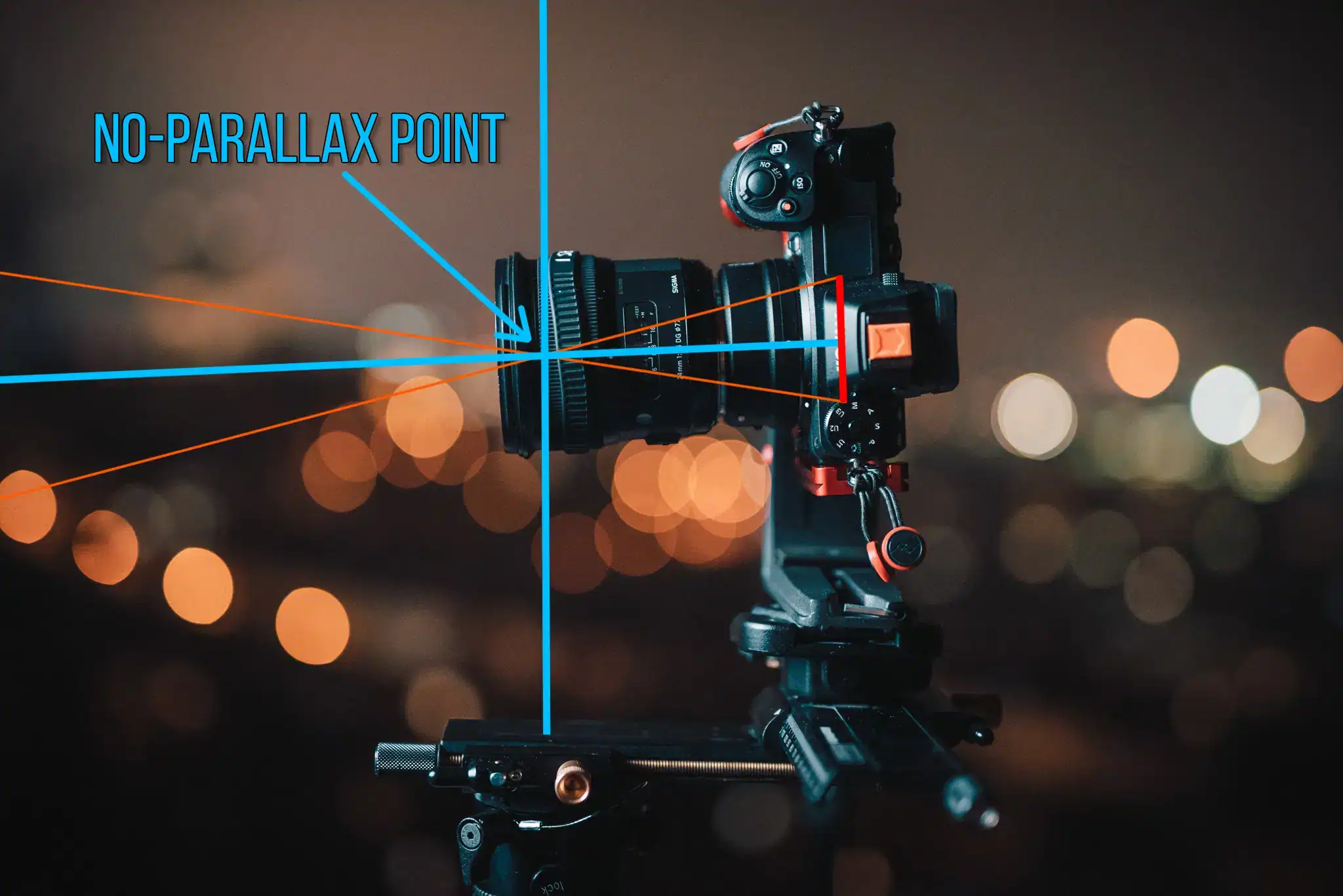
- Panoramic head with nodal slide: Align the lens’s entrance pupil over the rotation axis to eliminate parallax (critical for stitching cleanly in interiors and near objects).
- Stable tripod with leveling base: A leveling base saves time between sets and keeps horizons true.
- Remote trigger or Sony Imaging Edge Mobile: Fire the shutter hands-free; use 2-second timer if a remote isn’t available.
Optional Add-ons
- Pole or car mount: Highly effective for elevated or moving perspectives; always use safety tethers and watch wind loading. Rotate slower to minimize vibration blur.
- Lighting aides: Small LED panels for interior fill; beware of LED flicker—test with short clips before committing.
- Weather covers: Keep drizzle and sea spray off the fisheye; even tiny droplets show up in every frame.
Step-by-Step Shooting Guide
Standard Static Scenes
- Level the tripod and align the nodal point. Mount the A7R III on the panoramic head so the entrance pupil of the Nikon 8–15mm sits directly over the rotational axis. As a starting point, at 8mm the entrance pupil will sit roughly near the front element; at 15mm it shifts slightly back. Calibrate by placing two vertical objects (one close, one far) and rotating—adjust the rail until relative movement disappears.
- Manual exposure and locked white balance. Set M mode, fix aperture (typically f/8), choose a shutter speed to expose midtones properly, and keep ISO as low as practical (100–400). Lock WB (Daylight outdoors, or Custom/3200–4000 K indoors) to avoid color shifts across frames.
- Capture with reliable overlap.
- 8mm circular: 4 around at 0° tilt (90° spacing), then 1 straight up (zenith) and 1 down (nadir). Slightly tilt up the around-shots (+5°) to ensure cleaner zenith coverage if you prefer.
- 12–15mm diagonal: 6 around at 0° tilt (60° spacing) + zenith + nadir. For maximum quality, add a second tilted row (+15°/-15°).
- Take the nadir (ground) shot for tripod removal. Either shoot a handheld nadir from the same nodal point (carefully position the lens where the head was) or use a nadir offset technique and patch in post.
HDR / High Dynamic Range Interiors
- Bracket ±2 EV (3–5 frames) to balance windows and shadowed rooms. Use AEB or manual bracketing; maintain identical WB and focus.
- Keep the aperture constant and adjust shutter speed for brackets. Turn off any Auto ISO and DRO; keep your tonal range consistent for stitching.
Low-Light / Night Scenes
- Use longer shutter speeds with a steady tripod. On the A7R III, ISO 100–800 is “safe/clean”; ISO 1600 is workable with modern denoise. Favor shutter speed over ISO if the scene is static.
- Disable IBIS (SteadyShot) on a tripod to prevent micro-blur from stabilization drift. Use a remote or 2-second timer.
Crowded Events
- Shoot two passes: one quickly to secure coverage, then a second pass waiting for gaps. This gives you clean pixels to mask over moving people in post.
- Consider 15mm for more frames and redundancy if people are very close to the camera (it stitches cleaner at edges).
Special Setups (Pole / Car / Drone)
- Secure all gear and add a safety tether. Balance your pole; watch wind and swinging. For car rigs, use suction plus straps and drive slowly on smooth roads.
- Use faster shutter speeds on moving platforms (1/250–1/500) and increase ISO as needed. Rotate slowly around the axis to minimize blur between frames.
Recommended Settings & Pro Tips
Exposure & Focus
| Scenario | Aperture | Shutter | ISO | Notes |
|---|---|---|---|---|
| Daylight outdoor | f/8–f/11 | 1/100–1/250 | 100–200 | Lock WB (Daylight) |
| Low light/night | f/4–f/5.6 | 1/30–1/60 | 400–800 | Tripod & remote; keep ISO low for clean stitches |
| Interior HDR | f/8 | Bracket ±2 EV | 100–400 | Balance windows & lamps |
| Action / moving subjects | f/5.6–f/8 | 1/200+ | 400–800 | Freeze motion, double pass |
Critical Tips
- Manual focus at a practical hyperfocal. At 15mm f/8, focusing around 1 m gives sharpness from roughly 0.5 m to infinity. At 8mm f/8, focusing ~0.4 m covers almost everything.
- Nodal point calibration: Mark the rail position for 8mm and 15mm on your panoramic head once calibrated. Remember the lens hood must be removed at 8mm on full frame to avoid clipping the circular image.
- White balance lock: Use a custom Kelvin or set a preset (Daylight/Tungsten). Mixed lighting? Shoot a gray card, then apply that WB across all frames in post.
- RAW over JPEG: The A7R III’s RAW files hold excellent shadow detail; consider Compressed RAW for speed/space. Turn off DRO when shooting for consistent tonality.
- IBIS and shutter mode: Turn IBIS off on tripod; avoid electronic/silent shutter under LED lighting to prevent banding. Use mechanical shutter for reliability.
- Adapter-specific: Use a Nikon F–to–Sony E adapter that supports E-type electromagnetic aperture control. Verify aperture changes actually step on the lens before you leave home.
Stitching & Post-Processing
Software Workflow
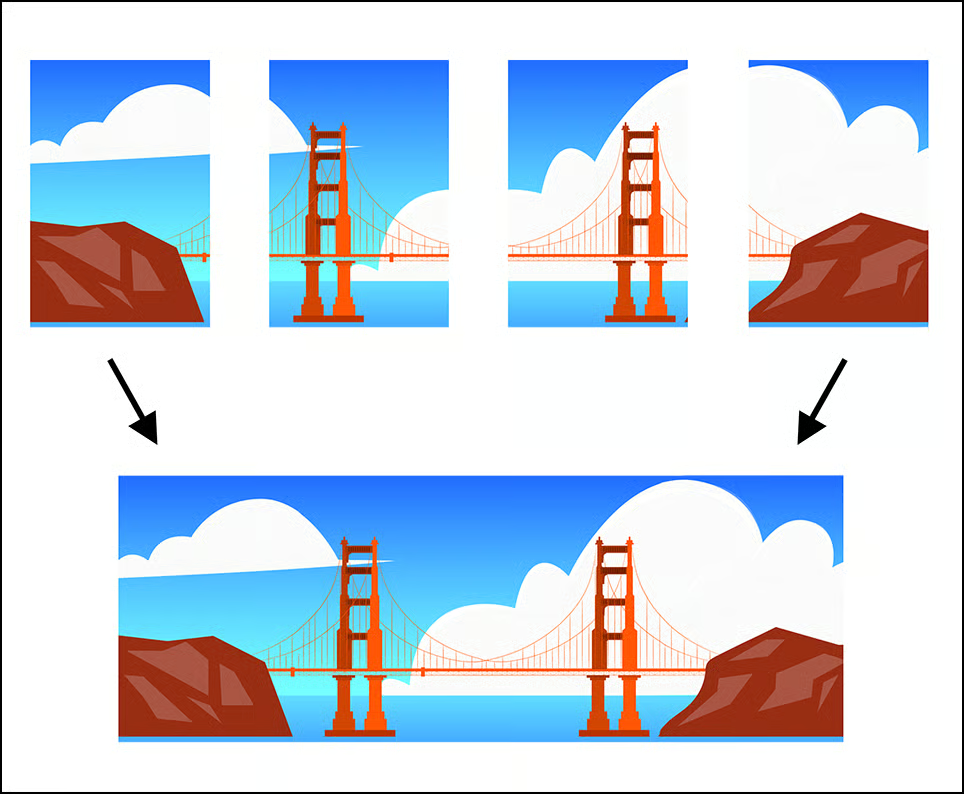
Fisheye panoramas are straightforward in modern stitchers. PTGui is the industry workhorse for professional 360s, especially with fisheyes, because it supports lens types (circular/diagonal), robust control point generation, and powerful masking. Hugin is a capable open-source alternative. For single-row rectilinear panos, Lightroom and Photoshop can work, but for spherical 360s a dedicated tool is far more reliable. With fisheyes, aim for ~25–35% overlap; rectilinear lenses often need 30–40% to get enough control points. For diagonal fisheye at 15mm, 6-around plus poles is a dependable baseline. For circular fisheye at 8mm, 4-around plus poles is very efficient and stitches fast.
Once stitched to an equirectangular, level the horizon, adjust pitch/yaw/roll, then tone and denoise lightly. Export a 16-bit TIFF for archiving and a JPEG in 2:1 equirectangular format for the web or VR platforms.
Cleanup & Enhancement
- Tripod/nadir patch: Use PTGui Viewpoint Correction, a handheld nadir shot, or clone/AI tools to remove the tripod.
- Color correction: Apply consistent WB; address mixed lighting with selective HSL adjustments. Use subtle dehaze to manage flare without creating halos.
- Noise reduction: Apply at the end of the pipeline; avoid smearing fine textures.
- Final export: 10,000–16,000 px on the long edge is typical for high-quality tours from this setup. Keep a master TIFF and a web-optimized JPEG.
Want deeper guidance on head setup and capture standards? See this panoramic head primer and stitching best practices at the end of this section. Panoramic head alignment tutorial
PTGui’s flexibility and masking tools make it a favorite for complex scenes. Here’s a thorough review of why it excels for pro work: PTGui review and workflow insights. For expected output resolution by lens type, Panotools’ wiki is an excellent reference: DSLR spherical resolution estimates.
Useful Tools & Resources
Software
- PTGui panorama stitching
- Hugin (open-source)
- Lightroom / Photoshop for global edits
- AI tripod/nadir removal tools
Hardware
- Panoramic heads (Nodal Ninja, Leofoto)
- Carbon fiber tripods
- Leveling bases
- Wireless remote shutters
- Pole extensions / car mounts (with safety tethers)
Disclaimer: software/hardware names are provided for search reference; check official sites for latest compatibility and specifications.
Real-World Scenarios & Field Advice
Indoor Real Estate (Windows + Mixed Light)
Use 12–15mm diagonal fisheye at f/8. Run 6 around + zenith + nadir; bracket ±2 EV to balance bright windows. Set WB to a neutral Kelvin (e.g., 4000–4500 K) then fine-tune in post room-by-room. Mask window ghosting if trees move between exposures.
Outdoor Sunset (High DR Landscape)
At 8mm circular, capture quickly: 4 around + poles with a 3-frame bracket at ±2 EV. Keep ISO 100–200, and use a GND-like curve in post to protect highlights. Expect flare—shield the sun with your hand just out of frame when possible, or plan to mask frames with minimal artifacts. For more detail, try 12mm diagonal 6-around and accept a slightly longer capture time.
Event Crowds (People Close to Camera)
Prefer 15mm diagonal; more frames mean easier stitching near edges. Shoot two passes and mask moving subjects. If you must shoot 8mm circular, rotate quickly and accept some ghosting to be fixed with masks.
Rooftop / Pole Shots
Use a carbon pole and keep the lens at 8–12mm to reduce frame count aloft. Shutter 1/200–1/500 to combat sway; use a safety tether and avoid strong winds. To hide the pole, a careful nadir patch or viewpoint correction in PTGui works well. For formal guidance on high-end 360 capture workflows, Oculus’s guide for DSLR/mirrorless capture is a great reference: Using a DSLR/mirrorless to shoot and stitch a 360 photo.
Safety, Limitations & Honest Notes
Adapters: The Nikon 8–15mm is an E-type lens—aperture is electronic. Use a Nikon F–to–Sony E adapter that explicitly supports E-type aperture control; otherwise you’ll be stuck wide open, which is not ideal for panoramas. Test aperture control at home and check for mount play that could shift your nodal alignment.
Tripod stability: Hook a weight to your tripod in wind. On rooftops or near traffic, prioritize safety over the shot. When elevating the camera on poles, maintain a clear perimeter and use a tether.
Banding risk: Silent/electronic shutter can band under certain LED lights; prefer mechanical shutter indoors with LEDs.
Moisture on fisheyes: Even tiny droplets or smudges show across all frames. Keep a microfiber cloth handy and inspect the front element before every sweep.
Common Mistakes & How to Avoid Them
- Parallax error → Calibrate the no-parallax point for 8mm and 15mm; keep the entrance pupil over the rotation axis.
- Exposure/WB flicker → Manual exposure, locked ISO, and fixed white balance for all frames and brackets.
- Tripod shadows / poles in frame → Shoot a proper nadir and patch; reposition between takes if needed.
- Ghosting from people/trees → Double pass capture; use masking in PTGui/Hugin.
- Noise at night → Keep ISO ≤ 800 when possible; use longer shutters with a sturdy support and remote trigger.
For additional discussion of proven techniques and community-tested advice, this Q&A thread remains useful: Best techniques to take 360 panoramas.
Frequently Asked Questions
- Can I shoot handheld panoramas with the Sony A7R III?
Yes, for quick single-row panos outdoors you can handhold, but for true 360s—especially interiors—use a tripod and panoramic head. Handheld 360s risk parallax, uneven overlap, and exposure shifts. If you must handhold, use 8mm circular for fewer shots, enable IBIS, use fast shutter (1/250+), and rotate around the lens, not your body.
- Is the Nikon 8–15mm fisheye wide enough for a single-row 360?
Absolutely. At 8mm on full frame (circular), 4 around + zenith + nadir is a classic, efficient spherical capture. At 15mm (diagonal), 6 around + poles is reliable. For premium detail, add a second row or increase around-shots to 8.
- Do I need HDR for interiors with bright windows?
Usually yes. Bracket ±2 EV (3–5 frames) to retain highlight texture outdoors and shadow detail indoors. Keep WB/focus fixed, and blend brackets per camera angle before stitching, or let PTGui handle bracket fusion.
- How do I avoid parallax issues with this lens?
Use a panoramic head and calibrate the entrance pupil for 8mm and 15mm. Mark both positions on your rail. Remove the lens hood at 8mm (on full frame) to avoid clipping the circular image. Keep the adapter secure—any rotational play will reintroduce parallax.
- What ISO range is safe on the A7R III in low light?
ISO 100–800 is very clean; ISO 1600 is usable with careful exposure and modern denoising. For static scenes, favor longer shutters over pushing ISO. Always shoot RAW.
- Can I set up Custom Modes to speed pano work?
Yes. Assign a Custom Mode (e.g., MR or Memory Recall) with Manual exposure, RAW, WB preset, MF with peaking, IBIS off (for tripod), and 2-second timer. Store a second custom slot for handheld with IBIS on and faster shutter.
- How do I reduce flare with a fisheye?
Shade the lens with your hand just outside the frame, avoid pointing directly at intense point sources when possible, and shoot an extra frame when the sun is in a bad position so you can mask later. Clean glass is crucial.
- What panoramic head should I use?
Look for a compact head with fore/aft and vertical rails (e.g., Nodal Ninja, Leofoto) and a leveling base. It must be rigid enough to prevent flex with your adapter and lens during rotation.
Visual Examples
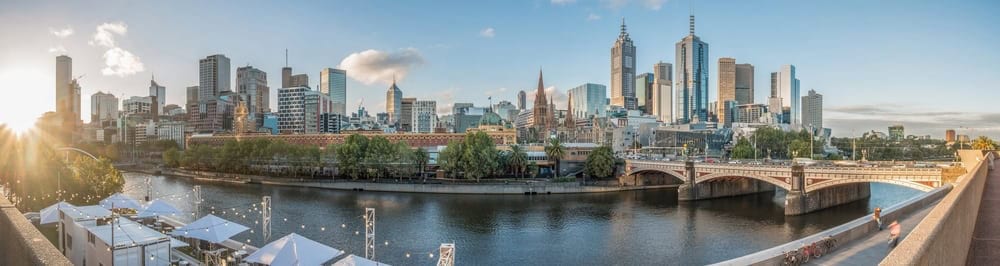
More Learning
Set up and verification of your panoramic head makes or breaks your stitch quality. This step-by-step guide aligns with pro standards: Set up a panoramic head for high-end 360 photos. For lens/pano resolution expectations by focal length, see: Panotools spherical resolution wiki.