
Why This Camera & Lens Are Great for Panoramas
The Sony A7R III and Fujifilm XF 8–16mm f/2.8 R LM WR are both exceptional tools for high-quality panoramic imaging—one for its sensor and processing prowess, the other for its ultra-wide, rectilinear optical performance. The A7R III’s 42.4MP full-frame BSI sensor (approx. 35.9 × 24mm, ~4.51 µm pixel pitch) delivers excellent detail, dynamic range around 14+ stops at base ISO, and robust color depth—ideal for stitching clean, high-res 360 photos. The XF 8–16mm, while designed for Fujifilm X-mount APS-C bodies, is a class-leading ultra-wide zoom (12–24mm equivalent field of view on full frame) with a constant f/2.8 aperture, strong corner sharpness for a rectilinear UWA, and modern coatings that control flare and CA well.
Important compatibility note: The Fujifilm XF 8–16mm is not mount-compatible with the Sony A7R III. There is effectively no practical adapter that preserves optical infinity, aperture control, and AF for XF-to-Sony E mount. If your goal is “how to shoot panorama with Sony A7R III & Fujifilm XF 8–16mm,” you have two proven workflows:
- Recommended A7R III-native workflow: Use the A7R III with a native ultra-wide rectilinear lens (e.g., Sony FE 12–24mm f/4 G or f/2.8 GM, or FE 16–35mm) to match the XF 8–16mm field of view. The shooting methods below apply directly.
- Fujifilm workflow: Use the XF 8–16mm on a Fujifilm X camera (e.g., X-T5/X-H2/X-T4). All exposure, overlap, and nodal techniques here still apply, with slightly different shot counts noted for APS-C.
In short, the A7R III provides the resolution, DR, and low-noise base for superb stitches; the XF 8–16mm exemplifies the kind of ultra-wide rectilinear optics that make clean, high-detail multi-row panoramas possible. Pair the A7R III with a comparable native Sony UWA and you’ll get the same practical benefits described throughout this guide.
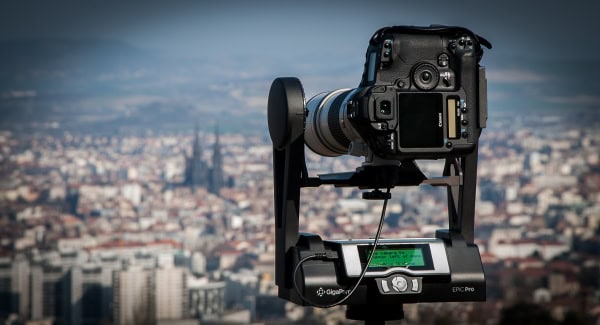
Quick Setup Overview
- Camera: Sony A7R III — Full-frame 42.4MP BSI sensor, ~14+ stops DR, excellent color depth and low ISO performance.
- Lens: Fujifilm XF 8–16mm f/2.8 R LM WR — rectilinear ultra-wide zoom (designed for APS-C X-mount), robust weather sealing, constant f/2.8, good CA control. Not mount-compatible with Sony E. Use a native Sony UWA to replicate this FOV on the A7R III.
- Estimated shots & overlap (rectilinear, 25% overlap typical):
- On full-frame 12–16mm (Sony FE 12–24, 16–35): 6–8 shots per row x 2–3 rows + zenith + nadir (≈ 16–26 frames total for a 360).
- On APS-C at 8mm (XF 8–16 on a Fujifilm body): about 5–6 shots per row x 2–3 rows + zenith + nadir (≈ 14–20 frames total).
- Difficulty: Intermediate (requires nodal calibration and consistent manual exposure).
Planning & On-Site Preparation
Evaluate Shooting Environment
Before mounting the camera, assess light direction, the presence of moving subjects, reflective surfaces, and potential obstacles. For interiors with glass, keep the lens at least a few inches away to avoid contact reflections and to reduce flare. If you must shoot near glass, shade the front element with your hand or a flag and avoid pointing directly at bright point light sources when possible.
Match Gear to Scene Goals
The Sony A7R III excels in scenes requiring high dynamic range (sunrise/sunset cityscapes, interiors with bright windows) thanks to its deep RAW files at ISO 100–400. For low-light interiors or nights, the A7R III remains clean through ISO 800–1600 with careful exposure. Rectilinear ultra-wide lenses (like the XF 8–16mm class or Sony FE 12–24mm) maintain straight lines—great for architecture and real estate—though they require more frames than fisheyes for full 360 coverage. If speed matters more than absolute resolution, a fisheye lens would cut the shot count drastically, but introduces fisheye distortion handling in stitching.
Pre-shoot Checklist
- Charge batteries, format and double-check memory cards, clean front/rear elements, and if possible, run a sensor dust check.
- Level the tripod and verify your panoramic head’s nodal (no-parallax) calibration for the focal length you’ll use.
- Safety: assess wind and foot traffic; tether your gear on rooftops or poles; check car-mount bolts and vibration dampers.
- Backup workflow: shoot a second pass if time allows, and consider bracketing for HDR in tricky light.
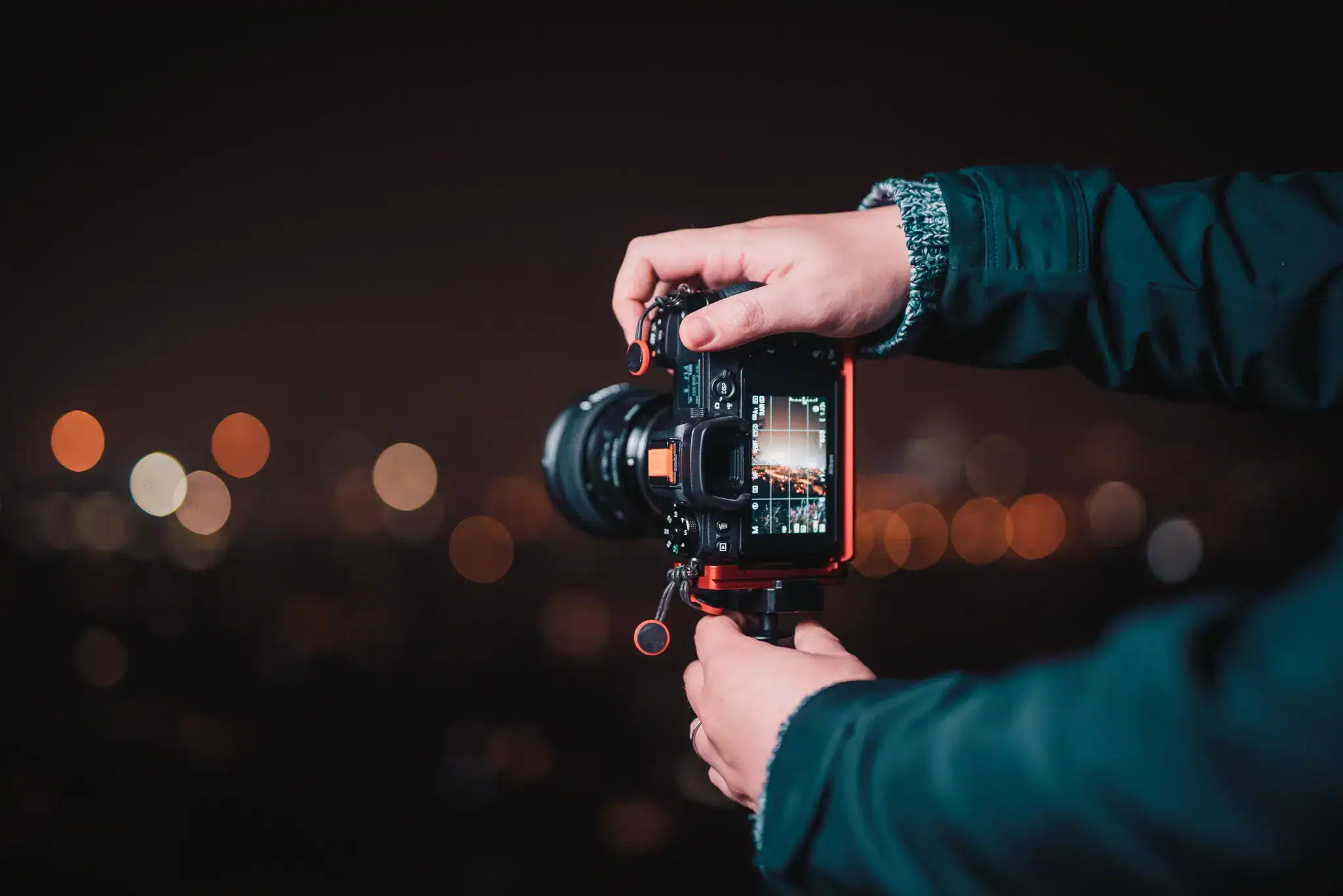
Essential Gear & Setup
Core Gear
- Panoramic head: Lets you rotate around the lens’s nodal point to minimize parallax—critical for clean stitches, especially indoors with near objects.
- Stable tripod with leveling base: A leveling base speeds setup and keeps rows consistent. Carbon fiber tripods reduce vibration without adding too much weight.
- Remote trigger or camera app: Avoids touch-induced vibrations. Sony’s app or a simple wireless trigger both work well.
Optional Add-ons
- Pole or car mount: Great for unique perspectives, but always tether your rig and respect wind limitations. Avoid long exposures on vibrating mounts.
- Lighting aids: For dark interiors, small LED panels can lift shadows. Keep lighting consistent across frames to avoid stitch mismatches.
- Weather protection: Rain cover, microfiber cloths, and silica gel when moving between temperature extremes to prevent fogging.
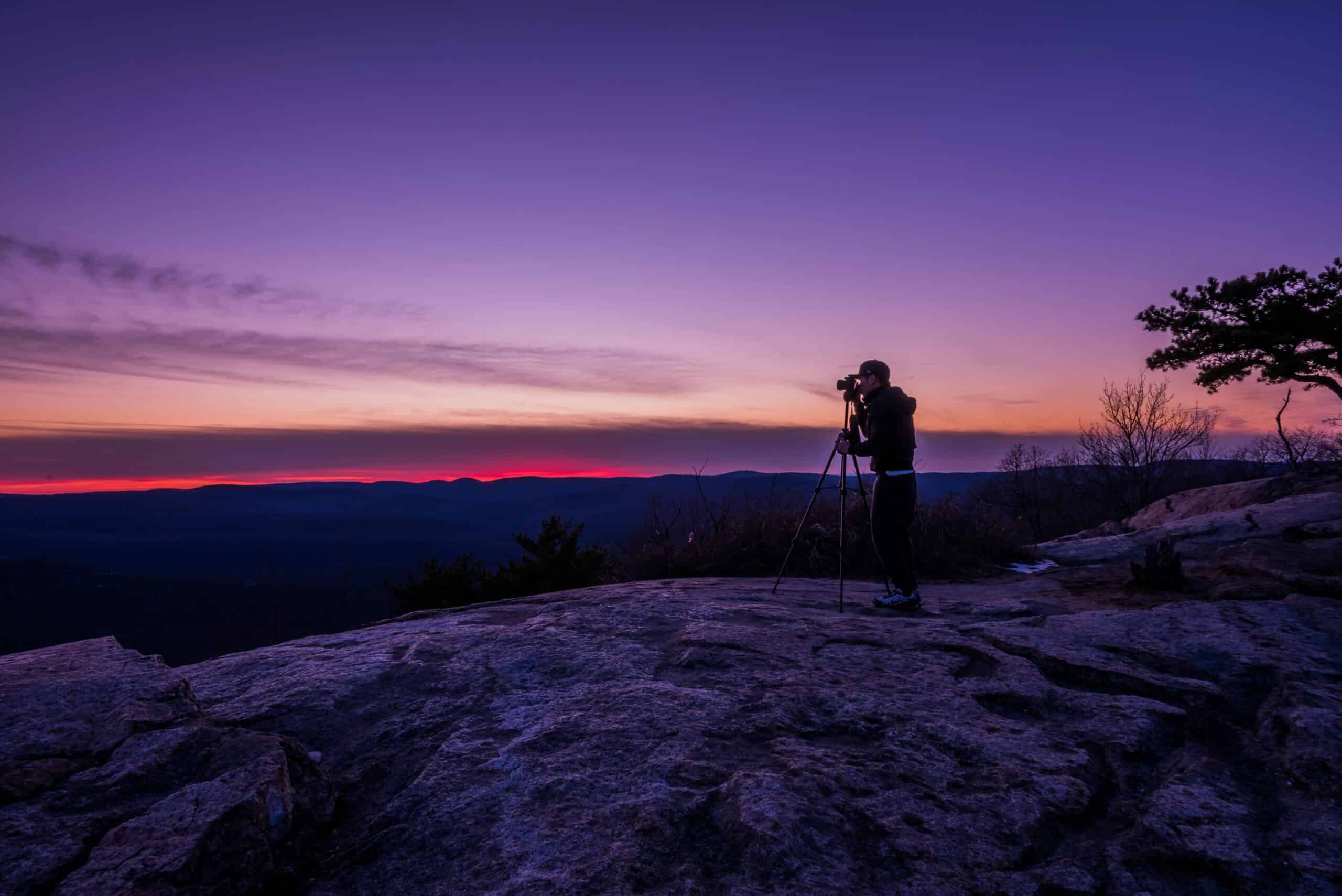
Step-by-Step Shooting Guide
Standard Static Scenes
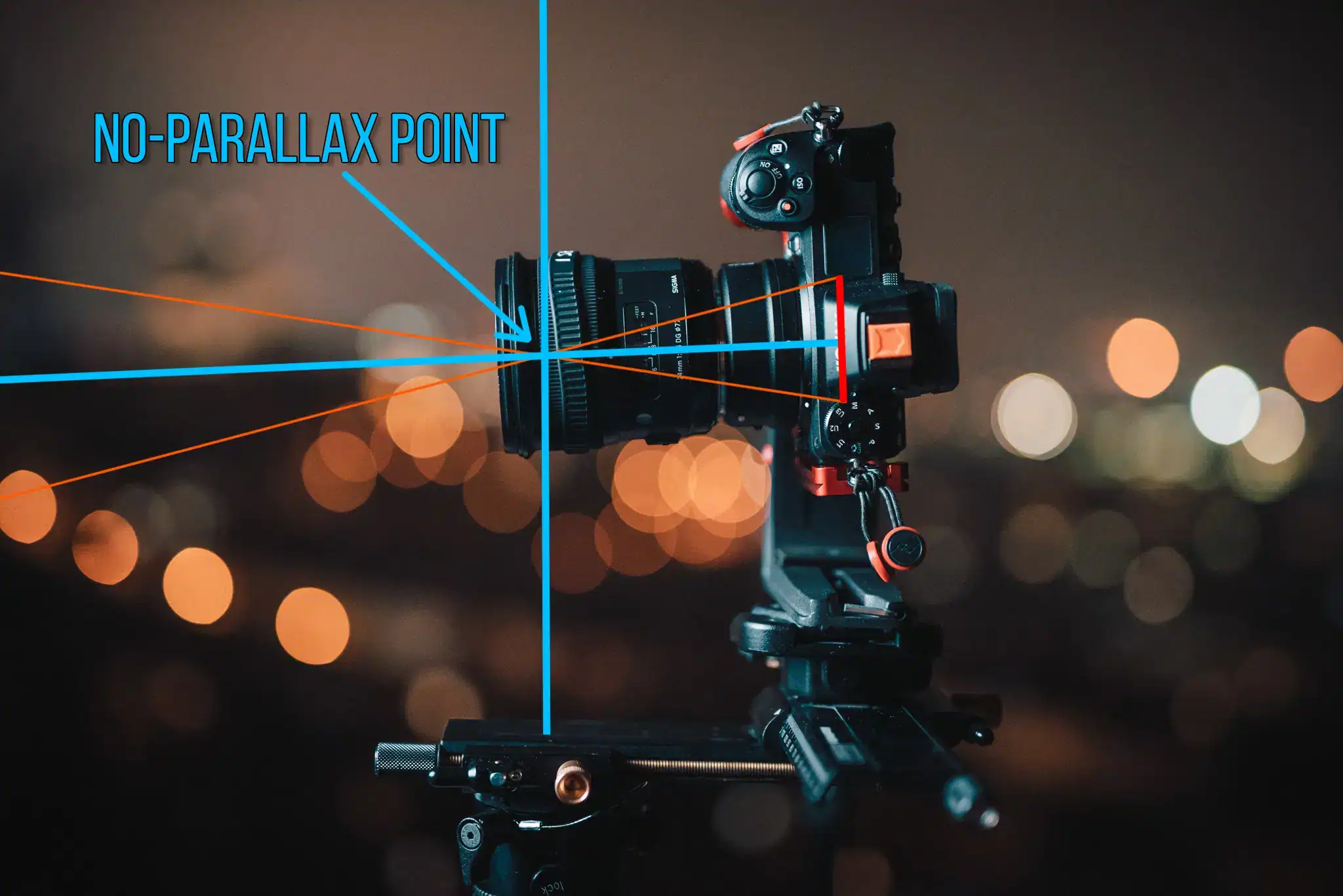
- Level tripod & align nodal point: On your panoramic head, adjust the fore-aft rail so foreground and background objects don’t shift relative to each other when panning. Mark your rail positions for each focal length you commonly use.
- Manual exposure & locked white balance: Set manual exposure for the brightest frame you expect not to clip, then keep ISO/shutter/aperture consistent through the set. Lock WB (e.g., Daylight for sun, Tungsten for most interiors) to prevent color cast shifts during stitching.
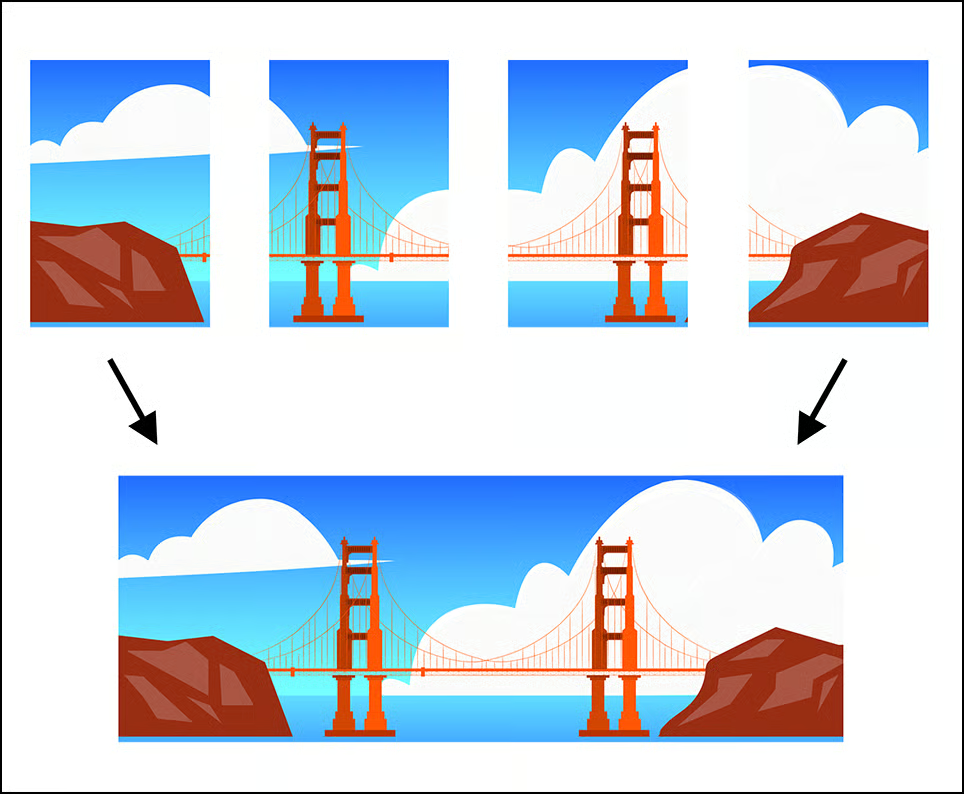
- Capture with consistent overlap: For rectilinear ultra-wide, use 20–25% overlap; for multi-row 360s at 12–16mm on full frame, plan 6–8 shots per row x 2–3 rows, plus zenith/nadir. Rotate smoothly and keep your nodal mark aligned.
- Take a nadir shot: After the main sweep, tilt down and capture the ground for easier tripod removal or patching.
HDR / High Dynamic Range Interiors
- Bracket ±2 EV at each position to hold bright windows and shadowed interiors. The A7R III supports bracketing bursts—use 3 or 5 frames if needed.
- Lock WB & aperture: Keep WB fixed and aperture constant (e.g., f/8) for consistent depth and color. Merge HDR per position prior to stitching, or use software that supports exposure fusion while stitching.
Low-Light / Night Scenes
- Use longer exposures and low ISO: On the A7R III, ISO 100–400 is best for clean files; 800–1600 remains usable. Set shutter speeds of 1/10–1s as needed with a sturdy tripod.
- Trigger remotely: Use a remote or the Sony app. Turn off IBIS when on a firmly mounted tripod to prevent micro-jitters.
Crowded Events
- Two-pass approach: First pass for coverage, second pass capturing gaps in moving crowds. Mask in post for fewer ghosted limbs.
- Faster shutter: If people must be sharp, aim for 1/200s or faster and consider ISO 400–800 with a slightly wider aperture.
Special Setups (Pole / Car / Drone)
- Secure gear: Use safety tethers and clamps; keep the center of mass low. On a pole, rotate slower and avoid gusty conditions.
- Manage vibrations: For car mounts, shoot at lower speeds or stop briefly. Increase shutter speed to 1/500+ if you must shoot while moving.
Want to see a panoramic head setup in action? This video is a great primer before your first field trip.
Recommended Settings & Pro Tips
Exposure & Focus
| Scenario | Aperture | Shutter | ISO | Notes |
|---|---|---|---|---|
| Daylight outdoor | f/8–f/11 | 1/100–1/250 | 100–200 | Lock WB to Daylight for consistent color |
| Low light/night | f/4–f/5.6 | 1/10–1/60 | 400–800 (up to 1600 if needed) | Tripod + remote; consider NR in post |
| Interior HDR | f/8 | Bracket ±2 EV | 100–400 | Preserve window highlights with clean shadows |
| Action / moving subjects | f/5.6–f/8 | 1/200+ | 400–800 | Freeze motion; do a double pass |
Critical Tips
- Manual focus at hyperfocal: At 12–16mm on full frame, f/8–f/11 with manual focus near hyperfocal keeps everything sharp. Use focus magnification to set it precisely.
- Nodal point calibration: With your panoramic head, slide the lens along the rail until near/far objects stay aligned while panning. Mark this position on the rail for each focal length. Recheck when you change zoom.
- White balance lock: Fix WB to avoid color shifts between frames (especially in mixed lighting interiors).
- RAW over JPEG: 14-bit RAW from the A7R III gives headroom for highlight recovery and cleaner HDR merges.
- IBIS behavior: Turn off stabilization on a locked tripod; leave it on only if you’re forced to handhold or on slightly unstable ground.
Stitching & Post-Processing
Software Workflow
Import your frames and, if HDR bracketing was used, merge each position first. Then stitch in PTGui, Hugin, or similar software. Rectilinear UWAs require more images than fisheyes but yield straight lines—ideal for architecture. Industry norms suggest overlap around 20–25% for rectilinear and 25–30% for fisheye. PTGui’s control point detection is very robust, and you can fine-tune yaw/pitch/roll to level the horizon. For output, an equirectangular projection at 12000–16000 px wide is typical for professional virtual tours.
For a deep review of PTGui’s strengths in complex panoramas, see this overview by Fstoppers at the end of this section. If you’re new to panoramic heads and workflow, the linked tutorials further down will save you hours of trial and error.
Cleanup & Enhancement
- Nadir patch: Capture a clean ground plate and patch with cloning or AI tools. Many tour platforms also support auto nadir logos.
- Color & noise: Adjust WB/tint, apply selective NR for night scenes, and add subtle clarity. Keep clouds/noise natural to avoid banding.
- Geometric corrections: Use the optimizer to straighten verticals and level the horizon; adjust roll/pitch/yaw until the scene feels natural.
- Export: Save a 16-bit TIFF master and a high-quality JPEG (e.g., 80–90%) in equirectangular 2:1 for VR platforms.
PTGui review: why it’s a favorite for complex panoramas
Using a mirrorless camera to shoot & stitch a 360 photo (Oculus Creator)
Useful Tools & Resources
Software
- PTGui panorama stitching
- Hugin open source panorama tool
- Lightroom / Photoshop for RAW and retouching
- AI tripod/nadir removal tools
Hardware
- Panoramic heads (Nodal Ninja, Leofoto)
- Carbon fiber tripods with leveling bases
- Wireless remote shutters
- Pole extensions / car mounts with tethers
Want a primer on panoramic head fundamentals? 360 Rumors: Panoramic head tutorial
Disclaimer: software/hardware names provided for search reference; check official sites for details.
Common Mistakes & How to Avoid Them
- Parallax error: Always align the nodal point. Even small misalignments cause foreground-background splitting.
- Exposure flicker: Manual mode only. Lock exposure/WB and keep them consistent through the full set.
- Tripod shadows and footprints: Capture nadir frames and patch later.
- Ghosting from moving subjects: Do two passes and mask the clean subject positions in post.
- Night noise: Favor low ISO and longer exposures with a sturdy setup; apply gentle NR in post.
Frequently Asked Questions
- Can I shoot handheld panoramas with the Sony A7R III?
It’s possible for cylindrical or quick single-row sweeps, but for 360 spheres and interior work, handheld introduces parallax errors and horizon drift. Use a panoramic head and leveled tripod for reliable, pro-quality results.
- Is the Fujifilm XF 8–16mm wide enough for a single-row 360?
It’s a rectilinear UWA (not a fisheye), so you’ll need multi-row capture to cover the full sphere cleanly. Expect 2–3 rows plus zenith and nadir, with 20–25% overlap per frame.
- Do I need HDR for interiors with bright windows?
Usually yes. Bracket ±2 EV (3–5 frames) at each position to retain detail inside and outside. Merge the brackets first, then stitch for best quality.
- How do I avoid parallax issues?
Calibrate the lens’s no-parallax point on your panoramic head. Slide the rail until near and far objects don’t shift relative to each other while panning. Mark the rail for each focal length you use.
- What ISO range is safe on the A7R III in low light?
ISO 100–400 yields the cleanest files. ISO 800–1600 remains highly usable for night work with careful exposure and noise reduction. Avoid pushing ISO unnecessarily; use a tripod and longer shutter instead.
- Can I create Custom Shooting Modes for pano on the A7R III?
Yes. Save a “Pano” mode with Manual exposure, RAW, WB locked, IBIS off, and your preferred bracketing sequence. This speeds consistent setup on location.
- Which tripod head is best for this setup?
A multi-row panoramic head with fore-aft and vertical rail adjustments ensures proper nodal alignment. Look for precise scales, rigid clamps, and a compatible L-bracket.
- Any authoritative guides to learn more?
Yes. These are solid deep dives: set up a panoramic head for high-end 360s (Oculus Creator) and Fstoppers’ PTGui review.
Real-World Case Studies
Indoor Real Estate (A7R III + FE 12–24mm as XF 8–16 equivalent)
Set f/8, ISO 100–200, and expose for mid-tones. Bracket ±2 EV to hold window views. Use 6–8 shots per row across two rows, plus zenith and nadir. Lock WB to a neutral preset and turn off IBIS on a solid tripod. Stitch in PTGui and patch the nadir with a clean ground shot.
Outdoor Sunset Cityscape
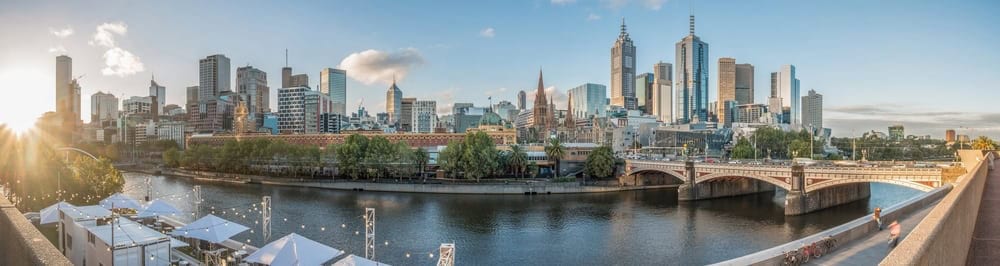
Start at ISO 100, f/8–f/11. Meter to preserve highlight detail in the sky (sometimes -0.7 EV). Expect 2–3 rows to keep skyline verticals clean. Add a second pass a few minutes later as the sky color peaks and blend the best sky into your primary stitch.
Crowded Event
Prioritize shutter speed (1/200–1/500s) and move quickly. Do two passes: one for coverage, the other to capture clean areas when people move. In post, mask to reduce ghosts and keep focal points sharp.
Rooftop or Pole Shooting
Use a lightweight but rigid panoramic head. Keep the pole vertical (use a bubble level), rotate slowly, and avoid long exposures if the pole flexes in wind. Safety first—always tether your camera and keep people clear below.
Car-Mounted Capture
Park the car when possible. If moving, choose faster shutter speeds (1/500–1/1000s) and raise ISO to 800–1600. Expect imperfect nodal control due to vibrations—shoot extra overlap (30%) and allow extra time in post.
For a broader guide to camera and lens choices for virtual tours, see this overview: DSLR/mirrorless lens guide for virtual tours (360 Rumors)
Compatibility & Practical Alternatives
The Fujifilm XF 8–16mm f/2.8 R LM WR cannot be practically adapted to the Sony A7R III. If your plan is to use this exact lens with an A7R III, switch to a native Sony FE ultra-wide to match the XF’s field of view and follow the same capture workflow. If you own a Fujifilm X body, the XF 8–16 is superb for rectilinear multi-row 360s—expect about 5–6 shots per row with 2–3 rows, plus zenith and nadir. Either way, the nodal alignment, exposure locking, and stitching steps in this guide remain the same.