Why This Camera & Lens Are Great for Panoramas
Sony’s A7 IV gives you a modern, 33MP full-frame sensor with excellent dynamic range, robust color, and dependable autofocus. The Fujifilm XF 8–16mm f/2.8 R LM WR is a pro-grade, rectilinear ultra-wide zoom that stays sharp across the frame when stopped down, controls distortion well, and is weather resistant for outdoor work. Together, the concepts they represent—full-frame resolution and a high-quality ultra-wide rectilinear zoom—are ideal for high-end panoramic work, including 360° photos, real estate, and gigapixel-style multi-row panoramas.
Important compatibility note: The Fujifilm XF 8–16mm is an X-mount APS‑C lens and does not physically mount to a Sony A7 IV (E‑mount) with proper infinity focus or aperture control. If you want to apply this guide verbatim, either use a Fujifilm X‑mount body with the XF 8–16mm, or use a Sony ultra‑wide rectilinear lens with similar field of view on the A7 IV (for example, the Sony FE 12–24mm f/4 G or FE 12–24mm f/2.8 GM). The shooting steps, overlap, and stitching workflow below apply equally to both paths because they depend on focal length and field of view more than on the specific mount.
Quick Setup Overview
- Camera: Sony A7 IV — Full-frame 33MP (7008×4672), ~5.1 µm pixel pitch, ~14 stops DR at ISO 100, 14‑bit RAW, 5‑axis IBIS.
- Lens: Fujifilm XF 8–16mm f/2.8 R LM WR — rectilinear APS‑C UWA zoom (12–24mm FF-equivalent FOV), very good edge sharpness at f/5.6–f/8, controlled CA and distortion, weather resistant.
- Estimated shots & overlap (rectilinear UWA, 25–35% overlap):
- APS‑C at 8mm (XF lens on Fuji body): 3-row spherical, ~6 shots per row at −45°, 0°, +45° = 18, plus zenith + nadir = ~20 total (safe, fast). For extra safety and busy scenes: 8×3 + Z + N ≈ 26.
- Full‑frame at 12mm (Sony FE 12–24 @ 12mm): same as above — 6×3 + Z + N ≈ 20 shots; or 8×3 + Z + N ≈ 26 for easier stitching.
- Difficulty: Moderate (you’ll need a panoramic head and nodal point alignment).
Planning & On-Site Preparation
Evaluate Shooting Environment
Survey light direction, contrast, and movement. High-contrast sunsets and interiors with bright windows benefit from HDR bracketing. Watch for reflective surfaces (glass, glossy floors, polished counters) and moving objects (people, cars, trees). If you must shoot through glass, get the front element very close to the glass (1–2 cm) and shoot slightly off-axis to limit reflections; use a rubber lens hood if possible. Indoors, watch for mixed color temperatures (daylight vs. tungsten) and plan to lock a neutral white balance.
Match Gear to Scene Goals
A7 IV’s 33MP full-frame RAW files offer generous latitude for highlight and shadow recovery, and clean detail at low to moderate ISO. For most panoramas, keep ISO 100–400 for maximum DR; ISO 800–1600 remains workable for night scenes with careful noise reduction. A rectilinear ultra‑wide like the XF 8–16 or a Sony 12–24 captures straight architectural lines with minimal geometric distortion, making it ideal for real estate and interiors. Compared to fisheye, you’ll take more frames with a rectilinear zoom, but you’ll get straight walls and easier edge blending in architectural scenes.
Pre-shoot Checklist
- Power & storage: fully charged batteries and fast UHS-II SD cards; carry spares.
- Optics clean: blow dust off the sensor, clean front/rear elements; bring microfiber cloth.
- Tripod & head: level your tripod, verify panoramic head scale zero, confirm nodal point marks.
- Safety: test stability in wind; on rooftops/poles/car rigs use tethers and safety lines.
- Backup workflow: after the main pass, do a second safety pass; for HDR, bracket every frame consistently.
Essential Gear & Setup
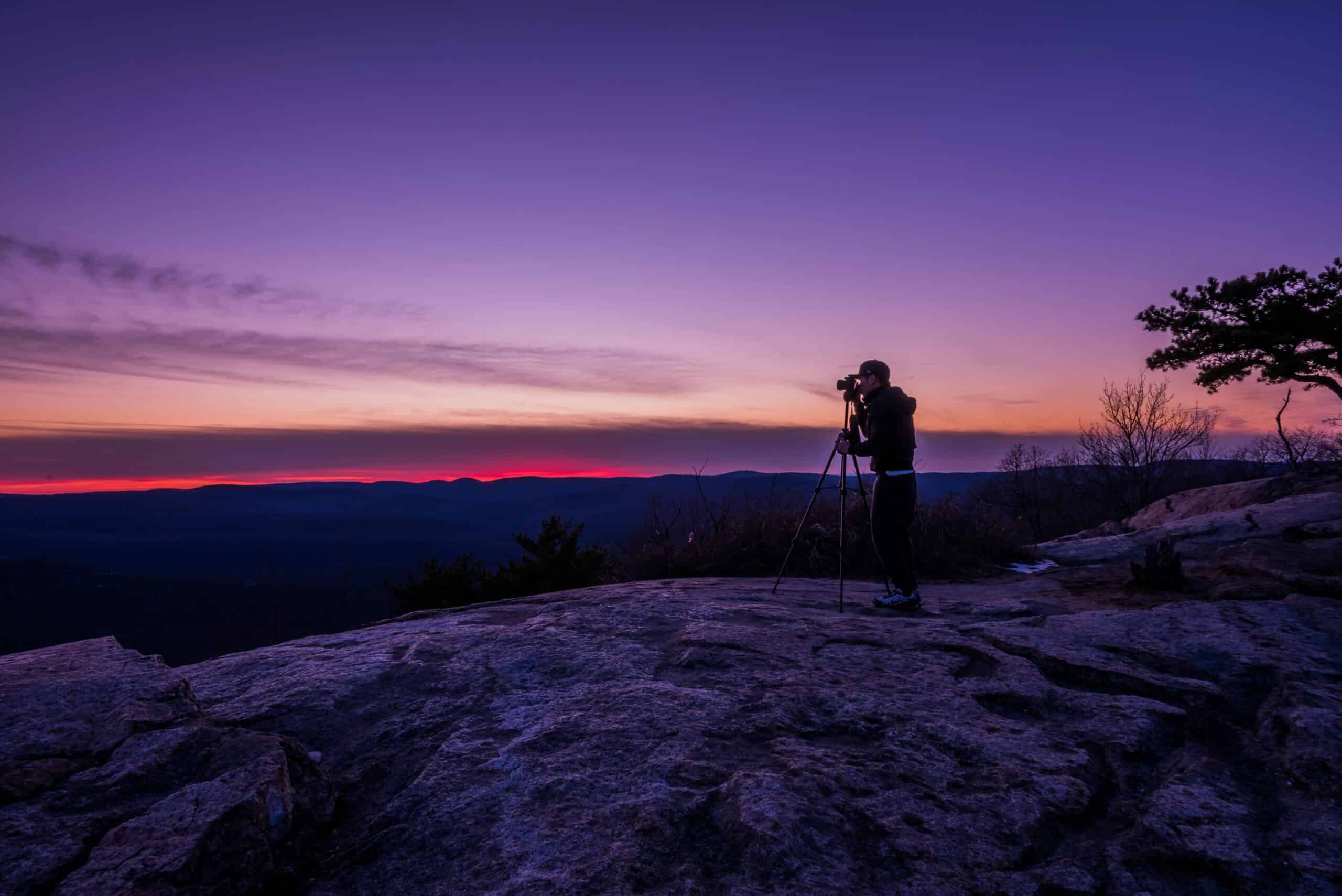
Core Gear
- Panoramic head: allows precise rotation around the lens’s no-parallax (nodal) point to eliminate foreground/background shifts. Calibrate once and mark scales for your focal lengths.
- Tripod with leveling base: fast horizon leveling means faster setup and less correction in post.
- Remote trigger or app: minimize vibrations; use a 2s self-timer if you don’t have a remote.
Optional Add-ons
- Pole or car mount: use tethers, inspect clamps, avoid gusty conditions. Wind and vibration increase stitching errors—rotate slower and shoot more overlap.
- Lighting aids: for dark interiors, portable LED panels or bounced flash can even out exposure—keep it consistent across frames.
- Weather protection: lens hood, rain covers, microfiber cloths; keep UV filter handy for salt spray.
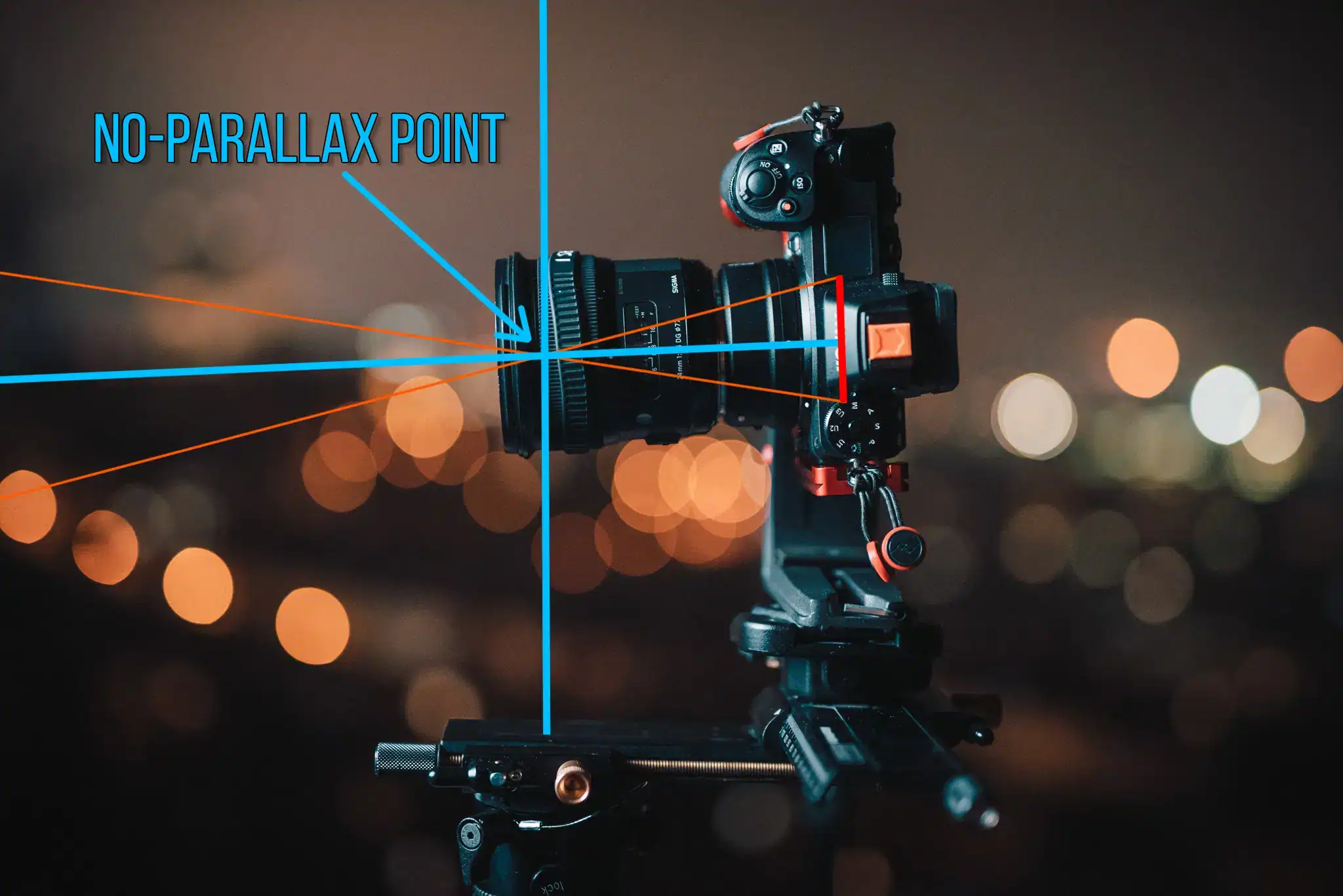
For a solid primer on panoramic head setup, see this practical tutorial on choosing and using pano heads. Panoramic head tutorial (360 Rumors)
Step-by-Step Shooting Guide
Standard Static Scenes
- Level and align nodal point: level the tripod, set your panoramic head’s vertical and horizontal rails to the marks for your focal length. Confirm by aiming at two vertical objects (one near, one far) and rotating—if they shift relative to each other, fine-tune the fore-aft rail until the shift disappears.
- Manual exposure and white balance: meter your brightest area you want to retain (e.g., sky or window highlights) and expose accordingly. Lock exposure and set a fixed white balance (Daylight/Tungsten/Custom) to keep color consistent across frames.
- Capture with the right overlap: with a rectilinear 8–12mm FOV, 25–35% overlap is safe. For a 360°:
- Fast method: 6 shots per row at −45°, 0°, +45° (18 shots) + a zenith and a nadir (20 total).
- Safe method for busy scenes: 8 shots per row (24) + Z + N = 26 total.
- Take the nadir (ground) shot: tilt the head so the lens points down to patch the tripod later. You can also shoot a handheld nadir after moving the tripod.
HDR / High Dynamic Range Interiors
- Bracket ±2 EV or ±3 EV: shoot 3–5 frames per angle to balance bright windows and dim interiors. Keep aperture constant, vary shutter speed.
- Lock white balance and turn off auto ISO: maintain uniform color and noise across brackets.
- Work methodically: complete all brackets at one angle before rotating to the next. Consider a remote with exposure bracketing automation.
Low-Light / Night Scenes
- Use longer shutter speeds: prioritize low ISO and stable support. Start at ISO 100–200 and let exposure extend to 10–30s if needed.
- Disable IBIS on tripod: in-body stabilization can cause micro-blur when the camera is perfectly still.
- Use a remote or self-timer: prevent vibrations, especially in cold or windy conditions.
Crowded Events
- Two passes: first for coverage, second to capture clean gaps when people move. You’ll mask between passes in post.
- Increase overlap to 35–40%: gives more control points across moving subjects.
- Mind parallax: keep the head perfectly set; moving subjects are easier to fix than parallax errors.
Special Setups (Pole / Car / Drone)
- Secure everything: use safety tethers, verify clamps/plates, and avoid high winds. On a pole, rotate slower and overshoot overlap (40%).
- Vibration management: on vehicles, shoot at lower speeds or parked; use higher shutter speeds and more overlap to fight micro-blur and alignment issues.
Real-World Mini Case Studies
Indoor Real Estate
Set f/8, ISO 100–200, bracket ±2 EV. Use 6×3 + Z + N for clean coverage. Lock WB to a neutral preset or custom card. Avoid pointing at bright windows on the first frame; work around the room consistently to minimize stitching seams.
Outdoor Sunset
Expose for highlights (don’t clip the sunlit sky). Bracket if needed. Windy? Add weight to your tripod and use a 2s timer. Expect flare with the sun in frame—shade the lens briefly with your hand out of frame between shots to reduce cumulative flare.
Event Crowds
Use 1/200–1/320s to freeze motion at ISO 400–800. Do two passes and mask people later. If a parade keeps moving, shoot the background first, then wait for a smaller group to fill the foreground.
If you’re new to pano head workflow, this concise walkthrough helps visualize the process:
Recommended Settings & Pro Tips
Exposure & Focus
| Scenario | Aperture | Shutter | ISO | Notes |
|---|---|---|---|---|
| Daylight outdoor | f/8–f/11 | 1/100–1/250 | 100–200 | Lock WB (Daylight). Turn off IBIS on tripod. |
| Low light/night | f/4–f/5.6 | 1/4–10s (tripod) | 100–400 | Remote trigger; consider ISO 800–1600 if wind or movement. |
| Interior HDR | f/8 | Bracket ±2 EV (3–5 frames) | 100–400 | Balance bright windows and lamps; fixed WB. |
| Action / moving subjects | f/5.6–f/8 | 1/200+ | 400–800 | Freeze motion; shoot two passes for masking. |
Critical Tips
- Manual focus at hyperfocal distance: for an 8–12mm rectilinear lens, set focus just past 1–1.5 m at f/8 to keep near-to-far sharp. Use magnified live view to confirm.
- Find and mark the nodal point: place two light stands at different distances; pan the camera—adjust the fore-aft rail until the stands stay aligned. Mark the rail position for 8mm, 12mm, 16mm.
- White balance lock: consistent WB simplifies blending. For mixed lighting, consider a custom WB using a grey card.
- RAW over JPEG: maximizes DR and color depth. The A7 IV’s 14-bit RAW is excellent for HDR merges and complex stitches.
- IBIS and OSS: turn off stabilization on tripod to avoid micro-jitter blur and alignment drift.
If you’re curious how focal length and sensor format affect spherical resolution, see this reference. DSLR spherical resolution (PanoTools Wiki)
Stitching & Post-Processing
Software Workflow
Industry workhorses like PTGui, Hugin, Lightroom/Photoshop, and Affinity Photo can stitch rectilinear ultra-wide panoramas reliably. Rectilinear UWA lenses typically need more frames than fisheyes, but deliver straight lines in architecture. Aim for ~25–35% overlap to ensure robust control points. My usual flow: pre-merge HDR brackets (if needed), batch stitch in PTGui or Hugin, then finish color and retouch in Lightroom/Photoshop. For a thoughtful review of PTGui’s strengths, this breakdown is useful. PTGui review and best practices (Fstoppers)
Cleanup & Enhancement
- Nadir patch: export a nadir patch from PTGui or clone in Photoshop; AI-based content-aware fill can be quick for simple floors.
- Color consistency: match WB and tint, then apply subtle noise reduction to shadow regions, especially if ISO ≥ 800.
- Level and straighten: set horizon and verticals in your stitcher; small yaw/roll/pitch tweaks matter.
- Output: export an equirectangular at 8K (7680×3840) for web, or 12–16K for premium VR tours. Keep a layered master TIFF/PSD for edits.
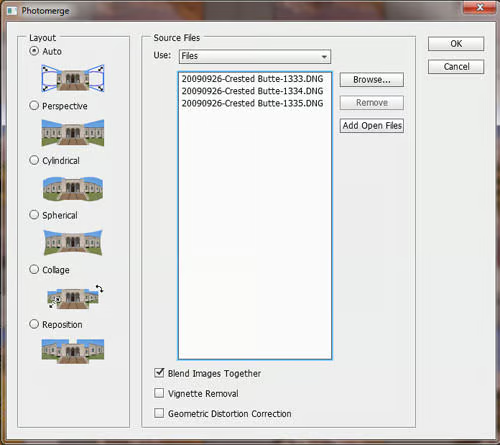
For a complete end-to-end DSLR/mirrorless 360 workflow aligned with VR platforms, this guide is a solid reference. Using a DSLR/mirrorless to shoot and stitch a 360 photo (Oculus Creator)
Useful Tools & Resources
Software
- PTGui (fast, advanced masking and control points)
- Hugin (open-source alternative with strong control)
- Lightroom / Photoshop (global edits, retouching, nadir patching)
- AI tripod removal tools (content-aware fill, generative tools)
Hardware
- Panoramic heads: Nodal Ninja, Leofoto, Sunwayfoto
- Carbon fiber tripods with leveling bases
- Wireless remote shutters (Sony Imaging Edge Mobile, Bluetooth remotes)
- Pole extensions / car mounts with tethers
Disclaimer: software/hardware names provided for search reference; check official sites for details.
Common Mistakes & How to Avoid Them
- Parallax error: always align the no-parallax point for your chosen focal length before shooting.
- Exposure flicker: manual mode, fixed WB, fixed ISO. Bracket consistently for HDR.
- Tripod shadows and footprints: capture a nadir frame and patch later.
- Ghosting from motion: shoot two passes and mask in PTGui or Photoshop.
- Night noise and blur: prioritize low ISO, use longer shutters on a stable tripod, and turn off stabilization.
If you want a quick overview of pano techniques and pitfalls, this Q&A thread collects solid community wisdom. Best techniques to take 360 panoramas (Photo.SE)
Frequently Asked Questions
-
Can I shoot handheld panoramas with the Sony A7 IV?
Yes, for simple single-row panos in good light. For full 360° spheres (especially interiors) a tripod and panoramic head are strongly recommended. Handheld increases parallax errors and stitching time—use more overlap (40%+), lock exposure/WB, and keep your pivot as fixed as possible.
-
Is the Fujifilm XF 8–16mm f/2.8 wide enough for a single-row 360?
No. With rectilinear ultra-wide lenses, you normally need multiple rows to cover zenith and nadir. A single row can make a cylindrical pano, but not a full sphere. Use 3 rows (−45°, 0°, +45°) plus zenith and nadir to complete the sphere.
-
Do I need HDR for interiors with bright windows?
Usually yes. Bracket ±2 EV or ±3 EV to retain window detail and shadow texture. Merge HDR frames before stitching, or let PTGui handle bracketed stacks. Keep WB and aperture fixed throughout.
-
How do I avoid parallax issues with this setup?
Calibrate the no-parallax point for your focal length using a panoramic head. Align a near and far object; rotate and adjust the fore-aft rail until there is no relative shift. Mark the rail positions for 8mm, 12mm, and 16mm equivalents so you can set up quickly in the field.
-
What ISO range is safe on the A7 IV in low light?
For maximum quality, stay at ISO 100–400 with longer shutters. For events or wind, ISO 800–1600 remains very usable. ISO 3200 can work with careful noise reduction. Always prefer a tripod and slower shutter before pushing ISO when possible.
Compatibility Note & Smart Alternatives
The Fujifilm XF 8–16mm f/2.8 is not compatible with the Sony A7 IV mount. If you own the A7 IV, use a Sony E‑mount ultra‑wide rectilinear lens with similar FOV such as the FE 12–24mm f/4 G, FE 12–24mm f/2.8 GM, or a prime like the FE 14mm f/1.8 GM. If you own the XF 8–16 already, pair it with a Fujifilm X‑mount body (e.g., X‑T5, X‑H2) and follow the same pano method and overlap guidelines—the technique is identical; only your field of view and final resolution change slightly.
Safety, Care, and Backup Workflow
Wind is your enemy: extend tripod legs lowest first, add weight to the center column, and avoid fully extending skinny upper leg sections. On rooftops, use a safety tether. With poles and car rigs, double-check clamps and always add a redundant strap. In rain or spray, cover gear and check for droplets on the front element between frames—droplets create stitching artifacts. For backups, shoot a second full pass (or at least a few angles around the most critical view) and maintain a dual-card workflow on the A7 IV (slot 1 RAW, slot 2 RAW/JPEG). When you return, copy to two drives and verify.