
Why This Camera & Lens Are Great for Panoramas
If you’re wondering how to shoot panorama with Sony A1 & Sigma 8mm f/3.5 EX DG Circular Fisheye, you’re already pairing one of the sharpest high‑resolution full-frame bodies with a specialized ultra‑wide lens that minimizes shot count. The Sony A1 uses a 50.1MP stacked full-frame CMOS sensor (approx. 9504×6336 px; pixel pitch ~4.16 μm) with excellent dynamic range at base ISO (around 14–15 stops) and superb color depth. The body’s 5‑axis IBIS (rated up to ~5.5 stops) helps handheld work but is best disabled on a locked‑down tripod for consistent framing.
The Sigma 8mm f/3.5 EX DG Circular Fisheye projects a circular 180° field of view in every direction on full-frame. That means you can cover a full 360×180° sphere with very few images, reducing stitching seams and time on location. Expect strong barrel distortion (by design) and some susceptibility to flare due to the bulbous front element. Stopped down to f/5.6–f/8 it’s impressively sharp across the circular image with manageable chromatic aberration that most stitchers correct automatically.
Mount compatibility note: this Sigma lens was produced in Canon EF, Nikon F, Sigma SA, and Sony A‑mount versions. On the Sony A1 (E‑mount), most users adapt the Canon EF version via Sigma MC‑11 or a Metabones EF‑E adapter. Autofocus is not critical for panoramas—manual focus is preferable—so even a basic adapter works. If your adapter is “dumb,” enable “Release w/o lens” in the camera menu.
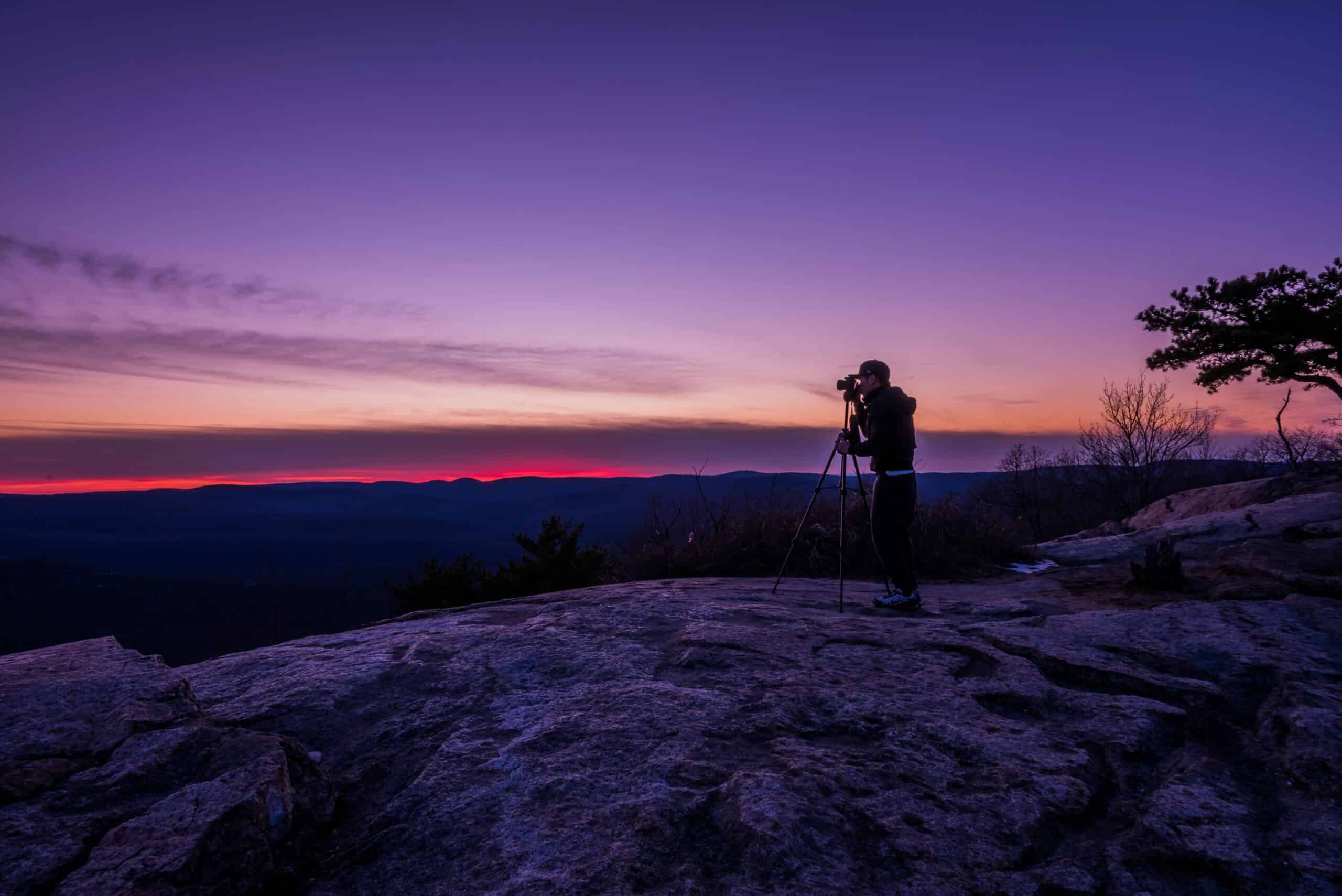
Quick Setup Overview
- Camera: Sony A1 — Full-frame 50.1MP stacked CMOS; excellent DR at ISO 100; native ISO 100–32,000 (expandable 50–102,400).
- Lens: Sigma 8mm f/3.5 EX DG Circular Fisheye — circular fisheye, 180° FOV; sharpest around f/5.6–f/8; some CA and flare if pointed near the sun.
- Estimated shots & overlap:
- 4 around at 90° yaw + 1 zenith + 1 nadir (safe, clean coverage with ~30–40% overlap).
- Advanced: 3 around at 120° yaw tilted slightly up (+5°) + 1 nadir (works in open scenes; watch overlap near the horizon).
- Difficulty: Easy–Moderate (fast capture; careful nodal alignment and flare control required).
Planning & On-Site Preparation
Evaluate Shooting Environment
Scan for moving objects (people, traffic, trees in wind), reflective surfaces (windows, glossy floors), and strong point light sources that can cause flare on a circular fisheye. If shooting through glass, get the lens nearly touching the glass (or use a rubber lens hood) to cut reflections. In interiors, note mixed lighting—lock white balance to a preset to avoid color shifts across frames.
Match Gear to Scene Goals
The Sony A1’s dynamic range lets you hold sky detail while keeping shadows usable, and the 50MP source files give you headroom for a high-res equirectangular. For interiors, keep ISO between 100–400 whenever possible; ISO 800–1600 is still very clean on the A1, but avoid pushing higher unless necessary. The 8mm circular fisheye drastically reduces shot count compared to rectilinear lenses, which is great for busy scenes and tight schedules—but be mindful of the fisheye’s flare and the need for precise no‑parallax alignment.
Pre-shoot Checklist
- Charge batteries, format fast UHS‑II/CFexpress media, and clean lens/sensor.
- Level the tripod and verify pano head calibration (no‑parallax point) before critical work.
- Safety: tether your camera on rooftops or poles; check wind gusts and tripod stance.
- Backup: shoot an extra full round at the end in case someone walks into a seam.
Essential Gear & Setup
Core Gear
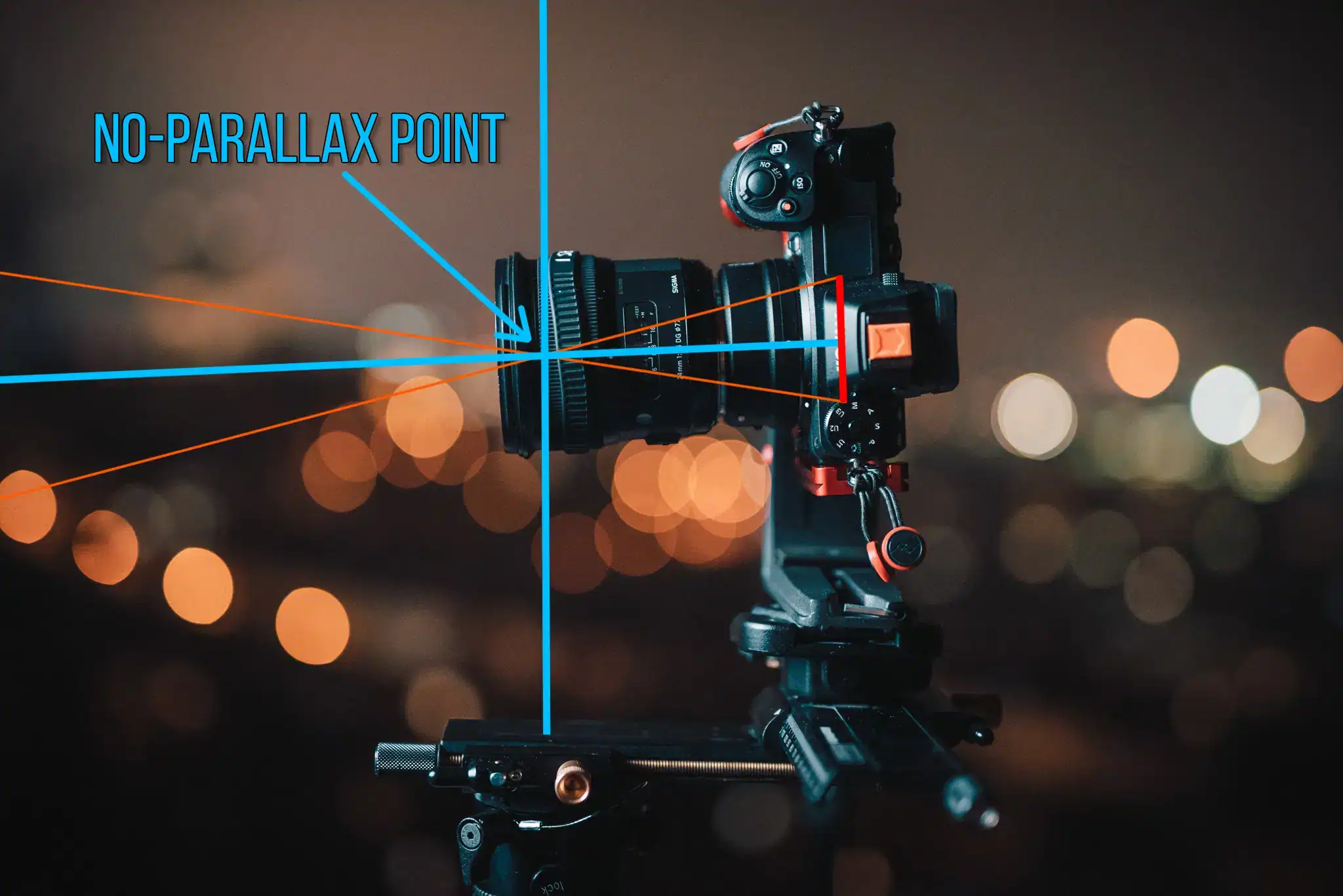
- Panoramic head: Enables rotation around the lens’s no‑parallax (entrance pupil) point so near/far objects don’t shift between frames. Calibrate once, mark the rail, and your stitches will be seamless.
- Stable tripod with leveling base: A leveling base speeds setup and keeps horizons straight, saving time in post.
- Remote trigger or Sony Imaging Edge Mobile app: Fire the A1 without touching the camera to avoid micro‑shake.
Optional Add-ons
- Carbon pole or car mount: Great for crowds and rooftops. Use safety lines, inspect clamps, and respect wind load; rotate more slowly to damp vibrations.
- LED panels for dark interiors: Even low-intensity fill can make HDR brackets cleaner and reduce noise.
- Weather protection: Rain covers and microfiber cloths; the Sigma’s front element beads water but must be kept spotless.
Step-by-Step Shooting Guide
Standard Static Scenes
- Level and align: Level your tripod, mount the panoramic head, and set the fore‑aft rail so the lens rotates around the no‑parallax point. Use two vertical objects (one near, one far) and rotate; adjust until they don’t shift relative to each other.
- Lock exposure and white balance: Set Manual mode. Meter the brightest portion you need to preserve (e.g., sky or window), then adjust so highlights aren’t clipped. Lock white balance to Daylight/Tungsten as needed to avoid color shifts between frames.
- Capture sequence:
- 4‑around method (recommended): 0°, 90°, 180°, 270° with ~30–40% overlap; tilt slightly up (+5°) if you want more zenith coverage.
- Zenith shot: Tilt up to cover remaining sky/ceiling.
- Nadir shot: Tilt down over the tripod. You can also shoot a handheld nadir after moving the tripod away for an easier patch.
- Notes on focus: Switch to MF, magnify, and focus slightly short of infinity. At 8mm f/8 on full‑frame, the hyperfocal distance is roughly ~0.27 m, so setting focus around 0.3 m keeps everything from near foreground to infinity sharp.
HDR / High Dynamic Range Interiors
- Bracket ±2 EV (3 or 5 frames): Windows and bright fixtures often exceed a single exposure’s DR. The A1’s clean ISO allows base ISO bracketing to maximize highlight detail.
- Keep WB locked and avoid flicker: Manual exposure + fixed WB ensures your brackets stitch smoothly without tonal flicker.
- Speed hints: With so few positions (3–6 views), HDR adds minimal time but greatly improves quality inside high-contrast rooms.
Low-Light / Night Scenes
- Use a tripod and remote: Turn off IBIS on the A1 to avoid sensor micro‑motion. Use 2‑second timer or remote/app.
- Exposure targets: f/4–f/5.6, shutter 1/15–1/60 (longer if wind is calm), ISO 200–800. The A1 stays clean to ISO 1600; go higher only if motion demands it.
- Reduce flare: Shade the lens with your hand or body when bright sources are just out of frame; shoot a spare frame without the shade to clone in edges if needed.
Crowded Events
- Two passes: First for coverage, second to catch gaps in foot traffic at each yaw angle.
- Short shutter: Use 1/200–1/500 if you want to freeze people and reduce ghosting. You can blend later when stitching.
- Mind your shadow: Move slightly between nadir shots if needed so you have clean pixels to patch.
Special Setups (Pole / Car / Drone)
- Poles: Balance your rig by keeping the center of mass close to the pole axis. Use guy‑lines when windy and rotate slowly to damp oscillation.
- Car mounts: Avoid high speeds; vibrations smear fine detail. Consider higher shutter speeds (1/250+) and shoot multiple redundant rounds.
- Safety: Always tether the camera. Never work near edges or traffic without a spotter.
Recommended Settings & Pro Tips
Exposure & Focus
| Scenario | Aperture | Shutter | ISO | Notes |
|---|---|---|---|---|
| Daylight outdoor | f/8–f/11 | 1/100–1/250 | 100–200 | Lock WB (Daylight). Watch for sun in frame and shade with your hand. |
| Low light/night | f/4–f/5.6 | 1/30–1/60 | 200–800 | Tripod + remote; IBIS off; use 2s timer if needed. |
| Interior HDR | f/8 | Bracket ±2 EV | 100–400 | Balance windows and lamps; keep WB fixed to avoid color seams. |
| Action / moving subjects | f/5.6–f/8 | 1/200+ | 400–800 | Freeze motion; consider two passes to mask movement. |
Critical Tips
- Manual focus at or near hyperfocal. Verify with focus peaking and 7–14× magnification.
- No‑parallax calibration: Start with the lens’s entrance pupil roughly forward of the rotation axis (typical fisheye rails land near the front element). Fine‑tune using near/far alignment tests, then mark your rail for repeatability.
- White balance lock: Mixed lighting is common indoors. Pick a fixed Kelvin or preset and correct globally in post.
- Shoot RAW: The A1’s 14‑bit RAW maximizes dynamic range and color latitude; JPEG throws away recoverable highlight/shadow data.
- Stabilization: Turn IBIS off on a tripod; leave it on only for handheld sequences.
- Shutter mode: Prefer mechanical or EFCS for consistency on a tripod to avoid potential rolling‑shutter artifacts of electronic shutter.
Stitching & Post-Processing
Software Workflow
Import RAWs to Lightroom or Capture One, apply global white balance and lens corrections sparingly (most stitchers handle fisheye mapping better). Export to a stitcher like PTGui or Hugin. Circular fisheye sets are fast to stitch: fewer images, fewer seams, and robust control point generation. For this combo, standard fisheye projection with ~30% overlap works well, and most scenes solve automatically. Expect an equirectangular output between ~10k–14k pixels wide from a 50MP A1 set (varies with shot count and overlap). For a deep dive into PTGui’s capabilities, see this review of PTGui’s panorama tools at the end of the section. PTGui review on Fstoppers
Cleanup & Enhancement
- Nadir patch: Use PTGui Viewpoint Correction, Photoshop’s Clone/Heal, or AI tripod removal. A handheld nadir plate makes perfect patches easy.
- Color and noise: Apply gentle noise reduction for interior HDR shadows; keep saturation natural to avoid banding in gradients.
- Leveling: Fix horizon, roll, and pitch in your stitcher so the panorama is correctly oriented for VR viewers.
- Export formats: Save a 2:1 equirectangular JPEG (quality 90–100) at 8192×4096 or higher. For archival, keep layered PSD/PSB and source RAWs.
For panoramic head setup fundamentals, Oculus’s high‑end DSLR 360 guide is an authoritative reference. Set up a panoramic head for perfect 360 photos
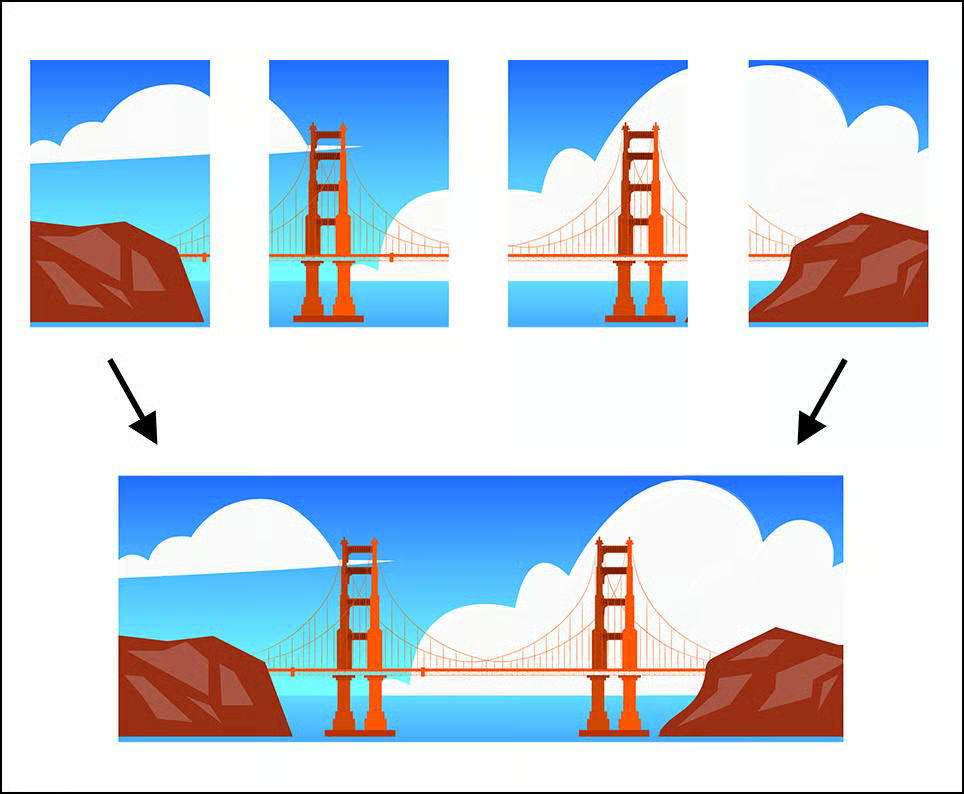
Curious about spherical resolution math (how lens FOV, sensor MP and shot count translate to pano resolution)? The PanoTools wiki is a goldmine. Understanding DSLR spherical resolution
Useful Tools & Resources
Software
- PTGui panorama stitching (fast fisheye solver, great masking and viewpoint correction)
- Hugin (open-source alternative with fisheye support)
- Lightroom / Photoshop (RAW development, nadir patching)
- AI tripod removal tools (content-aware or trained models to clean nadirs)
Hardware
- Panoramic heads (Nodal Ninja, Leofoto, Fanotec) with fore‑aft rail markings
- Carbon fiber tripods (good stiffness-to-weight for field work)
- Leveling bases (3‑way or half‑ball for quick leveling)
- Wireless remotes (Sony Bluetooth remote or Imaging Edge Mobile)
- Pole extensions / car mounts (with safety tethers and anti‑rotation pins)
Disclaimer: product names for reference; verify latest features and compatibility on official sites.
Common Mistakes & How to Avoid Them
- Parallax error: Not aligning the entrance pupil causes stitching ghosts on near objects. Calibrate once; mark your rail.
- Exposure flicker: Auto exposure/WB changes between frames. Use Manual exposure and a fixed WB preset.
- Tripod shadow or photographer in frame: Shoot a dedicated nadir and mask yourself out; rotate sun‑side frames last.
- Flare and veiling: Fisheyes are flare‑prone. Shade the lens, avoid direct sun, and take a spare frame to retouch.
- High ISO noise: The A1 is good at ISO 1600–3200, but for maximum detail, keep ISO ≤800 on tripod and lengthen shutter instead.
Frequently Asked Questions
-
Can I shoot handheld panoramas with the Sony A1?
Yes, but a panoramic head on a tripod still yields the best results. Handheld with a fisheye can work for quick captures—use fast shutter (1/250+), IBIS on, and overlap generously (40%+). Expect more stitching warps around near objects.
-
Is the Sigma 8mm f/3.5 circular fisheye wide enough for single‑row 360?
Absolutely. 4 around + zenith + nadir is a robust recipe. In simple outdoor scenes you can get away with 3 around + nadir, but overlap near the horizon will be tighter and stitching may be less reliable.
-
Do I need HDR for interiors with bright windows?
Often yes. Bracketing ±2 EV (3–5 frames) prevents blown highlights and heavy shadow noise. The A1’s DR helps, but HDR ensures crisp window detail and clean midtones in a single stitch.
-
How do I avoid parallax issues with this lens?
Use a pano head and align the rotation axis to the lens’s entrance pupil. With the Sigma 8mm, the entrance pupil sits near the front group; calibrate using near/far objects and mark your rail so you can repeat the setting.
-
What ISO range is safe on the A1 in low light?
On a tripod, aim for ISO 100–400 for maximum detail. ISO 800–1600 is still very clean; 3200 remains usable but begins to trade fine texture. Favor longer shutters over higher ISO when the scene is static.
-
Can I save a custom pano setup on the A1?
Yes. Store your preferred pano settings (Manual exposure, MF, IBIS off, fixed WB, 2s timer) to a Custom mode (1/2/3 on the mode dial) for instant recall on location.
-
How do I reduce flare with a circular fisheye?
Avoid placing the sun just outside the frame edge; shade the lens with your hand, a flag, or your body, and shoot a clean plate to edit out the shade later. Clean the front element meticulously.
-
What’s the best tripod head for this setup?
A compact, precise panoramic head with fore‑aft rail (e.g., Nodal Ninja or Leofoto) is ideal. Look for indexed rotators (click stops at 90°/120°), a vertical arm with scale, and a solid clamp.
Field‑Tested Scenarios
Indoor Real Estate HDR
Mount the A1 on a leveled pano head, ISO 100–200, f/8, bracket ±2 EV. Use 4‑around + zenith; shoot a handheld nadir once you move the tripod. The Sigma’s circular fisheye captures ceiling lights and tight corners with far fewer shots than a rectilinear lens. Result: faster on‑site time and consistent exposure across the tour.
Outdoor Sunset View
Meter for highlights to preserve the sunlit sky (ETTR within reason), set WB to Daylight, f/8, 1/100–1/250, ISO 100. Shoot 4‑around, then a zenith for the upper sky. Take an extra set a few minutes later if the light is changing rapidly—blend the best sky and the cleanest ground in post.
Event Crowds
Use 1/200–1/500 and ISO 400–800, f/5.6–f/8. Do two passes around to mask moving people later. The fisheye’s minimal shot count lets you finish quickly between crowd surges.
Rooftop or Pole Shooting
Attach the rig to a carbon pole; keep it vertical, rotate slowly, and use a remote trigger. In wind, increase shutter speed and take redundant rounds. Safety first: tether the camera and never work by edges without a spotter.
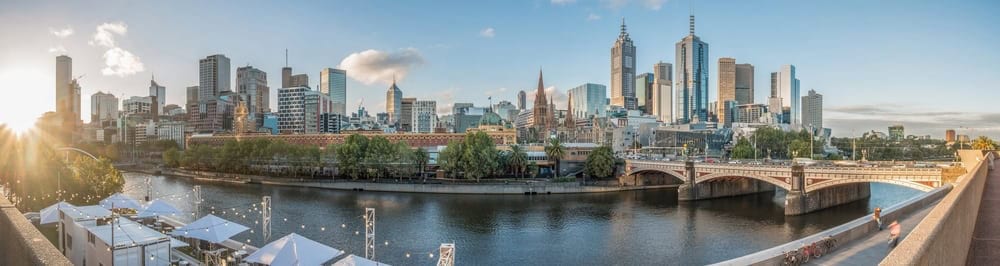
For more on panoramic head fundamentals from a practical perspective, this tutorial expands on key concepts when leveling and calibrating. Panoramic head tutorial