Why This Camera & Lens Are Great for Panoramas
If you want to learn how to shoot panorama with Sony A1 & Laowa 4mm f/2.8 Circular Fisheye, you’ve picked a powerful combo for fast, high‑quality 360 photos. The Sony A1 is a 50.1MP full-frame mirrorless with a stacked BSI sensor, excellent dynamic range (around 14–15 stops at base ISO), fast readout, and reliable color at low ISO. Its pixel pitch is approximately 4.16 µm, giving you crisp detail and smooth tonal transitions—perfect for panoramas where you’ll push and pull shadows and highlights. The body’s IBIS is helpful for handheld shooting but can be switched off on a tripod for best consistency.
The Laowa 4mm f/2.8 Circular Fisheye is an ultra‑wide, circular fisheye designed for APS‑C mounts (including Sony E). Mounted on the A1, you’ll want to enable APS‑C capture for optimal file efficiency, yielding approximately 21MP images with a circular image in-frame. Its extreme field of view (~210° circular FOV) is ideal for 360 photo capture because you can cover the full sphere with fewer shots—typically three around at 120°, plus an optional nadir patch. Compared with rectilinear lenses, a circular fisheye needs fewer frames, stitches more reliably, and speeds up your workflow. The tradeoffs are intentional fisheye distortion and some chromatic aberration wide-open; both are manageable in post and largely normalized in an equirectangular projection.
Quick Setup Overview
- Camera: Sony A1 — Full-frame 35mm sensor, 50.1MP; base ISO 100; strong DR; 5-axis IBIS; APS‑C crop output ~21MP; mechanical and electronic shutters.
- Lens: Laowa 4mm f/2.8 Circular Fisheye — circular fisheye for APS‑C; very wide 210° FOV; sharp from f/5.6–f/8; some edge CA at wider apertures.
- Estimated shots & overlap: With Laowa 4mm on APS‑C: 3 shots around at 120° typically covers 360×180° with 25–35% overlap; add 1 handheld nadir for clean ground. For extra safety in tight spaces, shoot 4 around at 90°.
- Difficulty: Easy–Intermediate (few shots, but requires precise nodal alignment and consistent exposure).
Planning & On-Site Preparation
Evaluate Shooting Environment
Assess light direction, contrast, reflections, and movement. For interiors with bright windows, plan on HDR bracketing to retain detail. Outdoors, consider sun position—this fisheye sees everything, so strong backlight can cause flare; shade the front element when possible. If shooting near glass, angle slightly and keep the lens as close to the glass as practical (a few centimeters) to reduce ghosting and double reflections.
Match Gear to Scene Goals
The Sony A1’s dynamic range and low‑ISO performance are ideal for clean panoramas. For interiors, ISO 100–400 gives you malleable files with deep shadow recovery; you can safely push to ISO 800–1600 if you must, but tripod use is recommended. The Laowa 4mm circular fisheye minimizes the number of shots—great for locations with people or changing light—while still producing high-resolution equirectangular outputs. The tradeoff is visible fisheye distortion in the raw frames, which is normal for this workflow and resolved at export.
Pre-shoot Checklist
- Charge batteries; format fast cards; enable dual-slot backup if available.
- Clean the front element—fisheye lenses are extremely sensitive to smudges and flare.
- Tripod and panoramic head leveled; nodal point pre‑calibrated (details below).
- Safety: tether gear on rooftops and poles; mind wind gusts; avoid walkways; consider a spotter.
- Backup workflow: do one complete round, then a quick second round in case of stitching or motion issues.
Essential Gear & Setup
Core Gear
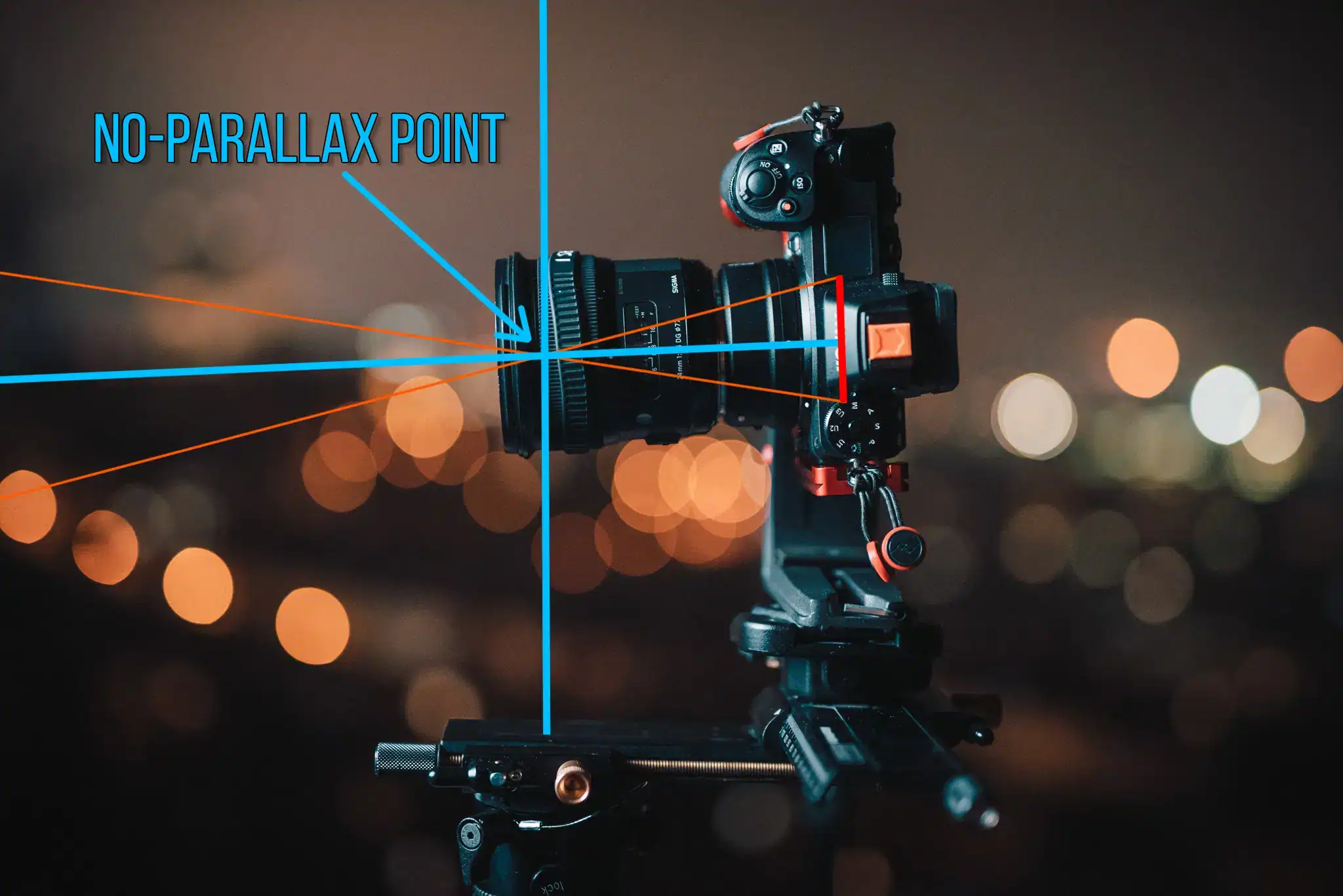
- Panoramic head: Lets you rotate around the lens’s no-parallax point (entrance pupil) to eliminate parallax errors. This is critical for reliable stitches in tight spaces.
- Stable tripod with a leveling base: A leveled rig simplifies stitching and avoids tilted horizons in equirectangular output.
- Remote trigger or camera app: Fire the shutter without touching the camera to avoid micro‑blur, especially at longer exposures.
Optional Add-ons
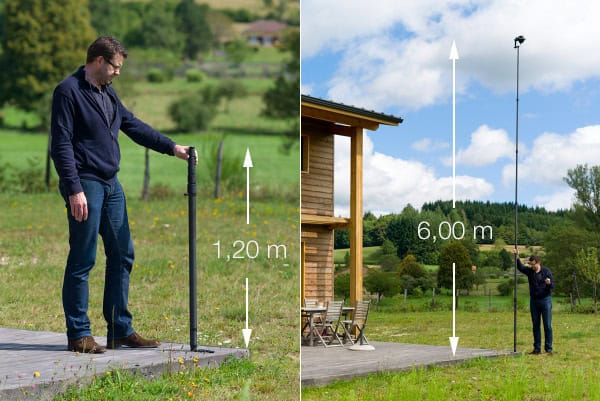
- Pole or car mount: Great for elevated or moving perspectives; always tether gear and use higher shutter speeds to fight vibration.
- Lighting aids: Small LED panels for interiors; keep color temp consistent to avoid WB mismatches.
- Weather protection: Rain covers, microfiber cloths, and gaffer tape to secure cables and caps.
For a deeper dive into panoramic head theory and setup, see this panoramic head tutorial to visualize alignment steps and best practices. Panoramic head tutorial
Step-by-Step Shooting Guide
Standard Static Scenes
- Level and align: Level your tripod. Mount the pano head and set the camera so rotation passes through the lens’s entrance pupil. A quick test: place two vertical objects (one close, one far) along the frame edge; rotate the camera. If they shift relative to each other, adjust fore/aft until the shift disappears.
- Exposure and WB: Switch to Manual mode. Set a fixed white balance (Daylight outside, custom Kelvin indoors). Shoot 14‑bit RAW (Lossless Compressed) for maximum latitude. With the A1, base ISO 100–200 is ideal for daylight.
- Capture sequence: With the Laowa 4mm in APS‑C mode, shoot 3 frames around at 120° intervals. Use the pano head’s detents or count stops (e.g., every 2 clicks on a 60° rotator). If you’re close to foreground objects, consider 4 frames at 90° for extra overlap.
- Nadir patch: After the main round, move the tripod slightly and shoot a handheld frame of the ground for clean tripod removal (aim for similar exposure and WB).
HDR / High Dynamic Range Interiors
- Bracket ±2 EV (3 or 5 frames) to balance bright windows and dark corners. The A1’s DR is excellent, but bracketing preserves highlight texture.
- Lock WB and focus; shoot brackets quickly per position to minimize movement between frames.
- Keep ISO 100–400 when possible; let shutter lengthen since the rig is on a tripod.
Low-Light / Night Scenes
- Start at f/4–f/5.6, ISO 100–400, and drag shutter as needed (1–10s) on a stable tripod. Turn off IBIS to avoid sensor “float.”
- Use a remote or 2s timer; enable electronic front curtain or mechanical shutter to avoid LED banding in artificial light.
- If wind or vibration is present, raise ISO to 800–1600 and keep shutter around 1/30–1/60 to protect sharpness.
Crowded Events
- Do two passes: one quick, then a second waiting for clean gaps. Mask moving people during stitching.
- Prefer 4 around at 90° for more overlap when crowds are near the camera.
Special Setups (Pole / Car / Drone)
- Pole: Tether the camera and use a safety line. Favor 1/250–1/500s shutters to reduce sway blur. Consider enabling IBIS if you’re not on a rigid support.
- Car mount: Use mechanical shutter with anti-flicker off unless under LEDs; set 1/500–1/1000s, ISO 400–1600. Avoid strong crosswinds and check mount torque.
- Drone: This lens/camera combo is heavy; use only rated platforms. Verify local regulations and practice redundancy.
Recommended Settings & Pro Tips
Exposure & Focus
| Scenario | Aperture | Shutter | ISO | Notes |
|---|---|---|---|---|
| Daylight outdoor | f/8–f/11 | 1/100–1/250 | 100–200 | Lock WB to Daylight; use mechanical shutter to avoid banding under LEDs |
| Low light/night | f/4–f/5.6 | 1/30–1/60 (or longer on tripod) | 100–800 (up to 1600 if needed) | Tripod + remote; turn off IBIS; watch wind |
| Interior HDR | f/8 | Bracket ±2 EV (3–5 frames) | 100–400 | Bracket quickly; consistent WB; avoid moving items |
| Action / moving subjects | f/5.6–f/8 | 1/200+ | 400–800 | Two-pass capture to minimize ghosting in stitch |
Critical Tips
- Manual focus: With a 4mm on APS‑C, set focus near 0.8 m at f/8 for sharpness from ~0.4 m to infinity. Tape the focus ring to prevent drift.
- Nodal calibration: Start with the camera centered on the rotator. Slide the rail so the entrance pupil aligns over the rotation axis. Mark your rail once you find the sweet spot for the A1 + Laowa 4mm.
- White balance lock: Set a Kelvin value or consistent preset for every frame and bracket to avoid color mismatches in stitching.
- RAW over JPEG: Use 14‑bit RAW (Lossless Compressed) on the A1 for maximum DR and smoother color gradients.
- IBIS on/off: Off for tripod work; On may help for handheld or pole shots (test for micro‑jitter before committing).
- A1 APS‑C mode: Enable APS‑C capture for this APS‑C lens to save card space and buffer; output will be ~21MP per frame.
Stitching & Post-Processing
Software Workflow
Import your RAWs into Lightroom/ACR for basic exposure and WB normalization (apply globally to all frames and brackets). For stitching, PTGui and Hugin handle circular fisheyes exceptionally well—set Lens Type to “Fisheye Circular,” set FOV to around 210°, and define the circular crop. With the Laowa 4mm, three shots around at 120° usually auto‑align with 25–35% overlap. Expect equirectangular outputs in the 8K–12K range depending on sharpening and overlap. PTGui is a top choice for complex panoramas
Keep overlap consistent (about 25–30% with fisheye) for the best automatic control point generation. Rectilinear lenses need more frames and tighter overlap, but your circular fisheye simplifies this stage. For high‑end VR pipelines and file specs, these creator guidelines are helpful at a glance. DSLR/Mirrorless 360 photo guide
Cleanup & Enhancement
- Tripod/nadir patch: Shoot a dedicated nadir plate or use content-aware fill/clone tools. Many panorama tools support nadir patching and masking.
- Color and NR: Apply global color balance first; then selective noise reduction and sharpening. The A1 files tolerate mild shadow pushes very well at ISO ≤400.
- Leveling: Use horizon and vertical line tools to correct yaw/pitch/roll after the stitch.
- Export: Save as 2:1 equirectangular JPEG or TIFF. Standard web VR sizes are 8K–12K on the long edge; export higher for archive if needed.
If you’re new to panoramic heads, this hands-on primer covers setup steps and pitfalls in clear diagrams. Set up a panoramic head for high-end 360s
Useful Tools & Resources
Software
- PTGui panorama stitching
- Hugin (open source)
- Lightroom / Adobe Camera Raw / Photoshop
- AI tools for tripod/nadir removal
Hardware
- Panoramic heads (Nodal Ninja, Leofoto, Sunwayfoto)
- Carbon fiber tripods with leveling base
- Wireless remote shutters or Sony Imaging Edge Mobile
- Pole extensions / vehicle mounts with safety lines
Disclaimer: software/hardware names are for reference; check official sources for the latest features and compatibility.
Field Scenarios: What Works Best
Indoor Real Estate
Use a tripod, f/8, ISO 100–200. Bracket ±2 EV (3–5 frames) for each position to tame bright windows. Hide yourself and reflections—this fisheye sees behind you, so step aside before each exposure. Expect clean stitches with 3 around at 120°, but use 4 around if furniture is very close to the lens.
Outdoor Sunset
Bracket for the sky and foreground; consider a short‑exposure sky plate to reduce sun bloom and blend later. Shield the lens from direct sun with your hand (out of frame) or time captures when the sun is partially obscured by architecture or trees.
Events with Crowds
Use 1/200–1/500s depending on movement. Shoot two rounds: fast pass to lock the scene, then a second to fill gaps. In PTGui, use masks to prioritize frames with fewer people crossing seams.
Rooftop or Elevated Pole
Safety first: tether the camera and use a spotter. Favor 1/250–1/500s, ISO 200–800. Slightly underexpose to protect highlights and bring up shadows in post; the A1’s DR handles this well.
Car-Mounted Capture
Plan routes for consistent lighting; turn off stabilization on rigid mounts. Use 1/500–1/1000s and stitch single rounds to minimize background mismatches from vehicle motion.
Safety, Limitations, and Honest Gotchas
- Wind + pole: A fisheye’s bulbous front element acts like a sail. Keep the rig low in gusts; consider guy lines.
- Flare: Fisheyes are prone to flare; bring a small flag/clip to shade the lens between frames without entering the image circle.
- Electronic shutter banding: Under LED or some fluorescent lights, use mechanical shutter or anti-flicker to avoid banding artifacts across the panorama.
- Reflections: Back away from mirrors or glass, and angle slightly; remove yourself from line-of-sight during exposure.
- Data safety: Use redundant cards and consider an immediate second pass—if someone walks through a seam, you’ll have alternates to mask.
Common Mistakes & How to Avoid Them
- Parallax error → Always align the entrance pupil on a pano head; verify with the near/far object test.
- Exposure flicker → Manual exposure and locked WB; avoid auto ISO and auto WB.
- Tripod in frame → Shoot a dedicated nadir plate or patch later in post.
- Ghosting from motion → Double-pass capture and masking in PTGui/Hugin.
- High-ISO noise → Use tripod, longer shutter, and keep ISO ≤800 when possible on the A1 for the cleanest files.
For general panoramic techniques and community‑tested tips, this Q&A is a solid reference after you learn the basics. Panorama techniques Q&A
Frequently Asked Questions
-
Can I shoot handheld panoramas with the Sony A1?
You can in a pinch, but a pano head is strongly recommended. Handheld 3‑around with a circular fisheye can work outdoors with distant subjects. Indoors or with close foregrounds, parallax will cause stitching errors—use a tripod and aligned nodal point.
-
Is the Laowa 4mm f/2.8 wide enough for a single-row 360?
Yes. On the A1 in APS‑C mode, three shots around at 120° typically cover the full sphere with adequate overlap. Add a nadir patch shot for a clean ground and consider 4 around at 90° if objects are very close.
-
Do I need HDR for interiors with bright windows?
Often, yes. Bracket ±2 EV (3–5 frames) per view to retain highlight detail through windows while keeping shadow noise low. The A1’s DR is strong, but HDR ensures cleaner results and simpler post.
-
How do I avoid parallax issues with this combo?
Mount the A1 + Laowa on a pano head and calibrate the entrance pupil: align a near and far vertical, rotate, and adjust fore/aft until the relative shift disappears. Mark that rail position for repeatable, fast setups.
-
What ISO range is safe on the A1 in low light?
For tripod work, ISO 100–400 is ideal; push to 800–1600 if wind or movement demands faster shutter speeds. The files remain robust, but always prefer longer shutter over higher ISO when possible.
Notes Specific to Sony A1 & Laowa 4mm
- Enable APS‑C capture: Reduces file size and speeds workflow with this APS‑C lens; you’ll get about 21MP per frame.
- Aperture sweet spot: f/5.6–f/8 for best corner sharpness; stop down to f/8 for interiors and scenes with near objects.
- Focusing method: Use MF and set around 0.7–0.8 m at f/8; test once on-site and leave it.
- Detents: For 3 around, use 120° increments. On a 60° detent ring, skip one click each time to land at 0° → 120° → 240°.