
Why This Camera & Lens Are Great for Panoramas
If you’re wondering how to shoot panorama with Pentax K-1 II & Tokina ATX-i 11-20mm f/2.8, you’re starting with a rugged, high‑quality platform. The Pentax K-1 II is a full‑frame DSLR with a 36.4MP sensor (approx. 35.9 × 24.0 mm, pixel pitch ~4.88 μm) and excellent weather sealing. It offers robust in-body image stabilization (IBIS), deep dynamic range at base ISO (around 14 stops), and dependable ergonomics for tripod work. The Tokina ATX-i 11–20mm f/2.8 is a rectilinear ultra‑wide zoom designed for APS‑C. On the K‑1 II, it will automatically trigger APS‑C crop mode (or you can force it), delivering about 15MP images—still plenty for high-quality 360 photos and virtual tours.
For panoramas, this pairing provides three big advantages: (1) fast f/2.8 aperture when you need to keep shutter speeds up or shoot interiors; (2) rectilinear rendering that avoids fisheye stretching; and (3) the K-1 II’s strong high‑ISO performance and weather sealing, which make it reliable outdoors in wind, mist, or cold. While a fisheye lens can reduce shot count, the Tokina’s rectilinear view yields more natural lines—especially for architecture and real estate—at the cost of a few extra frames. Expect modest barrel distortion at the wide end that stitches cleanly when you use proper overlap and a calibrated panoramic head.
Quick Setup Overview
- Camera: Pentax K‑1 II — Full‑Frame 36.4MP CMOS, IBIS, weather sealed, strong DR at ISO 100–200.
- Lens: Tokina ATX‑i 11‑20mm f/2.8 — rectilinear APS‑C ultra‑wide zoom; sharpest around f/5.6–f/8; moderate CA/distortion, easily corrected in post. On K‑1 II it runs in APS‑C crop (~15MP).
- Estimated shots & overlap (tested baselines):
- 11mm (APS‑C crop, ~16.5mm FF equivalent): 8 shots around (45° spacing) + 1 zenith + 1 nadir, 30–35% overlap.
- 14mm: 10 shots around + zenith + nadir, 30% overlap.
- 20mm: 12 shots around + zenith + nadir, 25–30% overlap.
- Difficulty: Moderate (rectilinear ultra‑wide needs a bit more frames than fisheye, but stitches very cleanly with good nodal alignment).
Planning & On-Site Preparation
Evaluate Shooting Environment
Before mounting the K‑1 II, scan the scene for moving elements (people, foliage, traffic), reflective surfaces (glass, polished floors), and bright light sources (windows, the sun). For glass, press a rubber lens hood against it and shoot perpendicular to minimize reflections and flare. If you must shoot near glass, keep at least 30–50 cm clearance to reduce ghosting, and use a dark cloth or your body to block stray light. For sunsets, plan for bracketing to preserve highlight detail while keeping shadows clean.
Match Gear to Scene Goals
The K‑1 II’s DR and color depth at ISO 100–200 are excellent for outdoor panos, and its ISO tolerance is comfortable up to 800–1600 for low-light scenes when needed. The Tokina 11–20mm keeps straight lines straight—perfect for real estate and architecture. At 11mm, you can complete a single‑row 360 with 8 frames around plus top/bottom; for tighter spaces, tilt up and down for extra coverage. If you need fewer shots or are working in rapidly changing scenes, consider shooting at 11–14mm to minimize frame count while maintaining good overlap for stitching.
Pre-shoot Checklist
- Charge two batteries; format and carry two high‑speed SD cards.
- Clean front/rear elements; check sensor for dust (f/16 test shot on sky).
- Level tripod and pre‑calibrate panoramic head for the Tokina at your chosen focal length.
- Safety: if shooting on rooftops or near traffic, tether your camera, weigh down the tripod, and watch wind gusts.
- Backup workflow: do a second safety pass at the end, especially if the scene has moving subjects.
Essential Gear & Setup
Core Gear
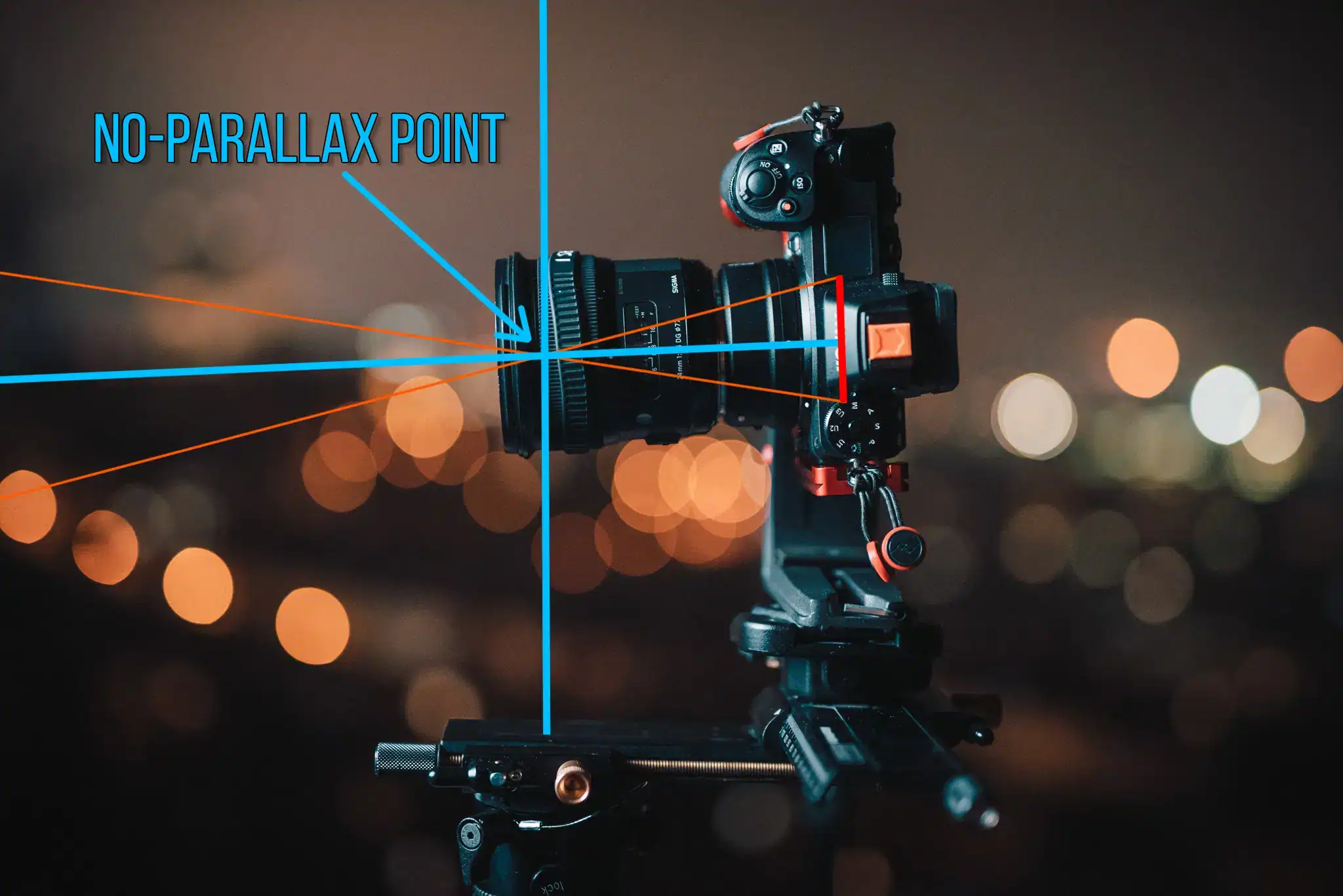
- Panoramic head: Align the lens’s entrance pupil (nodal point) over the rotation axis to eliminate parallax. This ensures foreground and background elements stay aligned between frames, making stitching robust.
- Stable tripod with a leveling base: Leveling removes horizon drift and speeds multi‑row work.
- Remote trigger or app: Use a remote, 2s timer, or mirror lock‑up to eliminate vibrations.
Optional Add-ons
- Pole or car mount: Use a safety tether, add guy lines in wind, and keep rotation smooth to avoid motion blur. For car rigs, test at low speeds and watch vibration-induced blur.
- Lighting aids: Small LED panels can lift shadow corners in interiors; avoid mixing heavy color temperatures.
- Weather protection: Rain covers and an umbrella can prevent drizzle and flare. The K‑1 II is weather‑sealed but still protect the lens front element.
For deeper nodal head setup techniques and field examples, this panoramic head tutorial is a solid reference at the end of your prep phase. Panoramic head alignment guide
Step-by-Step Shooting Guide
Standard Static Scenes
- Level and center: Set the tripod on firm ground. Use the leveling base and the K‑1 II’s built‑in level. Make sure the panoramic head’s rotation is precisely horizontal.
- Nodal calibration: With two vertical objects (one near, one far), rotate the camera and adjust the rail until the objects do not shift relative to each other. On the Tokina 11–20mm, the entrance pupil at 11mm sits roughly above the front portion of the zoom ring. Start about 70–80 mm forward of the sensor plane and fine‑tune visually.
- Exposure and WB lock: Switch to Manual (M) mode. Meter the brightest area you must retain detail in, then set a consistent exposure for all frames (e.g., f/8, 1/125, ISO 100). Set white balance to a fixed preset or Kelvin (e.g., Daylight 5200–5600K) to avoid color shifts during stitching.
- Focus: Use live view and manual focus. At 11mm f/8 on APS‑C crop, set focus near the hyperfocal (~0.8 m) to keep everything sharp; at 20mm f/8, hyperfocal is ~2.5 m.
- Capture sequence: At 11mm, shoot 8 frames around with 30–35% overlap. Then tilt up 60–90° and capture one zenith. Tilt down for one nadir (you can shoot a second low‑angle nadir from a shifted tripod position for an easier patch).
- Redundancy: If time allows, shoot a second rotation in case of people walking through or wind‑moved objects.
HDR / High Dynamic Range Interiors
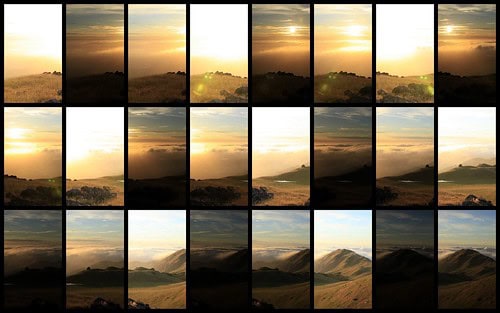
- Bracketing: Use the K‑1 II’s exposure bracketing for 3–5 frames at ±2 EV. This balances bright windows against interior shadows without pushing ISO.
- Constant WB: Lock WB for the entire set to prevent color mismatch between brackets.
- De‑ghost strategy: Ask people to hold still, or shoot multiple passes and pick the cleanest bracket per view during stitching/blending.
Low-Light / Night Scenes
- Stability first: Turn IBIS off on a tripod to prevent micro‑corrections. Use remote or 2s timer; mirror‑lock‑up helps at longer exposures.
- Exposure: Open to f/4–f/5.6 if needed, drop shutter to 1/30–1/4 s depending on wind and subject motion, and keep ISO 100–800 when possible (K‑1 II handles ISO 1600–3200 acceptably; consider noise reduction in post).
- Consistency: Keep identical exposure across frames unless you’re bracketing. Mixed exposure frames can cause seam visibility.
Crowded Events
- Two passes: First pass captures geometry; second pass waits for gaps to fill in. Note frame numbers to help masking later.
- Fast shutter: Aim for 1/200 s or faster at f/5.6–f/8, ISO 400–800. Prioritize sharpness over base ISO.
- Overlap more: Use 35–40% overlap to give the stitcher multiple control point options around moving subjects.
Special Setups (Pole / Car / Drone)
- Pole work: Keep the rig as light as possible. Use a safety tether. Rotate slowly and let vibrations settle before each frame.
- Car rigs: Avoid high speeds. Park in a safe, quiet area. Use short exposures (1/250+) and increase ISO if necessary to freeze vibration.
- Drone: The K‑1 II is too heavy for typical drones; use this section as a conceptual reference only if you switch to aerial platforms.
Recommended Settings & Pro Tips
Exposure & Focus
| Scenario | Aperture | Shutter | ISO | Notes |
|---|---|---|---|---|
| Daylight outdoor | f/8–f/11 | 1/100–1/250 | 100–200 | Lock WB (Daylight); IBIS off on tripod |
| Low light/night | f/4–f/5.6 | 1/30–1/4 | 400–800 (up to 1600–3200 if needed) | Remote trigger; mirror lock‑up |
| Interior HDR | f/8 | Bracket ±2 EV (3–5 frames) | 100–400 | Keep WB fixed across brackets |
| Action / moving subjects | f/5.6–f/8 | 1/200+ | 400–800 | Two passes; plan for masking |
Critical Tips
- Manual focus at hyperfocal to keep everything sharp. Roughly 0.8 m at 11mm f/8 (APS‑C crop), and ~2.5 m at 20mm f/8.
- Nodal point calibration: Mark your panoramic head rails for 11mm, 14mm, and 20mm. This saves time on future shoots.
- White balance lock: Use Kelvin or a preset to avoid color cast stitching seams, especially under mixed lighting.
- Shoot RAW: It gives you latitude for highlight recovery and noise reduction in night scenes and HDR merges.
- IBIS and tripod: Disable IBIS (Shake Reduction) on tripod to avoid micro‑jitter. Re-enable only for handheld panos.
- Crop mode: In the K‑1 II menu, set APS‑C capture to Auto for this lens or force APS‑C if you see vignetting. At 20mm you can try full‑frame but expect heavy vignetting and softer corners.
Stitching & Post-Processing
Software Workflow
For rectilinear ultra‑wide sets, PTGui is a fast, reliable stitcher; Hugin is a great free alternative. Import all frames, set lens type to rectilinear, and choose an appropriate HFOV (PTGui can estimate). Aim for 25–35% overlap. If you shot HDR brackets, either pre‑merge to 32‑bit HDR per viewpoint or let PTGui handle exposure fusion. Keep lens distortion corrections consistent across frames, and enable “vertical control points” for clean architecture lines. PTGui overview and review
Cleanup & Enhancement
- Nadir patch: Export the stitched panorama with a hole around the tripod area, then blend in a clean nadir shot or use a logo patch. Content-aware fill or AI tools can speed this up.
- Color and noise: Use local adjustments to balance mixed lighting; apply mild noise reduction for ISO 1600–3200 night shots.
- Level and orientation: Use horizon-level tools and set your pano to 0° pitch, 0° roll, with the primary view centered on your chosen direction.
- Export: Save an equirectangular 2:1 image (e.g., 12000 × 6000 px) for VR platforms or virtual tour software. Keep a layered PSD or PTGui project as a master.
Want a structured DSLR-to-360 pipeline from capture to publishing? This practical guide is a good follow‑up. Using a DSLR to shoot and stitch a 360 photo
Video: Panorama Stitching Basics
Prefer watching over reading? The walkthrough below reinforces key steps and common pitfalls.
For additional nodal head setup and field techniques, this step-by-step explainer complements your practice. Panoramic head setup guide
Disclaimer: Software evolves. Check the latest documentation for PTGui/Hugin and your RAW editor.
Useful Tools & Resources
Software
- PTGui panorama stitching
- Hugin (open source)
- Lightroom / Photoshop for RAW development and cleanup
- AI tripod removal and object cleanup tools
Hardware
- Panoramic heads: Nodal Ninja, Leofoto, Sunwayfoto (with fore‑aft and lateral rails)
- Carbon fiber tripods: 3‑section with a leveling base for stability
- Bubble or half‑ball leveling bases
- Wireless remote shutters or intervalometers
- Pole extensions / car mounts with safety tethers
Disclaimer: Product names are for search and comparison; verify details on official sites before buying.
Common Mistakes & How to Avoid Them
- Parallax error: Always align the entrance pupil; test with near/far objects before the real shoot.
- Exposure flicker: Manual exposure and fixed WB only. Avoid auto ISO for multi‑frame panos.
- Tripod shadows and nadir clutter: Capture a dedicated nadir and patch it later.
- Ghosting from motion: Shoot multiple passes and mask in the stitcher; increase overlap around moving subjects.
- Noise at night: Keep ISO as low as you can with a stable mount; bracket if dynamic range is high.
- IBIS on tripod: Turn off IBIS to avoid micro‑blur during long exposures.
Real-World Use Cases
Indoor Real Estate
Shoot at 11–14mm for fewer frames and straight lines. Bracket ±2 EV (3–5 shots), f/8, ISO 100–200. Keep lamps on but watch color temperature: set a neutral Kelvin and correct mixed lighting later. Capture extra frames toward bright windows for easier blending.
Outdoor Sunset Landscape
Base ISO, f/8–f/11, and 8 around + zenith + nadir at 11mm. Consider a second rotation 1–2 stops brighter for shadow lift if you’re not bracketing. Use the K‑1 II’s built‑in level and histogram to avoid clipping the sun side. Windy? Add weight to the tripod and use 1/125 s or faster.
Event Crowds
Increase overlap to 35–40% at 11–14mm, shoot a fast sequence, then a second pass to fill gaps. When you stitch, prefer frames with fewer people near seams. Masking moving subjects is much easier with extra overlap.
Rooftop / Pole Shooting
Safety first: tether everything. Rotate slower and allow vibrations to die before each exposure. At 11mm, stick to 8 around + Z + N and keep shutter speeds short (1/250 s if possible); raise ISO to 800–1600 if needed.
Car‑Mounted Drive‑Up
Park, engine off, and shoot quickly before people or cars move in. Use 14–20mm for less edge stretch. Consider a partial multi‑row (0° and +30°) for clean zenith coverage when you cannot shoot a dedicated zenith after mounting.
Practical Notes Specific to This Combo
- APS‑C Crop Mode: The Tokina is an APS‑C lens. In the K‑1 II menu, set APS‑C capture to Auto or On to avoid heavy vignetting.
- Pixel Shift: Pentax Pixel Shift is amazing for static single‑frame shots, but avoid using it for multi‑shot panoramas; alignment differences between frames make stitching harder and can introduce artifacts.
- Dynamic Range: Base ISO 100–200 yields the cleanest files (~14 stops). For interiors with windows, HDR bracketing is more reliable than pushing shadows later.
- Field Curvature and Corners: At 11mm, stop down to f/8 for edge sharpness. Calibrate your nodal point per focal length—zoom changes the entrance pupil position.
Frequently Asked Questions
-
Can I shoot handheld panoramas with the Pentax K‑1 II?
Yes for standard panoramas, but for full 360×180 with straight lines, a tripod and panoramic head are strongly recommended. Handheld introduces parallax and leveling errors. If you must go handheld, use 11mm, overlap generously (~40%), keep IBIS on, and rotate your body around the lens as much as possible.
-
Is the Tokina ATX‑i 11–20mm f/2.8 wide enough for a single‑row 360?
At 11mm (APS‑C crop on K‑1 II), you can do 8 around plus a zenith and nadir. For tight spaces or complex ceilings, adding a second tilted row ensures full zenith coverage and better stitch robustness.
-
Do I need HDR for interiors with bright windows?
Usually yes. Bracket ±2 EV (3–5 frames) to retain window detail and clean shadows. Merge to HDR per view or use exposure fusion in PTGui during stitching.
-
How do I avoid parallax issues with this lens?
Use a panoramic head and calibrate the entrance pupil at your chosen focal length. Start around 70–80 mm forward of the sensor plane at 11mm and fine‑tune with near/far alignment tests. Mark the rails so you can repeat it quickly next time.
-
What ISO range is safe on the K‑1 II in low light?
For tripod‑based panos, aim for ISO 100–800. If shutter speeds must be faster (wind, crowds), ISO 1600–3200 is still usable with careful noise reduction. Prioritize consistent exposure across frames over absolute lowest ISO.
Safety, Reliability & Backup Workflow
- Wind management: Hook a weight bag to your tripod. Keep the center column down for stability.
- Weather: The K‑1 II is weather‑sealed, but keep droplets off the Tokina’s front element; carry a microfiber and rain cover.
- File safety: Shoot to two cards if possible; if not, back up to a laptop or SSD after each location. Name folders by date_location and keep bracket sets grouped.
- Take a safety rotation: A quick second pass catches moving elements and gives you options during masking.
If you want a deeper dive into DSLR pano best practices and troubleshooting, this authoritative Q&A is a good read. Best techniques to take 360 panoramas