
Why This Camera & Lens Are Great for Panoramas
The Pentax K-1 II is a rugged, full-frame DSLR known for excellent image quality and reliability in the field. Its 36.4 MP 35.9×24 mm sensor delivers rich detail with roughly 4.9 µm pixel pitch and strong dynamic range (about 14+ stops at base ISO), making it ideal for high-resolution panoramic and 360 photos where consistent exposure and color are critical. The in-body stabilization (SR II) is outstanding for handheld frames, while the built-in GPS and Astrotracer can be useful for location-aware shoots and night work.
The Tamron 17–28mm f/2.8 Di III RXD is a compact, sharp, rectilinear ultra-wide zoom that’s exceptional across the frame from f/4–f/8. At 17mm, it covers a wide field with comparatively low lateral CA and good flare control for its class; at 28mm, it remains crisp and contrasty. Its constant f/2.8 aperture helps in low light and when bracketing HDR sequences indoors.
Important compatibility note: The Tamron 17–28mm f/2.8 Di III RXD is a Sony E-mount lens. There is no practical way to mount native Sony E lenses on a Pentax K DSLR body with infinity focus. If your goal is specifically “how to shoot panorama with Pentax K-1 II & Tamron 17–28mm,” you have three workable options: 1) use a functionally equivalent K-mount ultra-wide rectilinear lens (e.g., HD Pentax-D FA 15–30mm f/2.8, or a third-party 17–35/16–28) and follow this guide; 2) shoot the Tamron 17–28 on a compatible Sony body and apply the same settings logic below; 3) use the K-1 II for capture and rent/borrow a compatible K-mount UWA. This guide proceeds with the K-1 II using an equivalent rectilinear UWA at 17–28 mm and calls out settings that translate directly.

Quick Setup Overview
- Camera: Pentax K-1 II — Full Frame (36.4 MP), ~4.9 µm pixel pitch, strong DR (~14+ EV at ISO 100), 5-axis IBIS (SR II).
- Lens: Tamron 17–28mm f/2.8 Di III RXD (rectilinear UWA, best performance f/4–f/8, mild barrel distortion at 17mm, well-controlled CA). Use a K-mount equivalent UWA at similar focal lengths on K-1 II.
- Estimated shots & overlap (on Full Frame, rectilinear):
- At 17mm for a full 360×180: 6 shots at +45°, 6 shots at 0°, 6 shots at −45° (≈18), plus 1 zenith and 1–2 nadir (≈20–21 total) with 30% overlap.
- At 28mm for a full 360×180: 8 shots at +45°, 8 at 0°, 8 at −45° (≈24), plus 1 zenith and 1–2 nadir (≈26–27 total) with 30% overlap.
- Cylindrical panorama (single row, 17mm): 8–10 frames around with 25–30% overlap.
- Difficulty: Moderate (requires nodal alignment and consistent manual settings).
Planning & On-Site Preparation
Evaluate Shooting Environment
Assess light direction, contrast, wind, and moving elements. Indoors, note reflective surfaces (glass, polished floors) and mixed lighting that can cause color shifts. If shooting through glass, get as close as safely possible (within a few centimeters) and shoot at a slight angle to reduce reflections and ghosting. Outdoors, watch the sun’s position—strong backlight produces flare; plan your rotation path to position the sun near a frame edge rather than the center when possible.
Match Gear to Scene Goals
The K-1 II’s DR at base ISO allows you to hold both sky and foreground in a single exposure for many outdoor scenes; for extreme contrast (e.g., interiors with bright windows), bracketed HDR captures are recommended. ISO 100–400 is ideal for maximum latitude; the K-1 II remains clean through ISO 800 and quite usable at 1600–3200 in emergency low-light panoramas if you’re on a tripod. The 17–28 mm rectilinear zoom is excellent for multi-row 360 photos (low distortion when stitched properly) and for cylindrical sweeps; it requires more frames than a fisheye but yields straight architectural lines and natural-looking edges.
Pre-shoot Checklist
- Charge batteries, bring spares; format fast SD cards.
- Clean front/rear elements and the sensor. Dust shows up when you stitch.
- Level the tripod; verify your panoramic head’s nodal point calibration for the chosen focal length.
- Safety first: weight and secure the tripod in wind; tether gear on rooftops and poles; avoid public obstruction. For vehicle mounts, use secondary safety lines and obey local laws.
- Backup workflow: shoot an extra safety round on each row in case of motion blur or missed overlap.
Essential Gear & Setup
Core Gear
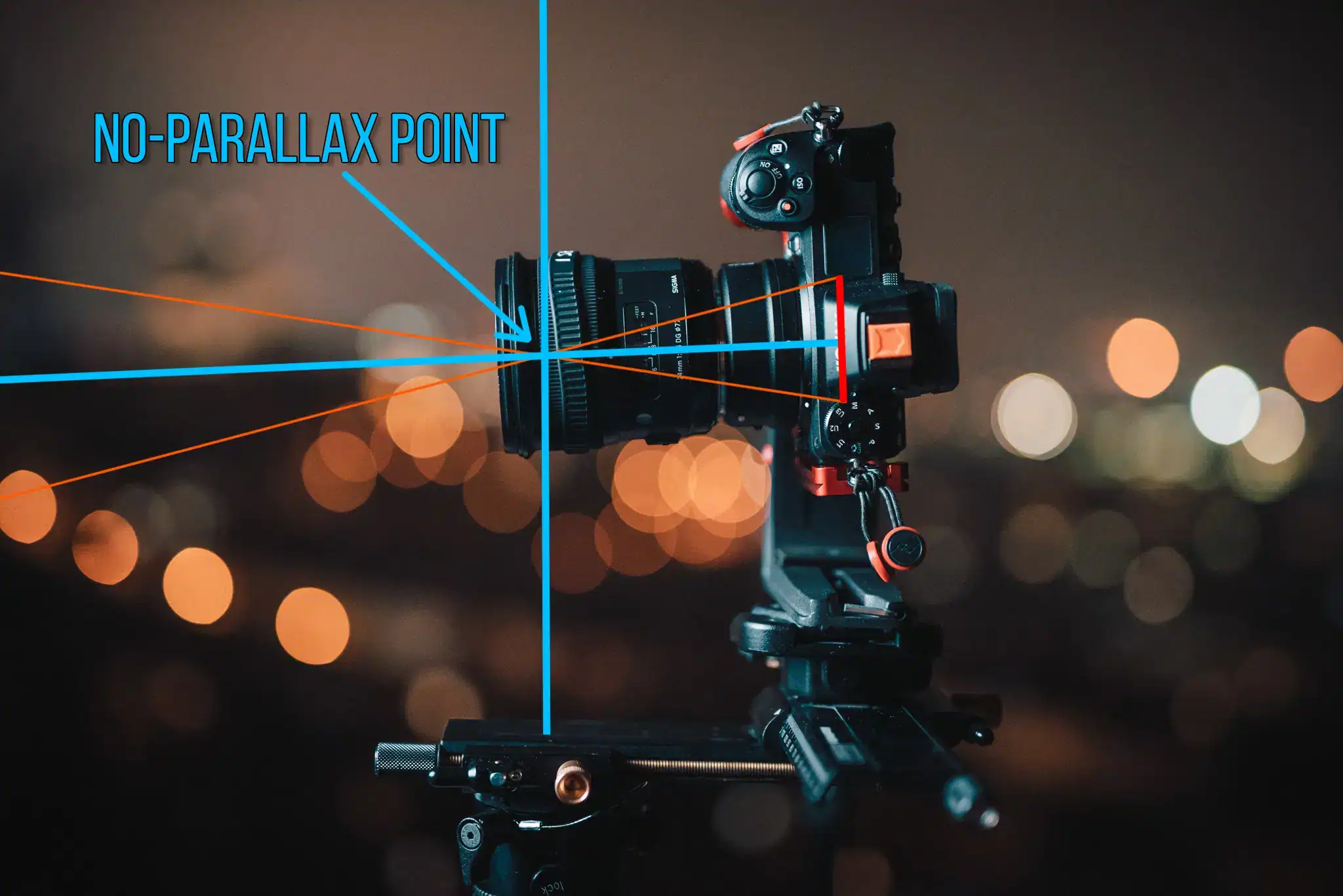
- Panoramic head: Essential for aligning the lens to its no-parallax (entrance pupil) point. This eliminates parallax error when rotating, which is critical in tight interiors and near objects.
- Stable tripod with a leveling base: A leveled platform keeps rows consistent and simplifies stitching geometry.
- Remote trigger or app: Minimize vibrations. On the K-1 II, use a 2s timer or a wired remote; disable IBIS when on a tripod.
Optional Add-ons
- Pole or car mount: Great for elevated vantage points or drive-by scenes. Use wind-rated poles, guy lines, and always tether your rig; rotation should be slow and deliberate.
- Lighting aids: Small LED panels for dim interiors; keep light consistent across frames.
- Weather protection: Rain covers and microfiber cloths; seal your bag if shooting near surf or dust.
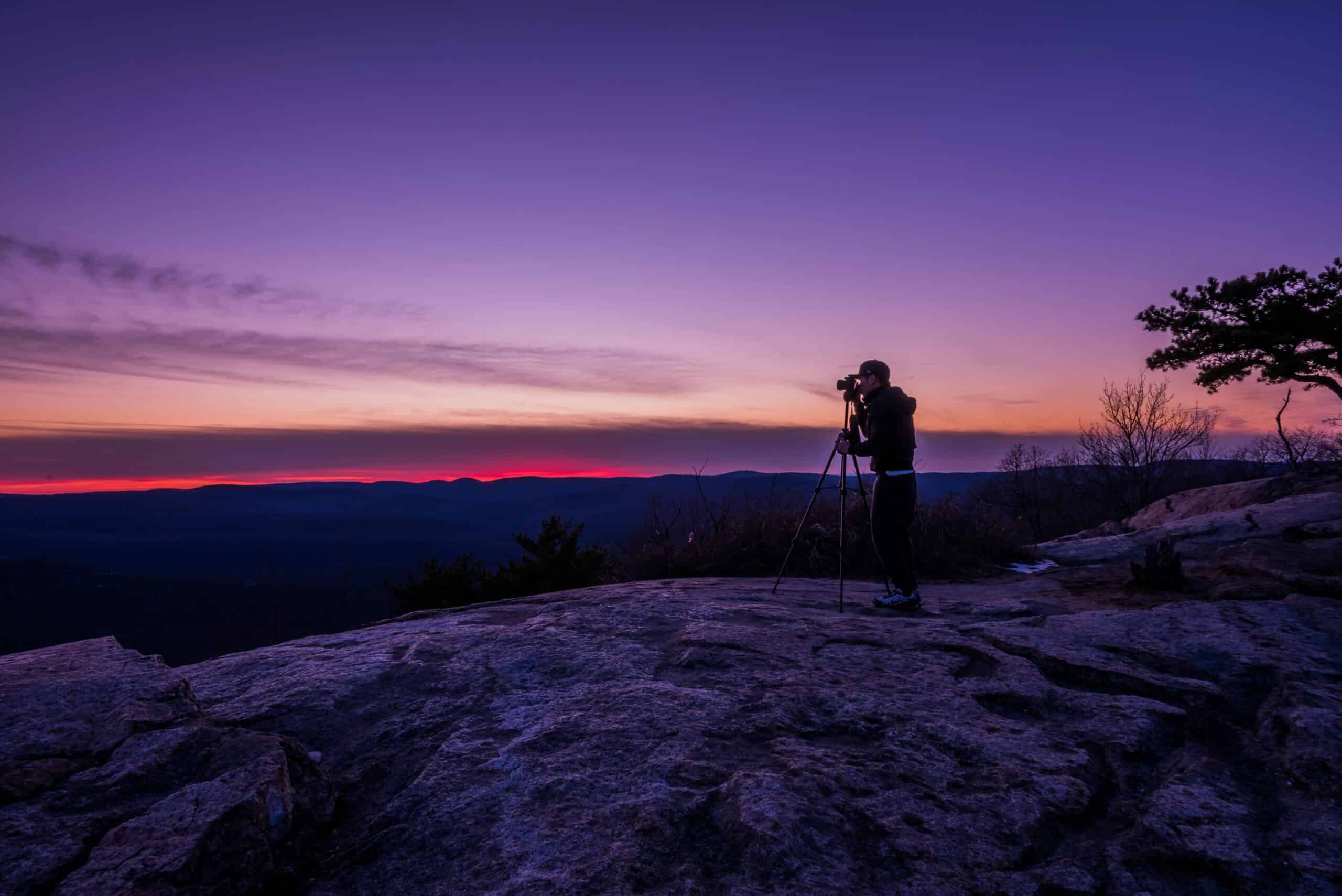
Step-by-Step Shooting Guide
Standard Static Scenes
- Level the tripod and align the nodal point: Mount your panoramic head, set the lens to the chosen focal length (e.g., 17 mm), and adjust the fore-aft rail until foreground and background objects don’t shift relative to each other when you pan. Mark the rail position for each focal length you use.
- Set exposure and white balance manually: Meter a mid-tone frame, then switch to full manual. Lock WB to Daylight or a Kelvin value (e.g., 5500 K) to avoid color shifts. Turn off auto ISO. Disable IBIS (SR) on tripod; turn off Pixel Shift for multi-frame rotations.
- Focus: Use AF once on a mid-distance subject, then switch to MF. For exteriors, set near hyperfocal (f/8 at 17 mm) to keep everything sharp.
- Capture with tested overlap: At 17 mm, shoot +45°, 0°, −45° rows, rotating 60° between frames (≈6 per row) for ~30% overlap. Add a zenith shot (tilt up) and 1–2 nadir shots (tilt down). For 28 mm, use 45° spacing (≈8 per row).
- Nadir (ground) shot: After your main sweep, remove the camera, reposition over the tripod location (or lean the tripod aside), and shoot a clean ground patch for tripod removal in post.
HDR / High Dynamic Range Interiors
- Bracket ±2 EV (3–5 frames): Windows vs. interior shadows demand extra DR. Keep shutter speed as the only changing variable; aperture and ISO must stay fixed.
- Lock WB across brackets: Prevents color banding across overlap regions. RAW files give extra latitude for blend and stitch.
- Sequence discipline: Shoot all brackets for one angle before rotating to the next—this keeps your stitching software happy.
Low-Light / Night Scenes
- Tripod and remote are non-negotiable: Use base ISO 100–200 when possible. If wind or subject motion forces faster shutter speeds, the K-1 II remains very usable at ISO 800–1600 and acceptable at 3200 with careful noise reduction.
- Aperture f/4–f/5.6 is a good compromise: Keeps shutter manageable while maintaining edge sharpness on UWA lenses.
- Long exposures: Use mirror lock-up or electronic front-curtain shutter; keep IBIS off on tripod.
Crowded Events
- Two-pass strategy: Do a fast pass for coverage, then a second pass to capture gaps as people move. This gives options to mask out duplicates.
- Shutter speed: Aim for 1/200 s or faster at f/5.6–f/8 and ISO 400–800 to minimize motion blur if you want crisper crowds.
- Masking: In post, pick the cleanest parts of each frame to eliminate ghosting.
Special Setups (Pole / Car / Drone)
- Secure everything: Use safety tethers and check mount torque. Elevated poles catch wind—limit pole height in gusts and rotate slowly.
- Vibration management: For car rigs, use vibration-damping mounts, shoot at higher shutter speeds, and consider short bursts to catch the stillest moments.
- Rotation pattern: Keep it simple—fewer, carefully overlapped frames reduce stitching errors in dynamic conditions.
Recommended Settings & Pro Tips
Exposure & Focus
| Scenario | Aperture | Shutter | ISO | Notes |
|---|---|---|---|---|
| Daylight outdoor | f/8–f/11 | 1/100–1/250 | 100–200 | Lock WB (Daylight or Kelvin) |
| Low light/night | f/4–f/5.6 | 1/30–1/60 (tripod) or faster | 400–1600 (3200 if needed) | Disable IBIS on tripod; use remote/timer |
| Interior HDR | f/8 | Bracket ±2 EV | 100–400 | Balance windows and lamps; keep ISO low |
| Action / moving subjects | f/5.6–f/8 | 1/200+ | 400–800 | Freeze motion; consider two-pass capture |
Critical Tips
- Manual focus near hyperfocal: At 17 mm, f/8 keeps foreground-to-infinity sharp in most scenes. Use Live View at 10× to confirm.
- Nodal point calibration: Place a near object and a far object aligned in the frame; pan left/right. Adjust the rail until there’s no relative shift. Mark the rail for 17 mm and 28 mm positions.
- White balance lock: Use a fixed Kelvin value or preset. Mixed lighting? Shoot a WB reference frame.
- RAW over JPEG: For panoramas, RAW gives headroom to equalize exposure and color and rescue highlights.
- Stabilization: Turn off IBIS (SR) on tripod. Leave it on only for handheld pano sweeps.
Stitching & Post-Processing
Software Workflow
Import your RAW files into Lightroom or similar for basic exposure and WB unification, then export to your stitching tool. PTGui is an industry-standard for robust control point generation and masking; Hugin is a powerful open-source alternative. Rectilinear UWA lenses (like 17–28 mm) stitch cleanly when you use consistent overlap and good control points. As a rule of thumb, target 25–30% overlap for ultra-wide focal lengths and about 20–25% for longer rectilinear focal lengths. If you’re shooting HDR brackets, either pre-merge each angle to an HDR DNG/TIFF before stitching or use PTGui’s built-in HDR workflow.
For learning and deeper guidance, see a practical PTGui review and overview of strengths and workflow at the end of this section. PTGui review: why many pros rely on it.
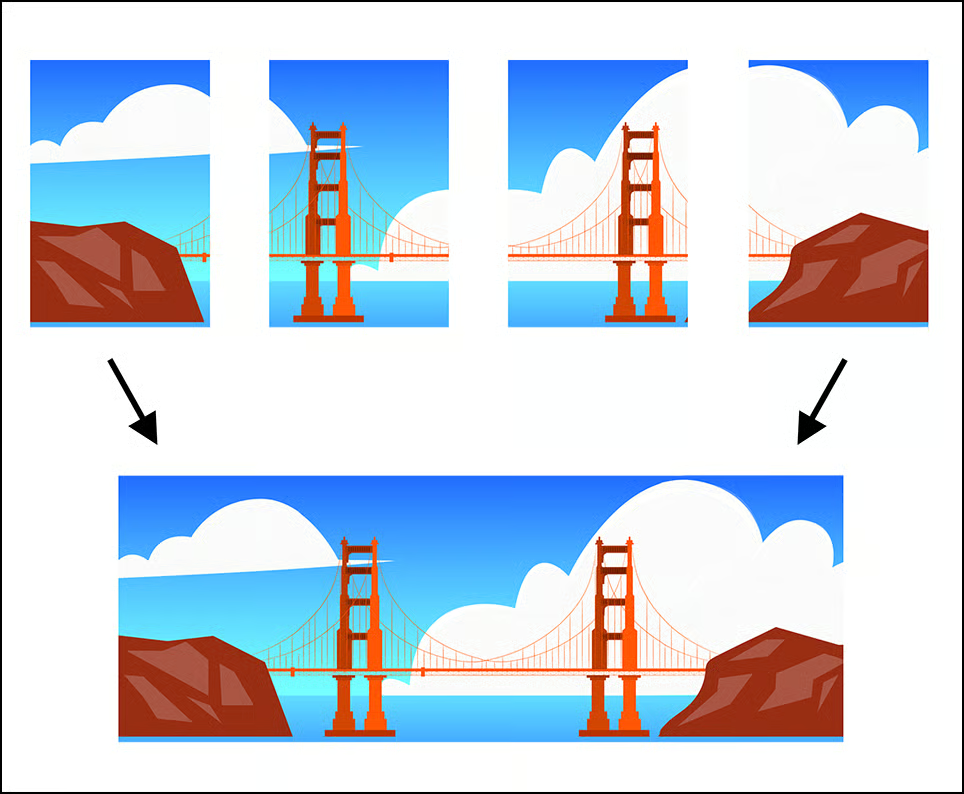
Cleanup & Enhancement
- Tripod/nadir patch: Export a layered panorama and use content-aware fill or a dedicated nadir patch tile. AI tools or manual cloning both work.
- Color and noise: Balance color casts across frames; apply noise reduction more aggressively in the sky and shadows; sharpen last.
- Leveling: Use vertical control lines and horizon level tools (PTGui has excellent pitch/roll/yaw correction).
- Exports: For 360 viewers, export equirectangular 2:1 JPEG/TIFF; for VR platforms, follow their file size and metadata guidelines.
For a comprehensive tutorial on high-end panoramic head setup and capture principles, see the following resources after practicing the steps above: Panoramic head setup principles (Meta/Oculus).
Video: Panorama Shooting & Stitching Basics
Prefer to learn visually? The video below reinforces core ideas like nodal alignment, overlap, and stitching flow.
Useful Tools & Resources
Software
- PTGui panorama stitching
- Hugin (open source)
- Lightroom / Photoshop for RAW prep and cleanup
- AI tripod removal/nadir patch tools
Hardware
- Panoramic heads (Nodal Ninja, Leofoto, or equivalent)
- Carbon fiber tripod with leveling base
- Wireless remote shutters or intervalometers
- Pole extensions and vehicle mounts with safety tethers
Disclaimer: software/hardware names provided for search reference; check official sites for details.
If you’re new to the whole process and want a broad overview, this FAQ is widely cited in the community: best practices for 360 panoramas. Also see a DSLR/mirrorless 360 guide here: Using a DSLR or mirrorless to shoot and stitch a 360.
Common Mistakes & How to Avoid Them
- Parallax error: Always align the entrance pupil. Even small misalignment shows up near objects and in interiors.
- Exposure flicker: Manual mode, fixed ISO, fixed aperture, consistent shutter across frames.
- WB shifts: Lock white balance or use a fixed Kelvin value; correct any mixed lighting in RAW.
- Tripod shadows and footprints: Capture a separate nadir patch and plan your shadow positions.
- Insufficient overlap: Aim for 25–30% at UWA. Undershooting overlap creates control point failures.
- IBIS on tripod: Turn SR off to avoid micro blur during long exposures.
- Forgetting a safety pass: One extra sweep can rescue a priceless pano when a frame is soft or misfired.
Real-World Scenarios & Field Advice
Indoor Real Estate (Bright Windows)
Use 17–20 mm to keep edges straight and rooms natural. Level the tripod, set f/8, ISO 100–200, and bracket ±2 EV (3–5 frames per angle). Shoot three rows (±45°, 0°) at 6–8 shots per row depending on focal length, plus zenith and nadir. Turn off all auto features (AWB, Auto ISO, IBIS on tripod). In PTGui, pre-merge HDR stacks or use its HDR mode; then straighten verticals and patch the nadir with a floor tile or AI tool. Because the K-1 II’s DR is strong, you can sometimes get away with a single exposure in evenly lit spaces, but bracket if windows are bright.
Outdoor Sunset Landscape
Arrive early to do a fast test stitch and set exposure at base ISO 100. For the sweep, shoot quickly during peak light but keep manual settings fixed. If the sun is in the frame, consider a second pass with your hand shading the front element to reduce flare (move your hand out between shots). Blend the clean parts later with masks. Keep overlap generous (~30%) and watch for horizon roll; use PTGui’s horizontal/vertical control lines to level precisely after stitching.
Event Crowds
Mount the camera higher than head level for cleaner sight lines. A two-pass method works well: first pass for coverage, second pass for cleaner gaps. Keep shutter around 1/200 s at f/5.6–f/8, ISO 400–800. In post, mask moving people so they appear only once.
Rooftop or Pole Capture
Wind is the main enemy. Use a carbon pole, guy lines, and a safety tether from the camera to the pole. Rotate slowly with fewer total frames and larger overlap to give your stitching software more to work with. For rooftops, sandbag the tripod and use a leash around a structural element. Never leave gear unattended near edges.
Car-Mounted Panoramas
Use vibration-damping suction mounts, a secondary safety line, and keep speeds low. Set a faster shutter (1/500 s or more) and slightly raise ISO. Minimize total frames and overlap generously since some frames will be unusable due to vibration or traffic.
Frequently Asked Questions
- Can I shoot handheld panoramas with the Pentax K-1 II?
Yes, for cylindrical or quick single-row sweeps in good light. Use IBIS on, fast shutter (1/200 s+), and 30% overlap. For full 360×180 with multi-row precision, a tripod and pano head are strongly recommended.
- Is the Tamron 17–28mm wide enough for a single-row full 360?
Not for a full sphere. At 17 mm rectilinear, you’ll need multiple rows (+45°, 0°, −45°) plus zenith and nadir. A fisheye can do it in fewer frames, but the 17–28 yields straighter lines and more natural edges when stitched.
- Do I need HDR for interiors with bright windows?
Often yes. Bracket ±2 EV (3–5 exposures) at each angle to capture both interior shadows and exterior highlights. Merge to HDR before or during stitching in PTGui or similar.
- How do I avoid parallax issues?
Use a panoramic head and align the entrance pupil (no-parallax point). Place near/far objects in the frame and adjust the rail so they don’t shift when panning. Mark the rail positions for 17 mm and 28 mm so you can quickly repeat them in the field.
- What ISO range is safe on the K-1 II for low light panoramas?
Try ISO 100–200 on a tripod whenever possible. If wind or movement forces faster shutters, ISO 800–1600 is very usable; ISO 3200 can work with careful noise reduction.
- Can I store pano settings in Custom Modes (U1/U2/U3)?
Yes. Save manual exposure, fixed WB, disabled IBIS (for tripod), and your preferred drive mode to a user slot. This speeds up setup and avoids missed settings.
- What’s the best tripod head choice for this setup?
A two-axis panoramic head with fore-aft and lateral rails (e.g., Nodal Ninja or similar) that allows precise entrance pupil alignment. Add a leveling base for fast horizons and repeatability.
- Wait—can I actually mount the Tamron 17–28 Di III on a K-1 II?
No practical native solution. It’s a Sony E-mount lens and won’t adapt to a Pentax K DSLR with infinity focus. Use a functionally equivalent K-mount UWA lens on the K-1 II, or use the Tamron on a compatible Sony body and apply the same techniques.
Expert Notes & References
For deeper theory and rig setup, this panoramic head tutorial is a reliable starting point: 360 panoramic head tutorial. For hands-on software, PTGui remains a top choice for complex multi-row panoramas: Fstoppers on PTGui. And for capture-to-stitch workflows with DSLRs/mirrorless in 360, see: DSLR/mirrorless 360 capture guide.