Why This Camera & Lens Are Great for Panoramas
If you’re exploring how to shoot panorama with Nikon Zf & Laowa 8-15mm f/2.8 FF Zoom Fisheye, you’ve picked a powerful and compact combo that excels at 360° work. The Nikon Zf is a full-frame mirrorless camera with a 24.5MP BSI sensor, EXPEED 7 processor, and solid in-body stabilization (IBIS). Its large photosites (~5.9 µm pixel pitch) deliver clean files with excellent dynamic range (around 14 EV at base ISO), which helps when blending sky and foreground or balancing interior shadows and bright windows. The Zf’s tactile controls and responsive live view with focus magnification/peaking make manual workflows easy—perfect for fisheye shooting.
The Laowa 8–15mm f/2.8 FF Zoom Fisheye is a manual-focus, manual-aperture ultra-wide designed for full-frame. It covers circular fisheye at 8mm (180° in all directions) and diagonal fisheye at 15mm (180° diagonal FOV). For 360° panoramas, fisheyes are a dream: fewer shots, faster capture, and robust stitching, especially when subjects move. At the same time, you must manage flare, strong curvature, and parallax via careful nodal point alignment. The Zf’s Z-mount and the Laowa’s robust build (with removable hood for a full circle at 8mm) provide a reliable, compact rig that’s easy to travel with.
Quick Setup Overview
- Camera: Nikon Zf — Full Frame (36 × 24 mm), 24.5 MP BSI CMOS, EXPEED 7, strong base ISO DR (~14 EV), IBIS on-sensor.
- Lens: Laowa 8–15mm f/2.8 FF Zoom Fisheye — manual focus/aperture; circular fisheye at 8mm; diagonal fisheye at 15mm; sharpest around f/5.6–f/8; moderate CA at edges; removable hood for circular coverage.
- Estimated shots & overlap:
- 8mm (circular fisheye): 3 around (120° spacing) + zenith + nadir; safe overlap ≈ 30–35%.
- 10–12mm (transition range): 5 around (72° spacing) + zenith + nadir; overlap ≈ 30%.
- 15mm (diagonal fisheye): 6 around (60° spacing) + zenith + nadir; overlap ≈ 25–30%.
- Difficulty: Easy–Intermediate (simple once nodal point is calibrated).
Planning & On-Site Preparation
Evaluate Shooting Environment
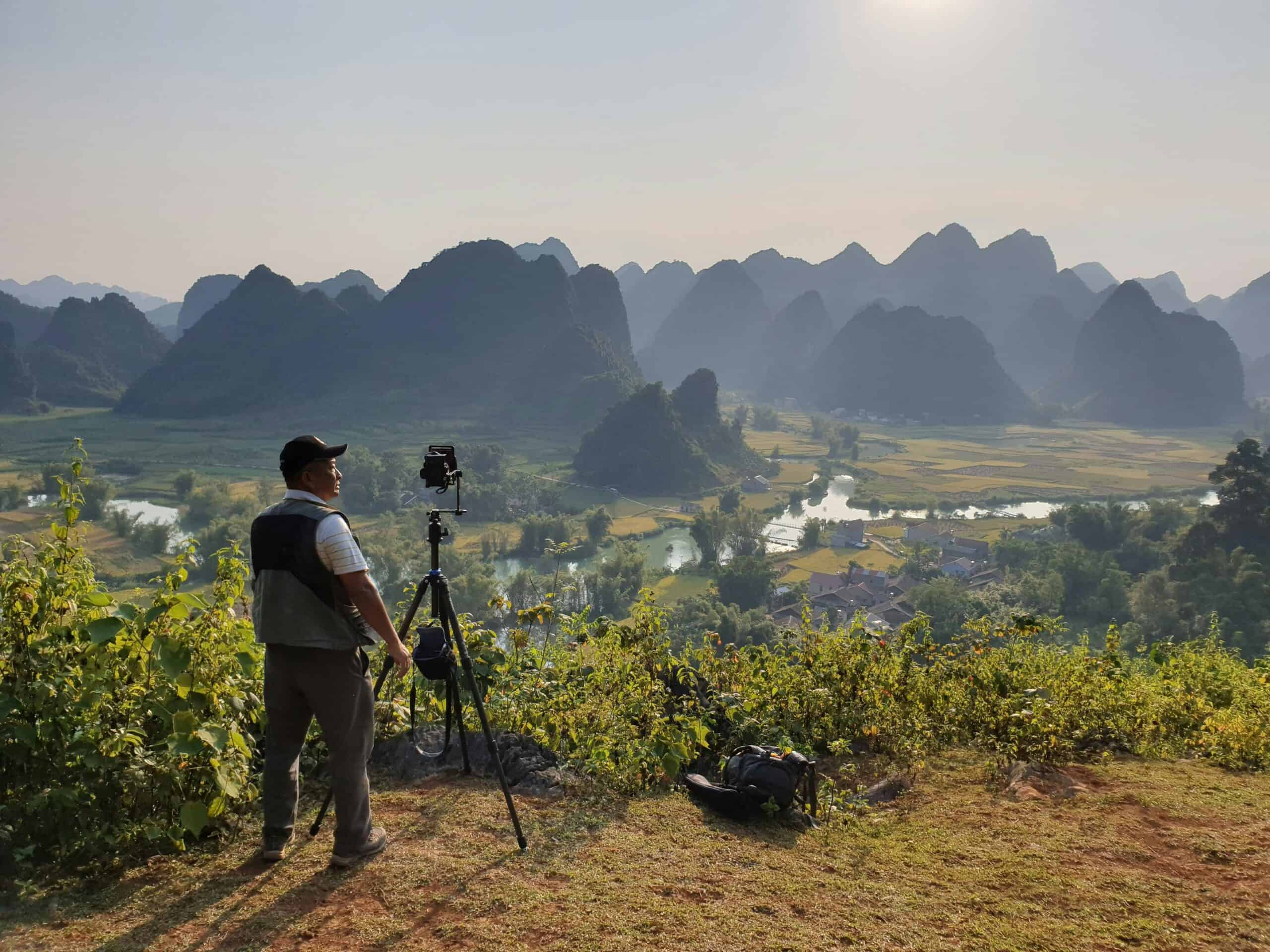
Walk the scene. Note the light direction, moving subjects, reflective/glass surfaces, and any tight spaces. If you must shoot through glass, get the front element as close as safely possible (1–2 cm) and shade it to reduce reflections and ghosting. Watch for flickering light sources (LEDs) which can cause banding if using an electronic shutter—prefer mechanical or EFCS for consistency. Outdoors, plan for wind and tripod stability—especially if you’ll shoot nadir frames or use a pole.
Match Gear to Scene Goals
The Nikon Zf’s low-noise files and high dynamic range pair perfectly with the Laowa fisheye for fast, high-quality 360 captures. Indoors, you can comfortably shoot at ISO 100–400 for HDR brackets; outdoors at base ISO 100 for maximum dynamic range. The fisheye’s extremely wide FOV means fewer frames—ideal for events or locations where people or vehicles are moving. The tradeoff is perspective curvature; this is normal for fisheye, and stitching software models it precisely.
Pre-shoot Checklist
- Charge batteries, format fast cards, clean both lens/sensor.
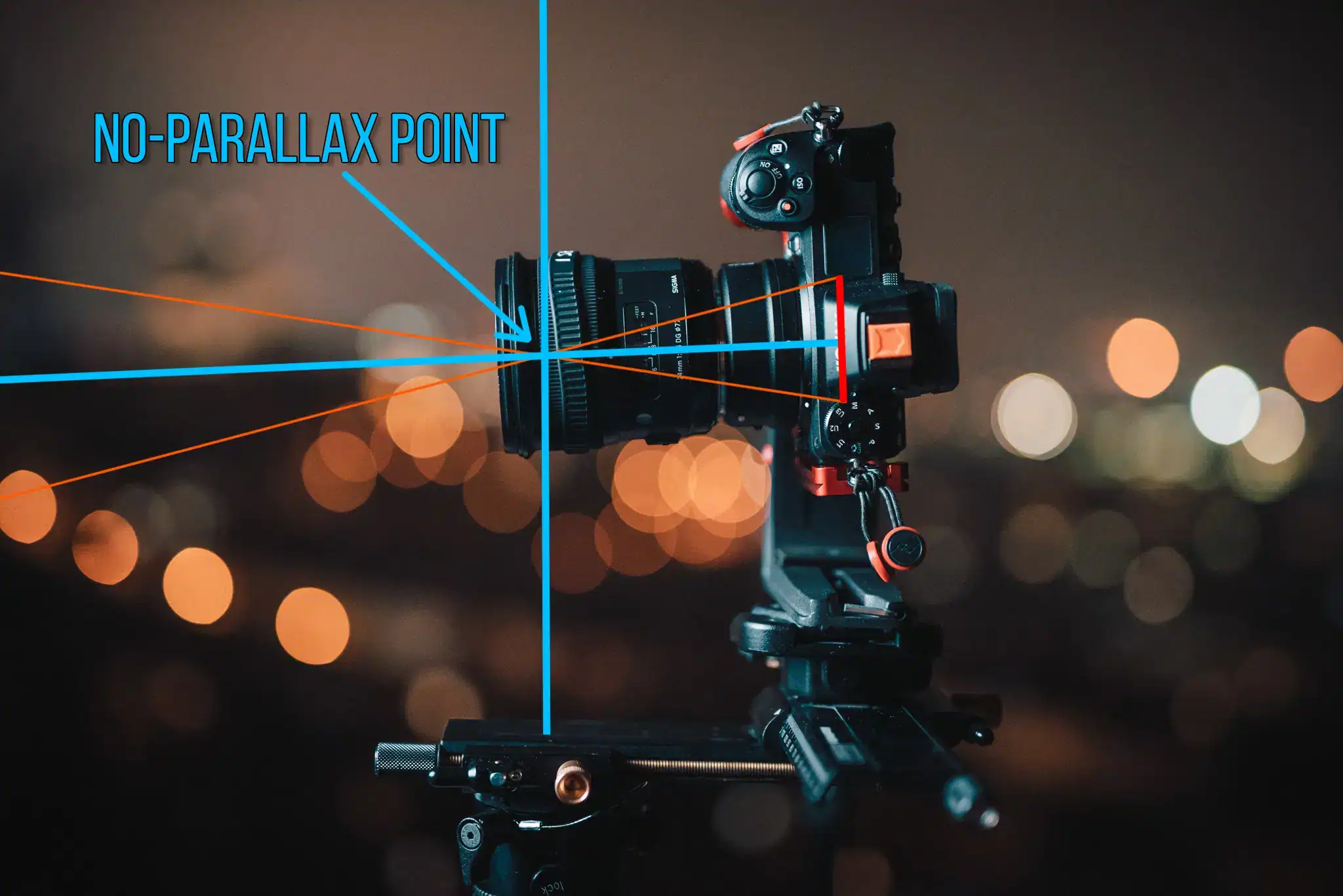
- Level your tripod and ensure your panoramic head is calibrated for the lens’s no-parallax point (NPP).
- Safety first: weigh down tripods in wind, use tethers on rooftops, verify suction mounts on cars, and respect local regulations.
- Backup workflow: shoot a second full round of frames—tiny effort, huge insurance against blinks, flare, or stitching gaps.
Essential Gear & Setup
Core Gear
- Panoramic head: A proper pano head lets you rotate around the nodal point (also called the no-parallax point). This eliminates foreground-background shifts between frames so stitching is seamless.
- Stable tripod with leveling base: A leveling base gets your rotator perfectly horizontal in seconds, keeping horizons straight and zenith/nadir alignment clean.
- Remote trigger or app: Trigger the Zf via remote or SnapBridge app to avoid vibrations, especially in low light.
Optional Add-ons
- Pole or car mount: Use a safety tether at all times. Watch wind loads and vibrations; keep rotations deliberate and smooth.
- Lighting aids: Small constant lights for interior shadows; avoid mixing multiple color temperatures or lock a custom white balance.
- Weather protection: Rain covers, microfiber cloths, and lens hoods help cut flare and keep water off the fisheye’s big front element.
For a great primer on pano heads and alignment concepts, see this panoramic head tutorial. Panoramic head tutorial
Step-by-Step Shooting Guide
Standard Static Scenes
- Level and align: Level the tripod/rotator. Adjust the pano head so the lens rotates around its no-parallax point (NPP). With the Laowa 8–15mm, start with the entrance pupil a bit forward of the lens mount; refine by aligning a near and far object and rotating to ensure they don’t shift relative to each other.
- Set manual exposure and locked white balance: Meter the brightest part you must keep (e.g., sky or windows), then pick an exposure all frames can share. Set WB to Daylight or a custom Kelvin to avoid color shifts between shots.
- Manual focus: Use magnified live view and focus peaking. For 8–12mm at f/8, a focus distance around 0.7–1 m typically puts everything from near to infinity acceptably sharp. Recheck focus if temperature changes or you bump the focus ring.
- Capture with proper overlap:
- 8mm circular: 3 shots around at 0° pitch, then one zenith (~+60 to +90°) and one nadir (~–60 to –90°).
- 12mm: 5 shots around + zenith + nadir.
- 15mm: 6 shots around + zenith + nadir.
- Take a dedicated nadir: If the tripod shows prominently, shoot an offset nadir (lean the rig aside or do a handheld nadir carefully) for easier tripod removal later.
HDR / High Dynamic Range Interiors
- Bracket ±2 EV (3 or 5 frames) to balance window highlights and interior shadows. Keep shutter speed in a range that avoids subject blur if people are in the scene.
- Lock WB and keep ISO consistent across brackets. The Zf’s clean ISO 100–400 files are great for HDR; the extra DR helps maintain natural tonal transitions and vibrant color fidelity.
Low-Light / Night Scenes
- Use a tripod and remote. Turn off IBIS when locked on tripod to prevent micro-vibrations. Switch to mechanical shutter to avoid banding under artificial lights.
- Exposure: f/4–f/5.6, ISO 400–800, shutter as needed (often 1–5s on static scenes). If stars are moving, keep shutter under ~10s at 8–15mm to minimize trails unless that effect is desired.
- Take an extra pass if there’s pedestrian or vehicle movement—more frames mean easier masking later.
Crowded Events
- Do two rotations: one quickly for complete coverage, another waiting for gaps in movement. This gives you “clean plates” for masking.
- Favor 8–12mm to minimize frame count and reduce the chance that moving subjects cause ghosting.
Special Setups (Pole / Car / Drone)
- Pole work: Use a lightweight carbon pole and the smallest possible head. Keep the rig balanced and tethered. Shoot fewer frames (8–12mm) to reduce your time aloft.
- Car mounts: Triple-check suction, add safety straps, and avoid high speeds. Watch for vibration; shoot at faster shutter speeds (1/250s+) and capture multiple passes.
Recommended Settings & Pro Tips
Exposure & Focus
| Scenario | Aperture | Shutter | ISO | Notes |
|---|---|---|---|---|
| Daylight outdoor | f/8–f/11 | 1/100–1/250 | 100–200 | Lock WB (Daylight or custom); mechanical/EFCS for consistency |
| Low light / night | f/4–f/5.6 | 1/30–5s | 400–800 | Tripod + remote; IBIS OFF on tripod; consider noise reduction in post |
| Interior HDR | f/8 | Bracket ±2 EV | 100–400 | Even spacing for smooth tonemaps; match WB across brackets |
| Action / crowds | f/5.6–f/8 | 1/200+ | 400–800 | Freeze motion; do a second pass for clean plates |
Critical Tips
- Manual focus: Use magnified live view. At 8–12mm, f/8 and a focus distance around 0.7–1 m generally keeps everything sharp.
- Nodal point calibration: Mark your rail position for 8mm and 15mm separately; circular vs diagonal fisheye positions can differ.
- White balance lock: Avoid mixed frames. Set a Kelvin value or use a custom WB card under interior lighting.
- RAW over JPEG: RAW gives headroom for highlight recovery and color correction, especially for HDR panorama work.
- IBIS and tripod: Turn IBIS off on a locked-down tripod to prevent micro-blur. Use the self-timer or remote release to minimize vibration.
- Shutter mode: Prefer mechanical or EFCS to avoid LED banding and maintain consistent frame geometry for stitching.
For a deep dive on how lens choice affects resolution in spherical panoramas, the Panotools community reference is helpful. Panotools spherical resolution guide
Stitching & Post-Processing
Software Workflow
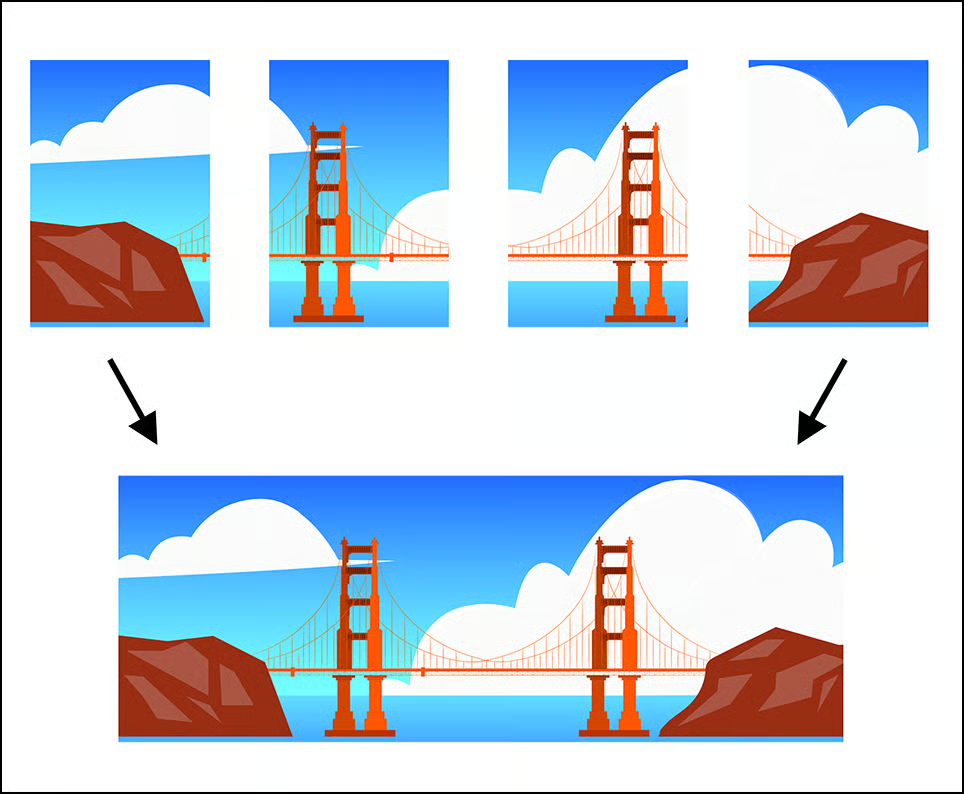
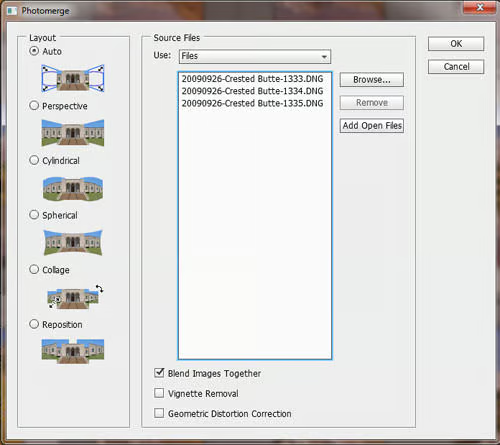
Import RAWs and make global adjustments first (exposure, WB, lens vignetting if needed, minimal sharpening). Export to a 16-bit TIFF workflow for maximum quality. In PTGui or Hugin, set lens type correctly: circular fisheye for 8mm or full-frame/diagonal fisheye for 12–15mm. Let the software detect control points, then optimize yaw/pitch/roll and lens parameters. Industry practice recommends ~25–30% overlap for fisheyes and ~20–25% for rectilinears; with your Laowa, aim for 30% at 8–12mm and 25–30% at 15mm. If you shot HDR brackets, either pre-merge (e.g., in Lightroom) before stitching or use PTGui’s HDR fusion. Why PTGui remains a top choice for complex panoramas
Cleanup & Enhancement
- Nadir patch: Use a dedicated nadir shot, or clone/AI-fill in Photoshop. Keep texture scale consistent to avoid visible patches.
- Color balance and noise: Apply consistent color grading. Use moderate luminance NR for ISO 800+ night shots; keep details intact.
- Leveling: Set horizon and verticals with roll/pitch/yaw controls. Many viewers expect level horizontals in 360 photos.
- Export: Save an equirectangular 2:1 image (e.g., 12000×6000 for high-res) as a high-quality JPEG or 16-bit TIFF for archival/retouching.
If you’re building VR-ready content, Meta’s guide to using a mirrorless for 360 photos outlines solid end-to-end practices. Using a mirrorless camera to shoot and stitch a 360 photo
Video: Visual Walkthrough
Useful Tools & Resources
Software
- PTGui panorama stitching (robust fisheye support)
- Hugin (open-source panorama tool)
- Lightroom / Photoshop (RAW and retouching)
- AI tripod removal and content-aware fill tools
Hardware
- Panoramic heads: Nodal Ninja, Leofoto, and similar modular systems
- Carbon fiber tripods for stability with low weight
- Leveling bases and rotators with click stops
- Wireless remote shutters or intervalometers
- Pole extensions and secure car mounts with safety tethers
For a broader buying and technique overview, see this DSLR/virtual tour FAQ for lenses and heads. DSLR virtual tour camera & lens guide
Disclaimer: software/hardware names provided for search reference; check official sites for specifications and updates.
Common Mistakes & How to Avoid Them
- Parallax error: Always rotate around the no-parallax point; mark your rail positions for 8mm and 15mm separately.
- Exposure flicker: Use full manual exposure and a fixed white balance so frames match perfectly.
- Tripod shadows/footprint: Plan a nadir shot and patch it in post; move slightly to capture a clean floor texture.
- Ghosting from movement: Shoot two passes and mask in post; use shorter shutter speeds in busy scenes.
- Night noise: Keep ISO reasonable (100–800 on the Zf is very clean), use longer exposures on a tripod instead of pushing ISO too high.
- Flare and veiling: Shield the fisheye front element from direct sun and avoid bright point lights near the frame edge.
Field-Proven Scenarios
Indoor Real Estate (Bright Windows)
At 12–15mm, shoot 5–6 frames around plus zenith/nadir. Capture 3–5 bracketed exposures per view at ISO 100–200 and f/8. Pre-merge HDR in Lightroom (natural preset) or fuse in PTGui for more tailored control. Watch color casts from mixed lighting—set a custom Kelvin WB and correct spill in post.
Outdoor Sunset Landscape
Use 8mm circular for speed: 3 around + Z/N at f/8, ISO 100, 1/60–1/250s depending on light. Meter for the sky, then lift shadows in RAW. For flare control, slightly rotate your starting position to keep the sun between frames rather than at the edge of a shot.
Event Crowds
Choose 8–12mm to minimize total frames. Shoot a quick pass at 1/250s, ISO 400–800, f/5.6–f/8. Then wait for micro-gaps and do a second rotation. In post, blend to remove duplicates/ghosts. If a performer is key, time frames so they’re present in only one image per overlap region.
Rooftop or Pole Work
Attach a safety tether and use a compact rotator. Keep the rig above head-height for a cleaner nadir. Use 8mm to reduce time aloft. Choose faster shutter speeds to counter sway, and take multiple zenith frames in case of slight motion blur.
Frequently Asked Questions
- Can I shoot handheld panoramas with the Nikon Zf?
Yes, especially at 8–12mm where you need fewer shots. Use high shutter speeds (1/250s+), lock exposure/WB, and keep your rotation as steady as possible around the camera. Handheld is fine for casual 360s, but a pano head dramatically improves stitch reliability and quality.
- Is the Laowa 8–15mm wide enough for single-row 360?
Absolutely. At 8mm circular, three shots around plus zenith/nadir typically cover the sphere. At 15mm diagonal fisheye, six around plus zenith/nadir is a common single-row workflow with clean overlap.
- Do I need HDR for interiors with bright windows?
Usually. Bracketing ±2 EV (3–5 frames) preserves window detail and interior textures. The Zf’s clean base ISO files blend smoothly, giving you natural tonality and minimal noise after fusion.
- How do I avoid parallax issues with this lens?
Calibrate the no-parallax point using a pano rail. Align a near and far object, rotate the camera, and slide the lens forward/back until there’s no relative shift. Mark rail positions for 8mm and 15mm—they can differ.
- What ISO range is safe on the Zf in low light?
For tripod-based panoramas, ISO 100–800 is the sweet spot. ISO 1600 is still usable with careful noise reduction. Prefer longer shutter speeds over higher ISO for static scenes.
- Can I set up custom modes for panorama on the Zf?
Yes. Save a Manual mode baseline (e.g., f/8, fixed WB, RAW, IBIS OFF, mechanical/EFCS) to a custom bank so you can recall pano-ready settings instantly.
- How do I reduce flare with a fisheye?
Avoid placing the sun or strong point lights near the frame edge. Shade the lens with your hand (out of frame) or reposition slightly. Remove or use the hood appropriately—remember you need the hood off for full circular coverage at 8mm.
- What’s the best tripod head for this setup?
A compact panoramic head with an adjustable rail (e.g., Nodal Ninja/Leofoto) and a leveling base. Click-stop rotators at 60°, 72°, and 120° are convenient for 6-, 5-, and 3-shot rounds respectively.
Safety, Reliability & Backup Workflow
Use a weighted hook or sandbag on your tripod in wind. On rooftops and poles, add a safety tether to the camera/pano head. Turn off IBIS on tripod to avoid micro jitter. For reliability, do a second full pass—stitchers can auto-select the sharpest/cleanest frames if needed. Back up your files twice before formatting cards. Keep a lint-free cloth for the fisheye’s exposed front element and check for smudges every rotation.
If you want a structured walkthrough of high-end pano head setup for 360 photos, this guide is a solid reference. Set up a panoramic head for high-end 360 photos