Why This Camera & Lens Are Great for Panoramas
The Nikon Zf paired with the 7Artisans 10mm f/2.8 II Fish-Eye is a powerful, budget-friendly combo for creating immersive 360° panoramas and ultra-wide 360 photos. The Zf’s 24.5MP full-frame BSI CMOS sensor offers excellent low-light performance and robust dynamic range (about ~14 stops at base ISO 100), while the EXPEED 7 processor delivers clean files with strong detail retention at ISO 100–800 and usable results up to ISO 1600–3200 when exposure is nailed. The Zf’s 5-axis in-body stabilization (IBIS) is helpful for handheld frames, though you should turn IBIS off for tripod-based pano sequences to avoid micro-drift between frames.
The 7Artisans 10mm f/2.8 II is a manual-focus, diagonal fisheye designed for full-frame mirrorless mounts including Nikon Z. As a fisheye, it delivers an extremely wide field of view (near 180° diagonally) with pronounced barrel distortion—perfect for capturing full scenes with fewer shots, which speeds up 360 stitching and reduces alignment errors in dynamic environments. It’s sharpest around f/5.6–f/8, with moderate chromatic aberration that is easily corrected in post. Being fully manual means consistent exposure and focus across frames—exactly what we want for seamless panoramas.
Quick Setup Overview
- Camera: Nikon Zf — full-frame (36×24mm) 24.5MP BSI CMOS; EXPEED 7; excellent DR at ISO 100; clean up to ISO 800–1600 with careful exposure.
- Lens: 7Artisans 10mm f/2.8 II Fish-Eye — full-frame diagonal fisheye, manual focus/aperture, best sharpness f/5.6–f/8, moderate CA and flare control improved vs Mk I.
- Estimated shots & overlap:
- Fast 360: 4 shots around (90° increments) + 1 zenith + 1 nadir, ~30–35% overlap.
- Higher quality or busy scenes: 6 around (60° increments) + zenith + nadir, ~35–40% overlap.
- Difficulty: Beginner-friendly on tripod; Intermediate for pole/car-mount work.
Planning & On-Site Preparation
Evaluate Shooting Environment
Scan for changing light, reflective surfaces, moving subjects, and wind. For interiors with windows, expect high dynamic range; plan for HDR bracketing. Near glass, get as close as safely possible (a few centimeters) to reduce reflections and ghosting. Outdoors, note sun angle—fisheye lenses flare easily; recompose to keep the sun just outside the frame or shield the lens when rotating.
Match Gear to Scene Goals
The Nikon Zf’s strong DR and clean ISO 100–800 files make it suitable for real estate interiors, museums, and night cityscapes. The 7Artisans 10mm fisheye minimizes shot count, which is ideal for time-limited situations (rooftops, busy sidewalks, event floors). Fewer images mean fewer opportunities for people or clouds to shift between frames, improving stitch consistency. For static architecture with lots of straight lines, remember fisheye distortion—your stitcher will handle fisheye profiles, but keep the camera perfectly level to minimize horizon warps.
Pre-shoot Checklist
- Power & storage: Fully charged batteries, plus spares; fast memory card with ample space.
- Optics clean: Blow off dust; spotless front element is critical with a fisheye’s huge FOV.
- Tripod & head: Leveling base checked; panoramic head calibrated to the lens’s entrance pupil (no-parallax point).
- Safety: Mind wind loads on rooftops/poles; use a safety tether; avoid traffic; respect venue policies.
- Backup workflow: Shoot one clean pass, then a second safety pass (or an extra nadir/zenith) before moving on.
Essential Gear & Setup
Core Gear
- Panoramic head: Lets you rotate around the lens’s entrance pupil (nodal point) to eliminate parallax. This is essential for stitching accuracy in tight interiors and scenes with foreground objects.
- Stable tripod with leveling base: A leveling base speeds up setup and keeps your horizon consistent across frames, reducing the need for pitch/roll corrections in post.
- Remote trigger or SnapBridge app: Prevents shake. Set a 2s self-timer if a remote isn’t available.
Optional Add-ons
- Pole or car mount: Great for elevated or moving perspectives. Safety first—secure all clamps, use a tether, and be conservative with wind and speed. Reduce rotation speed and increase overlap.
- Lights for interiors: Small LED panels at low power to lift dark corners; keep placement consistent between frames.
- Weather protection: Rain covers, microfiber cloths, and gaffer tape for unexpected conditions.
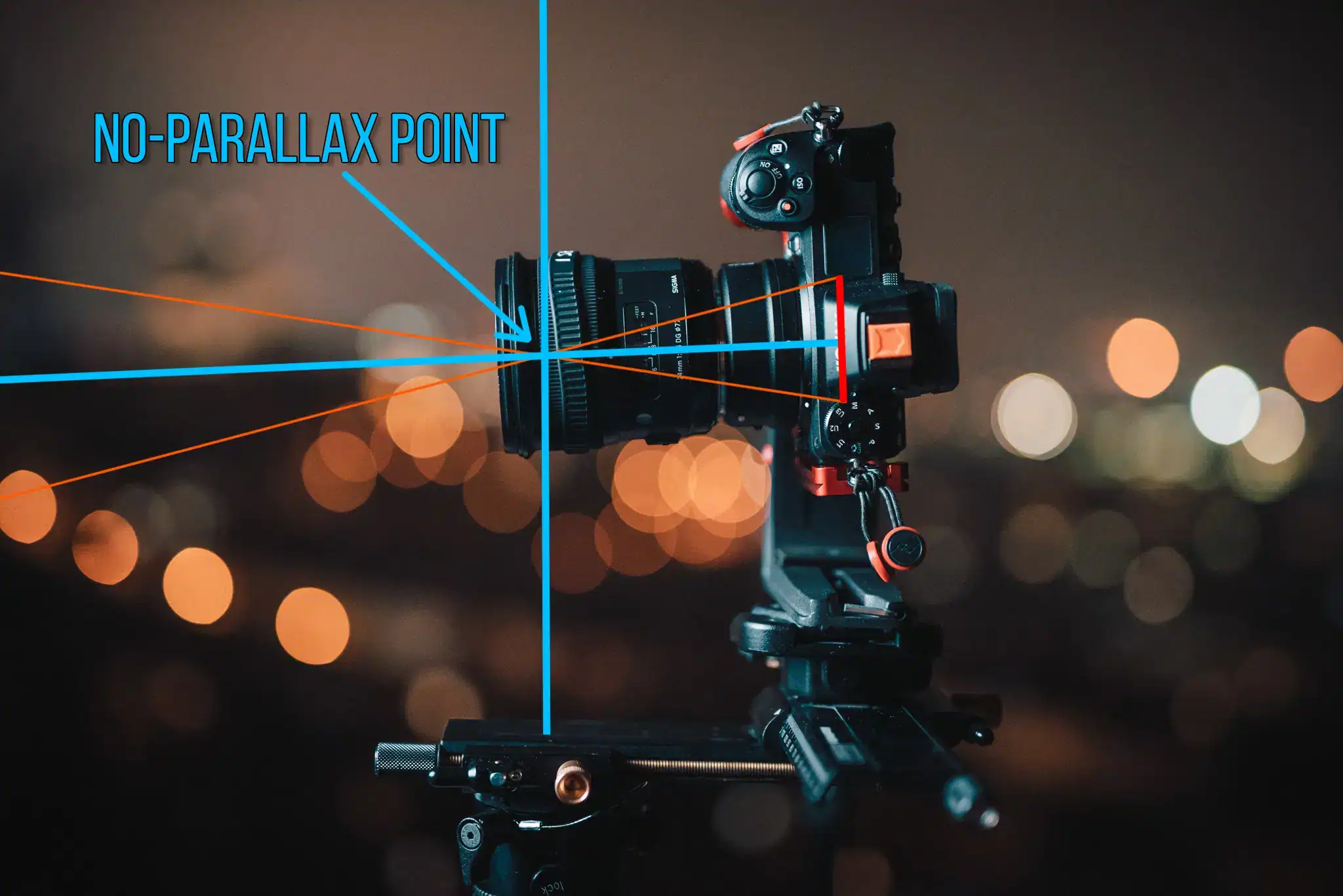
For a deeper dive on panoramic head setup and technique, see this comprehensive panoramic head tutorial from 360 Rumors. Panoramic head setup guide
Step-by-Step Shooting Guide
Standard Static Scenes
- Level and align: Level your tripod using the leveling base. On the pano head, set the rotation around the entrance pupil. A practical starting point for many full-frame fisheyes is to position the pivot roughly near the front element; fine-tune by aligning near/far objects and rotating to confirm zero parallax.
- Manual exposure and white balance: Set Manual mode and lock WB (Daylight for sun, Tungsten for typical interiors, or custom Kelvin like 5200K). Consistency across frames prevents seams.
- Focus and aperture: Switch the 7Artisans to manual focus; set focus just past hyperfocal around f/5.6–f/8. For daylight scenes, f/8 is a sweet spot for edge-to-edge sharpness.
- Capture sequence with overlap:
- Fast method: 4 around (every 90°), then 1 zenith (tilt up), 1 nadir (tilt down). Overlap ~30–35%.
- Quality method: 6 around (every 60°) for more detail and robustness in busy scenes; add zenith/nadir.
- Nadir shot: After the around set, tilt camera down and shoot a dedicated nadir frame so you can patch out the tripod later.
HDR / High Dynamic Range Interiors
- Bracket exposures: Use ±2 EV bracketing (3–5 frames) to capture bright windows and deep interior shadows. Keep ISO at 100–200 whenever possible for clean blends.
- Lock WB & settings: Keep aperture/focus fixed and use a remote trigger. Bracket with shutter speed only to maintain depth of field and sharpness.
Low-Light / Night Scenes
- Exposure strategy: Start at f/4–f/5.6, ISO 100–400 if on tripod, and extend shutter to 1–8 seconds as needed. The Zf handles ISO 800–1600 well for night skies and city scenes when exposed to the right (ETTR).
- Stability: Turn off IBIS on a tripod. Use remote or 2s timer, and consider electronic front-curtain shutter to minimize micro-shake.
Crowded Events
- Two-pass capture: First pass quickly for coverage; second pass pick gaps when people move. You’ll mask frames in post to remove ghosting.
- Overlap insurance: Increase overlap to ~40% and keep your rotation consistent; this gives the stitcher more usable data.
Special Setups (Pole / Car / Drone)
- Secure everything: Use redundant clamps and a safety tether. Check wind and avoid high speeds. For car mounts, a smooth route is essential.
- Settings for vibration: Favor faster shutter speeds (1/250–1/1000), raise ISO to 400–1600 as needed, and shoot more around frames (6–8) to hedge against motion blur and rolling shutter artifacts.
Recommended Settings & Pro Tips
Exposure & Focus
| Scenario | Aperture | Shutter | ISO | Notes |
|---|---|---|---|---|
| Daylight outdoor | f/8–f/11 | 1/100–1/250 | 100–200 | Lock WB (Daylight); keep horizon centered for less distortion |
| Low light/night | f/4–f/5.6 | 1/30–8s (tripod) | 100–800 (1600 if needed) | IBIS off on tripod; use remote or 2s timer |
| Interior HDR | f/8 | Bracket ±2 EV | 100–400 | Blend in post; prioritize clean base exposure at ISO 100 |
| Action / moving subjects | f/5.6–f/8 | 1/200+ | 400–800 | Short shutter to freeze movement; shoot two passes |
Critical Tips
- Manual focus at hyperfocal: On a 10mm FF fisheye, setting focus around 0.7–1.0 m at f/8 typically yields sharpness from near foreground to infinity. Confirm with magnified live view.
- Nodal calibration: Use a rail. Place a near object and a far object in line; rotate left/right. Adjust the fore–aft position until there is no shift between near and far objects when rotating.
- White balance lock: Mixed lighting can cause visible seams. Set a Kelvin value or a fixed preset for the entire sequence.
- RAW over JPEG: The Zf’s 14-bit RAW files provide more latitude for HDR and color matching. JPEGs are okay for quick work, but RAW is safer.
- IBIS: Turn it off for tripod panoramas. For handheld emergency stitches, IBIS can help stabilize frames, but expect more stitching work.
- Custom Modes (U1/U2/U3): Save your pano profile (Manual exposure, manual focus, IBIS off, WB preset, self-timer) to recall instantly on jobs.
Stitching & Post-Processing
Software Workflow
Import RAWs into Lightroom or your preferred RAW editor; sync white balance, lens corrections (CA removal), and basic exposure across the sequence. Export 16-bit TIFFs to your stitcher. In PTGui or Hugin, set the lens type to fisheye and let the optimizer find control points. With fisheye shots, 25–35% overlap is typical; rectilinear lenses need more frames but less distortion at edges. PTGui’s templates and optimizer handle fisheye mapping well, and you can output a 2:1 equirectangular for VR. For more on PTGui’s capabilities and why many pros use it, see Fstoppers’ review. PTGui review
Cleanup & Enhancement
- Nadir patch: Use PTGui’s Viewpoint correction, or export to Photoshop to clone/patch the tripod. Many virtual tour platforms and AI tools can auto-patch simple floors.
- Color consistency: After stitching, fine-tune global white balance and match contrast. Apply targeted noise reduction to shadow areas—Zf files handle NR gracefully at ISO ≤1600.
- Level and straighten: Use the stitcher’s horizon/verticals tool to correct yaw/pitch/roll. Keep verticals straight for real estate work.
- Export: Deliver at 8000×4000 or higher (2:1 ratio) for VR. Keep a 16-bit master TIFF and export an 8-bit sRGB JPEG for web/tour platforms.
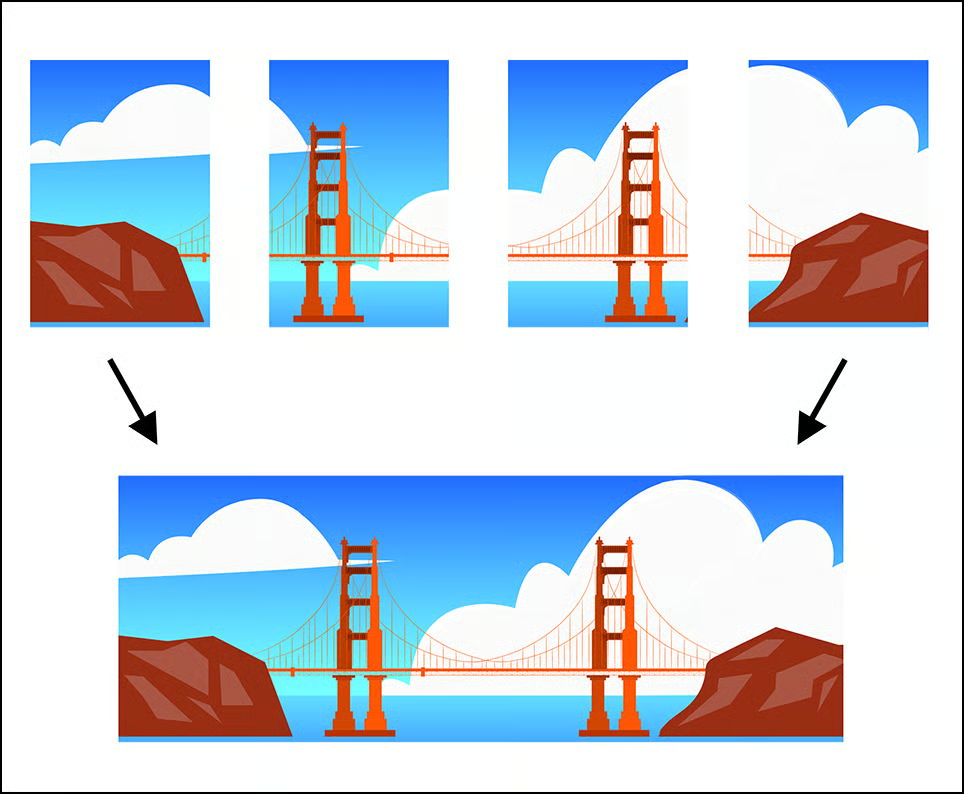
For an official, platform-agnostic primer on DSLR/mirrorless 360 workflows, the Meta/Oculus Creator documentation is a solid reference. Using a mirrorless camera to shoot and stitch a 360 photo
Useful Tools & Resources
Software
- PTGui panorama stitching
- Hugin (open source)
- Lightroom / Photoshop for RAW and retouching
- AI tripod/nadir removal tools in modern tour platforms
Hardware
- Panoramic heads: Nodal Ninja, Leofoto geared systems
- Carbon fiber tripods with leveling bases
- Wireless remotes (Nikon MC-DC2 compatible or Bluetooth)
- Pole extensions and car suction mounts (with safety tethers)
Disclaimer: Product names are for search convenience; verify specs on official sites.
For additional best practices collected from working photographers, see this community Q&A about 360 panorama techniques. Best techniques for 360 panoramas
Common Mistakes & How to Avoid Them
- Parallax error: Always align to the entrance pupil. Even with a fisheye, misalignment causes ghosting around close objects.
- Exposure flicker: Manual exposure and locked WB only. Avoid auto ISO—keep it fixed for the full sequence.
- Tripod and shadows: Take a separate nadir shot; use a compact tripod footprint when possible.
- Ghosting from movement: Increase overlap, shoot two passes, and mask in post. Use the stitcher’s masking tools.
- Noise in dark scenes: Keep ISO low and extend shutter on a tripod. Expose to the right for cleaner shadows.
- Flare with fisheye: Shade the lens when rotating; avoid direct sun in frame when possible and clean the front element meticulously.
Real-World Use Cases with the Zf + 10mm Fish-Eye
Indoor Real Estate
Shoot at f/8, ISO 100–200, bracket ±2 EV around the space. The 10mm fisheye reduces frame count, speeding up capture in furnished rooms with mirrors and windows. Watch reflections and minimize parallax by perfect nodal alignment. Use a dedicated nadir shot to cleanly remove the tripod on glossy floors.
Outdoor Sunset
Meter for the highlights and consider a 3–5 shot bracket. Keep the sun near the frame edge rather than centered to reduce flare. The Zf’s DR helps retain color in the sky; blend in post for a balanced 360 without halos.
Event Crowds
Run 6 around + Z + N at fast shutter speeds (1/200–1/500) and ISO 400–800. Capture a second series when crowd flow opens up, then mask in the clearest elements during stitching. Fewer frames with a fisheye buys you time in dynamic situations.
Rooftop or Pole
Use a carbon pole with a compact pano head, 6–8 around with 35–40% overlap. Shutter 1/250+ and ISO 400–1600 depending on light. Always tether. If wind exceeds safe limits, don’t risk it—vibration ruins stitches and endangers gear.
Frequently Asked Questions
- Can I shoot handheld panoramas with the Nikon Zf?
Yes, in a pinch. IBIS can help, but expect more stitching work. Use high shutter speeds (1/250+), higher overlap (~40%), and keep the camera level. For critical work (real estate/VR tours), use a tripod and pano head.
- Is the 7Artisans 10mm f/2.8 II wide enough for single-row 360?
Yes. On full frame, 4 around + zenith + nadir is feasible with ~30–35% overlap. For complex ceilings or tight interiors, 6 around improves stitch reliability and detail.
- Do I need HDR for interiors with bright windows?
Often yes. Bracket ±2 EV (3–5 frames) at each position to balance window highlights and interior shadows. Keep WB and aperture locked; vary shutter only.
- How do I avoid parallax issues with this lens?
Mount on a panoramic head, align rotation at the entrance pupil by the near/far alignment test, and lock all rails. With a fisheye, even small errors show near the tripod or furniture edges.
- What ISO range is safe on the Zf in low light?
For tripod work, ISO 100–400 is ideal; extend shutter instead of pushing ISO. Handheld or dynamic scenes are clean up to 800–1600 if exposure is accurate. Beyond 1600, expect more noise and reduced dynamic range.
- Can I store pano settings as a custom mode on the Zf?
Yes. Use U1/U2/U3 to save a “Pano” preset: Manual exposure, manual focus, WB fixed, IBIS off (for tripod), 2s timer/remote, and your preferred aperture (e.g., f/8).
- How can I reduce flare with a fisheye?
Avoid direct sun in the frame when possible; shade the lens with your hand just outside the field of view as you rotate. Keep the front element pristine; tiny smudges glow under hard light.
- Best tripod head for this setup?
A compact panoramic head with fore–aft rail adjustment (e.g., Nodal Ninja or Leofoto) is perfect. Ensure it supports vertical tilt for zenith/nadir and has click-stops for repeatability.
Expert Notes & Safety
Technical: The Zf’s ~5.9 μm pixel pitch (24.5MP on full frame) favors low noise and good dynamic range at base ISO. Use 14-bit RAW for maximum latitude in HDR blends. The 7Artisans 10mm II is sharp centrally by f/4 and across the frame at f/5.6–f/8; correct CA and vignetting uniformly before stitching to improve seam blending.
Safety & care: On rooftops or poles, a fisheye’s massive FOV makes your rig more susceptible to wind. Never leave the setup unattended; always anchor or tether. Protect gear from drizzle and dust—droplets on a fisheye’s front element are magnified and ruin frames. Back up cards frequently; consider dual-run sequences so you have a second take if moving subjects spoil the first.
Standards & further learning: If you’re new to high-end pano heads or multi-row workflows, the Oculus/Meta pano head setup guide is a good standard reference, as are published spherical resolution notes from the PanoTools community for planning output resolution. Set up a panoramic head for 360 photos • Spherical resolution overview