Why This Camera & Lens Are Great for Panoramas
The Nikon Z9 paired with the Laowa 8–15mm f/2.8 FF Zoom Fisheye is a powerhouse combo for 360° panoramas and ultra-wide VR photos. The Z9’s 45.7MP full-frame stacked BSI sensor (approx. 35.9×23.9 mm, pixel pitch ~4.35 µm) delivers excellent detail with strong base-ISO dynamic range (14+ stops at ISO 64), while its in-body stabilization (IBIS) and low shutter vibration make it ideal for long, clean exposures. The Z9’s fully electronic shutter helps with zero shutter wear and silent operation, though under some LED lighting you should engage flicker reduction to avoid banding.
The Laowa 8–15mm is a full‑frame zoom fisheye: at 8mm it produces a circular 180° image; at 15mm it’s a diagonal fisheye with 180° across the diagonal. For panoramas, that flexibility is gold—use 8mm to reduce shot count (fast capture, fewer seams) and 12–15mm for higher stitched resolution when you can afford a few more frames. Optically, fisheyes inherently distort straight lines, but that’s fine for spherical stitching; edge sharpness is solid from f/5.6–f/8, with moderate lateral CA near the edges that’s easy to fix in post. The lens is available in multiple mounts; if you’re using an F‑mount version on the Z9, Nikon’s FTZ II adapter maintains infinity focus and aperture control (check your specific lens version). For Z‑mount native, you’ll get a cleaner, lighter build.
Quick Setup Overview
- Camera: Nikon Z9 — Full-frame 45.7MP stacked BSI sensor; base ISO 64; excellent 14+ stops DR at base; fully electronic shutter; 5-axis IBIS.
- Lens: Laowa 8–15mm f/2.8 FF Zoom Fisheye — Full-frame zoom fisheye; circular at 8mm, diagonal at 15mm; sharpness sweet spot f/5.6–f/8; moderate lateral CA at frame edges.
- Estimated shots & overlap (field-tested):
- 8mm circular: 4 around at 90° yaw + zenith + nadir (safe overlap ~30–35%). Fast and reliable.
- 10–12mm: 6 around at 60° + 1 zenith + 1 nadir (overlap ~30%). Good balance of speed and resolution.
- 15mm diagonal: 6–8 around + zenith + nadir (overlap 25–30%). Highest stitch resolution from this zoom.
- Difficulty: Moderate — very forgiving with a calibrated panoramic head; manageable even outdoors with careful technique.
Planning & On-Site Preparation
Evaluate Shooting Environment
Scan for moving subjects (people, cars, trees in wind), reflective surfaces (glass, polished metal), and high-contrast lighting (bright windows, strong sun). If shooting through glass, place the front element as close as possible (1–2 cm) to reduce internal reflections; shield stray light with a rubber lens hood or a dark cloth. Avoid direct sun crossing the frame if possible; with fisheyes, sun can hit the front element from unexpected angles and create flare/ghosting.
Match Gear to Scene Goals
The Z9’s base ISO 64 captures massive dynamic range—perfect for bright exteriors and golden-hour scenes. Indoors, the Z9 stays clean to ISO 1600–3200, but for virtual tours and critical detail, try to keep ISO at 64–400 on tripod. The Laowa 8–15mm lets you choose efficiency (8–10mm, fewer frames) or extra resolution (12–15mm, more frames). For real estate interiors, 10–12mm usually hits a sweet spot: manageable shot count with noticeably higher final pano resolution than 8mm circular.
Pre-shoot Checklist
- Power & media: Fully charged Z9 battery; spare battery; fast, high-capacity CFexpress Type B cards.
- Optics: Clean the front element thoroughly—fisheyes see everything, including dust and smudges.
- Support: Leveling base on a sturdy carbon tripod; calibrated panoramic head with nodal alignment set for your focal length.
- Camera prep: Manual exposure, manual white balance, RAW capture, IBIS off on tripod, flicker reduction on under LEDs.
- Safety: On rooftops or poles, tether the camera/lens; check wind gusts; don’t overextend center column.
- Backup capture: After the first full rotation, shoot a second safety round (especially if clouds or crowd movement changed).
Essential Gear & Setup
Core Gear
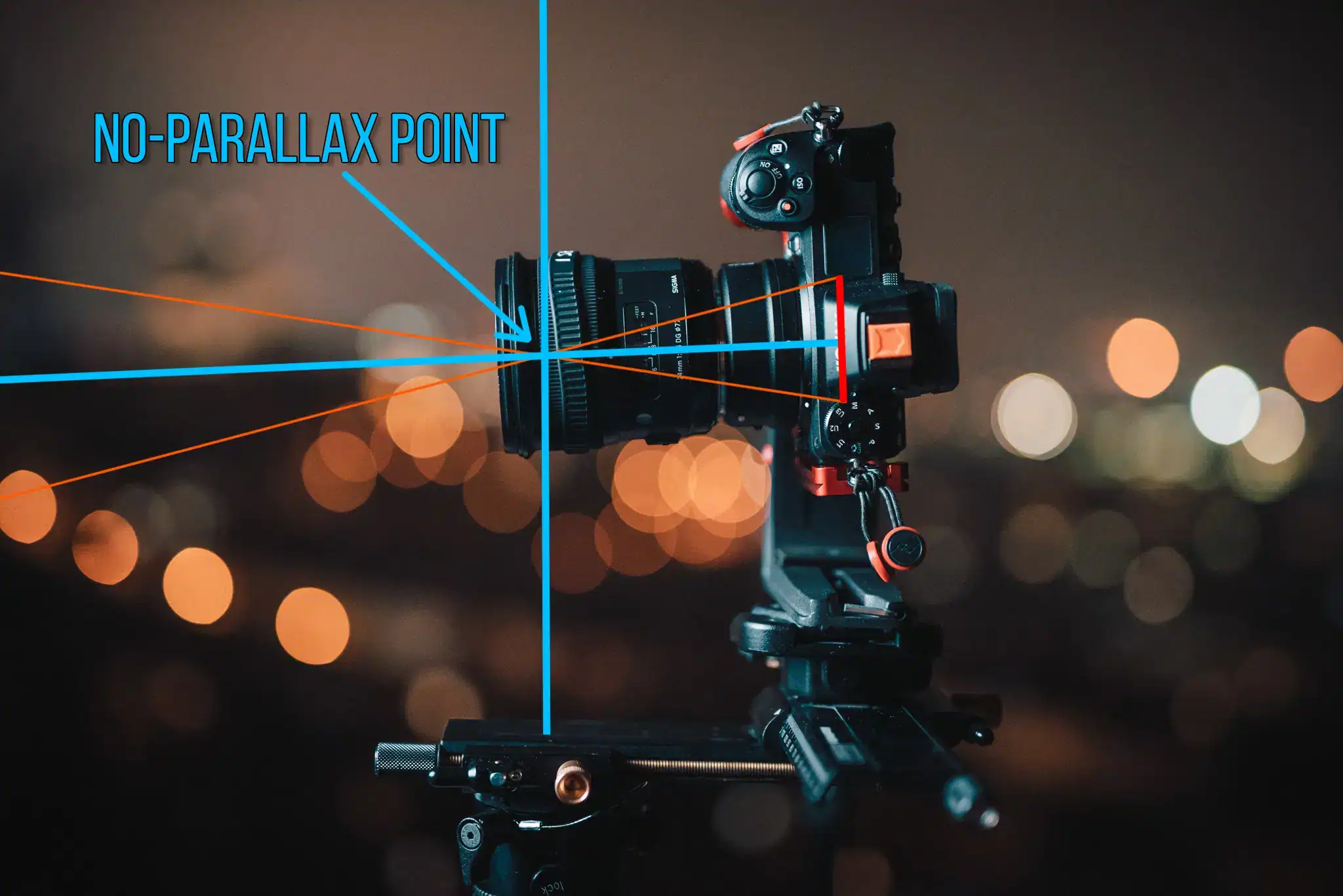
- Panoramic head: Lets you rotate around the lens’s entrance pupil (nodal point) to eliminate parallax—critical for clean stitches when foreground objects are close.
- Stable tripod with leveling base: A bowl or leveling base speeds setup; perfectly level horizons make stitching simpler.
- Remote trigger or SnapBridge app: Prevents vibrations; set 2s self-timer if you forget the remote.
Optional Add-ons
- Pole or car mount: Useful for elevated or moving captures. Always use safety tethers and minimize speed/wind exposure; IBIS on can help for pole work but test for jello under vibrations.
- Lighting aids: Small LED panels or bounced flash for interiors; avoid mixing color temperatures across frames.
- Weather protection: Rain covers, microfiber wipes, and a small blower; fisheyes are flare-prone in drizzle—keep the front element dry.
For a step-by-step panoramic head setup refresher, see a practical guide to perfect high‑end 360 photos. Set up a panoramic head for high‑end 360 photos.
Step-by-Step Shooting Guide
Standard Static Scenes
- Level tripod and align the nodal point. On the panoramic head, slide the camera fore/aft until a near object and far object stay aligned while you pan. Repeat for your chosen focal length (8, 10, 12, 15mm) and mark the rail for speed next time.
- Lock manual exposure and white balance. Meter the mid-tones, then switch to Manual. Set WB to Daylight for sun, Tungsten for warm interiors, or a fixed Kelvin (e.g., 5000K). Consistency avoids visible seams.
- Capture with tested overlap:
- 8mm circular: 4 shots around at 0° pitch; rotate 90° each step. Add zenith and nadir if needed.
- 10–12mm: 6 around at 60°. Add 1 zenith and 1 nadir. Use 30% overlap for robust control points.
- 15mm: 6–8 around, plus zenith/nadir. More shots improve edge quality and final resolution.
- Take a dedicated nadir (ground) shot. Tilt the camera down and offset the tripod to capture clean ground for patching. Alternatively, shoot a handheld nadir with the tripod removed—just keep the lens roughly over the same spot.
HDR / High Dynamic Range Interiors
- Bracket ±2 EV (3 or 5 frames) to balance bright windows and deep shadows. The Z9’s base ISO 64 gives tons of highlight headroom—exploit it.
- Keep WB locked across brackets and frames. If under LED lighting, enable High-frequency flicker reduction (choose a shutter close to 1/100 or 1/120s) to minimize banding.
- Batch your brackets in a predictable order (e.g., 0, −2, +2) so PTGui or Lightroom recognizes stacks easily.
Low-Light / Night Scenes
- Use tripod, remote, and IBIS off. Shoot at f/4–f/5.6 with longer shutters at ISO 64–400 for the cleanest files. The Z9 stays usable to ISO 1600–3200 if wind or motion forces shorter exposures.
- Long exposures can cause light trails; decide if you want them. If not, wait for gaps in traffic or blend multiple takes later.
Crowded Events
- Shoot two passes. First pass captures the structure of the scene; second pass captures cleaner gaps in crowds for key zones.
- At stitch time, mask moving people between passes. Keep the tripod planted and rotate smoothly to maintain alignment.
Special Setups (Pole / Car / Drone)
- Secure the rig with primary and secondary tethers. For poles, keep the center of mass low; for car mounts, avoid high speeds and rough roads.
- Use faster shutter speeds and slightly higher ISO to combat vibration. Consider fewer frames (e.g., 8–10mm, 4–6 around) to finish quickly before conditions change.
Field Case Studies
- Indoor real estate: 12mm, f/8, 6 around + Z/N, ISO 100–200, brackets ±2 EV. Clean windows and consistent color are higher priority than ultimate corner sharpness.
- Outdoor sunset: 10mm, f/8, ISO 64–100, 6 around + Z/N. Meter for highlights; consider a two-pass bracket to protect both sky and foreground.
- Event crowds: 8mm circular, f/5.6, ISO 400–800, 4 around + Z/N. Minimal frames reduce ghosting risks and speed capture.
- Rooftop/pole: 8–10mm, f/5.6, 4–6 around. Keep shutter at 1/200s+ if windy. Safety first.
Recommended Settings & Pro Tips
Exposure & Focus
| Scenario | Aperture | Shutter | ISO | Notes |
|---|---|---|---|---|
| Daylight outdoor | f/8–f/11 | 1/100–1/250 | 64–200 | Lock WB (daylight 5200–5600K); avoid clipping highlights. |
| Low light/night | f/4–f/5.6 | 1/15–1/60 | 64–800 | Tripod & remote; IBIS off; enable flicker reduction under LEDs. |
| Interior HDR | f/8 | Bracket ±2 EV | 64–400 | Expose for mid-tones; bracket to save windows and lamps. |
| Action / moving subjects | f/5.6–f/8 | 1/200+ | 200–800 | Freeze motion; consider fewer frames (8–10mm) to minimize ghosting. |
Critical Tips
- Manual focus at hyperfocal: At 10–12mm, set focus roughly 0.5–1 m and stop down to f/8; everything from ~0.5 m to infinity stays sharp. Confirm on Z9’s magnified live view.
- Nodal calibration: For each marked focal length (8/10/12/15mm), slide the fore-aft rail until near and far objects stay aligned while panning. Mark the rail. Recheck if you switch between 8mm circular and 15mm diagonal.
- White balance lock: Use Kelvin values instead of Auto WB to avoid color shifts between frames, which can cause visible seams.
- RAW over JPEG: RAW maximizes dynamic range and color latitude—standard practice for HDR panoramas and mixed lighting.
- IBIS behavior: Turn IBIS off on tripod to avoid micro-jitters; turn IBIS on for handheld or pole work. Test for any rolling artifacts under vibration.
- Z9 flicker tools: Under LED lighting, use High-frequency flicker reduction to pick a precise shutter speed that reduces banding (often ~1/100–1/120s in 50/60 Hz regions).
Stitching & Post-Processing
Software Workflow
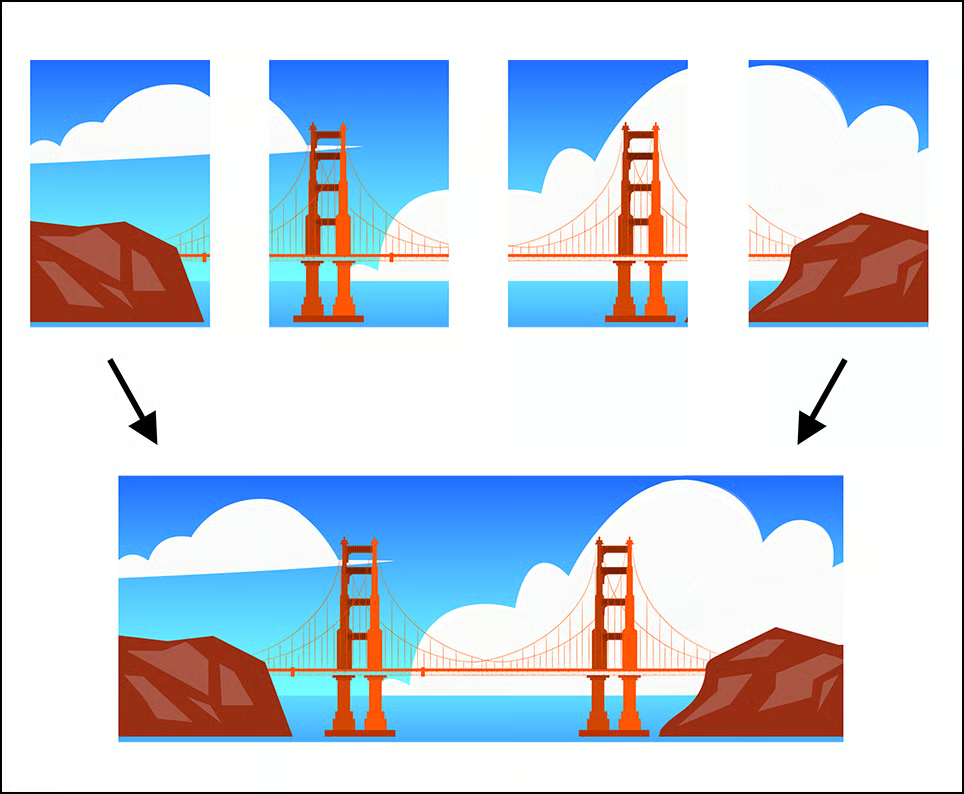
Import RAW files into Lightroom or Capture One for initial white balance, exposure normalization, and lens CA correction (don’t apply fisheye defishing—leave distortion intact for stitching). Send to PTGui or Hugin for stitching; fisheye frames are easy for control points and typically require 25–35% overlap. Rectilinear ultrawides need more frames but less edge distortion. Export an equirectangular at the highest needed width for your platform (e.g., 12K–16K for premium VR, 8K for standard web), then refine in Photoshop for patching and cleanup. For a hands-on look at PTGui in practice, see this review. Why PTGui is a top choice for pro panoramas.
Cleanup & Enhancement
- Nadir patch: Use PTGui Viewpoint correction or clone/heal in Photoshop. You can also overlay a clean handheld nadir shot.
- Color consistency: Harmonize tints across frames; fix mixed lighting by local white balance adjustments or HSL tweaks.
- Noise reduction: Apply modest luminance NR for low-light shots; sharpen last, and avoid halos at high-contrast seams.
- Horizon and leveling: Adjust roll/yaw/pitch until verticals are straight and horizon is level, especially for architectural work.
- Export: Save a 16-bit TIFF master; create an 8-bit JPEG equirectangular for VR platforms or web. Keep a layered PSD/PSB for future edits.
To estimate final pano resolution from your lens/sensor combo, the Panotools wiki has useful theory and calculators. Understanding spherical resolution.
Video: A concise overview of shooting and stitching panoramas.
Useful Tools & Resources
Software
- PTGui panorama stitching
- Hugin open source
- Lightroom / Photoshop
- AI tripod removal / generative fill tools
Hardware
- Panoramic heads (Nodal Ninja, Leofoto)
- Carbon fiber tripods and leveling bases
- Wireless remote shutters or intervalometers
- Pole extensions / car mounts with safety tethers
Want a deeper dive into panoramic-head fundamentals? This visual tutorial covers key concepts and setup tips. Panoramic head tutorial.
Disclaimer: software/hardware names provided for search reference; check official sites for details.
Common Mistakes & How to Avoid Them
- Parallax error → Always align the entrance pupil for each focal length. Recheck after changing 8/10/12/15mm.
- Exposure flicker → Manual exposure and locked WB. Use flicker reduction under LEDs (Z9 menu).
- Tripod shadows or legs in frame → Capture a clean nadir or plan to patch later.
- Ghosting from moving subjects → Shoot two passes and mask; or time rotations between pedestrian flows.
- High ISO noise at night → Prefer longer shutter at low ISO with tripod and remote; Z9 is clean to ISO 1600–3200 if needed.
- Sun flare on fisheye → Shade the lens, recompose slightly, or time shots when the sun is behind a structure.
Frequently Asked Questions
- Can I shoot handheld panoramas with the Nikon Z9?
Yes, especially at 8–10mm where fewer frames are needed. Use IBIS on, fast shutter (1/200s+), and overlap generously (35–40%). However, for critical work (VR tours, interiors), a leveled tripod and pano head produce far more consistent stitches.
- Is the Laowa 8–15mm wide enough for a single‑row 360?
Absolutely. At 8mm circular you can do 4 shots around plus zenith/nadir. At 10–12mm, 6 shots around plus Z/N is typical. At 15mm, plan 6–8 around plus Z/N for higher resolution. The lens’s 180° coverage at the wide end makes single-row spherical capture practical.
- Do I need HDR for interiors with bright windows?
Usually yes. The Z9 has strong dynamic range at ISO 64, but windows can be several stops brighter than interiors. Bracket ±2 EV (3–5 frames) and merge before stitching or let PTGui handle exposure fusion. Keep WB locked to avoid seams.
- How do I avoid parallax issues with this fisheye?
Use a panoramic head and align the entrance pupil for each focal length. Place a near object (0.5–1 m) and a far object in frame, pan the head, and adjust the rail until they don’t shift relative to each other. Mark rail positions (8/10/12/15). If adapting an F‑mount lens via FTZ II, redo the calibration after adding/removing the adapter.
- What ISO range is safe on the Z9 for low light?
For pro-grade VR, aim for ISO 64–400 on tripod. The Z9 remains very good to ISO 1600–3200 with tasteful noise reduction. If you must freeze motion at night, prioritize shutter speed and accept ISO 1600+; the files remain workable, especially at f/2.8–f/4.
Resolution Expectations & Safety Notes
Expect a higher final equirectangular resolution when you use 10–15mm versus 8mm circular, thanks to increased sampling across the sphere. Real-world results vary with overlap and pitch strategy, but as a rule: fewer, wider frames give speed; more, tighter frames yield more pixels in the stitch. For theory and calculators, see the Panotools spherical resolution guide linked above.
Safety and gear protection are paramount: fisheyes are bulbous and easy to bump; always cap the lens between locations, keep a microfiber cloth handy, and tether the camera in elevated or windy scenarios. Back up in the field—copy your RAWs to a second card or a portable SSD whenever possible.