
Why This Camera & Lens Are Great for Panoramas
If you want to master how to shoot panorama with Nikon Z9 & Laowa 4mm f/2.8 Circular Fisheye, you’re pairing one of the most capable full-frame mirrorless bodies with an ultra-wide circular fisheye. The Nikon Z9’s 45.7MP stacked BSI CMOS sensor (full frame, ~4.35 µm pixel pitch) provides excellent dynamic range at base ISO (roughly 14+ stops) and robust low-noise performance up through ISO 1600–3200 when needed. Its in-body image stabilization (IBIS), fast bracketing, and precise exposure tools make it a strong platform for both tripod-based and quick on-location 360 photography.
The Laowa 4mm f/2.8 Circular Fisheye is a fully manual lens with a massive ~210° field of view. Being a circular fisheye, it projects a circular image, enabling full 360×180 coverage with very few shots (often just 2 frames 180° apart, plus an optional safety nadir). While the 4mm lens was designed primarily for smaller sensors (APS-C/MFT), you can still use it on the Z9 via the appropriate Z-mount version or adapter. On full-frame, expect a smaller circular image on the sensor, which limits the maximum stitched resolution compared with an 8mm circular fisheye made for full-frame. The upside is speed: fewer shots, quicker workflows, and easier stitching even in challenging environments.
Quick Setup Overview
- Camera: Nikon Z9 — full-frame 45.7MP stacked BSI CMOS, base ISO 64, excellent DR (~14+ stops), IBIS, CFexpress Type B.
- Lens: Laowa 4mm f/2.8 Circular Fisheye — circular fisheye ~210° FOV, fully manual focus/aperture, best sharpness around f/5.6–f/8, moderate CA easy to correct in post.
- Estimated shots & overlap:
- 2 shots around (0° and 180° yaw), pitch at 0° — works with this 210° lens; add 1 nadir for safety.
- 3 shots around (120° apart) — higher overlap for complex scenes (glass, crowds), still very fast.
- Overlap target: ~25–35% between frames for stable control points.
- Difficulty: Easy for field speed; Moderate for optimal nodal alignment and high-resolution output expectations.
Planning & On-Site Preparation
Evaluate Shooting Environment
Scan the space for strong light sources, reflective surfaces (mirrors, windows, glossy floors), and moving subjects (people, trees in wind). With a circular fisheye, flare and sun stars can appear if the sun or bare bulbs are included; adjust your stance to keep bright sources consistent within a single frame. If shooting through glass, get the lens as close as safely possible (1–3 cm) to reduce reflections; carry a black cloth or rubber hood if you must press against glass to block side light.
Match Gear to Scene Goals
The Z9’s high DR and low noise let you shoot at base ISO 64 for maximum quality, or bump to ISO 400–800 for interiors without sacrificing too much detail. The Laowa 4mm lets you cover the entire sphere with 2–3 frames, minimizing time and blending issues. The trade-off is ultimate resolution—on full frame, the circular image from this 4mm is relatively small, so expect final equirectangular outputs in the 5K–8K width range (scene and overlap dependent). If you need exceptionally high pixel density (museum ceilings, wall textures for gigapixel tours), consider a multi-row approach with a longer focal length on another day.
Pre-shoot Checklist
- Battery & storage: Z9 batteries last, but RAW + bracketing can add up; pack a spare and fast CFexpress Type B cards.
- Clean optics & sensor: dust appears everywhere in 360; clean front element carefully and do a sensor check.
- Tripod leveling & pano head calibration: level the base; verify nodal alignment to avoid parallax seams.
- Safety checks: tether gear on rooftops and poles, weigh down tripod in wind, and avoid public trip hazards.
- Backup workflow: when in doubt, shoot an extra pass (e.g., 3-around after your 2-shot set) for insurance.
Essential Gear & Setup
Core Gear
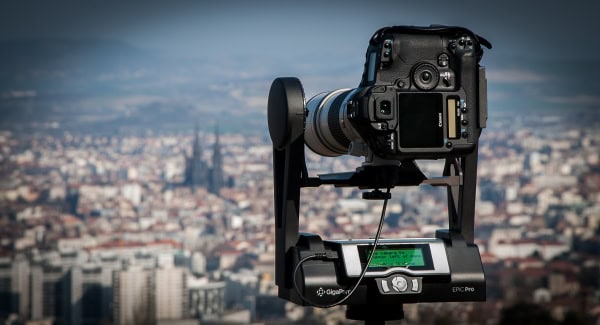
- Panoramic head: This lets you rotate precisely around the lens’s no-parallax point (NPP), minimizing parallax errors. With an ultra-wide circular fisheye, parallax tolerance is better, but alignment still matters around nearby objects (chairs, railings).
- Stable tripod with leveling base: Leveling keeps horizons true and simplifies stitching. A leveling base speeds setup dramatically.
- Remote trigger or app: Use the Z9 app or a wired trigger to prevent camera shake. The Z9’s electronic shutter helps, but hands-off is best for long exposures.
Optional Add-ons
- Pole or car mount: Great for aerial viewpoints and car interiors. Always tether the camera, watch wind loads, and keep bystanders clear.
- Lighting aids: Small LED panels help lift shadows in interiors. Keep lighting consistent across frames to avoid stitching color shifts.
- Weather protection: Rain covers and microfiber cloths for drizzle or sea spray.

Step-by-Step Shooting Guide
Standard Static Scenes
- Level the tripod & align the nodal point: On the Z9 + Laowa 4mm, set your panoramic head’s rails so the rotation axis passes through the lens’s entrance pupil (often near the front element on ultra-wides). Use a simple test with a near and far object; adjust fore/aft until the near object doesn’t shift against the far object as you pan.
- Manual exposure & locked white balance: Set manual mode. For daylight, start around f/8, 1/125–1/250 s, ISO 64–200. Lock WB (Daylight/Cloudy) to ensure consistent color across frames.
- Framing and capture: For the 2-shot method, shoot one frame at yaw 0°, pitch 0°, then rotate 180° and shoot the second. For complex scenes, use 3-around (0°, 120°, 240°). Aim for ~25–35% overlap; with 210° FOV you’ll have generous coverage.
- Nadir shot: If your tripod base or your feet intrude, tilt down and capture a nadir. With a 210° FOV, you may already cover the ground, but a dedicated nadir makes patching clean.
HDR / High Dynamic Range Interiors
- Bracket ±2 EV: Use the Z9’s exposure bracketing (3 or 5 frames) to balance bright windows with interior shadows. Keep ISO low (64–200) to maximize DR.
- Lock WB: Use a fixed Kelvin or preset to avoid WB shifts across brackets that complicate stitching.
- Consistency: Do the full bracket at each yaw position before rotating. Avoid people walking through during brackets.
Low-Light / Night Scenes
- Longer exposures on tripod: Open to f/4–f/5.6 and keep ISO 64–800 if possible. On the Z9, ISO 1600–3200 is still usable for web VR; test your tolerance.
- Stabilization: Turn IBIS (VR) OFF on a tripod to avoid micro-movements. Use a remote or 2–5 s self-timer to eliminate shake.
- Noise management: Expose to the right within reason and apply mild noise reduction in post.
Crowded Events
- Two passes: First pass for coverage; second pass when gaps appear in the crowd.
- Higher shutter: 1/200 s or faster to freeze motion if people are essential to the scene. Otherwise, allow some motion blur for easier masking later.
- Mask in post: Use PTGui’s masking to select clean areas from each frame.
Special Setups (Pole / Car / Drone)
- Pole: Secure a safety tether mid-height and at the base. Keep shutter speed higher (1/250–1/500 s) to reduce motion. Rotate more slowly between shots.
- Car interior: Use 2-shot method from the center console area; ensure seats and mirrors don’t block overlap zones.
- Drone: For the Z9, this is generally impractical; use a dedicated drone system if aerial is required.
Recommended Settings & Pro Tips
Exposure & Focus
| Scenario | Aperture | Shutter | ISO | Notes |
|---|---|---|---|---|
| Daylight outdoor | f/8–f/11 | 1/100–1/250 | 64–200 | Lock WB (Daylight). Avoid sun on the seam; keep it within one frame. |
| Low light/night | f/4–f/5.6 | 1/30–1/60 (tripod) | 400–800 (up to 1600–3200 if needed) | VR OFF on tripod; use remote/self-timer. |
| Interior HDR | f/8 | Bracket ±2 EV (3–5 shots) | 64–200 | Pre-merge brackets before stitching for best control. |
| Action / moving subjects | f/5.6–f/8 | 1/200+ | 400–800 | Two-pass workflow to blend cleaner frames. |
Critical Tips
- Manual focus: Set focus to just shy of infinity or use hyperfocal at f/5.6–f/8. Take a quick test frame at 100% to confirm edge sharpness.
- Nodal point calibration: Start with the lens mounted so the rotation axis passes near the front element; fine-tune with a near/far alignment test. Mark your rail position for repeatability.
- White balance lock: Mixed lighting? Choose a Kelvin value (e.g., 4000–5000K indoors) to avoid frame-to-frame shifts.
- RAW vs JPEG: Shoot RAW for dynamic range and better CA/flare correction.
- IBIS: Turn VR OFF on tripod. For quick handheld tests, VR can help, but stitching success drops without a pano head.
- Non-CPU Lens Data: Add a 4mm f/2.8 profile in the Z9 menu to embed EXIF and improve IBIS focal-length awareness if you ever shoot handheld.
Stitching & Post-Processing
Software Workflow
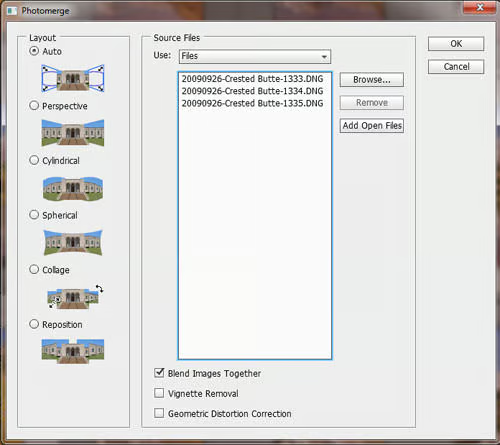
Import RAW files and apply consistent basic adjustments first (WB, lens CA, exposure). If you bracketed, merge each viewpoint’s bracket into an HDR image (e.g., Lightroom HDR or HDRMerge) before stitching. In PTGui or Hugin, set lens type to Circular Fisheye and enter approximate FOV (~210°). The 2-shot method often auto-detects control points; if not, add a few manually around prominent features. Target 25–30% overlap for fisheye. PTGui’s optimizer and masking tools handle moving objects and flare well. For a deeper look at panoramic stitching tools and why many pros pick PTGui, see this review at Fstoppers. PTGui: an industry-favorite stitching tool.
Once stitched to equirectangular, level the horizon and correct roll/yaw/pitch. Export a 2:1 equirectangular (e.g., 6000×3000 or 8000×4000) for web VR platforms. If you need platform-specific guidance for delivering 360 photos, Oculus’ guide for DSLR/mirrorless workflows is concise and helpful. Using a DSLR or mirrorless to shoot and stitch a 360 photo.
Cleanup & Enhancement
- Nadir patch: Clone or patch the tripod area. PTGui’s Viewpoint Correction helps when you shot a dedicated nadir from offset.
- Color consistency: Revisit WB and tint; balance mixed lighting, and use local HSL to tame neon signs or saturated LEDs.
- Noise reduction: Apply luminance NR gently; preserve edges and textural detail.
- Sharpening: Output sharpen based on delivery size. For web VR, avoid oversharpening that creates halos in the sky.
- Export: Save 16-bit TIFF masters; export JPEGs for delivery. Consider keeping layered PSDs with masks for future tweaks.
For more on setting up a pano head and best practices, this practical tutorial is a solid companion. Panoramic head setup and theory.
Useful Tools & Resources
Software
- PTGui panorama stitching
- Hugin (open source)
- Lightroom / Photoshop for RAW and finishing
- AI tripod removal or content-aware fill tools
Hardware
- Panoramic heads (Nodal Ninja, Leofoto, or similar)
- Carbon fiber tripods with leveling bases
- Wireless remote shutters
- Pole extensions / car mounts with safety tethers
Disclaimer: Product names for reference only—verify specifications on official sites before purchase.
Common Mistakes & How to Avoid Them
- Parallax error: Not aligning to the NPP causes near objects to jump. Calibrate once and mark rail positions.
- Exposure flicker: Auto exposure or auto WB leads to visible seams; use manual exposure and fixed WB.
- Tripod shadows: If the sun is low, your tripod may cast shadows visible in the nadir; capture a clean nadir and patch in post.
- Ghosting from moving subjects: Shoot multiple passes or use masks in PTGui to choose the clean person-free areas.
- Overreliance on high ISO: The Z9 handles ISO well, but base ISO + longer shutter almost always yields cleaner results on a tripod.
Field-Proven Scenarios
Indoor Real Estate
Place the tripod centrally, slightly below eye level (1.3–1.6 m). For rooms with bright windows, use 3–5 shot brackets at ±2 EV. Two frames around usually cover the whole room with the Laowa 4mm; shoot a nadir if floors are glossy. Avoid placing the seam across mirrors—reposition the tripod or rotate the head so the mirror sits more centrally within one frame for easy masking.
Outdoor Sunset
Flare control is key. If possible, keep the sun contained within a single frame instead of splitting it across two frames. Use f/8, ISO 64–100, and a shutter that preserves highlights (then lift shadows in post). If dynamic range is extreme, bracket.
Event Crowds
Set shutter speed 1/200–1/320 s to reduce motion blur. Do a quick first pass for coverage, then wait for gaps to shoot a second pass. In PTGui, mask in the cleaner areas for minimal ghosting.
Rooftop or Pole
Mount a guy line tether and monitor the wind. Use higher shutter speeds and shoot an extra pass for redundancy—vibrations can soften one of your frames. Always keep your footprint secure and never shoot over crowds with an elevated pole.
Honest Limitations of This Combo
- Resolution ceiling: Because the Laowa 4mm projects a relatively small circular image on the Z9’s full-frame sensor, your final equirectangular will be lower resolution than what a full-frame 8mm circular fisheye or a multi-row rig can deliver.
- Manual-only workflow: No autofocus and no electronic aperture—set and forget is fine for 360, but check focus carefully.
- Flare and CA: Ultra-wide circular fisheyes can flare with strong backlight; shoot an extra pass and be ready to mask or retouch.
- Mount compatibility: Ensure you have the correct Z-mount version or a compatible adapter. Infinity focus and coverage depend on the exact version of the lens you’re using.
If maximum resolution is your target, consider a full-frame 8mm circular fisheye or a multi-row approach with a 12–24mm rectilinear lens. For speed and reliability in dynamic environments, the Laowa 4mm excels.
Frequently Asked Questions
- Can I shoot handheld panoramas with the Nikon Z9?
Yes, for quick tests or casual results. Set faster shutter speeds (1/250–1/500 s), enable VR, and keep overlap generous. For professional, parallax-free results—especially indoors with near objects—use a tripod and a panoramic head.
- Is the Laowa 4mm f/2.8 wide enough for single-row 360?
Absolutely. With ~210° FOV, you can cover the sphere with two shots 180° apart. Many shooters add a third (or a nadir) as insurance, especially in complex scenes.
- Do I need HDR for interiors with bright windows?
Often yes. The Z9 has excellent DR, but high-contrast interiors benefit from 3–5 bracketed exposures at ±2 EV. Merge HDRs per viewpoint before stitching for consistent tonality.
- How do I avoid parallax issues?
Calibrate the no-parallax point on your pano head. With ultra-wide circular fisheyes it’s forgiving, but alignment still matters near furniture, railings, or car dashboards. Mark your rail settings once dialed in.
- What ISO range is safe on the Z9 in low light?
For best quality, stay at ISO 64–200 on a tripod. If you need speed, ISO 800 is still very clean. ISO 1600–3200 is usable for web delivery; test your tolerance and apply smart noise reduction in post.
- Can I create custom modes for pano work?
Yes. Assign a custom mode with Manual exposure, fixed WB, RAW, VR OFF (tripod), bracket settings, and self-timer/remote. It speeds up setup and reduces mistakes in the field.
- How do I reduce fisheye flare?
Avoid placing the sun or bare bulbs near the frame edge; slightly re-angle the camera so bright sources sit more centrally within one frame. Clean the front element and consider a black flag or your hand just out of frame to block stray light.
- What panoramic head works best here?
A lightweight, precisely adjustable head (e.g., Nodal Ninja/Leofoto) with fore-aft and vertical rails. A leveling base is a major time saver. For background reading, this practical overview is excellent. DSLR/virtual tour gear fundamentals.
Safety, Metadata, and Backup Workflow
Use a safety tether on rooftops, poles, or near water. Log your rail positions, WB, aperture, and bracket settings in a notes app. On the Z9, create a Non-CPU lens profile (4mm f/2.8) so EXIF records the lens—this helps you remember settings later and can guide IBIS if you ever shoot handheld. Back up cards to a second device before leaving the site and keep a redundant copy off-site as soon as possible.
For a refresher on pano fundamentals and focal length trade-offs, this B&H guide is also helpful. Panoramas, focal lengths, and Photoshop.
