Why This Camera & Lens Are Great for Panoramas
The Nikon Z7 II paired with the Nikon Z 14-24mm f/2.8 S is a powerhouse for high-end 360 photo and multi-row panoramic work. The Z7 II’s full-frame 45.7 MP BSI CMOS sensor (8256×5504) with a pixel pitch of approximately 4.35 μm delivers exceptionally detailed files with clean micro-contrast. At base ISO 64 you get industry-leading dynamic range (about 14+ stops), which is crucial when stitching frames that include bright skies and deep shadows. The mirrorless body offers precise manual focus aids (magnification and peaking), fast and accurate AF when you need it, and 5-axis IBIS to help when you’re shooting handheld or on a pole—though you should turn IBIS off on a tripod to avoid micro-blur.
The Z 14-24mm f/2.8 S is a rectilinear ultra-wide zoom. Unlike fisheye lenses, it preserves straight lines—ideal for architecture and real estate. It’s razor sharp from center to edges by f/5.6–f/8, has low coma and well-controlled lateral CA, and its flare resistance is strong for a 14mm ultra-wide. As a rectilinear lens, it requires more frames for a full 360×180 panorama than a fisheye, but the payoff is higher geometric fidelity and superb edge detail. The Z-mount combination is also mechanically solid, making nodal point alignment on a panoramic head repeatable and reliable.
Quick Setup Overview
- Camera: Nikon Z7 II — Full Frame (35.9×23.9 mm), 45.7 MP, base ISO 64, excellent DR and low noise through ISO 800–1600.
- Lens: Nikon Z 14-24mm f/2.8 S — Rectilinear ultra-wide zoom; very sharp by f/5.6–f/8; low CA; minimal distortion corrected via profile if needed.
- Estimated shots & overlap (tested starting points for spherical 360×180):
- 14mm: 6 shots around at 0°, 6 around at +45°, 6 around at −45° + 1 zenith + 1 nadir (≈20 shots). For ultra-safe coverage: 8×3 + Z + N (≈26 shots).
- 18–20mm: 8×3 rows + Z + N (≈26 shots) for higher pixel density.
- 24mm: 10×3 rows + Z + N (≈32 shots) when you want gigapixel-level detail.
Aim for 25–30% overlap horizontally and 25% vertically with rectilinear lenses.
- Difficulty: Intermediate (easy if you’ve used a panoramic head; doable for beginners following this guide).
Planning & On-Site Preparation
Evaluate Shooting Environment
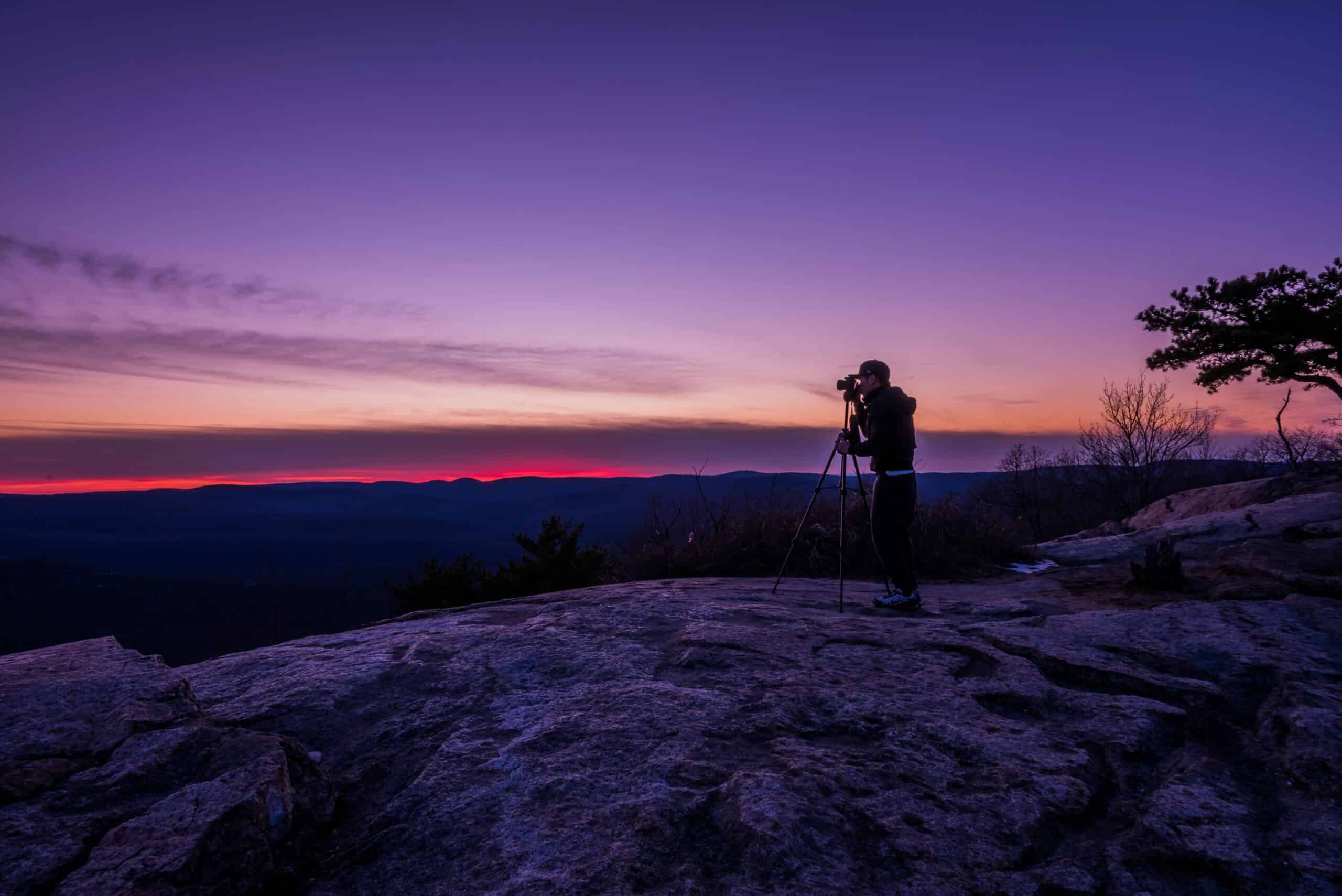
Survey the scene for lighting contrast, moving subjects (people, traffic, foliage), reflective surfaces (glass, polished floors), and potential vibration sources. If shooting through glass, get the lens as close as safely possible (1–2 cm) and shade stray light to reduce reflections. Note sun direction for flare control; the 14-24 S handles flare well, but direct light across multiple frames can still create stitching artifacts.
Match Gear to Scene Goals
For interiors and real estate, the Z7 II’s superb dynamic range and clean ISO 100–800 performance let you keep noise low while preserving window highlights—especially if you add HDR brackets. For outdoor sunsets or cityscapes, base ISO 64 is gold: it maximizes highlight headroom and reduces stitch boundary noise. The rectilinear 14-24 S keeps lines straight for architecture, though it means more frames compared to a fisheye. Choose 14mm for fewer frames, or zoom to 20–24mm when chasing ultra-high resolution.
Pre-shoot Checklist
- Power and media: Full batteries, dual card slots enabled; plenty of fast UHS-II or CFexpress storage.
- Optics and sensor: Clean front/rear elements; check sensor for dust; carry a blower and microfiber cloth.
- Level and calibration: Level the tripod; verify your panoramic head’s nodal alignment marks for 14mm and 24mm.
- Safety: Wind forecast, rooftop railings, pole/car mount tethers, and traffic awareness. Don’t risk gear—or yourself.
- Backup workflow: Shoot a second safety round whenever practical to cover stitching or ghosting surprises.
Essential Gear & Setup
Core Gear
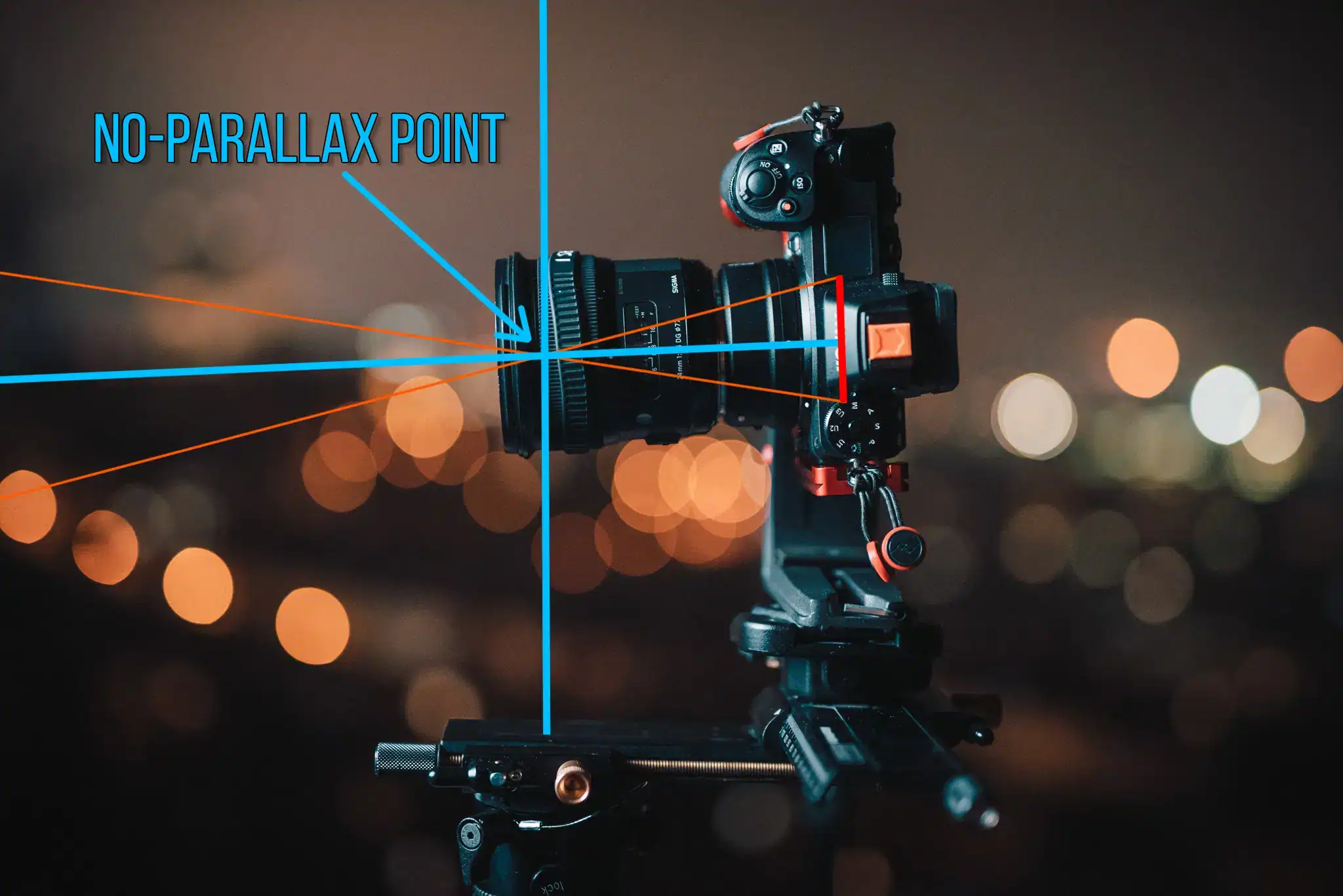
- Panoramic head: Enables precise rotation around the lens’ entrance pupil (nodal point) to eliminate parallax. Mark separate positions for 14, 18, and 24mm.
- Stable tripod with leveling base: A leveling base or half-ball saves time and prevents roll drift across rows.
- Remote trigger or SnapBridge app: Avoids camera shake. On tripod, disable IBIS in the Z7 II menu.
Optional Add-ons
- Pole or car mount: Use guy lines and safety tethers. Mind wind load—ultra-wide rectilinears show vibration as subtle blur.
- Lighting aids: Small LED panels for dark interiors; keep color temperature consistent to simplify white balance.
- Weather protection: Rain cover, silica gel packs, and lens hood to reduce flare and spray.
Step-by-Step Shooting Guide
Standard Static Scenes
- Level and align: Level your tripod. On the pano head, align the rotation around the lens’ entrance pupil to minimize parallax (see nodal calibration below).
- Manual exposure and WB: Switch to full Manual. Meter the brightest part you need detail in; set a balanced exposure that won’t clip highlights. Lock white balance (daylight/tungsten/custom). Disable Auto ISO.
- Focus: Use manual focus. At 14mm, set around the hyperfocal distance. A practical value: at f/8, hyperfocal is roughly 0.8 m; focus slightly beyond 0.8–1.0 m to keep near-to-infinity sharp.
- Capture strategy: For 14mm, a reliable pattern is 6 frames at 0°, 6 at +45°, 6 at −45°, plus a zenith and nadir shot. Rotate with 25–30% overlap. Use the lens hood to shield flare when needed.
- Nadir (ground) shot: After the main sequence, tilt down and shoot one or two nadir frames for tripod removal in post. If possible, roll the column to move the tripod slightly and take a clean patch.
HDR / High Dynamic Range Interiors
- Bracket ±2 EV or ±3 EV: Use 3 or 5 frames per angle to balance bright windows and room shadows. Maintain constant aperture; vary shutter speed only.
- WB and consistency: Keep white balance locked across brackets. Use a self-timer or remote to prevent touch-induced movement between bracketed frames.
- Deghosting strategy: If curtains or plants move, take an extra base exposure at each angle to help mask motion in post.
Low-Light / Night Scenes
- Exposure: Start at f/4–f/5.6, ISO 100–400 for the cleanest files, then lengthen shutter. If subjects move, raise ISO to 800–1600 on the Z7 II—still quite usable.
- Vibration control: Turn off IBIS on a tripod. Use remote trigger and shutter delay. Shield the setup from wind; add weight to the center column hook.
- Long exposure gaps: Allow a short pause after rotation for vibrations to settle before triggering.
Crowded Events
- Two-pass method: First pass for coverage; second pass waiting for gaps in the scene. Mark re-leveling points on the head so you can quickly return to exact yaw positions.
- Masking: In post, blend frames from both passes to remove repeated or blurred subjects. Keep your exposure constant across both passes.
Special Setups (Pole / Car / Drone)
- Pole: Use a carbon pole rated for the combined weight of Z7 II + 14-24 S. Tether the camera. Keep shutter speeds higher (1/125–1/250) to counter sway.
- Car mount: Avoid highways; use suction cups plus safety straps. Park and shoot if possible. Watch for vibrations; shoot multiple sets and keep the best.
- Drone: The Z7 II is too heavy for most consumer drones; use ground-based masts instead, or a lighter camera when aerial capture is essential.
Recommended Settings & Pro Tips
Exposure & Focus
| Scenario | Aperture | Shutter | ISO | Notes |
|---|---|---|---|---|
| Daylight outdoor | f/8–f/11 | 1/100–1/250 | 64–200 | Lock WB (daylight); maximize DR at ISO 64 |
| Low light/night | f/4–f/5.6 | 1/30–several sec | 100–800 (1600 if needed) | Tripod, remote, IBIS off |
| Interior HDR | f/8 | Bracket ±2 or ±3 EV | 64–400 | Window detail + clean shadows |
| Action / moving subjects | f/5.6–f/8 | 1/200+ | 400–800 | Freeze motion; consider two-pass strategy |
Critical Tips
- Manual focus at or slightly past hyperfocal. At 14mm f/8, focus around 0.8–1.0 m. Use magnified live view to confirm.
- Nodal calibration: Place two vertical objects (near/far). Rotate the camera on the head. Slide the lens forward/back until parallax disappears. Mark the rail. For this combo, your 14mm mark will likely be a few centimeters forward of the camera’s tripod socket; zoomed-in focal lengths move the entrance pupil slightly.
- White balance lock: Consistent color across frames makes stitching seamless and avoids color seams, especially under mixed lighting.
- RAW always: The Z7 II’s 14-bit RAW at ISO 64–200 is superb. RAW gives you headroom for highlight recovery and color consistency.
- IBIS: On tripod, turn IBIS off. Handheld, leave it on; for poles, test both ways but usually off if you’re locking down between shots.
Stitching & Post-Processing
Software Workflow
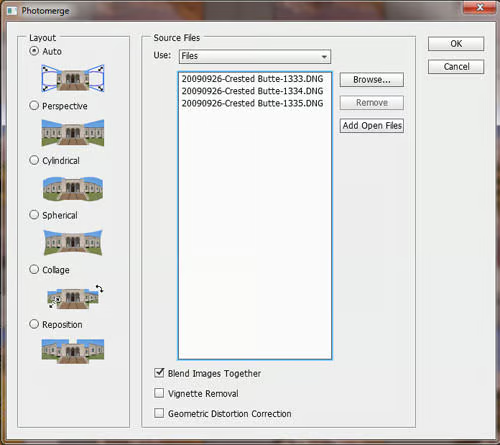
Import RAWs into Lightroom or your preferred RAW processor. Apply consistent color profile, WB, and lens corrections (distortion/vignetting) if you want a rectilinear base—but some stitchers prefer minimal preprocessing beyond WB and exposure. Export 16-bit TIFFs. Stitch in PTGui or Hugin. Rectilinear lenses need solid overlap (20–30%) and careful control points; the payoff is straight lines and less defishing than with fisheyes. Save and re-import the stitched equirectangular image for finishing touches (sharpening, color, and perspective). For PTGui tips and a deep dive into why it’s favored by pros, see this review. PTGui reviewed for creating incredible panoramas
Cleanup & Enhancement
- Nadir patch: Use PTGui’s Viewpoint correction or clone/heal in Photoshop. There are AI tools that automate tripod removal for clean floors.
- Color and noise: Match color across rows; use gentle noise reduction for high ISO shots from 800–1600.
- Leveling: Align horizon using roll/yaw/pitch tools. A level horizon is critical for natural VR viewing.
- Export: For VR, export equirectangular 2:1 JPEG/TIFF. Check platform specs (8k, 12k, or higher) depending on your target viewer or virtual tour platform.
If you’re new to pano heads and want a fundamentals refresher, this panoramic head tutorial is an excellent primer. Panoramic head setup and usage
Video: Setting Up a Pano Head
Visual learners: watch this concise walkthrough on panoramic head setup fundamentals.
For an end-to-end DSLR/mirrorless panorama-to-VR workflow and platform requirements, this official guide is also helpful. Using a mirrorless camera to shoot and stitch a 360 photo
Useful Tools & Resources
Software
- PTGui (fast, flexible control points, excellent masking and viewpoint tools)
- Hugin (open source, powerful when configured well)
- Lightroom / Photoshop (RAW processing, color, retouching, nadir patch)
- AI tripod removal tools (for quick nadir cleanup)
Hardware
- Panoramic heads: Nodal Ninja, Leofoto, Really Right Stuff
- Carbon fiber tripods with a leveling base
- Wireless remote shutters or smartphone control
- Pole extensions and car mounts with safety tethers
Disclaimer: software and hardware names are provided for research; verify current features and compatibility on official sites.
Common Mistakes & How to Avoid Them
- Parallax errors: Not rotating around the entrance pupil. Calibrate and mark your rail for each focal length you use.
- Exposure flicker: Using auto exposure or auto WB. Lock both in Manual.
- Tripod shadows and missing nadir: Always shoot a nadir patch and consider a viewpoint shot for perfect floor coverage.
- Ghosting from movement: Use two-pass capture and mask in PTGui or Photoshop.
- Night noise and blur: Keep ISO in the 100–800 range when you can, use long exposures on a stable tripod with remote triggering.
Frequently Asked Questions
- Can I shoot handheld panoramas with the Nikon Z7 II?
Yes, for quick partial panos or multi-row with practice. Use IBIS on, high shutter speeds (1/250+), and generous overlap (40–50%). For professional 360×180 results, a tripod and pano head are strongly recommended to avoid parallax and misalignment.
- Is the Nikon Z 14-24mm f/2.8 S wide enough for a single-row 360?
No. It’s rectilinear, so you’ll need multiple rows to cover zenith and nadir. At 14mm, plan for at least two or three rows plus dedicated zenith and nadir shots for a complete sphere.
- Do I need HDR for interiors with bright windows?
Often yes. The Z7 II has excellent dynamic range, but bright windows can exceed it. Bracket ±2 or ±3 EV so you can blend to retain both window views and clean interior shadows.
- How do I avoid parallax issues with this lens?
Mount the camera on a calibrated panoramic head and rotate around the lens’ entrance pupil. Calibrate by aligning a near and far object and adjusting the rail until relative motion disappears as you pan. Mark your rail for 14mm and any other focal lengths you use.
- What ISO range is safe on the Z7 II in low light?
ISO 64–400 is pristine; ISO 800 is still very clean; ISO 1600 remains usable with light noise reduction. Prefer longer shutter times on a tripod when possible to maintain image quality.
- Can I create custom settings for pano work?
Yes—save a “Pano” setup to U1/U2/U3 on the Z7 II: Manual exposure, fixed WB, RAW, IBIS off (for tripod), manual focus, and your preferred drive mode. That way, you can recall pano settings instantly.
- How do I reduce flare at 14mm?
Use the lens hood, shade the front element with your hand or a flag, and plan your rotation to keep direct sun near the frame edge rather than centered. If flare occurs in a frame, shoot a quick duplicate from the same angle and blend the cleaner one in post.
- What panoramic head should I choose for this setup?
Look for an Arca-compatible, two-axis pano head with a vertical rail long enough for ultra-wides. Nodal Ninja and Leofoto make robust options. Add a leveling base for faster, repeatable setup.
Field-Proven Scenarios with the Z7 II + 14-24 S
Indoor Real Estate
Shoot at 14–18mm, f/8, ISO 64–200. Use a three-row pattern for full coverage with 25–30% overlap. Bracket ±2 EV for windows. Lock WB (tungsten or custom). Keep the camera level to avoid vertical distortion—even though the lens is rectilinear, accurate leveling reduces post straightening and keeps control points clean.
Outdoor Sunset
Base ISO 64 to protect highlights. Consider 6×3 rows at 14mm, then add a dedicated zenith shot if the sky has a strong gradient. If wind is present, add weight to the tripod and let vibrations settle before each capture. Expect to lift shadows slightly in post; the Z7 II files handle this gracefully.
Event Crowds
Use 14mm and raise shutter speed (1/200–1/400) at ISO 400–800. Two-pass capture helps you mask out stray movement or repeated subjects. If possible, elevate on a short pole to reduce occlusion, but keep safety first and maintain a firm base or a spotter.
Rooftop / Pole
Use a light carbon pole and a safety tether. Keep the rig balanced; shoot at faster shutters (1/125–1/250) and ISO 200–800. Capture multiple redundant sets—wind can ruin a sequence. When stitching, prefer frames with the least motion blur and best overlap alignment.
Safety, Limitations & Trustworthy Workflow
Wind and height are the main risks with multi-row panoramas. Always secure your gear with a tether, avoid overextending center columns outdoors, and never work near edges without proper safety measures. The Z7 II + 14-24 S can withstand light weather, but keep rain off the front element and wipe between frames if needed—water spots create stitching headaches.
Limitations: Rectilinear lenses demand more frames and precise nodal alignment. Night panoramas require patience and vibration control. Mitigation: take a second full sequence, especially when the scene is changing or wind is rising. Back up your cards on-site if possible.
For deeper reading about focal lengths and panorama strategy, this overview from B&H is useful context. Panoramas, focal lengths and workflow