
Why This Camera & Lens Are Great for Panoramas
The Nikon Z6 II paired with the Tamron 17–28mm f/2.8 Di III RXD is a powerful, lightweight combo for high‑quality panoramic and 360° photography. The Z6 II’s 24.5MP full‑frame BSI CMOS sensor (approx. 6048 × 4024 px) delivers excellent dynamic range (roughly 14 EV at base ISO), strong color depth, and low‑noise performance; with a pixel pitch around 5.9µm, it holds up well in dim interiors and night scenes. The body adds 5‑axis in‑body stabilization (IBIS), reliable manual-focus aids (magnification + peaking), and dual card slots (CFexpress Type B/SD UHS‑II) for robust backup workflows.
The Tamron 17–28mm f/2.8 Di III RXD is a compact, constant‑aperture rectilinear ultra‑wide zoom. Its strengths for panoramas include sharpness from f/5.6–f/11, low barrel distortion for an ultra‑wide, and relatively controlled chromatic aberration. At 17mm you’ll capture a very wide field with fewer shots per row; at 24–28mm you’ll gain edge sharpness and less stretching but will need more frames. Note: the original Tamron 17–28mm is widely available in Sony E‑mount; Nikon Z users should use the Nikon Z version (NIKKOR Z 17–28mm f/2.8 shares the Tamron optical design) or a Tamron Z‑mount version where available. Do not attempt to adapt the Sony E‑mount version to Z—it’s not compatible.
Quick Setup Overview
- Camera: Nikon Z6 II — full‑frame 24.5MP BSI sensor; excellent DR at ISO 100; comfortable up to ISO 1600–3200 for panoramas if needed.
- Lens: Tamron 17–28mm f/2.8 Di III RXD (rectilinear ultra‑wide zoom) — best sharpness f/5.6–f/11; mild barrel distortion at 17mm; controlled CA, easy to correct in RAW.
- Estimated shots & overlap (360×180 equirectangular, on tripod):
- 17mm: 6–8 shots per row with ~30% overlap; 3 rows (−35°, 0°, +35°) + zenith + nadir ≈ 20–26 frames total.
- 24mm: 8 shots per row with ~25–30% overlap; 3 rows + Z/N ≈ 26–32 frames.
- 28mm: 10 shots per row with ~25% overlap; 4 rows (−60°, −30°, 0°, +30°) + Z/N ≈ 42–44 frames for clean coverage.
- Difficulty: Intermediate (nodal alignment and multi‑row capture required, but forgiving sensor and lens).
Planning & On-Site Preparation
Evaluate Shooting Environment
Assess light direction, intensity, and contrast. For interiors with bright windows, plan for HDR bracketing. Check for reflective glass, mirrors, polished floors, or chrome that can create flare/ghosting and parallax headaches; if shooting through glass, keep the front element close (1–3 cm) to minimize reflections and use a black cloth or lens hood against the glass. Outdoors, note wind, moving crowds, and the sun’s position to avoid direct flares at 17mm.
Match Gear to Scene Goals
The Z6 II’s base ISO 100 dynamic range preserves shadow detail and highlight recovery for landscapes and architecture. In dim interiors, ISO 400–800 is typically safe with minimal noise; ISO 1600–3200 is still workable for night cityscapes when the tripod is solid. The Tamron 17–28mm’s rectilinear rendering avoids fisheye curvature but requires more frames than a fisheye—worth it when straight lines (architecture/real estate) matter.
Pre-shoot Checklist
- Power & storage: fully charged batteries; use dual cards with backup recording (RAW to XQD/CFexpress, JPEG to SD or dual RAW).
- Optics clean: remove dust from front/rear elements and the sensor; a single speck repeats across the stitched pano.
- Level & calibrate: set up a leveling base and a panoramic head calibrated to the lens’s no‑parallax point.
- Safety: weigh down the tripod in wind; use a safety tether on rooftops or poles; avoid public obstructions and traffic.
- Redundancy: shoot one full safety round in case of stitching trouble or stray motion.
Essential Gear & Setup
Core Gear
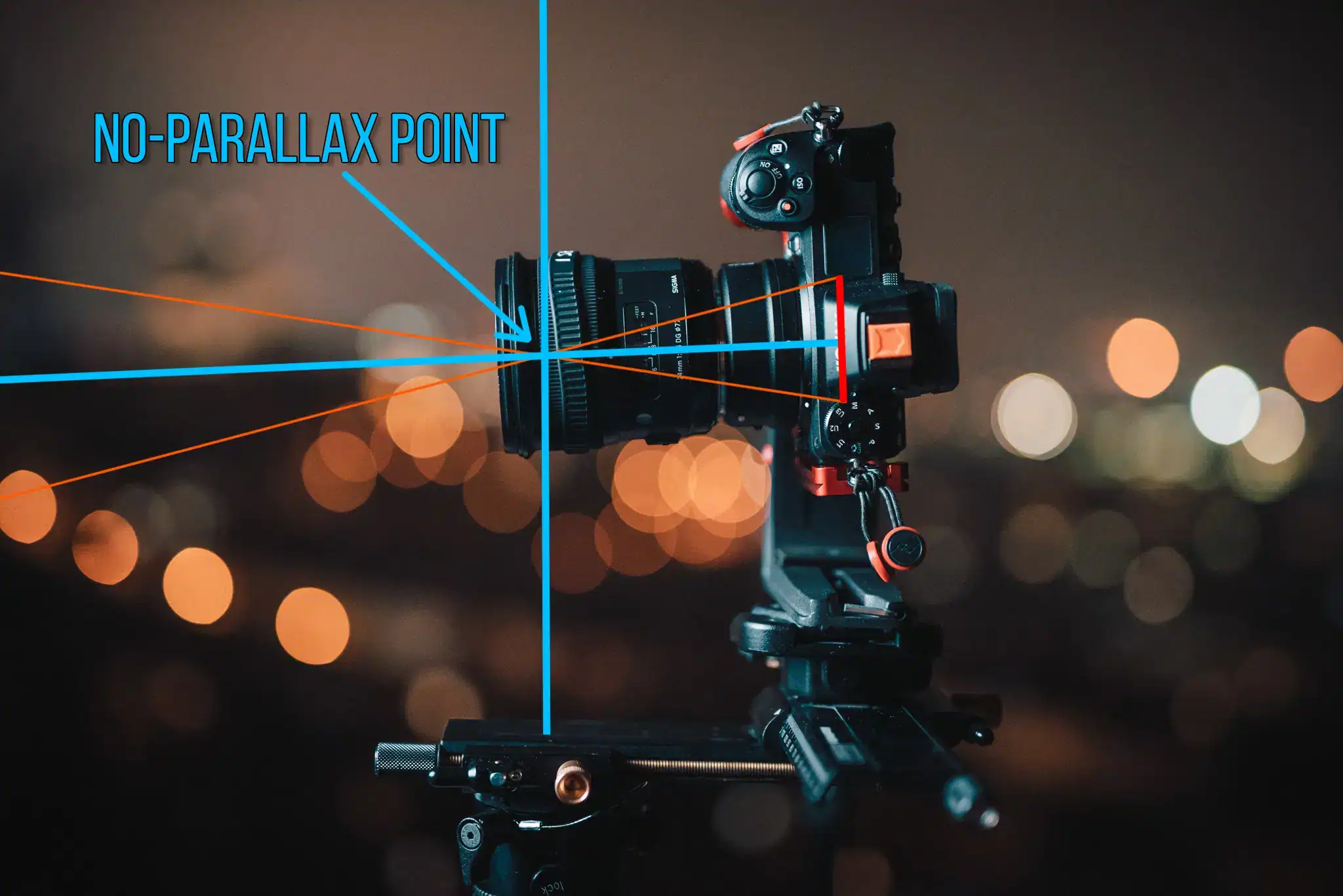
- Panoramic head: A multi‑row panoramic head lets you align the lens’s entrance pupil (nodal point) over the rotation axis to eliminate parallax. This is crucial for clean stitches in tight interiors and with foreground objects.
- Stable tripod with leveling base: A leveled platform ensures each row stays vertically consistent, making stitching and horizon leveling much easier.
- Remote trigger / app: Use Nikon SnapBridge or a wired remote; also consider the Z6 II’s exposure delay mode or a 2‑second timer to kill vibrations.
Optional Add-ons
- Pole or car mount: Use a safety tether and watch wind loads. With poles, rotate slowly and avoid sudden movements to prevent sway and misalignment.
- Lighting aids: Small LED panels to lift shadows for real estate; keep color temperatures consistent to avoid WB headaches.
- Weather protection: Rain covers, microfiber cloths, and lens hoods to mitigate flare and keep droplets off the front element.
Step-by-Step Shooting Guide
Standard Static Scenes
- Level tripod & align nodal point: Mount the Z6 II and the Tamron on your panoramic head. Slide the rail so the lens’s entrance pupil sits exactly over the rotation axis. For this 17–28mm, a good starting estimate at 17mm is roughly 65–75 mm forward from the camera’s sensor plane; refine with a foreground/background alignment test until parallax disappears.
- Manual exposure & white balance: Switch to M mode. Meter the brightest significant area (not the sun) and protect highlights. Set a fixed WB (Daylight/Cloudy or Kelvin) so color stays consistent across frames. Turn off Auto ISO.
- Focus & aperture: Use manual focus with focus peaking. For maximum sharpness, use f/8–f/11. At 17mm, the hyperfocal distance at f/8 is about 1.2–1.3 m; set focus slightly beyond 1.2 m to keep near-to-infinity sharp.
- Capture with proper overlap: At 17mm, shoot 6–8 frames around per row with 25–30% overlap. For a full 360×180:
- Row tilt: +35°, 0°, −35°.
- Zenith: 1–2 frames pointing up (often 2 frames at 90° apart for safety).
- Nadir: 1–2 frames pointing down to patch the tripod zone.
- Nadir capture: After the main sweep, shift the tripod slightly or hold the camera over the center on a nadir adapter to capture a clean floor plate for patching.
HDR / High Dynamic Range Interiors
- Bracket exposure: Use 3–7 brackets at 1 EV steps to cover ±2 EV or more as needed. The Z6 II can shoot up to 9‑frame brackets; pick what covers windows and lamp hotspots. Keep WB locked.
- Maintain consistency: Do not change aperture between brackets; only vary shutter speed. Use a remote or exposure delay to eliminate shake.
- Workflow: Either merge brackets to HDR per angle before stitching, or stitch each EV set and merge HDR afterward (PTGui can handle exposure fusion and HDR workflows).
Low-Light / Night Scenes
- Tripod first: Use longer exposures rather than high ISO. Start around f/4–f/5.6, 1/10–2 s, ISO 100–400. If wind or vibration is present, prefer 1/30–1/60 s at ISO 800–1600.
- Stabilization: Turn IBIS (VR) off on a tripod to avoid micro‑blur; turn it on only when hand‑holding.
- Timing: Shoot when moving lights (cars, signage) are less chaotic, or plan to mask multiple passes in post.
Crowded Events
- Two passes: First pass fast for coverage; second pass timed for gaps in movement. Use 1/200 s or faster at f/5.6–f/8, ISO 400–800.
- Masking: In PTGui/Photoshop, choose the cleanest person‑free areas from each pass and mask moving subjects.
Special Setups (Pole / Car / Drone)
- Pole: Keep the rig as light as possible. Secure with a safety line. Rotate slowly and keep exposures short (raise ISO to 800–1600 if needed) to minimize sway.
- Car: Avoid high speeds; use vibration‑damping mounts and faster shutter speeds. Plan for more overlap to help the stitcher deal with motion.
Recommended Settings & Pro Tips
Exposure & Focus
| Scenario | Aperture | Shutter | ISO | Notes |
|---|---|---|---|---|
| Daylight outdoor | f/8–f/11 | 1/100–1/250 | 100–200 | Lock WB (Daylight); shield lens from sun to reduce flare |
| Low light/night | f/4–f/5.6 | 1/30–1/60 (or longer on solid tripod) | 400–1600 | IBIS off on tripod; remote or timer to avoid shake |
| Interior HDR | f/8 | Bracket (3–7 frames) | 100–400 | Cover windows and lamp highlights (±2 EV or more) |
| Action / moving subjects | f/5.6–f/8 | 1/200+ | 400–800 | Double pass to mask people, keep overlap 30% |
Critical Tips
- Manual focus near hyperfocal: At 17mm and f/8, ~1.2–1.3 m keeps near-to-infinity sharp. Use focus peaking to confirm.
- Nodal calibration: Start around 70 mm forward from the sensor plane at 17mm and refine with a near/far object test. Mark the rail so you can repeat the setup at 17, 24, and 28mm.
- White balance lock: Choose Kelvin or a preset; avoid Auto WB shifts that cause seams.
- RAW capture: The Z6 II’s RAW files give more range for highlight recovery and color work; shoot RAW for all pano frames.
- Stabilization: Turn IBIS off on a tripod. If you must shoot handheld, enable IBIS and take extra overlap (40–50%).
- Camera craft: Use exposure delay or a 2 s self‑timer; consider EFCS to minimize shutter shock.
Stitching & Post-Processing
Software Workflow
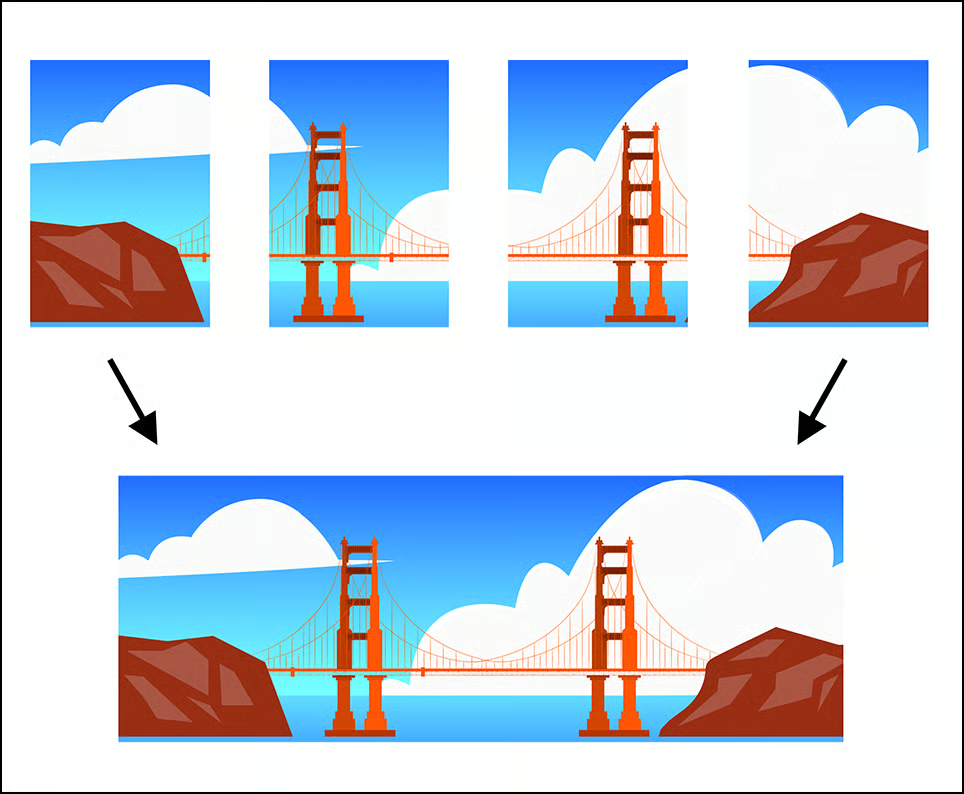
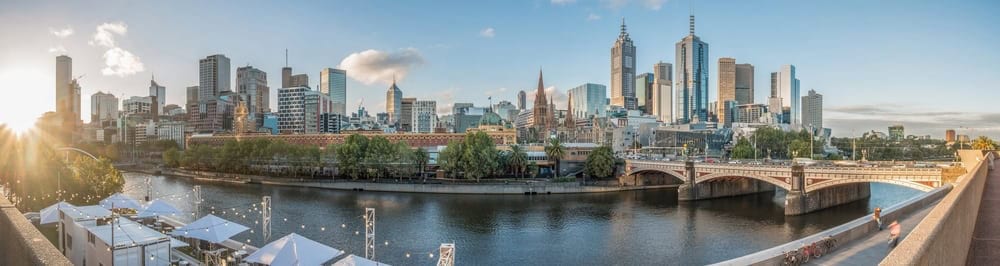
PTGui is a proven, industry‑standard stitcher for both fisheye and rectilinear workflows, handling exposure fusion, masking, and advanced control points. Hugin is a capable open‑source alternative. Lightroom/Photoshop can handle simpler panoramas, but for full 360×180 work PTGui’s tools are hard to beat. With rectilinear lenses like the Tamron 17–28, plan on 25–30% overlap horizontally and ~30% overlap vertically to give the stitcher solid data. For highly reflective or low‑texture scenes, increase overlap to 35–40%.
Cleanup & Enhancement
- Nadir patch: Export a layered panorama and use a clean nadir shot to patch out the tripod. PTGui’s Viewpoint correction can help when the nadir is off‑center.
- Color and noise: Match color temperature across rows; apply noise reduction to shadow areas, especially if ISO 1600+ was used.
- Leveling: Use horizon and vertical straightening tools to fix roll/pitch/yaw errors; rectilinear lenses will magnify alignment issues at edges.
- Export: For VR platforms, export equirectangular 2:1 images. 8K (7680×3840) is a practical minimum; 10–12K offers cleaner detail for professional tours.
For deeper guidance on professional DSLR/mirrorless 360 workflows, see Oculus’ creator documentation on capturing and stitching 360 photos with interchangeable‑lens cameras. How to shoot and stitch a 360 photo with DSLR/mirrorless
Video: A clear overview of shooting and stitching techniques that complement the Nikon Z6 II + Tamron 17–28mm workflow.
If you want a second opinion on software choices and why PTGui remains a top pick for pros, this review is a great summary. Why PTGui is a go‑to for advanced panoramas
Useful Tools & Resources
Software
- PTGui panorama stitching
- Hugin (open source)
- Lightroom / Photoshop for RAW, color, and finishing
- AI tripod removal / content-aware fill for nadir patching
Hardware
- Panoramic heads (Nodal Ninja, Leofoto, Sunwayfoto)
- Carbon fiber tripod with leveling base
- Wireless remotes or SnapBridge control
- Pole extensions / car suction mounts (with tethers)
To learn more about setting up a panoramic head and the nodal point, this illustrated tutorial is a practical reference. Panoramic head setup and nodal alignment
Field-Tested Scenarios with the Z6 II & Tamron 17–28mm
Indoor Real Estate (Bright Windows)
Mount the panoramic head and level the base. Set f/8, ISO 100–200. Bracket 5 frames at 1 EV steps to cover window highlights. Shoot 3 rows at 17–20mm with 30% overlap; add zenith and nadir. Merge HDR per angle first (for consistent tonal mapping), then batch stitch in PTGui. Export 10K equirectangular for a crisp tour. Use content-aware fill or a nadir plate for a clean floor patch.
Outdoor Sunset Landscape
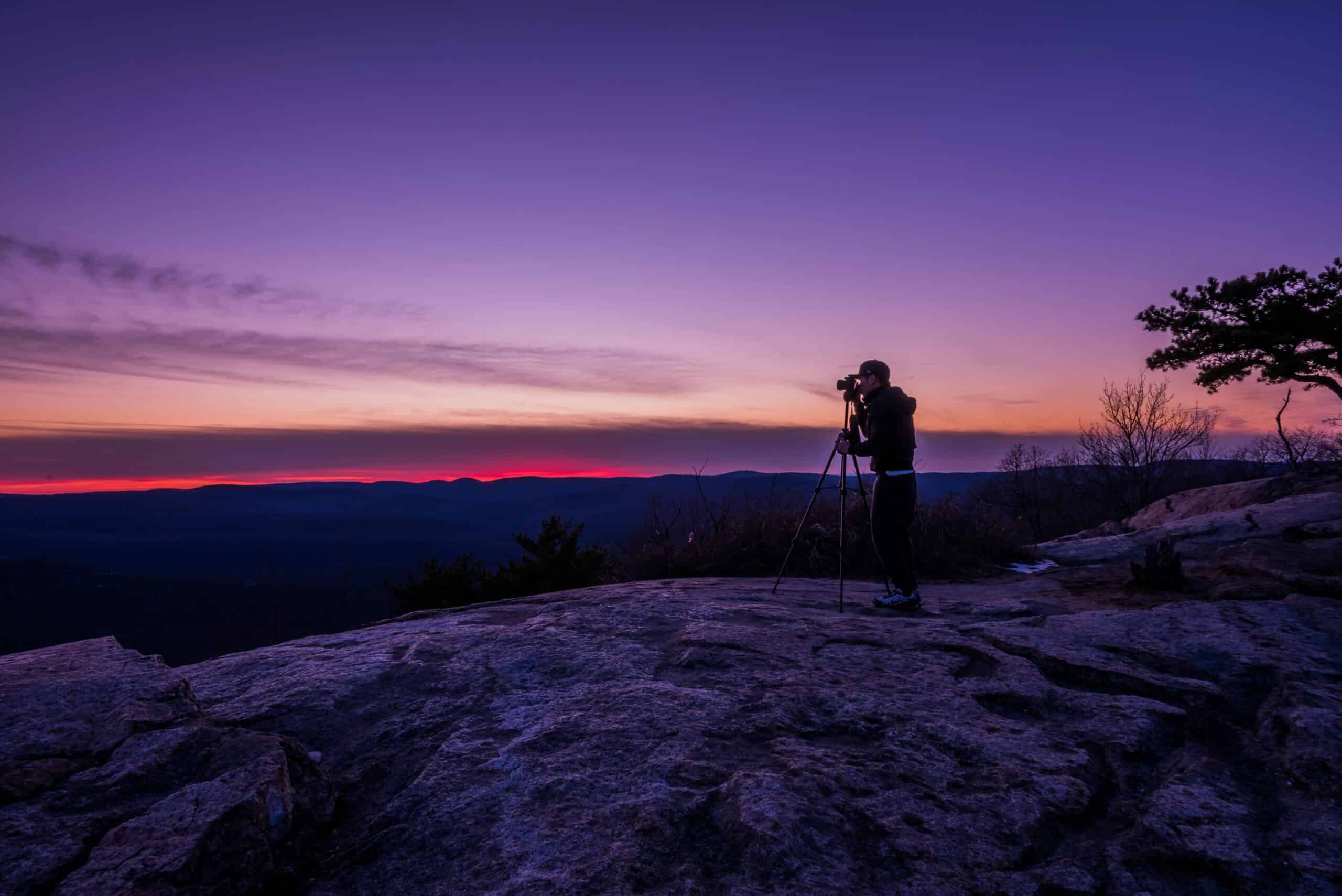
At 17mm, lock WB to 5500–6000K to keep the warm tones consistent. Meter for highlights near the sun, then choose a bracketed set if the contrast is extreme. A single exposure often works at blue hour. Keep shutter at 1/60–1/125 s if grasses or leaves move; raise ISO to 400–800 as needed. Lens hood and hand flagging help tame flare.
Crowded Event or Street Scene
Shoot two fast passes at 1/200–1/320 s, f/5.6–f/8, ISO 800. The first pass is for structure; the second pass is to catch gaps in the crowd. In PTGui, mask moving subjects by choosing the best frame for each region. Slightly increase overlap (~35%) to give the stitcher more data where people move.
Rooftop / Pole Capture
Use 17mm to keep rows to three; increase shutter speed to 1/125–1/250 s, ISO 400–800 to counter wind and vibration. Add a safety tether and avoid sudden rotations. Consider a second full round of shots in case of motion blur on a frame.
Common Mistakes & How to Avoid Them
- Parallax error: Always align the entrance pupil. Use a near/far object test and mark your rail for 17, 24, and 28mm.
- Exposure flicker: Shoot in manual, disable Auto ISO, and lock WB.
- Tripod shadows: Capture a dedicated nadir frame and patch in post.
- Ghosting: Take multiple passes and mask people, flags, trees, and cars in post.
- Noise at night: Prefer longer shutter on a stable tripod rather than pushing ISO too high; the Z6 II is clean to ISO 1600–3200 but base ISO looks best.
- IBIS on tripod: Turn VR off to avoid micro‑blur from stabilization oscillation.
For a wider perspective on pano techniques and pitfalls, this Q&A thread aggregates many practical tips from experienced shooters. Best techniques for 360 panoramas
Frequently Asked Questions
- Can I shoot handheld panoramas with the Nikon Z6 II?
Yes, but it’s best for quick cylindrical panos or when subjects are distant. Enable IBIS, use faster shutter speeds (1/250 s+), and increase overlap to 40–50%. For 360×180 work with nearby objects, use a panoramic head to avoid parallax.
- Is the Tamron 17–28mm f/2.8 wide enough for single‑row 360s?
For a full 360×180 sphere, no—the lens is rectilinear, not fisheye, so you’ll need multiple rows. At 17mm, three rows plus zenith/nadir is a practical minimum. For cylindrical panoramas (no zenith/nadir), a single row at 17mm can work.
- Do I need HDR for interiors with bright windows?
Usually. Bracket 3–7 frames to cover the range (±2 EV or more). Merge HDR per angle first for consistent tonality, or use PTGui’s exposure fusion. Keep ISO at 100–200 for the cleanest files.
- How do I avoid parallax issues with this lens?
Use a multi‑row panoramic head and align the entrance pupil. Start around 70 mm forward from the sensor plane at 17mm, then refine with a near/far test. Mark the rail positions for 17, 24, and 28mm and reuse them.
- What ISO range is safe on the Z6 II for low light panoramas?
On a tripod, aim for ISO 100–400. If you need faster shutter speeds for wind or crowds, ISO 800–1600 remains very usable on the Z6 II; ISO 3200 is acceptable with careful noise reduction.
- Can I set up Custom Shooting Modes for pano on the Z6 II?
Yes—use U1/U2/U3 for fast recall. For example, U1: daylight pano (M, f/8, ISO 100, WB Daylight, IBIS off); U2: interior HDR (M, f/8, AEB set, WB Kelvin); U3: night pano (M, f/5.6, longer shutter, ISO 400–800, exposure delay on).
- Best tripod head choice for this setup?
A compact, precise multi‑row panoramic head with a leveling base (e.g., Nodal Ninja/Leofoto/Sunwayfoto) balances well with the Z6 II + Tamron 17–28. Ensure it has adjustable rails to place the entrance pupil over the pivot.
Safety, Reliability & Backup Workflow
Wind and vibration ruin stitches; weigh down the tripod, keep center column low, and rotate smoothly. On rooftops or near edges, tether your camera. With poles, use a safety line and avoid crowded spaces. For data safety, enable dual‑card backup: write RAW to the faster CFexpress and a second copy to SD. After each location, review frames for gaps or motion blur and—when in doubt—shoot a second complete round.
Final Thoughts
If you follow the steps above, you’ll master how to shoot panorama with Nikon Z6 II & Tamron 17–28mm f/2.8 Di III RXD. This combo offers a great balance of light weight, image quality, and flexibility. The key to seamless multi‑row 360s is consistent exposure and color, precise nodal alignment, and generous overlap. For deeper dives on lens and head technique, these resources are excellent companions: Set up a panoramic head for high‑end 360 photos.