
Why This Camera & Lens Are Great for Panoramas
The Nikon D850 is one of the most capable full-frame DSLRs ever made for high-end panoramic photography. Its 45.7MP FX-format sensor (35.9 × 23.9 mm, approx. 8256 × 5504 px, ~4.35 µm pixel pitch) delivers excellent micro-contrast and very low read noise at base ISO. With a measured dynamic range close to ~14.8 EV at ISO 64, the D850 lets you hold sky highlights and deep shadows in a single RAW or in very clean HDR brackets—ideal for 360 photos and large-format gigapans.
The Sony FE 12–24mm f/4 G is a rectilinear ultra-wide zoom with a 122° diagonal field of view at 12mm. It’s sharp wide open, controls coma and lateral CA well, and has Sony’s Nano AR coating for flare resistance. However, it’s important to be transparent: the FE 12–24mm f/4 G is a Sony E-mount lens and is not natively compatible with the Nikon D850 (F mount). Due to flange distance differences, there is no simple adapter that preserves infinity focus and aperture control for E→F. To follow this guide with the D850, use an equivalent Nikon F-mount ultra-wide such as the Sigma 12–24mm f/4 Art, NIKKOR 14–24mm f/2.8G, Tamron 15–30mm f/2.8 G2, or Sigma 14–24mm f/2.8 Art. The techniques, framing, and shot counts below apply directly to any 12–24mm rectilinear on full-frame. If you do own the Sony FE 12–24mm, all settings and techniques here also apply when using a Sony full-frame body.
Quick Setup Overview
- Camera: Nikon D850 — Full Frame (FX), 45.7MP, base ISO 64, outstanding dynamic range and color depth.
- Lens: Sony FE 12–24mm f/4 G — rectilinear UWA; constant f/4; very good corner performance by f/5.6–f/8; bulbous front element (no screw-in filters). Note: Use an equivalent Nikon F-mount 12–24/14–24 for D850 compatibility.
- Estimated shots & overlap (full 360×180 with 12mm rectilinear on FF):
- Efficient multi-row: 6–8 shots around at 0°, 6 at +45°, 1 zenith, 2 nadir (offset) → ~15–17 frames total with ~20–25% overlap.
- High-quality coverage: 8 around at 0°, 8 at +45°, 1 zenith, 3 nadir → ~20 frames total; increases stitching reliability in complex scenes.
- Difficulty: Intermediate (precise nodal alignment + multi-row capture).
Planning & On-Site Preparation
Evaluate Shooting Environment
Look for moving elements (crowds, traffic, trees in wind), reflective surfaces (glass, polished floors), and extreme highlights (sun, bright windows). For glass viewpoints, place the front element as close to the glass as possible (1–3 cm) to minimize reflections; shade with a black cloth or lens hood where possible (the 12–24’s fixed hood helps). Check for obstacles that could block parts of the frame during rotation. If you must shoot toward the sun, plan two passes to reduce flare artifacts and to capture clean sky plates for blending.
Match Gear to Scene Goals
The D850’s base ISO 64 and ~14.8 EV dynamic range let you preserve highlight detail at golden hour and pull clean shadows—great for expansive outdoor 360s. Indoors, you can safely shoot ISO 100–400 for clean interior HDR, and ISO 800–1600 remains usable if you need faster shutters. A 12–24mm rectilinear minimizes geometric distortion but requires more frames than a fisheye. Compared to fisheyes, you’ll capture more natural straight lines (better for real estate) at the cost of extra shots. This is typically the preferred route for architectural 360 photos.
Pre-shoot Checklist
- Power & storage: full batteries, fast UHS-II/XQD/CFexpress cards; consider backup media.
- Optics: clean front element and sensor; avoid dust that can repeat across frames.
- Tripod & head: level base; calibrate panoramic head for no-parallax rotation (entrance pupil).
- Safety: assess wind load (especially with poles), keep a tether on rooftop or balcony work, and mind people moving behind you while rotating.
- Backup take: shoot a second safety round; one extra minute can save a reshoot.
Essential Gear & Setup
Core Gear
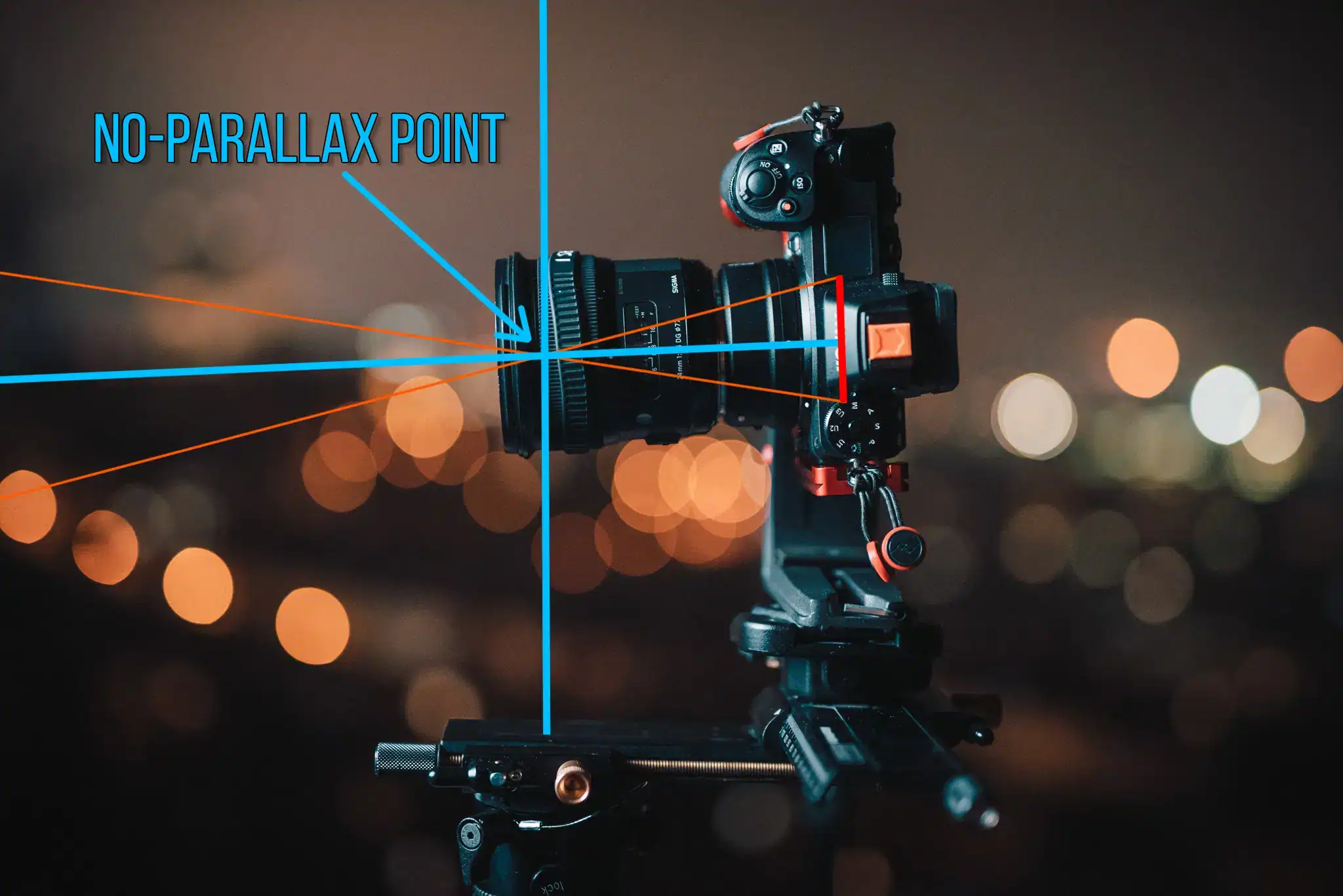
- Panoramic head: lets you rotate around the lens’s entrance pupil (nodal point) to eliminate parallax. This is essential for rectilinear ultra-wide zooms when foreground objects are close.
- Stable tripod with leveling base: leveling the rig ensures even, repeatable rows and clean stitch alignment.
- Remote trigger or self-timer: reduces vibrations, especially for longer exposures. The D850’s exposure delay mode is also handy.
Optional Add-ons
- Pole or car mount: great for elevated vantage points or moving platforms. Use safety lines, reduce speed, and avoid high winds to protect gear and bystanders.
- Portable lighting: LED panels or bounced flash for interiors to lift shadows between brackets (keep lighting static across frames).
- Weather protection: rain covers, silica gel, and gloves for cold-weather panoramas to maintain dexterity.
For a deeper dive into panoramic heads and why entrance pupil alignment matters, see this panoramic head tutorial. Panoramic head fundamentals
Step-by-Step Shooting Guide
Standard Static Scenes
- Level tripod and align the nodal point. With your panoramic head, slide the camera forward/back until objects at near and far distances don’t shift relative to each other while panning. Do this at your chosen focal length (e.g., 12mm); zooms can shift the entrance pupil slightly, so recheck if you change focal length.
- Lock exposure and white balance. Set Manual mode (M). Meter the brightest portion you must preserve (e.g., sky near sun) and choose an exposure that avoids clipping at ISO 64–100 when possible. Set a fixed WB (e.g., Daylight 5200K outdoors, custom Kelvin indoors) to prevent color mismatches across frames.
- Focus method. Use live view at maximum magnification, focus about 1/3 into the scene or at the hyperfocal distance, then switch to Manual focus. For 12–24mm at f/8, focusing a few meters out typically keeps everything sharp.
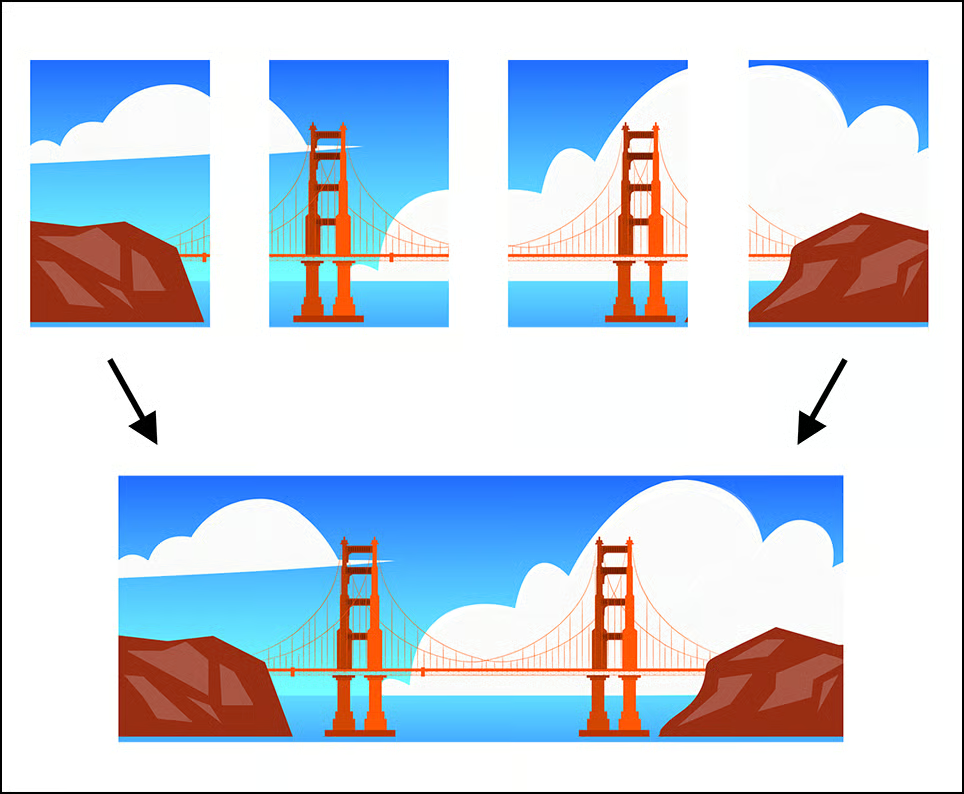
- Capture with consistent overlap. At 12mm rectilinear on full-frame, shoot 6–8 images around at 0° pitch with ~20–25% overlap. Then add a row at +45° pitch (6–8 shots), 1 zenith frame (top), and 2–3 nadir frames (bottom) offset so you can patch out the tripod.
- Document your row order. Work clockwise with a fixed pattern (0° row → +45° row → zenith → nadir), so sorting later is easy.
HDR / High Dynamic Range Interiors
- Bracket ±2 EV (3 or 5 frames). The D850 handles HDR extremely well at ISO 64–200. If windows are very bright, consider ±3 EV or 5–7 frames to retain view detail.
- Lock WB and focus across brackets and rows. Changing WB between frames can cause stitching seams.
- If lights flicker (LEDs), use shutter speeds above flicker frequency (1/60–1/125s) or slower long exposures to average the flicker, and keep the same shutter per bracket step across the whole panorama.
Low-Light / Night Scenes
- Use tripod, remote, and exposure delay. Start at f/4–f/5.6, ISO 64–400, and let shutter lengthen to 1–8 seconds as needed. The D850 remains very clean at ISO 400–800; use ISO 1600 only if necessary to tame subject movement.
- Disable any lens stabilization on a tripod (most ultra-wides here have no VR/OSS; the D850 has no IBIS). Mirror-up mode or electronic front-curtain shutter can further reduce vibrations.
- Take a second pass for the sky if light pollution or star motion complicates the stitch; blend later.
Crowded Events
- Two passes strategy. First pass for composition; second pass when gaps open in the crowd. Mark the tripod feet position so you can pause and resume without shifting.
- Use higher shutters (1/200s+) at f/5.6–f/8 and ISO 400–800 to freeze people. In post, mask the clean parts from the second pass.
Special Setups (Pole / Car / Drone)
- Pole: Keep the rig light. Tighten clamps, tether the camera, and rotate slowly to avoid flex-induced parallax. Shorter exposures (raise ISO to 400–800) help keep frames sharp in the wind.
- Car-mounted: Only on closed roads or controlled situations. Balance the mount, use safety cables, and set a faster shutter (1/500s+) to beat vibration.
- Drone: Not applicable to D850 directly, but the same multi-row principles apply when flown; ensure consistent heading and tilt between rows.
Video: A clear walkthrough of panoramic head setup and stitching best practices.
Recommended Settings & Pro Tips
Exposure & Focus
| Scenario | Aperture | Shutter | ISO | Notes |
|---|---|---|---|---|
| Daylight outdoor | f/8–f/11 | 1/100–1/250 | 64–200 | Lock WB (Daylight); prioritize highlight protection |
| Low light / night | f/4–f/5.6 | 1/30–8s | 100–800 | Tripod + remote; use exposure delay; keep ISO ≤800 when possible |
| Interior HDR | f/8 | Bracket ±2 EV (3–5 frames) | 64–400 | Consistent WB; avoid lens flare from downlights |
| Moving subjects | f/5.6–f/8 | 1/200+ | 400–800 | Two-pass method; mask in post |
Critical Tips
- Manual focus at or near hyperfocal. For 12mm at f/8 on FF, focusing ~1–1.5 m keeps almost everything sharp to infinity.
- Nodal point calibration. Use a vertical reference (light stand) near the camera and a distant background. Pan and adjust the rail until the near object stays fixed relative to the background.
- White balance lock. Mixed lighting? Choose a Kelvin value that best compromises, then batch-correct later in RAW.
- RAW over JPEG. The D850’s 14-bit RAW at ISO 64 is incredibly flexible for highlight recovery and color finesse.
- Stabilization. D850 lacks IBIS and the 12–24 class typically lacks VR/OSS; on tripod, ensure all stabilization is off to avoid frame-to-frame misalignment.
- Lens hood shadows. The integrated petal hood on these ultra-wides can cast subtle vignettes when a light is near the frame edge—watch for it during bracketing.
Stitching & Post-Processing
Software Workflow
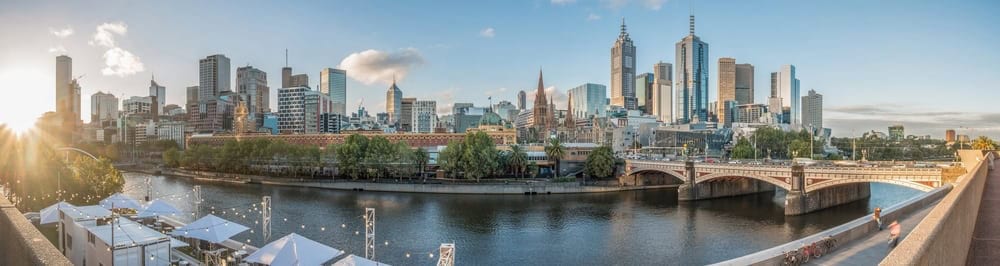
For multi-row 360s with rectilinear ultra-wides, PTGui is the industry workhorse thanks to excellent control point generation, masking, and HDR fusion. Hugin is a strong open-source alternative, and Lightroom/Photoshop can handle simpler single-row projects. As a rule of thumb, fisheye workflows prefer ~25–30% overlap, while rectilinear panoramas are comfortable around ~20–25% overlap if nodal alignment is perfect (add more overlap if your scene has complex near foregrounds). After stitching, export an equirectangular 2:1 image (e.g., 16,384 × 8,192 px for large tours) for web/VR players.
Deep dives and reviews can help refine your workflow. See this PTGui review for why many pros rely on it for complex 360 projects. PTGui: pro-grade stitching
Cleanup & Enhancement
- Nadir patching: capture an offset nadir frame and patch manually in Photoshop or with AI-based tripod removal tools. Clone stamp and perspective warp help match floor patterns.
- HDR tonemapping: if you merged HDR in RAW first, keep tonemapping consistent across frames. If you stitched then tonemapped, use masks to avoid halos along high-contrast seams.
- Color and noise: batch sync white balance, use modest noise reduction at ISO 800–1600 to preserve texture, and add selective clarity only where needed.
- Horizon leveling: use PTGui’s optimizer or Hugin’s orientation tools to lock the horizon; verify roll/yaw/pitch are correct in a 360 viewer before final export.
- Export: produce a high-quality JPEG (quality 10–12) for web and keep a 16-bit TIFF master for archival and future edits.
If you’re new to DSLR/DSLM 360 pipelines, these platform guides are concise and practical. DSLR 360 workflow overview
Useful Tools & Resources
Software
- PTGui panorama stitching
- Hugin open source
- Lightroom / Photoshop
- AI tripod removal / inpainting utilities
Hardware
- Panoramic heads (Nodal Ninja, Leofoto, Really Right Stuff)
- Carbon fiber tripods with leveling bases
- Wireless remotes or intervalometers
- Pole extensions / car suction systems with safety cables
Disclaimer: product names are for search convenience; check official sites for latest specs and compatibility.
For more on lens/camera choices and pano fundamentals, this expert FAQ is a useful reference. DSLR/Virtual tour lens guidance
Common Mistakes & How to Avoid Them
- Parallax error → Precisely align the entrance pupil on a panoramic head; recheck if you change focal length.
- Exposure flicker → Manual exposure and fixed WB across all frames and rows.
- Tripod shadows and footprints → Capture offset nadir frames and patch later.
- Ghosting from motion → Two-pass capture; mask people/vehicles during post.
- Night noise and banding → Keep ISO low (64–800 on D850), expose longer on tripod, and avoid pushing shadows excessively.
- Lens flare → Shade the lens, shoot a clean sky plate, and blend; avoid pointing directly at strong lamps indoors.
- Compatibility oversight → Remember: Sony FE 12–24 G doesn’t mount to D850; use a Nikon F-mount 12–24/14–24 alternative for the same results.
If you want an additional perspective on panorama capture techniques and pitfalls, this community thread offers practical tips from many shooters. Field-tested 360 panorama techniques
Frequently Asked Questions
-
Can I shoot handheld panoramas with the Nikon D850?
For simple single-row landscapes, yes—use 30% overlap and fast shutter speeds. For 360×180 with a 12–24mm rectilinear, a tripod and panoramic head are strongly recommended to avoid parallax and misalignment, especially indoors or with close foregrounds.
-
Is the Sony FE 12–24mm f/4 G wide enough for single-row 360?
For a full spherical 360×180, no—one row at 12mm won’t cover zenith and nadir. Plan at least two rows plus separate top/bottom shots. For cylindrical panoramas (not full 360×180), a single row at 12–14mm can work well.
-
How do I handle the D850 with the Sony FE 12–24 G if they’re not compatible?
Use a Nikon F-mount equivalent such as the Sigma 12–24mm f/4 Art, NIKKOR 14–24mm f/2.8G, or Sigma 14–24mm f/2.8 Art. The guidance in this article (shot counts, overlap, settings) applies 1:1 to those lenses on the D850.
-
Do I need HDR for interiors with bright windows?
Often yes. Bracket ±2 EV (3–5 shots) to retain exterior views and interior shadow detail. The D850’s 14-bit RAW at ISO 64–200 produces clean merges with minimal noise.
-
What ISO range is safe on the D850 for low-light panoramas?
ISO 64–400 is the “clean” zone. ISO 800 remains very usable. ISO 1600 is workable with good noise reduction. Above that, noise and color shifts increase; prefer longer exposures on tripod rather than pushing ISO.
-
How can I avoid parallax issues with an ultra-wide zoom?
Mount the camera on a panoramic head and align the entrance pupil for the chosen focal length. Don’t change the zoom once aligned. If you must reframe, recheck the rail position and perform a quick parallax test before continuing.
-
Can I store a “pano setup” on the D850?
The D850 uses Shooting Menu Banks and Custom Settings Banks instead of U1/U2. Create a “PANO” bank with Manual exposure, fixed WB, RAW 14-bit, self-timer/remote, and exposure delay mode. Switching banks recalls your preferred pano setup quickly.
-
What’s the best tripod head type for this setup?
A two-axis panoramic head with fore-aft and lateral adjustment (e.g., Nodal Ninja or Leofoto multi-row heads) allows precise entrance pupil alignment and consistent multi-row capture. For gigapans, a motorized head adds precision and speed.