Why This Camera & Lens Are Great for Panoramas
If you’re researching how to shoot panorama with Nikon D750 & Nikon Z 14-24mm f/2.8 S, here’s the first thing to know: the Nikon Z 14-24mm f/2.8 S is a Z-mount lens and it does not physically mount to the F-mount Nikon D750. There is no official adapter that allows Z lenses on F-mount DSLRs. That said, all the techniques, settings, and shot plans in this guide apply directly to this focal-length range on full-frame. To follow this guide exactly on a D750, use an F-mount equivalent such as the AF-S NIKKOR 14-24mm f/2.8G, Sigma 14-24mm f/2.8 HSM Art, or a similar ultra-wide rectilinear zoom. If you own the Z 14-24/2.8 S and want to leverage its superb optics, use it on a Nikon Z body (Z6/Z7/Z8/Z9); the capture workflow is the same.
Why this combo/focal range works so well: The Nikon D750 is a 24.3 MP full-frame DSLR (FX, 35.9 × 24 mm) with excellent dynamic range at base ISO (~14+ stops), dependable color, and dual SD slots for secure backups. Its pixel pitch is approximately 5.97 µm, which provides very clean files up to ISO 1600–3200 when exposed well. Pairing it with a premium 14–24 mm f/2.8-class rectilinear zoom gives you very sharp corners at f/5.6–f/8, minimal coma, and predictable geometric distortion—ideal for stitching seamless 360 photos and high-res panoramas.
The Z 14–24mm f/2.8 S specifically is among the sharpest ultra-wide zooms available, with excellent contrast, very low chromatic aberration, and reasonable flare resistance. On a Z body, it accepts 112 mm front filters via the dedicated hood and has a compact build (~650 g), which is advantageous on panoramic heads. On the D750, use the F-mount equivalents noted above; they deliver similarly strong panoramic results at the same focal lengths and settings described throughout this guide.
Quick Setup Overview
- Camera: Nikon D750 — Full-frame (FX) 24.3 MP; pixel pitch ~5.97 µm; excellent DR at ISO 100; clean up to ISO 1600–3200 with careful exposure.
- Lens: Nikon Z 14-24mm f/2.8 S — Rectilinear ultra-wide zoom (use on Z body), extremely sharp across the frame by f/5.6–f/8; low CA; great coma control. On D750, use an F-mount 14–24 mm f/2.8 equivalent.
- Estimated shots & overlap (full-frame, rectilinear):
- At 14 mm: single-row 8 shots around (≈45° increments) + zenith + nadir (25–30% overlap).
- At 18–20 mm: 10 shots around + zenith + nadir (25–30% overlap).
- At 24 mm: 12 shots around + zenith + nadir (25–30% overlap).
- For cleaner poles or gigapixel detail: two-row capture, e.g., 6 around at +30° and 6 around at −30°, then zenith + nadir.
- Difficulty: Moderate — rectilinear ultra-wide requires precise nodal point alignment, but stitching is reliable with good technique.
Planning & On-Site Preparation
Evaluate Shooting Environment
Scan for moving elements (people, trees in wind, cars), reflective surfaces (glass, polished floors), and strong backlights. If shooting through glass, get the front element as close as safely possible (1–3 cm) and shade with a hood or cloth to minimize reflections. In interiors, note mixed lighting and strong window highlights; plan for HDR bracketing if the scene exceeds your camera’s dynamic range. Outdoors at sunset, anticipate rapidly changing light—work quickly and consider bracketing for safety.
Match Gear to Scene Goals
The D750’s strong base ISO dynamic range lets you preserve highlights in bright windows and lift shadows in post. It tolerates ISO 800–1600 well for low light when paired with a sturdy tripod. A 14–24 mm rectilinear zoom gives you straight edges and architecture-friendly lines, but requires more shots than a fisheye for full 360 coverage—accept the extra frames for cleaner edges and less fisheye distortion. If you do own the Z 14–24/2.8 S, use a Z body for best results; otherwise use an F-mount equivalent on the D750 to replicate the same framing and overlap strategy.
Pre-shoot Checklist
- Batteries charged; dual SD cards in the D750 set to backup or overflow; clean lens and sensor.
- Tripod level checked; panoramic head calibrated for nodal point (record rail marks for 14 mm and 24 mm to speed setup).
- Safety: assess wind loads on rooftops or poles; add tethers; avoid overhanging edges; confirm car mount suction and secondary straps.
- Backup workflow: if time allows, shoot a second pass (or at least re-shoot the most critical row) to hedge against stitching gaps or motion.
Essential Gear & Setup
Core Gear
- Panoramic head: A two-axis panoramic head with fore-aft and side-to-side adjustment lets you align the lens’s no-parallax (entrance pupil) point precisely over the rotation axis. This eliminates parallax between near and far objects, crucial for flawless stitches.
- Stable tripod with leveling base: A leveling base speeds setup so your rotator stays truly level across the whole sweep.
- Remote trigger or app: On the D750, use the ML-L3 remote, a wired release, or app control. Enable Exposure Delay Mode to reduce vibration after mirror movement.
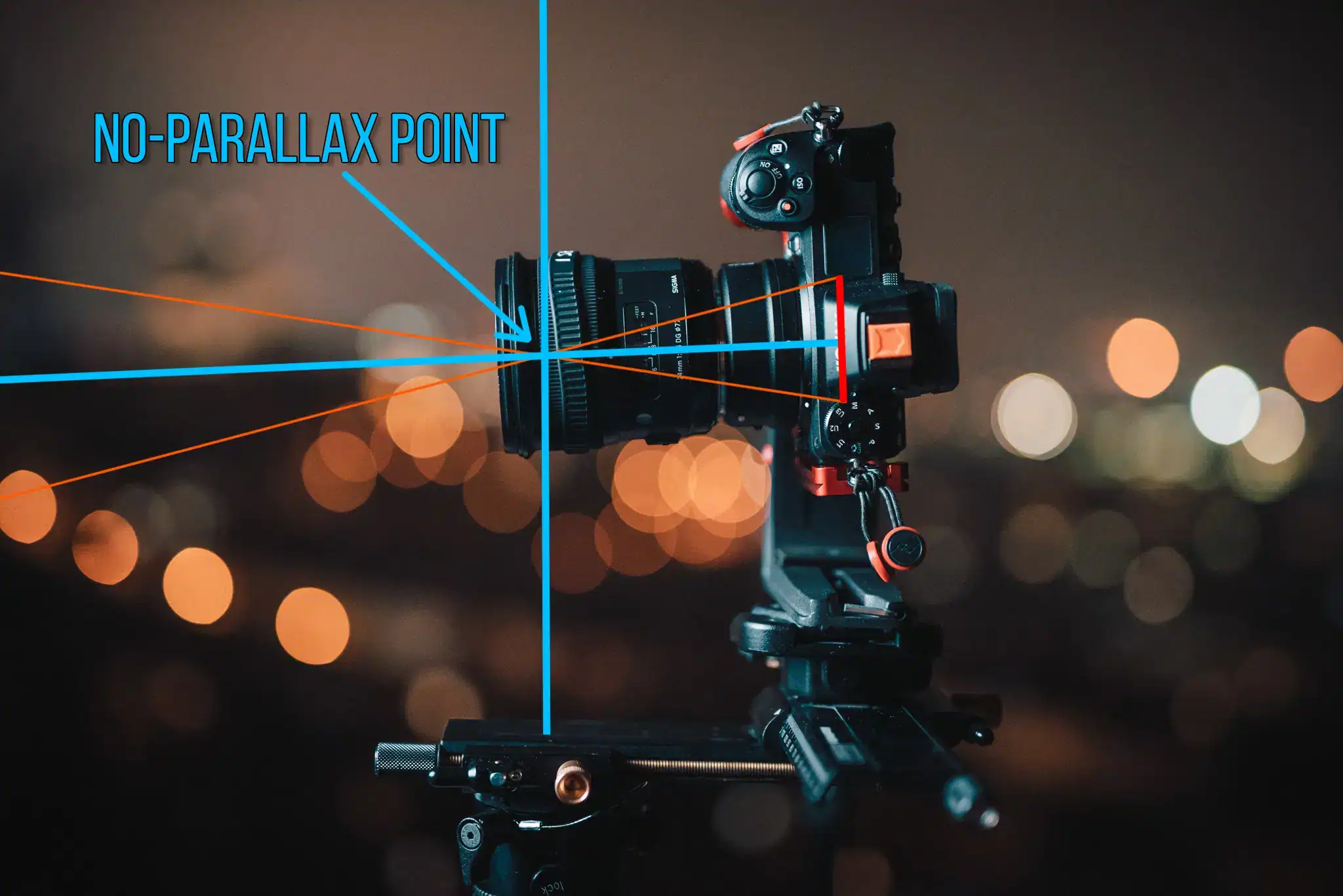
For a deeper primer on panoramic head setup and why nodal alignment matters, see this panoramic head tutorial. Comprehensive panoramic head setup guide
Optional Add-ons
- Pole or car mount: Use safety tethers, keep wind profiles low, and avoid high gusts. On poles, rotate slower and increase shutter speeds to reduce motion blur.
- Lighting aids: Small LED panels or bounced flash help balance dark corners in interiors (avoid mixed color temperatures).
- Weather protection: Rain covers, silica packs, and lens hoods to manage drizzle and flare.
Step-by-Step Shooting Guide
Standard Static Scenes
- Level tripod and align the nodal point. With your 14–24 mm, find the entrance pupil by placing a near object and a far object in the frame and rotating the camera; adjust the fore-aft rail until the relative position of the two objects does not shift during rotation. Record the rail marks for 14 mm and 24 mm.
- Set manual exposure and lock white balance. Manual exposure prevents brightness flicker between frames. Lock WB (e.g., Daylight for outdoor or a measured Kelvin) to avoid color shifts across the panorama.
- Focus: switch to manual focus and set near the hyperfocal distance. At 14 mm and f/8 on full frame, hyperfocal is roughly 0.8–1.0 m. Confirm with magnified Live View.
- Capture sequence with overlap. At 14 mm: shoot 8 frames around the horizon with 25–30% overlap, then 1 zenith (tilt up ~60–75°) and 1 nadir (tilt down). For cleaner poles or tall subjects, add an upper and lower row (e.g., 6+6).
- Use vibration control: On the D750, enable Exposure Delay Mode (e.g., 1–3 s). Consider Mirror Up mode with remote. Turn off lens VR if using an F-mount lens that has it (most 14–24/2.8 UWA zooms don’t).
HDR / High Dynamic Range Interiors
- Bracket ±2 EV (3 or 5 shots). The D750’s base ISO DR is excellent, but bright windows can exceed 16–18 stops in interiors. Bracketing safeguards highlight detail.
- Keep WB locked and avoid auto ISO. Shoot RAW, and turn off Long Exposure NR when bracketing to keep timing consistent.
- Maintain your overlap. A consistent bracketing cadence (e.g., 0, −2, +2) for each frame helps batch processing later.
Low-Light / Night Scenes
- Use a sturdy tripod and remote. Set f/4–f/5.6 to keep exposures reasonable. Target ISO 200–800 for the D750; ISO 1600 is usable with careful exposure and noise reduction.
- Long exposures: 1–8 s is common. Use Exposure Delay + Mirror Up. Beware moving lights (cars) and wind-induced shake on rooftops or poles.
- Shield the lens from stray lights to avoid flare; consider a flag or your hand (outside the frame).
Crowded Events
- Shoot two passes: one quickly to lock composition and one slower, waiting for clear gaps. Note your rotator detents to remain consistent.
- In post, use masks to blend cleaner areas, removing duplicated or ghosted people.
Special Setups (Pole / Car / Drone)
- Secure gear and tether. On poles, keep the rig compact and centered over the rotation axis; plan for faster shutter speeds (1/200–1/500) even at higher ISO to combat sway.
- For car mounts, use multiple suction cups and a safety strap. Avoid highways; choose smooth roads and short exposures. Always prioritize safety over the shot.
Watch: Panorama Shooting Fundamentals
Here’s a concise video walkthrough on panoramic capture fundamentals that pairs well with the steps above.
Recommended Settings & Pro Tips
Exposure & Focus
| Scenario | Aperture | Shutter | ISO | Notes |
|---|---|---|---|---|
| Daylight outdoor | f/8–f/11 | 1/100–1/250 | 100–200 | Lock WB (Daylight or 5200–5600K); expose for highlights |
| Low light/night | f/4–f/5.6 | 1/30–1/2 s (tripod) | 200–800 (1600 if needed) | Use Exposure Delay + remote; shield from wind |
| Interior HDR | f/8 | Bracket ±2 EV (3–5 frames) | 100–400 | Balance windows and interior lamps; turn off Auto ISO |
| Action / moving subjects | f/5.6–f/8 | 1/200+ | 400–800 | Freeze motion; do a second pass for clean masks |
Critical Tips
- Manual focus at hyperfocal: At 14 mm f/8, ~0.8–1.0 m gives near-to-infinity sharpness. Confirm with Live View.
- Nodal point calibration: Mark the fore-aft rail positions for 14 mm and 24 mm on your panoramic head; keep a note on your phone.
- White balance lock: Avoid Auto WB. Mixed lighting? Use a custom Kelvin or gray card-based preset for consistency.
- RAW over JPEG: The D750’s RAW files handle highlight recovery and gradient smoothing far better, especially for skies and interiors.
- Stabilization: The D750 has no IBIS; turn off any lens VR when on a tripod to avoid micro-blur from stabilization seeking.
Stitching & Post-Processing
Software Workflow
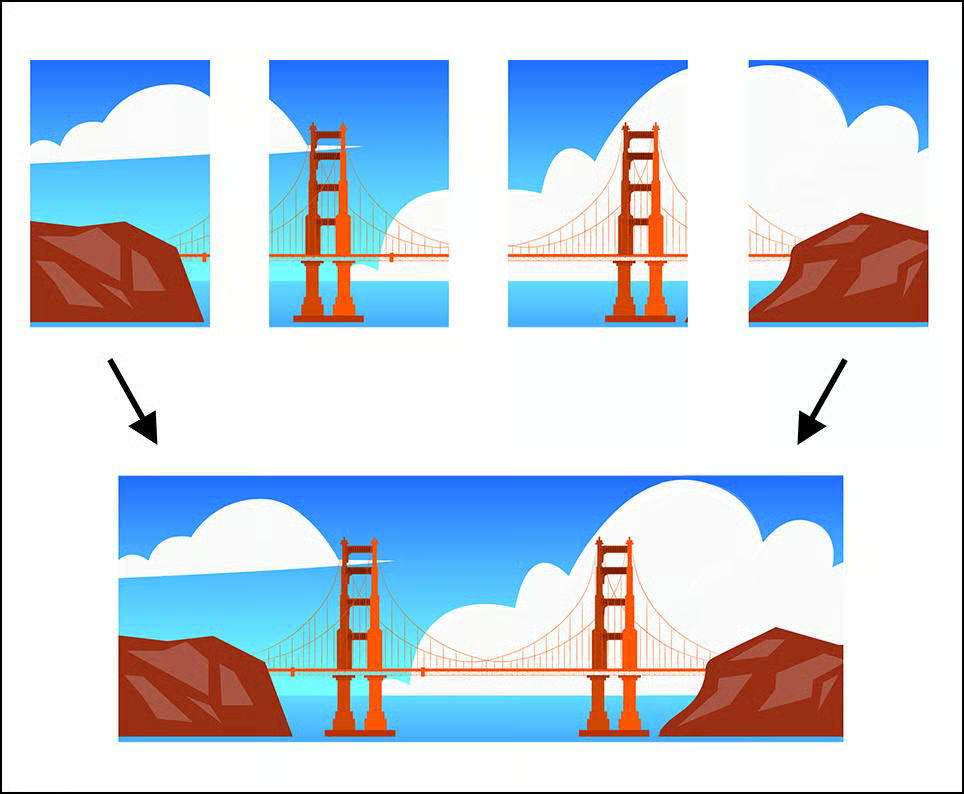
Import your RAWs into Lightroom or your favorite RAW processor. Correct basic lens profiles (vignetting and CA), synchronize settings, and export to a stitching tool. PTGui is an industry favorite for speed, control points, masking, and horizon leveling. Hugin is a powerful open-source alternative. Rectilinear ultra-wide lenses like 14–24 mm are very stitch-friendly with 25–30% overlap; you’ll need more shots than fisheye, but you’ll get straight lines and cleaner architecture.
For a professional overview of PTGui’s capabilities and why it’s widely used, see this review. PTGui: advanced panorama stitching review
If your goal is VR output, confirm your export as a 2:1 equirectangular at your target resolution (e.g., 8K, 12K, or 16K) and validate it in a VR player. Oculus provides a concise guide to DSLR/MILC 360 photo pipelines. Using a DSLR or mirrorless to shoot and stitch a 360 photo
Cleanup & Enhancement
- Nadir patch: Export a layered file and patch the tripod using a logo plate, AI-based removal, or manual cloning.
- Global color and noise: Apply gentle noise reduction for high-ISO frames; unify white balance if a few frames drifted.
- Horizon and verticals: Use PTGui’s optimizer or post-rotate in Photoshop/Lightroom to level the horizon and keep verticals true.
- Export: Save a master 16-bit TIFF where possible; deliver equirectangular JPEGs for web and VR platforms. Keep a layered source file for future edits.
Note: Software evolves quickly. Always review your stitching tool’s latest documentation for the most efficient workflow and features.
Useful Tools & Resources
Software
- PTGui panorama stitching
- Hugin open source
- Lightroom / Photoshop / Affinity Photo
- AI tripod removal tools (content-aware fill, generative remove)
Hardware
- Panoramic heads (Nodal Ninja, Leofoto, Sunwayfoto)
- Carbon fiber tripods with leveling bases
- Detent rotators for consistent angles
- Wireless remote shutters / intervalometers
- Pole extensions / car mounts with safety tethers
Disclaimer: Names are provided for research; always confirm compatibility and specifications on the manufacturers’ sites.
Common Mistakes & How to Avoid Them
- Parallax error: Not aligning the entrance pupil over the rotation axis causes stitching gaps. Calibrate the nodal point and mark your rails.
- Exposure flicker: Auto exposure or Auto WB across frames leads to visible seams. Use manual exposure and locked WB.
- Tripod or photographer shadow: Plan a nadir shot and patch later, or reposition to minimize shadows.
- Ghosting from movement: Shoot a second pass and mask clean areas in PTGui or Photoshop.
- High ISO noise at night: Keep ISO modest (200–800), use a solid tripod, and lengthen shutter rather than pushing ISO too far.
Real-World Case Studies
Indoor Real Estate (Mixed Light, Bright Windows)
On a Nikon D750 with an F-mount 14–24 mm f/2.8, set f/8, ISO 100–200, and bracket ±2 EV (3–5 frames) for each position. Capture 8 around plus zenith and nadir. Keep all lights either on or off to reduce color temperature mixing. Stitch in PTGui, blend exposures there or pre-merge HDRs per angle, then stitch. Result: clean lines, balanced window detail, and minimal color casts.
Outdoor Sunset (Rapidly Changing Light)
Work quickly in manual exposure; meter for the brightest sky area to protect highlights. At 14 mm, 8 around in one minute or less is practical if you pre-mark your detents. Consider a safety pass if the sunset changes dramatically.
Event Crowd (Motion Management)
First pass locks composition; second pass waits for gaps. At 1/200, ISO 400–800, f/5.6–f/8, you’ll freeze most motion. Blend in post using masks to reduce ghosting.
Rooftop or Pole (Wind + Safety)
Keep the rig compact, use a heavier tripod or add a sandbag at the base, and tether the camera. Rotate slowly, shoot at faster shutter speeds (1/125–1/250), and increase ISO rather than risking blur. Safety first—if wind surges, abort the shot.
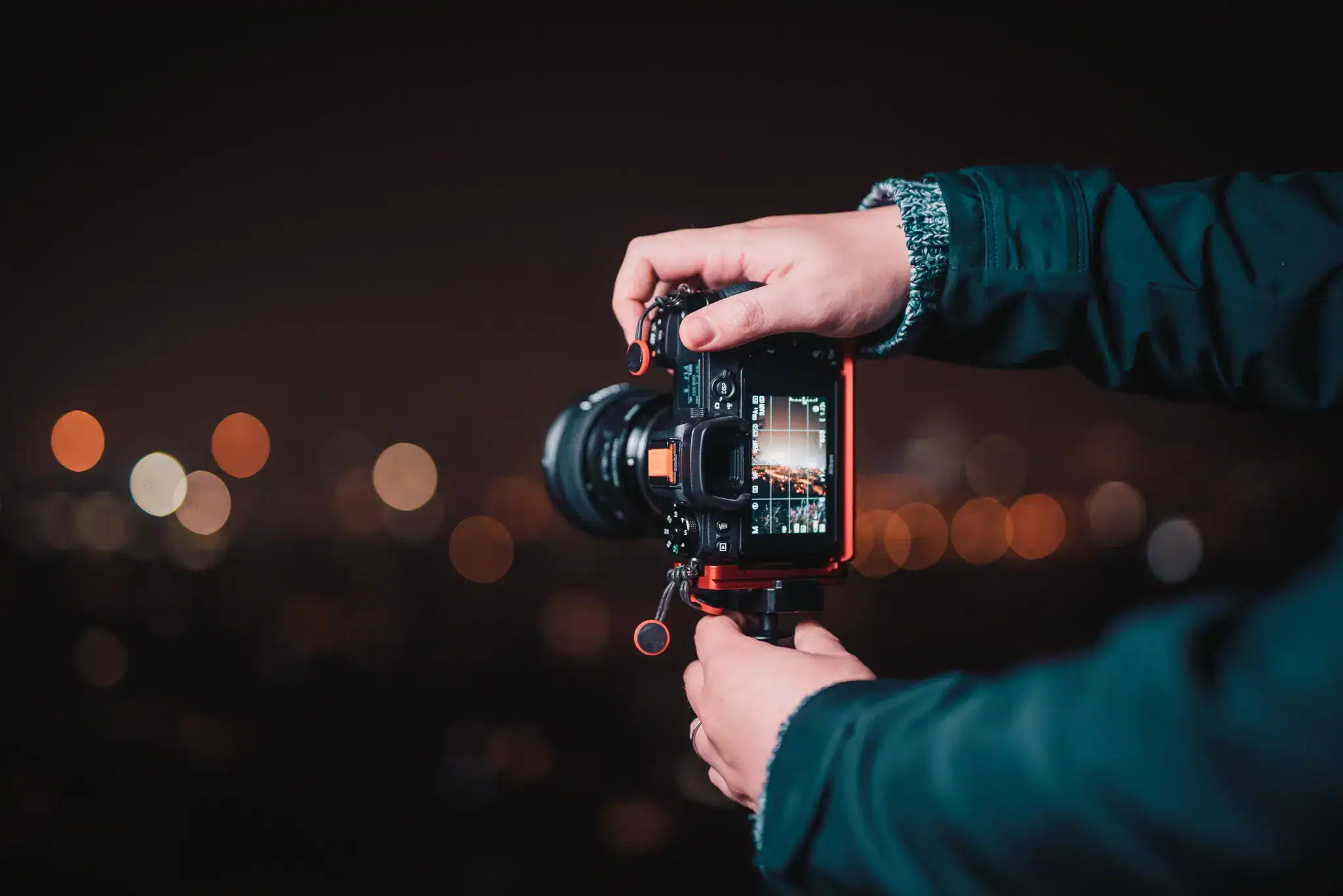
Visual: Low-Light Setup Example
Frequently Asked Questions
- Can I directly mount the Nikon Z 14-24mm f/2.8 S on my Nikon D750?
No. The Z 14–24/2.8 S is Z-mount and does not mount on F-mount DSLRs like the D750. There is no official adapter in that direction. Use an F-mount 14–24 mm f/2.8 equivalent on the D750, or pair the Z lens with a Nikon Z body.
- Is 14 mm wide enough for a single-row full 360 on full frame?
Yes for the horizon band, but you’ll typically need additional zenith and nadir shots. A common pattern is 8 around at 0°, then 1–2 extra frames for zenith and nadir. For cleaner poles, add a second row (e.g., 6 at +30° and 6 at −30°).
- What ISO range is safe on the D750 for low light panoramas?
ISO 200–800 is a safe sweet spot with very clean results. ISO 1600 is usable if exposed well and processed carefully. Favor longer exposures on a tripod over pushing ISO too high.
- How do I avoid parallax issues with this ultra-wide zoom?
Use a panoramic head and align the entrance pupil. Place a near and far object in the frame and adjust the fore-aft rail until their relative position stays fixed during rotation. Mark the rail positions for 14 mm and 24 mm for repeatability.
- Do I need HDR for interiors with bright windows?
Often yes. Even with the D750’s strong base ISO dynamic range, interiors with sunlit windows usually exceed sensor limits. Bracket ±2 EV (3–5 frames) and merge before or during stitching for optimal tonality.
Further Reading
For broader context on DSLR/virtual tour gear choices and workflows, this overview is helpful. DSLR virtual tour camera and lens guidance