
Why This Camera & Lens Are Great for Panoramas
If you want to learn how to shoot panorama with Hasselblad X1D-50c & Samyang 8mm f/3.5 UMC Fish-Eye CS II, this guide walks you through a reliable, field-tested workflow. The Hasselblad X1D-50c is a medium-format mirrorless camera with a 44 × 33 mm sensor (~50 MP, ~5.3 μm pixels) known for superb color, ~14 stops of dynamic range, and beautiful tonality—excellent traits for high-quality 360 photos and HDR panoramas. The Samyang 8mm f/3.5 UMC Fish-Eye CS II is a manual-focus, manual-aperture fisheye with strong central sharpness and a detachable hood. Although it’s designed for APS-C, it can be adapted for the X1D and used as a circular/strongly-vignetted fisheye—ideal for reducing shot count in 360 captures.
Important compatibility note: The Samyang 8mm does not natively mount to the XCD mount. You’ll need a dumb adapter (e.g., Canon EF-to-XCD) and the X1D’s electronic shutter (ES), since native XCD lenses include leaf shutters and adapted lenses do not. ES works well on static scenes but can show rolling-shutter artifacts with fast movement or flicker with some LED lighting. Because the Samyang’s image circle is smaller than the X1D sensor, expect circular coverage with heavy vignetting; this is normal and usable for spherical pano stitching when planned correctly.
Quick Setup Overview
- Camera: Hasselblad X1D-50c — 44 × 33 mm medium-format sensor, ~50 MP, ~14 stops DR, base ISO 100–25,600 (best quality ISO 100–800). Electronic shutter required with adapted lenses.
- Lens: Samyang 8mm f/3.5 UMC Fish-Eye CS II — manual-focus fisheye, detachable hood, strong central sharpness from f/5.6–f/8, moderate CA and flare (manageable in post), APS-C image circle produces circular coverage on the X1D.
- Estimated shots & overlap (field-proven starting points):
- With hood removed and good circular coverage: 3 shots around (120° apart) + 1 zenith + 1 nadir (5 total). Use ~30% overlap.
- If coverage is partial/narrower due to adapter/hood: 6 shots around (60° apart) + zenith + nadir (8 total) with ~30–35% overlap for safety.
- Difficulty: Moderate (adapter + ES + nodal alignment require care, but results are excellent).
Planning & On-Site Preparation
Evaluate Shooting Environment
Assess light, movement, reflective surfaces, and space. The X1D’s dynamic range preserves highlights and shadow detail, but bright windows and mixed lighting still benefit from HDR bracketing. Watch for glass reflections; if you must shoot through glass, get the lens close (2–5 cm) at a slight angle, use a rubber lens hood or cloth to block reflections, and avoid touching the glass to prevent vibration transfer.
Match Gear to Scene Goals
This combo excels when you want top-tier color and tonality but minimal shot count. The X1D’s 50 MP files give you latitude for clean noise reduction and color grading. Safe ISO ranges on the X1D-50c: ISO 100–400 is optimal; ISO 800 is still good; ISO 1600 is usable with careful noise reduction. The fisheye’s advantage is fewer frames; the tradeoff is characteristic distortion, which is expected and handled during stitching. Because you’re using the electronic shutter, avoid rapidly moving subjects and beware of LED/fluorescent flicker artifacts—especially indoors at shutter speeds that sync poorly with the mains frequency.
Pre-shoot Checklist
- Power and storage: fully charged batteries (X1D batteries drain faster in cold), fast UHS-II cards or XQD/CFexpress readers for a smooth workflow.
- Lens and sensor clean: dust and smears on a fisheye are extremely visible—clean thoroughly.
- Tripod and panoramic head: level the tripod, and calibrate nodal alignment before critical shoots.
- Safety: check wind if on rooftops/poles, use tethers/straps, avoid overextending the pole in crowded or windy conditions.
- Backup workflow: shoot one extra rotation to hedge against stitching errors or people moving.
Essential Gear & Setup
Core Gear
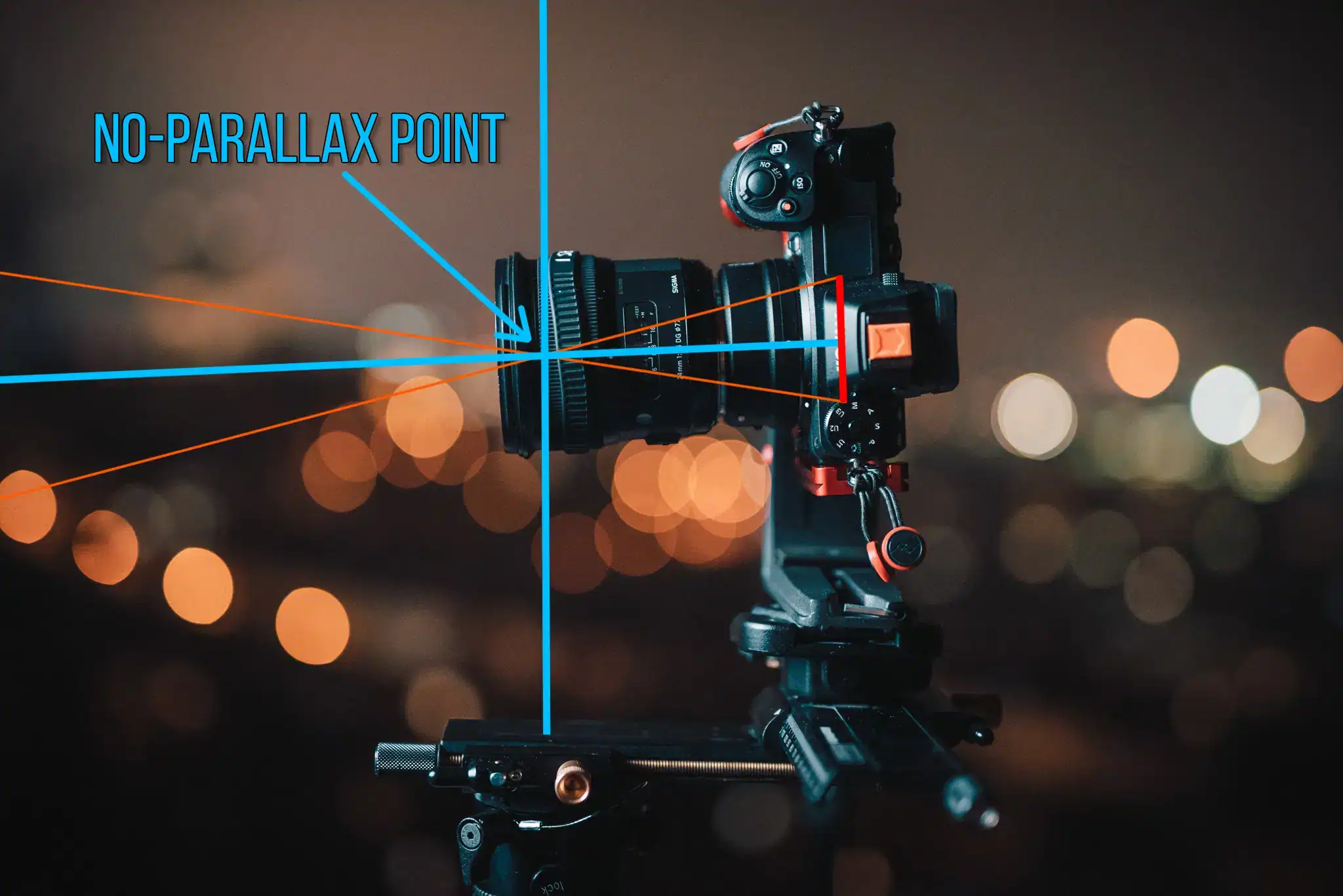
- Panoramic head: Enables rotation around the lens’s no-parallax point (entrance pupil), eliminating parallax errors between near and far objects. A two-axis pano head (e.g., Nodal Ninja, Leofoto) lets you tilt for zenith/nadir frames easily.
- Stable tripod with a leveling base: A leveling base speeds up setup, ensuring each rotation stays level—critical for clean stitches and horizon.
- Remote trigger or app: Use a remote or self-timer to prevent vibration, especially important with long exposures.
Optional Add-ons
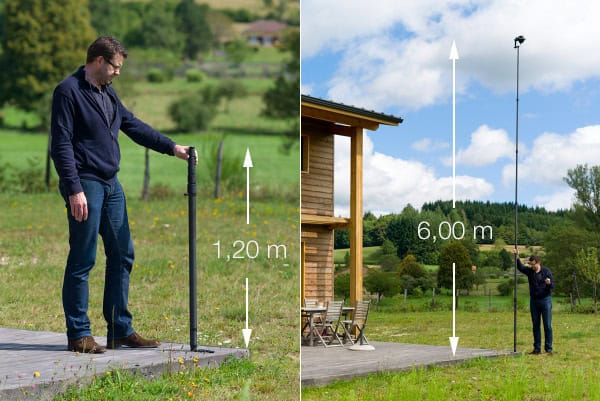
- Pole or car mount: Great for elevated views or vehicle-panos. Safety first—use tethers, monitor wind gusts, and avoid overhead cables/branches.
- Lighting aids: Small LED panels or bounced flash (off-camera) for interiors. Beware of flicker with ES; continuous high-CRI LED with flicker-free drivers is best.
- Weather protection: Rain covers, microfiber cloths, and silica gel packs to protect gear and keep the fisheye element spotless.
Step-by-Step Shooting Guide
Standard Static Scenes
- Level tripod and align nodal point: Mount the X1D-50c and Samyang 8mm (with adapter) on your panoramic head. Start with the lens centered above the rotator. Slide forward/backward to find the no-parallax point by aligning a close vertical object with a distant one and rotating 20–30°; adjust until there’s minimal relative shift. For this lens, a common starting offset is roughly 55–65 mm forward of the camera’s sensor plane mark, then fine-tune on-site.
- Manual exposure and white balance: Set M mode. Meter the brightest area you must retain (e.g., near sunlit windows) and expose to protect highlights. Lock white balance (Daylight for outdoor sun, custom WB for interiors) to prevent stitching inconsistencies.
- Capture sequence with overlap: With a circular coverage, try 3-around (120° steps) at slight downward tilt (-5° to 0°), then 1 zenith and 1 nadir. If the circle is smaller or overlap looks thin, switch to 6-around at 0° and keep at least 30% overlap between frames.
- Nadir (ground) shot: Either shoot a handheld nadir after moving the tripod aside or do a dedicated nadir with the pano head offset method to simplify tripod removal.
HDR / High Dynamic Range Interiors
- Bracket ±2 EV (3 or 5 frames): The X1D’s DR is strong, but bright windows can blow out. Bracket each pano position (e.g., -2/0/+2 EV). Keep ISO low (100–400) and aperture steady (f/8).
- Lock WB and focus: Keep both fixed for the entire sequence; varying WB or focus across brackets complicates stitching and exposure fusion.
- Use a slow, steady cadence: With electronic shutter, avoid touching the camera; use a remote or 2-second timer to prevent vibration.
Low-Light / Night Scenes
- Use longer exposures at low ISO: The X1D-50c shines at ISO 100–400. At night, consider 4–10 second exposures at f/4–f/5.6. Keep the tripod rock-solid and shield the lens from wind.
- Avoid flicker sources: Some street/indoor LEDs may band with ES. Test a frame and adjust shutter speed to reduce banding (multiples of mains frequency can help: 1/50, 1/60, etc.).
- Check star trailing if doing astro: Keep shutter modest or plan for stacking; fisheye masks trailing somewhat, but it’s still visible in the zenith.
Crowded Events
- Two-pass capture: First, a quick full rotation for coverage. Second, reshoot frames as gaps open in the crowd.
- Mask in post: Use PTGui’s masking to choose the cleanest regions and reduce ghosting from moving people.
- Shorter shutter speeds: Prefer 1/125–1/250 when possible to freeze motion; raise ISO modestly if needed (up to ISO 800 on the X1D is usually clean).
Special Setups (Pole / Car / Elevated)
- Secure gear and tether: On poles, attach safety lines and keep the center of gravity over your stance. On cars, use vibration-damped mounts and check legal/safety rules.
- Slower rotation, more overlap: Wind and vibration can blur frames—add overlap (35–40%) and use faster shutter speeds when possible.
- Remote viewing: If feasible, trigger via remote and monitor framing on a phone/tablet to avoid touching the rig.
Recommended Settings & Pro Tips
Exposure & Focus
| Scenario | Aperture | Shutter | ISO | Notes |
|---|---|---|---|---|
| Daylight outdoor | f/8–f/11 | 1/100–1/250 | 100–200 | Lock WB (Daylight); protect highlights for easy stitching |
| Low light/night | f/4–f/5.6 | 1/4–10 s | 100–400 | Tripod + remote; test for LED flicker with ES |
| Interior HDR | f/8 | Bracket ±2 EV | 100–400 | Bracket each position; keep WB fixed |
| Action / moving subjects | f/5.6–f/8 | 1/200+ | 400–800 | Freeze motion; do a second pass for masking |
Critical Tips
- Manual focus at hyperfocal: With an 8mm fisheye at f/8, set focus around 1 m; you’ll cover roughly 0.5 m to infinity sharply. Confirm with magnified live view.
- Nodal point calibration: Start around 55–65 mm forward from the sensor plane, then refine using the near/far alignment test. Mark your pano rail once dialed in.
- White balance lock: Avoid AWB changes between frames; mixed-light interiors especially benefit from a custom WB card reading.
- RAW workflow: Shoot Hasselblad RAW (3FR/FFF), then convert to DNG or 16-bit TIFF for stitching. You’ll preserve the X1D’s color and DR advantages.
- Stabilization: The X1D-50c does not have IBIS. On tripod, keep stabilization off (if your lens or system provides it) and use a remote/timer to avoid micro-shake.
Recommended watch: A concise panoramic head setup walkthrough.
Stitching & Post-Processing
Software Workflow
Export your RAWs to 16-bit TIFFs with consistent color and tone (disable per-image auto adjustments). Stitch with PTGui or Hugin; the Samyang 8mm is a fisheye, which is generally easier for control-point generation and requires fewer shots. Start with 25–30% overlap for fisheyes. Let the software auto-detect lens type; if it struggles, set fisheye and calibrate FOV by aligning control points. PTGui’s optimizer usually solves projection and alignment quickly, even with circular coverage. For VR outputs, export an equirectangular file (2:1 ratio). Widths of 10,000–16,000 px are typical depending on shot count and overlap.
If you want a deeper comparison of stitchers, see this practical review of PTGui’s strengths for professional panoramas. Fstoppers: PTGui review
Cleanup & Enhancement
- Tripod/nadir patch: Render a separate nadir frame (tripod moved or offset). In PTGui, use viewpoint correction or export to Photoshop for patching/cloning. AI-based object removal tools can speed up clean floor patches.
- Color consistency: Use synchronized adjustments. If bracketing, exposure-fuse or HDR-merge before stitching for cleaner seams.
- Noise and clarity: The X1D files respond well to modest noise reduction and micro-contrast. Avoid over-sharpening on edges; fisheye projections magnify it.
- Level and straight horizons: In PTGui, use vertical/horizontal line constraints or the panorama editor to correct roll/yaw/pitch.
- Export formats: 16-bit TIFF master; JPEG for web/VR viewers. For VR platforms, standard equirectangular 2:1 at 8–12k px width is common.
For a broader primer on DSLR/mirrorless 360 workflows, the Oculus guide is solid and platform-agnostic. Using a DSLR/Mirrorless to shoot and stitch a 360 photo
Note: Software evolves regularly. Always verify the latest documentation for your stitching app’s best practices.
Useful Tools & Resources
Software
- PTGui panorama stitching (robust for fisheye/circular workflows)
- Hugin (open-source alternative)
- Lightroom / Photoshop for RAW, tone, and nadir patch
- AI tripod removal tools (e.g., object removal in PS)
Hardware
- Panoramic heads: Nodal Ninja, Leofoto, Fanotec
- Carbon fiber tripods with a leveling base
- Wireless remotes or intervalometers
- Pole extensions and vehicle mounts with safety tethers
For understanding panoramic head mechanics and no-parallax alignment, this primer is helpful. Panoramic head tutorial
Disclaimer: Brand names above are examples for search reference; check official sites and manuals for current details.
Common Mistakes & How to Avoid Them
- Parallax error: Always align the entrance pupil carefully. Even a small misalignment creates double edges near the tripod.
- Exposure flicker: Avoid auto exposure and auto white balance; lock both for consistency across the set.
- Thin overlap: With circular coverage, don’t skimp—target 30% overlap; 35% if windy or on a pole.
- LED banding with electronic shutter: Test a frame and adjust shutter speed; consider continuous, flicker-free lighting for interiors.
- Dirty fisheye front element: Clean before and during the shoot. Smudges on ultrawide glass are painfully obvious in stitches.
- Insufficient safety on poles/rooftops: Use tethers and common sense; protect people and property first.
Real-World Use Cases & Field Advice
Indoor Real Estate
Use ISO 100–200, f/8, HDR bracketing at each position. Keep a consistent color temperature (custom WB). Because you’re on ES, vet the lighting for flicker—slow shutters often help. Aim for 6-around if circular coverage is thin, plus zenith and nadir; this yields extra overlap and cleaner corners around windows and bright fixtures.
Outdoor Sunset
Expose for highlights to keep the sky’s color. Consider a 2- or 3-shot bracket only for the sun-side frames to reduce noise in darker frames. Wind can vibrate the rig—use a hook on your tripod’s center column with a weight, and increase overlap to 35% if necessary.
Event Crowds
Fast shutter speeds (1/200+), ISO 400–800, f/5.6–f/8. Shoot a fast base rotation and then capture replacement frames as people clear. Use PTGui’s masking to pick people-free areas. The X1D files handle selective noise reduction well if you must push ISO.
Rooftop / Pole Shooting
Keep the pole vertical, add overlap (35–40%), and use 1/250 or faster when possible. The Samyang fisheye reduces the number of frames you need—which is safer when you’re elevated and want minimal time at the edge. Always tether the rig.
Car-Mounted Capture
Only on private roads or controlled environments. Use vibration-damped mounts. Shoot short bursts at regular intervals to grab frames between bumps. The ES may skew verticals with vibration; prefer higher shutter speeds and consider pausing the vehicle at capture points.
Frequently Asked Questions
-
Can I shoot handheld panoramas with the Hasselblad X1D-50c?
Yes, but it’s not ideal with a fisheye and electronic shutter. Handheld introduces alignment and parallax errors and increases stitching time. For quick tests it’s fine; for production, use a leveled tripod and pano head.
-
Is the Samyang 8mm f/3.5 UMC Fish-Eye CS II wide enough for single-row 360 on the X1D?
Yes, with caveats. As an APS-C fisheye on medium format, it produces a circular/strongly-vignetted image. Many shooters get clean coverage with 3-around + zenith + nadir. If your circular coverage is smaller due to adapter geometry or hood, use 6-around for safe overlap.
-
Do I need HDR for interiors with bright windows?
Often, yes. The X1D has excellent DR, but HDR bracketing (±2 EV) keeps window detail while preserving interior shadows, yielding cleaner seams and higher-quality virtual tours.
-
How do I avoid parallax issues with this setup?
Use a proper panoramic head and align the entrance pupil. Start around 55–65 mm forward from the sensor plane and refine with a near/far alignment test. Mark your rail once perfect.
-
What ISO range is safe on the X1D-50c in low light?
For best quality, aim for ISO 100–400. ISO 800 is still very good; ISO 1600 is workable with careful noise reduction. Prefer longer exposures on a tripod over high ISO, and watch for ES flicker with certain lighting.
For a concise overview of traditional DSLR/mirrorless 360 workflows, this resource is worth reading: Oculus: shooting and stitching a 360 photo. For broader technique discussions, this panoramic Q&A is also helpful: Best techniques to take 360 panoramas.
Safety, Limitations & Trustworthy Workflow
Using an adapted lens on the X1D requires the electronic shutter, which can exhibit rolling-shutter skew with fast motion and banding with certain artificial lights. Test a single frame before doing a full rotation, and adjust shutter speed to mitigate issues. On rooftops, poles, or car rigs, always prioritize safety—use tethers, keep clear of power lines, and avoid crowded spaces when elevated. Protect your files with dual storage if possible (shoot a second pass) and back up immediately after the session. The combination of a high-DR medium-format sensor and a fisheye’s efficiency is powerful, but only when paired with careful handling and conservative overlap.
If you’re new to panoramic heads, this beginner-friendly primer will help you avoid early mistakes: Panoramic head tutorial.