
Why This Camera & Lens Are Great for Panoramas
If you want to know how to shoot panorama with Hasselblad X1D-50c & Samyang 12mm f/2.8 ED AS NCS Fish-Eye, you’re pairing a high-fidelity medium format sensor with a fast, ultra-wide diagonal fisheye. The X1D-50c’s 50 MP 44 × 33 mm CMOS sensor (approx. 5.3 µm pixel pitch) delivers excellent base-ISO dynamic range (~14 stops at ISO 100) and beautiful color depth that holds up in aggressive grading. The Samyang 12mm f/2.8 is a manual-focus, diagonal fisheye designed for full-frame (36 × 24 mm), offering a 180° diagonal field of view with low coma and respectable edge sharpness when stopped down to f/5.6–f/8.
There are two practical considerations with this combo. First, the 12mm fisheye’s image circle is designed for 35 mm full-frame; on the larger 44 × 33 mm sensor you’ll see heavy corner darkening. The solution is simple: plan to crop to a 36 × 24 mm “FF-equivalent” region in post (or use a framing guide). Second, because the Samyang is a fully manual lens (and mounts via an adapter), you’ll typically rely on the X1D’s electronic shutter. That works well for tripod-based panoramas, but avoid LED flicker and fast-moving subjects to minimize rolling-shutter artifacts. With those managed, you get the best of both worlds: fewer frames per 360° thanks to the fisheye FOV and the X1D’s exceptional tonality for premium, clean stitches.
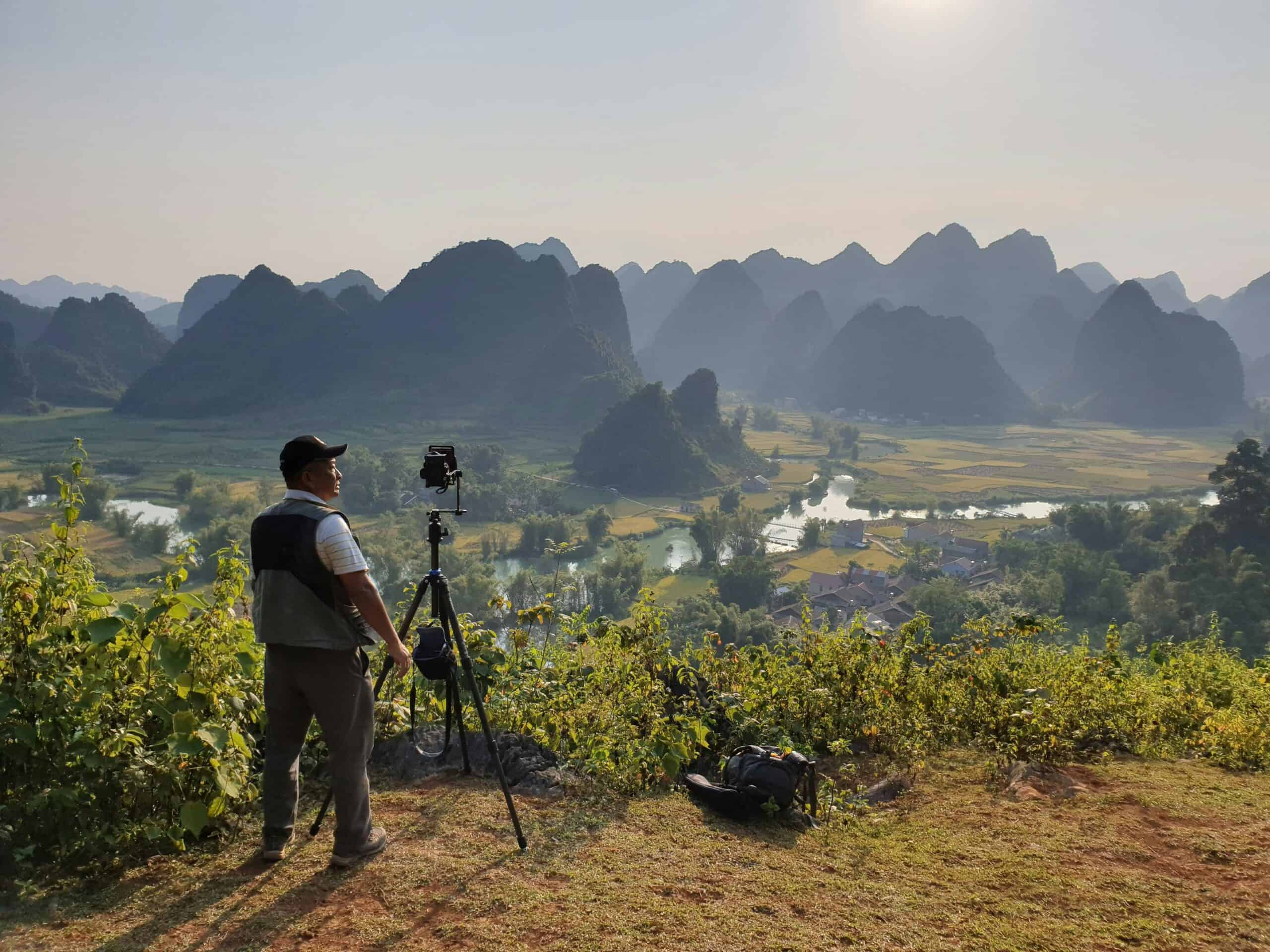
Quick Setup Overview
- Camera: Hasselblad X1D-50c — 44 × 33 mm medium format CMOS, 50 MP, excellent DR at ISO 100–200, clean up to ISO 800–1600 with careful exposure.
- Lens: Samyang 12mm f/2.8 ED AS NCS Fish-Eye — diagonal fisheye designed for 35 mm full-frame; manual focus; sharpest at f/5.6–f/8; moderate CA that’s easily corrected in post.
- Estimated shots & overlap (after cropping to FF-equivalent area):
- Safe, high-quality 360°: 6 shots around at 0° + 1 zenith + 1 nadir (25–30% overlap).
- Speed capture (good outdoor light/static scene): 4–5 around + zenith + nadir if your overlap remains ≥25% after cropping.
- If you must crop more due to vignetting: go 8 around for stress-free coverage.
- Difficulty: Intermediate (manual lens, adapter workflow, nodal calibration required).
Planning & On-Site Preparation
Evaluate Shooting Environment
Assess light direction, mixed lighting (tungsten/LED/daylight), reflective surfaces (glass, polished floors), and movement (people, trees, cars). For glass, shoot perpendicular and keep the lens as close as possible (1–3 cm if permissible) to reduce reflections. Watch for LED signage or dimmable LEDs indoors; they can cause banding with electronic shutters. When shooting sunsets or high-contrast scenes, plan an HDR bracket to preserve sky color and deep shadows.
Match Gear to Scene Goals
The X1D-50c’s medium format tonality shines in scenes where color subtlety and highlight roll-off matter: architecture interiors, sunset landscapes, and high-end virtual tours. Its ISO is clean at 100–800; 1600 is usable with good exposure; 3200+ is a last resort. The Samyang 12mm fisheye minimizes frame count and speeds fieldwork, which is ideal for rooftops, events, and time-critical captures. Distortion is expected with fisheyes but stitches well, and because you’ll crop to a 35 mm-equivalent region, coverage per frame remains generous.
Pre-shoot Checklist
- Power & storage: two batteries minimum; fast UHS-II SD cards; format in-camera.
- Clean optics: blower for sensor, microfiber for front element; fisheyes magnify smudges and flare.
- Tripod & leveling: use a leveling base; calibrate your panoramic head’s no-parallax point before the job.
- Adapter sanity check: ensure your lens adapter locks firmly; test aperture control (choose a mount version with an aperture ring).
- Safety: tether on rooftops or poles; weigh down tripod in wind; avoid traffic and overhead lines for car/pole shots.
- Backup workflow: shoot a second rotation in case of stitching surprises; redo the zenith/nadir if anything moved.
Essential Gear & Setup
Core Gear
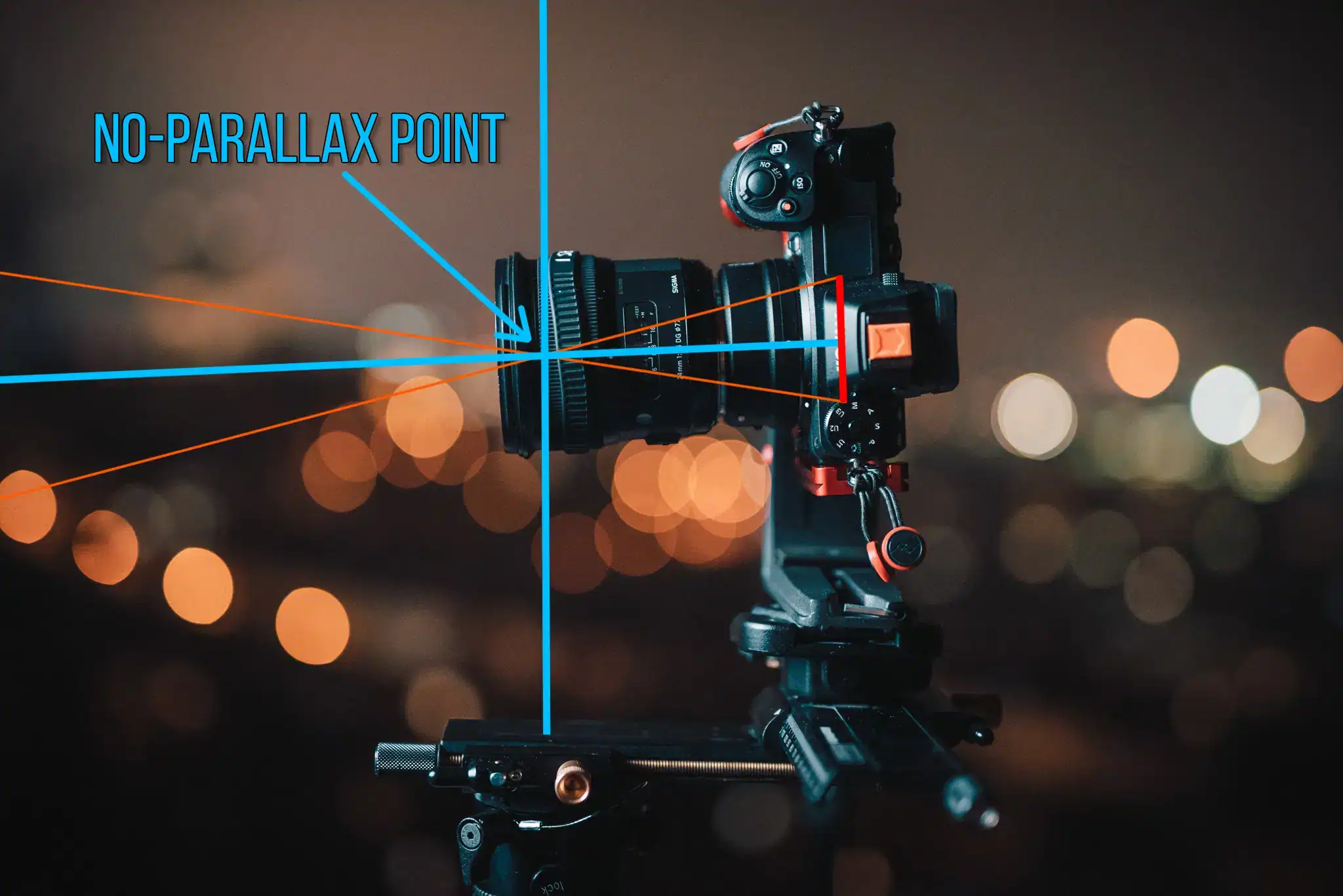
- Panoramic head: allows precise rotation around the lens’s no-parallax point (entrance pupil), eliminating foreground/background shifts that cause stitching errors.
- Stable tripod with leveling base: keeps the yaw axis vertical, which reduces horizon correction later and prevents coverage gaps.
- Remote trigger or app: minimize vibrations; use the X1D’s self-timer if you lack a remote.
Optional Add-ons
- Pole or car mount: great for elevated or moving perspectives. Safety first—always tether gear, avoid high winds, and consider vibration dampers.
- Lighting aids: small LED panels or bounced flash can lift shadows in interiors (just keep them static across frames or shoot a clean pass to mask later).
- Weather protection: rain covers and lens hoods; fisheyes are prone to flare and raindrops, which become glaring artifacts in a stitch.
Step-by-Step Shooting Guide
Standard Static Scenes
- Level and align the nodal point: Mount the X1D on your panoramic head. Rough starting value for the Samyang 12mm’s entrance pupil is about 60–62 mm forward from the sensor plane, but calibrate precisely (see tip below). Level the head using the leveling base bubble.
- Manual exposure and WB: Set manual exposure for the brightest frame without clipping key highlights (use histogram). Lock white balance (Daylight, Cloudy, or custom Kelvin) to avoid color shifts that complicate stitching.
- Focus: Use focus peaking. For 12mm at f/8, a hyperfocal around ~0.6 m is a good target; focus at ~0.6–0.8 m to keep near-to-far crisp.
- Capture sequence: Shoot 6 frames around at 60° yaw increments. Add 1 zenith (tilt up 60–90°) and 1 nadir. Overlap 25–30%. If you’re forced to crop heavily due to vignetting, shoot 8 around at 45° increments.
- Nadir (ground) cleanup: Either shoot a dedicated nadir by removing the tripod and shooting a handheld plate, or plan to patch in post.
HDR / High Dynamic Range Interiors
- Bracket: Use ±2 EV (3 or 5 frames). With the X1D’s DR, 3 frames at ±2 EV often suffice; 5 frames for extreme window contrast.
- Consistency: Keep aperture and focus fixed; lock WB. If using electronic shutter under LED lights, check for banding—reduce shutter speed or turn off problematic fixtures.
- Workflow: Either pre-merge HDR per angle before stitching, or use PTGui’s exposure fusion. Pre-merge yields cleaner control over halos and noise.
Low-Light / Night Scenes
- Stability: Use a sturdy tripod, remote trigger, and mirrorless silent timer. The X1D has no IBIS; rely on rock-solid support.
- Exposure: Prefer ISO 100–800 and longer shutter times. ISO 1600 is acceptable with proper exposure; 3200 is a last resort.
- Avoid flicker: Sodium/LED lights can band with electronic shutters. Lengthen exposure or adjust timing to average flicker cycles.
Crowded Events
- Two passes: First pass for coverage, second pass waiting for gaps. Mark your yaw stops so frames align.
- Masking: In PTGui/Photoshop, use masks to remove duplicates and ghosting; choose the cleanest subject positions per sector.
Special Setups (Pole / Car / Drone)
- Pole: Tether everything. Keep shutter speeds higher (1/125–1/250) to reduce sway blur; take multiple frames per yaw angle and pick the sharpest.
- Car mount: Park safely. Turn engine off to minimize vibration. Consider 8 around for extra overlap because of micro movement.
- Drone: The X1D is heavy—drone use is specialized and risky. If you do, use professional platforms and follow regulations.
If you are new to stitching, this PTGui overview clarifies lens setup, control points, and optimization.
Recommended Settings & Pro Tips
Exposure & Focus
| Scenario | Aperture | Shutter | ISO | Notes |
|---|---|---|---|---|
| Daylight outdoor | f/8–f/11 | 1/100–1/250 | 100–200 | Lock WB (Daylight/5500K). Meter for brightest sector then hold manual. |
| Low light/night | f/4–f/5.6 | 1/30–1/60 (longer on tripod) | 400–800 (1600 if needed) | Electronic shutter: beware LED banding; use longer exposures to average flicker. |
| Interior HDR | f/8 | Bracket ±2 EV (3–5 frames) | 100–400 | Keep aperture/focus fixed; consider pre-merging HDR per angle. |
| Action / moving subjects | f/5.6–f/8 | 1/200+ | 400–800 | Freeze motion; shoot two passes and mask. |
Critical Tips
- Manual focus at hyperfocal: At 12mm and f/8, focus ~0.6–0.8 m to keep everything from ~0.3 m to infinity acceptably sharp.
- Nodal calibration (quick method): Place two light stands (near and far) on a line; rotate the camera. Adjust the rail until the near stand doesn’t shift against the far one through a 30–60° yaw. Mark this rail position for repeatability.
- White balance lock: Mixed lighting is common; set a Kelvin value or custom WB once and keep it. Avoid auto WB across frames.
- RAW capture: The X1D’s 16-bit RAW (if available in your workflow) and 50 MP files hold highlight and color better, crucial for HDR merges and sky recovery.
- Stabilization: The X1D-50c has no IBIS and the Samyang has no OIS—always use a tripod and remote. Turn off any stabilization on adapted lenses if present.
- Adapter choice: Prefer a mount with a mechanical aperture ring (e.g., Nikon F version of the Samyang). Canon EF versions without an aperture ring require smart adapters that may not fully support the X1D; test before jobs.
Stitching & Post-Processing
Software Workflow
Import and pre-crop each frame to the 35 mm-equivalent region (centered 36 × 24 mm) to eliminate black corners from the larger sensor. In PTGui or Hugin, set the lens type to “full-frame fisheye,” focal length 12 mm, and start with 180° diagonal FOV. Add control points and run the optimizer. Fisheye sets typically stitch easily thanks to large overlaps; if you see parallax errors, re-check nodal alignment or use viewpoint correction on nadir patches. For HDR, either feed pre-merged 32-bit files or use the app’s exposure fusion. Industry guidance suggests ~25–30% overlap for fisheyes and ~20–25% for rectilinear lenses. For detailed panoramas and gigapixel work, consider multi-row techniques and higher overlap when the scene is complex. For more on head setup and best practices, see this panoramic head tutorial by 360 Rumors. Panoramic head setup and theory.
Cleanup & Enhancement
- Nadir patch: Use PTGui’s Viewpoint tool or export to Photoshop and clone/patch. You can also capture a handheld nadir tile for cleaner texture.
- Color and noise: Grade gently—medium format files handle color pushes well. Apply noise reduction only where needed (shadow masks) to preserve detail.
- Leveling: Set the horizon and correct roll/yaw/pitch. Keep verticals straight in architectural work by setting vertical control points.
- Export: Equirectangular 2:1 aspect. For VR, common outputs are 8000×4000 to 16384×8192 (depending on stitch quality and intended platform). Check platform guidelines for file size and compression.
Want a platform-specific view of DSLR/mirrorless 360 workflows for VR? Meta’s guide covers best practices from capture to stitch. Using a mirrorless camera to shoot and stitch a 360 photo.
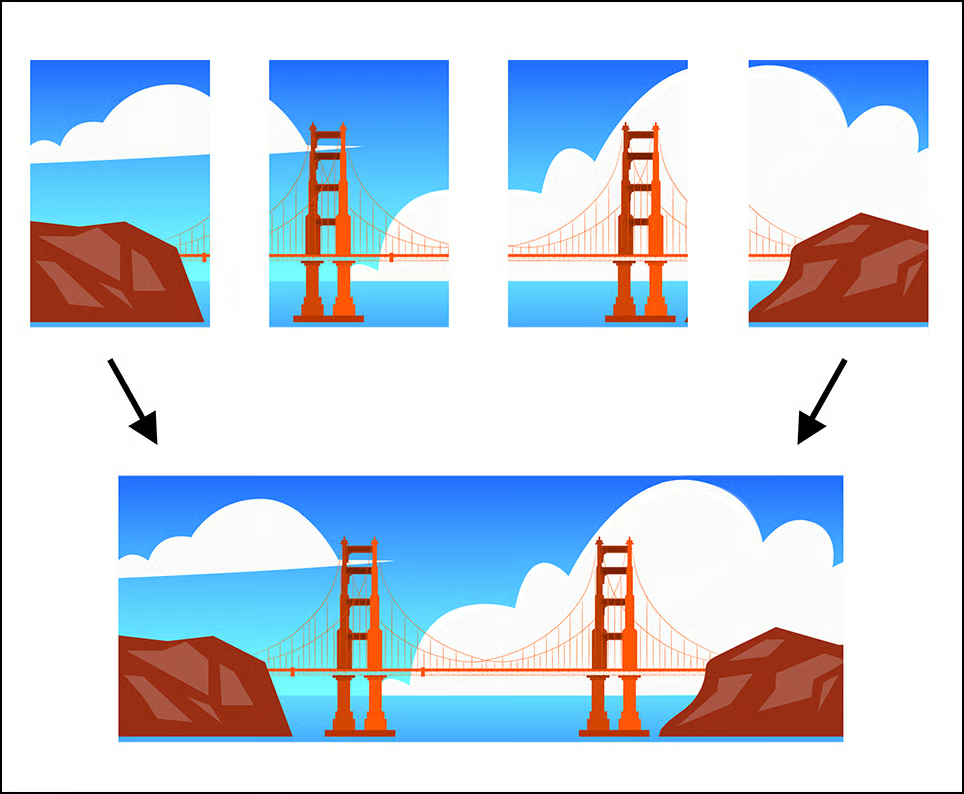
For a deep dive into PTGui’s optimization, masking, and HDR blending features, this review discusses why it’s considered an industry standard for pros. PTGui overview for pro panoramas.
Useful Tools & Resources
Software
- PTGui — fast, robust control points, masking, viewpoint correction.
- Hugin — open-source alternative with advanced controls.
- Lightroom / Photoshop — RAW development, color grading, nadir cleanup.
- AI tripod removal/patch tools — speed up nadir fixes.
Hardware
- Panoramic heads — Nodal Ninja, Leofoto: precise rails and repeatable settings.
- Carbon fiber tripods — stable and portable.
- Leveling bases — faster setup, fewer stitching corrections later.
- Wireless remotes — reduce vibration.
- Pole extensions / car mounts — creative perspectives with safety tethers.
Disclaimer: software/hardware names provided for search reference; check official sites for details and compatibility with your exact camera/adapter.
Common Mistakes & How to Avoid Them
- Parallax error: Always rotate around the no-parallax point. Calibrate once and mark your rail.
- Exposure flicker: Use manual exposure and locked WB; don’t let auto modes vary per frame.
- Tripod in the shot: Plan a nadir patch or shoot a handheld nadir tile.
- Ghosting from movement: Shoot multiple passes and mask the cleanest subject positions.
- LED banding with electronic shutter: Lengthen exposures to average flicker or switch off problematic lights.
- Underestimating vignetting on MF: Pre-crop to a 35 mm-equivalent region before stitching, or shoot more frames (8 around) to maintain overlap.
Real-World Scenarios & Field Advice
Indoor Real Estate (Window View)
Use tripod, panoramic head, f/8, ISO 100–200. Shoot 6 around + zenith + nadir. Bracket ±2 EV for each angle to keep window detail and interior shadows. Pre-merge HDR for each angle in Lightroom (deghost if trees are moving), then stitch in PTGui. Set vertical lines in PTGui to keep walls straight and export 12k equirectangular for crisp MLS tours.
Outdoor Sunset (Windy Rooftop)
Weigh the tripod. ISO 100–200, f/8–f/11. Time the sweep to keep sky color consistent (work quickly or do a double sweep to pick the best sky sector). If wind gusts push the rig, shoot 8 around for extra overlap and sharper selects. The X1D’s highlight recovery is excellent—expose to protect sun-adjacent clouds and lift shadows later.
Event Crowd (Plaza)
Use 1/200 s, f/5.6–f/8, ISO 400–800. Shoot two complete rotations. In post, paint masks to select the cleanest, least-crowded frame for each sector. If you’re using the X1D’s electronic shutter near LED walls, check for banding; a slightly longer shutter (1/50–1/60) can help.
Pole/Rooftop Elevated View
Fisheye is perfect for minimizing frames. Keep the pole vertical (use a bubble). Shoot 8 around, then a separate zenith if possible. Expect more micro-blur; take 2–3 exposures per yaw angle and choose the sharpest during cull. Always tether gear—medium format bodies are heavy.
Frequently Asked Questions
- Can I shoot handheld panoramas with the X1D-50c?
You can for partial panoramas, but for 360×180 coverage the lack of IBIS and the need for nodal alignment make a tripod and panoramic head strongly recommended. Handheld 360s with a fisheye are possible in a pinch (3–4 shots around), but expect stitching artifacts near close objects.
- Is the Samyang 12mm f/2.8 wide enough for a single-row 360 on this camera?
Yes—after cropping to a 35 mm-equivalent region, 6 around + zenith + nadir is reliable. If your crop is severe due to vignetting, use 8 around for overlap safety. For speed outdoors, 4–5 around can work if overlap remains ≥25% in all directions.
- Do I need HDR for interiors with bright windows?
Often, yes. Bracket ±2 EV (3–5 frames) to capture exterior views and interior shadows cleanly. The X1D’s DR helps, but true window pulls generally need bracketing to avoid haloing and noise in the stitch.
- How do I avoid parallax issues with this setup?
Calibrate the no-parallax point on your panoramic head and mark the rail. A good starting offset for the Samyang 12mm is ~60–62 mm forward from the sensor plane; fine-tune using the near/far alignment test and keep the focus at your working distance (f/8 hyperfocal) during calibration.
- What ISO range is safe on the X1D-50c in low light?
ISO 100–800 is very clean; 1600 is still solid with proper exposure; 3200 is usable in a pinch but expect more noise. For night panoramas, prefer lower ISO and longer tripod-mounted exposures.
Safety, Limitations & Honest Notes
With an adapted manual fisheye, you’ll rely on the X1D’s electronic shutter. That’s perfect for static tripod shots, but be careful around flickering LEDs and subjects with quick motion. The Samyang’s full-frame image circle won’t cover 44 × 33 mm corners; build a 35 mm-equivalent crop into your workflow or overlay safe-area guides in live view. Finally, medium format bodies are heavy—use a robust head and rail, tighten all clamps, and tether the rig when elevated or near edges.
For additional background on focal lengths, coverage, and stitching strategies across lens types, this B&H Explora article is a helpful complement. Panoramas, focal lengths, and coverage considerations.