
Why This Camera & Lens Are Great for Panoramas
If you’re wondering how to shoot panorama with Hasselblad X1D-50c & Pentax DA 10-17mm f/3.5-4.5 ED Fisheye, the short answer is: this combo can be surprisingly effective once you understand its quirks. The X1D-50c’s 44×33 mm medium-format CMOS sensor (approx. 50 MP, ~5.3 μm pixel pitch) delivers big, clean files with excellent tonal depth and around 14 stops of dynamic range at base ISO. That’s ideal for HDR panoramas and for extracting detail when stitching multiple frames.
The Pentax DA 10–17mm is a compact fisheye zoom designed for APS-C. On the larger X1D sensor it won’t cover the full frame; expect heavy vignetting or a near-circular image, especially at the wide end. For panoramic work, that can be a feature, not a bug: a circular/near-circular fisheye simplifies coverage of the sphere with fewer shots (e.g., 3–6 around), speeding up capture and reducing stitching seams. The fisheye projection also makes control point matching in software straightforward, even when shooting in complex environments.
Important compatibility notes: you’ll need a K-mount to XCD adapter. This will be a fully manual adapter; autofocus is not supported. Most DA 10–17 copies don’t have an aperture ring, so use an adapter with an aperture lever to stop down the lens. With adapted lenses, the X1D-50c uses its electronic shutter (no leaf shutter), which can introduce rolling shutter artifacts and banding under flickering light—plan your scenes accordingly.
Quick Setup Overview
- Camera: Hasselblad X1D-50c — 44×33 mm medium-format CMOS, ~50 MP (8272×6200), base ISO 100, approx. 14 stops DR, electronic shutter only with adapted lenses.
- Lens: Pentax DA 10–17mm f/3.5–4.5 ED Fisheye — fisheye zoom, APS-C coverage, strong curvature (fisheye projection), moderate CA typical of fisheyes, sharp center, softer edges at wide end; no native aperture ring on most versions.
- Estimated shots & overlap (field-tested guidelines):
- At 10–12 mm (near-circular on X1D): 3 shots around at 120° yaw + zenith + nadir; 30–40% overlap.
- At 14–17 mm (less circular, more fill): 6 shots around at 60° yaw + zenith + nadir; 25–30% overlap.
- Difficulty: Intermediate (due to adapter, manual aperture control, electronic shutter, and nodal calibration).
Planning & On-Site Preparation
Evaluate Shooting Environment
Scan the scene for movement (people, trees, water), reflective surfaces (glass, polished stone), and bright point sources (sun, bare bulbs). With an adapted lens, the X1D uses electronic shutter only, so avoid flickering light (older LEDs, fluorescent tubes) to prevent banding. If shooting through glass, place the front element as close as safely possible (1–3 cm) and shoot at a slight angle to reduce reflections and ghosting.
Match Gear to Scene Goals
The X1D-50c’s DR and color depth excel in high-contrast outdoor scenes and interior HDR. For low light, ISO 100–800 is the sweet spot; ISO 1600 is usable with careful exposure and denoise. The DA 10–17 fisheye reduces shot count, which is great in wind or crowds, but fisheye curvature means more careful horizon leveling and NPP (no-parallax point) alignment. If you need maximum resolution for gigapixel panos, this lens isn’t the right tool—but for fast, clean 360s, it’s efficient.
Pre-shoot Checklist
- Power & storage: fully charged batteries, fast UHS-II cards; the X1D buffer is modest—shoot methodically.
- Optics: clean both front and rear elements carefully; fisheyes show dust and smudges easily.
- Support: level your tripod; calibrate your panoramic head for the lens’s nodal point.
- Safety: consider wind loads on rooftops and poles; tether the rig; never lean over edges.
- Backup workflow: shoot a second full round if time allows—saves you from blink/ghosting surprises.
Essential Gear & Setup
Core Gear
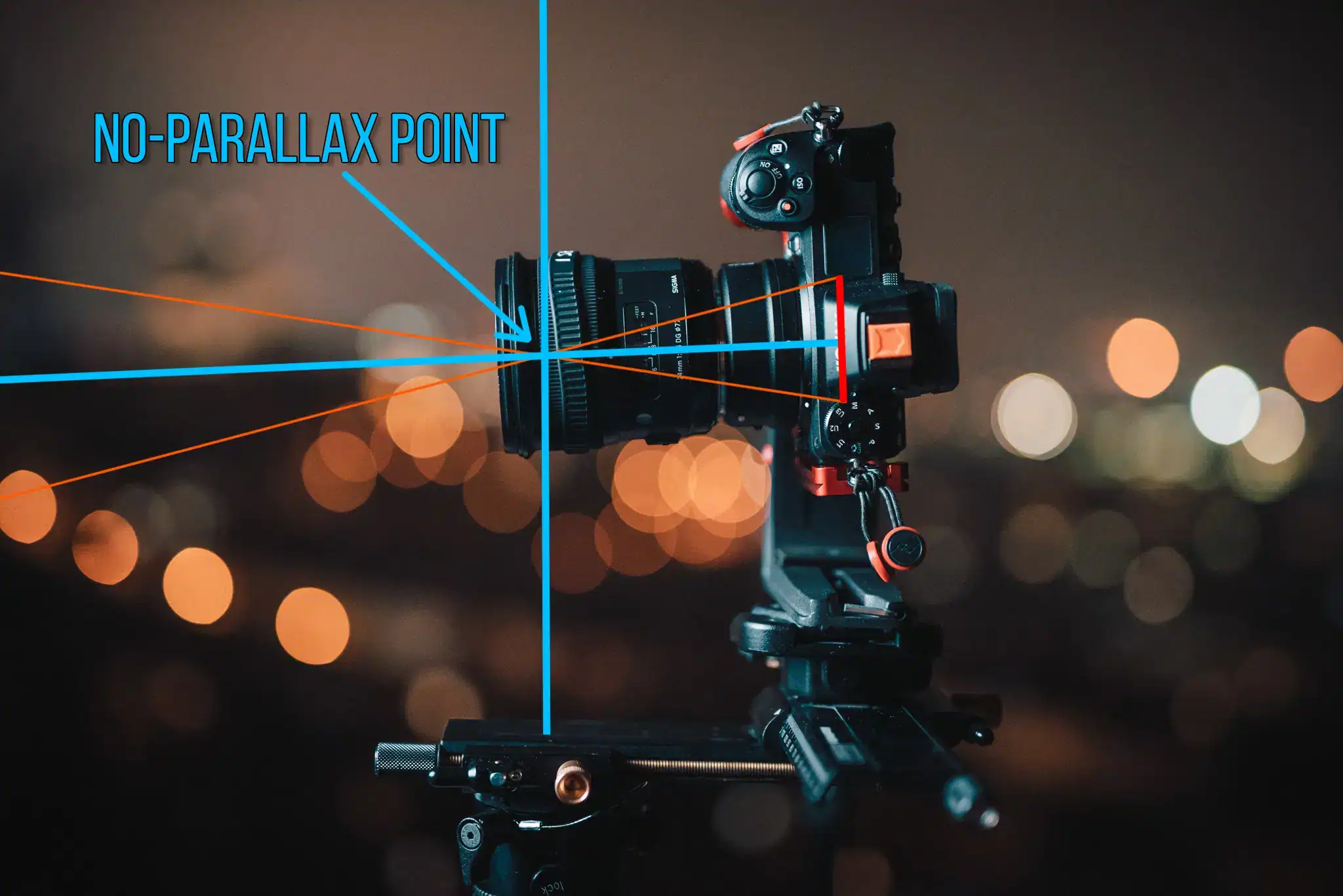
- Panoramic head: lets you rotate around the lens’s nodal point to eliminate parallax. Use a rail to slide the camera so the rotation axis passes through the NPP.
- Stable tripod + leveling base: quick, precise leveling helps keep horizons straight and speeds stitching.
- Remote trigger or app: reduce vibration; with electronic shutter, use a 2 s self-timer or cabled remote.
Optional Add-ons
- Pole or car mount: great for overhead or moving shots; use guy lines and tethers; beware wind-induced vibration and rolling shutter wobble.
- Lighting aids: dimmable LEDs for interiors; avoid flicker sources that cause electronic-shutter banding.
- Weather protection: rain covers and lens hoods; fisheyes are prone to flare and raindrop artifacts.
New to nodal alignment? This visual guide to panoramic heads is an excellent primer: panoramic head tutorial (360Rumors).
Step-by-Step Shooting Guide
Standard Static Scenes
- Level the tripod and align the nodal point. Place a light stand or pole a meter away and a distant object in line behind it. Rotate the rig—if the nearer object shifts relative to the background, slide the camera on the rail until the shift disappears. Mark this position on your rail for 10 mm and 14–17 mm—it may change slightly with zoom.
- Set manual exposure and lock white balance. Meter midtones, then switch to M. Lock WB (Daylight/Cloudy/Tungsten as appropriate) to avoid stitching color shifts.
- Capture with tested overlap.
- Fast capture mode: 3 frames around at 120° yaw (lens at 10–12 mm) + zenith + nadir.
- Higher-res mode: 6 frames around at 60° yaw (14–17 mm) + zenith + nadir.
- Shoot a nadir patch. After the main set, shoot the ground from a slightly offset position for later tripod removal.
HDR / High Dynamic Range Interiors
- Bracket ±2 EV (3–5 frames). Medium-format files have great latitude, but windows still need bracketing to avoid blown highlights.
- Keep WB locked and use consistent brackets at every yaw position. This ensures clean seam blending and prevents flicker in virtual tours.
Low-Light / Night Scenes
- Use longer shutters at ISO 100–800. The X1D-50c stays clean here; ISO 1600 is acceptable with noise reduction.
- Use a remote or 2 s timer. Electronic shutter plus long exposure demands hands-off capture to avoid micro-shake.
Crowded Events
- Shoot two passes. First pass for coverage, second pass pausing for subject gaps at each frame.
- Mask and blend in post to remove ghosts and repeating people, especially along overlaps.
Special Setups (Pole / Car / Drone)
- Secure everything with tethers and safety lines. On poles, rotate slowly and let oscillations damp before shooting.
- Expect rolling shutter skew. Keep shutter speeds high (1/250+), avoid flickering streetlights, and consider more overlap to give the stitcher options.
Recommended Settings & Pro Tips
Exposure & Focus
| Scenario | Aperture | Shutter | ISO | Notes |
|---|---|---|---|---|
| Daylight outdoor | f/8–f/11 | 1/100–1/250 | 100–200 | Lock WB (Daylight). Fisheye is forgiving; prioritize sharpness across frame. |
| Low light/night | f/4–f/5.6 | 1/30–1/60 (tripod) | 200–800 | Use remote; watch for rolling-shutter artifacts on moving subjects. |
| Interior HDR | f/8 | Bracket ±2 EV | 100–400 | Balance windows and lamps; keep bracket spacing consistent. |
| Action / moving subjects | f/5.6–f/8 | 1/200+ | 400–800 | Freeze motion; shoot extra coverage for masking. |
Critical Tips
- Manual focus and hyperfocal: at 10 mm and f/8, focus ~0.5–0.7 m for near-to-far sharpness. Use magnified live view to confirm.
- Find and mark the nodal point: expect the NPP a few centimeters behind the front element at the wide end; verify by parallax test and mark your rail for quick repeats.
- White balance lock: mixed lighting is common indoors; pick the dominant temperature and correct local casts in post.
- Shoot RAW: the X1D’s 16-bit color (internally processed) gives excellent latitude for HDR merges and de-ghosting.
- Stabilization: the X1D-50c has no IBIS; rely on a rigid tripod and remote release. Turn off any lens-based stabilization if you use a different adapted lens on a tripod.
- Electronic shutter caveats: avoid flickering light; if you see banding, lower shutter speed and avoid PWM-driven LEDs.
Stitching & Post-Processing
Software Workflow
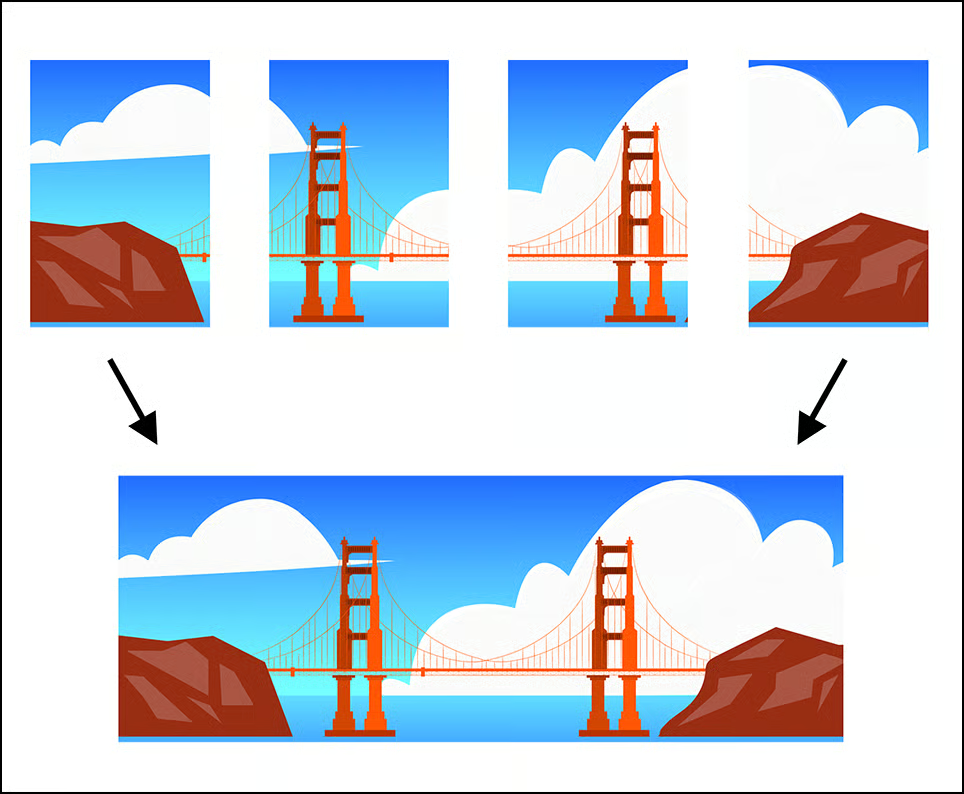
Import RAWs to Lightroom/Phocus for basic exposure and color normalization, then export 16-bit TIFFs to your stitcher (PTGui or Hugin). For the Pentax DA 10–17, set lens type to Fisheye; if auto-calibration struggles, try equisolid-angle or equidistant and let optimizer refine. Fisheye inputs typically need 25–35% overlap; your 3 or 6 around sets will stitch cleanly if the NPP was aligned. PTGui remains a gold standard for speed and control point robustness in complex fisheye panoramas. PTGui in-depth review (Fstoppers)
Cleanup & Enhancement
- Nadir/tripod patch: export an equirectangular, clone/patch in Photoshop, or use AI nadir removal tools for speed.
- Color and noise: balance interior color casts, and apply light luminance noise reduction for ISO 800–1600 shots.
- Level and horizon: adjust roll/yaw/pitch in PTGui’s panorama editor or Hugin’s fast preview window.
- Export: 8K–12K equirectangular JPEG for web/VR; keep a 16-bit TIFF master for archival.
If you’re new to 360 authoring with interchangeable-lens cameras, this step-by-step primer is helpful: Using a DSLR/Mirrorless to shoot and stitch a 360 photo (Meta/Oculus Creator).
Video Walkthrough
Prefer to see the process? This video covers capturing and stitching panoramas with a pano head and fisheye:
Useful Tools & Resources
Software
- PTGui panorama stitching
- Hugin (open source)
- Lightroom / Photoshop for RAW and retouching
- AI tripod removal tools for fast nadir patching
Hardware
- Panoramic heads: Nodal Ninja, Leofoto
- Carbon fiber tripods with leveling base
- Wireless remote shutter release
- Pole extensions / car suction mounts (with safety tethers)
Disclaimer: names are for search reference only—confirm compatibility and current specs on official sites.
Common Mistakes & How to Avoid Them
- Parallax error → Always align to the lens’s NPP and recheck after zooming the 10–17.
- Exposure flicker → Manual exposure and locked WB, especially in HDR sequences.
- Tripod shadows and nadir mess → Shoot an offset nadir patch or plan a clean replacement tile.
- Ghosting from movement → Two-pass capture and layer masking in post.
- Banding under LEDs → Avoid flicker sources; lengthen shutter or switch locations.
- Rolling shutter wobble on poles/cars → Rotate slower, increase shutter speed, and add guy lines.
Frequently Asked Questions
- Can I shoot handheld panoramas with the Hasselblad X1D-50c?
Yes, but it’s risky. The X1D files are large, and stitching tolerates less misalignment. Handheld 3-around at 10–12 mm can work outdoors with distant subjects, but you’ll still face parallax near foreground elements. A monopod or compact travel tripod dramatically improves results.
- Is the Pentax DA 10–17mm wide enough for a single-row 360 on the X1D?
Yes. At ~10–12 mm (near-circular on the X1D sensor), 3 shots around plus zenith and nadir will cover the sphere. For cleaner edges and higher detail, use 6 around at 14–17 mm plus z/n.
- Do I need HDR for interiors with bright windows?
Usually. The X1D-50c has great DR, but sunlit windows can exceed it. Bracket ±2 EV (3–5 frames) at each yaw position to keep window detail and clean shadow noise without pushing ISO.
- How do I avoid parallax issues with this adapted fisheye?
Use a panoramic head and calibrate the NPP for two zoom positions (e.g., 10–12 mm and 14–17 mm). Mark the rail positions. Keep tripod level and don’t bump the setup mid-rotation.
- What ISO range is safe on the X1D-50c in low light?
ISO 100–800 is the sweet spot. ISO 1600 is workable with careful exposure and gentle denoise. Prefer longer shutter on a solid tripod over pushing ISO.
- Can I make a Custom Mode for pano?
Set up manual exposure, manual focus, fixed WB, and a 2 s self-timer, then save to a custom user profile if available on your firmware. Even if you can’t store a full preset, a written checklist avoids mistakes.
- How can I reduce flare with a fisheye?
Keep the front element spotless, avoid direct sun in the frame when possible, shade the lens with your hand (outside the field), and bracket extra frames to have clean alternatives for masking.
- What panoramic head should I choose for this setup?
Pick a compact, precise head with fore–aft and left–right rail adjustment (e.g., Nodal Ninja or a lightweight Leofoto kit). Make sure the clamp and rails can support the X1D body’s weight safely.
For a broader perspective on setting up a pano head and capturing high-end 360s, see: Set up a panoramic head (Meta/Oculus Creator).
Field Notes & Case Studies
Indoor Real Estate (Mixed Light)
Use 6-around at ~14 mm for better corner detail in tight rooms. Aperture f/8, ISO 100–200, 5-shot HDR ±2 EV. Watch for LED flicker—if banding appears, lengthen shutter to a multiple of the mains frequency (1/50 or 1/60) and keep ISO low.
Outdoor Sunset (High DR, Wind)
Pick 3-around at 10–12 mm to finish the rotation before the sky changes. Bracket 3–5 frames, shield the lens from flare, and shoot an extra zenith after the sun dips for a clean sky to blend.
Event Crowds (Motion)
Use 3-around at 10–12 mm, 1/200 s+, ISO 400–800, f/5.6–f/8. Shoot a second clean pass while waiting for gaps. Mask people along seams in post.
Rooftop or Pole Shooting (Safety First)
Attach a safety tether, check wind speeds, and avoid leaning the pole over drop-offs. Rotate slowly to minimize oscillation and rolling shutter skew. Consider 6-around at 14 mm for redundancy.
Car-Mounted Capture (Motion + Vibration)
Only on closed roads or controlled environments. Fast shutters (1/500+), 3-around at 10–12 mm, and over-capture extra frames per node. Expect to discard frames with motion artifacts.
More Learning
Deep-dive guides worth bookmarking: