
Why This Camera & Lens Are Great for Panoramas
Before we dive in, a quick but important clarification: the Fujifilm GFX 50S / 50R (G-mount, 44×33 mm medium-format) cannot natively mount the Fujifilm XF 8–16mm f/2.8 R LM WR (X‑mount APS‑C). The flange distance and mount are incompatible, so there’s no practical adapter that keeps infinity focus. This guide keeps the SEO intent “how to shoot panorama with Fujifilm GFX 50S / 50R & Fujifilm XF 8-16mm f/2.8 R LM WR,” but in practice you should use a comparable ultra‑wide GF or adapted full‑frame lens on the GFX. The closest native alternatives are the GF 20–35mm f/4 (16–28mm FF equivalent) and GF 23mm f/4 (≈18mm FF equivalent). If you only have the XF 8–16, you’ll want to pair it with an X‑mount body for panoramas.
With that sorted, here’s why the GFX 50S/50R is a powerhouse for panoramic and 360° photography:
- Huge, 51.4MP 44×33 mm sensor (approx. 8256×6192 px, ~5.3 µm pixel pitch) gives enormous stitch headroom and ultra-clean detail.
- Excellent dynamic range at base ISO (~13.5–14 EV at ISO 100) preserves both window highlights and interior shadows for HDR panoramas.
- 14‑bit RAW files grade beautifully; color is consistent across frames when you lock WB.
- Mirrorless advantages: precise manual focus aids, focus peaking, and EFCS/electronic shutter to minimize vibration.
- Rectilinear ultra‑wide options (e.g., GF 20–35/4, GF 23/4) minimize fisheye deformation while keeping lines straight—great for architecture and real estate.
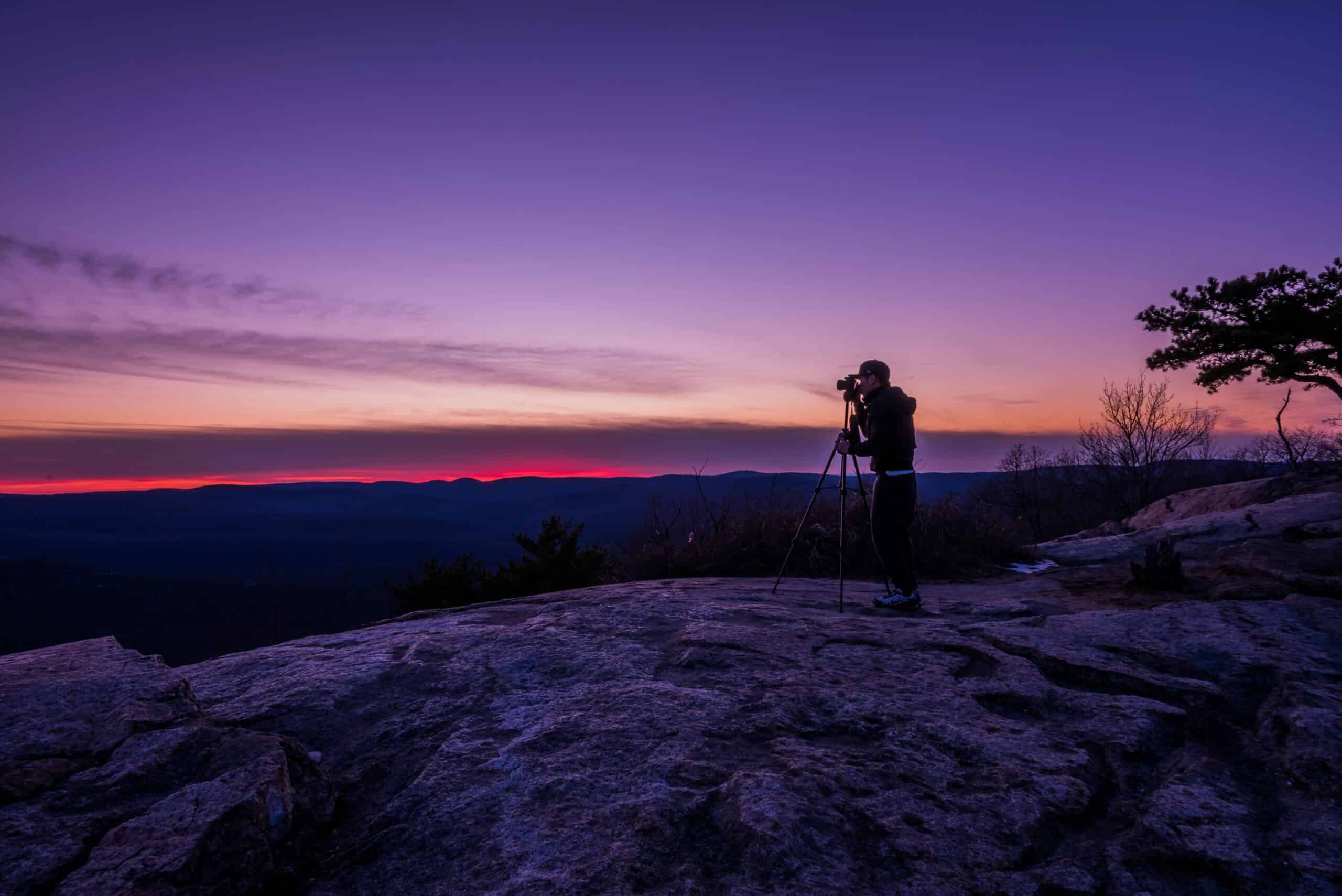
Quick Setup Overview
- Camera: Fujifilm GFX 50S / 50R — 44×33 mm medium format, 51.4MP; strong DR at ISO 100–400; no IBIS on these models (use a sturdy tripod and EFCS).
- Lens: Fujifilm XF 8–16mm f/2.8 — rectilinear ultra‑wide, sharp wide‑open, well-controlled coma; however, incompatible with GFX. Use native equivalents like GF 20–35mm f/4 or GF 23mm f/4 for the same panoramic workflow.
- Estimated shots & overlap (tested on GFX with rectilinear UWA):
- GF 20mm: three rows of 6 frames (−55°, 0°, +55°) with ~30% overlap + 1–2 zenith + 1–2 nadir = ~20–22 frames.
- GF 23mm: three rows of 6 frames with ~30% overlap + zenith + nadir = ~20 frames; for safety in complex interiors, consider 8 frames per row.
- Difficulty: Intermediate. Easy if you’re already comfortable with manual exposure, tripod leveling, and basic stitching.
Planning & On-Site Preparation
Evaluate Shooting Environment
Scan for reflective surfaces (glass, polished floors), moving subjects (crowds, trees, traffic), and mixed lighting. Avoid placing the camera too close to glass; 30–60 cm off the pane reduces ghosting and flare. For sunrise/sunset, plan the rotation order to minimize moving shadows and color shifts (shoot toward the sun last to keep exposure consistency).
Match Gear to Scene Goals
The GFX 50S/50R excels in dynamic range and detail, making it ideal for architecture, interiors, and fine‑art panoramas. Indoors, you can confidently bracket HDR at ISO 100–200; if handheld scouting is needed, ISO 400–800 is still clean. An ultra‑wide rectilinear like the GF 20–35/4 (or GF 23/4) lets you create straight‑line geometry with predictable coverage. While a fisheye would reduce shot count, GFX has limited native fisheye choices; rectilinear workflows deliver class‑leading quality, just with more frames.
Pre-shoot Checklist
- Charge batteries, format cards, and clean front/rear elements and sensor with a blower.
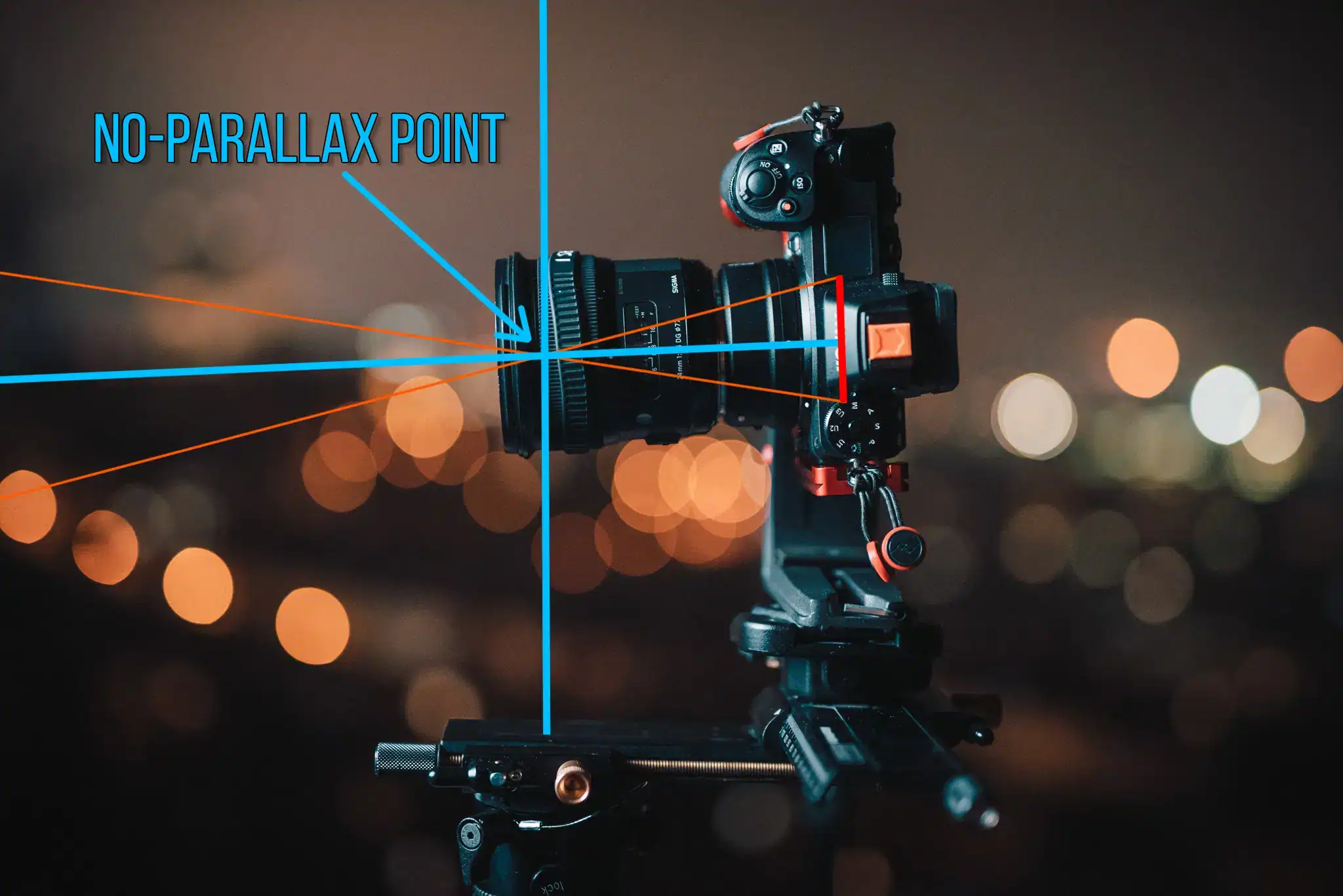
- Level your tripod and calibrate the panoramic head for the lens’s entrance pupil (no‑parallax point).
- Safety: assess wind, rooftop railings, and bystanders; use a safety tether when elevated or near edges.
- Backup workflow: shoot an extra full pass at the end. If people walk through frames, a second pass gives options for masking.
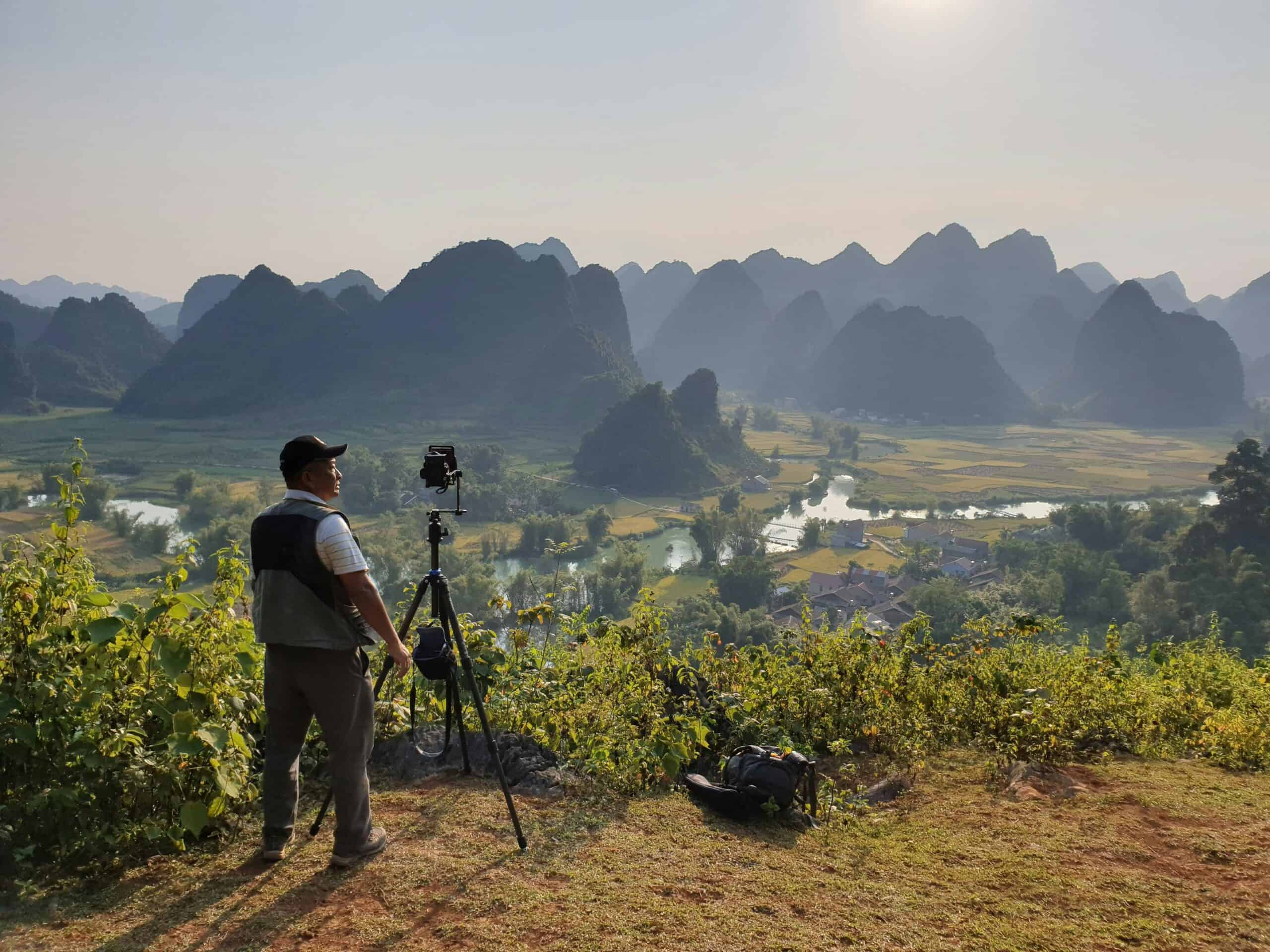
Essential Gear & Setup
Core Gear
- Panoramic head: Allows rotation around the entrance pupil to eliminate parallax. Multi‑row heads (e.g., Nodal Ninja, Leofoto) simplify 360° coverage and zenith capture.
- Stable tripod with leveling base: A half‑ball or dedicated leveling base gets you perfectly level without fighting tripod legs.
- Remote trigger or app: Reduce vibration; use the GFX’s self‑timer or a wired/wireless remote. Enable EFCS to avoid shutter shock.
Optional Add-ons
- Pole or car mount: Great for elevated viewpoints, but always use a safety tether. Wind amplification is real—slow your rotation and increase shutter speeds.
- Lighting aids: Small LED panels for interior fill, especially in deep shadows that won’t be covered by HDR brackets.
- Weather protection: Rain covers and lens hoods help maintain contrast and prevent droplets that cause stitch errors.
Step-by-Step Shooting Guide
Standard Static Scenes
- Level tripod and align nodal point: On your pano head, slide the lens forward/back until foreground and background features do not shift relative to each other while panning. Mark this rail position for your lens.
- Manual exposure and locked white balance: Meter the brightest part you need detail in (often near windows) and set manual exposure. Lock WB (e.g., 5600K daylight outside or a measured custom WB indoors) to avoid color shifts across frames.
- Capture with tested overlap: For GF 20–35 at 20mm or GF 23mm, shoot three rows: −55°, 0°, +55° with ~30% overlap. Use 6 frames per row (60° yaw steps). Add 1–2 zenith frames (+90°) and 1–2 nadir frames (−90° or tilted down) for tripod removal.
- Take a clean nadir: Either offset the tripod and shoot a patch plate, or capture an extra handheld nadir to clone in post.
HDR / High Dynamic Range Interiors
- Bracket ±2 EV (3–5 exposures) to balance windows and interior shadows. The GFX files handle merges gracefully at ISO 100–200.
- Lock WB and focus: Keep consistency across brackets and rows; minor WB shifts cause visible seams. Use manual focus after a focus check with magnification/peaking.
Low-Light / Night Scenes
- Use longer shutter times on a solid tripod. Start at f/5.6, ISO 100–400, and expose 1–8 s as needed. If wind or vibration is a concern, consider ISO 800 and a faster shutter.
- Trigger remotely; use EFCS or full electronic shutter to eliminate vibration. The 50S/50R have no IBIS, so stability is everything.
Crowded Events
- Shoot two passes. First, capture the full pano quickly for coverage. Second, wait for gaps to grab “clean plates” of problem areas for later masking.
- Use faster shutter speeds (1/200–1/500) and ISO 400–800 to freeze motion in key frames.
Special Setups (Pole / Car / Drone)
- Secure everything. Use a tether/secondary clamp. Balance the head carefully to avoid sudden dips.
- Account for wind and vibration. Shorten exposure times, increase overlap (35–40%), and rotate slower to reduce blur and stitch errors.
Field-tested Scenarios
Indoor Real Estate
GF 23/4 at f/8, ISO 100, HDR ±2 EV, three-row capture. Watch for mirrors and glass—step back to reduce parallax risk with nearby furniture. Use a handheld nadir for clean floors.
Outdoor Sunset
GF 20–35 at 20mm, f/8, ISO 100–200. Start opposite the sun and work toward it as the light stabilizes. Consider a gradient ND only if it won’t cause stitching inconsistencies; HDR bracketing is often easier.
Rooftop / Pole
Shorten exposures (1/125–1/250) at ISO 400–800. Use a guy-line tether if possible. Plan a minimal-frame capture (e.g., 6×3 rows) to reduce time aloft.
Event Crowds
Two-pass method, then mask in post. Ask people to pause if possible; otherwise, anticipate motion and shoot overlapping frames to give the stitcher alternatives.
Recommended Settings & Pro Tips
Exposure & Focus
| Scenario | Aperture | Shutter | ISO | Notes |
|---|---|---|---|---|
| Daylight outdoor | f/8–f/11 | 1/100–1/250 | 100–200 | Lock WB (daylight 5200–5600K) |
| Low light/night | f/4–f/5.6 | 1/30–8s | 100–800 | Tripod + remote; prefer longer shutter before raising ISO |
| Interior HDR | f/8 | Bracket ±2 EV | 100–400 | Merge brackets before stitching or use true HDR stitch |
| Action / moving subjects | f/5.6–f/8 | 1/200+ | 400–800 | Two-pass capture to help masking later |
Critical Tips
- Manual focus at hyperfocal: With GF 23/4 at f/8, focusing ~1.5–2 m keeps most of the scene sharp. Confirm with magnified live view.
- Nodal point calibration: Place near and far verticals in frame; pan and adjust the rail until the relative position doesn’t shift. Mark the rail for your lens.
- White balance lock: Pick a Kelvin value or create a custom preset for the room. Mixed lighting? Favor neutral (≈4000–4500K) and adjust in RAW.
- RAW over JPEG: 14‑bit GFX RAWs give you far more latitude for HDR merges and color matching across rows.
- Stabilization: The 50S/50R have no IBIS. If your adapted lens has OIS, switch it off on a tripod to avoid micro‑jitter blur.
Stitching & Post-Processing
Software Workflow
For rectilinear ultra‑wide captures, use PTGui or Hugin for control over control points, projection, and masking. Typical overlap targets: ~25–30% for fisheye workflows; ~30–40% for rectilinear multi‑row (recommended here). Merge HDR brackets first per angle and then stitch, or use a stitcher that supports HDR stacks directly. PTGui is a gold standard for professional 360° panoramas and VR output. See a practical review of PTGui’s strengths for pro panos at the end of this paragraph. PTGui for professional panorama stitching
Cleanup & Enhancement
- Tripod/nadir patch: Use PTGui Viewpoint Correction, a nadir patch image, or clone/heal in Photoshop. AI object removal tools can speed this up.
- Color and noise: Match color/contrast across rows, then apply mild noise reduction for ISO 800+ night shots.
- Leveling: Correct horizon and fix roll/pitch/yaw. Use vertical lines in architecture to guide vertical alignment.
- Export: Save a 16‑bit TIFF master and an equirectangular JPEG (2:1) for web/VR. 12000×6000 px is a solid starting point for web players.
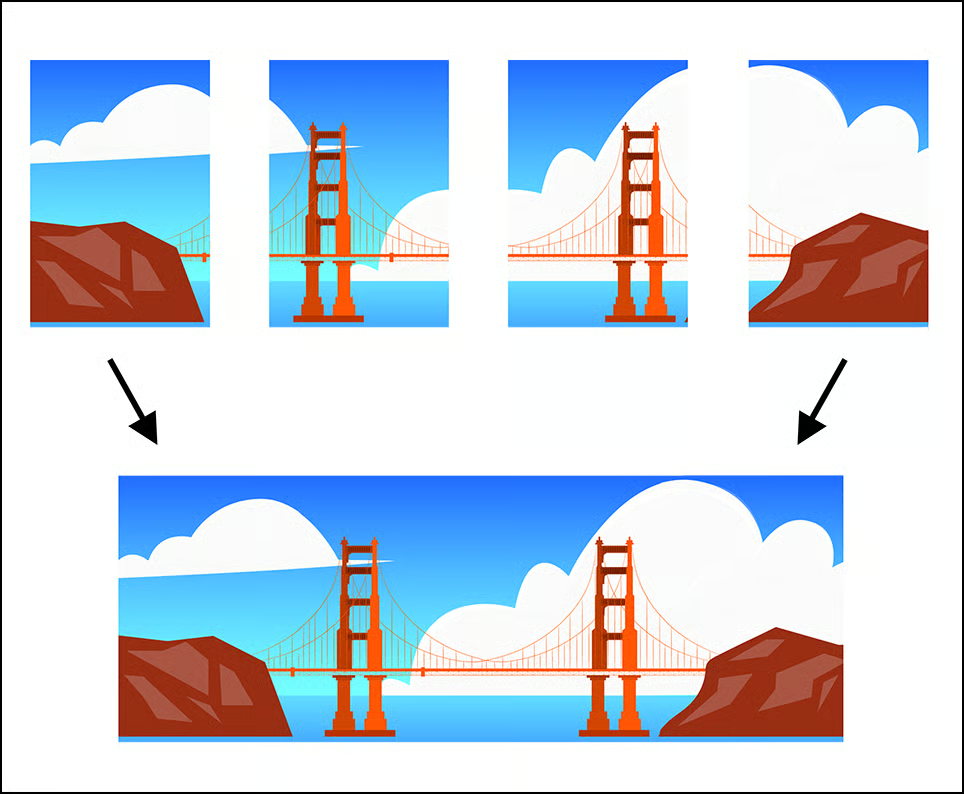
New to panoramic heads and alignment basics? This deep dive is an excellent primer on technique and gear. Panoramic head setup tutorial
Useful Tools & Resources
Software
- PTGui panorama stitching
- Hugin (open source)
- Lightroom / Photoshop (RAW, HDR, cloning)
- AI tripod removal tools (e.g., Generative Fill) for faster nadir cleanup
Hardware
- Panoramic heads (Nodal Ninja, Leofoto)
- Carbon fiber tripods with leveling base
- Wireless remotes or interval timers
- Pole extensions / car suction mounts with safety tethers
Disclaimer: brand names are provided for research; verify compatibility and specs on official sites.
Prefer a structured 360° DSLR/mirrorless workflow? Oculus’ creator docs outline end‑to‑end capture and stitch principles. DSLR/mirrorless 360 capture basics
Common Mistakes & How to Avoid Them
- Parallax error: Always align the entrance pupil. Even a few millimeters off shows up in close interiors.
- Exposure flicker: Manual exposure and locked WB are mandatory for seamless stitches.
- Tripod shadows and footprints: Shoot a nadir patch or plan for AI cleanup.
- Ghosting from moving subjects: Capture a second pass and mask the clean frames in post.
- Excessive ISO at night: Favor longer shutters on a stable tripod; the GFX 50 files look best at ISO ≤800.
- Rushing rotations: Especially on a pole or windy rooftop. Slower pans and extra overlap save the final stitch.
Frequently Asked Questions
- Can I shoot handheld panoramas with the Fujifilm GFX 50S/50R?
Yes, for quick single‑row panos in good light, but expect more stitching errors. The 50S/50R lack IBIS, and the high resolution reveals blur easily. For 360°/VR or interiors, a tripod and pano head are strongly recommended.
- Is the Fujifilm XF 8–16mm f/2.8 wide enough for single‑row 360?
On an X‑mount body, 8mm (12mm FF equiv) can often do 8–10 around plus zenith/nadir. However, the XF 8–16 does not mount on GFX. On GFX, use GF 20–35 at the wide end or GF 23/4 and plan a multi‑row capture.
- Do I need HDR for interiors with bright windows?
Usually yes. Bracket ±2 EV (3–5 frames) to hold window highlights and deep room shadows. Merge to HDR before stitching or use an HDR‑aware stitcher like PTGui.
- How do I avoid parallax issues with the GFX and a rectilinear ultra‑wide?
Use a multi‑row pano head and calibrate the entrance pupil for your exact focal length. Start with a rough mark, fine‑tune with near/far verticals, and record the rail position for repeatability.
- What ISO range is safe on the GFX 50S/50R for low light?
Base ISO 100–200 is ideal. ISO 400–800 remains very clean; ISO 1600 is workable with careful noise reduction. For critical work, prioritize longer shutter times over ISO increases.
- Can I set custom modes for fast pano capture on the GFX?
Yes—save a custom setting with manual exposure, manual focus, EFCS, fixed WB, and drive set to bracket (if needed). This speeds up consistent multi‑row work.
- How do I minimize flare with an ultra‑wide rectilinear?
Avoid direct strong backlight in critical frames when possible; use your hand or a flag just out of frame to block the sun. Clean the front element and consider a slight angle change to keep veiling flare off the glass.
- What tripod head should I choose for this setup?
A multi‑row panoramic head with precise fore‑aft rail adjustment (Nodal Ninja/Leofoto‑style) is ideal. For heavy rooftop/pole use, prioritize robust clamps and repeatable detents (e.g., 60°/45° click‑stops).
Compatibility Note and Practical Alternatives
If your intent is specifically “how to shoot panorama with Fujifilm GFX 50S / 50R & Fujifilm XF 8–16mm f/2.8 R LM WR,” the short answer is that this combo is not natively compatible. You have two realistic paths:
- Use the XF 8–16 on an X‑mount body (e.g., X‑T or X‑H series) and follow similar techniques. You’ll benefit from fewer shots per 360°, but with smaller sensor DR/resolution than GFX.
- Stay on GFX and use GF 20–35mm f/4, GF 23mm f/4, or an adapted full‑frame UWA that covers the 44×33 mm image circle. Expect multi‑row captures and superb final resolution/detail.
For detailed pano technique and capture planning beyond this guide, see this broadly cited community resource. Best techniques to shoot 360° panoramas