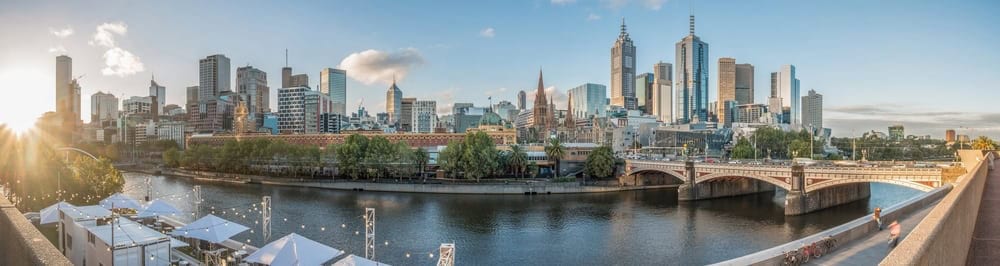
Why This Camera & Lens Are Great for Panoramas
If you’re wondering how to shoot panorama with Fujifilm GFX 100 II & Tokina ATX-i 11-20mm f/2.8, here’s the short answer: the GFX 100 II gives you elite dynamic range and resolution, while the Tokina provides a fast, rectilinear ultra-wide view that’s ideal for architectural lines and natural horizons. The combination delivers extremely detailed, low-noise 360 photos and multi-row panoramas—provided you set it up correctly and account for the Tokina’s APS-C image circle when used on a medium-format body.
Why it works:
- Sensor and resolution: The GFX 100 II uses a 43.8×32.9 mm (approx. 44×33 mm) medium format BSI sensor with ~102 MP resolution. Pixel pitch is about 3.76 µm, which balances detail and noise performance very well for panoramas and gigapixel stitches.
- Dynamic range: Expect roughly 14+ stops of usable DR at base ISO, which means better highlight recovery (windows, skies) and clean shadows—crucial for interiors and sunsets.
- Stabilization and handling: In-body stabilization (IBIS) is excellent for handheld frame scouting and low-light work; turn it off when the camera is on a tripod to avoid micro-shake drift during multi-shot sequences.
- Lens characteristics: The Tokina ATX-i 11–20mm f/2.8 is a rectilinear APS-C zoom. It keeps straight lines straight, which simplifies architectural stitching and reduces “fisheye look.” It’s sharpest around f/5.6–f/8; expect mild barrel distortion at the wide end and some lateral CA that’s easily corrected.
- Mount compatibility note: The ATX-i is typically a DSLR APS-C lens (e.g., Canon EF-S / Nikon F). To use it on the GFX 100 II, you’ll need the appropriate adapter (e.g., EF–GFX smart adapter to control aperture; for Nikon F, a mechanical adapter with aperture control ring). Because the lens was designed for APS-C, enable a crop (35mm format mode or custom crop) and plan to trim any vignetting in post.
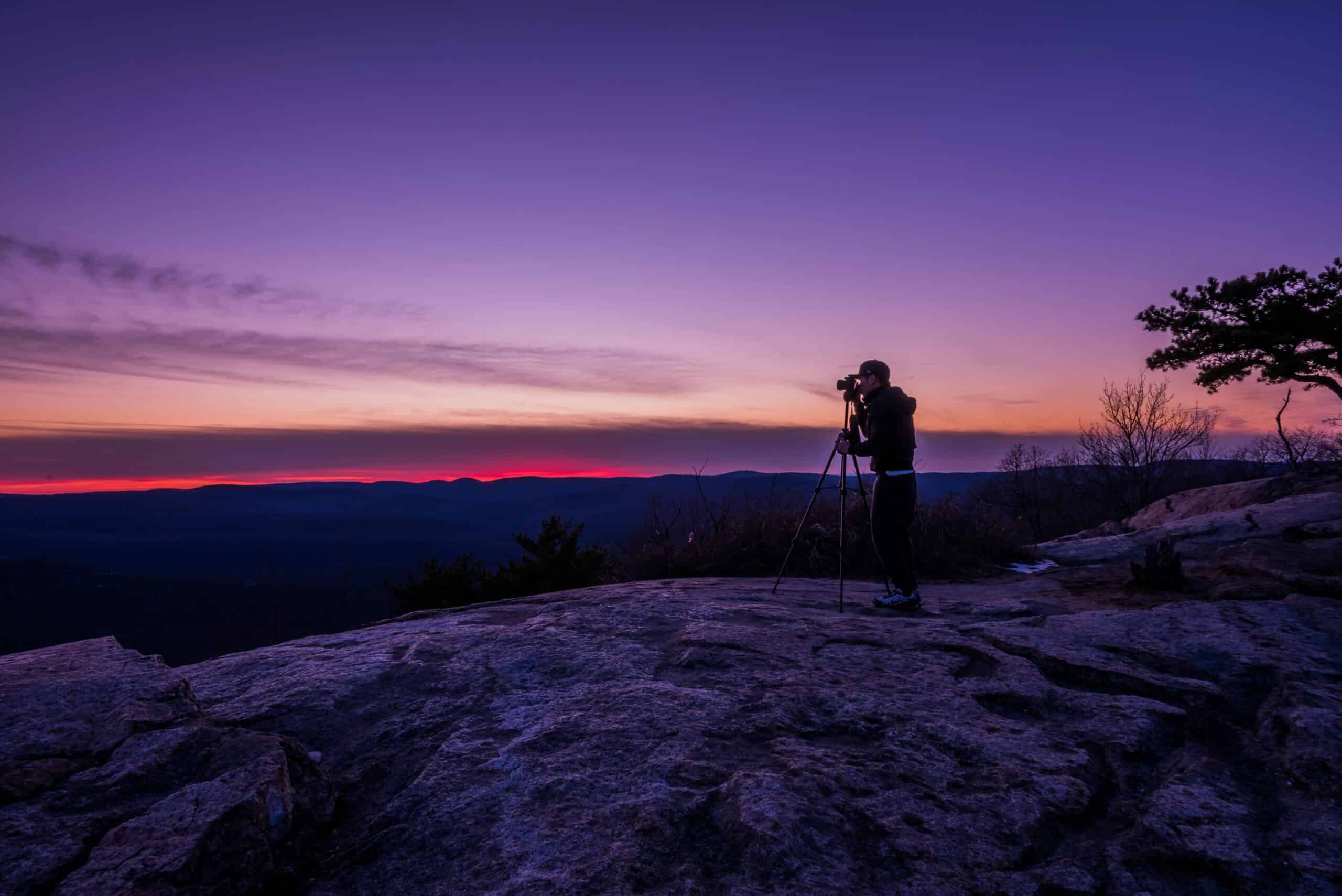
Quick Setup Overview
- Camera: Fujifilm GFX 100 II — Medium format (43.8×32.9 mm), 102 MP BSI sensor, excellent DR, base ISO 80.
- Lens: Tokina ATX-i 11–20mm f/2.8 — Rectilinear APS-C ultra-wide zoom; sharp at f/5.6–f/8, moderate CA at edges, some barrel distortion at 11mm.
- Estimated shots & overlap (rectilinear, multi-row):
- At 11mm (APS-C coverage; ~16.5mm FF equiv): 6 around per row with 30–35% overlap; two to three rows (−45°, 0°, +45°) plus zenith/nadir. Total ~20–24 frames.
- At 20mm (APS-C coverage; ~30mm FF equiv): 8 around per row with 30–35% overlap; two to three rows plus zenith/nadir. Total ~26–34 frames.
- Difficulty: Intermediate — rectilinear multi-row needs careful nodal setup and overlap discipline.
Planning & On-Site Preparation
Evaluate Shooting Environment
Before you deploy the GFX, scan for lighting extremes, reflective glass, mirrors, moving subjects (people, trees), and wind. If shooting through glass, place the front element as close to the glass as practical (a few millimeters, using a rubber hood if possible) and angle slightly to avoid reflections. In backlit scenarios, note potential flare points and adjust positions so the sun is either fully blocked or composed consistently across your rows.
Match Gear to Scene Goals
Use the GFX 100 II’s strong dynamic range when you expect bright windows and dark interiors. At base ISO (80–100) it retains highlights gracefully; for interiors, ISO 200–400 remains very clean and ISO 800 is still dependable if you keep exposures long on a solid tripod. The Tokina’s rectilinear projection is ideal for architecture and real estate because lines remain straight, but you’ll shoot more frames than with a fisheye. At 11–14mm you can reduce the total frame count; at 18–20mm expect more images per row but less edge stretching.
Pre-shoot Checklist
- Power and media: Fully charged batteries (GFX files are large), large/fast memory cards (UHS-II), and spares.
- Lens and sensor: Clean glass and sensor—dust shows up repeatedly across frames and complicates retouching.
- Support and alignment: Sturdy tripod, leveling base, calibrated panoramic head with nodal alignment for the Tokina at your chosen focal length.
- Safety: On rooftops or windy terraces, tether the rig. For car mounting or pole work, use secondary safety lines and check torque on clamps.
- Backup workflow: When the light is changing or the crowd is moving, consider shooting a second full pass as a safety set.
Essential Gear & Setup
Core Gear
- Panoramic head: Lets you rotate around the lens’s no-parallax (nodal) point to eliminate parallax differences between frames, which is essential for clean stitches.
- Stable tripod with leveling base: A leveled platform lets you keep rows consistent and yaw steps precise; it also speeds up your workflow.
- Remote trigger or app: Use the Fujifilm app or a cable release to avoid touching the camera during exposures.
Optional Add-ons
- Pole or car mount: Great for elevated or moving perspectives. Beware wind load on the large GFX body; keep exposures short and rotations deliberate.
- Lighting aids: Small LED panels for interior shadows; gels to balance color temperatures if needed.
- Weather protection: Rain covers, microfiber cloths, and silica packs for moisture control.
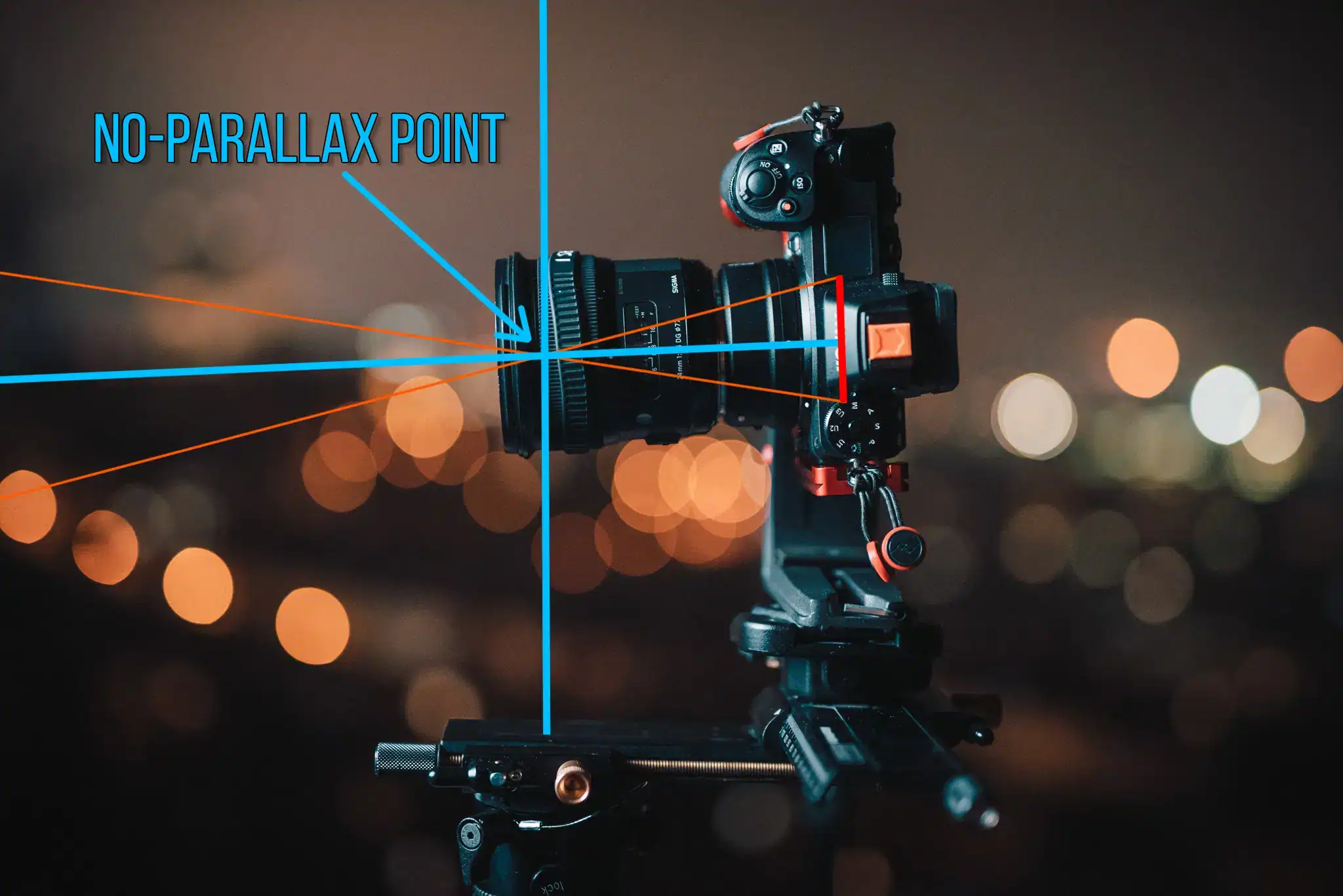
Want a deeper visual primer on setting up a panoramic head? The guidance in this video pairs well with what’s in this article:
For an in-depth written guide to panoramic heads and nodal alignment, see this panoramic head tutorial. Read more on panoramic head setup
Step-by-Step Shooting Guide
Standard Static Scenes
- Level tripod and align nodal point: Level the base using the built-in bubble or a leveling head. On your panoramic head, set the Tokina to your chosen focal length (e.g., 11 mm or 16–20 mm) and align the no-parallax point. Simple test: place two vertical objects (one near, one far) and rotate; adjust fore-aft until their relative position doesn’t shift.
- Manual exposure and locked white balance: Set exposure in manual mode and use a fixed Kelvin WB (e.g., 5600K daylight, or 3200K tungsten interiors). This avoids flicker and color shifts between frames.
- Capture with tested overlap:
- At 11 mm (APS-C coverage; ~16.5mm FF equiv): Yaw step around 55–60° for ~30–35% overlap. Shoot 6 frames per row. Use two or three rows: −45°, 0°, +45°. Add 1–2 zenith frames near +85° (rotated ~120° apart) and 1–3 nadir frames for patching.
- At 20 mm (APS-C coverage; ~30mm FF equiv): Yaw step ~40–45° for ~30–35% overlap. Shoot 8 frames per row. Use three rows (−45°, 0°, +45°) plus zenith/nadir.
Expect total images from ~20 up to ~34 depending on focal length and the number of rows.
- Take a nadir shot: Tilt the camera up (or temporarily move the tripod) to capture a clean ground plate that you can patch into your equirectangular projection to remove tripod legs.
HDR / High Dynamic Range Interiors
- Bracket ±2 EV: Use 3 to 5 frames per angle (e.g., −2/0/+2, or −3/−1/ +1/+3) to balance bright windows and interior shadows. The GFX 100 II handles bracketing well; use a 2-second self-timer or remote trigger to minimize vibration.
- Lock WB: Keep a fixed Kelvin setting to avoid inconsistent hues across brackets. Consider shooting a gray card in the scene for reference.
Low-Light / Night Scenes
- Longer exposure on a solid mount: With the GFX on a tripod, disable IBIS to prevent sensor drift. Use exposures in the 1–8 s range as needed rather than pushing ISO.
- ISO guidance: Aim for ISO 80–400 for best quality; ISO 800 still looks good and ISO 1600 can work in a pinch. Keep consistency across all frames for even noise characteristics.
- Remote trigger: Use a cable release or app to avoid touching the camera. If available, use electronic shutter to reduce vibration in very long exposures.
Crowded Events
- Two-pass method: Make a full, complete pass for coverage. Then do a second pass, waiting for moving people to shift so you can mask them out later.
- Faster shutter: Use 1/200–1/500 s if possible to reduce motion blur within each frame. Increase ISO modestly if needed and maintain consistent exposure across all frames.
Special Setups (Pole / Car / Drone)
- Secure gear and tether: The GFX 100 II is heavy; always add safety lines when the camera is overhead or on a moving vehicle. Avoid sudden accelerations while capturing.
- Plan for wind and vibration: Use shorter exposures and slightly slower rotation steps to keep overlap reliable. Consider shooting fewer, wider focal lengths (11–14 mm) to reduce total frames.
Recommended Settings & Pro Tips
Exposure & Focus
| Scenario | Aperture | Shutter | ISO | Notes |
|---|---|---|---|---|
| Daylight outdoor | f/8–f/11 | 1/100–1/250 | 80–200 | Lock WB to Daylight (5200–5600K) |
| Low light/night | f/4–f/5.6 | 1/15–1 s+ | 200–800 | Tripod, remote, IBIS off on tripod |
| Interior HDR | f/8 | Bracket ±2 EV | 80–400 | Expose for windows, merge brackets in post |
| Action / moving subjects | f/5.6–f/8 | 1/200+ | 400–800 | Two-pass capture for cleaner masking |
Critical Tips
- Manual focus at hyperfocal: At 11 mm and f/8 (APS-C coverage), hyperfocal is roughly 0.6–0.8 m. Focus just past 1 m to keep near-to-far sharp.
- Nodal calibration: Mark your panoramic head rails for 11, 14, 18, and 20 mm positions. Re-check when you change focal length; even a few millimeters off can introduce parallax.
- White balance lock: Use Kelvin for consistent tones across frames and brackets. This reduces color correction time.
- RAW over JPEG: With 102 MP frames, RAW retains highlight detail and clean color transitions for superior stitching and blending.
- Stabilization: Turn off IBIS and any lens IS while on a tripod. Re-enable when handholding scouting shots or on a moving platform where you can’t fully isolate vibration.
Stitching & Post-Processing
Software Workflow
Import your RAWs into Lightroom or Capture One for initial exposure balance, color consistency, and lens profile corrections (distortion and CA). Export as 16-bit TIFFs to a stitching app such as PTGui or Hugin. Rectilinear lenses like the Tokina may require slightly more overlap and careful control points than fisheyes, but the result preserves straight lines and architectural fidelity. For multi-row work, keep overlap at ~30–35% horizontally and ~25–30% between rows for robust control point detection.
PTGui’s optimizer and masking tools excel with multi-row rectilinear sets, and its batch processing speeds up HDR pano merges. If you’re new to professional stitching software, this review gives a practical overview of the PTGui toolset. See a PTGui review and why it’s popular for pro panoramas
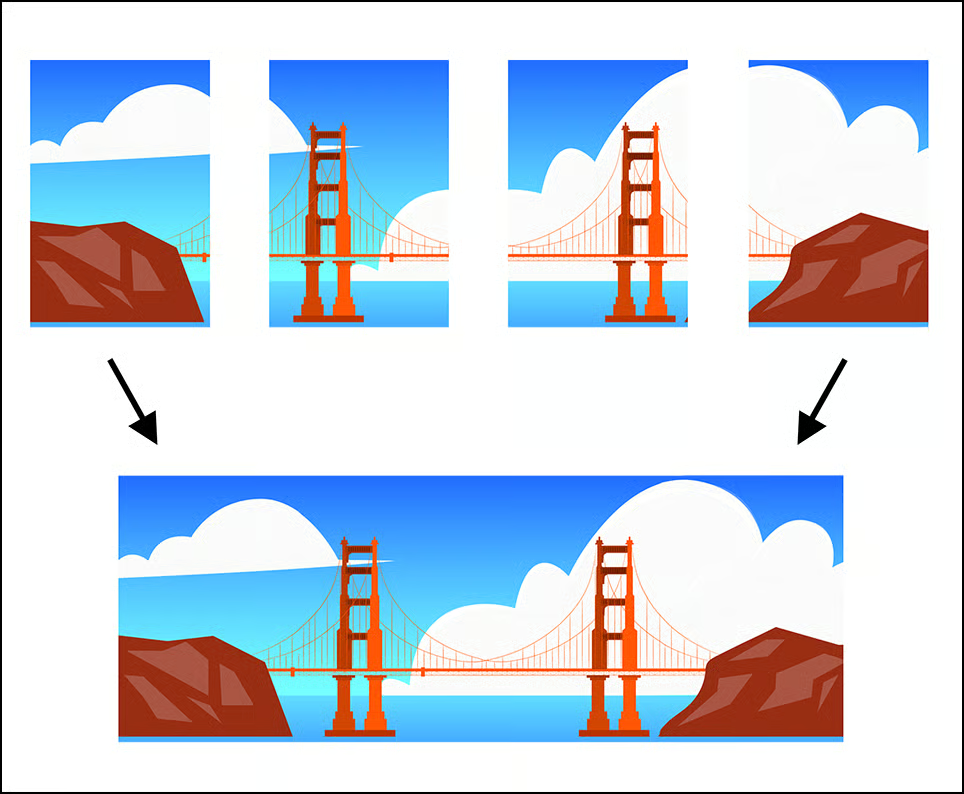
If you’re building 360 photos for VR or virtual tours, Meta’s guide is a solid reference for preparing and stitching DSLR/mirrorless captures. Read Meta’s DSLR/Mirrorless 360 photo stitching guidance
Cleanup & Enhancement
- Nadir patch: Use PTGui’s Viewpoint Correction or Photoshop’s Clone/Content-Aware Fill to remove the tripod. Dedicated AI tools can accelerate this step.
- Color and noise: Match color across rows; apply mild noise reduction for high-ISO or night shots, then sharpen at the end.
- Leveling: Ensure the horizon is level using yaw/pitch/roll controls; set the center point of view.
- Export: Deliver a 16k–24k equirectangular JPEG/TIFF for VR and virtual tour platforms, depending on target performance.
Tip: For rectilinear zooms, you may get better seam placement by masking edges and favoring the sharper central regions of each frame. For more on capture and stitching fundamentals, this Q&A thread collects time-tested techniques. Read classic tips for 360 panoramas
Useful Tools & Resources
Software
- PTGui for advanced stitching and masking
- Hugin (open source) for cost-free experimentation
- Lightroom / Photoshop for RAW prep and nadir cleanup
- AI tripod removal and sky replacement tools where appropriate
Hardware
- Panoramic heads: Nodal Ninja, Leofoto, or similar adjustable rails
- Carbon fiber tripods rated for the weight of a GFX + head (consider 20–25 kg load rating for extra stiffness)
- Leveling bases and rotators with click-stops (e.g., 45°, 60°)
- Wireless remotes or intervalometer
- Pole extensions / rigid car mounts with safety tethers
Disclaimer: Brand names are for search reference only. See manufacturers’ sites for specifications and compatibility.
Common Mistakes & How to Avoid Them
- Parallax error: Always rotate around the nodal point. Recalibrate when changing focal length on the Tokina.
- Exposure flicker: Use manual exposure and a fixed Kelvin WB—avoid auto settings that change frame to frame.
- Tripod shadows and footprints: Plan a clean nadir shot and patch in post.
- Ghosting: For moving subjects, capture a second pass and use layer masks to pick the cleanest segments.
- High-ISO noise: Prioritize tripod stability and longer exposures over pushing ISO.
- Vignetting from APS-C lens coverage: Use 35mm format/crop modes and be prepared to trim corners in post.
Field-Proven Scenarios with This Combo
Indoor Real Estate (Bright Windows)
Set the Tokina at 11–14 mm to minimize frame count. Shoot three rows (−45°, 0°, +45°), 6 frames per row, with 3-frame brackets at ±2 EV. Keep ISO at 80–200 for clean shadows. Focus manually near 1 m at f/8. Use a rubber hood if near glass and watch for reflections.
Outdoor Sunset (High DR, Light Wind)
At 14–18 mm, shoot 6–8 frames per row across three rows for robust coverage. Expose to preserve highlights (sky) and lift shadows in post. If the wind shakes the rig, increase shutter speed to 1/125–1/250 s and bump ISO to 200–400 while maintaining overlap.
Crowded Event (Masking Strategy)
Stick to 11–14 mm for fewer frames. Use 1/250 s to freeze motion. Do a second pass after the first row, waiting for gaps in traffic. In post, blend the least crowded segments along seam lines.
Rooftop or Pole Shooting
Keep the lens at 11–14 mm, lock focus at hyperfocal, and use short exposures (1/250–1/500 s). Reduce the number of rows if needed. Always tether the camera and use a companion to stabilize the pole. Avoid strong gusts and do not stand under the rig.
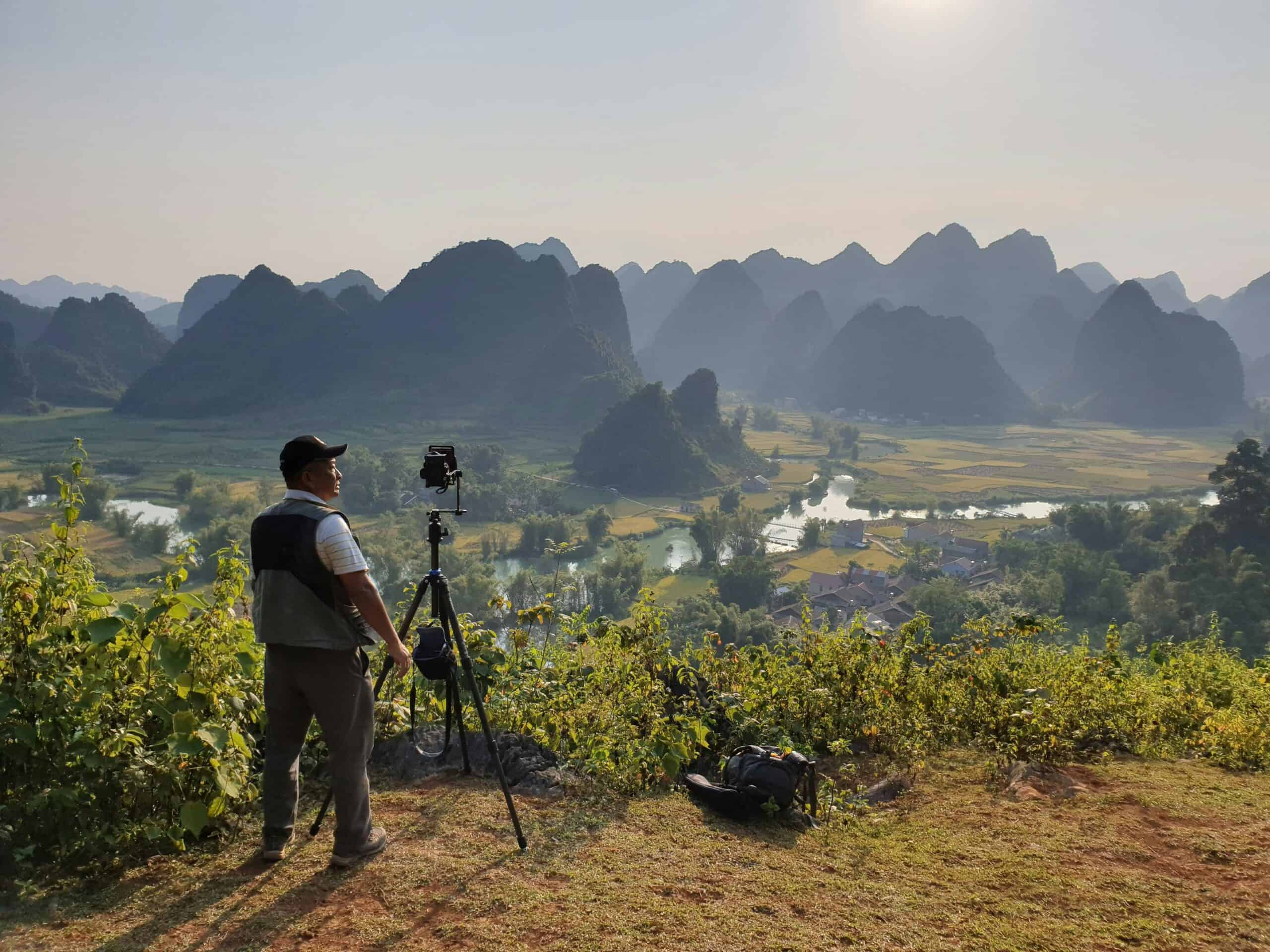
Compatibility Notes: Using the Tokina ATX-i on GFX
The Tokina ATX-i 11–20mm f/2.8 is an APS-C DSLR lens. On the GFX 100 II, plan for:
- Adapter: Use a smart EF–GFX adapter for Canon EF-S version (for aperture control) or a Nikon F–GFX adapter with a mechanical aperture lever. Confirm infinity focus and rigidity.
- Crop and vignetting: Expect heavy vignetting outside the APS-C image circle. Use 35mm format mode or a custom crop frame as a guide. In post, crop out dark corners or mask them during stitching.
- Resolution advantage: Even after cropping, the GFX 100 II retains very high frame resolution, so stitched panoramas can still reach extreme detail levels.
If you want a primer that spans camera/lens choices for 360 and virtual tours, this overview provides a helpful big-picture perspective. Read a practical camera & lens guide for virtual tours
Frequently Asked Questions
- Can I shoot handheld panoramas with the GFX 100 II?
Yes, for quick multi-frame stitches outdoors, but keep overlap generous (40%+) and use faster shutter speeds (1/250 s+). For full 360° multi-row captures, use a tripod and panoramic head to avoid parallax and stitching artifacts.
- Is the Tokina 11–20mm wide enough for single-row 360°?
Not reliably. As a rectilinear APS-C lens, it won’t cover the zenith and nadir in a single row. Plan on two or three rows plus dedicated zenith and nadir frames for a true spherical panorama.
- Do I need HDR for interiors with bright windows?
Usually, yes. Bracket ±2 EV (3–5 frames) to preserve highlight detail outside and shadow detail inside. The GFX’s DR is excellent, but brackets still deliver cleaner, less noisy results in extreme contrast scenes.
- How do I avoid parallax issues with this combo?
Use a panoramic head and calibrate the no-parallax point at the chosen focal length. Mark the rail positions for 11, 14, 18, and 20 mm so you can switch focal lengths without redoing the test each time.
- What ISO range is safe on the GFX 100 II for low light panoramas?
ISO 80–400 yields the cleanest files; ISO 800 still looks very good for most uses. If you must, ISO 1600 is workable—prioritize stable support and longer shutter speeds to keep ISO lower.
- Can I set custom shooting modes for faster pano setup?
Yes. Assign a custom mode with manual exposure, fixed Kelvin WB, manual focus, IBIS off, and a 2 s timer. You’ll get consistent, repeatable settings as soon as you arrive on site.
- How do I reduce flare at 11–14 mm?
Shade the lens with your hand just outside the frame, avoid direct sun in the edge areas of your rows, and keep the front element spotless. You can also pick orientations where the sun is blocked by architecture or landscape features.
- What’s the best tripod head for this setup?
A two-rail panoramic head with indexed rotator (e.g., 45°/60° click-stops) is ideal. Ensure load capacity exceeds the GFX + adapter + lens weight and that micro-adjustments lock without flex.
Safety, File Management & Quality Assurance
Safety first: the GFX 100 II is heavy. Always verify clamp tightness, use fresh thread-lock on critical fasteners, and attach a safety tether when the camera is overhead or near edges. In wind, reduce the center column, hang a weight from the tripod, and shorten exposures.
File management: 102 MP RAWs are large. Use dual-card capture if available and back up immediately after the shoot. On location, create a quick contact sheet or run a fast stitch test on a laptop to confirm coverage before you pack up.