Why This Camera & Lens Are Great for Panoramas
The Canon EOS RP paired with the Samyang 12mm f/2.8 ED AS NCS Fisheye is a compact, budget-friendly path into professional 360 photo work. The EOS RP is a full-frame 26.2MP mirrorless body (36×24mm sensor) with approximately 5.7µm pixel pitch, delivering solid detail and usable dynamic range (around 11.5 stops at ISO 100) for both outdoor and interior scenes. Its lightweight body, intuitive menus, Canon Camera Connect app support, and reliable exposure metering make it a comfortable tool for long pano sessions.
The Samyang 12mm f/2.8 is a diagonal fisheye designed for full-frame. It gives a sweeping field of view close to 180° on the diagonal (roughly 150° horizontal and ~100° vertical), which means fewer shots around the horizon to complete a 360° panorama. That speeds up capture and reduces stitch seams in moving environments. Stopped down to f/5.6–f/8, it’s sharp across most of the frame; expect some purple fringing in high-contrast edges and noticeable fisheye distortion (which pano software understands and corrects during stitching). It’s manual focus and manual aperture—ideal for consistent exposure and focus in panoramas. If you’re using the EF version, mount it via the EF–RF adapter on the EOS RP with full compatibility.
Quick Setup Overview
- Camera: Canon EOS RP — Full-frame (36×24mm), 26.2MP, approx 5.7µm pixel pitch, ~11.5 EV dynamic range at ISO 100, clean results up to ISO 800 with careful exposure.
- Lens: Samyang 12mm f/2.8 ED AS NCS Fisheye — diagonal fisheye, manual focus/aperture, best sharpness at f/5.6–f/8, moderate CA that’s easy to correct.
- Estimated shots & overlap (tested): 6 shots around at 60° yaw steps (~60% overlap) + 1 zenith + 1–2 nadir for tripod removal. In tight interiors, use 8 around for extra coverage.
- Difficulty: Moderate — easy once the nodal point is calibrated.
Planning & On-Site Preparation
Evaluate Shooting Environment
Before you set up, scan for moving elements (people, cars, trees in wind), specular highlights (chrome, polished floors), and reflective surfaces (glass). In interiors with glass, stand at least 50–100 cm from the pane and shoot slightly off-axis to reduce self-reflections and ghosting. For sunsets and cityscapes, note the brightest direction (sunset/sunrise) and plan your rotation so you bracket those frames smoothly.
Match Gear to Scene Goals
This combo is particularly strong in fast 360° capture where you want minimal frames and consistent quality. The EOS RP’s noise is well-controlled through ISO 400–800; for most interiors, ISO 100–400 is ideal with longer shutter times on a tripod. The Samyang 12mm fisheye minimizes the number of frames needed compared to rectilinear lenses, but its distortion demands proper lens type selection in your stitching software. For detailed real estate and architectural spaces, the fisheye’s speed outweighs the geometric distortion, especially when you carefully align the nodal point.
Pre-shoot Checklist
- Charge batteries and carry a spare; format fast UHS-I/UHS-II SD cards.
- Clean both the lens front/rear elements and the sensor; fisheye smudges are very visible.
- Level the tripod and verify pano head calibration for the 12mm lens.
- Safety: secure straps, use a sandbag on windy rooftops, and tether on poles or car mounts.
- Backup workflow: shoot a second pass, especially in high-value locations or with crowds.
Essential Gear & Setup
Core Gear
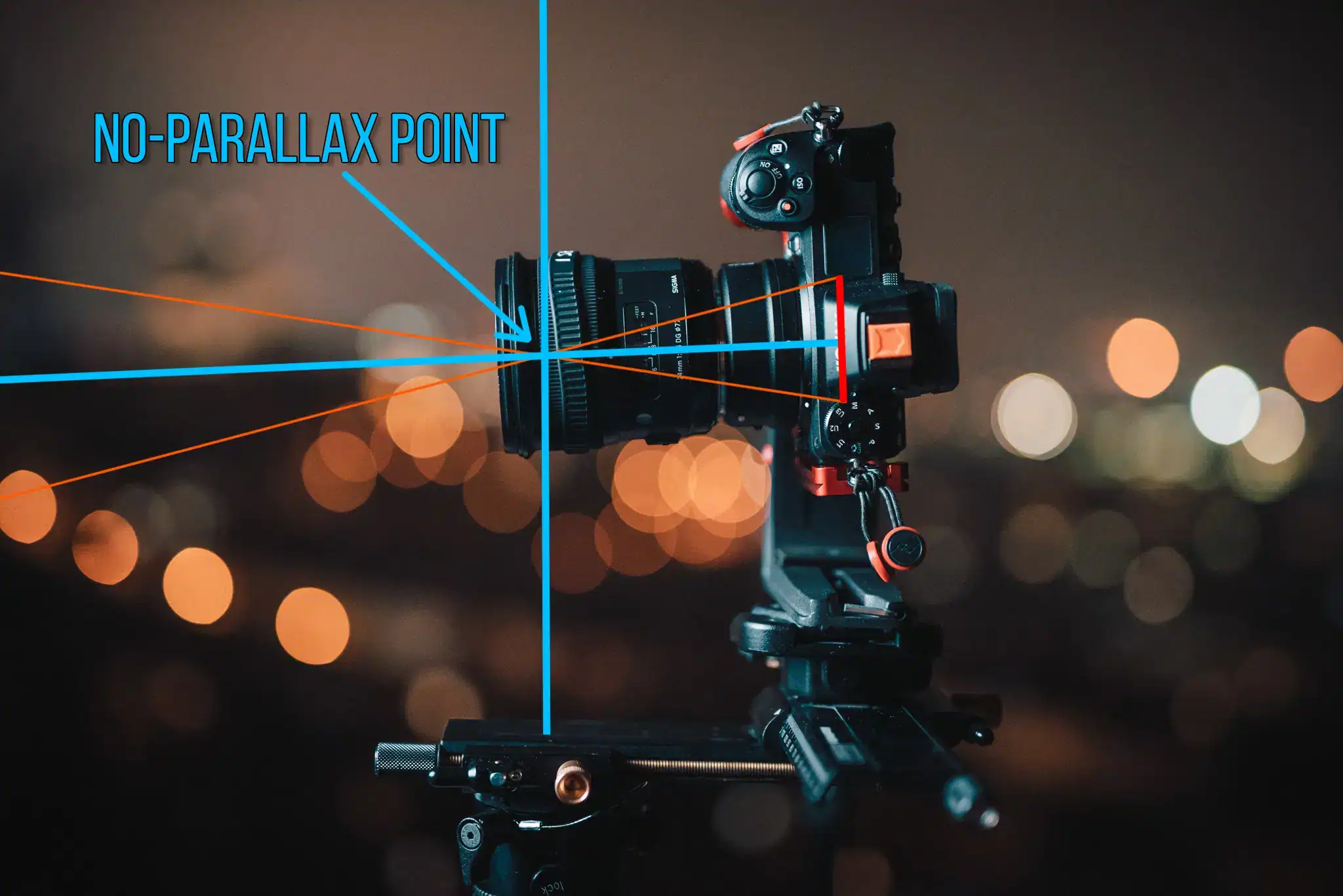
- Panoramic head: A proper pano head lets you rotate around the lens’s entrance pupil (nodal point) to eliminate parallax. This is critical for clean stitches in close quarters.
- Stable tripod with leveling base: Leveling reduces yaw/pitch errors and speeds up stitching alignment.
- Remote trigger or self-timer: Use a cable release (E3-type) or Canon Camera Connect to avoid camera shake. A 2-sec timer also works.
Optional Add-ons
- Pole or car mount: Use a safety tether, check wind, and avoid speeds or gusts that cause flex. A fisheye reduces the frames required—vital when the rig is moving.
- Lighting aids: For interiors, carry small LED panels to subtly lift shadows if HDR is not possible.
- Weather protection: Rain covers and lens wipes prevent droplets that are difficult to retouch on ultra-wides.
For more background on panoramic head setup and why it matters, see this panoramic head tutorial. Panoramic head basics and setup
Step-by-Step Shooting Guide
Standard Static Scenes
- Level and align: Level your tripod. On the pano head, position the camera so rotation occurs around the lens’s entrance pupil. With the Samyang 12mm, start with the upper rail so the sensor plane mark (Φ symbol on the EOS RP body) sits about 60–64 mm behind the rotation axis as a starting point. Fine-tune by testing: place two light stands (one near, one far) and rotate—parallax disappears when they stay aligned.
- Manual everything: Set Manual mode exposure, manual white balance (Daylight/Tungsten/Custom), and manual focus. For the 12mm at f/8, a focus around the hyperfocal (~0.6–0.7 m) keeps everything sharp from ~0.3 m to infinity.
- Capture sequence: With this lens, shoot 6 frames around at 60° yaw steps (~60% overlap). Then add 1 zenith (tilt up ~60–70°) and 1–2 nadir frames (tilt down) for tripod removal. In very tight rooms or textured ceilings/floors, 8 around can save a difficult stitch.
- Nadir strategy: Mark the tripod feet on the ground for repeatability. Capture a clean nadir by tilting the camera and rotating to keep the same nodal point, or shoot a handheld patch after moving the tripod.
HDR / High Dynamic Range Interiors
- Bracket ±2 EV: Use AEB for 3–5 frames if available, or manual bracket. Expose for shadows, midtones, and windows. Keep the bracket order consistent to speed up batch merging later.
- Lock WB and focus: Changing white balance between bracketed sets causes color banding across seams.
- Minimize movement: Turn off fans and wait for people to pass. Consider two full passes to have “clean” alternatives for masking.
Low-Light / Night Scenes
- Long exposures: Use f/4–f/5.6, ISO 100–400 if possible, and extend shutter times on a sturdy tripod. On the EOS RP, ISO 400–800 is a safe range; ISO 1600 is usable with noise reduction but try to expose to the right.
- Vibration control: Use a remote or 2-second timer. The EOS RP has no IBIS, so stability is everything; if your lens has IS (not the case with this Samyang), turn it off on a tripod.
- Flare control: Avoid bright sources hitting the fisheye directly; shade with your hand or adjust angle slightly.
Crowded Events
- Two-pass method: Do a quick capture pass for coverage, then a second pass waiting for gaps in movement at key frames. You’ll mask best parts in post.
- Short shutter: Aim for 1/200s+ if freezing motion is important; increase ISO to 800 if needed. Otherwise, embrace motion blur for a dynamic feel.
Special Setups (Pole / Car / Drone)
- Pole: Keep the rig under 3–5 m in windy conditions, use a guy line or a helper, and tether the camera. Rotate slower and plan 6 around + zenith only; patch nadir later.
- Car mount: Avoid highways. Park and shoot, or drive at walking speed in controlled areas. Check suction cups and safety lines between every location.
- Drone: The EOS RP is too heavy for most drones; use a dedicated aerial platform. For rooftop captures, treat wind like a drone shoot—stability and safety first.
For a thorough walkthrough of DSLR/mirrorless 360 capture principles, this guide is excellent. Mirrorless/DSLR 360 photo workflow
Recommended Settings & Pro Tips
Exposure & Focus
| Scenario | Aperture | Shutter | ISO | Notes |
|---|---|---|---|---|
| Daylight outdoor | f/8–f/11 | 1/100–1/250 | 100–200 | Lock WB (Daylight). Focus ~0.6–0.7 m for hyperfocal. |
| Low light/night | f/4–f/5.6 | 1/30–multi-sec | 100–800 | Tripod + remote. The RP stays clean to ISO 800 with proper exposure. |
| Interior HDR | f/8 | Bracket ±2 EV | 100–400 | Bracket 3–5 shots to handle windows and lamps. |
| Action / events | f/5.6–f/8 | 1/200+ | 400–800 | Short shutter to freeze, capture two passes for clean masks. |
Critical Tips
- Manual focus: Set around hyperfocal distance (≈0.6–0.7 m at f/8) to keep near-to-far sharp.
- Nodal calibration: Start with the entrance pupil ~60–64 mm forward of the sensor plane; fine-tune using near/far alignment tests and mark the rail for repeatability.
- White balance lock: Use a fixed WB to prevent color shifts between frames and brackets.
- RAW files: Shoot RAW for maximum dynamic range and better chromatic aberration correction on the Samyang 12mm.
- Image stabilization: The EOS RP has no IBIS; if using a stabilized lens in other setups, switch IS off on tripod to prevent micro-blur.
- Filters: Avoid polarizers on fisheyes—uneven sky polarization creates unpleasant banding.
Stitching & Post-Processing
Software Workflow
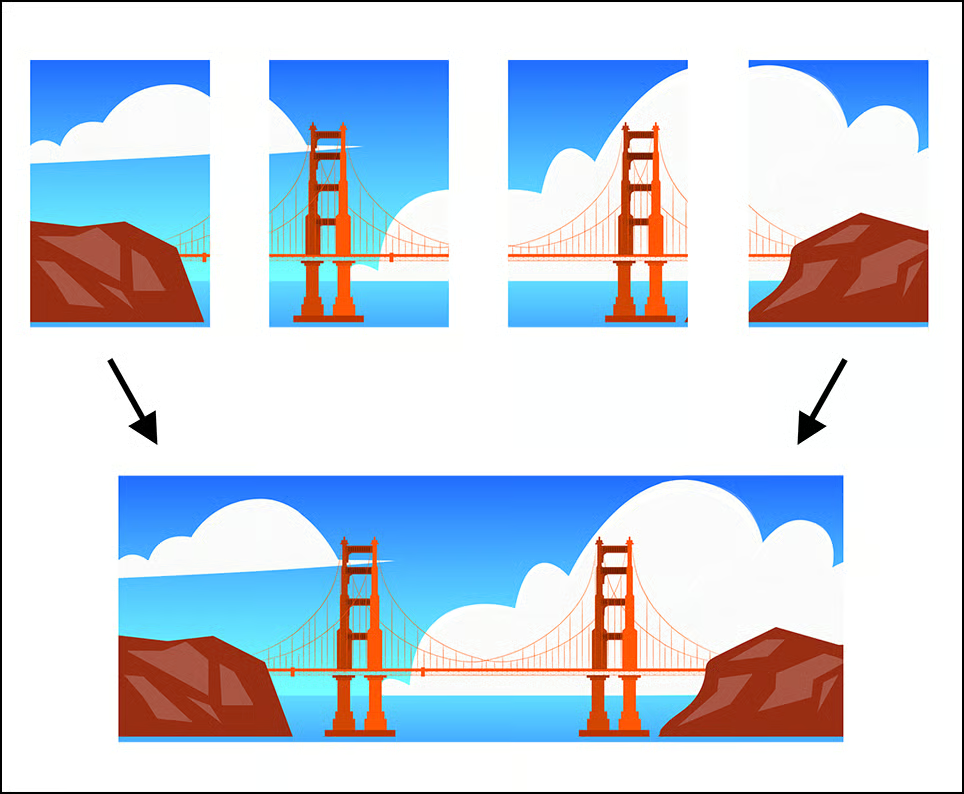
Import your RAW files into Lightroom or your preferred RAW editor. Apply basic corrections: white balance consistency, lens CA/fringing correction, and modest noise reduction if needed. Do not defish the images—stitchers like PTGui and Hugin expect the native fisheye projection and will handle it accurately.
In PTGui or Hugin, set the lens type to “full-frame fisheye,” focal length 12mm, and choose a 360×180 equirectangular output. For this setup, use around 25–35% minimum overlap (you’ll have ~60% with 6-around), keep exposure/HDR settings consistent, and inspect control points—especially near the ground and ceiling. With 6-around + Z + N, expect final equirectangular results in the 80–120 MP range depending on overlap and crop.
PTGui is a top choice for speed and robustness with fisheye lenses; Hugin is a capable open-source alternative. Why PTGui is often preferred for complex panoramas
Cleanup & Enhancement
- Nadir patch: Use a dedicated nadir shot or patch with a logo or AI-based content-aware fill. Take care with patterned floors—manual clone/heal might be cleaner.
- Color consistency: Match tones across the sphere. Use gradient masks to even sky transitions if needed.
- Noise reduction: Apply only as needed and preserve texture; the RP at ISO 800 responds well to luminance NR 10–20 in Lightroom.
- Level the horizon: Use the pitch/roll/yaw tools in your stitcher or a plugin to set the horizon and correct verticals.
- Export: Save as 16-bit TIFF for master files and 8-bit JPEG at 10–16k width for web/VR players (2:1 aspect ratio).
For in-depth capture-to-stitch best practices, see these principles for high-end 360 workflows. Setting up a panoramic head for perfect 360 photos
Useful Tools & Resources
Software
- PTGui panorama stitching
- Hugin open source stitcher
- Lightroom / Photoshop for RAW and retouching
- AI/clone tools for tripod/nadir removal
Hardware
- Panoramic heads: Nodal Ninja, Leofoto, Sunwayfoto, Really Right Stuff
- Carbon fiber tripods with a leveling base
- Wireless remotes or cable releases (E3 type)
- Pole extensions / car suction mounts with safety tethers
Disclaimer: product and software names are for reference—check official sites for current specs and availability.
Field-Proven Case Studies
Indoor Real Estate
On the EOS RP, set ISO 100–200, f/8, and bracket ±2 EV for windows. With the Samyang 12mm, 6-around + Z + N is very reliable. Watch reflections in TVs and mirrors; if you see the camera, shoot an extra frame with the camera moved and clone it in. Keep WB fixed (Tungsten or Custom) to prevent mixed lighting color shifts between frames.
Outdoor Sunset
Expose for midtones at ISO 100, f/8, and bracket a darker frame for the sun-facing direction. Rotate so you capture the sun frames consecutively to minimize light change. Fisheye flare can show rainbow ghosts—slightly change your angle or use your hand to flag the sun just out of frame when possible.
Event Crowds
Pre-focus and lock at hyperfocal. Use 1/200s, f/5.6–f/8, ISO 400–800. Make a fast coverage pass, then a second pass waiting for gaps. In post, mask clean areas from pass two into pass one. This is where six shots around is gold—fewer seams to correct for moving subjects.
Rooftop or Pole
Wind safety first. Use a guy line, tether, and only extend as high as feels rigid. Shoot 6-around quickly; patch nadir later. If the rig vibrates, increase shutter speed to 1/250s and raise ISO to 800 if needed—the EOS RP will handle it with careful exposure.
Common Mistakes & How to Avoid Them
- Parallax error: Calibrate the nodal point and keep the camera centered on the rotation axis.
- Exposure flicker: Manual exposure and fixed WB. Avoid auto ISO and auto WB.
- Tripod shadows and clutter: Shoot nadir frames and patch them cleanly in post.
- Ghosting from movement: Use two passes and mask the clean subjects later.
- Night noise: Expose to the right at low ISO and use longer shutters on a rigid tripod.
- Uneven color: Don’t switch white balance mid-shoot; keep RAW workflow consistent.
Frequently Asked Questions
-
Can I shoot handheld panoramas with the Canon EOS RP?
Yes, for partial panos or quick 360s outdoors with distant subjects. But for interiors or close objects, a tripod with a panoramic head is strongly recommended to avoid parallax errors and stitching headaches.
-
Is the Samyang 12mm f/2.8 wide enough for a single-row 360?
Yes, with 6-around plus dedicated zenith and nadir frames. The diagonal fisheye’s vertical FOV (~100°) won’t cover the top and bottom in one row, so add Z/N shots for a full 360×180.
-
Do I need HDR for interiors with bright windows?
Usually yes. The EOS RP offers around 11.5 EV of DR at base ISO; interiors with sunlit windows often exceed that. Bracket ±2 EV across 3–5 shots per angle for clean window detail and balanced shadows.
-
How do I avoid parallax problems with this lens?
Use a pano head and align the entrance pupil. For the Samyang 12mm, start around 60–64 mm forward of the sensor plane and refine via near/far alignment tests. Mark your rails to repeat quickly on location.
-
What ISO range is safe on the EOS RP in low light?
ISO 100–400 is ideal on a tripod. ISO 800 is generally clean with proper exposure; ISO 1600 is workable with careful noise reduction. Avoid underexposure to keep shadow noise low.
-
Can I use Custom Shooting Modes for pano on the RP?
Yes. Save a pano preset (manual exposure, manual WB, MF, RAW, timer/remote) into a custom mode (C1/C2/C3 depending on your body’s configuration) for faster setup.
-
How do I reduce flare with a fisheye?
Avoid direct light sources near the frame edge; slightly reframe or use your hand as a flag. Clean the front element frequently—smudges amplify flare on fisheyes.
-
What’s the best tripod head for this setup?
A two-axis panoramic head with fore–aft and lateral adjustments (e.g., Nodal Ninja or Leofoto) makes nodal alignment precise and repeatable. A leveling base speeds up setup.
Safety, File Management & Trustworthy Workflow
Always prioritize safety when using poles, rooftops, or car mounts. Use tethers, check weather conditions, and avoid high winds. The EOS RP and Samyang lens are lightweight, but the fisheye’s dome is exposed—use a cap between setups and keep a microfiber cloth handy.
On the data side, shoot RAW+JPEG if you need quick client previews. Back up your card after each location (dual backups if possible). Keep a consistent folder structure per location and note your pano head rail marks in a text file or phone note so reshoots are consistent.
For additional background on panoramic capture fundamentals and resolution trade-offs, this reference is useful. Understanding spherical panorama resolution
Behind the Scenes Visual
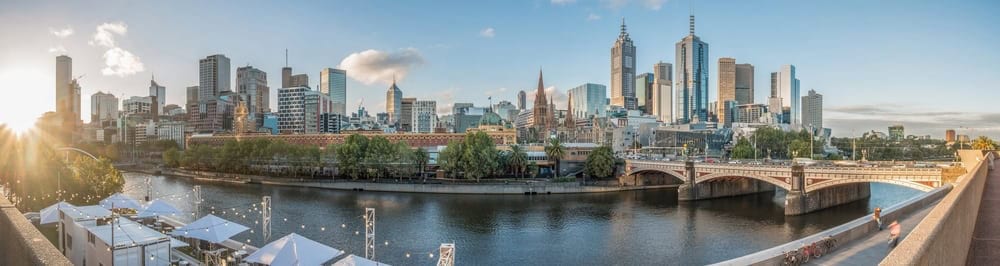
Here’s a quick visual reminder of the key concept (no-parallax alignment) and a sample panorama result to compare against your own tests.