Why This Camera & Lens Are Great for Panoramas
The Canon EOS RP paired with the Canon EF 8–15mm f/4L Fisheye USM is a compact, budget-friendly full-frame setup that excels at 360° work. The EOS RP uses a 26.2MP full-frame sensor (approx. 36 × 24 mm) with a pixel pitch around 5.7 µm, offering clean files at base ISO, good color, and workable dynamic range for HDR panoramas (roughly 11–12 stops at ISO 100 in practical use). Dual Pixel AF makes pre-focus fast, while the simple control layout and fully articulating screen help with zenith/nadir framing. The EF 8–15mm is a pro-grade fisheye zoom: sharp center-to-edge by f/5.6–f/8, quick USM AF, well-controlled lateral CA for a fisheye, and excellent coatings to tame flare.
Fisheye vs. rectilinear: with a fisheye you’ll need far fewer shots to cover a sphere, speeding up capture and reducing stitching mismatches—key for crowds or changing light. On a full-frame body, 8mm yields a circular fisheye (full 180° in all directions within a circle), and 12–15mm yields a full-frame fisheye (about 180° diagonal FOV). This combo works via the Canon EF–EOS R adapter with full AF/EXIF support; no stabilization is in the lens or body, but for tripod-based panoramas you wouldn’t want IS/IBIS anyway.
Quick Setup Overview
- Camera: Canon EOS RP — Full-frame, 26.2MP, Dual Pixel AF, DIGIC 8 processor. Practical DR ~11–12 EV at ISO 100; usable ISO for pano work typically 100–800 (1600 with careful noise reduction).
- Lens: Canon EF 8–15mm f/4L Fisheye USM — Circular/full-frame fisheye zoom. Very sharp stopped down, minimal focus breathing, typical fisheye lateral CA easily corrected in software.
- Estimated shots & overlap (field-tested guidelines):
- 8mm (circular fisheye): 3 around at 120° can cover a sphere; safer is 4 around at 90° (+ optional nadir). Aim for 30–40% overlap.
- 12mm (full-frame fisheye): 4–6 around at 60–90° spacing + zenith + nadir (25–30% overlap).
- 15mm (full-frame fisheye): 6 around at 60° spacing + zenith + nadir (25–30% overlap).
- Difficulty: Intermediate (easy once nodal point is dialed in).
Planning & On-Site Preparation
Evaluate Shooting Environment
Look for moving elements (people, cars, trees in wind), reflective surfaces (glass, polished floors), and light extremes (bright windows, spotlights). If shooting through glass, keep the lens as close as possible (1–3 cm) to reduce reflections and ghosting; use a rubber lens hood if available. For outdoor sunsets or night scenes, plan a quick capture sequence to minimize sky changes between frames.
Match Gear to Scene Goals
The EOS RP’s files grade well at low ISO—ideal for architecture and real estate. Indoors, stay around ISO 100–400 for maximum dynamic range and use AEB/HDR bracketing; outdoors, ISO 100–200 and f/8–f/11 gives crisp detail. The fisheye advantage is speed: fewer shots means fewer stitching seams and less risk of misalignment in crowds or wind. If straight lines matter (e.g., tight interiors), keep the camera level and expect to correct lines in post; it’s normal with fisheye capture.
Pre-shoot Checklist
- Charge batteries, bring spares; use fast, reliable SD cards (UHS-I is fine).
- Clean lens front element and the sensor; fisheyes see everything—dust shows up easily.
- Calibrate your panoramic head for this lens (nodal/entrance pupil alignment) and bring a leveling base.
- Safety: weigh down tripod in wind; tether gear on rooftops or poles; check clamps twice.
- Backup workflow: shoot a second full round in case of motion/ghosting.
Essential Gear & Setup
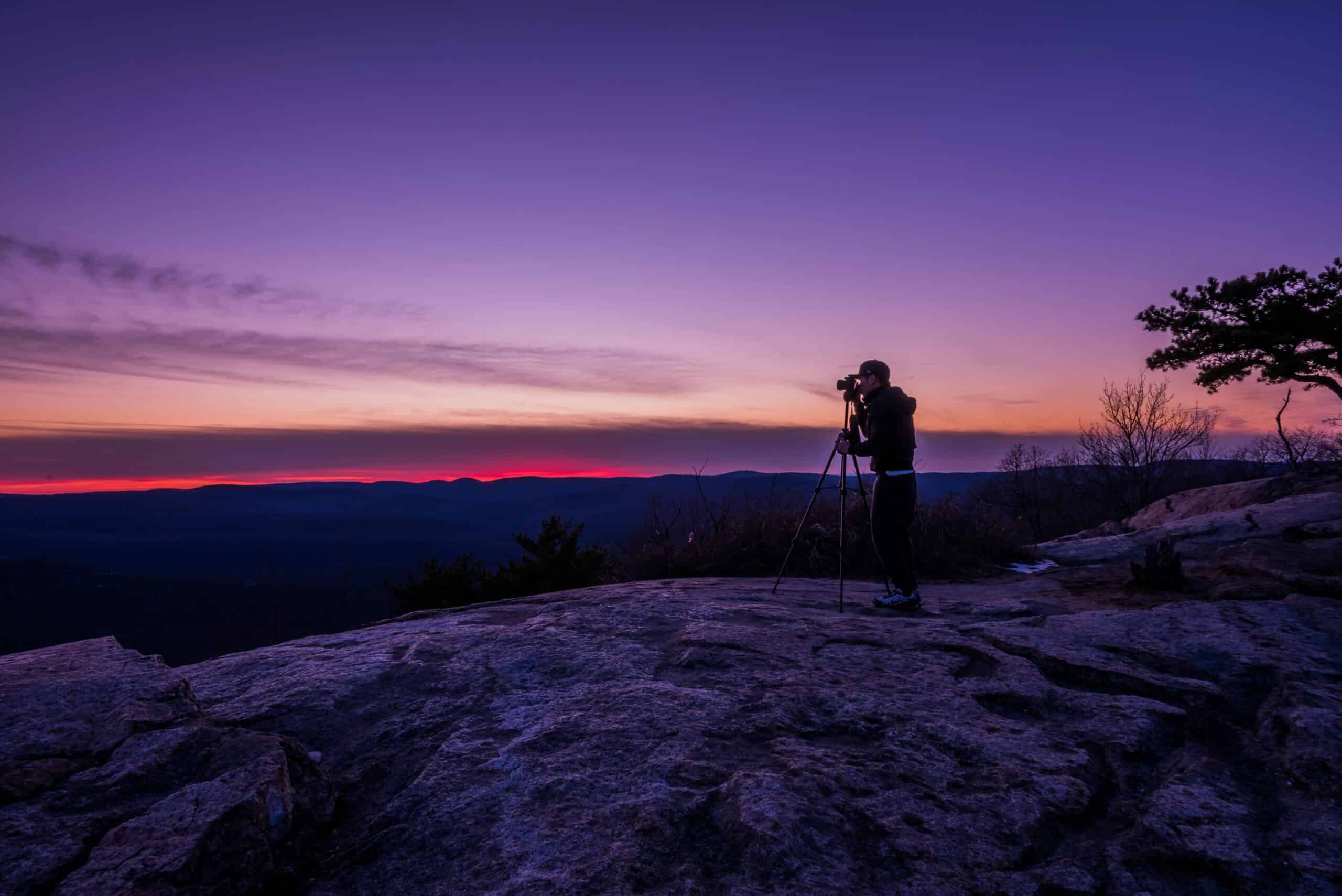
Core Gear
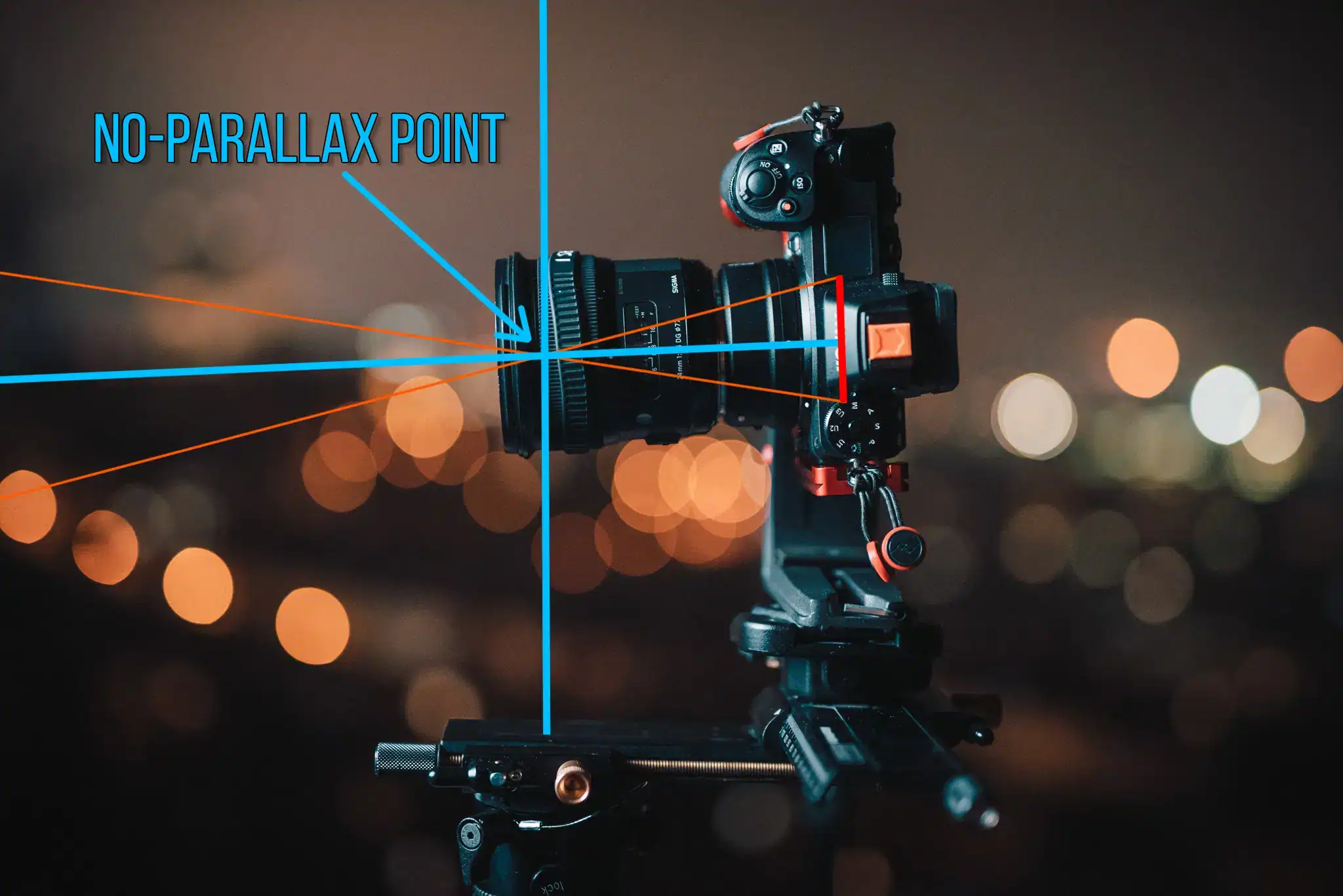
- Panoramic head: Lets you rotate around the lens’s entrance pupil (often called the “nodal point”) to eliminate parallax, critical when foreground objects are close.
- Stable tripod with a leveling base: Leveling saves time; if the base is level, the pan axis stays level and horizons are straighter.
- Remote trigger or Canon Camera Connect app: Avoids vibration and speeds up bracketing.
Optional Add-ons
- Carbon pole or car mount: Useful for elevated views. Always use safety tethers, check wind, and avoid crowds directly below elevated gear.
- Lighting aids: Small LED panels for dim interiors; keep them off during the pano unless you plan to composite.
- Weather protection: Rain cover, microfiber cloths; fisheyes are flare-prone with droplets or dust.
Tip: Use the compact Canon EF–EOS R Mount Adapter (non drop-in) for the lowest bulk and best head clearance. Ensure the head’s rails accommodate the RP body length plus the adapter.
Step-by-Step Shooting Guide
Standard Static Scenes
- Level tripod and align the nodal point. Slide the camera on the pano head’s rail until foreground and background points stay aligned as you yaw the camera left/right. Mark the rail position for 8mm, 12mm, and 15mm on tape for fast recall.
- Manual exposure and locked white balance. Meter the brightest part you must retain (e.g., a window), then set Manual mode. Lock WB to a preset (Daylight/Tungsten) or a custom Kelvin—do not leave AWB.
- Capture sequence with overlap. At 8mm circular fisheye: shoot 3 frames at 120° apart for fast-moving scenes; for safer stitches (architectural detail), shoot 4 at 90°. At 12–15mm: 4–6 around with 25–30% overlap. Keep rotation consistent with the head’s degree markings.
- Nadir shot for tripod removal. After the around shots, tilt down and take a clean ground shot. If possible, shift the tripod slightly and shoot a patch plate of the floor.
HDR / High Dynamic Range Interiors
- Bracket ±2 EV to balance bright windows and interior shadows. The EOS RP supports AEB with up to ±3 EV; a 3-shot or 5-shot series works well for real estate.
- Lock WB and focus. Bracket only shutter speeds (Manual mode). Use the remote or 2s timer to avoid shake.
- Sequence management. Shoot all exposures at each camera angle before rotating to the next position for easier file grouping.
Low-Light / Night Scenes
- Use a tripod and remote. The RP has no IBIS and the 8–15 has no IS. Expose longer instead of raising ISO when possible.
- Safe ISO range. For panoramas meant for publishing/VR, ISO 100–800 is a safe target. ISO 1600 can work with noise reduction; avoid 3200+ unless necessary.
- Watch light sources. Shield the lens from direct bright lights when possible to reduce flare; consider a slight rotation offset to keep strong light sources near the frame center.
Crowded Events
- Two passes technique. First pass quickly for coverage; second pass wait for gaps to capture clean foregrounds.
- Use faster shutter (1/125–1/250) and a slightly higher ISO (400–800) to freeze motion.
- In post, mask the cleaner areas from either pass to remove duplicates and ghosting.
Special Setups (Pole / Car / Drone)
- Secure all gear. Use a strong pole, tighten clamps, add a safety tether, and avoid extending too high in gusty wind. For car mounts, use rated suction cups and a safety line.
- Vibration control. Use faster shutter speeds (1/250–1/500) and shoot fewer frames (8mm mode) to minimize blur from vibrations.
- Plan your rotation. With a pole, rotate the rig slowly and let vibrations settle between shots.
Recommended Settings & Pro Tips
Exposure & Focus
| Scenario | Aperture | Shutter | ISO | Notes |
|---|---|---|---|---|
| Daylight outdoor | f/8–f/11 | 1/100–1/250 | 100–200 | Lock WB (Daylight). Keep the camera level. |
| Low light/night | f/4–f/5.6 | 1/30–1/60 (or longer on tripod) | 400–800 | Remote trigger; allow longer shutter rather than pushing ISO too far. |
| Interior HDR | f/8 | Bracket ±2 EV | 100–400 | Meter windows; bracket enough to retain highlights. |
| Action / moving subjects | f/5.6–f/8 | 1/200+ | 400–800 | Freeze motion; consider two-pass method. |
Critical Tips
- Focus: Use manual focus and set near the hyperfocal distance at your chosen aperture; with a fisheye at f/8, focusing around 1–1.5 m typically keeps everything sharp to infinity.
- Nodal calibration: With the EF 8–15, the entrance pupil shifts slightly across the zoom range—mark rail positions for 8, 12, and 15mm. Test using a near object (0.5–1 m) and a far object.
- White balance: Lock WB to avoid frame-to-frame color shifts. Mixed lighting? Use a custom Kelvin or a gray card and correct in RAW.
- RAW over JPEG: RAW gives you latitude for HDR merging and highlight recovery—especially important on interiors.
- Stabilization: The EOS RP has no IBIS; the 8–15 has no IS. On a tripod, stabilization should be off anyway.
- Adapter fit: Keep the EF–RF adapter tight and re-check play before each session; micro-movements can introduce stitching errors.
Stitching & Post-Processing
Software Workflow
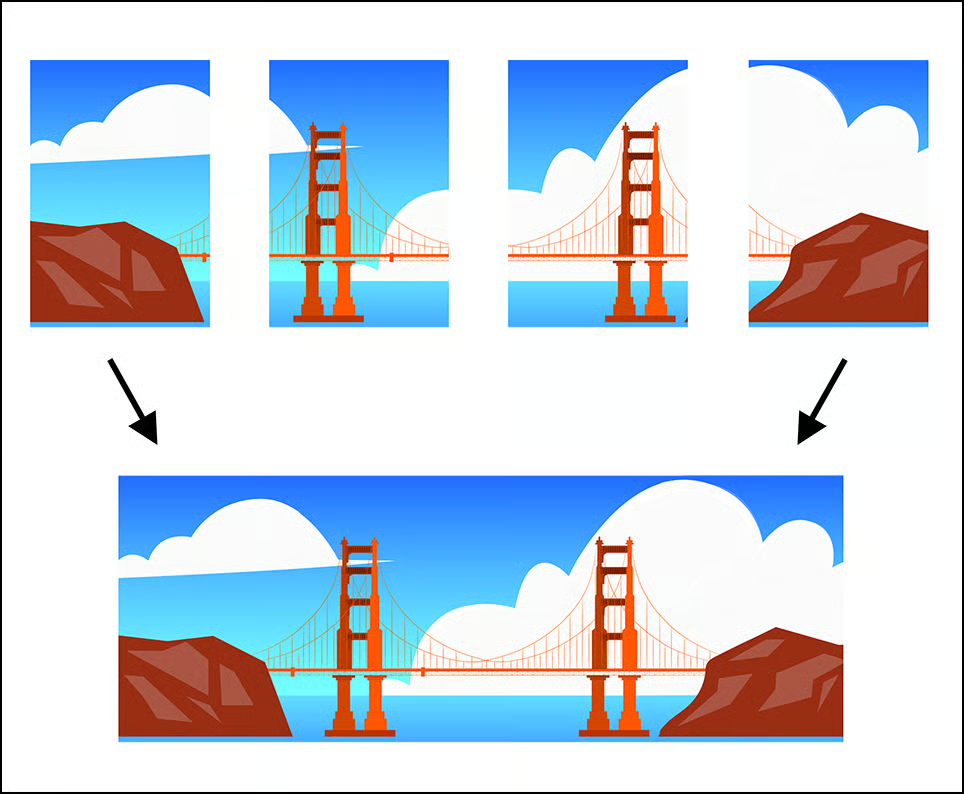
For this fisheye combo, PTGui is a top choice for speed and control; Hugin is a robust free alternative. Fisheye frames require fewer shots but need correct lens type selection (circular vs full-frame fisheye) during stitching. Industry guidance: aim for 25–30% overlap with fisheyes and about 20–25% with rectilinear lenses. After stitching, export an equirectangular 2:1 image for VR or virtual tour platforms. If you’re new to heads and control points, these guides provide solid foundations at the end of this section.
Cleanup & Enhancement
- Nadir patch: Use a clean floor shot to patch the tripod. Many apps offer AI-based tripod removal, or you can clone in Photoshop.
- HDR merge: Merge brackets in PTGui or pre-merge in Lightroom, then stitch. Keep exposure consistent across all positions.
- Color and noise: Correct color casts, apply subtle noise reduction for ISO 800–1600 captures, and add gentle sharpening.
- Leveling: Use the viewer’s horizon tool, correct roll/yaw/pitch, and ensure a level horizon—especially critical for architecture.
- Export: Save master TIFF, plus JPEG at high quality. For VR, export 8K–12K equirectangular if your source supports it.
Deep-dive resources: Learn panoramic head setup and best practices for high-end DSLR/mirrorless 360° capture. Panoramic head setup principles. For software choice and control points, PTGui remains a pro favorite: PTGui in-depth review. Community knowledge and technique discussions also help refine your craft: best techniques for 360 panoramas.
Video: From Head Setup to Stitch
Prefer to watch the process? This video pairs nicely with the steps above.
Useful Tools & Resources
Software
- PTGui panorama stitching
- Hugin (open source)
- Adobe Lightroom / Photoshop
- AI tripod removal tools (various)
Hardware
- Panoramic heads (Nodal Ninja, Leofoto, Fanotec)
- Carbon fiber tripods with leveling bases
- Wireless remote shutters or Canon Camera Connect
- Pole extensions / car mounts with safety tethers
Disclaimer: software/hardware names provided for search reference; check official sites for specs and compatibility.
Learn more about panoramic head fundamentals: panoramic head tutorial. For DSLR/mirrorless 360 workflows and lens choices: DSLR 360 photo and virtual tour guide.
Common Mistakes & How to Avoid Them
- Parallax error → Align the entrance pupil precisely; use a pano head and re-test with near/far objects.
- Exposure flicker → Use Manual exposure, fixed ISO, and locked white balance; avoid auto anything.
- Tripod shadows/footprint → Shoot a nadir patch and clone or patch with a separate plate.
- Ghosting from moving subjects → Use two-pass shooting and mask in post; increase shutter speed outdoors.
- Night noise and color shifts → Keep ISO moderate (≤800–1600), bracket if needed, and shoot RAW for clean color.
Real-World Case Studies with the EOS RP + 8–15mm
Indoor Real Estate (Bright Windows)
At 12–15mm, shoot 6 around + zenith + nadir, f/8, ISO 100–200. Use 5-shot brackets at ±2 EV to retain view detail in windows. Keep the camera perfectly level to minimize vertical distortion. Stitch in PTGui with lens type set to full-frame fisheye; use horizontal/vertical line constraints to straighten walls.
Outdoor Sunset Landscape
At 8mm (circular), 4 around at 90° for safer overlap as light changes quickly. Meter the sky, underexpose by ~0.3 to protect color, shoot quickly in Manual with WB locked to Daylight. Consider a second, faster pass to capture the brightest horizon band for blending if clouds move.
Crowded Event
Use 8mm for speed—3 around at 120° plus a nadir. Shutter 1/200–1/250 at ISO 400–800. If people block critical areas, do a second pass and mask later. Keep the camera height above head level when possible to reduce occlusions.
Rooftop or Pole Shooting
Use a carbon pole with safety line; aim for 8mm to minimize frame count at height. Shutter 1/250+, burst 3–4 frames per direction if wind causes sway and pick the sharpest. Always check local regulations and safety guidelines.
Car-Mounted Capture
Only when safe and legal. Use quality suction mounts and an additional safety tether. Stop the vehicle to shoot; avoid moving shots with this setup. Use 8mm, 4 around, 1/250–1/500, ISO 200–400. Review frames on-site to verify sharpness before leaving.
Frequently Asked Questions
-
Can I shoot handheld panoramas with the Canon EOS RP?
Yes—for quick outdoor scenes at 8mm you can do 3–4 frames handheld. Keep shutter 1/250+, lock exposure/WB, and rotate your body around the lens as much as possible. Expect more stitching cleanup than with a panoramic head.
-
Is the EF 8–15mm wide enough for single-row 360?
Absolutely. At 8mm (circular) a single row of 3–4 shots can cover the sphere; at 12–15mm (full-frame fisheye) use 4–6 around plus zenith and nadir for perfect coverage.
-
Do I need HDR for interiors with bright windows?
Usually yes. The EOS RP’s practical DR is good, but bright windows often exceed it. Bracket ±2 EV (3–5 frames) to retain highlight detail and clean shadows for professional real estate results.
-
How do I avoid parallax issues with this combo?
Use a proper panoramic head and align the entrance pupil. Calibrate at each focal length (8/12/15mm) using near/far alignment tests and mark the rail positions so setup is repeatable on location.
-
What ISO range is safe on the EOS RP in low light?
For high-quality 360 output, ISO 100–800 is the sweet spot. ISO 1600 is acceptable with careful noise reduction. Prefer longer shutter speeds over higher ISO when you’re on a stable tripod.
Inspiration & Field Moments
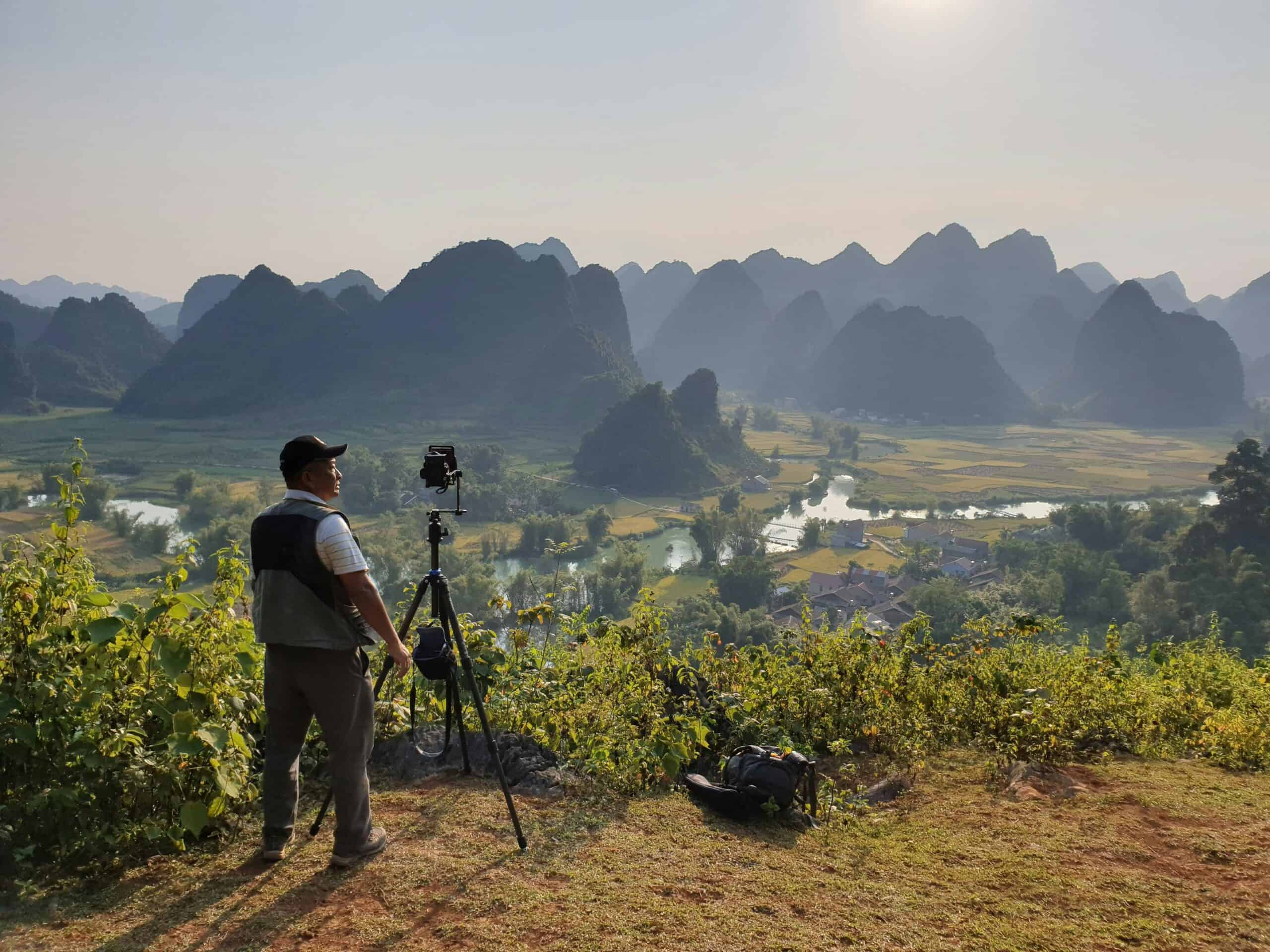
A few contextual visuals to spark ideas for your next pano session with the EOS RP and 8–15mm fisheye.
Final Thoughts
If your goal is speed, coverage, and dependable results, learning how to shoot panorama with Canon EOS RP & Canon EF 8–15mm f/4L Fisheye USM is a smart path. The RP’s compact full-frame body and the 8–15mm’s flexibility (circular and full-frame fisheye in one) make it a travel-friendly rig that still delivers professional 360° output. With consistent overlap, locked exposure/WB, and a properly calibrated panoramic head, you’ll produce clean, immersive panoramas that stitch quickly and look great on VR platforms and virtual tours.