Why This Camera & Lens Are Great for Panoramas
If you want a fast, reliable way to create high‑quality 360° images, learning how to shoot panorama with Canon EOS R6 Mark II & Sigma 15mm f/1.4 DG DN Diagonal Fisheye Art is a powerful combo. The EOS R6 Mark II’s 24.2MP full‑frame Dual Pixel CMOS AF II sensor offers excellent low‑noise performance, a base dynamic range around 13.5 stops at ISO 100, and in‑body stabilization that helps for handheld scouting and low‑light tests. The large 6.0µm‑class pixel pitch keeps noise controlled and color depth strong—important when merging multiple frames or bracketing for HDR.
The Sigma 15mm f/1.4 DG DN Diagonal Fisheye Art delivers a 180° diagonal field of view with crisp corner‑to‑corner sharpness even stopped down slightly, which is ideal for fewer shots per 360, faster capture on site, and easy control point matching in the stitcher. As a diagonal fisheye, it sacrifices rectilinear straight lines in exchange for extreme coverage; that’s fine for equirectangular VR output and interior virtual tours.
Compatibility note for Canon RF users: the Sigma 15mm f/1.4 DG DN Diagonal Fisheye Art currently ships for Sony E and L‑mount. There isn’t a practical adapter to Canon RF that preserves infinity focus. If you shoot RF, consider a native alternative like the Canon EF 8–15mm f/4L Fisheye via EF‑to‑RF adapter; the shooting workflow and shot counts in this guide still apply to a 15mm diagonal fisheye on full frame. Always confirm mount compatibility before a paid job.
Quick Setup Overview
- Camera: Canon EOS R6 Mark II — Full Frame 24.2MP sensor, Dual Pixel CMOS AF II, IBIS up to ~8 stops, excellent high‑ISO performance.
- Lens: Sigma 15mm f/1.4 DG DN Diagonal Fisheye Art — diagonal fisheye (180° diagonal FOV), very sharp from f/4–f/8, good control of coma/CA for night skies and interiors.
- Estimated shots & overlap:
- Single‑row 360: 6 around (portrait orientation) + 1 zenith + 1 nadir, ~30–35% overlap.
- Safety set for tricky scenes: 8 around + zenith + nadir, ~30% overlap.
- HDR interiors: same shot counts, but bracket 3–5 frames per angle.
- Difficulty: Intermediate (easy with a calibrated panoramic head; doable handheld for partial panoramas but not recommended for critical 360°).
Planning & On-Site Preparation
Evaluate Shooting Environment
Before you start, read the scene. Watch for moving subjects, reflective glass, and light direction. If you’re shooting near windows, position yourself several feet from glass to avoid glare and double reflections. Outdoors, check wind and ground stability. If the sun is in frame, plan for bracketed exposures to retain highlight detail and to avoid stitching bands from extreme contrast.
Match Gear to Scene Goals
The EOS R6 Mark II is very forgiving in mixed lighting thanks to deep color bit depth and strong dynamic range at base ISO. Indoors, ISO 400–800 is a safe zone with minimal noise for this sensor, especially when you’ll be downsampling after stitching. The Sigma 15mm fisheye reduces shot counts—great for crowds and quick setups. The tradeoff is diagonal fisheye distortion, which is fine for VR and virtual tour output, but less appropriate if you need perfectly straight architectural lines in a single frame.
Pre-shoot Checklist
- Fully charged batteries; plenty of storage. Clean front/rear elements and the sensor (dust shows up when cloning the nadir).
- Calibrate your panoramic head to the lens’s no‑parallax (entrance pupil) point in advance. Bring a small hex key for micro‑adjustments.
- Leveling: Pack a leveling base or use the camera’s electronic level; level saves time correcting horizon later.
- Safety: On rooftops or poles, tether the camera, watch wind gusts, and stay clear of edges. For car mounts, use redundant straps and verify every clamp.
- Backup workflow: Shoot a second clean round if time allows, especially for client work. If something moves or ghosting happens, you’ll be glad you did.
Essential Gear & Setup
Core Gear
- Panoramic head: This lets you rotate the camera around the lens’s entrance pupil (nodal point) to eliminate parallax between near and far objects. Parallax is the main cause of stitching errors around edges, furniture, and railings.
- Stable tripod with leveling base: A leveling base speeds setup and ensures consistent overlap. Even a few degrees off-level can warp the horizon in 360s.
- Remote trigger or Canon Camera Connect app: Trigger without touching the camera to avoid micro-vibrations, especially at longer shutter speeds.
Optional Add-ons
- Pole or car mount: Great for elevated or vehicle-based panoramas. Always use a safety tether and test for vibrations. Wind loads rise rapidly with height.
- Lighting aids: Small LED panels or flashes to fill dark corners in interiors. Keep WB consistent and avoid mixing color temperatures when possible.
- Weather protection: Lens rain cover, microfiber cloths, and silica packs for humid conditions.
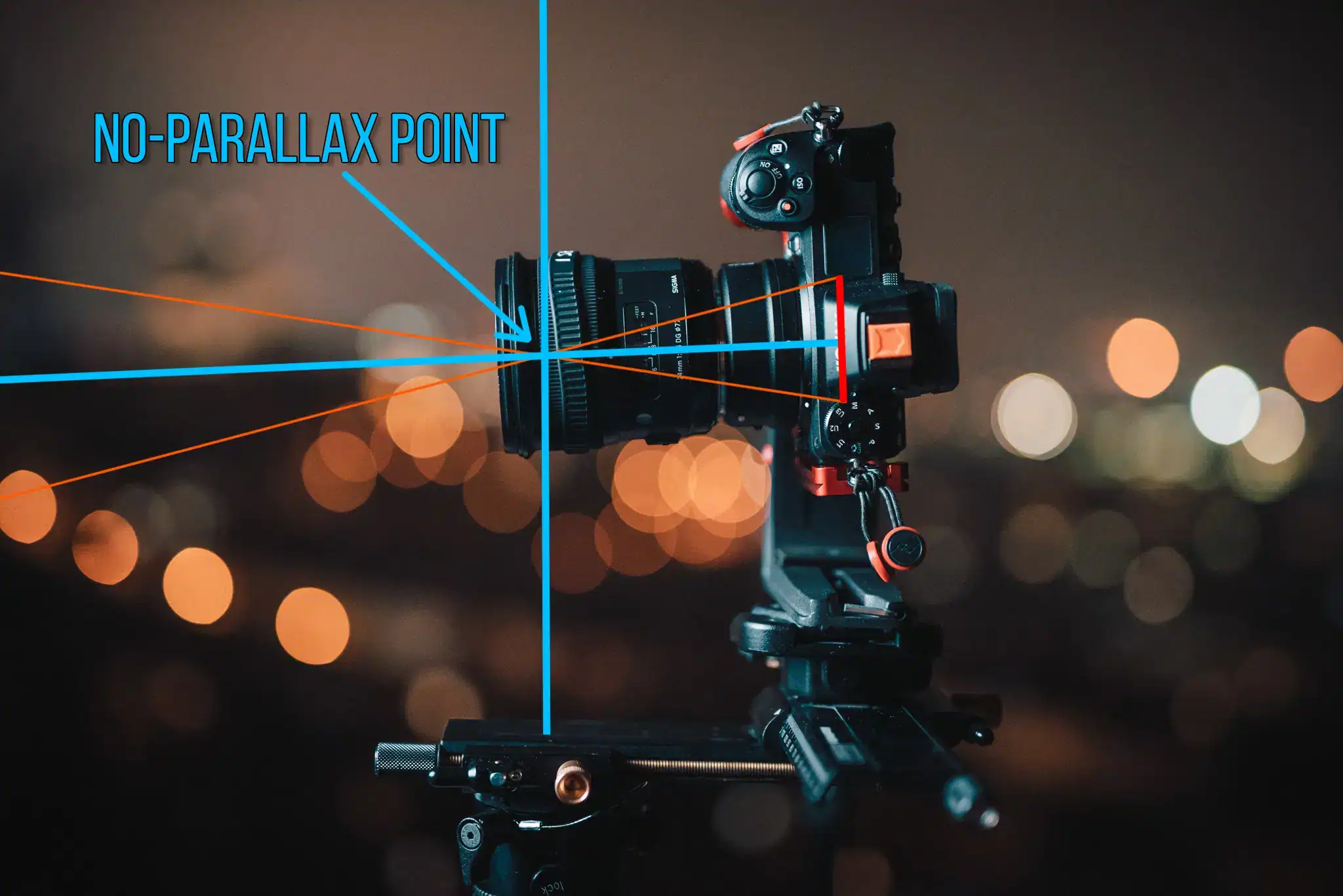
For deeper background on panoramic head setup, see this panoramic head tutorial with practical diagrams and examples. Panoramic head setup guide
Step-by-Step Shooting Guide
Standard Static Scenes
- Level and align: Mount the R6 Mark II in portrait orientation on the panoramic head. Level the base. Adjust the rails so the entrance pupil of the 15mm fisheye sits exactly over the rotation axis. Use a foreground object (stick or light stand) against a far background and rotate—if the foreground moves relative to the background, fine-tune the rails until it doesn’t.
- Manual exposure and white balance: Set the camera to Manual mode. Meter the brightest part of the scene you want detail in and expose for a good compromise, or use HDR bracketing. Lock white balance (e.g., Daylight 5200–5600K outdoors; custom Kelvin indoors) to avoid color shifts across frames.
- Focus: Switch to MF, magnify, and focus about one third into the scene or at the hyperfocal distance. With a 15mm fisheye, f/8 gives deep DoF and consistent sharpness. Turn off IBIS when on a tripod to avoid correction drift.
- Capture sequence: Rotate in equal increments. For 15mm diagonal fisheye, 6 shots around at 60° steps in portrait orientation is a reliable baseline. Then add 1 zenith (straight up) and 1 nadir (straight down). If the nadir is blocked by the tripod, shoot a separate handheld nadir after moving the rig, or plan to patch it in post.
HDR / High Dynamic Range Interiors
- Bracket exposure: Use AEB with ±2 EV spacing, 3 to 5 frames per angle depending on window brightness. The R6 Mark II handles bracketing quickly; use a remote to maintain cadence without touching the camera.
- Keep WB and focus locked: This prevents the stitcher from seeing the brackets as color or focus changes. Use the same aperture for every frame, ideally f/8.
- Avoid flicker: Turn off auto ISO, auto WB, and any exposure-automatic features that vary from shot to shot.
Low-Light / Night Scenes
- Long exposure strategy: Start with f/4–f/5.6, ISO 200–800, and shutter 1/15–1/60 as needed. The R6 Mark II is clean up to ISO 1600; for best quality in large virtual tours, ISO 400–800 is a sweet spot if you can keep shutters workable.
- Stability: Use a sturdy tripod, remote trigger, and disable IBIS. Consider electronic first curtain shutter or mechanical shutter to prevent banding with certain light sources.
- Extra overlap: At night, adding 1–2 extra around-shots (e.g., 8 around total) gives more control points for the stitcher in low-contrast areas.
Crowded Events
- Two-pass method: First pass for composition and coverage; second pass after waiting for gaps in foot traffic. If people move between frames, you can mask clean areas from the second pass in PTGui or Photoshop.
- Faster rotation: With a fisheye, you can complete the around-shots in under a minute. Keep your sequence consistent so you can easily find frames later.
Special Setups (Pole / Car / Elevated)
- Safety first: Double-tether the camera and head. Check wind speed and never stand under the pole. Use a remote or intervalometer. For cars, avoid public roads whenever possible and secure redundant mounts.
- Vibration control: Use faster shutter speeds (1/250+ if possible) and slightly higher ISO to freeze small vibrations. Shoot extra overlap and a second safety round.
Recommended Settings & Pro Tips
Exposure & Focus
| Scenario | Aperture | Shutter | ISO | Notes |
|---|---|---|---|---|
| Daylight outdoor | f/8–f/11 | 1/100–1/250 | 100–200 | Lock WB (Daylight or custom Kelvin) |
| Low light/night | f/4–f/5.6 | 1/30–1/60 | 400–800 | Tripod, remote; disable IBIS on tripod |
| Interior HDR | f/8 | Bracket ±2 EV (3–5 frames) | 100–400 | Retain window detail and clean shadows |
| Action / moving subjects | f/5.6–f/8 | 1/200+ | 400–800 | Freeze motion; consider two-pass method |
Critical Tips
- Manual focus at or near hyperfocal: With a 15mm fisheye, f/8 gives deep DoF; focus 1–2m out for interiors.
- Nodal calibration: Mark your panoramic head rails for this lens so you can repeat the setup quickly. Use two vertical objects (near/far) to fine-tune until there’s no relative movement while rotating.
- White balance lock: Use a single WB across all frames, or set a custom Kelvin. Mixed lighting can be balanced later if it’s consistent shot-to-shot.
- Shoot RAW: You want maximum latitude for color, noise reduction, and HDR merging before stitching.
- IBIS and IS: On a tripod, turn IBIS off to avoid micro‑corrections. If handholding partial pans, IBIS can help steady the sequence.
- Shutter mode: Prefer mechanical or EFCS indoors to avoid LED banding; electronic shutter is fine outdoors but beware of rolling shutter in fast pans.
Stitching & Post-Processing
Software Workflow
After capture, ingest and cull. If you bracketed, batch-merge HDR sets first (e.g., in Lightroom Classic or PTGui’s HDR workflow), then stitch the merged images. PTGui remains the industry standard for fisheye panoramas with powerful control point generation, mask tools, and fast GPU acceleration. Hugin is a capable open‑source alternative. With a 15mm diagonal fisheye, 25–35% overlap is usually enough, and the stitcher handles the fisheye projection automatically—set lens type to “Fisheye” (often equisolid angle is a good starting point for modern fisheyes) and optimize. For reference-quality overviews of panorama apps and PTGui, see this review and comparison. PTGui review and why it’s favored for complex panos
Expect final equirectangular sizes around 10,000–12,000 px wide from a 24MP single-row 6+2+1 set; multi‑row or more overlap can push higher. For platform delivery, export 8K (7680×3840) JPEGs for web VR viewers, and keep a master TIFF/PSB for archiving. For general platform guidance, Meta’s creator docs outline best practices when using DSLR/mirrorless for 360 content. DSLR/mirrorless 360 capture and stitching overview
Cleanup & Enhancement
- Nadir patch: Use PTGui’s Viewpoint correction with a handheld nadir shot, or export to Photoshop and clone. New AI-based content-aware tools can speed up floor repairs.
- Color and noise: Apply gentle noise reduction for night scenes and match color balance across the panorama. Use selective HSL adjustments to neutralize mixed lighting.
- Leveling: The R6 Mark II’s level helps, but always re-level the horizon using pitch/roll/yaw controls in PTGui/Hugin.
- Export: Save an equirectangular master (16‑bit TIFF) and a web copy (JPEG, 10–12K wide). Maintain embedded XMP metadata for 360 platforms.
Want a quick primer on why shot counts and FOV matter for resolution? Panotools documents DSLR spherical resolution tradeoffs. Understanding spherical resolution
Useful Tools & Resources
Software
- PTGui panorama stitching
- Hugin open source stitcher
- Lightroom / Photoshop for HDR merges and cleanup
- AI tripod removal and content-aware fill tools
Hardware
- Panoramic heads (Nodal Ninja, Leofoto)
- Carbon fiber tripods with leveling bases
- Wireless remotes or intervalometers
- Pole extensions and vehicle mounts (with tethers)
Disclaimer: software/hardware names provided for search reference; check official sites for details and compatibility.
Common Mistakes & How to Avoid Them
- Parallax error → Calibrate the entrance pupil and keep it over the rotation axis.
- Exposure flicker → Manual exposure and locked WB across all frames.
- Tripod shadows and footprints → Shoot a nadir or plan a patch.
- Ghosting from moving people → Use two-pass shooting and mask in post.
- High noise at night → Keep ISO modest (400–800), use longer shutter on a stable tripod.
- Banding with LEDs → Prefer mechanical or EFCS shutter indoors.
Field-Proven Scenarios
Indoor Real Estate
Place the tripod near the room center but avoid placing the camera too close to reflective objects. Shoot 6 around + zenith + nadir in portrait orientation. Use 3–5 frame brackets at ±2 EV to hold window highlights and preserve clean shadows under cabinets. The R6 Mark II’s clean base ISO lets you merge HDR without banding or color shifts. Keep WB at a fixed Kelvin (e.g., 4200–4800K) to moderate tungsten and daylight mixes, then fine‑tune channels later.
Sunset Landscape
Arrive early to frame foreground interest. Start a baseline set before the peak color, then a second set during the best light; you’ll have options if the sky changes mid-rotation. For silhouette or sunstar shots, stop to f/8–f/11 and make sure your zenith captures the gradient cleanly. Consider 8 around for more sky overlap; it helps avoid seams in smooth color gradients.
Crowded Event
Use the fisheye’s efficiency: 6 around can be done in ~30 seconds. Work quickly between waves of people. If someone blocks a key seam, wait a beat and shoot that frame again. Mark your “keeper” pass in-camera or with voice notes so you know which set to prioritize in post.
Rooftop or Pole
Check wind. With elevated rigs, use faster shutters (1/200–1/500) and ISO 400–800 to freeze sway. Pre‑mark your head’s rail settings so you can set up quickly while light is good. Always tether the kit. A redundant collar or safety strap can save your gear—and someone’s day.
Frequently Asked Questions
- Can I shoot handheld panoramas with the EOS R6 Mark II?
For full 360×180 virtual tours, use a tripod and panoramic head. Handheld can work for partial panos or quick single‑row stitches, but parallax will cause errors near foreground objects. The R6 Mark II’s IBIS helps steady handheld frames, yet for professional 360 output, a leveled tripod is the way to go.
- Is the Sigma 15mm f/1.4 DG DN Diagonal Fisheye Art wide enough for single‑row 360?
Yes. On full frame, a diagonal fisheye at 15mm is wide enough for 6 around + zenith + nadir with about 30–35% overlap when shot in portrait orientation. In tricky scenes or at night, consider 8 around for more robust control points.
- Do I need HDR for interiors with bright windows?
Usually, yes. Bracket 3–5 exposures at ±2 EV to retain window detail and clean interior shadows. Merge HDRs before stitching or use PTGui’s HDR workflow. Lock WB and aperture so your brackets are consistent.
- How do I avoid parallax issues?
Calibrate the panoramic head so the entrance pupil sits over the rotation axis. Use two vertical reference objects (one near, one far) and rotate the camera; if their alignment shifts, adjust the rails and try again. Once dialed in, mark your rail positions for this lens so future setups are fast.
- What ISO range is safe on the R6 Mark II in low light?
For professional 360 output, ISO 100–800 is the sweet spot. The R6 Mark II stays quite clean to ISO 1600, but if you plan to deliver high-res 8–12K panoramas, keeping ISO below 800 reduces noise and preserves color fidelity.
- Can I create a Custom Shooting Mode for pano?
Yes. Save Manual exposure, RAW, fixed WB, MF, IBIS off (for tripod), and a 2-second self-timer or remote to C1/C2. This lets you recall consistent pano settings instantly on location.
- How do I reduce flare with a fisheye?
Avoid pointing directly at small, intense light sources when possible. Shade the lens with your hand or body at oblique angles (avoid entering the frame). Stop to f/8 to tighten any sunstars and reduce veiling glare. Clean the front element religiously; fisheyes show smudges.
- What’s the best tripod head type for this setup?
A dedicated multi‑row panoramic head with fore‑aft and lateral rail adjustments is ideal. It must allow precise entrance pupil alignment and lock solidly between clicks. Quality heads from Nodal Ninja or Leofoto are common choices among 360 pros.
Trust, Safety, and Professional Workflow
Always run a safety check before elevated or vehicle‑mounted work. Wind multiplies loads on poles and can loosen clamps over time—inspect frequently. Carry a backup body or extra battery and card. For client jobs, shoot a second round of the same pano to guard against stitching surprises. Keep your RAWs and project files; non‑destructive workflows pay off when you need to re-export at different sizes later.
For an authoritative primer that complements this guide, read Oculus’s panoramic head setup principles for high‑end 360 capture. High‑end 360 pano head setup principles