
Why This Camera & Lens Are Great for Panoramas
If you’re exploring how to shoot panorama with Canon EOS R6 Mark II & Nikon Z 20mm f/1.8 S, you’re combining a fast, low-noise full-frame body with a crisp, rectilinear 20mm prime. The Canon EOS R6 Mark II uses a 24.2MP full-frame sensor (approx. 36×24 mm) with strong dynamic range at base ISO (about 13+ EV) and excellent high-ISO handling thanks to large ~6.0 μm pixels. It also offers 5-axis IBIS (up to ~8 stops claim), deep buffer, responsive controls, and dependable exposure metering—all very helpful for consistent, multi-shot panoramas.
The Nikon Z 20mm f/1.8 S is a sharp, rectilinear ultra-wide prime known for very low coma and controlled chromatic aberration. It’s at its best around f/5.6–f/8 for uniform sharpness across the frame. As a rectilinear lens (not fisheye), it preserves straight lines in architecture and interiors—ideal for virtual tours and real estate when you want minimal distortion at edges. At 20mm on full frame, the horizontal field of view is roughly 84°, which means you’ll need multiple rows for a full 360×180° sphere, but the payoff is high-quality detail and minimal fisheye bending.
Important mount note: the Nikon Z 20mm f/1.8 S is a Nikon Z-mount lens and cannot be natively mounted or electronically controlled on a Canon RF body. There’s no practical adapter that preserves electronic aperture/focus control. Realistically, you have three options:
– Use an equivalent Canon RF or EF 20mm (or nearby focal length like RF 16mm/24mm) on the R6 Mark II (recommended).
– Use the Nikon Z 20mm f/1.8 S on a Nikon Z body specifically for capture and then stitch as usual.
– Use a manual EF-mount ultra-wide (e.g., 20mm) plus Canon’s EF–RF adapter to keep this workflow on your R6 Mark II.
For the settings, shot counts, and workflow in this guide, treat them as applying to a 20mm rectilinear prime on a full-frame camera. They’ll map perfectly if you pick a Canon 20mm equivalent or shoot with a Nikon Z body and the Z 20mm S.
Quick Setup Overview
- Camera: Canon EOS R6 Mark II — Full-frame 24.2MP; excellent high-ISO performance; ~13+ EV DR at base ISO.
- Lens: Nikon Z 20mm f/1.8 S — Rectilinear prime; sharp stopped down; low coma; well-controlled CA; best around f/5.6–f/8.
- Estimated shots & overlap (20mm FF, portrait orientation recommended):
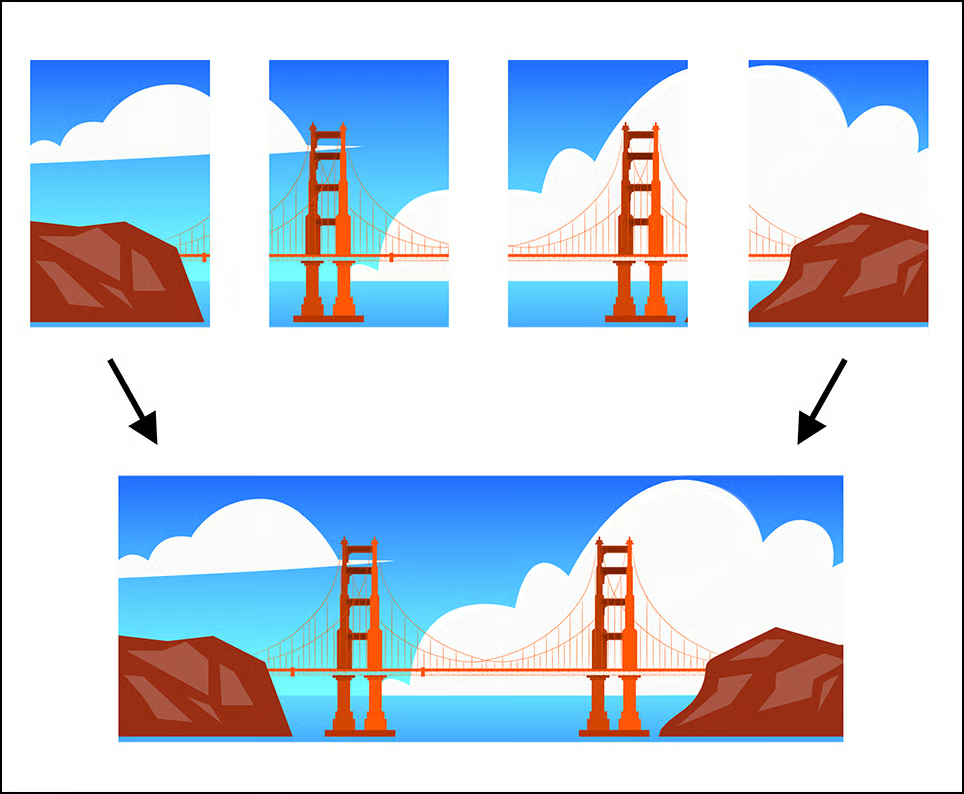
– Single-row cylindrical (around the horizon): 8–9 shots at ~35–45° yaw increments for ~30–40% overlap.
– Full 360×180° spherical: typically 2–3 rows of 8–9 shots each (+zenith +nadir). Common safe set: 3 rows (−45°, 0°, +45°) × 8 shots = 24, plus 1–3 zenith and 2–3 nadir frames (26–30 total).
– HDR interiors: multiply by bracket count (e.g., 3× for ±2 EV). - Difficulty: Intermediate (requires nodal alignment and multi-row shooting for 360×180°).
Planning & On-Site Preparation
Evaluate Shooting Environment
Walk the scene and look for moving elements (people, cars, trees in wind), reflective glass, and mixed light sources. If shooting through glass, keep the lens close (1–3 cm) to reduce reflections and ghosting. Watch for the sun’s position—strong backlight increases flare and HDR complexity. Indoors, note color temperatures (daylight through windows vs tungsten lamps) and plan your white balance lock.
Match Gear to Scene Goals
The EOS R6 Mark II’s clean files and strong DR mean you can keep ISO low for dynamic range and push to ISO 800–1600 if needed without excessive noise. For interiors and dusk exteriors, the R6 Mark II handles long exposures cleanly on a sturdy tripod. A 20mm rectilinear lens demands more frames than a fisheye, but it produces straight lines and high fidelity—great for real estate, architecture, and virtual tours where distortion must be minimal. If you need fewer shots and can accept fisheye bending, consider a fisheye alternative in your kit. Otherwise, the 20mm rectilinear is an excellent balance of detail and workflow.
Pre-shoot Checklist
- Power/storage: fully charged batteries, a spare, and fast, reliable cards. Format in-camera.
- Optics: clean front/rear elements; inspect sensor for spots; carry a blower.
- Support: level the tripod, ensure your panoramic head is calibrated for the lens’s no-parallax (nodal) point.
- Safety: check wind forecast for rooftop/pole work; bring a safety tether for elevated or car-mounted setups.
- Workflow: shoot a backup pass, especially in changeable light or crowded scenes.
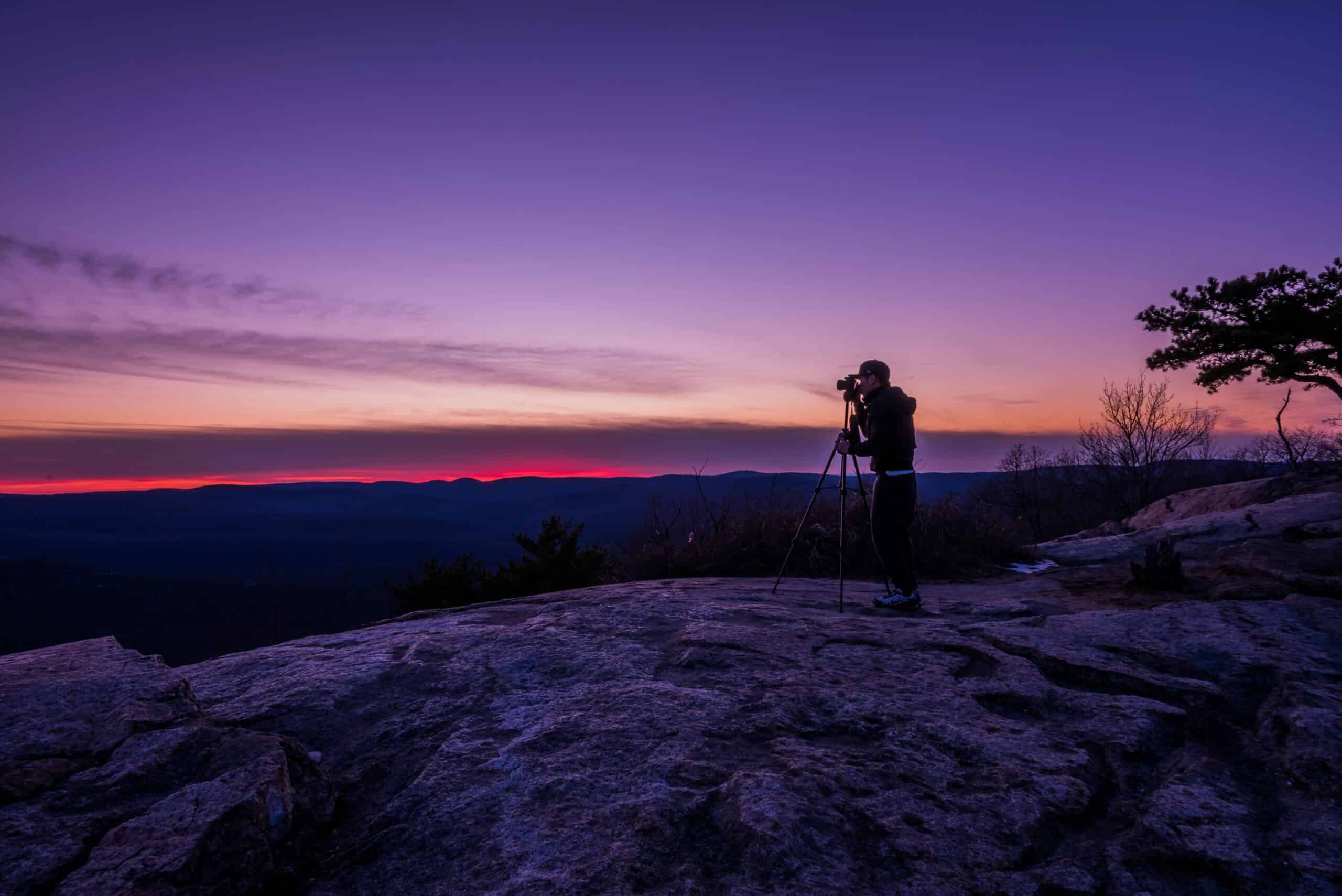
Essential Gear & Setup
Core Gear
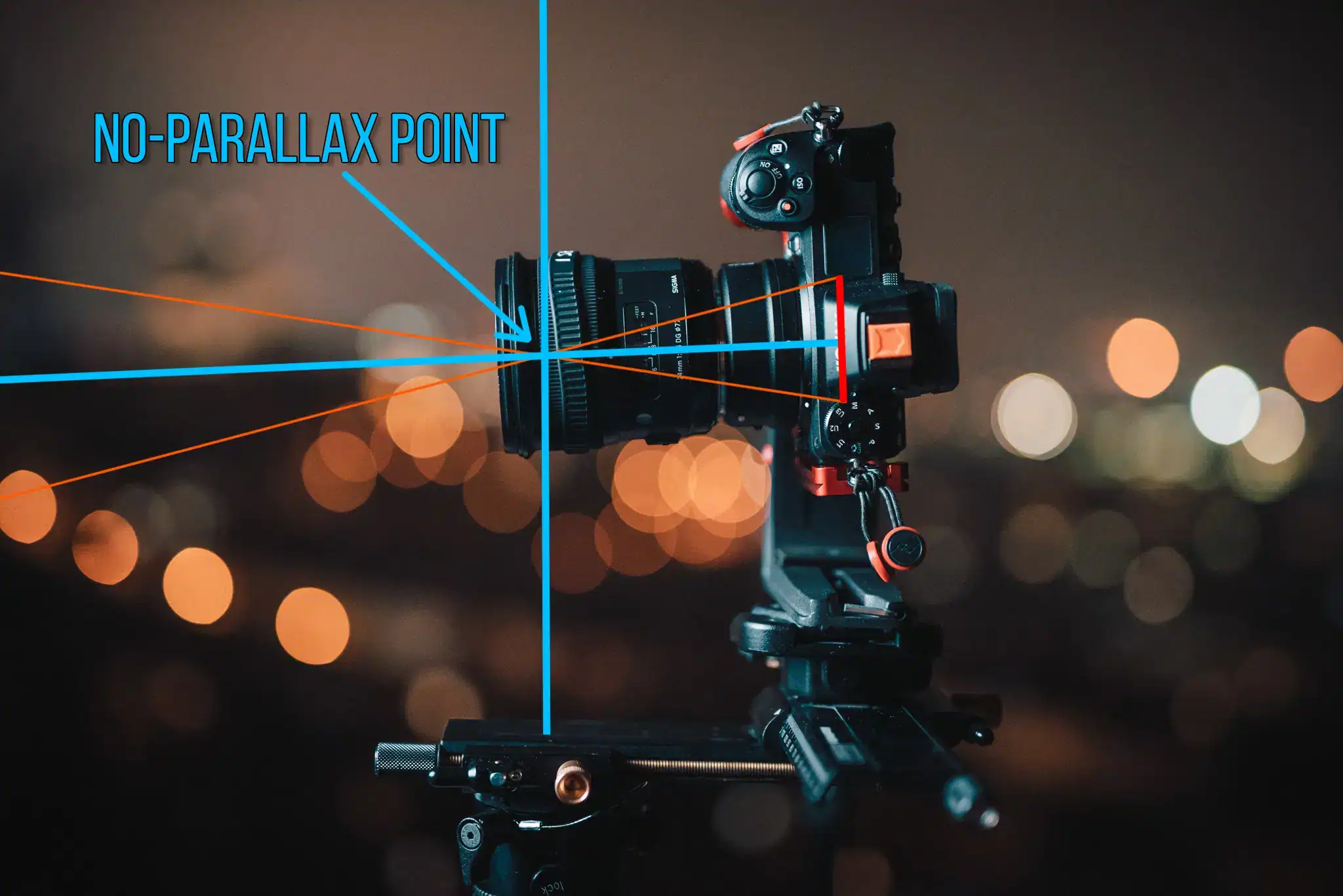
- Panoramic head: enables nodal point alignment to eliminate parallax. Aligning the lens’s entrance pupil over the rotation axis is critical for clean stitches, especially with foreground objects.
- Stable tripod with leveling base: a leveling base lets you rotate the pano head on a truly level plane, keeping horizons straight and overlaps consistent.
- Remote trigger or Canon Camera Connect app: avoid vibrations from touching the shutter. Use 2s self-timer if you don’t have a remote.
Optional Add-ons
- Pole or car mount: for elevated vantage points or vehicle captures, add a safety tether. Beware of wind; increase shutter speed and use burst mode to counter vibrations.
- Lighting aids: a small LED panel or bounced flash can lift shadows in dark interiors (shoot separate exposures if mixing with ambient).
- Weather covers: protect the R6 Mark II and lens from drizzle or dust. Keep silica packets in your bag for humidity control.
Step-by-Step Shooting Guide
Standard Static Scenes
- Level the tripod and align the nodal point. On a pano head, slide the camera fore/aft while watching a near and far object; rotate slightly left/right. When their relative position doesn’t shift, you’re at the correct entrance pupil. Mark this setting for your 20mm.
- Set manual exposure and lock white balance. Meter a midtone and set exposure in M. Lock WB (e.g., Daylight or 5200K) to prevent color shifts between frames.
- Focus and shoot your rows. Use manual focus near the hyperfocal distance. For a 20mm at f/8 on full frame, hyperfocal is ~1.7 m—focus there and switch AF off. Capture frames with 30–40% overlap. For a spherical pano, try 3 rows at −45°, 0°, +45° with 8 shots per row (45° yaw steps), then add zenith and nadir.
- Capture the nadir (ground) shot. Either tilt the head down for a clean patch frame or shoot a handheld nadir after moving the tripod out and keeping the lens over the same point.
HDR / High Dynamic Range Interiors
- Bracket exposures (e.g., −2/0/+2 EV). Windows and light fixtures often blow out; bracketing keeps highlights and shadows. Keep the bracket sequence consistent for every camera angle.
- Lock white balance and aperture. Stick to f/8 for sharpness; vary shutter speed only so depth of field stays consistent across brackets and frames.
Low-Light / Night Scenes
- Use longer exposures and keep ISO low for cleaner files. On the R6 Mark II, ISO 100–400 is ideal; 800 is still clean. Use 1/10–1/30s as needed with a solid tripod.
- Use a remote trigger/self-timer. Turn off IBIS when on a tripod to avoid micro-blur from stabilization corrections.
Crowded Events
- Make two passes. First, a fast pass to secure geometry; second, a slower pass where you wait for gaps in foot traffic. The extra frames help with masking later.
- Use shorter shutter speeds (1/200–1/500s) at ISO 400–800 to reduce motion blur if available light allows.
Special Setups (Pole / Car / Drone)
- Secure everything. Use a safety tether and check all clamps. For a pole, avoid gusts; capture in short bursts and rotate smoothly.
- Plan for vibration. Use higher shutter speeds (1/250–1/1000s), enable electronic shutter if it reduces shutter shock, and overshoot extra frames for redundancy.
Recommended Settings & Pro Tips
Exposure & Focus
| Scenario | Aperture | Shutter | ISO | Notes |
|---|---|---|---|---|
| Daylight outdoor | f/8–f/11 | 1/100–1/250 | 100–200 | Lock WB (Daylight). Use 30–40% overlap. |
| Low light/night | f/4–f/5.6 | 1/10–1/60 | 100–800 | Tripod & remote; turn off IBIS on tripod. |
| Interior HDR | f/8 | Bracket ±2 EV | 100–400 | Protect highlights; blend with PTGui/Photoshop. |
| Action / moving subjects | f/5.6–f/8 | 1/200+ | 400–800 | Freeze motion; shoot double pass for masking. |
Critical Tips
- Manual focus near hyperfocal (20mm f/8 ≈ 1.7 m) for edge-to-edge sharpness; then disable AF.
- Nodal calibration: mark the fore/aft position on your pano rail for 20mm so you can set it quickly in the field.
- Lock white balance: mixed color temps across frames can cause stitching seams.
- Shoot RAW: maximum latitude for HDR blending, denoising, and white balance corrections.
- IBIS: off on a tripod; on if you must shoot handheld in good light.
Case Studies
Indoor Real Estate
Mount on a leveled panoramic head, use f/8, ISO 100–200, and bracket ±2 EV for windows. Expect ~24 shots (3×8) plus zenith and nadir. Keep the camera mid-room to minimize parallax with near furniture. Turn off ceiling fans and ask people to step out during capture.
Outdoor Sunset
Use a graduated bracket (−2/0/+2 EV) to protect sky detail. Keep ISO 100, f/8, and adjust shutter. Watch for flare—shade the lens with your hand between frames if the sun is near the edge of the frame.
Event Crowds
Use higher shutter speeds (1/250–1/500s), ISO 400–800, f/5.6–f/8. Shoot a second pass waiting for gaps, then mask people in post. If using a pole, secure a tether and keep rotations smooth.
Rooftop or Pole Shooting
Wind is your enemy. Use 1/250s or faster, ISO 200–800, and burst mode. Capture extra frames for safety. Always tether gear to a fixed point.
Car-Mounted Capture
Parked vehicle only, or move slowly on private property with safety controls. Use suction mounts with redundancy straps. Increase shutter speed to 1/500+ and consider multiple takes.
Stitching & Post-Processing
Software Workflow
For 20mm rectilinear sets, PTGui offers robust control point generation, HDR merging, and mask tools. Hugin is an excellent open-source alternative. Lightroom/Photoshop can stitch simpler single-row panoramas but struggle with complex multi-row 360s. Industry guidance suggests 25–30% overlap for fisheyes and 30–40% for rectilinear lenses to ensure reliable control point placement. For VR delivery, export an equirectangular 2:1 image (e.g., 12K–16K on a 24MP capture, depending on your stitch and output goals). Learn more about why PTGui is favored by many pano pros in this review. PTGui reviewed for high-end panoramas.
Recommended Learning Resources
To perfect nodal alignment and setup, this panoramic head tutorial gives a clear, visual walkthrough. Panoramic head setup tutorial.
For end-to-end DSLR/mirrorless 360 workflow, the Oculus Creator guide is a concise reference for capture, stitch, and publishing to VR viewers. Using a DSLR/mirrorless to shoot and stitch a 360 photo.
Cleanup & Enhancement
- Nadir patch: capture a clean ground plate, or use content-aware fill/AI tools to remove tripod shadows and legs.
- Color balance: fix mixed lighting with local white-balance adjustments and HSL tweaks.
- Noise reduction: apply mild denoising to shadow regions, especially for night/HDR blends.
- Level horizon: correct yaw/pitch/roll so the pano starts straight; set initial view appropriately for VR.
- Export: for 360 players, output equirectangular JPEG/TIFF at a resolution that matches your platform’s needs.
Disclaimer: always check the latest software documentation for feature changes and recommended workflows.
Useful Tools & Resources
Software
- PTGui panorama stitching (HDR, masking, batch)
- Hugin (open source)
- Lightroom / Photoshop for color and finishing
- AI tripod removal or content-aware fills
Hardware
- Panoramic heads: Nodal Ninja, Leofoto, or similar with precise rails
- Carbon fiber tripods for stiffness/weight balance
- Leveling bases for fast, accurate setup
- Wireless remotes and L-brackets
- Pole extensions and safety tethers for elevated shots
Disclaimer: brand names are examples—verify compatibility and specifications on official sites.
Common Mistakes & How to Avoid Them
- Parallax error → Calibrate the nodal point and keep it consistent per lens.
- Exposure flicker → Manual exposure and locked white balance across the sequence.
- Tripod shadows → Shoot a nadir patch or plan to retouch it later.
- Ghosting from motion → Shoot double passes and use masks to blend clean frames.
- High-ISO noise → Keep ISO low on tripod; open aperture to f/5.6 if you must shorten shutter times.
- Not enough overlap → Aim for 30–40% with rectilinear lenses, especially at 20mm.
Mount Compatibility and Practical Alternatives
Because the Nikon Z 20mm f/1.8 S is a fly-by-wire Z-mount lens, there’s no practical adapter to maintain electronic aperture and autofocus control on a Canon RF-mount body like the EOS R6 Mark II. The Z flange distance (16 mm) and closed electronic protocol complicate adaptation to RF (20 mm) without optical correction, which would degrade image quality and still lack control. For a seamless Canon workflow, consider:
- Canon RF 16mm f/2.8, RF 24mm f/1.8 Macro, or an EF 20–24mm prime via Canon’s EF–RF adapter.
- Third-party EF 20mm options (e.g., Sigma/Samyang) adapted to RF with full control.
- Alternatively, use the Nikon Z 20mm S on a Nikon Z body for capture; the stitching workflow remains identical.
The pano planning, shot counts, and settings in this article still apply to any 20mm rectilinear full-frame setup. For spherical resolution considerations at specific focal lengths and sensor densities, this resource is a helpful reference. DSLR spherical resolution and FOV math.
Safety, Backup, and Data Integrity
Rooftops, poles, and car mounts introduce real risk. Use safety tethers, double-check clamps, and never operate near edges in gusty conditions. Keep people clear of the area below an elevated rig. For data integrity, set the R6 Mark II to write RAW to the fastest card you have, and back up immediately after the shoot. Consider a dual-card mirror dump or a portable SSD backup on-site. When the light or crowd is changing, shoot a second full pass to safeguard your project.
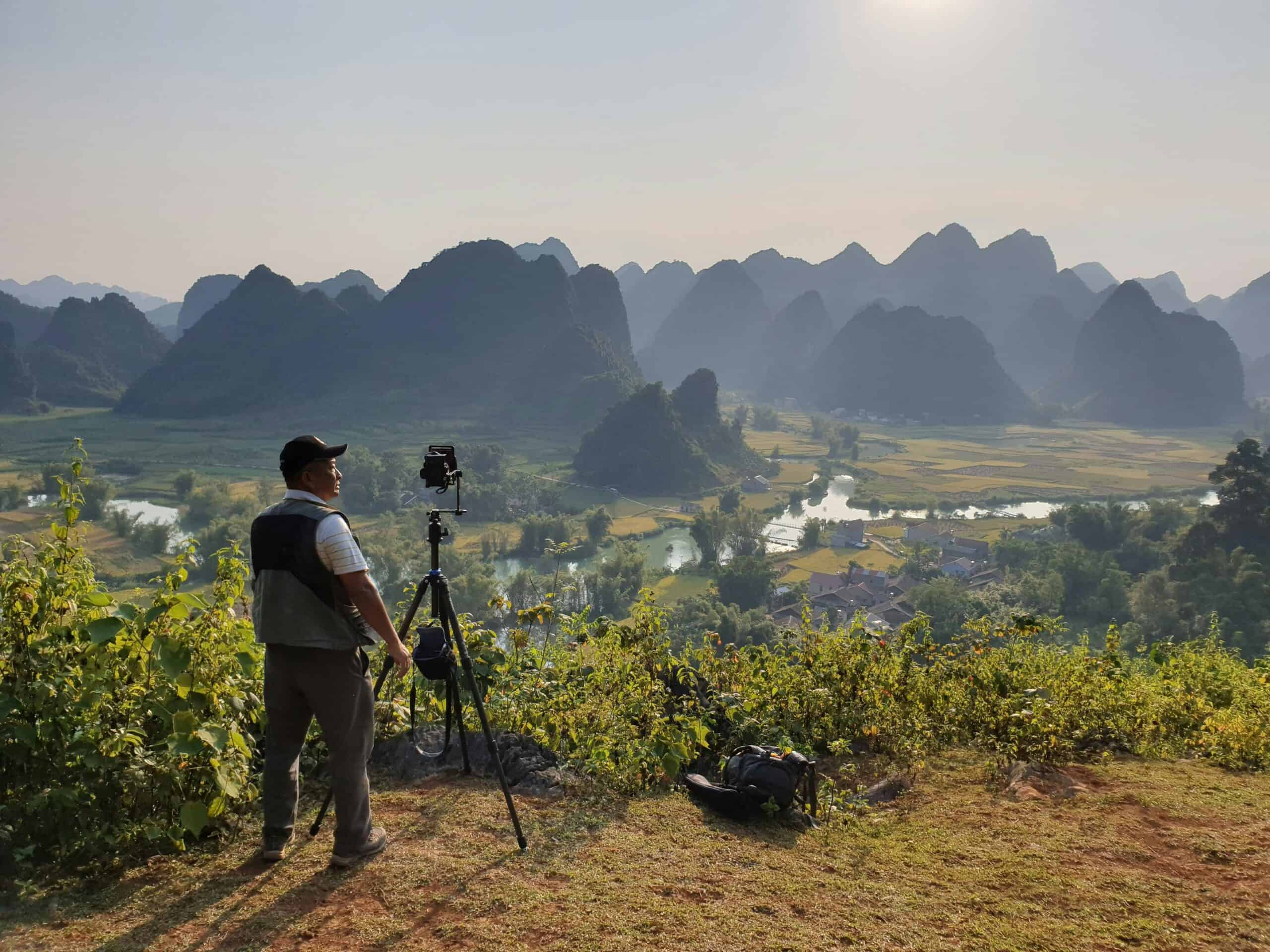
Advanced Notes for the EOS R6 Mark II
- Custom modes (C1/C2): store “Pano-Day” (M, ISO 100, f/8, AF off, WB Daylight) and “Pano-HDR” (M, ISO 100, f/8, AEB ±2 EV, 2s timer). This cuts setup time on-site.
- Electronic vs mechanical shutter: for long exposures on tripod, use mechanical; for pole or car with higher shutter speeds, electronic can reduce vibration.
- Pixel shift not available; rely on multi-row for higher final resolution. A careful 24–30 shot spherical at 24MP still yields high-quality 12–16K equirectangulars after stitching.
- Dynamic range: keep ISO low for maximum highlight headroom. For tricky interiors, bracket rather than push ISO.
Frequently Asked Questions
- Can I shoot handheld panoramas with the Canon EOS R6 Mark II?
Yes, for single-row landscapes in good light. Use fast shutter speeds (1/250s+), IBIS on, and 30–40% overlap. For full 360×180° or interiors, a tripod and pano head are strongly recommended to avoid parallax and stitching errors.
- Is the Nikon Z 20mm f/1.8 S wide enough for a single-row 360?
Not for a full sphere. At 20mm rectilinear you’ll need multiple rows for 360×180°. For a simple horizon sweep (cylindrical pano), 8–9 shots can work. For a full sphere, plan on ~24 + zenith/nadir.
- Do I need HDR for interiors with bright windows?
Usually, yes. Bracket ±2 EV (or more if needed) to capture window highlights and interior shadows. Merge HDR in your stitcher or pre-merge per viewpoint.
- How do I avoid parallax errors?
Use a panoramic head and align the lens’s entrance pupil over the rotation axis. Calibrate once for 20mm and mark the rail position. Keep nearby objects consistent distance from the lens where possible.
- What ISO range is safe on the R6 Mark II in low light?
On tripod, stay at ISO 100–400 for best DR and color. ISO 800 is still quite clean if you need to shorten shutter times. Reserve 1600–3200 for action or when support is limited.
- Can I store pano settings on the R6 Mark II?
Yes. Use C1/C2 to store two custom setups (e.g., daylight static and HDR interior). This speeds up field work and ensures consistent results.
- What’s the best tripod head for this setup?
A two-axis panoramic head with fore/aft and lateral rails (e.g., Nodal Ninja, Leofoto) that allows precise entrance pupil alignment for a 20mm lens. Add an indexed rotator for consistent yaw increments (e.g., 45° clicks if shooting 8 per row).
Bonus: Industry Standards and Further Reading
For deeper technique and gear choices, this DSLR/virtual tour guide summarizes current best practices and lens/body pairings in the pano world. Virtual tour camera & lens guide.
Want a refresher on pano technique and general pitfalls? The community insights here are evergreen. Best techniques to take 360 panoramas.