
Why This Camera & Lens Are Great for Panoramas
If you’re wondering how to shoot panorama with Canon EOS R5 & Laowa 8-15mm f/2.8 FF Zoom Fisheye, you’ve got a powerhouse combo. The Canon EOS R5’s 45MP full-frame sensor (36×24 mm, ~4.4 µm pixel pitch) delivers superb detail, wide dynamic range at base ISO (roughly 13.5 EV), and robust 14-bit RAW files that hold up in heavy stitching and tone mapping. The R5’s IBIS (in-body stabilization) is excellent for handheld shooting, and its electronic level and grid overlays help keep horizons straight. Dual Pixel AF II is fast and sticky when you need it, but for panos you’ll often switch to manual focus for consistency.
The Laowa 8-15mm f/2.8 FF Zoom Fisheye is a specialty manual lens that covers both circular fisheye (at the 8mm end) and diagonal fisheye (toward 15mm). On full frame, this gives you two practical panorama modes: ultra-fast coverage with 8mm circular frames (fewer shots needed) or slightly higher-resolution stitches using 12–15mm diagonal fisheye frames. The lens is fully manual (aperture and focus), which is a plus for pano consistency; chromatic aberration is generally well controlled for a fisheye, and sharpness is very good from f/5.6–f/8. With the R5, you can use a native RF mount version (or the appropriate adapter depending on the lens mount you own); in either case the combo balances well on a panoramic head.
Quick Setup Overview
- Camera: Canon EOS R5 — Full Frame 45MP sensor, ~4.4 µm pixel pitch, excellent base ISO dynamic range (~13.5 EV).
- Lens: Laowa 8-15mm f/2.8 FF Zoom Fisheye — fisheye zoom; circular at 8mm, diagonal at 12–15mm; fully manual focus and aperture.
- Estimated shots & overlap (field-tested):
- 8mm circular: 3–4 around at 0° tilt + 1 zenith + 1 nadir (5–6 total). Use 30–35% overlap; 4 around is safer indoors.
- 12mm diagonal: 6 around + zenith + nadir (8 total). 30% overlap.
- 15mm diagonal: 8 around + zenith + nadir (10 total). 25–30% overlap.
- Difficulty: Easy to Intermediate (easy capture with fisheye; nodal alignment and post still matter).
Planning & On-Site Preparation
Evaluate Shooting Environment
Before you think about yaw angles or bracketing, scan the space. Note the light direction and intensity, reflective surfaces (glass, polished floors), and moving elements (people, trees, cars). If shooting through glass, keep the lens close to the glass (1–2 cm) to reduce reflections and ghosting. For interiors with mixed lighting, identify color temperatures (daylight, tungsten, LEDs) and plan to lock a white balance that gives you consistent stitching later.
Match Gear to Scene Goals
For indoor real estate and quick-turnaround virtual tours, the Laowa at 8–12mm minimizes the number of shots while the EOS R5’s clean ISO 400–800 files handle shadow lifting. Outdoors at sunset, the R5’s dynamic range plus HDR bracketing preserves highlights while maintaining texture in shadows. For events, the fisheye’s huge field of view limits the number of frames, which reduces stitching issues from moving crowds.
Practical ISO guidance for the R5: aim for ISO 100–200 in daylight; ISO 400–800 indoors; ISO 800–1600 for night if you’re tripod-mounted and can apply mild denoising in post. The R5 handles these ranges gracefully without banding or color shifts when exposed to the right.
Pre-shoot Checklist
- Charge batteries and format cards; 45MP RAW brackets consume storage fast.
- Clean the front element carefully; fisheyes see everything, including dust.
- Level tripod and confirm panoramic head calibration (nodal/no-parallax point).
- Safety: weigh down tripod in wind; use a tether for rooftop or pole work; check car mounts twice.
- Backup workflow: shoot an extra full rotation in case of stitching gaps or motion issues.
Essential Gear & Setup
Core Gear
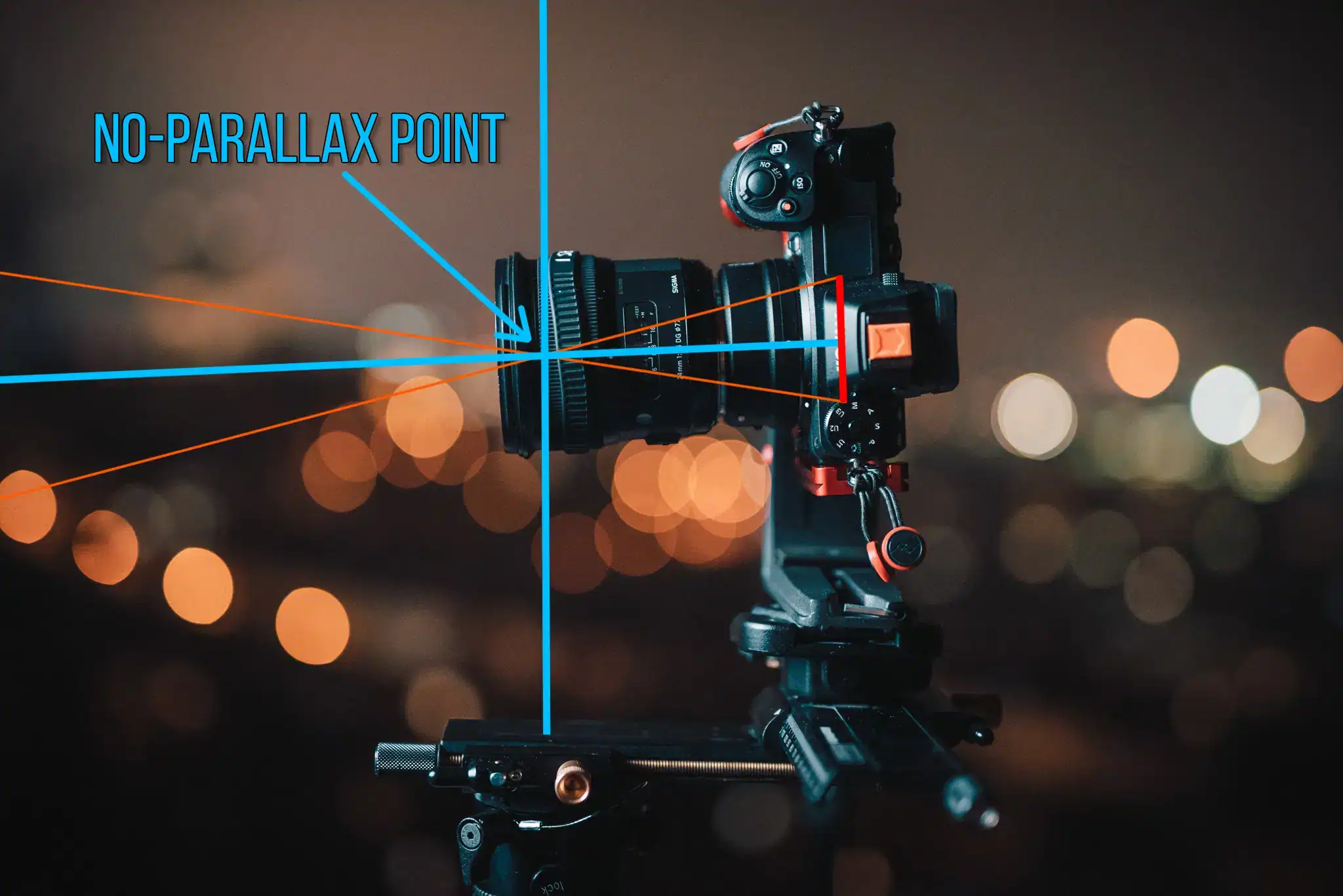
- Panoramic head: A proper panoramic head lets you rotate around the lens’s no-parallax point (entrance pupil), eliminating parallax. This is crucial when nearby objects or rails are in frame.
- Stable tripod with leveling base: Fast, repeatable leveling saves time and prevents horizon correction headaches later.
- Remote trigger or app: Use Canon Camera Connect or a wired remote to avoid vibrations, especially at slower shutter speeds.
Optional Add-ons
- Pole or car mount: Great for elevated or car-top 360s. Safety first: use a tether, monitor wind, and keep speeds low to limit vibration.
- Lighting aids: Small LEDs for dark interiors; aim for indirect fill to avoid glare on glossy surfaces.
- Weather protection: Rain cover for sudden showers; microfiber cloths for spray or mist.
If you’re new to nodal alignment, this panoramic head tutorial is an excellent walkthrough of the core principles and setup steps. Learn panoramic head setup and no-parallax alignment.
Step-by-Step Shooting Guide
Standard Static Scenes
- Level the tripod and align the nodal point: With the Laowa, roughly start by aligning the rotation point near the middle of the lens barrel, then perform a parallax test—frame a close object against a distant line, rotate the rig, and adjust the fore-aft rail until the relationship does not shift. Mark this position on the rail for 8mm and 15mm for future speed.
- Manual exposure and locked white balance: Set the R5 to Manual (M). Use a consistent white balance (Daylight indoors with windows often works; or measure with a gray card). Consistency prevents stitching seams from exposure/WB flicker.
- Capture with tested overlap:
- 8mm circular: 4 shots around at 0° pitch (90° yaw steps), plus 1 zenith and 1 nadir. Indoors with close objects, 4-around is safer than 3-around.
- 12mm diagonal: 6 shots around (60° steps) + zenith + nadir.
- 15mm diagonal: 8 shots around (45° steps) + zenith + nadir. If you want extra margin near ceilings/floors, shoot a two-row ring (+30° and -30°) and you can often skip separate Z/N.
- Take a nadir (ground) shot: Tilt the camera straight down and hide the tripod by moving it slightly, or shoot a handheld nadir and patch in post. Capture a clean plate of the floor if possible.
HDR / High Dynamic Range Interiors
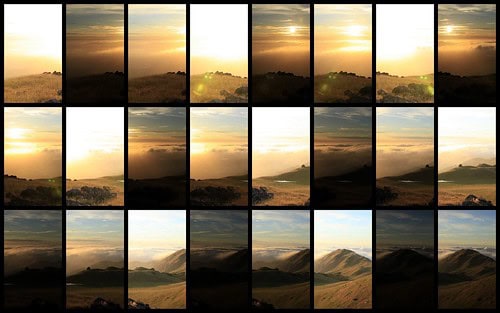
- Bracket ±2 EV (3–5 frames): Set the R5 to AEB; 0/±2 EV is a good start. In rooms with bright windows, consider 5 frames spaced 2 EV apart.
- Lock white balance and focus: Keep both constant across brackets to prevent color shifts and alignment errors.
- Use a 2s timer or remote: Prevents any vibration during bracket bursts.
Low-Light / Night Scenes
- Use longer exposures and stable support: Start around f/4–f/5.6, ISO 400–800, 1/30–1s depending on scene. The R5 is clean at ISO 800 when properly exposed.
- Disable IBIS on tripod: IBIS can introduce micro-blur at long exposures on a solid tripod. Turn it off in the R5 menu for locked-down shots.
- Use EFCS or remote: Electronic first curtain shutter reduces vibrations; avoid fully electronic in flickery LED environments.
Crowded Events
- Shoot two passes: First for framing; second while waiting for gaps in foot traffic. Markers on the floor help you rotate consistently back to the same yaw positions.
- Mask in post: In PTGui or similar, use masking to prioritize clean areas from the second pass.
Special Setups (Pole / Car / Drone)
- Secure gear and tether: On a pole, keep the rig compact and oriented over the center of mass. On cars, use rated suction mounts plus safety cords.
- Mind wind and vibration: Use higher shutter speeds (1/250s+) and minimize the number of frames (8mm circular fisheye is ideal) to reduce stitch mismatch.
Recommended Settings & Pro Tips
Exposure & Focus
| Scenario | Aperture | Shutter | ISO | Notes |
|---|---|---|---|---|
| Daylight outdoor | f/8–f/11 | 1/100–1/250 | 100–200 | Lock WB (Daylight). Avoid f/16 diffraction on high-res sensors. |
| Low light/night | f/4–f/5.6 | 1/30–1s | 400–800 | Tripod + remote; IBIS off; expose to the right without clipping. |
| Interior HDR | f/8 | Bracket ±2 EV | 100–400 | Brackets tame windows; keep aperture constant across all frames. |
| Action / moving subjects | f/5.6–f/8 | 1/200+ | 400–800 | Freeze motion; consider 8mm to reduce shot count and stitch issues. |
Critical Tips
- Manual focus at hyperfocal: At 8mm f/8, hyperfocal is about 0.27 m; at 15mm f/8, about 0.95 m. Set, then tape the ring.
- Nodal point calibration: Perform a near/far parallax test and mark your rail positions for 8mm and 15mm. Re-check if you change your L-bracket or plate.
- White balance lock: Pick a fixed WB to avoid seams. For mixed lighting, err on neutral and correct in post.
- RAW over JPEG: Gives maximum dynamic range and consistent color for stitching and HDR blending.
- IBIS and stabilization: Off on tripod; on if you must shoot handheld, but keep shutter speeds up and overlap generous.
For a deeper, hands-on explanation of shooting with a DSLR/mirrorless for 360 photos and virtual tours, this guide is practical and up-to-date. Using a DSLR or mirrorless to shoot and stitch a 360 photo.
Stitching & Post-Processing
Software Workflow
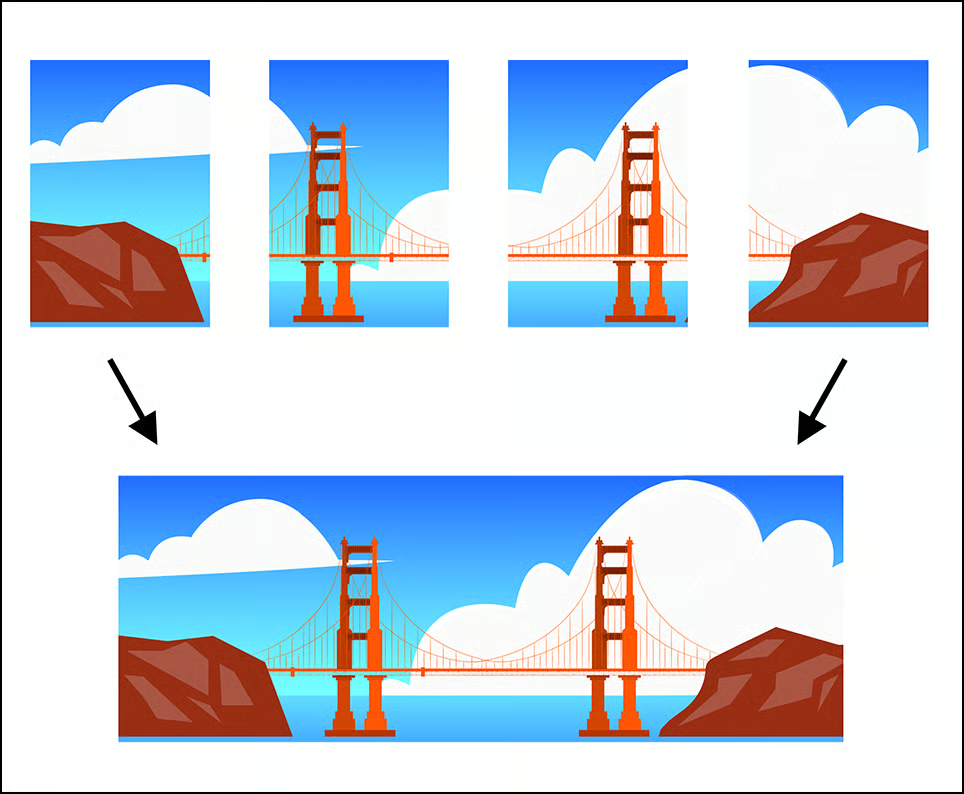
Import your RAW files into Lightroom (or Capture One). Apply a neutral profile, lens CA correction if needed, and synchronized exposure/WB across each yaw angle. Export 16-bit TIFFs to your stitcher. PTGui remains the industry standard for fast, robust control points and masking, while Hugin is a capable open-source alternative. Fisheye images are generally easier to stitch thanks to their ultra-wide coverage (fewer shots), but you must keep overlap consistent—aim for 25–30% with fisheyes; 20–25% with rectilinear lenses.
Once stitched to an equirectangular image, correct yaw/pitch/roll so the horizon is true, then fine-tune exposure and color balance. Export high-quality JPEG or 16-bit TIFF for further editing or upload to a virtual tour platform. For a balanced review of PTGui’s strengths and workflow, this piece is helpful. PTGui review: best tool for creating panoramas.
Cleanup & Enhancement
- Nadir patch: Use PTGui’s Viewpoint correction or patch with a cloned plate. AI-based tripod removal tools can save time on complex floors.
- Color and noise: Apply gentle luminance denoise (the R5 files take it well), and match color across the zenith/nadir to avoid visible seams.
- Leveling: Ensure straight verticals in interiors; correct roll/yaw with the optimizer to keep viewers comfortable in VR.
- Output: Export equirectangular 2:1 at 12k–16k pixels on the long side for high-quality VR; 8k is a solid web baseline.
Recommended Deep-Dive Video
Set up, shoot, and stitch panoramas step-by-step—watch this comprehensive tutorial to see the full flow in action.
If you want to estimate final spherical resolution for different focal lengths and sensor sizes, this reference is useful. DSLR spherical resolution considerations.
Useful Tools & Resources
Software
- PTGui panorama stitching
- Hugin open-source panorama stitcher
- Lightroom / Photoshop for RAW prep and retouch
- AI tripod removal tools for fast nadir cleanup
Hardware
- Panoramic heads (Nodal Ninja, Leofoto, SunwayFoto)
- Carbon fiber tripods with a leveling base
- Wireless remote shutters or Canon Camera Connect
- Pole extensions / car mounts with safety tethers
Disclaimer: software/hardware names provided for search reference; check official sites for details.
Common Mistakes & How to Avoid Them
- Parallax error: Always align to the no-parallax point before a critical shoot; re-check after moving the rig.
- Exposure/WB flicker: Use full manual exposure and a fixed WB, and synchronize RAW adjustments per yaw angle.
- Tripod shadows: Take a nadir shot or a clean floor plate to patch later.
- Ghosting from motion: Use masking in PTGui; shoot a second pass to capture clean areas.
- Night noise: Keep ISO modest (≤800 if possible), expose to the right, and use tripod + remote for clean files.
- Insufficient overlap: Stick to 25–35% overlap, especially with fisheyes, to maintain robust control-point matches.
For more guidance and FAQs specific to DSLR/ML 360 capture, this article goes deeper on best practices. DSLR/Mirrorless virtual tour FAQ and guide.
Frequently Asked Questions
-
Can I shoot handheld panoramas with the Canon EOS R5?
Yes—especially at 8mm where you need just 3–4 shots around. Enable IBIS, use 1/250s or faster, and increase overlap to ~40% to help the stitcher. However, for interiors or near objects, a tripod with a panoramic head is strongly recommended to avoid parallax seams.
-
Is the Laowa 8-15mm f/2.8 wide enough for single-row 360s?
Absolutely. At 8mm circular fisheye, you can complete a full 360×180 with 3–4 shots around plus zenith and nadir. At 12–15mm diagonal fisheye, plan on 6–8 around plus Z/N. The fewer shots at 8mm make it fantastic for crowded or fast-changing scenes.
-
Do I need HDR for interiors with bright windows?
Usually yes. Bracket ±2 EV (3–5 frames) to hold window highlights and interior shadows. The R5’s dynamic range is good, but HDR preserves highlight texture and keeps noise low in lifted shadows, leading to cleaner stitches.
-
How do I avoid parallax issues with this fisheye?
Use a panoramic head and align the rotation axis to the lens’s entrance pupil. Perform a simple near/far test and mark your slider for 8mm and 15mm positions. Re-verify any time you change plates or adjust the camera orientation.
-
What ISO range is safe on the EOS R5 for low light panoramas?
ISO 100–200 for daylight; ISO 400–800 for most interiors; ISO 800–1600 at night on tripod if needed. Expose to the right without clipping highlights to keep noise minimal. Apply mild denoise after stitching.
-
Can I set up Custom Shooting Modes (C1/C2) for panoramas?
Yes. Store Manual mode, fixed WB, manual focus, drive mode (AEB for HDR), and IBIS off (tripod use) into C1. Save a handheld pano variant with IBIS on and higher shutter speed into C2. This speeds up field work.
-
How do I reduce flare when using a fisheye?
Avoid pointing directly into strong light sources; shield the sun with buildings/trees, or time the rotation so the sun is at a frame edge where it’s easier to retouch. Keep the front element spotless—fisheye curvature amplifies dust glints.
-
What’s the best tripod head for this setup?
A two-axis panoramic head with fore-aft and lateral adjustments (e.g., Nodal Ninja, Leofoto) works great. Make sure it supports the R5’s weight and allows precise rail markings for repeatability.
Real-World Scenarios with the R5 + Laowa 8–15mm
Indoor Real Estate (Tight Rooms)
Use 12mm diagonal fisheye for a balance of resolution and coverage: 6 around + Z/N. Set f/8, ISO 200–400, bracket ±2 EV. Lock WB to “Daylight” if window light dominates; otherwise try a custom WB. Keep the camera centered in the room to reduce converging verticals and use a leveling base to keep horizons perfect.
Outdoor Sunset (High DR)
At 8mm circular, shoot 4 around + Z/N with 5-shot AEB (±2 EV). Meter for mid-tones, protect highlights, and let the R5’s RAW latitude handle the shadows. Ghosting from moving clouds or foliage is minimized by fewer frames.
Event Crowds (Motion Management)
Shoot two passes at 8mm. First pass captures the full scene; second pass waits for gaps in critical directions (entrances, signage). In PTGui, use masks to prioritize the cleaner frames for those yaw angles.
Rooftop or Pole Work (Safety First)
Prefer 8mm to reduce total shots. Keep shutter speeds high (1/250s+), strap the rig, and monitor wind gusts. A tethered lanyard is non-negotiable.
Behind-the-Scenes Vibe
Final Thoughts
Learning how to shoot panorama with Canon EOS R5 & Laowa 8-15mm f/2.8 FF Zoom Fisheye pays off quickly: minimal frames at 8mm help you work faster in dynamic scenes, while the R5’s 45MP sensor ensures excellent detail even after heavy processing. With solid nodal alignment, disciplined exposure/WB, and a reliable stitching workflow (PTGui/Hugin), you’ll produce clean, high-resolution 360 photos for web, VR, or large prints. If you want a structured refresher on panoramic head setup, this guide is a great companion. Set up a panoramic head for high-end 360 photos.