
Why This Camera & Lens Are Great for Panoramas
The Canon EOS R5 paired with the Canon RF 14–35mm f/4L IS USM is a stellar combo for high-resolution panoramas and full 360 photos. The EOS R5’s full-frame 45MP sensor (36×24 mm) delivers exceptional detail with a pixel pitch of roughly 4.4 μm, and a measured base-ISO dynamic range in the ~13.5–14 EV class. In practice, that means clean shadows, excellent highlight recovery, and ample resolution for gigapixel stitches or VR delivery. Its responsive EVF, focus aids (magnify/peaking), and EFCS/IBIS options also make it forgiving in low light and precise on a tripod.
The RF 14–35mm f/4L IS USM is an ultra-wide rectilinear zoom with a constant f/4 aperture and 77 mm front filter thread. At 14 mm, you get a diagonal FoV around 114° (rectilinear), with strong but well-corrected distortion and some edge stretching that stitching software handles well if you maintain healthy overlap. At f/5.6–8 the lens is sharp across the frame, with good control over lateral CA; correction profiles in modern RAW software further polish results. Image stabilization is rated up to 5.5 stops in-lens; combined with the R5 IBIS, Canon rates the system up to ~7 stops—great for handheld single-row panos, though for 360×180 capture a leveled tripod and panoramic head are still best.
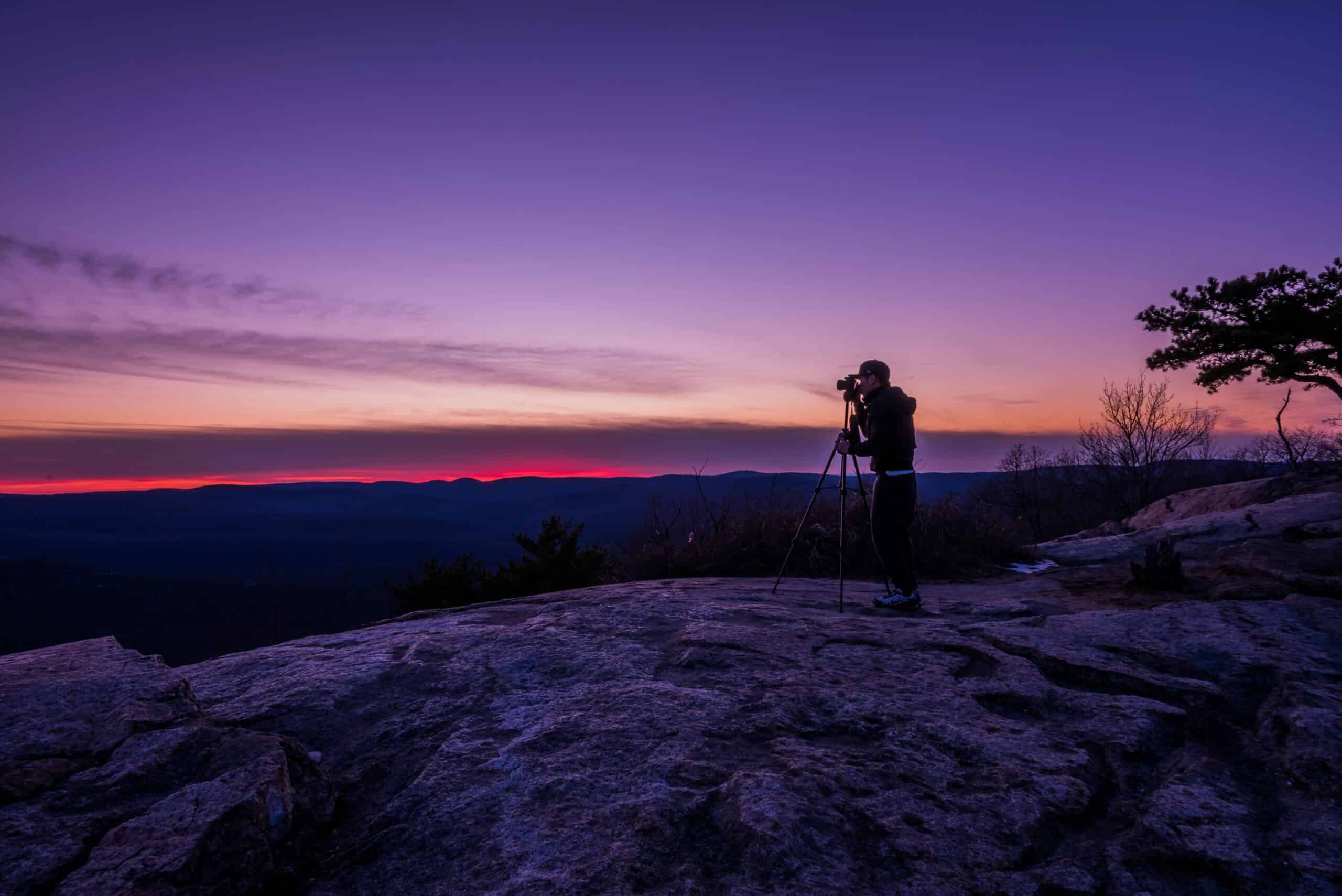
Quick Setup Overview
- Camera: Canon EOS R5 — Full-frame (36×24 mm), 45MP (8192×5464), ~14 EV base DR, excellent AF and manual focus aids.
- Lens: Canon RF 14–35mm f/4L IS USM — Rectilinear ultra-wide zoom; sharpest around f/5.6–f/8; moderate barrel distortion at 14 mm corrected in software; 77 mm filter thread; minimum focus 0.2 m.
- Estimated shots & overlap (portrait orientation, ~30% overlap, full 360×180):
- 14 mm: 6 around × 3 rows (pitch -45°, 0°, +45°) + 1 zenith + 1 nadir ≈ 20 shots.
- 20–24 mm: 8 around × 4 rows + zenith + nadir ≈ 34–36 shots (adds resolution, safer edges).
- 35 mm: 10–12 around × 5 rows + zenith + nadir ≈ 52–62 shots (for ultra-detailed/gigapixel).
- Single-row cylindrical panoramas: 14–20 mm, 6–8 around is typical.
- Difficulty: Moderate — easy outdoors with good light; indoor 360s require careful nodal alignment and HDR bracketing.
Planning & On-Site Preparation
Evaluate Shooting Environment
Read the light first. Big dynamic range (e.g., interiors with bright windows or sunset gradients) will push exposure and stitch tolerance. Reflective surfaces like glass, polished floors, or cars invite ghosting and flare—avoid pointing directly at strong sources, or plan to bracket. If shooting through glass, get the front element as close as possible (1–3 cm) to minimize internal reflections. Watch for moving elements—trees, people, vehicles—and decide whether to wait for a lull, shoot two passes for masking, or embrace motion blur.
Match Gear to Scene Goals
For how to shoot panorama with Canon EOS R5 & Canon RF 14–35mm f/4L IS USM, the combo is flexible: the R5’s ISO performance is robust up to ISO 800–1600 for panoramas (for 360s, we typically keep ISO 100–800 on a tripod). The RF 14–35mm’s rectilinear view avoids fisheye curvature and is ideal where straight lines matter (architecture, real estate), though it requires more shots than a fisheye. For fast-moving scenes, the R5’s IBIS and the lens’s IS help stabilize single-row handheld panos, but true 360×180 work is best on a panoramic head to eliminate parallax.
Pre-shoot Checklist
- Fully charge batteries; high-capacity, fast UHS-II cards; clean front/rear elements and the sensor if needed.
- Level your tripod; ensure your panoramic head is calibrated for the lens’s no-parallax point (see below).
- Safety: If on rooftops or windy locations, use a weighted hook, sandbag, or tether. For car mounts or poles, use redundant tethers and check all clamps.
- Backup workflow: Shoot an extra safety round for each row; if bracketing HDR, consider a second bracket set at a slightly different exposure.
Essential Gear & Setup
Core Gear
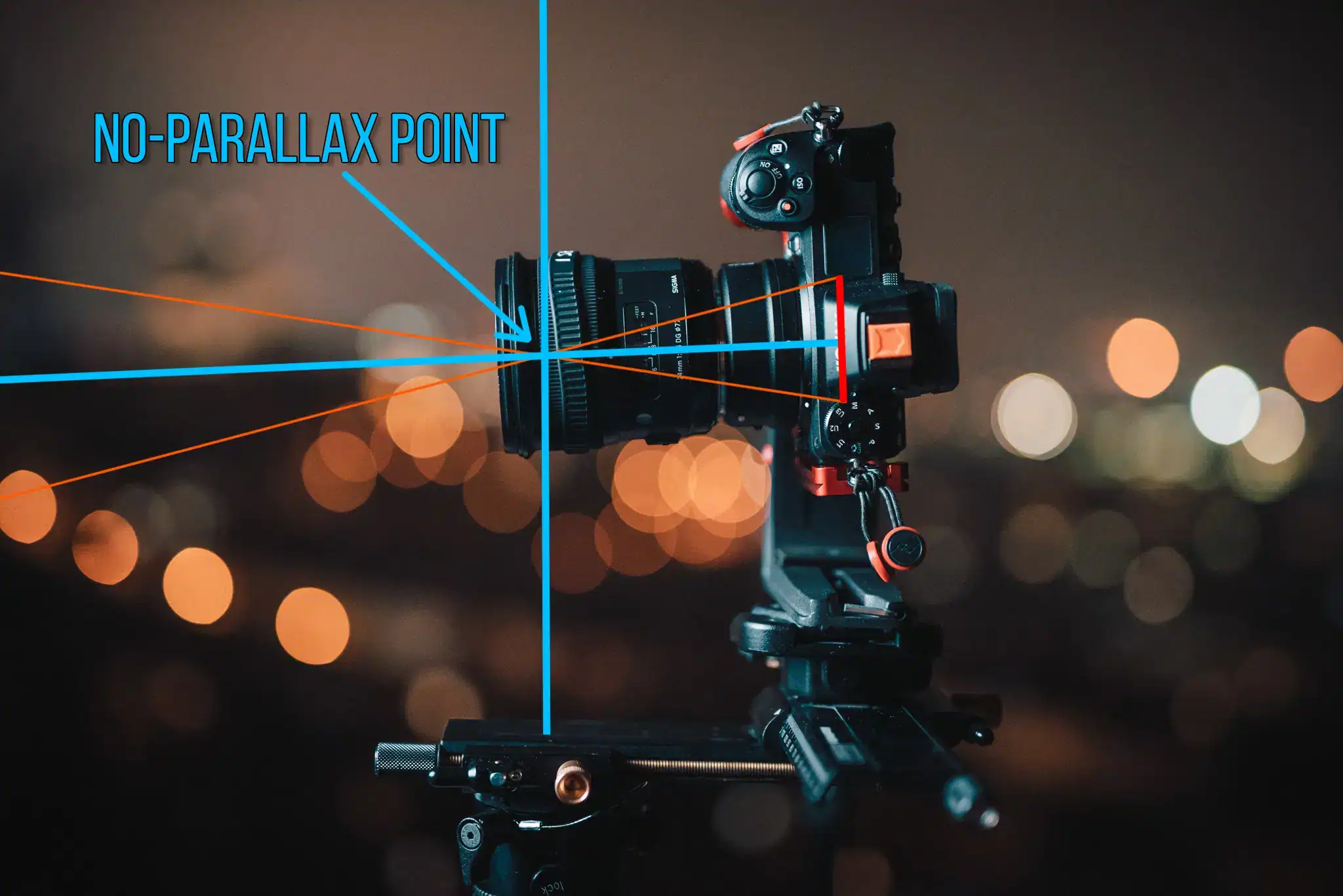
- Panoramic head: This aligns the entrance pupil (“nodal point”) of your lens over the tripod’s rotational axis, eliminating parallax. With rectilinear lenses like the RF 14–35mm, correct nodal alignment is critical to clean stitches in tight interiors.
- Stable tripod with leveling base: A leveling base speeds setup and keeps your horizon level across rows.
- Remote trigger or Canon Camera Connect app: Avoid camera shake; EFCS is recommended for the R5 to reduce vibration on a tripod.
Optional Add-ons
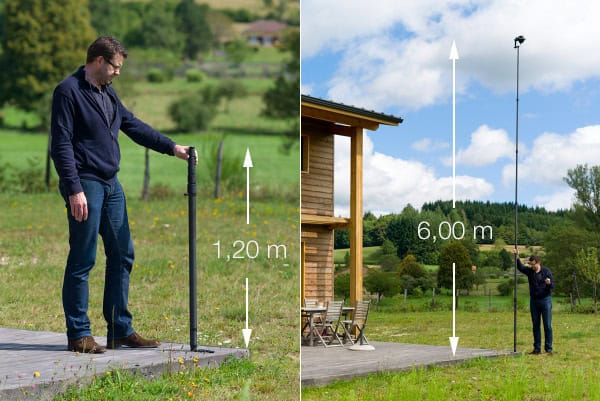
- Pole or car mount: Great for rooftops or elevated viewpoints. Use safety tethers and avoid high winds; slow down panning for fewer vibrations.
- Lighting aids: Small LED panels or bounced flash can lift shadow detail in cavernous interiors, but maintain consistency to prevent stitching artifacts.
- Weather protection: Rain cover and microfiber cloths. The R5/RF L combo is weather-sealed, but keep ports and joints protected in prolonged rain.
Step-by-Step Shooting Guide
Standard Static Scenes
- Level and align: Level the tripod, then adjust your panoramic head so the rotation is truly horizontal. Set the camera in portrait orientation to maximize vertical coverage.
- Calibrate the nodal point: Place two vertical reference objects (one near, one far) overlapping in your frame. Rotate the camera; if the near object shifts relative to the far one, slide the camera forward/back on the rail until the shift disappears. Mark this position for 14 mm, 20 mm, 24 mm, and 35 mm (the entrance pupil shifts slightly with focal length).
- Manual everything: Set manual exposure (same settings for every frame), manual white balance (Daylight for sun, Tungsten/3200–4000K indoors, or fixed Kelvin), and manual focus. With 14 mm at f/8, a focus distance around 0.8–1 m sits near hyperfocal on full frame; at 24–35 mm, focus ~2–5 m depending on aperture.
- Capture with overlap: At 14 mm, shoot 6 frames around for the middle row, then repeat at +45° and -45° pitch. Add a zenith shot (+90°) and a nadir shot (-90°) for the ground. Use ~25–35% overlap to mitigate edge stretching and ensure reliable control point generation.
- Nadir capture: For a cleaner nadir, shift the tripod slightly and take a handheld nadir patch at the same exposure and focal length, keeping the lens over the same ground point if possible.
HDR / High Dynamic Range Interiors
- Bracket exposure: Use ±2 EV or ±2 and ±4 EV for extreme windows. The R5’s bracketing with a 2-second self-timer or remote reduces vibration. Keep WB and focus locked across brackets.
- Order matters: Shoot each bracket sequence per position before rotating. Later, batch-fuse brackets to HDR before stitching, or let PTGui handle exposure fusion on import.
Low-Light / Night Scenes
- Longer exposures: Use tripod, turn off IS/IBIS for tripod work to avoid micro-jitter, and enable EFCS. ISO 100–400 preferred; ISO 800 still excellent on the R5 if wind requires shorter shutters. Avoid beyond ISO 1600 unless necessary.
- Remote trigger: Use a remote or the app to avoid touching the camera. For very long exposures, consider mirror lock (not applicable on mirrorless) or just ensure a delay to settle vibrations.
Crowded Events
- Two passes: First pass captures the entire sphere; second pass waits for gaps. In post, mask in the cleaner areas.
- Faster shutters: Use 1/200–1/400 and ISO 400–800 to reduce subject blur. The RF 14–35mm’s wide FOV keeps more of the scene in frame with fewer rotations.
Special Setups (Pole / Car / Elevated)
- Secure gear: Use double clamps and safety tethers, check weight limits, and account for wind load. Keep movements smooth and slower than usual.
- Simplify rows: On a pole, reduce to a single or double row plus zenith/nadir to minimize time aloft. Consider 14–20 mm to keep shot count low.
Recommended Settings & Pro Tips
Exposure & Focus
| Scenario | Aperture | Shutter | ISO | Notes |
|---|---|---|---|---|
| Daylight outdoor | f/8–f/11 | 1/100–1/250 | 100–200 | Lock WB (Daylight or fixed Kelvin) |
| Low light/night | f/4–f/5.6 | 1/30–multi-sec | 100–800 | Tripod + EFCS; IS/IBIS off on tripod |
| Interior HDR | f/8 | Bracket ±2 EV (3–5 frames) | 100–400 | Balance bright windows and interior shadows |
| Action / moving subjects | f/5.6–f/8 | 1/200+ | 400–800 | Freeze motion; consider two-pass capture |
Critical Tips
- Manual focus near hyperfocal: At 14 mm and f/8, ~0.8–1 m yields near-infinity sharpness. At 35 mm and f/8, focus around 5 m. Use R5 focus peaking/magnification.
- Nodal alignment: Mark rail positions for 14, 20, 24, and 35 mm on your pano head. Keep the entrance pupil over the pivot for zero parallax.
- White balance lock: Use fixed Kelvin or a scene-appropriate preset so that all frames have consistent color for stitching.
- RAW over JPEG: The R5’s RAW files give more DR and color latitude—especially important for HDR merges and mixed lighting.
- Shutter mode: Use EFCS on a tripod to minimize vibration; avoid fully electronic shutter under flickering lights to prevent banding.
- Diffraction caution: On a 45MP sensor, diffraction softening starts to show past f/11—try to keep f/5.6–f/8 for maximum sharpness.
Stitching & Post-Processing
Software Workflow
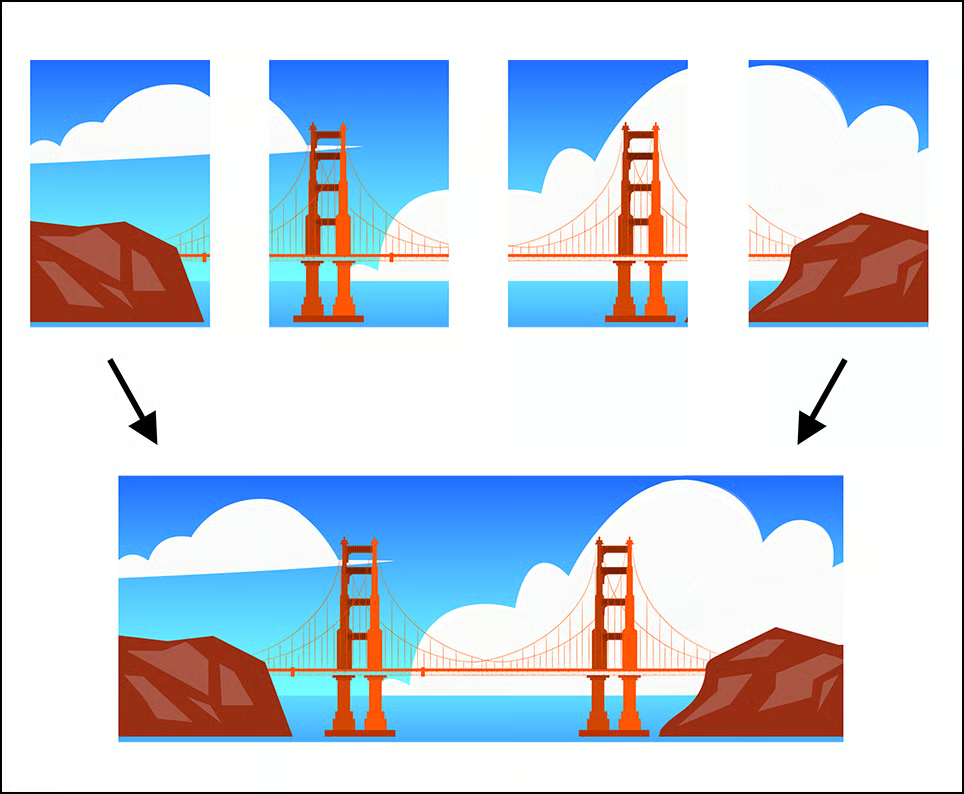
Import RAWs into Lightroom or equivalent, apply consistent lens profile, WB, and basic tone corrections across the set. If you bracketed, either pre-merge brackets to HDR DNG (per view) or let PTGui or Hugin manage exposure fusion. Rectilinear lenses like the RF 14–35mm typically need 20–30% overlap for reliable control points; at 14 mm, aim for 30–35% to mitigate edge stretching. PTGui is a gold standard for complex 360×180 projects; Hugin is a powerful open-source alternative. After stitching to an equirectangular projection, make final color and contrast tweaks, clean up the nadir, and export high-quality JPEG/TIFF for VR or web viewing. See an in-depth PTGui overview here: PTGui review and workflow insights.
Cleanup & Enhancement
- Nadir patch: Use a separately captured nadir or a logo patch. Content-aware fill and clone tools work well on simple surfaces.
- Color and noise: Use masked noise reduction on shadows; the R5’s ISO 800 files remain very clean when properly exposed.
- Level the horizon: Use PTGui’s vertical line tool or Lightroom’s Transform to correct roll/pitch/yaw.
- Export: For 360 viewers, export 2:1 equirectangular JPEG at 8–12k on the long side for web; keep a 16–20k TIFF master for archival or VR headsets.
If you’re new to panoramic heads and 360 pipeline, this practical guide is excellent: Using a mirrorless/DSLR to shoot and stitch a 360 photo. For foundational pano-head setup principles, see this tutorial: Panoramic head basics and entrance pupil setup.
Disclaimer: Always review the latest documentation for your stitching software; interfaces and best practices evolve.
Useful Tools & Resources
Software
- PTGui panorama stitching
- Hugin (open source)
- Adobe Lightroom / Photoshop
- AI tripod/nadir removal tools
Hardware
- Panoramic heads (Nodal Ninja, Leofoto, Really Right Stuff)
- Carbon fiber tripods with center hook
- Leveling bases and rotators with click-stops
- Wireless remote shutters
- Pole extensions / car suction mounts with safety tethers

Disclaimer: Brand names are provided for research; check manufacturer sites for current specs and compatibility.
Common Mistakes & How to Avoid Them
- Parallax error: Align the lens’s entrance pupil over the rotation axis. Recalibrate when changing focal lengths on the 14–35 mm.
- Exposure flicker: Use manual exposure and a locked white balance. Disable Auto Lighting Optimizer and any auto exposure adjustments.
- Tripod shadows and footprints: Capture a dedicated nadir patch or plan to clone them out.
- Ghosting from moving subjects: Shoot two passes and mask slower-moving elements during post.
- Softness from diffraction or shake: Stay around f/5.6–f/8 on the R5. Use EFCS and a remote; turn IS/IBIS off on a tripod.
Frequently Asked Questions
-
Can I shoot handheld panoramas with the Canon EOS R5?
Yes, especially single-row partial panoramas. The R5’s IBIS and the RF 14–35’s IS help a lot. Use 14–20 mm, shoot quickly with 25–30% overlap, and keep shutter at 1/200+ if people or wind are present. For full 360×180, a tripod and pano head are strongly recommended to avoid parallax.
-
Is the RF 14–35mm f/4L wide enough for single-row 360?
No. As a rectilinear lens, 14 mm still requires multiple rows to cover 180° vertically. Plan on at least three rows (±45° and 0°) plus zenith and nadir. If you need fewer shots, a fisheye lens is the usual choice—but rectilinear is better when straight lines must stay straight.
-
Do I need HDR for interiors with bright windows?
Often yes. The R5 has strong dynamic range, but window-to-interior contrast can exceed 14 EV. Bracket ±2 EV (and ±4 EV for extreme cases). Keep WB and focus locked, and use identical brackets at each position for consistent merges.
-
How do I avoid parallax issues with this lens?
Use a panoramic head and calibrate the entrance pupil at your chosen focal length. Slide the camera on the rail until near/far objects don’t shift relative to each other as you pan. Mark the rail for 14, 20, 24, and 35 mm so you can return to the correct position quickly.
-
What ISO range is safe on the EOS R5 in low light?
For tripod-based panoramas, aim for ISO 100–400; ISO 800 remains very clean. ISO 1600 is usable when shutter speed must be maintained (wind or people), but expose carefully to protect shadows.
Field-Proven Setups and Case Tips
Indoor Real Estate, 14–20 mm, HDR
Use 6 around × 3 rows, ±2 EV bracketing, f/8 at ISO 100–200. Keep light sources consistent; turn off flickering lights when possible. Place the tripod centrally in the room for symmetry and easier masking.
Outdoor Sunset, 14 mm
Expose for the sky highlights and bracket to protect shadows. Avoid pointing into the sun if possible; if unavoidable, capture two quick passes around the sun area to have clean frames for masking flares.
Event Crowds, 20–24 mm
Increase shutter to 1/200–1/400 with ISO 400–800. Do two passes: one fast for coverage, one patient to catch gaps in traffic. In post, blend the cleaner segments.
Rooftop or Pole Shooting
Use 14–20 mm, single or double row to limit time elevated. Tighten all clamps, use tethers, and avoid gusty conditions. Capture a separate nadir after lowering the pole for an easy patch.
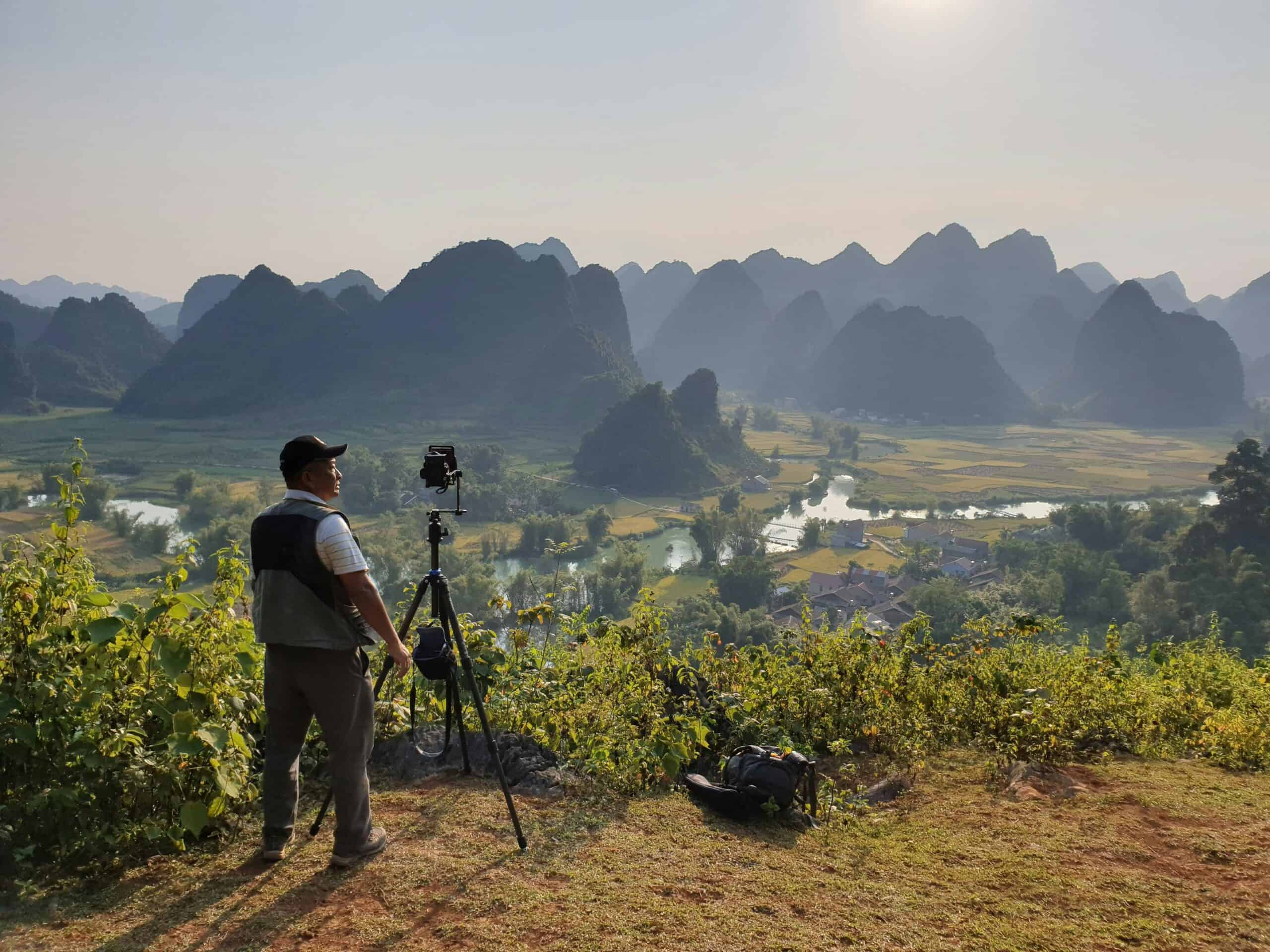
Practical Metrics for This Combo
- Pixel pitch and resolving power: At ~4.4 μm, the R5 resolves fine detail; avoid over-stopping. f/5.6–f/8 is the sweet spot for the RF 14–35mm across the frame.
- Overlap safety: Rectilinear ultra-wide frames stretch at the edges—use 30–35% overlap at 14 mm; 25–30% at 20–24 mm; 25% is fine at 35 mm if your pano head is precise.
- Stitch count planning:
- 14 mm: 18–20 shots (6 around × 3 rows + Z + N) per exposure. With 3-frame HDR, expect 54–60 captures.
- 24 mm: 32–36 shots (8 around × 4 rows + Z + N). With 3-frame HDR, ~96–108 captures.
- ISO guidance: ISO 100–400 best; ISO 800 still excellent; ISO 1600 acceptable with careful exposure. For shadow-critical work, prioritize longer shutter on tripod over pushing ISO.
For more background on panoramic head setup and industry practices, this reference is helpful: Virtual tour camera/lens guide and FAQ.