Why This Camera & Lens Are Great for Panoramas
If you want an efficient, high-resolution workflow for 360 photos and immersive panoramas, the Sony a7R V paired with the Sigma 15mm f/1.4 DG DN Diagonal Fisheye Art is a powerhouse. The a7R V’s 61MP full-frame sensor (approx. 35.7 × 23.8 mm; ~9504 × 6336 px, pixel pitch ~3.76 μm) delivers enormous detail and flexibility for clean stitches, sky/texture recovery, and high-quality nadir patches. Its robust dynamic range at base ISO gives you the headroom you need for HDR panorama work with bright windows or sunsets. The AF system is quick, but for panoramas you’ll appreciate sharp, predictable manual focus with peaking and magnification; the body’s customizable controls make it easy to lock exposure, white balance, and focus per pano set.
The Sigma 15mm f/1.4 DG DN Diagonal Fisheye Art is a modern, ultra-sharp diagonal fisheye with a 180° diagonal field of view on full frame. For 360° capture, a diagonal fisheye dramatically reduces shot count compared to rectilinear lenses while maintaining excellent edge-to-edge clarity once you stop down. Distortion is expected and desirable—stitchers like PTGui read fisheye projection metadata and use it to align images quickly and reliably. This combination is E-mount native, impeccably solid, and fast enough for low light or astro, while still allowing you to stop down to f/5.6–f/8 for maximum uniformity across the frame.
Quick Setup Overview
- Camera: Sony a7R V — Full-frame 61MP BSI CMOS, excellent DR at base ISO, 5-axis IBIS (turn off on tripod), advanced manual focus aids.
- Lens: Sigma 15mm f/1.4 DG DN Diagonal Fisheye Art — 180° diagonal FOV, fast f/1.4 for low light/astro, very sharp stopped to f/5.6–f/8, typical fisheye CA easily corrected in post.
- Estimated shots & overlap (tested-safe patterns):
- Standard: 6 around (yaw 60° each) + 1 zenith + 1 nadir (≈30–35% overlap).
- Speed run: 4 around (yaw 90°) at +10° pitch + 1 zenith + 1 nadir (requires careful nodal alignment; overlap ≈35–40%).
- HDR interiors: same patterns, but bracketed (e.g., 3–5 exposures per angle).
- Difficulty: Moderate for beginners (becomes easy after nodal calibration); fast and reliable for semi-pros.
Planning & On-Site Preparation
Evaluate Shooting Environment
Look for strong backlight sources, reflective surfaces (glass, polished floors, cars), and moving subjects. With a fisheye, the sun, bright light fixtures, and windows enter your frame easily, so plan your rotation to minimize flare and ghosting. For glass shooting (observation decks, showrooms), get the lens as close as safely possible to reduce reflections; angle the camera slightly if you must avoid direct internal reflections. For indoor spaces, anticipate mixed lighting—lock white balance and capture HDR brackets to keep color consistent and highlights in check.
Match Gear to Scene Goals
The Sony a7R V’s dynamic range at base ISO lets you preserve highlight detail in windows and sky while retaining shadow information. Use ISO 100–200 when possible for the cleanest stitch. In darker interiors or at night, ISO 400–800 remains very usable on this body for 360 photos—especially when you expose to the right and keep shutter speeds steady on a tripod. The Sigma 15mm fisheye minimizes the number of frames you need, helping you work faster in changing light or among crowds. The tradeoff is fisheye distortion, which stitchers handle well; just maintain solid overlap and nodal alignment.
Pre-shoot Checklist
- Power & storage: Fully charge batteries; bring spares. Use high-capacity, fast cards (UHS-II or CFexpress if available) for quick bracketing.
- Clean optics: Wipe the fisheye bulb carefully; dust at 15mm shows up everywhere.
- Tripod & head: Leveling base, calibrated panoramic head with marked nodal point for this lens.
- Safety: Wind checks for rooftops and poles; tether the camera if elevated. For car rigs, use redundant straps and avoid public traffic zones.
- Backup workflow: If the scene is important, shoot a second pass. For HDR, consider a short and a long bracket set to hedge against flicker or banding.
Essential Gear & Setup
Core Gear
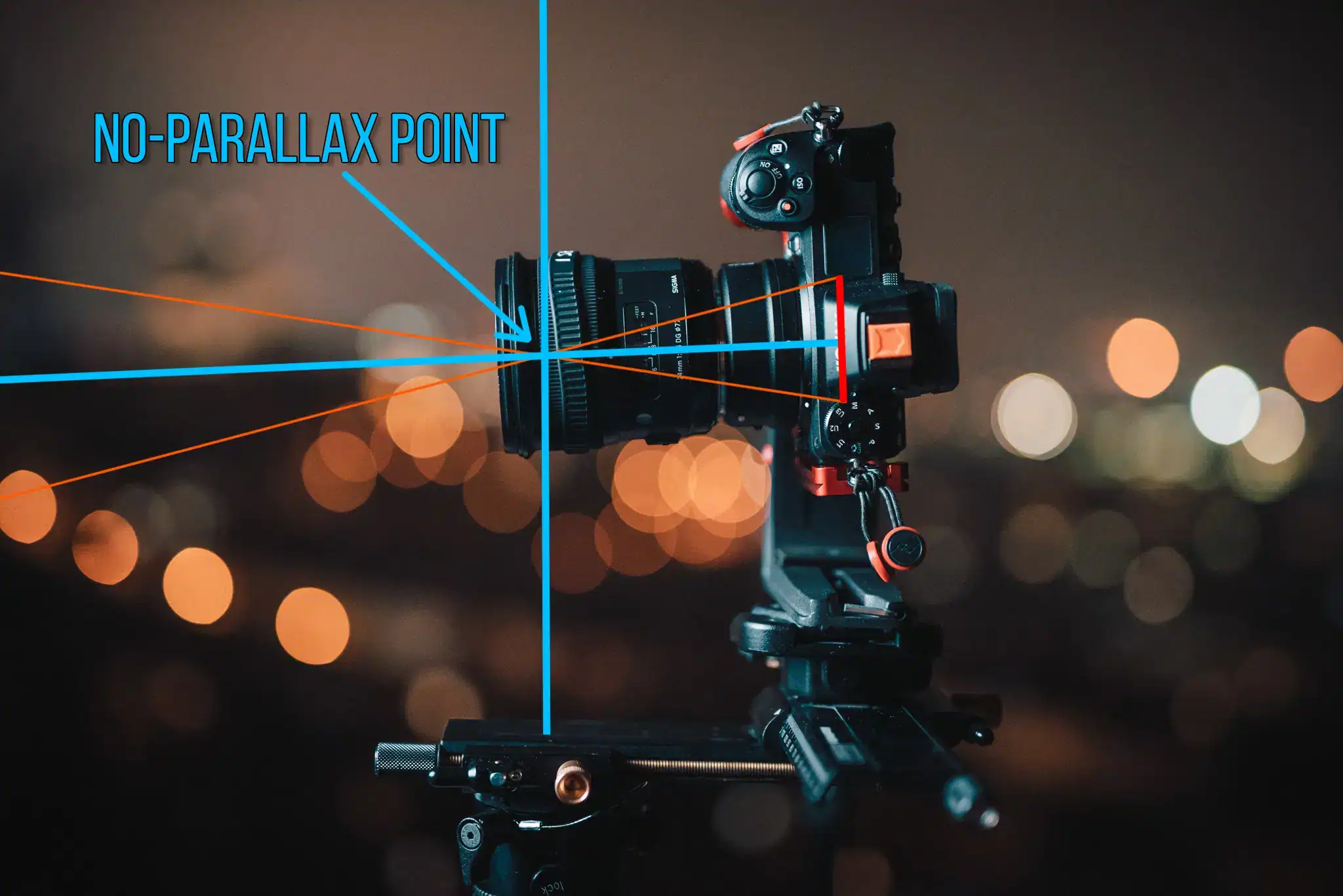
- Panoramic head: Critical for aligning the lens’s no-parallax (entrance pupil) point over the rotation axis. This eliminates parallax between near/far objects and makes stitching effortless.
- Tripod with leveling base: A levelling base speeds setup and keeps the horizon consistent, reducing post corrections.
- Remote trigger or app: Use a remote release or Sony Imaging Edge Mobile to avoid vibrations and to automate brackets.
Optional Add-ons
- Pole or car mount: Great for overhead or moving shots, but manage wind and vibration carefully. Always use safety tethers.
- Lighting aids: Continuous lights or bounced flash for dark corners in real estate; keep lighting consistent across frames.
- Weather protection: Rain covers and microfiber cloths; fisheye fronts collect droplets and fingerprints easily.
Step-by-Step Shooting Guide
Standard Static Scenes
- Level and nodal alignment:
- Level the tripod with the base, not the ball head. A bubble or digital level helps.
- On your panoramic head, slide the camera so the lens’s entrance pupil sits exactly above the rotation axis. Test with a close vertical object and far background—rotate 20–30°; if the relative position shifts, adjust accordingly and mark the rail for this combo.
- Manual exposure and WB:
- Set Manual mode. Meter for the mid-tones without clipping highlights (zebra and histogram help).
- Lock white balance (Daylight/Custom for outdoors; a Kelvin value or Custom WB for interiors). Consistency is vital for seamless stitching.
- Capture sequence:
- Use 6 around at 0° pitch (60° yaw steps) + 1 zenith + 1 nadir. Take the zenith first while the sky is clean, or last—just be consistent.
- Overlap ~30–35%. With the 15mm diagonal fisheye, this yields stress-free stitches in PTGui/Hugin.
- Nadir shot:
- After the main ring, tilt down for a dedicated nadir frame to make tripod removal easy.
- Optionally, move the tripod a few centimeters and shoot a handheld nadir patch while keeping the lens centered over the original nodal point.
HDR / High Dynamic Range Interiors
- Bracket ±2 EV (3–5 frames): Windows are often 4–8 stops brighter than rooms. The a7R V’s base ISO headroom plus 3–5 bracket sets will capture a full range for clean tonemapping or exposure fusion.
- Lock WB and focus: Keep both constant across all brackets and positions. Use a remote or 2s timer to avoid micro-shake.
- Disable IBIS on tripod: Prevent internal sensor corrections from adding blur between brackets.
Low-Light / Night Scenes
- Use f/4–f/5.6 and longer shutter times; start at ISO 100–200. If needed, ISO 400–800 on the a7R V is still very clean for 360 output.
- Enable EFCS or mechanical shutter to avoid LED banding; avoid fully electronic shutter around flickering light sources.
- Use a remote trigger and wait for wind lulls. Shoot an extra pass for safety.
Crowded Events
- Shoot two passes: one quick to lock in exposure, another to fill gaps during lulls in foot traffic.
- Mask in post: Use PTGui’s masking tools to favor frames with fewer people in each sector of the pano.
- Consider 6 around instead of 4: Higher overlap increases your options for ghost-free blends.
Special Setups (Pole / Car / Drone)
- Pole: Tether the a7R V and keep rotations slow. The 15mm fisheye reduces shot count, which is perfect on a wobblier platform. Watch wind; avoid long exposures.
- Car mounts: Only in controlled, safe areas. Use redundant straps, avoid public roads, and ensure zero movement during captures.
- Drone: Not typical for this heavy setup. If you must, keep to ground rigs or specialized drones rated for weight; always comply with regulations.
Field Scenarios (Mini Case Studies)
Indoor Real Estate
Use HDR brackets (±2 EV), f/8, ISO 100–200, and 6-around to ensure generous overlap around doorways and window edges. Lock WB to a Kelvin value to avoid shifts between rooms.
Outdoor Sunset Viewpoint
Expose for highlights; shoot a quick bracketed ring before the sun dips, then a second pass minutes later to blend a softer sky. Use the dedicated zenith frame for clean sky transitions.
Event Crowds
Go with 6-around at slightly faster shutter (1/125–1/250) and ISO 400–800 if necessary. Capture extra frames each direction, then mask moving people in post.
Rooftop Pole
Short exposures (1/200 or faster), ISO 400–800, and 4-around at +10° pitch to reduce total time aloft. Always tether your gear and check wind speeds.
Recommended Settings & Pro Tips
Exposure & Focus
| Scenario | Aperture | Shutter | ISO | Notes |
|---|---|---|---|---|
| Daylight outdoor | f/8–f/11 | 1/100–1/250 | 100–200 | Lock WB (Daylight or custom) |
| Low light/night | f/4–f/5.6 | 1/30–1/60 (tripod) | 400–800 | Remote trigger; IBIS off on tripod |
| Interior HDR | f/8 | Bracket ±2 EV | 100–400 | Balance windows and lamps; exposure fusion |
| Action / moving subjects | f/5.6–f/8 | 1/200+ | 400–800 | Freeze motion; double pass for masking |
Critical Tips
- Focus: Use manual focus and set near the hyperfocal at your working aperture. With a 15mm on full frame, f/8 gives deep DoF; verify with magnified live view.
- Nodal calibration: Once you’ve dialed the entrance pupil position, mark the rail. This saves time every shoot and consistency improves stitch quality.
- White balance lock: Mixed lighting is common in real estate and events. Lock WB to avoid color shifts frame-to-frame and across HDR brackets.
- RAW capture: Always shoot RAW (and RAW brackets for HDR). You’ll preserve the a7R V’s DR for highlight recovery and uniform color.
- IBIS off on tripod: Prevent micro-shifts during long exposures and brackets. Use EFCS or mechanical shutter to avoid LED banding.
Stitching & Post-Processing
Software Workflow
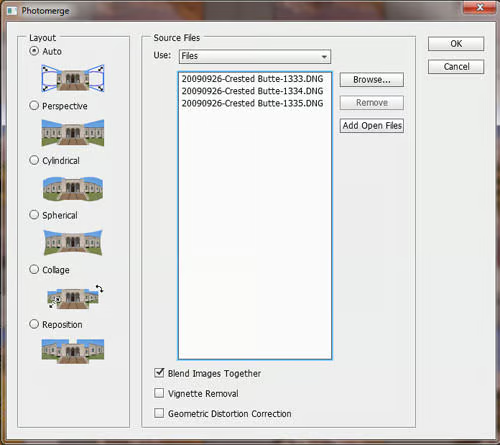
Import your RAWs into Lightroom or Capture One, apply uniform WB and lens correction only if needed (many stitchers handle fisheye geometry better without in-raw profiling), then export 16-bit TIFFs to your stitcher. PTGui is exceptionally fast and reliable with fisheyes, automatically detecting lens projection and creating strong control points. Hugin is a capable open-source alternative. For this combo, a 25–35% overlap around is ideal; the fewer frames mean faster masks and less risk of exposure flicker. After initial stitch, optimize control points, level the horizon, and check for seams around high-contrast edges and moving subjects. For a deeper primer on head setup and capture, see the panoramic head setup guide. Learn how to set up a panoramic head for high‑end 360 photos.
Cleanup & Enhancement
- Tripod/nadir patch: Render with a hole and patch via content-aware fill or a logo plate; PTGui’s Viewpoint correction or AI tools help for complex floors.
- Color & noise: Apply global color correction, lens CA cleanup (if needed), and noise reduction for low-light sets. Keep noise reduction consistent across the sphere.
- Geometry: Re-level horizon, adjust roll/yaw/pitch. Verify straight verticals in interior panos.
- Output: Export as an equirectangular JPEG/TIFF (2:1 aspect). Common sizes: 8k–12k for web VR, 16k for high‑detail tours. Follow platform limits.
For tool choice, PTGui is widely regarded as a top-tier stitcher for mixed workflows; see this review for context. Fstoppers: PTGui review.
Want a broad, platform-side overview of DSLR/mirrorless 360 capture and stitching? Oculus provides a concise guide. Using a DSLR or mirrorless to shoot and stitch a 360 photo.
Useful Tools & Resources
Software
- PTGui panorama stitching
- Hugin (open source)
- Lightroom / Photoshop for RAW and cleanup
- AI tripod removal or content-aware fill tools
Hardware
- Panoramic heads: Nodal Ninja, Leofoto, or equivalent rail systems
- Carbon fiber tripods for vibration control
- Leveling bases for fast setup
- Wireless remote shutters or intervalometers
- Pole extensions or car mounts with safety tethers
Disclaimer: Product names are for reference; check official sites for specs and compatibility.
Common Mistakes & How to Avoid Them
- Parallax error: Always align the no‑parallax point. Test with a near/far line before you start the main set.
- Exposure flicker: Manual mode, locked ISO, shutter, aperture, and WB—especially for HDR brackets.
- Tripod shadows or legs: Shoot a dedicated nadir patch and plan for clean, consistent lighting.
- Ghosting from movement: Capture extra frames, then mask in PTGui to pick the cleanest sectors.
- Noise or blur at night: Keep ISO modest (ideally ≤800), use remote release, and wait for wind lulls.
Frequently Asked Questions
- Can I shoot handheld panoramas with the Sony a7R V?
Yes for partial panos; for 360° work, a tripod and panoramic head are strongly recommended. Handheld 360s with a fisheye often suffer from parallax and uneven tilt/roll, which complicate stitches. If you must, shoot quickly, maintain consistent overlap, and keep the camera rotating around the same point at chest level.
- Is the Sigma 15mm f/1.4 DG DN Diagonal Fisheye wide enough for a single-row 360?
Yes. With 6 shots around (0° pitch) plus zenith and nadir, you’ll get reliable coverage and overlap. Skilled users can do 4 around at +10° pitch plus zenith/nadir to work faster, but alignment must be perfect.
- Do I need HDR for interiors with bright windows?
Usually yes. Bracket ±2 EV (3–5 frames) at each angle. The a7R V’s base ISO dynamic range helps, but large brightness differences require HDR or exposure fusion for natural results.
- How do I avoid parallax issues with this combo?
Calibrate the entrance pupil on your panoramic head and mark the rail. Keep the lens centered over the rotation axis for every frame, including zenith and nadir. Verify with a near/far test before every new location.
- What ISO range is safe on the a7R V for low light 360s?
For tripod-based panoramas, ISO 100–200 is ideal; ISO 400–800 remains clean and flexible for 360 outputs. Prefer longer shutter times over pushing ISO when the scene allows.
Safety, Reliability, and Data Workflow
Panoramic rigs can be top-heavy. Always lock your tripod legs fully, keep the center column down, and use a weight bag in wind. On rooftops and poles, tether the camera and plan for gusts; stop if wind exceeds your comfort threshold. For car-mounted shooting, use controlled environments only and redundant safety lines—no public traffic.
To protect your work, shoot two passes for critical scenes and maintain a redundant storage workflow: dual-card recording if available, immediate offload to a backup drive, and keep originals until your final stitched outputs are delivered. For more foundational advice from the panorama community, this Q&A is a solid primer. Best techniques to take 360 panoramas.
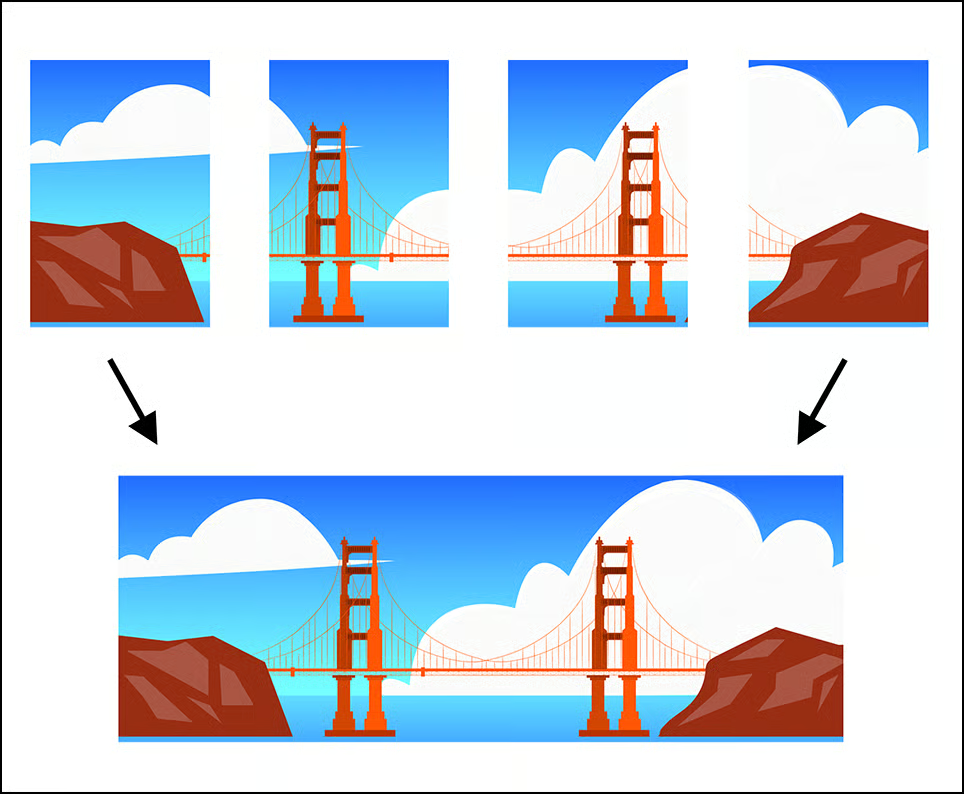
Visual Examples & Stitching Concepts
Wrap-up: Your Fast Lane to Pro-Quality 360°
That’s how to shoot panorama with Sony a7R V & Sigma 15mm f/1.4 DG DN Diagonal Fisheye Art: leverage the a7R V’s high resolution and dynamic range, lock exposure/WB, and let the 15mm fisheye cut your frame count without sacrificing sharpness. With a properly calibrated panoramic head, consistent overlap, and a disciplined HDR workflow when needed, you’ll produce crisp, artifact-free panos ready for VR tours and large displays. Practice your nodal alignment, save your pano head rail marks, and build a repeatable capture routine—you’ll shoot faster and stitch cleaner every time.