Why This Camera & Lens Are Great for Panoramas
The Sony a7R V is a 61MP full-frame mirrorless body with a back-illuminated sensor, excellent base ISO dynamic range (about 15 stops at ISO 100), and class-leading color depth. Its 3.76 µm pixel pitch records fine textures that are invaluable when you stitch multiple frames into a high-resolution 360 photo. The 5-axis IBIS (rated up to 8 stops) is fantastic for handheld work, and easily disabled on a tripod where you want absolute geometric stability.
The Pentax DA 10–17mm f/3.5–4.5 ED Fisheye offers a diagonal fisheye field of view that dramatically reduces the number of shots needed for a full spherical panorama. It’s a K-mount APS-C lens, so on the a7R V you’ll use a K-to-E adapter and typically enable APS-C/Super 35 crop. In APS-C crop, the a7R V still delivers ~26MP per frame—more than enough for professional 360 tours once stitched. The fisheye’s projection makes overlap generous and stitching easier in software like PTGui and Hugin.
Why this combo works: the a7R V provides superb raw quality, color, and wide DR for HDR panoramas, while the 10–17mm fisheye minimizes the shot count and speeds up capture. The tradeoffs: you’ll work in APS-C crop and with an adapted lens (usually manual focus/aperture), and you must control fisheye flare and parallax by aligning the entrance pupil on a panoramic head.
Quick Setup Overview
- Camera: Sony a7R V — Full-Frame 61MP BSI CMOS; APS-C crop output ~26MP; 5-axis IBIS; excellent base ISO DR.
- Lens: Pentax DA 10–17mm f/3.5–4.5 ED Fisheye — diagonal fisheye zoom for APS-C; sharpest stopped to f/8–f/11; moderate CA toward edges, easily corrected in raw.
- Estimated shots & overlap (APS-C crop):
- At 10mm: 6 around (60° yaw steps) + zenith + nadir (8 total). 25–35% overlap.
- At 14mm: 8 around (45° steps) + Z + N (10 total). ~30% overlap.
- At 17mm: 10–12 around (30–36° steps) + Z + N (12–14 total). 30% overlap.
- Difficulty: Moderate — easy shot count, but requires nodal alignment and careful flare control.
Planning & On-Site Preparation
Evaluate Shooting Environment
Walk the space and note changing light, reflective surfaces (glass, glossy floors, cars), and moving subjects. For glass, place the lens as close as safely possible (2–5 cm) and shoot perpendicular to reduce reflections; a black cloth behind the camera further suppresses glare. Avoid strong backlight on the fisheye front element to limit veiling flare and ghosting.
Match Gear to Scene Goals
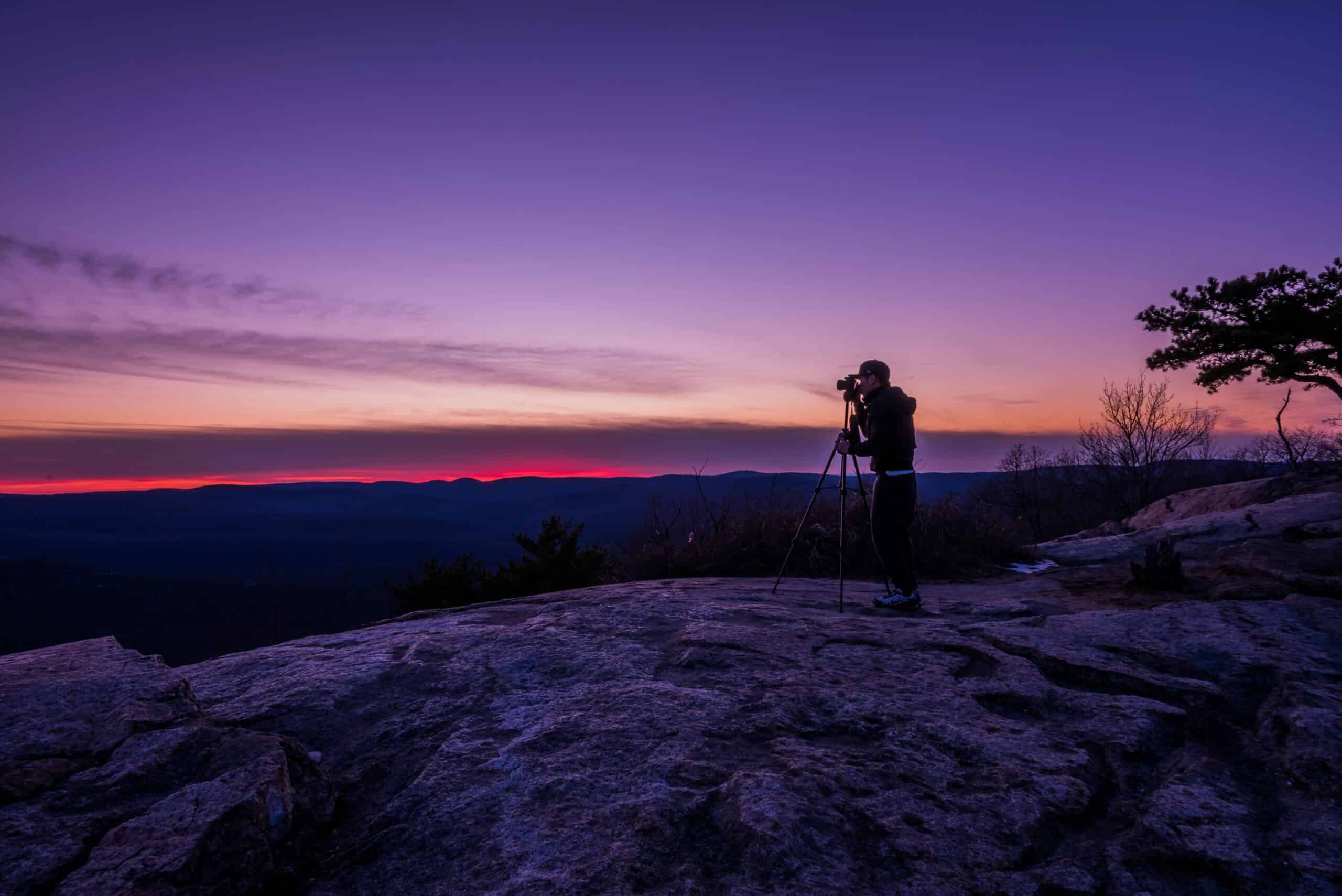
The a7R V’s wide DR and low read noise at base ISO give you clean shadows—ideal for interiors and sunset cityscapes. Indoors, ISO 100–400 on a tripod is optimal; you can safely go to ISO 800 for darker scenes, or 1600–3200 in a pinch with noise reduction. The Pentax 10–17mm fisheye minimizes shot count, which is perfect for fast-changing light or crowds, but brings fisheye distortion that stitching software must model correctly. For virtual tours, the low shot count reduces ghosting from moving subjects.
Pre-shoot Checklist
- Power and storage: full batteries, plenty of space on fast UHS-II or CFexpress Type A cards.
- Clean optics: dust on a fisheye shows easily. Clean front element and sensor.
- Tripod leveling: use a leveling base; calibrate panoramic head for the lens focal length you’ll use.
- Adapter readiness: K-to-E adapter fitted snugly; confirm aperture control (often manual) and solid lock-up.
- Safety: assess wind on rooftops; tether your gear; avoid overreaching when pole-mounting.
- Backup workflow: when time allows, shoot a second full round as insurance against ghosting or misfocus.
Essential Gear & Setup
Core Gear
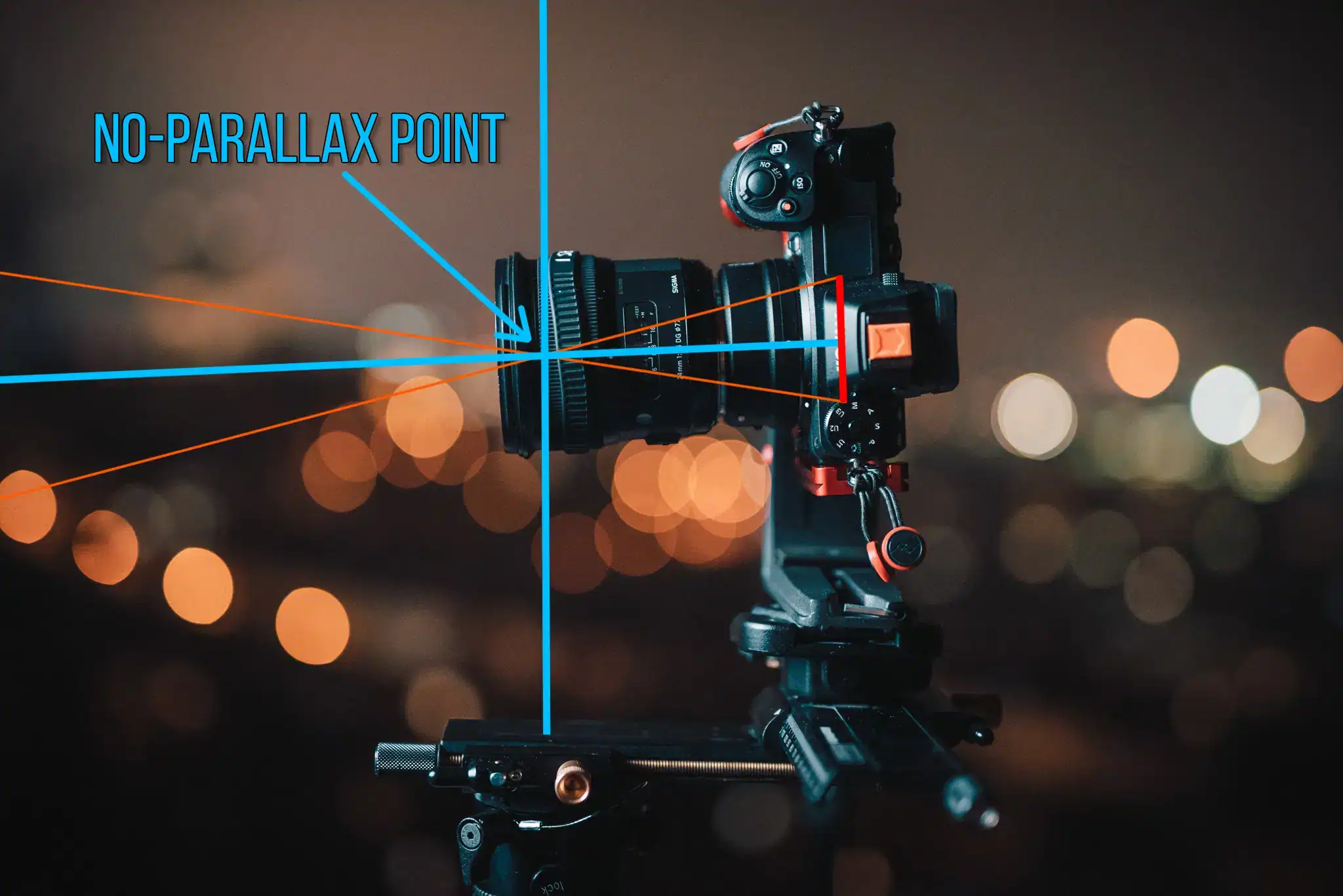
- Panoramic head: lets you rotate around the lens’s entrance pupil (nodal point) to eliminate parallax. This is critical for clean stitches in tight interiors or with near objects.
- Stable tripod with leveling base: level your yaw axis so frames align consistently.
- Remote trigger or app: use a cable release or Sony’s Creator’s App/Imaging Edge for vibration-free shots.
Optional Add-ons
- Pole or car mount: great for rooftops or vehicle POVs. Safety first—tether the rig, mind overhead lines, and reduce rotation speed to counter wind-induced sway.
- Lighting aids: LED panels or bounced flash for dark corners in real estate; keep light consistent between frames.
- Weather protection: a rain cover and microfiber cloths for the fisheye’s bulbous front element.
Mount Compatibility Notes
The Pentax DA 10–17 is K-mount APS-C. On the a7R V you’ll need a K-to-E adapter. Most adapters make this a manual-focus, manual-aperture setup, which is fine for panoramas. Enable APS-C/Super 35 crop in-camera to avoid severe vignetting. Some users “de-hood” the lens for wider coverage on full frame, but that is irreversible and not recommended for general use.
Step-by-Step Shooting Guide
Standard Static Scenes
- Level the tripod and align the nodal point:
- Set the zoom to your chosen focal length (e.g., 10mm).
- Place two vertical objects, one close (0.5–1 m) and one far (>5 m). Rotate the camera left/right. Adjust the rail so the relative position of the objects doesn’t shift. Repeat until parallax disappears.
- Manual exposure and white balance:
- Mode M. Meter for midtones to protect highlights; for high-contrast scenes, consider bracketing.
- Lock WB (e.g., Daylight 5200K outdoors, or set a custom Kelvin) to avoid color shifts between frames.
- Turn IBIS OFF on a tripod to prevent micro-shifts.
- Focus:
- Use manual focus, magnified live view. At 10mm APS-C, f/8 hyperfocal is roughly ~0.6 m; focusing slightly beyond that yields near-to-infinity sharpness.
- Capture sequence:
- At 10mm: 6 shots around (60° steps), then one zenith (tilt up ~60–90°), and one nadir (tilt down ~60–90°). For the nadir, you can offset the tripod and shoot a handheld patch.
- Overlap target: 25–35% for fisheye. Keep the horizon centered for the around shots to simplify stitching.
HDR / High Dynamic Range Interiors
- Bracket ±2 EV (3–5 frames per view) to balance bright windows and interior shadows. Keep the entire pano on the same bracket scheme.
- Lock WB and aperture; vary shutter speed only. Disable long-exposure NR to keep cadence consistent.
- Organize brackets in folders or name sets for easier post-processing.
Low-Light / Night Scenes
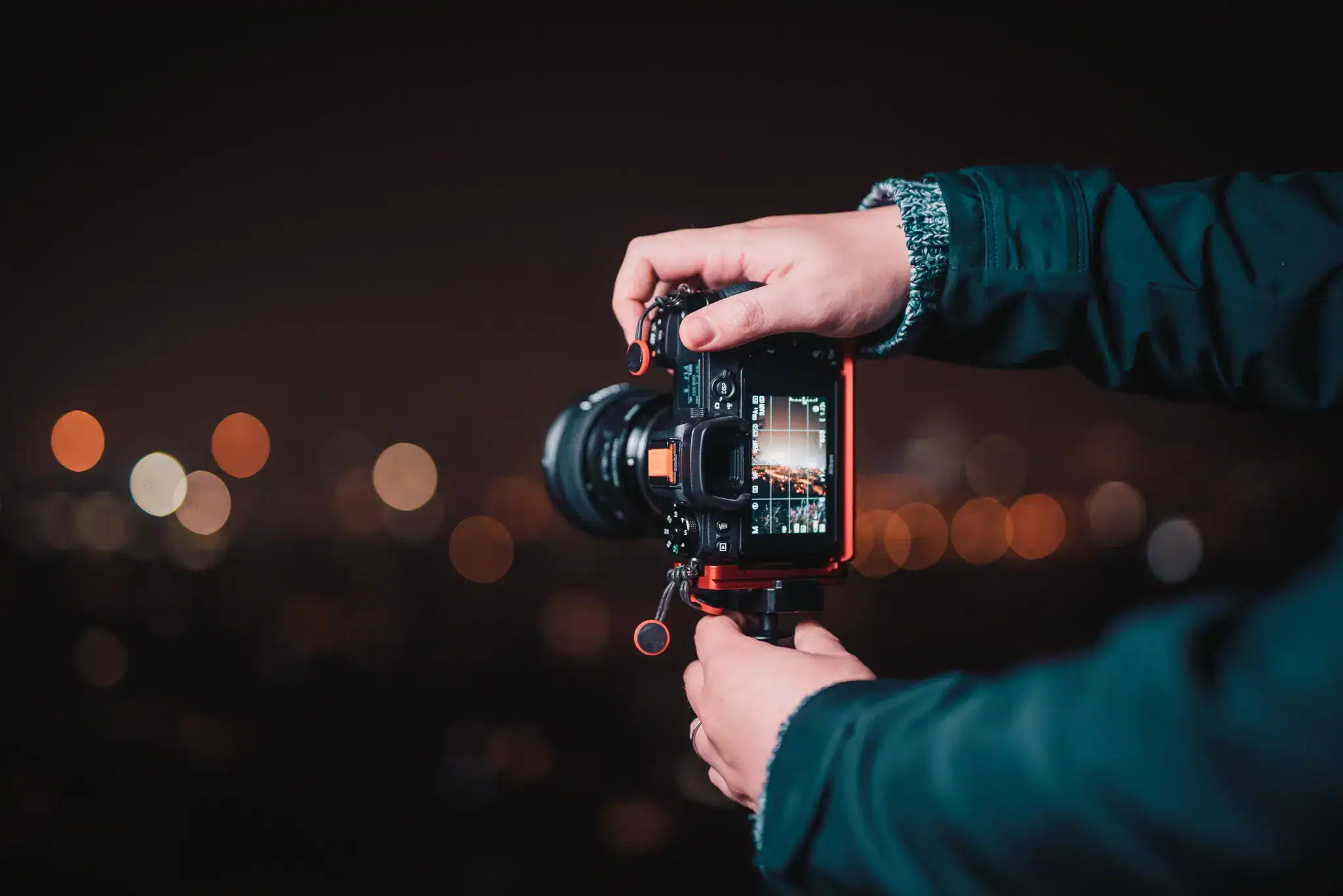
- Use f/4–f/5.6 to keep shutter practical and ISO low. Typical: 10–30 s at ISO 100–400; if wind is strong, increase ISO to 800–1600 and keep the shutter shorter.
- Use a 2 s self-timer or remote. Disable IBIS on tripod to avoid “drift.”
- Prefer mechanical shutter to avoid LED banding. Consider LENR off to maintain a consistent cadence across frames.
Crowded Events
- Shoot two passes: first for coverage, second waiting for gaps to capture clean areas you can later mask in.
- Increase shot count slightly (e.g., 8 around at 10–12mm) for extra overlap; this helps deghosting in post.
- Keep the tripod footprint minimal; mark your position to maintain azimuth if you must step away briefly.
Special Setups (Pole / Car / Drone)
- Pole: keep rotation slow; lock exposure and WB; use a safety tether and don’t exceed safe wind conditions. A fisheye’s low shot count reduces time aloft.
- Car mount: ensure vibration damping; shoot at a standstill; avoid traffic or secure permits; beware of reflective paint causing flare on the fisheye.
- Drone: not typical with this combo; consider native drone panos instead.
Recommended Settings & Pro Tips
Exposure & Focus
| Scenario | Aperture | Shutter | ISO | Notes |
|---|---|---|---|---|
| Daylight outdoor | f/8–f/11 | 1/100–1/250 | 100–200 | Lock WB to Daylight; disable IBIS on tripod |
| Low light/night | f/4–f/5.6 | 1/30–30 s | 100–800 (1600–3200 if needed) | Remote trigger; mechanical shutter for LED-heavy scenes |
| Interior HDR | f/8 | Bracket ±2 EV | 100–400 | Balance windows vs lamps; keep brackets consistent |
| Action / moving subjects | f/5.6–f/8 | 1/200+ | 400–800 | Two-pass approach; mask in post |
Critical Tips
- Manual focus: set near hyperfocal; at 10mm APS-C, ~0.6 m at f/8 is a good starting point.
- Nodal calibration: the entrance pupil shifts with zoom. Start with the rail toward the front at wide (10mm), then slide back as you zoom to 17mm. Expect the entrance pupil to sit roughly a few centimeters ahead of the sensor plane mark; refine by the parallax test.
- White balance lock: mixed lighting can produce seams. Set Kelvin or a custom preset and keep it locked across all frames and brackets.
- RAW over JPEG: more headroom for highlight recovery and chromatic aberration correction—especially important with fisheye edges.
- IBIS off on tripod: stabilization can introduce micro-shifts that complicate stitching.
- Custom modes: assign a pano setup (Manual exposure, WB fixed, IBIS off, self-timer) to a memory slot for fast recall.
Stitching & Post-Processing
Software Workflow
PTGui and Hugin both model fisheye lenses well. Import your images, define control points, and let the optimizer solve lens parameters. For the Pentax 10–17 fisheye, leave the lens model as “fisheye” and allow the software to fine-tune a/b/c distortion coefficients. Industry guidance: aim for ~25–30% overlap with fisheye and ~20–25% with rectilinear lenses. PTGui’s masking tools are excellent for removing moving objects across overlaps. For a practical review of PTGui’s strengths with complex panos, see this overview from Fstoppers. PTGui reviewed for high-end panoramas
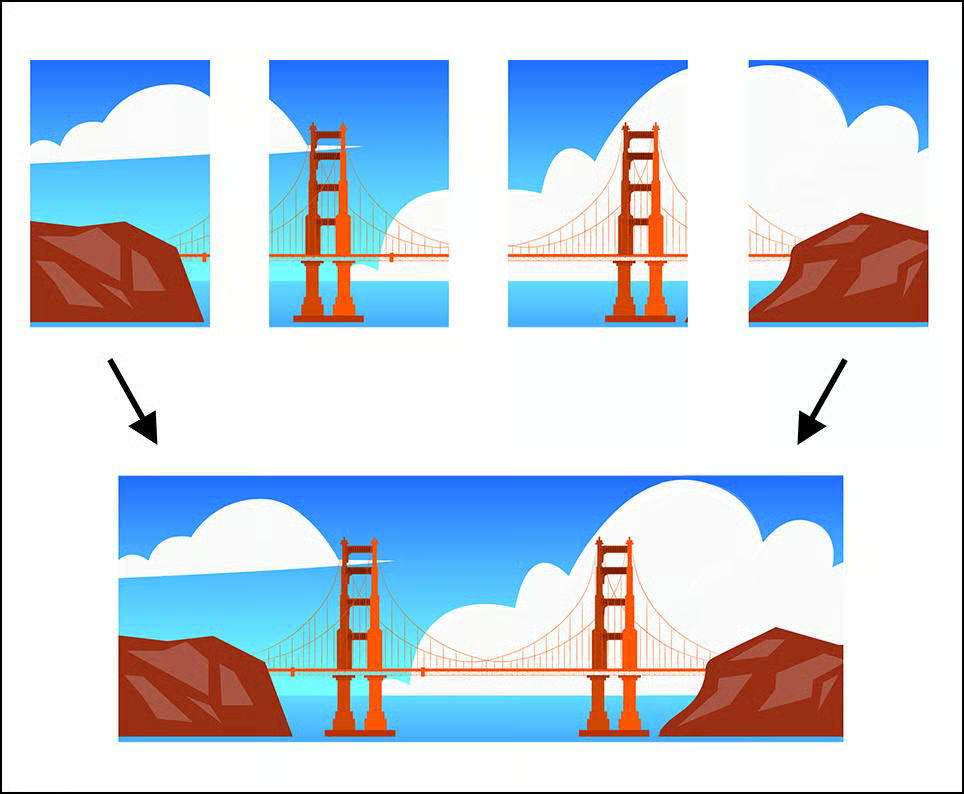
If you’re new to panoramic heads, this step-by-step tutorial helps you internalize parallax control and capture discipline. Panoramic head setup tutorial
For VR output, Oculus’ guide walks through DSLR/mirrorless 360 capture and typical export formats. DSLR/Mirrorless to 360 VR workflow
Video: A Fast Visual Primer
Want a quick refresher on shooting and stitching? The walkthrough below covers practical on-location and post tips.
Cleanup & Enhancement
- Nadir patch: export a nadir view and clone out the tripod, or use AI tripod removal tools, then re-import as a patch if your software supports it.
- Color and noise: apply global color correction, then local NR in shadows. Correct lateral CA and purple fringing near the fisheye edges.
- Leveling: set horizon and anchor vertical lines. Adjust yaw/pitch/roll in your stitcher for a natural, level look.
- Export: save a 16-bit TIFF master and a web-ready equirectangular JPEG (usually 12000–16000 px wide with this setup). For resolution planning, see this reference. Estimating spherical pano resolution
Disclaimer: software updates change menus/features; follow the latest docs for PTGui/Hugin/Adobe.
Useful Tools & Resources
Software
- PTGui panorama stitching
- Hugin (open source)
- Lightroom / Photoshop for RAW and retouching
- AI tripod removal utilities
Hardware
- Panoramic heads (e.g., Nodal Ninja, Leofoto)
- Carbon fiber tripods with leveling base
- Wireless remotes or smartphone app control
- Pole extensions and car suction mounts with safety tethers
Disclaimer: brand names for search reference only; check official sites for specifications and compatibility.
Common Mistakes & How to Avoid Them
- Parallax error: always align the entrance pupil for the exact focal length used; recheck after zoom changes or adapter swaps.
- Exposure flicker: manual exposure and locked WB; don’t let Auto ISO/WB vary between frames.
- Tripod shadows: shoot a nadir patch or rotate the tripod slightly to capture a clean floor area you can clone.
- Ghosting: when crowds move, do two passes and use masks. Increase overlap to give yourself options.
- Noise at night: prioritize base ISO and longer shutter on a sturdy tripod; if wind forces faster shutters, cap ISO around 800–1600 and denoise in post.
- Flare: avoid bright point lights striking the fisheye directly; shade the lens with your hand (out of frame) when possible.
Field-Tested Scenarios
Indoor Real Estate
Use 10–12mm for fewer shots and faster coverage. Bracket ±2 EV across all views to balance windows. Lock WB around 3200–4000K if warm interiors dominate. Place the tripod near the room center and keep the lens height consistent across rooms (1.3–1.6 m is common). Avoid mirrors and reflective stainless details straight-on; shift position slightly to minimize self-reflection.
Outdoor Sunset Rooftops
Start 20 minutes before sunset and shoot a full pass every few minutes to catch changing color. A wind-rated tripod and a hook with a weighted bag help. If wind picks up, increase ISO to 400–800 to maintain 1/60–1/200 s shutters and minimize blur. Bracket only if you can complete all views fast enough to avoid color mismatches across the panorama.
Event Crowds
At 10–12mm, do 6–8 around. Time shots between waves of movement. If a person lingers in an overlap, wait a beat and retake that frame; in PTGui you can mask to prefer the cleaner take.
Rooftop Pole Shooting
Keep the pole vertical (use a bubble level). Rotate as few times as possible (e.g., 6 around at 10mm). Watch wind loads—consider guy lines and keep people clear below. Tether the camera body and the pole to separate anchors for redundancy.
Car-Mounted Capture
Only shoot when parked in a safe, permitted area. Vibrations smear long exposures; use 1/250+ if you must shoot near traffic, or simply capture at a standstill. Protect the fisheye from road grime and flare with a top flag if possible.
Advanced Notes Specific to This Combo
- APS-C crop resolution: The a7R V outputs ~26MP per frame in crop mode; with 6 around + Z + N at 10mm, expect 12–16K-wide equirectangulars after stitching—ample for high-quality virtual tours.
- Pixel Shift Multi Shooting: tempting for maximum detail, but impractical for multi-frame panos unless the scene is perfectly static and your head indexing is rock-solid. Use sparingly.
- Shutter choice: Mechanical shutter avoids LED banding indoors. Electronic shutter can introduce rolling artifacts with moving subjects or flicker with artificial lights.
- Lens projection handling: Let PTGui/Hugin optimize fisheye parameters; avoid pre-defishing in RAW—stitching on native fisheye frames yields better control point geometry.
For a broad overview of DSLR/mirrorless pano practices and lens/camera considerations, this guide is a helpful complement. DSLR/Virtual tour FAQ and lens guide
Frequently Asked Questions
- Can I shoot handheld panoramas with the Sony a7R V?
Yes, but expect lower stitch reliability. Use 10–12mm on the fisheye, lock exposure/WB, and shoot fast with ~30% overlap. Handheld is fine outdoors with distant subjects; avoid tight interiors where parallax is unforgiving.
- Is the Pentax DA 10–17mm wide enough for single-row 360?
At 10mm APS-C, yes: 6 around + zenith + nadir covers 360×180° reliably. At longer focal lengths (14–17mm), you’ll need more around shots and still capture Z/N.
- Do I need HDR for interiors with bright windows?
Usually, yes. Bracket ±2 EV (3–5 frames) per view. Merge or let PTGui blend exposure stacks before global stitching to keep windows and interiors balanced.
- How do I avoid parallax issues with this adapted lens?
Use a panoramic head and calibrate the entrance pupil at the exact focal length. Recheck after changing the adapter or zoom setting. Keep near objects at least 0.5–1 m away when possible.
- What ISO range is safe on the a7R V for low light 360?
On a tripod, try ISO 100–400 and lengthen shutter. ISO 800 is still very clean; 1600–3200 is workable with modern denoise if wind or motion forces faster shutters.
In-Article Illustrations
The following visuals were used contextually to support the guide:
- Man Taking a Photo Using Camera With Tripod — planning and setup
- No-parallax point explanation — nodal alignment
- Panorama stitching explained — post-processing