Why This Camera & Lens Are Great for Panoramas
If you want to learn how to shoot panorama with Sony A7R IV & Tamron 17-28mm f/2.8 Di III RXD, you’re working with a high-resolution, low-distortion, travel‑friendly combo that’s excellent for both multi-row 360 photos and classic wide panoramic stitches. The Sony A7R IV uses a 61MP full-frame sensor (35.7 × 23.8 mm) with ~3.76 µm pixel pitch and roughly 14.5 stops of dynamic range at base ISO 100. That resolution preserves fine detail and gives you generous cropping room for clean nadir patches and reframing. The body adds reliable 5-axis IBIS (turn it off on a tripod), 14-bit RAW, and a sturdy weather-sealed build.
The Tamron 17–28mm f/2.8 is a rectilinear ultra-wide zoom with a constant f/2.8 aperture, quick AF, and excellent sharpness from about f/4–f/8—perfect for architectural lines and interior HDR panoramas. At 17 mm, expect mild barrel distortion, very manageable in post; by 28 mm, a touch of pincushion appears. Vignetting falls off nicely by f/5.6. The 67 mm front filter thread simplifies polarizer and ND use, and the lens is compact and light enough to pair well with a panoramic head. While it’s not a fisheye (so more frames are required to cover a full 360×180° sphere), rectilinear geometry gives straighter lines and cleaner edges—ideal for real estate, architecture, and landscapes.
Quick Setup Overview
- Camera: Sony A7R IV — Full-frame, 61MP, ~14.5 EV DR at ISO 100, 14-bit RAW, 5-axis IBIS.
- Lens: Tamron 17–28mm f/2.8 Di III RXD — Rectilinear ultra-wide zoom; sharpest around f/5.6–f/8; modest barrel/pincushion distortion across the zoom; controlled CA; 67 mm filters.
- Estimated shots & overlap (tested baselines for 360×180°):
- 17 mm: 3-row spherical, 6 shots per row (−45°, 0°, +45°) + 2 nadir + 2–3 zenith = ~20–23 images at ~30–40% overlap (fast outdoor set).
- 17 mm (indoor safety): 3-row, 8 shots per row + 2 nadir + 3 zenith = ~29–31 images at ~35–45% overlap.
- 20–24 mm: 8 shots per row (3-row) + zenith/nadir = ~28–34 images.
- 28 mm: 10 shots per row (3-row) + zenith/nadir = ~34–40 images (best for ultra-high resolution or gigapixel fragments).
- Difficulty: Intermediate (multi-row pano head alignment required for perfect 360s; single-row landscapes are easy).
Planning & On-Site Preparation
Evaluate Shooting Environment
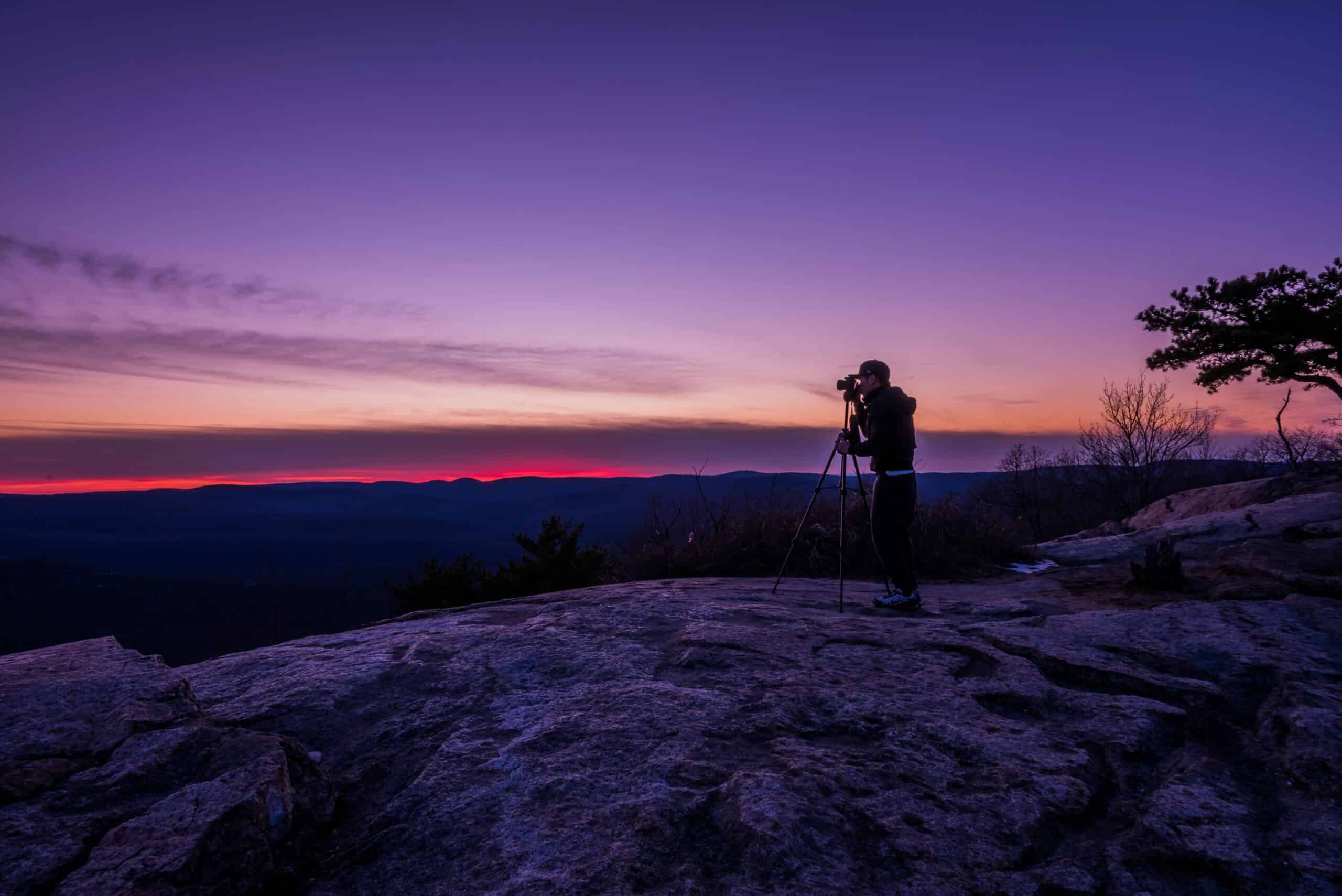
Walk the scene before you set up. Note light direction, moving subjects, reflective surfaces (glass, polished floors, cars), and potential flare sources. If shooting through glass, keep the front element as close as practical (1–3 cm) and shade with your hand or a flexible hood to avoid internal reflections. Plan your rotation so the brightest sources (sun, window glare) aren’t centered during critical stitches.
Match Gear to Scene Goals
Why the A7R IV and Tamron 17–28 mm excel: the A7R IV’s high resolution preserves texture and signage in real estate and cityscapes, and its dynamic range helps retain window detail in interiors when bracketing. ISO 100–400 is ideal; ISO 800–1600 is still very workable in dim spaces with responsible noise reduction. The rectilinear Tamron avoids the strong geometric warping of fisheyes; you’ll shoot more frames but maintain architectural lines and edge sharpness—especially important for professional listings and prints.
Pre-shoot Checklist
- Charge batteries; bring a spare. A 61MP body chews through power on long multi-row sequences.
- Use fast, high-capacity cards; enable backup to Slot 2 if possible.
- Clean lens and sensor; dust at f/8 shows up on skies and walls.
- Level your tripod and verify pano head calibration for this lens/focal length.
- Safety: assess wind loads on rooftops; use a weight hook; tether pole/camera; never lean over ledges.
- Backup workflow: shoot a second rotation if time allows—especially indoors or at sunset when lighting changes quickly.
Essential Gear & Setup
Core Gear
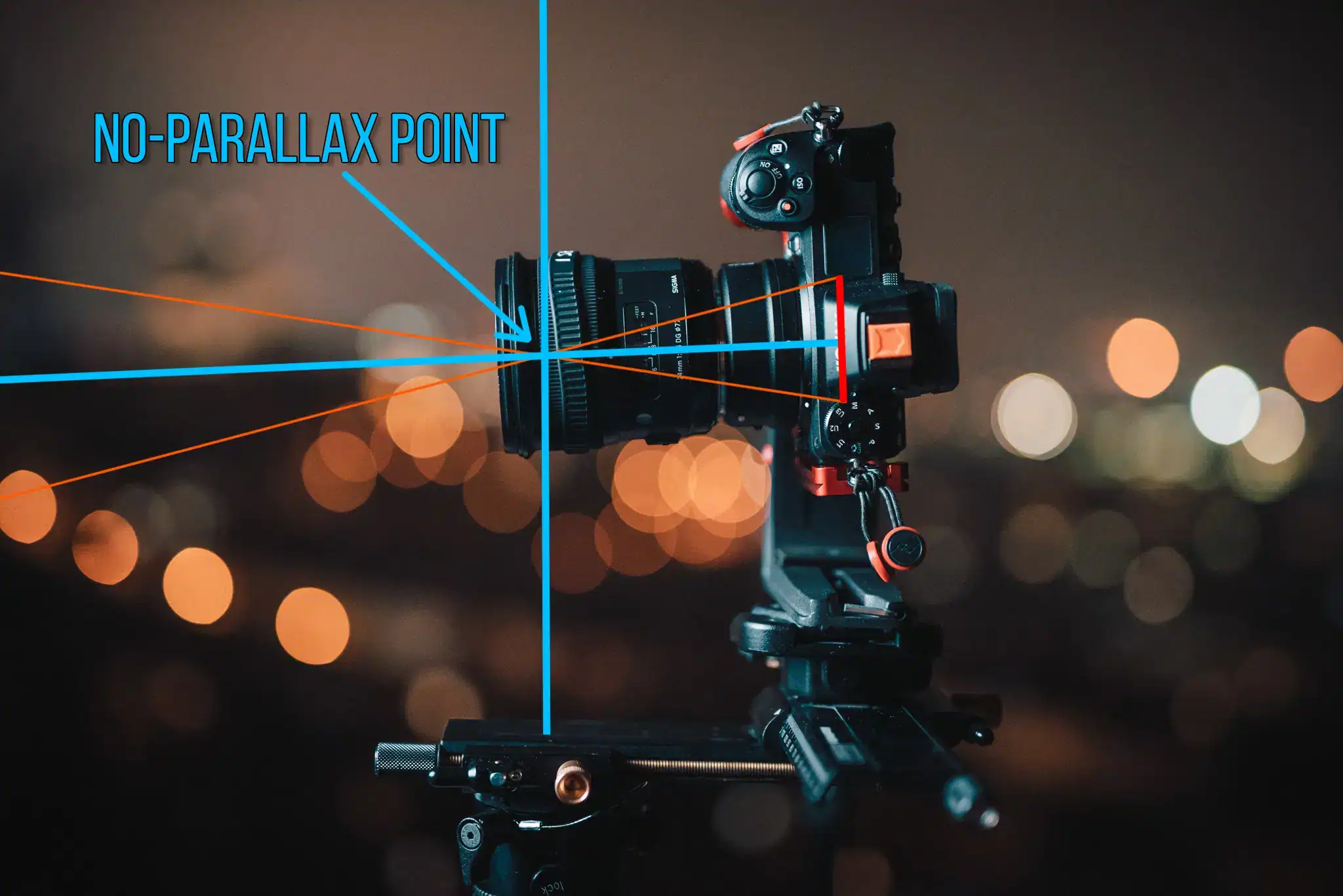
- Panoramic head: A multi-row head aligns the lens’s entrance pupil (nodal point) to eliminate parallax. This lets foreground and background line up cleanly during stitching—critical in interiors with furniture or railings.
- Stable tripod with a leveling base: A leveling base saves time and keeps your yaw rotation level, simplifying stitching and horizon control.
- Remote trigger or app: Use Sony Imaging Edge Mobile or a wired release to avoid touching the camera and inducing blur.
Optional Add-ons
- Pole or car mount: For overhead or vehicle POVs. Use safety tethers, watch wind, and keep speeds low—vibration amplifies stitching errors.
- Lighting aids: Small LED panels or bounced flashes for dim interiors; keep lighting consistent across frames.
- Weather protection: Rain covers, microfiber cloths, and silica packs for humid nights.
For a deeper dive on setting up and using a panoramic head effectively, see this illustrated panoramic head tutorial. Panoramic head basics
Step-by-Step Shooting Guide
Standard Static Scenes
- Level and align: Level your tripod using the base level. On the pano head, align the lens’s entrance pupil over the yaw axis. Use two light stands or door frames at different distances; rotate and adjust until their relative position doesn’t shift in the frame.
- Manual control: Switch to Manual exposure and lock White Balance (e.g., Daylight 5500–5600K outdoors; custom 3000–4000K indoors). This prevents exposure flicker and color shifts between frames.
- Focus and stabilize: Use AF once to focus near the hyperfocal distance, then switch to MF. At 17 mm f/8 on full frame, hyperfocal ≈ 1.2 m (everything from ~0.6 m to infinity will be acceptably sharp). Turn IBIS (SteadyShot) off on the tripod; enable EFCS to minimize shutter shock.
- Capture with overlap: At 17 mm, shoot 6–8 shots per row with 30–40% overlap. For full spherical, do −45°, 0°, and +45° rows. Rotate smoothly and keep the same yaw increments.
- Nadir for tripod removal: Tilt down and capture 1–2 nadir shots; if needed, move the tripod aside for a “clean plate” and mask it in post.
- Zenith coverage: Tilt up and capture 2–3 frames at +75° or one centered frame if your overlap is generous. Check that the ceiling/sky is fully covered.
HDR / High Dynamic Range Interiors
- Bracket ±2 EV (3 or 5 frames) to balance bright windows and deep shadows. The A7R IV’s DR is excellent, but interiors commonly exceed sensor range.
- Lock WB and focus for all brackets. Use a 2 or 5-second self-timer or remote to avoid vibration.
- Keep interval consistent: Fire brackets in quick succession to minimize ghosting from moving curtains, fans, or people.
- Merge brackets before stitching (Photomatix/Lightroom) or let PTGui handle bracketed merges natively.
Low-Light / Night Scenes
- Use longer exposures at base ISO when possible for cleaner results: f/4–f/5.6, ISO 100–400, shutter in the 1–8 s range with a solid tripod. If wind or subject motion forces it, ISO 800–1600 is still clean on the A7R IV with careful noise reduction.
- Use remote or 2 s delay; turn off IBIS; use EFCS. Beware of banding with silent shutter under certain LED lights.
- Watch light trails or moving clouds that change between frames; increase overlap or shoot faster.
Crowded Events
- Shoot two passes: first for coverage, second while waiting for gaps to minimize ghosting. Note anchor frames with minimal motion.
- Mask moving people during the stitch. PTGui’s masking tools or layer masks in Photoshop work well for choosing the cleanest regions.
Special Setups (Pole / Car / Drone)
- Pole: Use a lightweight head and keep the lens’s entrance pupil over the center line. Tether the camera, minimize swinging, and use faster shutter speeds (1/200+ where possible) to fight sway.
- Car: Avoid highways; park or drive very slowly in open areas. Vibrations and rolling scenery make stitching fragile—shoot fewer, faster frames per row and increase overlap.
- Drone: This lens/body combo isn’t for drones, but if you later blend with aerials, match WB and exposure curve to minimize seams.
Recommended Settings & Pro Tips
Exposure & Focus
| Scenario | Aperture | Shutter | ISO | Notes |
|---|---|---|---|---|
| Daylight outdoor | f/8–f/11 | 1/100–1/250 | 100–200 | Lock WB (daylight 5500–5600K); EFCS on, IBIS off |
| Low light/night | f/4–f/5.6 | 1/30–8 s (tripod) | 100–800 (1600 if needed) | Remote trigger; watch wind; avoid silent shutter under LEDs |
| Interior HDR | f/8 | Bracket ±2 EV | 100–400 | Balance windows and lamps; consistent timing between brackets |
| Action / moving subjects | f/5.6–f/8 | 1/200+ | 400–800 | Freeze motion; consider a second pass for cleanup |
Critical Tips
- Manual focus at hyperfocal distance: Approx. 1.2 m at 17 mm f/8; about 3.3 m at 28 mm f/8. AF once, then switch to MF.
- Nodal calibration: Mark the entrance pupil for 17, 20, 24, and 28 mm on your pano rail during a test session so you can switch focal lengths on location without re-calibrating.
- White balance lock: Mixed lighting is common indoors; set a manual Kelvin or custom WB from a gray card to avoid mismatch during stitching.
- RAW over JPEG: 14-bit RAW from the A7R IV gives more headroom for HDR merges, color grading, and noise reduction.
- IBIS off on tripod; EFCS on: The A7R IV’s stabilization can add blur on a fixed platform; EFCS reduces shutter shock. Use full mechanical shutter if you see EFCS artifacts with adapted lenses.
- Disable lens corrections in-camera for consistency, then apply consistent corrections in your stitcher or RAW editor.
Stitching & Post-Processing
Software Workflow
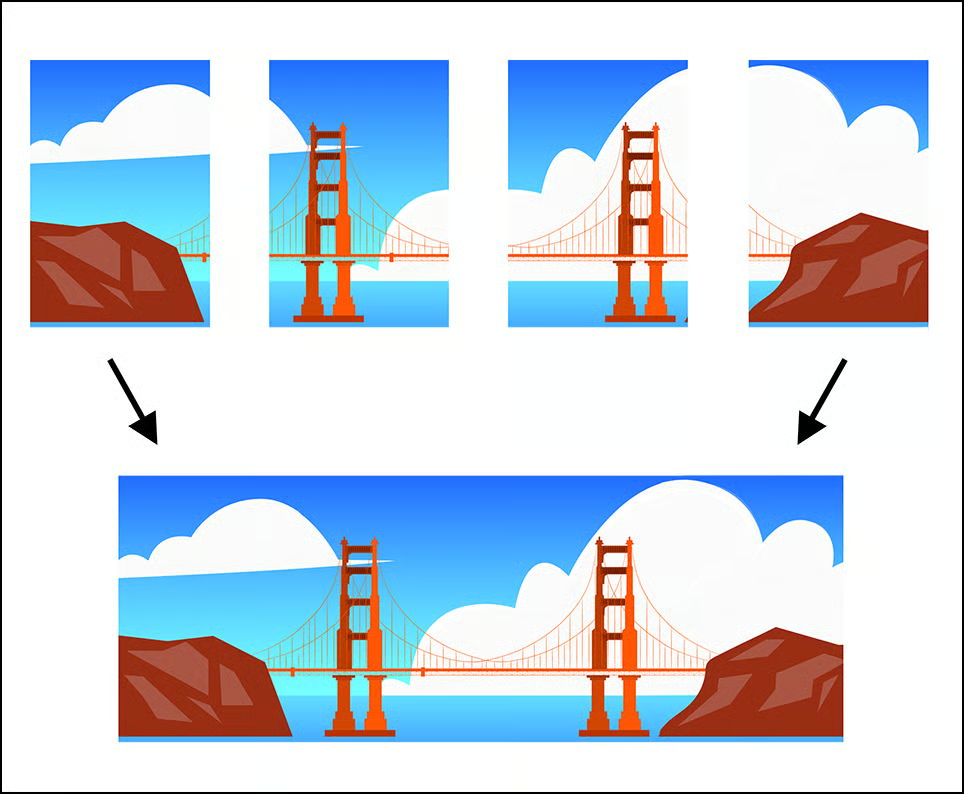
Import RAWs into Lightroom, Capture One, or your editor of choice for basic exposure/WB consistency, lens corrections (applied consistently), and bracket merging if needed. For stitching, PTGui and Hugin remain the industry staples. Rectilinear ultra-wide shots typically want 20–30% overlap; for interiors or when close to objects, aim for 35–45% for stronger control points. More overlap makes zenith/nadir blending more forgiving.
PTGui is popular for multi-row 360s thanks to control point management, exposure fusion/HDR, and interactive mask painting. Hugin is a capable open-source alternative if you’re comfortable with manual control points. For a review of PTGui’s strengths in complex panoramas, see this overview. PTGui review and why it excels
Cleanup & Enhancement
- Tripod/nadir patch: Use a clean plate or paint a patch in Photoshop; PTGui’s viewpoint correction can also help with off-axis nadirs.
- Color correction: Match color casts between rows. Use local HSL for mixed lighting zones and maintain neutral whites.
- Noise reduction: Apply global NR lightly; refine with masked NR in shadow areas to keep textures crisp.
- Horizon and rotation: Set horizon and yaw/pitch/roll in your stitcher so the viewer feels grounded.
- Export: For VR players, export equirectangular 2:1 at 12–16k on the A7R IV for detailed results. For web, 8192 × 4096 is a good balance.
For platform-specific guidance on preparing 360 photos for VR, this resource is concise and practical. Using a mirrorless camera to shoot and stitch a 360 photo
Recommended Video
Useful Tools & Resources
Software
- PTGui panorama stitching
- Hugin open source
- Adobe Lightroom / Photoshop
- AI tripod/nadir removal tools
Hardware
- Panoramic heads (Nodal Ninja, Leofoto, Sunwayfoto)
- Carbon fiber tripods with leveling bases
- Wireless remote shutters or interval timers
- Pole extensions and car mounts with safety tethers
Disclaimer: Names above are for search reference; always verify current specs and compatibility.
Field-Proven Scenarios with the A7R IV + 17–28mm
Indoor Real Estate (Bright Windows)
At 17 mm, set f/8, ISO 100, bracket ±2 EV (5 frames if windows are intense). Shoot 8 shots per row (3 rows), plus zenith and nadir. Keep WB constant at 4000–4500K if mixed daylight/tungsten. Mask reflections and edge seams in PTGui. The 61MP files keep text on signage sharp even after nadir patching.
Outdoor Sunset Overlook
Use f/8, ISO 100–200, 1/60–1/125 s. A 6×3 pattern at 17 mm is fast enough to beat rapid light changes. Capture a safety second rotation five minutes later; blend the better sky from one with the landscape from the other if needed.
Crowded Event or Market
Raise your tripod slightly above head level. At 20–24 mm, shoot 8 per row with faster shutter speeds (1/200–1/400, ISO 400–800). Do a second pass while waiting for gaps; in post, mask the cleanest regions.
Rooftop/Pole Shooting
Keep the lens at 17 mm for fewer frames and faster capture. Use 1/250 s+ and ISO 400–800 to freeze sway. Never extend over open edges. A guyline can help stabilize a pole in wind.
Visual Aids
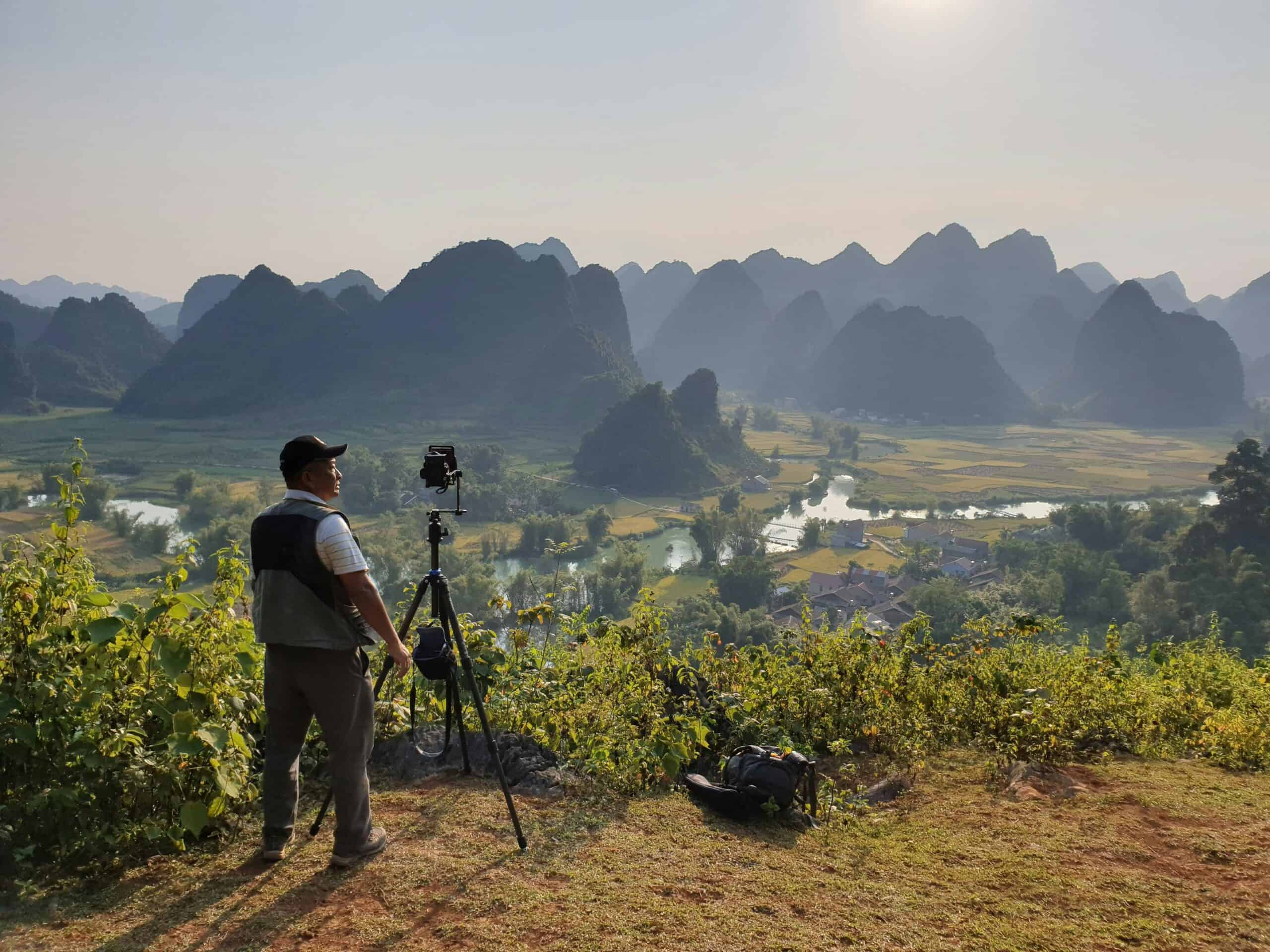
Common Mistakes & How to Avoid Them
- Parallax error: Align the entrance pupil precisely and avoid moving the tripod between rows.
- Exposure flicker: Manual exposure and locked WB across all frames; avoid Auto ISO for multi-row work.
- Tripod shadows and footprints: Shoot nadir clean plates and patch later.
- Ghosting from moving subjects: Shoot two passes and mask in post; increase overlap.
- Noise at night: Favor longer exposures at low ISO on a stable tripod; apply targeted NR in post.
- Missed zenith/nadir coverage: Audit coverage visually; if in doubt, add one more frame.
For a broader perspective on pano best practices, this Q&A thread compiles time-tested techniques. Panorama techniques that work
Frequently Asked Questions
- Can I shoot handheld panoramas with the Sony A7R IV?
Yes for simple single-row landscapes, but for 360×180° with nearby objects, a panoramic head is strongly recommended. Handheld multi-row 360s risk parallax and inconsistent overlap. IBIS helps steady single frames, but it doesn’t fix parallax.
- Is the Tamron 17–28 mm wide enough for a single-row 360?
No. Because it’s a rectilinear lens, you’ll need multi-row capture to cover zenith and nadir. At 17 mm, a practical pattern is 6–8 shots per row, three rows, plus zenith/nadir frames.
- Do I need HDR for interiors with bright windows?
Usually yes. Bracket ±2 EV (3–5 frames) to preserve window detail and clean shadows. The A7R IV’s DR is excellent, but interior contrast often exceeds single-exposure latitude.
- How do I avoid parallax issues with this lens?
Calibrate the entrance pupil at your chosen focal length on a pano rail and mark those positions. Keep the lens over the yaw axis, level the tripod, and lock everything down before shooting.
- What ISO range is safe on the A7R IV in low light?
ISO 100–400 is ideal. ISO 800–1600 is still clean for most panos with careful exposure and noise reduction. Try to stay at base ISO and increase shutter time when the scene allows.
- Can I set Custom Modes for faster pano work?
Yes. Save a pano preset (Manual exposure, MF, fixed WB, EFCS on, IBIS off) to a custom mode. Consider a second HDR preset with bracketing enabled and a reduced delay.
- Which tripod head type works best here?
A dual-axis panoramic head with an adjustable NPP rail is ideal. For fast travel setups, a compact multi-row head (e.g., Nodal Ninja or Leofoto) balances precision and portability.
- Should I use Pixel Shift on the A7R IV for panoramas?
Only for perfectly static scenes and when the entire sequence can remain motionless—rare in 360 work. Movement between Pixel Shift frames complicates stitching.
Safety, Limitations, and Trustworthy Practices
High places, wind, and crowds increase risk. Keep a low center of gravity, hang weight from the tripod, and use tethers on poles. Never lean over ledges, and avoid obstructing public walkways. Be honest about the limitations of this setup: multi-row capture is slower than fisheye solutions; more frames mean more chances for movement and flicker. The upside is superior line rendering and higher per-pixel detail from the A7R IV.
Document your pano head marks for each focal length, store RAWs redundantly (dual cards + cloud/offsite), and keep an “oops” second rotation whenever possible. For a step-by-step, standards-oriented training, this setup guide is also excellent. Set up a panoramic head for high-end 360 photos