
Why This Camera & Lens Are Great for Panoramas
The Sony A7R IV paired with the Sony FE 16–35mm f/2.8 GM is a powerhouse for high-quality panoramas and 360 photos. The A7R IV’s 61MP full-frame sensor (approx. 35.7 × 23.8 mm) delivers enormous detail and excellent tonal latitude, with roughly 14.5 stops of dynamic range at base ISO. Pixel pitch is about 3.76 µm, which means incredibly fine microcontrast and texture rendition when you stitch large multi-row panoramas. The camera’s 5-axis in-body stabilization helps handheld panos, while the robust weather sealing and reliable battery life make it dependable outdoors.
The FE 16–35mm f/2.8 GM is a rectilinear ultra-wide zoom with a 107° diagonal field of view at 16mm (approx. 96° horizontal), minimal lateral chromatic aberration, and outstanding sharpness across the frame by f/5.6–f/8—key for consistent edge-to-edge stitching. Being rectilinear (not fisheye), it requires more frames than a fisheye for a full 360×180 sphere, but it avoids the extreme distortion that can complicate architecture and interior lines. The zoom flexibility allows single-row panos at 35mm for tighter compositions, multi-row gigapixel mosaics at mid-focal lengths, and 360° capture at 16–20mm with predictable overlap.
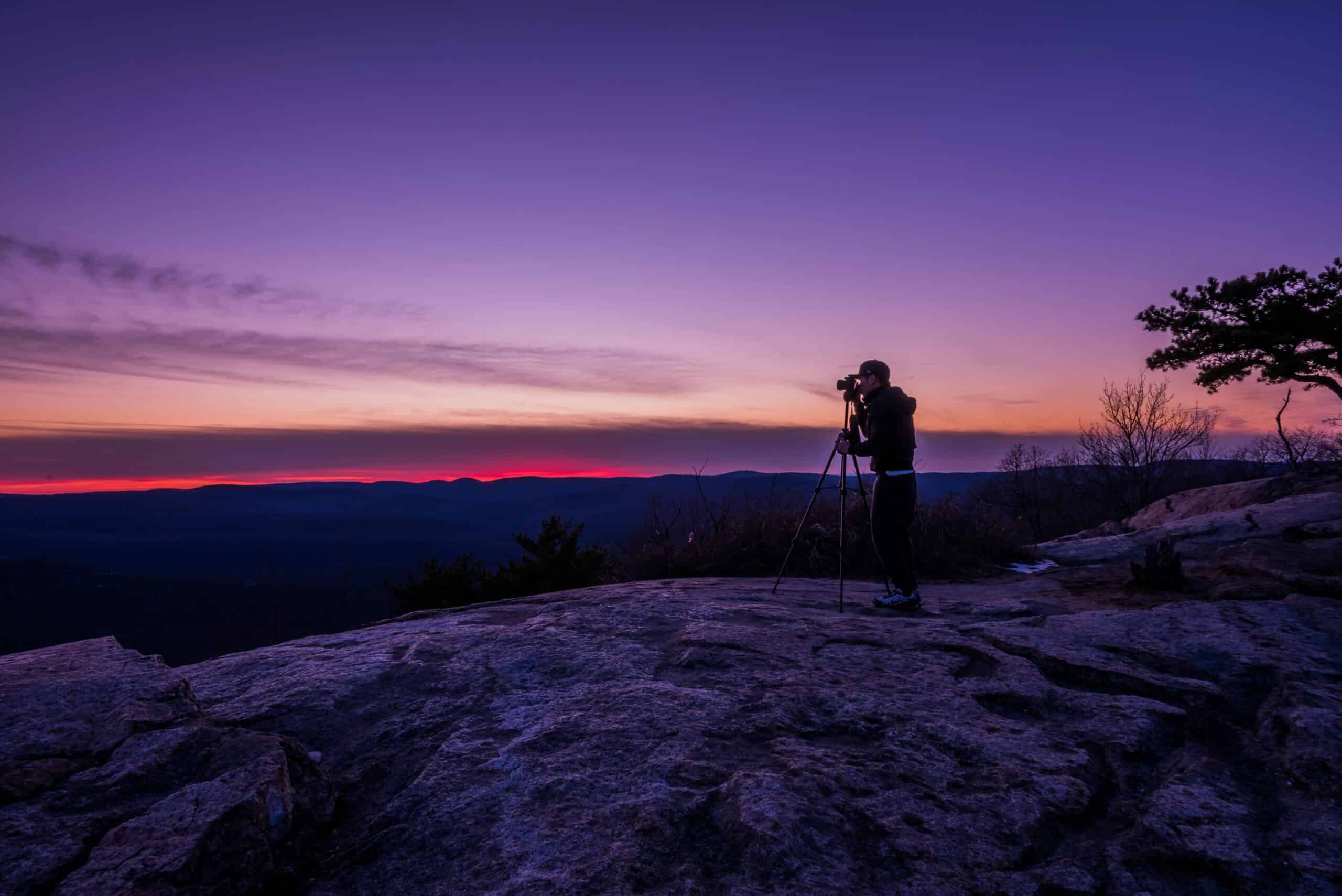
If you’re learning how to shoot panorama with Sony A7R IV & Sony FE 16-35mm f/2.8 GM, this guide shares field-tested settings, overlap counts, and workflows to deliver clean stitches for everything from real estate interiors to rooftop cityscapes.
Quick Setup Overview
- Camera: Sony A7R IV — Full-frame 61MP sensor, ~14.5 EV dynamic range at base ISO, 5-axis IBIS, excellent RAW latitude.
- Lens: Sony FE 16–35mm f/2.8 GM — Rectilinear ultra-wide zoom; very sharp by f/5.6–f/8; slight barrel distortion at 16mm (easily corrected), low CA.
- Estimated shots & overlap (tested ranges on full frame, rectilinear):
- At 16mm: 10–12 shots around + 1–2 zenith + 1–2 nadir (25–30% overlap). Single-row 360 is possible with careful coverage of zenith and nadir.
- At 24mm: 14–18 around + zenith + nadir (20–25% overlap). Often best as a two-row capture for high quality.
- At 35mm: 24–30 around, multi-row strongly recommended for a complete sphere; ideal for gigapixel detail.
- Difficulty: Intermediate (precise leveling and nodal alignment recommended).
Planning & On-Site Preparation
Evaluate Shooting Environment
Before you set up, scan for reflective surfaces (glass, polished floors), moving objects (people, trees in wind), and mixed lighting that could shift white balance. In interiors with glass, leave 30–60 cm of space from windows to reduce flare and ghosting. Outdoors, note the sun’s position—strong backlight can lower contrast and exaggerate lens flare. For crowds, anticipate flow and shoot two passes so you can mask movement later.
Match Gear to Scene Goals
The A7R IV’s resolution is perfect for detailed 360s and multi-row panoramas. Indoors, its RAW latitude lets you bracket windows and lamps for an HDR panorama without clipping. Stick to ISO 100–400 when possible; ISO 800 is safe, ISO 1600 still usable with gentle noise reduction, and ISO 3200 only if absolutely necessary. The FE 16–35mm f/2.8 GM at 16–20mm minimizes frame count for 360 capture while staying rectilinear—great for architecture. Stopping down to f/8 improves edge sharpness and consistency across frames, easing the stitching step.
Pre-shoot Checklist
- Power and storage: Fully charged batteries, two cards, RAW set to lossless compressed.
- Optics: Clean front element and sensor; disable in-camera lens corrections when shooting RAW to keep a neutral baseline.
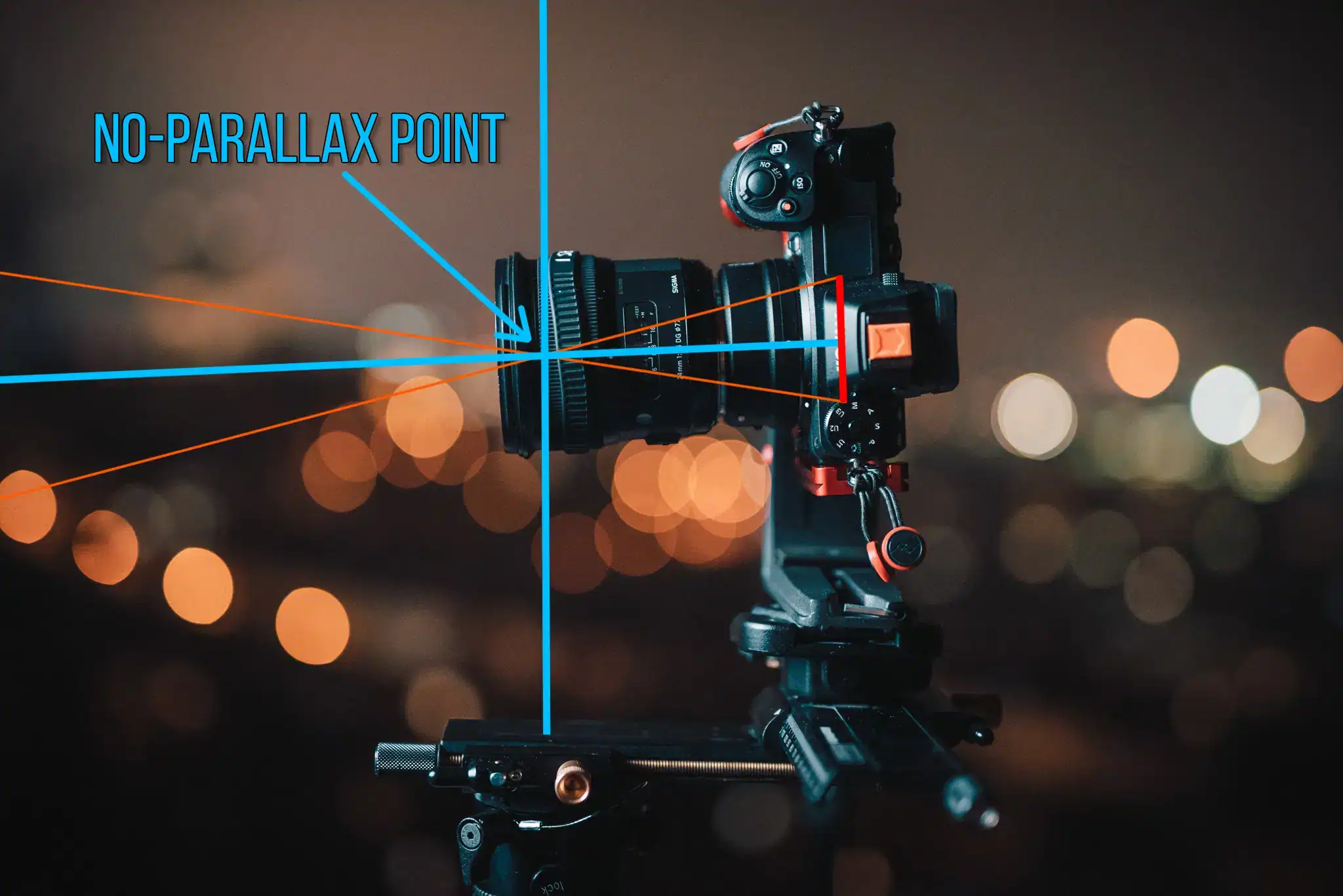
- Tripod leveling: Use a leveling base; ensure your panoramic head is calibrated to the lens’s entrance pupil (nodal point).
- Safety: Evaluate wind loads on rooftops or with a pole/car mount; use tethers and sandbags. Never lean over edges unrestrained.
- Backup pass: After your main capture, do a second safety rotation. It’s cheap insurance against a missed frame or motion glitch.
Essential Gear & Setup
Core Gear
- Panoramic head: Allows rotation around the lens’s entrance pupil (nodal point) to eliminate parallax. For multi-row, use a two-axis head with precise rails.
- Stable tripod with leveling base: Leveling the base instead of the head keeps your pan sweep perfectly horizontal.
- Remote trigger or Sony Imaging Edge Mobile: Fire without touching the camera; set a 2-sec timer if you’re without a remote.
Optional Add-ons
- Pole or car mount: Keep the rig as light as possible. Use a safety tether and avoid gusty conditions; vibrations cause misalignment.
- Lighting aids: LED panels for dim interiors; bounce cards to tame hotspots.
- Weather protection: Rain covers; microfiber cloths for spray or drizzle; gaffer tape for cables.
Step-by-Step Shooting Guide
Standard Static Scenes
- Level tripod and align the nodal point: Use your leveling base. Calibrate the panoramic head so foreground and background objects stay aligned as you pan. With the 16–35 GM, the entrance pupil at 16mm sits near the front group; start with your rail around the forward portion of the lens and fine-tune by the classic “near/far object” method.
- Manual exposure and white balance: Set Manual mode; meter for midtones and protect highlights. Lock WB (Daylight or a custom Kelvin) to avoid color shifts between frames.
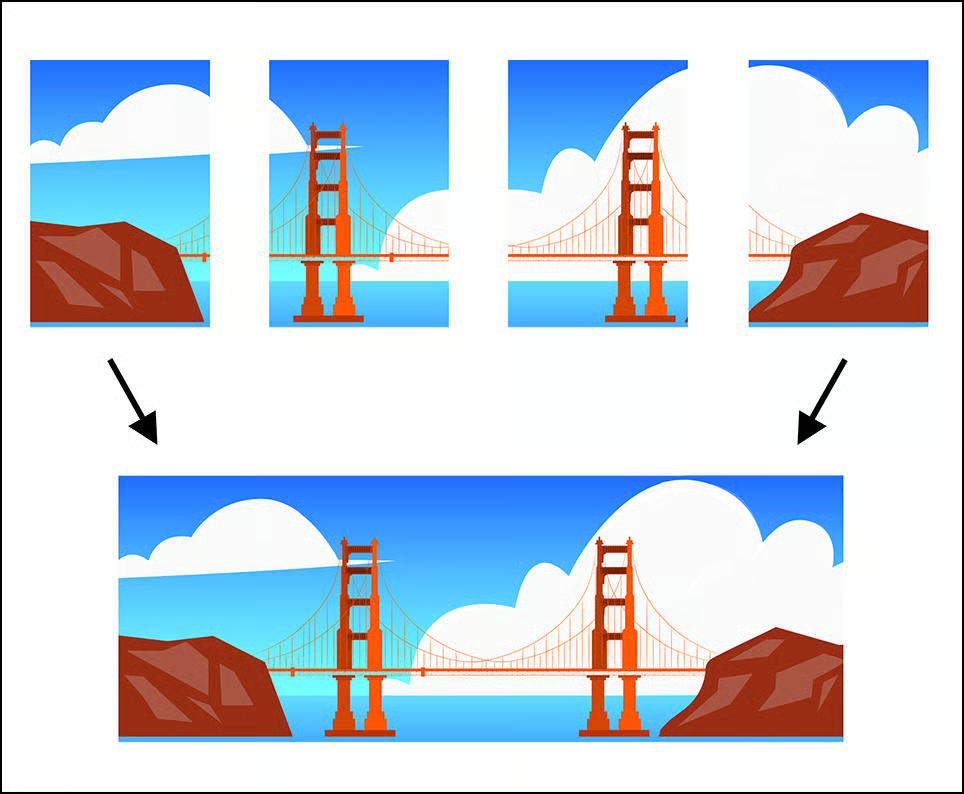
- Capture with consistent overlap: At 16mm, aim for 25–30% overlap. A practical sequence for a 360: 10–12 frames around at 0° tilt, plus 1–2 at +60° (zenith), and 1–2 at −60° (nadir). If you’ll patch the tripod, a single offset nadir shot is often enough.
- Nadir shot for tripod removal: Either shoot a blank floor tile after moving the tripod, or take a handheld nadir frame with the camera over the tripod footprint (use a plumb line or align with a floor mark).
HDR / High Dynamic Range Interiors
- Bracket ±2 EV or ±3 EV if windows are bright. On A7R IV, Auto Bracketing with 5–9 frames works well; RAW gives you more headroom.
- Lock WB and aperture (e.g., f/8), vary shutter speed only. This keeps depth of field and color stable across brackets, ensuring clean HDR merges and stitches.
Low-Light / Night Scenes
- Stay at ISO 100–400 if you can; increase exposure time instead. Use a remote and consider EFCS (Electronic First Curtain Shutter) to minimize vibrations. Turn IBIS off on a tripod to avoid micro-jitters.
- Watch for flicker or cycling LEDs; avoid full electronic shutter indoors under certain lights to reduce banding.
Crowded Events
- Two-pass approach: Pass 1 quickly captures coverage. Pass 2 waits for gaps where possible. This gives you clean plates for masking in post.
- Aim for faster shutter speeds (1/200s+), and don’t hesitate to go ISO 800–1600 with careful noise reduction in post.
Special Setups (Pole / Car / Drone)
- Pole: Use a lightweight head; minimize sail area. Rotate slowly and keep overlap generous (30–40%). Always use a safety tether.
- Car mount: Stop the car for each frame (when possible), or shoot very fast at lower focal lengths. Expect to mask moving elements later.
Recommended Settings & Pro Tips
Exposure & Focus
| Scenario | Aperture | Shutter | ISO | Notes |
|---|---|---|---|---|
| Daylight outdoor | f/8–f/11 | 1/100–1/250 | 100–200 | Lock WB (Daylight/Kelvin). Use EFCS. |
| Low light/night | f/4–f/5.6 | 1/30–1/60 (or longer on tripod) | 400–800 | Tripod, remote. Turn IBIS off on tripod. |
| Interior HDR | f/8 | Bracket ±2 EV (5–9 frames) | 100–400 | Keep aperture/WB fixed; vary shutter. |
| Action / moving subjects | f/5.6–f/8 | 1/200+ | 400–800 (up to 1600) | Freeze motion; do two passes. |
Critical Tips
- Manual focus at or near hyperfocal: At 16mm and f/8 on full frame, hyperfocal is roughly ~1.1–1.3 m. Focus slightly beyond 1 m and don’t refocus between frames.
- Nodal calibration: Use a near object and a far object; rotate the camera and slide the lens along the rail until their relative alignment doesn’t shift. Mark that rail position for 16mm, 20mm, 24mm, and 35mm.
- White balance lock: Choose a Kelvin value or a preset. Mixed lighting? Use a gray card to set a custom WB to minimize post work.
- RAW over JPEG: With a 61MP sensor, RAW gives the dynamic range and fine color needed for clean blending and shadow recovery.
- IBIS and shutter: Disable IBIS on a tripod. Use EFCS to reduce vibration; avoid full electronic shutter under flickering light.
- Lens zoom discipline: If you start at 16mm, keep it fixed; even a small zoom change can break alignment and overlap consistency.
Stitching & Post-Processing
Software Workflow
Import RAW files into Lightroom or your preferred RAW converter; apply a consistent profile and WB across the set. For HDR panoramas, first merge brackets per angle (HDR DNGs), then stitch the pano. PTGui is an industry standard for complex multi-row or mixed-HDR sets thanks to robust control-point generation and masking tools. Hugin is an excellent open-source alternative. Rectilinear lenses typically perform well with ~20–25% overlap; fisheyes often use ~25–30% overlap. Keep your lens correction consistent—apply the same distortion and vignetting treatment to all frames before stitching. For more on PTGui’s strengths in pro workflows, see this review from Fstoppers. PTGui reviewed as a top panorama tool
Cleanup & Enhancement
- Tripod/nadir patch: Clone in Photoshop or use specialized AI nadir patching tools. A clean offset nadir frame simplifies retouching.
- Color and noise: Match contrast curves across the set; apply noise reduction sparingly at ISO 800–1600; maintain natural texture.
- Horizon and leveling: Use the stitching software’s horizon tool or roll/pitch/yaw adjustments to get a level equirectangular frame.
- Export: For VR platforms, export an equirectangular 2:1 image (e.g., 16000 × 8000 for high-res) in JPEG or 16-bit TIFF when you need further edits.
For a solid primer on panoramic heads and technique, this tutorial is helpful. Panoramic head setup guide
If you’re new to end-to-end DSLR/mirrorless 360 workflows, Meta’s creator docs offer a concise checklist. Using a mirrorless camera to shoot and stitch a 360 photo
Disclaimer: always check the latest software documentation for updates and workflow changes.
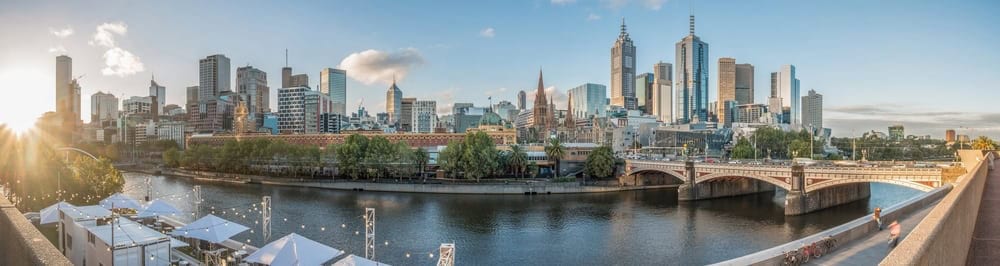
Video: Visualizing the Process
Sometimes seeing a capture flow helps more than reading about it. Here’s a concise panorama shooting overview:
Useful Tools & Resources
Software
- PTGui panorama stitching
- Hugin (open source)
- Lightroom / Photoshop for RAW and retouch
- AI tools for tripod/nadir removal
Hardware
- Panoramic heads (Nodal Ninja, Leofoto)
- Carbon fiber tripods with leveling bases
- Wireless remote shutters
- Pole extensions and safe car mounts
Disclaimer: product names for reference; check official sites for current specs and compatibility.
Common Mistakes & How to Avoid Them
- Parallax error: Calibrate the entrance pupil and keep the rotation axis fixed through the lens center.
- Exposure flicker: Use Manual mode; lock WB and aperture, vary shutter only.
- Tripod shadows or footprints: Capture a clean nadir or plan to patch it in post.
- Ghosting from motion: Shoot two passes and use masks to select the cleanest regions.
- Night noise and banding: Favor longer shutter over higher ISO; avoid full electronic shutter under flickering lights.
- Zoom creep: Tape the zoom ring after setting focal length; consistency beats everything in stitching.
Field Cases & Real-World Advice
Indoor Real Estate
At 16–20mm, use a two-row sequence for clean ceilings and floors. Bracket ±2 EV for bright windows. Keep ISO 100–200, f/8, and adjust shutter. Lock WB to a custom Kelvin (e.g., 3500–4000K for warm interiors) to avoid color shifts between frames. Take an offset nadir tile of the floor for painless tripod removal.
Outdoor Sunset
Expose for highlights to keep the sun glow intact; bracket for shadows if needed. A7R IV’s RAW files allow deep shadows recovery, but avoid underexposing by more than ~2 stops to maintain color fidelity. Use 25–30% overlap; wait a few seconds between frames if wind is causing vibration.
Crowd Scenes
Set 1/250–1/500s and ISO 400–800 to freeze people. Do a quick coverage pass, then pause and watch for moments when a frame clears. In post, mask the clean areas into the base stitch. Pan heads with masking in PTGui make this practical.
Rooftop or Pole
Double-check all clamps and tethers. Keep the lens at 16mm to reduce the number of frames and total time aloft. If wind exceeds a gentle breeze, reconsider the shot—safety first and motion blur will haunt the stitch anyway. Add 5–10% extra overlap as insurance.
Car-Mounted Capture
If moving, stick to very short shutter speeds and accept a higher ISO. Static shots (parked) are always better. Avoid busy areas where cars and people shift drastically between frames; plan routes and timing to minimize motion.
Frequently Asked Questions
- Can I shoot handheld panoramas with the A7R IV?
Yes for simple single-row panos, especially at 16–20mm with 30–40% overlap. For 360 spheres and multi-row mosaics, a leveled tripod and panoramic head dramatically improve stitch reliability and alignment.
- Is the FE 16–35mm f/2.8 GM wide enough for a single-row 360?
At 16mm you can complete a sphere with one ring plus dedicated zenith and nadir shots. However, many shooters prefer two rows for cleaner coverage of ceiling and floor and better control over distortion in the corners.
- Do I need HDR for interiors with bright windows?
Often yes. Bracket ±2 EV (5–9 frames) to retain both window views and interior detail. Merge HDR per viewpoint, then stitch for the cleanest result.
- How do I avoid parallax issues with this setup?
Use a panoramic head and align the rotation with the lens’s entrance pupil. Calibrate with a near/far object test and mark rail positions for 16, 20, 24, and 35mm. For fundamentals, see this panoramic head tutorial. Nodal/entrance pupil alignment guide
- What ISO is safe on the A7R IV for low light?
ISO 100–400 is ideal; 800 remains clean with light NR; 1600 is usable for events; 3200+ only if needed. Prefer longer shutter on a tripod over pushing ISO.
- Can I set up custom modes for panoramas?
Yes. Save Manual exposure, fixed WB, RAW, IBIS off (for tripod), EFCS on, and a 2-sec timer to a Memory Recall slot (1–3). It speeds up setup on location.
- What’s the best tripod head for this kit?
A two-axis panoramic head with fore-aft and lateral rails (e.g., Nodal Ninja or a precision Leofoto model) supports both single-row and multi-row work and ensures entrance pupil alignment.
Behind the Scenes
Here’s a visual of the capture and stitching journey—from framing on a tripod to the software magic.
Safety, Care & Backup
- Wind and edges: Weight your tripod and use a tether; never put yourself at risk on rooftops or cliffs.
- Weather: Use rain covers; dry the lens front element often to avoid water spots that repeat across frames.
- Data integrity: Dual-card recording or immediate card backups after key shots; do a quick on-site review to confirm coverage and focus.
- Lens handling: Tape the zoom ring at your chosen focal length; accidental zoom shifts cause alignment failures.