Why This Camera & Lens Are Great for Panoramas
If you want to learn how to shoot panorama with Sony A7R IV & Samyang 8mm f/3.5 UMC Fish-Eye CS II, this combo can deliver fast, clean, and highly stitchable 360° results. The Sony A7R IV’s 61MP full-frame Exmor R sensor (approx. 35.7 × 23.8 mm, ~3.76 µm pixel pitch) offers excellent base-ISO dynamic range (~14.5 EV at ISO 100), superb color depth, and 5-axis IBIS. The Samyang 8mm f/3.5 CS II is a manual-focus diagonal fisheye with a removable hood and strong UMC coatings that control flare better than most budget fisheyes. Together, they cover an extremely wide field of view with fewer frames per panorama, speeding up capture and reducing stitch seams.
Important note about compatibility: the Samyang 8mm f/3.5 UMC Fish-Eye CS II is designed for APS-C. On the A7R IV, you should enable APS-C/Super 35 crop mode for clean edges (you’ll still get a generous 26MP output per frame). Advanced users sometimes remove the lens hood and shoot full-frame for a near-circular fisheye, but that approach demands careful testing due to strong vignetting and reduced corner quality.
Quick Setup Overview
- Camera: Sony A7R IV — Full-frame mirrorless, 61MP (26MP in APS-C crop), ~14.5 stops DR at base ISO, 5-axis IBIS.
- Lens: Samyang 8mm f/3.5 UMC Fish-Eye CS II — Manual focus, diagonal fisheye coverage on APS-C, removable hood, strong UMC coatings, some lateral CA typical of fisheyes.
- Estimated shots & overlap (APS-C mode):
- Fast set: 4 around (0° tilt) at 90° yaw + 1 zenith + 1 nadir (6 total) with ~30% overlap.
- Safe/pro set: 6 around at 60° yaw + 1 zenith + 1 nadir (8 total) for complex interiors or tight spaces.
- Advanced (hood off, full-frame circular): 3 around at ~120° + nadir patch (expert only; test first).
- Difficulty: Easy–Intermediate (manual focus + nodal alignment required).
Planning & On-Site Preparation
Evaluate Shooting Environment
Start by reading the light and the scene dynamics. For interiors, consider bright windows against dark rooms (you’ll likely bracket for HDR). For city streets or events, expect movement and plan for double passes. Watch for reflective surfaces and glass: a fisheye sees everything, including you and your tripod. If shooting through glass, get as close as possible and shield stray light with a cloth to minimize reflections and ghosting.
Match Gear to Scene Goals
The A7R IV’s large sensor and excellent DR make it strong for both outdoor golden-hour panoramas and indoor real estate. In APS-C crop with the 8mm fisheye, you’ll capture a 360 with fewer frames than a rectilinear wide lens, decreasing stitch errors and parallax issues. For interiors, keep ISO low (100–400) and bracket ±2 EV; for night cityscapes, ISO 400–800 is a safe range on the A7R IV before details begin to suffer. The fisheye distortion is expected and handled by stitching software; you’ll output an equirectangular file for VR or 360 viewers.
Pre-shoot Checklist
- Charge batteries, format cards, clean front element (fisheye curvature exaggerates smudges) and check your sensor for dust.
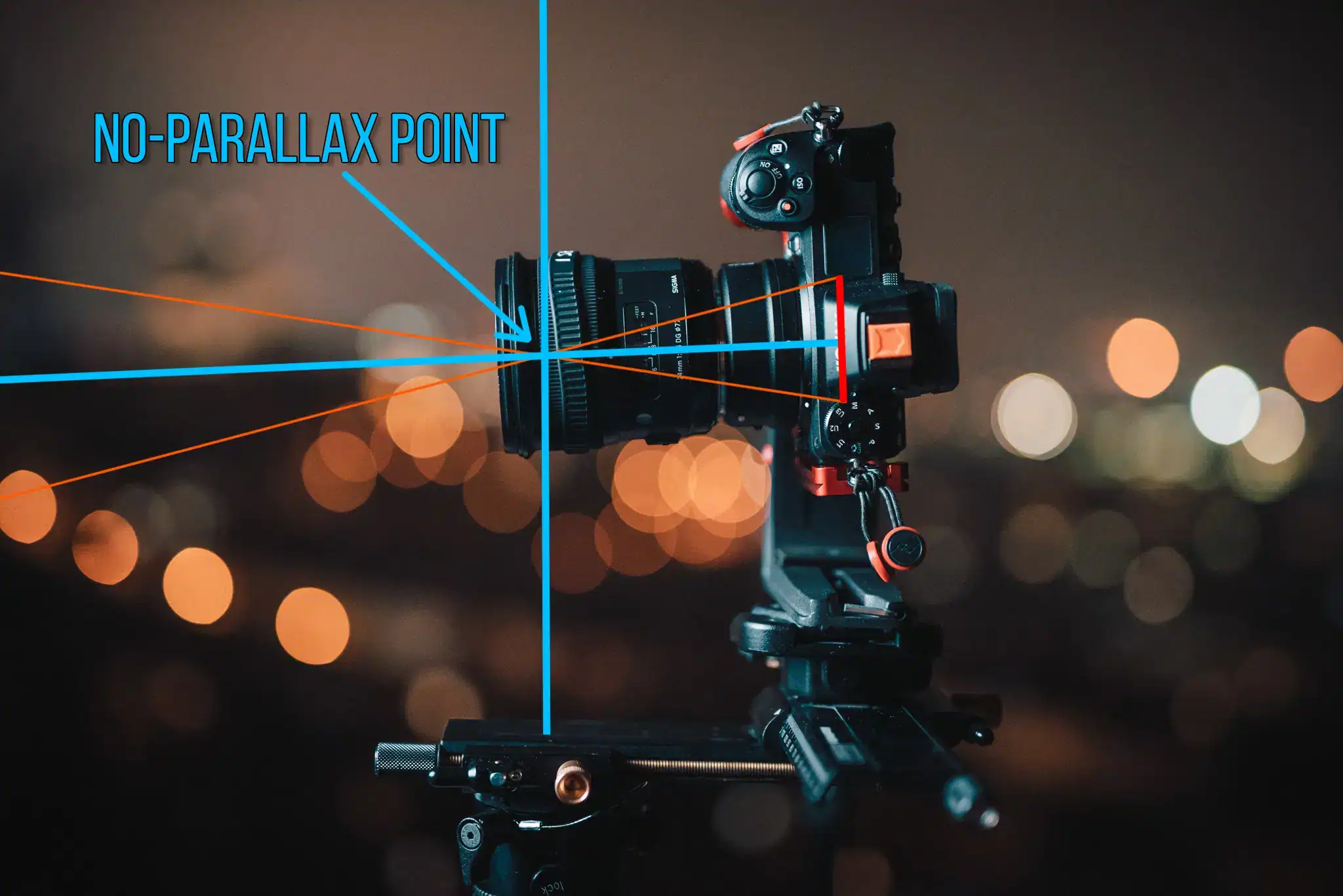
- Level your tripod and verify pano head calibration (entrance pupil/no-parallax point).
- Safety: weigh down the tripod in wind, use a safety tether on rooftops/poles, and follow local regulations for car mounts.
- Backup plan: shoot an extra rotation if subjects are moving or clouds are streaking; redundancy saves jobs.
For more planning fundamentals and capture techniques, see this community-driven overview of 360 pano best practices. Panorama techniques discussion
Essential Gear & Setup
Core Gear
- Panoramic head: Aligns the lens’s entrance pupil over the rotation axis to eliminate parallax. With the Samyang 8mm, a compact single-row head (e.g., a rotator with a vertical offset plate) often suffices.
- Stable tripod with leveling base: A leveling base speeds your workflow and keeps your horizon true. The A7R IV’s digital level helps, but a properly leveled base is faster.
- Remote trigger or app: Fire with a wireless remote or Sony Imaging Edge app. For static scenes, a 2s self-timer also works to avoid vibrations.
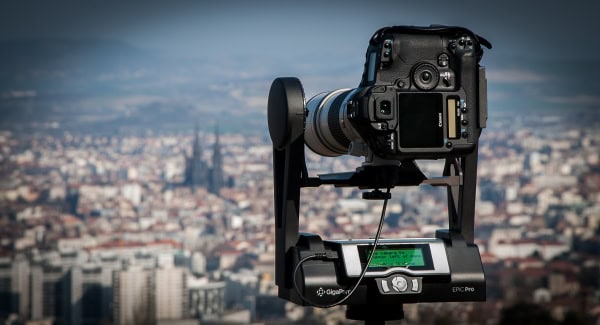
For a deeper dive into panoramic head theory and setup, this illustrated tutorial is solid. Panoramic head setup explained
Optional Add-ons
- Pole or car mount: Great for crowds or elevated viewpoints. Use safety tethers, avoid high winds, and keep speeds low for car rigs.
- Lighting aids: Small LED panels for interiors and a collapsible flag/black cloth to block window reflections.
- Weather protection: Rain covers and desiccant packs; fisheye front elements attract droplets and flare.
Step-by-Step Shooting Guide
Standard Static Scenes
- Level tripod and align no-parallax point: Mount your A7R IV in APS-C crop, attach the Samyang 8mm, and slide the camera fore/aft on the pano head until near and far objects don’t shift relative to each other as you pan. Mark that position on your rail for speed next time.
- Set manual exposure and white balance: Use M mode. Meter for the midtones or slightly to the highlights. Lock a Kelvin WB (e.g., 5600K daylight, 3200K tungsten) so stitches don’t show color shifts.
- Focus manually: At f/8, set focus a touch under 0.5 m for hyperfocal-like coverage. Use focus magnification to confirm.
- Capture your sequence:
- Fast set: 4 shots around at 0° tilt, yawing 90° each, then 1 zenith (~+60° to +90°) and 1 nadir (~−60° to −90°).
- Safe set: 6 around at 60° increments for complex interiors or when objects are close to the lens.
- Nadir shot: Either shoot a separate nadir by lifting the tripod slightly and rotating to cover the ground, or capture a handheld patch and plan to mask it in post.
HDR / High Dynamic Range Interiors
- Bracket ±2 EV (3 or 5 frames) to tame bright windows and shadow detail. Keep the same aperture and ISO across brackets.
- Lock WB and turn off long-exposure NR to keep timing consistent across the full rotation.
- Use a consistent cadence—e.g., darkest to brightest—for easier sorting in post.
Low-Light / Night Scenes
- Tripod locked, IBIS off, EFCS on: On a tripod, turning off stabilization prevents micro-drift; enable Electronic First Curtain Shutter for minimal vibration.
- Target ISO 400–800; 1600 is usable with light NR. Use f/4–f/5.6 and extend shutter to 1/4–1s as needed (start with 1/30–1/60 if subjects move).
- Use a remote trigger or 2s timer; avoid touching the camera mid-bracket.
Crowded Events
- Two passes: First for coverage, second to fill gaps when people move. Aim for overlapping “clean” regions to mask later.
- Keep the tripod footprint small and visible; the fisheye sees legs easily—plan your nadir patch.
Special Setups (Pole / Car / Drone)
- Pole: Keep shots fewer by using the 8mm fisheye (4 around + Z + N). Use a guy-line and tether in wind; keep shutter 1/200+ to fight sway.
- Car: Only with secure multi-suction mounts + safety lines. Slow speeds, smooth roads, and shoot at safe locations. Consider 1/500+ shutter.
- Drone: This lens/body pair isn’t a drone payload. Instead, shoot from a pole or rooftop for elevated views.
In-Field Case Studies
Indoor Real Estate
Use the safe set (6 around + Z + N) at f/8, ISO 100–200, bracketed ±2 EV. Keep the camera height consistent (around 120–140 cm) to preserve room proportions. Turn off all auto functions that could vary frame to frame.
Outdoor Sunset
Meter for the bright sky, then bracket for the foreground. Shoot quickly as the light changes; a fisheye keeps shot count low, so you can finish a full 360 in under a minute.
Event Crowds
Shoot two passes. For the second pass, wait for gaps or ask people to pause for 2 seconds—often all you need for a clean frame that masks over motion blur.
Rooftop Pole
Attach a safety tether, keep yaw increments precise (use a click-stop rotator), and shoot 4 around + Z + N. Wind is your biggest enemy—brace the pole and fire in calm intervals.
Recommended Settings & Pro Tips
Exposure & Focus
| Scenario | Aperture | Shutter | ISO | Notes |
|---|---|---|---|---|
| Daylight outdoor | f/8–f/11 | 1/100–1/250 | 100–200 | Lock WB to Daylight (≈5600K) |
| Low light/night | f/4–f/5.6 | 1/30–1/60 (or longer if static) | 400–800 (1600 OK with NR) | Tripod & remote; IBIS off |
| Interior HDR | f/8 | Bracket ±2 EV | 100–400 | Balance windows and lamps, keep WB locked |
| Action / moving subjects | f/5.6–f/8 | 1/200+ | 400–800 | Double pass to catch clean frames |
Critical Tips
- Manual focus near 0.5 m at f/8 for front-to-back sharpness; confirm with magnified live view.
- Nodal alignment: Start with the camera plate such that the lens’s entrance pupil sits roughly above the rotator center, then fine-tune by checking near/far object alignment while panning.
- White balance lock: Avoid AWB to prevent color seams across frames and brackets.
- RAW capture: Gives you the DR and color latitude to fix mixed lighting and strong highlights.
- IBIS off on tripod: Stabilizers can drift; EFCS on; long-exposure NR off for consistent timing across the sequence.
Stitching & Post-Processing
Software Workflow
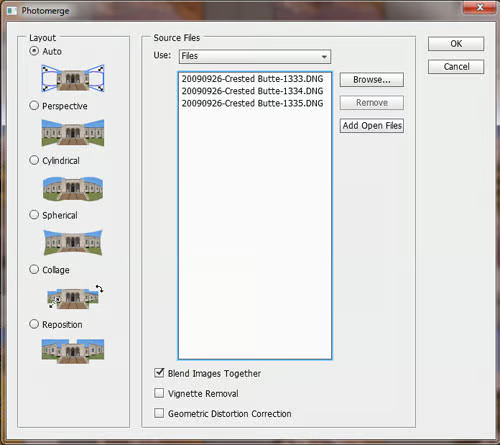
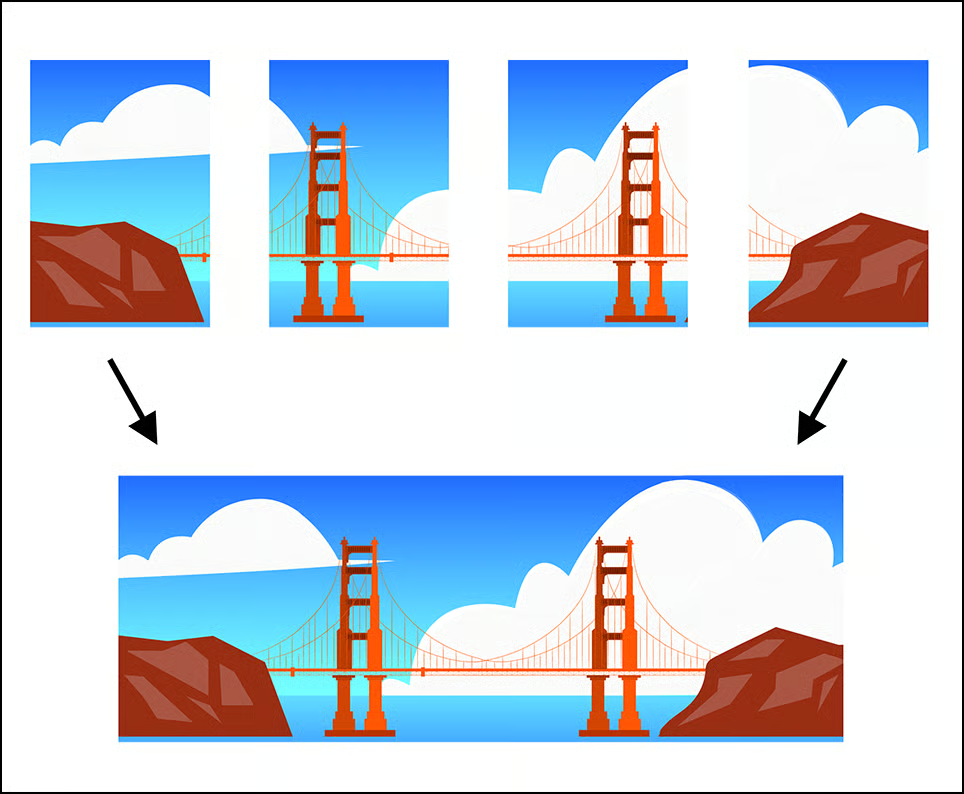
Import your RAWs into Lightroom or Capture One, apply basic corrections (lens profile off for fisheyes), synchronize WB and exposure across images of the same bracket, then export TIFFs to your stitcher. In PTGui or Hugin, declare the lens as a fisheye with focal length 8mm and 1.5x crop. Fisheye sets need ~25–30% overlap for best control point placement. Rectilinear lenses generally need 20–25% overlap but require more frames. After alignment, set the panorama projection to equirectangular (2:1) and optimize pitch/yaw/roll. If you bracketed, you can fuse HDR in PTGui (Exposure Fusion or HDR) or pre-merge in Lightroom/Photomatix before stitching. For an in-depth tool review, see this PTGui assessment. PTGui review and tips
Cleanup & Enhancement
- Nadir patch: Use a clean handheld shot or AI fill/clone tools to remove tripod and operator shadows.
- Color and noise: Apply color calibration and gentle NR for high-ISO night scenes; avoid smearing fine textures.
- Horizon leveling: In equirectangular output, correct roll/yaw/pitch so verticals stay true—especially important in architecture.
- Export: Deliver 2:1 equirectangular JPEG/TIFF at the needed size (e.g., 10,000–16,000 px wide). Follow your platform’s guidelines for 360 photo metadata and compression. DSLR 360 stitching guidance for VR
Tip: For more detail on head setup and pro capture discipline, this guide complements the workflow above. Set up a panoramic head for high-end 360s
Video Walkthrough
Prefer to watch? Here’s a concise video that reinforces key capture and stitching concepts.
Useful Tools & Resources
Software
- PTGui panorama stitching
- Hugin (open-source)
- Lightroom / Photoshop / Affinity Photo
- AI tripod removal tools and content-aware fill utilities
Hardware
- Panoramic heads (Nodal Ninja, Leofoto, Bushman Panoramic)
- Carbon fiber tripods + leveling bases
- Click-stop rotators for precise yaw increments
- Wireless remotes or phone apps
- Pole extensions / car suction mounts (with safety tethers)
Disclaimer: Names are for search reference; always verify latest specs and compatibility.
Common Mistakes & How to Avoid Them
- Parallax error → Center the entrance pupil over the rotation axis; re-check with near/far objects before you start.
- Exposure flicker → Manual mode, fixed ISO and shutter/aperture; lock WB and turn off auto features between frames.
- Tripod shadows and operator reflections → Shoot a nadir patch or plan a later clone/AI fill.
- Ghosting from moving subjects → Double-pass capture and mask in post; time your clicks between pedestrian flows.
- Night noise → Favor ISO 400–800 and extend shutter; the A7R IV resolves fine detail but shows noise sooner at very high ISO.
Frequently Asked Questions
-
Can I shoot handheld panoramas with the Sony A7R IV?
You can for casual results, but expect alignment challenges and parallax with close objects. Use faster shutters (1/250+) and overlap generously. For professional work, a leveled tripod and pano head are strongly recommended.
-
Is the Samyang 8mm f/3.5 UMC Fish-Eye CS II wide enough for a single-row 360?
Yes in APS-C crop mode: 4 around + zenith + nadir is common for exteriors; for interiors or tight spaces, use 6 around for extra overlap and cleaner stitches.
-
Do I need HDR for interiors with bright windows?
Often yes. Bracket ±2 EV (3–5 frames) to preserve window detail and lift interior shadows cleanly. Keep aperture and ISO constant; vary shutter only.
-
How do I avoid parallax issues with this lens?
Calibrate the no-parallax point on your pano head: align near/far objects and slide the camera until their relative position doesn’t shift as you pan. Mark that position on your rail for repeatability. A diagonal fisheye is forgiving, but alignment still matters for close foregrounds.
-
What ISO range is safe on the A7R IV in low light?
ISO 100–400 is optimal. ISO 800 is very usable; ISO 1600 can work with light noise reduction. Prefer extending shutter over pushing ISO when on a tripod.
-
Can I store a custom panorama setup on the A7R IV?
Yes. Use the “Memory” (1/2/3 on the mode dial) to save manual exposure, WB, drive mode (bracket), IBIS off, EFCS on, and APS-C crop. You’ll be ready in seconds on location.
-
How do I reduce flare with a fisheye?
Shade the lens with your hand or a flag just outside the frame, avoid direct bright sources near the edge, and keep the front element spotless. The Samyang’s UMC coatings help, but technique matters most.
-
What’s the best tripod head for this setup?
A single-row panoramic head with click-stop rotator is ideal (e.g., Nodal Ninja R series, Leofoto PAN heads). Ensure you can adjust fore/aft to align the entrance pupil and set reliable yaw increments (90° or 60°).
Safety, Reliability, and Real-World Notes
Wind and vibration are your enemies—especially with poles or rooftop work. Add weight to the tripod, use a safety tether, and keep bystanders clear. The A7R IV’s high pixel density reveals small blur, so be strict about stability. For a refresher on capture discipline and kit choices, this practical guide to virtual-tour gear and technique is helpful. Virtual tour gear and technique guide