Why This Camera & Lens Are Great for Panoramas
If you’re wondering how to shoot panorama with Sony A7R IV & Nikon AF-S 8-15mm f/3.5-4.5E ED Fisheye, you’ve picked a powerful combination. The Sony A7R IV is a 61MP full-frame mirrorless camera (35.7 × 23.8 mm sensor, ~3.76 µm pixel pitch) known for superb base-ISO dynamic range (about 14+ EV at ISO 100) and rich 14-bit RAW files. Paired with Nikon’s 8-15mm fisheye zoom via an F-to-E electronic adapter, you get a versatile 180° field-of-view tool that can dramatically reduce shot count for 360° captures, while maintaining excellent edge-to-edge sharpness when stopped down.
At 8mm on full-frame, the Nikon fisheye produces a circular 180° image; at 15mm it becomes a diagonal fisheye with ~180° across the frame diagonal. For 360 photo work, this flexibility lets you choose between ultra-fast shooting (3–4 shots around with circular fisheye) and higher final resolution (6–8 shots around at 12–15mm). The A7R IV’s reliable manual control, focus aids (peaking/magnification), and in-body stabilization (IBIS) are helpful; for tripod-based panoramas you’ll typically disable IBIS to avoid micro-blur during long exposures.
Important compatibility note: the Nikon AF-S 8–15mm is an E-type lens with an electromagnetic diaphragm. To control aperture on the A7R IV, you must use an electronic Nikon F → Sony E adapter that supports E-type aperture control and ideally AF (e.g., Commlite ENF-E1 Pro, Viltrox NF-E1; performance varies). Without a compatible adapter, you cannot reliably change aperture. Because panoramas love consistent exposure and depth-of-field, aperture control is critical.
Quick Setup Overview
- Camera: Sony A7R IV — Full Frame 61MP, ~14+ EV DR at base ISO, 14-bit RAW, strong low-ISO color depth.
- Lens: Nikon AF-S 8–15mm f/3.5–4.5E ED Fisheye — circular at 8mm, diagonal fisheye by 15mm; best edge-to-edge sharpness around f/5.6–f/8; low lateral CA when stopped down; minimal focus breathing.
- Estimated shots & overlap (field-tested):
- 8mm (circular fisheye): 3 around at 120° + 1 nadir. Optional zenith if ceiling detail matters.
- 10–12mm: 4 around at 90° + zenith + nadir (25–30% overlap).
- 15mm (diagonal): 6 around at 60° + zenith + nadir (25–30% overlap, portrait orientation recommended for coverage).
- Difficulty: Moderate. Fast to shoot, but requires careful nodal alignment and proper adapter use.
Planning & On-Site Preparation
Evaluate Shooting Environment
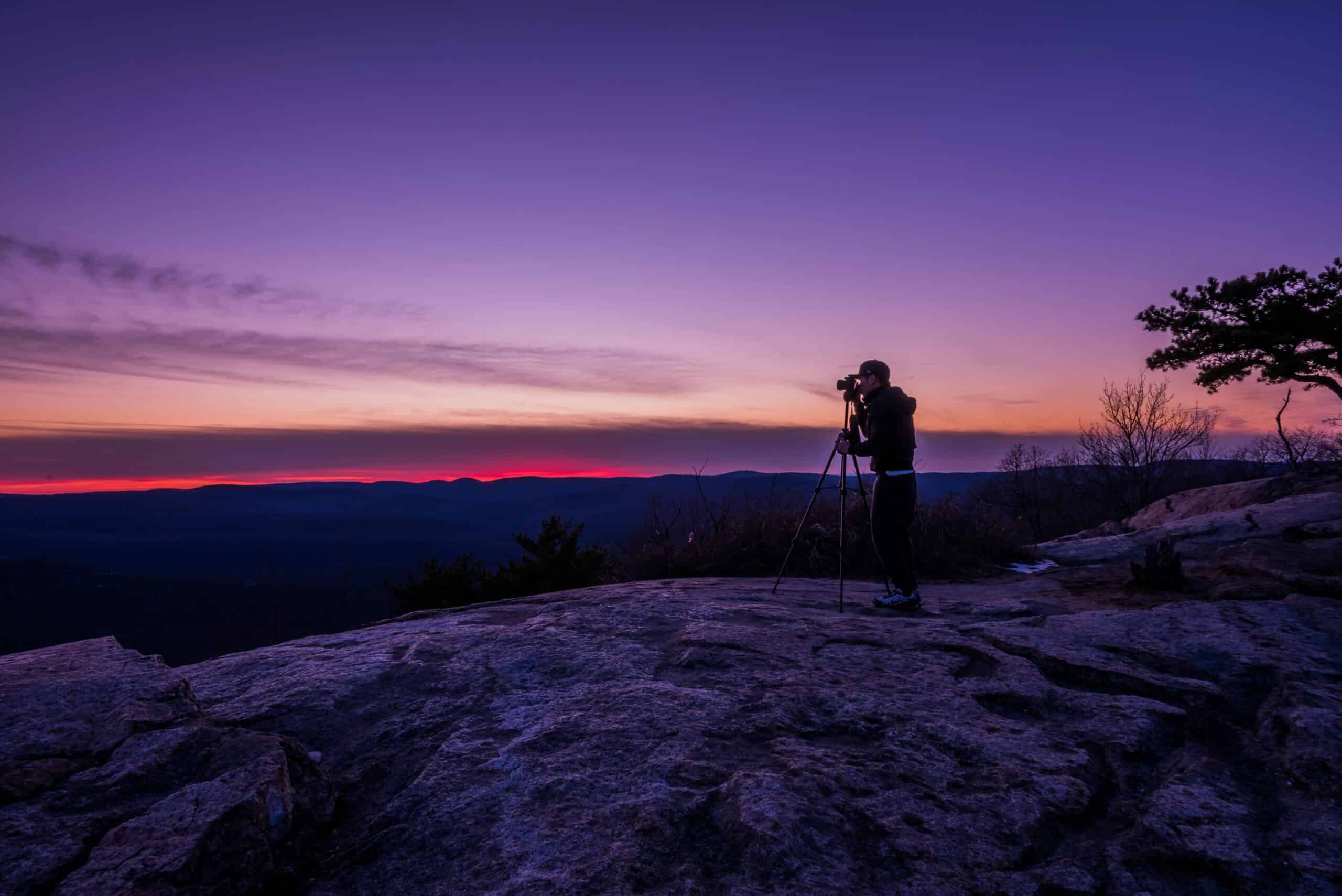
Before mounting the camera, read the scene. Watch for moving subjects, shimmering water, trees in wind, or crowds. Glass and polished metal introduce reflections and ghosting—get as close as possible to glass (1–3 cm) to reduce double reflections and flare. Note the sun position and bright windows; these determine if you need bracketing for an HDR panorama.
Match Gear to Scene Goals
The A7R IV’s huge resolution and excellent dynamic range make it ideal for detailed interiors and landscape 360 photo work. Indoors, ISO 100–400 gives clean files; ISO 800–1600 is usable with good noise reduction. The fisheye zoom keeps shot count low (especially at 8mm) which minimizes ghosting in crowds and speeds up capture at sunset, but remember that circular fisheye outputs slightly lower final equirectangular resolution than shooting at 12–15mm with more frames. Choose 8mm for speed and simplicity; choose 12–15mm for maximum detail.
Pre-shoot Checklist
- Power & storage: Fully charged batteries; dual UHS-II cards (RAW+RAW or RAW+JPEG preview).
- Optics clean: Lens front/rear elements and sensor checked; fisheye bulbs scratch easily—use a microfiber and blower.
- Pano head ready: Leveling base, pano rotator clicks set to 60°, 90°, or 120° per your plan; nodal rail marks for this combo.
- Safety checks: Secure tripod legs, weigh down center column if windy, use a safety tether on rooftops or poles.
- Backup workflow: If time permits, shoot a second full round. It saves projects when someone walked through the frame.
Essential Gear & Setup
Core Gear
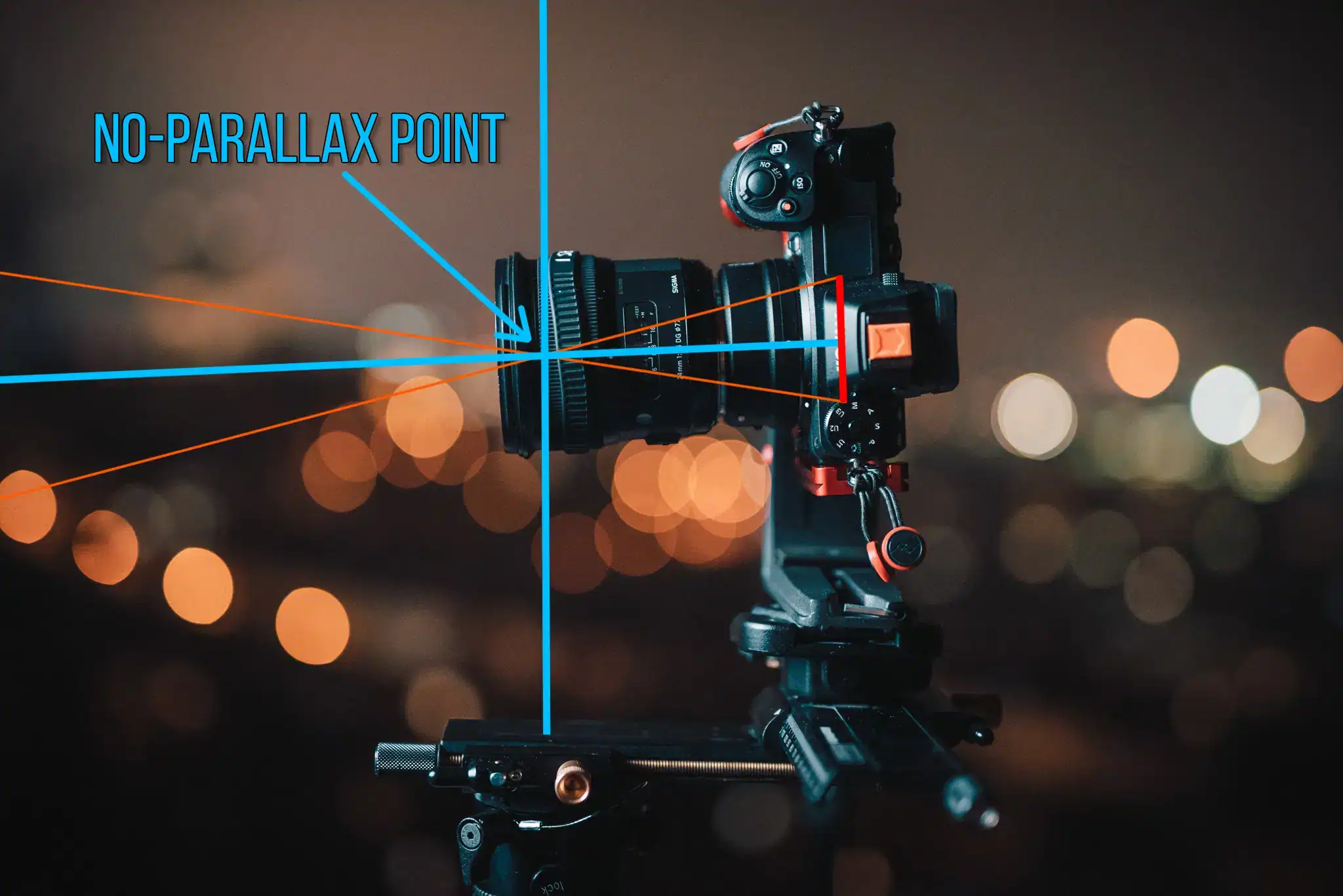
- Panoramic head: Ensures rotation around the lens’s entrance pupil (nodal point) to avoid parallax. Calibrate once, then mark your rails for the A7R IV + adapter + 8–15mm.
- Stable tripod with leveling base: A 75mm or 100mm half-ball leveling base speeds alignment and keeps pitches/yaws consistent.
- Remote trigger or app: Use Sony Imaging Edge Mobile or a cable release. Avoid touching the camera during exposures.
Optional Add-ons
- Pole or car mount: Great for elevated or vehicle-based 360 photo work. Always add a safety tether, check for wind load, and avoid overhanging crowds or traffic.
- Lighting for interiors: Small LEDs bounced off ceilings, or use bracketing instead to keep light natural.
- Weather protection: Fisheyes are exposed. Use a rain cover or large hat-style flag to shield from drizzle and flare.
Step-by-Step Shooting Guide
Standard Static Scenes
- Level and align the nodal point: Level your tripod, then adjust the fore/aft position of the lens on the nodal rail so near/far objects don’t shift relative to each other when you pan. Mark this position for 8mm and 15mm since the entrance pupil shifts with focal length.
- Manual exposure and white balance: Set manual exposure and lock WB (Daylight, Cloudy, or a Kelvin value). This avoids exposure flicker and color casts across frames when stitching.
- Capture with tested overlap:
- 8mm circular: 3 shots at 0°, 120°, 240°; add a nadir if the ground needs clean patching. Slightly tilt up 5–10° to minimize a zenith hole.
- 10–12mm: 4 shots at 0°, 90°, 180°, 270° + zenith + nadir.
- 15mm: 6 around at 60° increments + zenith + nadir. Portrait orientation preferred.
- Take the nadir: After the main round, tilt down for a dedicated ground shot. For perfect tripod removal, later shoot a handheld nadir from the same point after moving the tripod.
HDR / High Dynamic Range Interiors
- Bracket ±2 EV (3–5 frames): Windows and bright lamps often exceed the A7R IV’s single-exposure headroom. Bracketing preserves highlight detail.
- Keep WB locked: Mixed lighting is common; consistency across brackets avoids stitch seams. Consider shooting at ISO 100–200 and let shutter time vary.
Low-Light / Night Scenes
- Long exposures on a solid base: Use f/4–f/5.6 and keep ISO 100–800 for best quality; ISO 1600 in a pinch. Expect shutter speeds from 1/2 to 8s or more on static scenes.
- Prevent vibration: Disable IBIS on tripod, use a remote/2s timer, and Electronic First Curtain Shutter (EFCS). Avoid full electronic shutter under artificial lights to reduce banding risk.
Crowded Events
- Two passes: First pass quickly for full coverage; second pass wait for gaps in the crowd near critical features. You can mask moveable elements in post.
- Favor 8mm: Fewer frames means fewer moving-subject conflicts and easier masking later.
Special Setups (Pole / Car / Drone)
- Secure everything: Use a safety tether, lock all knobs, and confirm your adapter mount is firmly seated.
- Mind wind and vibration: Shorten the pole if windy; use faster shutter speeds (1/250+) with higher ISO if handholding a pole. For car mounts, pick smooth pavement and slow speed.
Recommended Settings & Pro Tips
Exposure & Focus
| Scenario | Aperture | Shutter | ISO | Notes |
|---|---|---|---|---|
| Daylight outdoor | f/8–f/11 | 1/100–1/250 | 100–200 | Lock WB (Daylight). Use 8mm for speed or 12–15mm for detail. |
| Low light/night | f/4–f/5.6 | 1/2–8s (tripod) | 100–800 | Remote trigger, IBIS off on tripod. EFCS to reduce shutter shock. |
| Interior HDR | f/8 | Bracket ±2 EV | 100–400 | Preserve window highlights; keep WB locked across brackets. |
| Action / crowds | f/5.6–f/8 | 1/200+ | 400–800 | Freeze motion; shoot two passes for easier masking. |
Critical Tips
- Manual focus at hyperfocal: At 8mm, f/8 gives near-infinite depth; focus slightly beyond 1 m and confirm with magnified live view.
- Nodal point calibration: With the camera on the pano head, align a near object against a far line; pan left/right. Adjust the fore/aft rail until the near object doesn’t “slide” relative to the background. Mark separate positions for 8mm and 15mm.
- White balance lock: Use a fixed Kelvin value or preset per scene. Avoid Auto WB variation between frames.
- RAW capture: 14-bit RAW leverages the A7R IV’s dynamic range and minimizes banding after heavy tone mapping.
- IBIS on/off: Turn OFF stabilization on a tripod; enable it handheld on a pole, with faster shutter speeds.
- Anti-flicker: Indoors under 50/60Hz lighting, enable Anti-flicker (mechanical/EFCS) to stabilize exposure.
Stitching & Post-Processing
Software Workflow
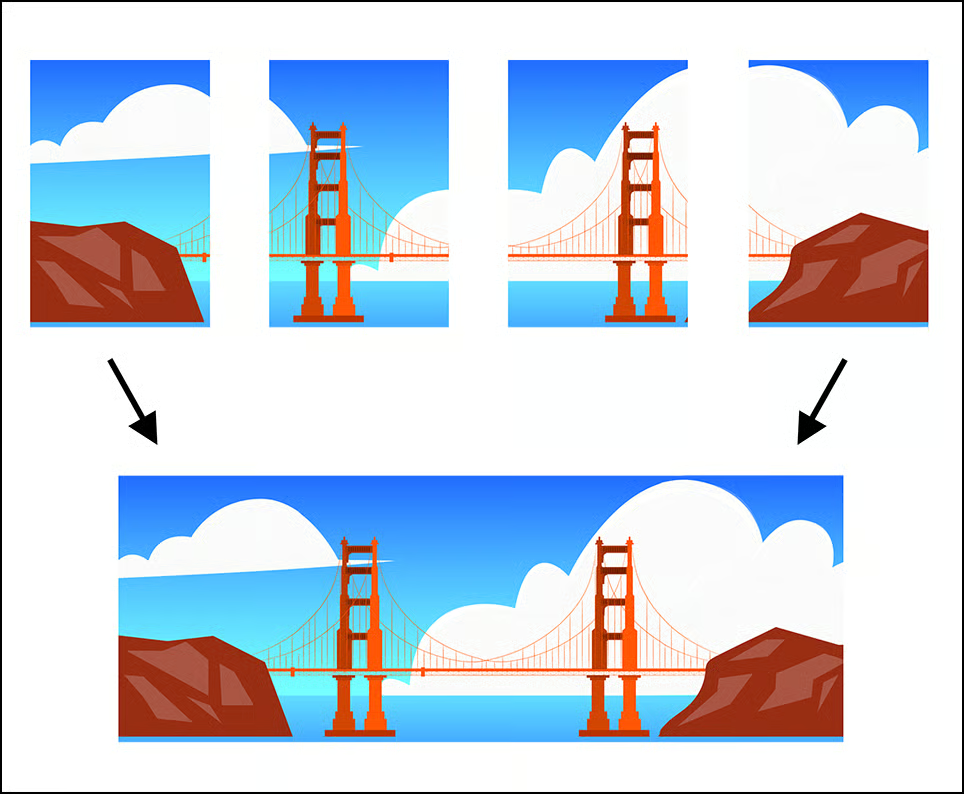
For best results, import your RAW files into Lightroom or Capture One for basic white balance and exposure normalization (no lens distortion removal for fisheye). Then stitch with PTGui or Hugin using the correct lens type: “Fisheye — Circular” at 8mm, “Fisheye — Full-frame” at 12–15mm. Aim for 25–30% overlap with fisheyes for robust control point generation. PTGui’s optimizer will solve yaw/pitch/roll and lens parameters; for zenith/nadir, you can add Viewpoint optimization or shoot dedicated shots and blend them. A reliable, production-proven tool for pros is PTGui, frequently rated as the most robust for complex sets. Read a professional PTGui review.
Cleanup & Enhancement
- Nadir patch: Use a dedicated nadir shot and PTGui’s Viewpoint feature, or export to Photoshop/Affinity and clone. AI tools can help remove the tripod quickly.
- Color & noise: Apply selective noise reduction for shadow areas (especially ISO 800+). Ensure consistent color across the sphere.
- Horizon and leveling: Use the software’s horizon tool, or set pitch/roll by picking verticals/horizontals.
- Export properly: For VR platforms, export 2:1 equirectangular JPEG at 8K–16K width depending on your source. At 8mm (3 around), expect 8–10K equirectangular; at 15mm (6+2), 12–16K is common. For resolution math, consult Panotools spherical resolution guidelines.
Want a concise, end-to-end primer on shooting and stitching DSLR/mirrorless 360 photos? The Oculus creator documentation covers setup, capture, and export for immersive platforms. See the DSLR/mirrorless 360 photo guide.
Recommended watch: A practical walkthrough for shooting and stitching panoramas.
Disclaimer: Always check your chosen software’s latest documentation; interfaces and features evolve.
Useful Tools & Resources
Software
- PTGui for advanced fisheye stitching and viewpoint correction.
- Hugin (open source) for cost-free but capable stitching.
- Lightroom / Photoshop or Affinity Photo for RAW prep and retouching.
- AI tripod removal and sky cleanup tools for speed.
Hardware
- Panoramic heads: Nodal Ninja, Leofoto, or Sunwayfoto with indexed rotators.
- Carbon fiber tripods for stability-to-weight balance.
- Leveling bases (half-ball or 3-point leveling) to speed setup.
- Wireless remotes or smartphone apps for shake-free operation.
- Pole extensions or vehicle mounts with safety tethers.
For fundamentals of panoramic heads and no-parallax rotation, this tutorial is an excellent primer. Learn panoramic head basics.
Disclaimer: Brand names are for search reference. Verify specs and compatibility on official sites, especially for Nikon F → Sony E electronic adapters.
Common Mistakes & How to Avoid Them
- Parallax errors: Not using the entrance pupil as your rotation center causes stitching faults. Calibrate your nodal rail before important shoots.
- Exposure flicker: Auto modes vary by frame. Use full manual exposure and fixed white balance.
- IBIS micro-blur: Stabilization can shift the sensor during long tripod shots. Turn IBIS off on a tripod.
- Tripod shadows and footprints: Plan a nadir shot and patch; avoid noon sun or place tripod in even shade.
- Adapter issues: Without an electronic F→E adapter that supports E-type aperture, you can’t reliably stop down. Test your adapter before a paid job.
- Underlap: Too little overlap reduces control points and causes stitching gaps. Target 25–30% with fisheyes.
Field Scenarios & Proven Settings
Indoor Real Estate (Bright Windows)
Use 12–15mm for higher final resolution and reduced edge stretching. Shoot 6 around + zenith + nadir. Set f/8, ISO 100–200, and bracket ±2 EV (3–5 frames) to retain window detail. White balance locked to a consistent Kelvin (e.g., 4000–4500K for warm LEDs). Use Anti-flicker and EFCS. In PTGui, enable exposure fusion or HDR merge before stitching for natural tonality.
Outdoor Sunset Overlook
Speed matters. Use 8–10mm so you can complete the sphere before the light changes. f/8, ISO 100–200, 1/60–1/200s depending on light, with 3 around + nadir at 8mm. Slightly tilt the camera up (~5–10°) for smaller zenith gaps. In post, set the horizon precisely and add a soft gradient to balance the sky glow.
Crowded Event or Festival
Choose 8mm to minimize the number of frames; shoot two full rounds. First pass prioritizes coverage; second pass captures “clean” background areas when people move. In PTGui, use masks to select clean regions and exclude unwanted subjects. Shutter 1/200–1/500s, ISO 400–800, f/5.6–f/8.
Rooftop or Pole Elevation
Mount firmly and add a safety tether. If shooting on a pole, raise sparingly in wind, shoot at 8–10mm, f/5.6–f/8, 1/250–1/500s, ISO 400–800. Expect minor sway; take two rounds and pick the sharpest frames. Verify your adapter mount tightness and lens lock before lifting—fisheyes have protruding elements, so keep a protective cap on until you’re ready to shoot.
Adapter & Lens-Specific Notes
The Nikon 8–15mm E-type relies on an electromagnetic diaphragm. Use a Nikon F → Sony E adapter that specifically supports E-type aperture control. Autofocus may be slower or inconsistent with third-party adapters; for panoramas, manual focus is preferred anyway. Test at home: confirm the camera can set f/8 and that EXIF reflects the change. If aperture control fails, you’ll be stuck wide open or closed—both problematic for pano depth-of-field.
At 8mm, remove the petal hood to avoid cutting the circular image. Keep the front element spotless—small fingerprints are obvious on fisheyes. Expect some vignetting; don’t correct in RAW pre-processing, as fisheye geometry corrections may interfere with stitching. Let PTGui or Hugin handle vignetting compensation during alignment.
Visual Aids
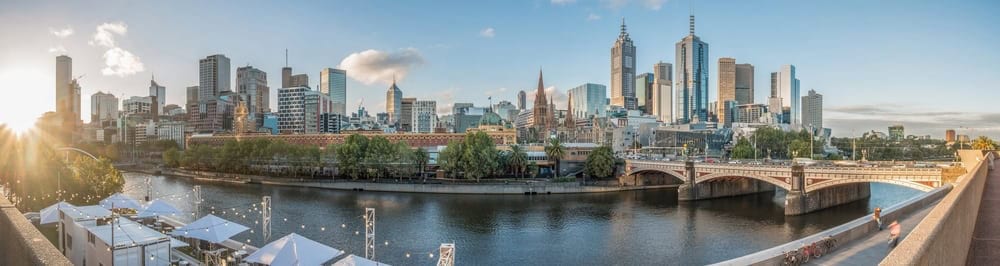
The images below illustrate the key ideas of entrance pupil alignment and stitching strategy that you’ll apply with the A7R IV and Nikon 8–15mm.
Frequently Asked Questions
- Can I shoot handheld panoramas with the Sony A7R IV?
Yes, for quick tests or outdoor scenes with fast shutter speeds (1/250+). Use 8–10mm to reduce frames. However, for professional 360 photo results (especially interiors), a leveled tripod and panoramic head are strongly recommended to avoid parallax and seam errors.
- Is the Nikon AF-S 8–15mm wide enough for single-row 360?
Absolutely. At 8mm (circular fisheye) you can do 3 around + nadir. At 12–15mm, a single around row of 6 frames plus zenith and nadir yields higher-resolution spheres with robust overlap.
- Do I need HDR for interiors with bright windows?
Often yes. Bracket ±2 EV (3–5 shots) to preserve highlights and clean shadows. The A7R IV has great dynamic range, but windows and specular lights commonly exceed single-exposure latitude.
- How do I avoid parallax issues with this setup?
Use a panoramic head and align rotation around the lens’s entrance pupil. Calibrate fore/aft for both 8mm and 15mm since the entrance pupil shifts with focal length. Mark your rail for repeatable setup. For a deeper primer, see this panoramic head guide. Panoramic head tutorial
- What ISO range is safe on the A7R IV in low light?
For critical quality, ISO 100–800. ISO 1600 is usable with careful noise reduction. Prefer longer tripod exposures over pushing ISO when possible, and keep IBIS off on a tripod.
- Can I set up custom modes for pano on the A7R IV?
Yes. Save a “PANO” profile to MR1/MR2 with Manual exposure, fixed WB, RAW, EFCS, IBIS off, and a typical aperture (f/8). It speeds up field work and keeps settings consistent.
- How do I reduce flare with a fisheye?
Shield the front element with your hand or a flag just outside the frame, avoid direct sun across frames if possible, and clean the glass meticulously. Slightly reframe to put the sun near a seam edge and mask carefully in post.
- What’s the best tripod head for this setup?
A compact panoramic head with independent vertical and horizontal rails, indexed click-stops, and a sturdy leveling base. Nodal Ninja and Leofoto systems are popular choices for fisheye-based 360° work.
Safety, Data Integrity & Workflow Hygiene
Always tether your gear in elevated positions. The fisheye’s bulbous front element is vulnerable—cap it during setup and carry a spare microfiber. In rain or sea spray, protect the glass and keep a dry cloth handy. After each scene, review a quick 360° sweep on the back screen for coverage gaps.
Data hygiene: Use dual-slot writing (RAW+RAW) when possible and back up cards at the end of the day. The A7R IV’s 61MP files are large; ensure you have fast UHS-II cards and adequate SSD space. Keep a simple folder structure: Project/Location/Date/Round01, Round02, HDR/Brackets, Nadir, Zenith. This consistency saves hours in post.