Why This Camera & Lens Are Great for Panoramas
If you want to know how to shoot panorama with Sony A7R IV & Laowa 8-15mm f/2.8 FF Zoom Fisheye, you’ve picked a powerhouse combo. The Sony A7R IV’s 61MP full-frame sensor (approx. 35.7 × 23.8 mm) delivers class-leading detail, wide dynamic range (~14.7 EV at base ISO), and robust RAW files that hold up during stitching and HDR merging. Its 5-axis IBIS helps when handholding or shooting on a pole, and the body ergonomics make manual focus and exposure control straightforward—important for consistent 360° capture.
The Laowa 8-15mm f/2.8 is a unique full-frame fisheye zoom. At 8mm it behaves as a circular fisheye (covering roughly 180–185° FOV), while at 15mm it’s a diagonal fisheye with approximately 180° across the frame. This flexibility lets you choose between ultra-fast capture (fewer shots at 8–10 mm) and higher-resolution single-row panos (12–15 mm). As a manual lens, it offers precise focus and aperture control, and fisheye mapping simplifies stitching by distributing distortion uniformly.
Mount compatibility is native to Sony E-mount, and the lens is compact enough to balance well on a panoramic head. The tradeoff: fisheye imagery shows distortion that you’ll manage in post, and the A7R IV’s small pixel pitch (~3.76 μm) can show noise if pushed too far in low light. Still, for 360 photo, virtual tours, and VR-ready equirects, this duo is faster to shoot than rectilinear alternatives and produces clean, detailed results.
Quick Setup Overview
- Camera: Sony A7R IV — Full-frame 61MP mirrorless; strong dynamic range, native ISO 100–32,000 (expandable 50–102,400). Pixel pitch ≈ 3.76 μm; 5-axis IBIS.
- Lens: Laowa 8-15mm f/2.8 FF Zoom Fisheye — Full-frame fisheye zoom; circular at 8mm, diagonal fisheye at 15mm. Manual focus/aperture; sharpest typically around f/5.6–f/8; lateral CA is present but manageable in post.
- Estimated shots & overlap (tested guidelines):
- 8mm (circular fisheye): 4 around (90°) + zenith + nadir; pros sometimes use 3 around (120°) in a pinch.
- 10–12mm (fisheye): 6 around (60°) + zenith + nadir for robust control points.
- 15mm (diagonal fisheye): 8 around (45°) + zenith + nadir; for ultra-high res, consider 2-row capture.
- Difficulty: Easy–Moderate (fisheye is more forgiving to stitch but requires nodal alignment and careful exposure consistency).
Planning & On-Site Preparation
Evaluate Shooting Environment
Scan your scene for moving subjects, reflective/transparent surfaces (glass, polished stone), and strong light sources. Indoors with windows or mixed lighting demands HDR bracketing and a locked white balance to avoid stitching seams. If you shoot through glass, keep the front element very close (1–3 cm) to reduce reflections and ghosting; use a rubber lens hood when possible and angle slightly to minimize flare.
Match Gear to Scene Goals
For fast capture (crowds, wind, event floors), zoom to 8–10mm and shoot fewer frames around. For maximum resolution (fine architecture, gigapixel-style detail), zoom toward 12–15mm and increase the number of shots. The Sony A7R IV’s DR at ISO 100 lets you recover highlights and shadows well; for interiors, ISO 100–400 is ideal with tripod, and ISO 800–1600 remains usable with careful exposure and noise reduction. The fisheye’s advantage is speed (fewer shots), but be mindful of near objects that can reveal parallax errors if your nodal point isn’t dialed in.
Pre-shoot Checklist
- Charge batteries, clear and format cards, clean lens/sensor, pack microfiber and blower.
- Level the tripod and verify pano head calibration marks for this combo.
- Safety: assess wind (especially on rooftops), secure straps/tethers, avoid placing tripod on soft/unstable surfaces, and follow property rules when using poles or car mounts.
- Backup capture: shoot a second full round (or a second zenith/nadir) as insurance against stitching issues.
Essential Gear & Setup
Core Gear
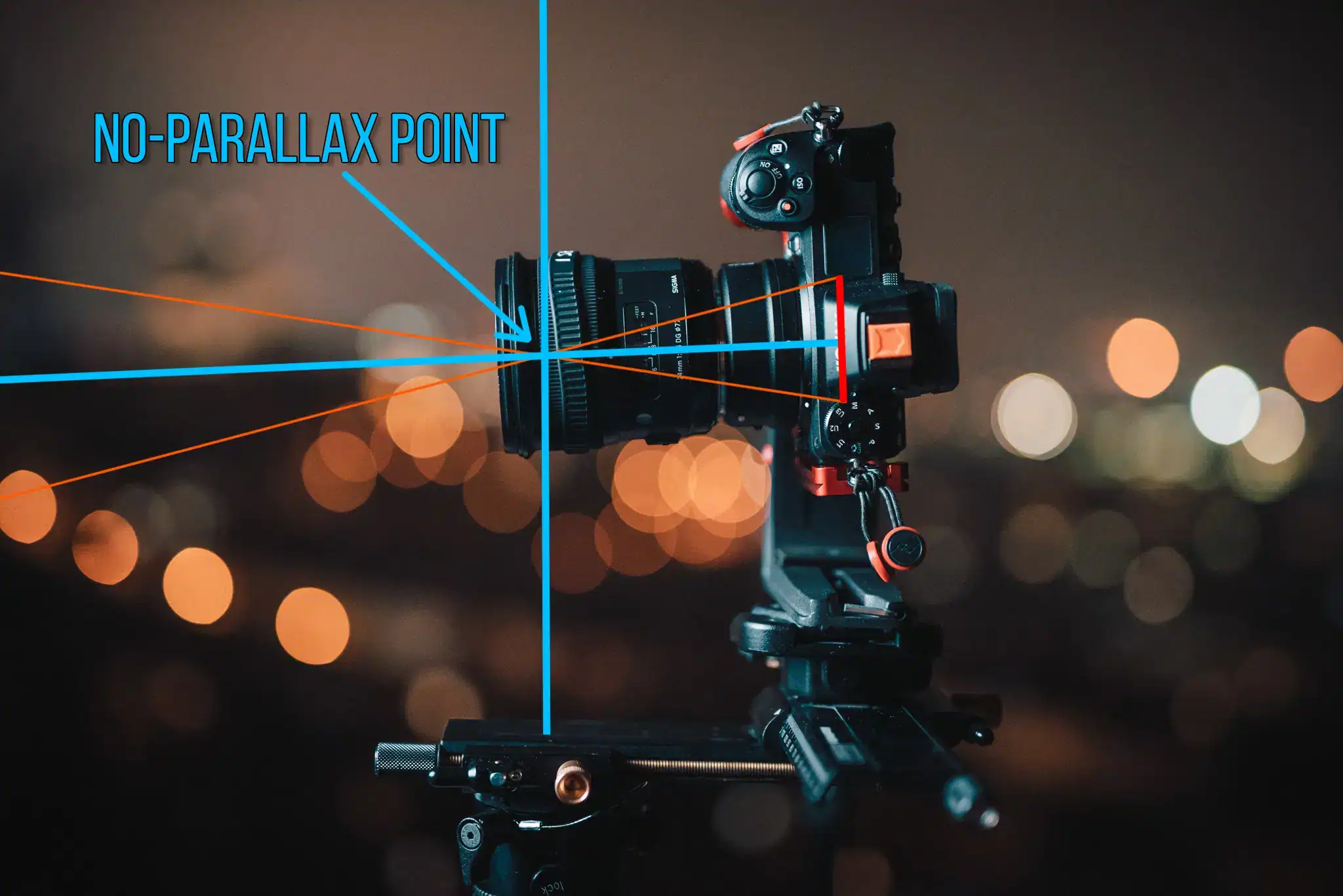
- Panoramic head: A proper pano head lets you rotate around the lens’s no-parallax (nodal) point, minimizing parallax and ensuring clean stitches. Mark your rail positions for the A7R IV + Laowa at several focal-lengths (8, 12, 15mm) to work faster.
- Stable tripod with leveling base: A leveling base speeds setup and keeps your horizon true, reducing post corrections.
- Remote trigger or app: Use the Imaging Edge Mobile app or a wired remote; set a 2s timer if neither is available.
Optional Add-ons
- Pole or car mount: Excellent for overhead shots or vehicle-mounted captures. Use safety tethers, pad contact points, and watch wind loads; the fisheye’s large FOV makes even small vibrations visible.
- Lighting aids: Small LED panels or bounced flash can help balance interiors, but beware of hotspots and reflections in 360.
- Weather protection: Rain covers, lens cloths, and silica packs. Seal the battery/card doors and avoid exposing the sensor when it’s windy/dusty.
Step-by-Step Shooting Guide
Standard Static Scenes
- Level and nodal alignment:
- Mount the A7R IV and Laowa on your panoramic head. Adjust the fore-aft rail so that near and far objects stay aligned while rotating. Use a light stand, a vertical pole, or two test objects at different distances to fine-tune. Do this once per focal length you intend to use (8, 12, 15mm) and record the rail marks.
- Turn off IBIS for tripod shots to avoid micro-vibrations; enable EFCS (Electronic First Curtain Shutter) or use a 2s timer for vibration-free frames.
- Manual exposure and white balance:
- Switch to M mode, meter for midtones, and avoid clipping highlights (use histogram/zebras). Lock WB (Daylight/Tungsten/Custom) to prevent color shifts between frames.
- Typical daylight baseline: f/8, 1/160s, ISO 100–200 at 8–12mm.
- Capture sequence and overlap:
- At 8–10mm: take 4 shots around (every 90°), then a zenith and a nadir. If time-pressured, 3 around (120°) can work but is riskier near complex edges.
- At 12mm: take 6 around (every 60°) + zenith + nadir for reliable control points.
- At 15mm: take 8 around (every 45°) + zenith + nadir; for best detail, consider a second row tilted up/down 30°.
- Nadir shot (tripod removal):
- Shoot a handheld or offset nadir: rotate the head 180°, move the tripod slightly, and shoot the ground to patch later. Alternatively, shoot a dedicated nadir with a boom arm or capture a patch plate.
HDR / High Dynamic Range Interiors
- Bracket ±2 EV (3–5 frames): The A7R IV’s DR is generous, but window-to-shadow differences often exceed 12 stops in real estate. Use AEB with 2 EV spacing or manual bracketing to cover extremes.
- Lock WB and focus: Keep WB fixed and manual focus set. Merge exposures after stitching or pre-merge per view if your software supports it.
Low-Light / Night Scenes
- Long exposure + low ISO: Start at f/4–f/5.6, ISO 100–400, and extend shutter to 1–4s on tripod. If motion blur is an issue (trees, flags), compromise at ISO 800–1600 with 1/2–1/10s. The A7R IV remains clean to ISO ~800; ISO 1600 is workable with modern denoising.
- Remote release and wind management: Use a remote or 2s timer and shield the tripod from gusts. Turn off IBIS on tripod.
Crowded Events
- Two-pass strategy: First pass for overall coverage, second pass capturing gaps when people move. This gives you maskable options in post.
- Fewer frames at wider focal length: Use 8–10mm for speed; shoot quickly to minimize subject movement between frames.
Special Setups (Pole / Car / Drone)
- Pole: Secure clamps, use a safety tether, and keep exposure short (1/250s+) to fight sway. Avoid strong winds; keep bystanders at a safe distance.
- Car mount: Use vibration-damping mounts, drive slowly, and shoot at 8–10mm with 1/500s+ if handholding from a sunroof. Watch for reflections from the car roof.
Recommended Settings & Pro Tips
Exposure & Focus
| Scenario | Aperture | Shutter | ISO | Notes |
|---|---|---|---|---|
| Daylight outdoor | f/8–f/11 | 1/100–1/250 | 100–200 | Lock WB to Daylight; show detail across frame |
| Low light/night | f/4–f/5.6 | 1/2–1/60 (tripod) | 100–800 (1600 if needed) | Use remote; IBIS off on tripod |
| Interior HDR | f/8 | Bracket ±2 EV | 100–400 | Prevents blown windows, keeps clean shadows |
| Action/motion | f/5.6–f/8 | 1/200+ | 400–800 | Faster shutter to freeze moving subjects |
Critical Tips
- Manual focus: Set to near-hyperfocal. At 8mm and f/8 on full-frame, focusing around ~0.5–0.6 m keeps near-to-infinity sharp. Use focus magnification to confirm.
- Nodal calibration: Start with the camera plate roughly centered. Move the fore-aft rail until foreground edges align with background when rotating. Mark your rail positions for 8, 12, and 15mm to speed future setups.
- White balance lock: Prevents seams where mixed lighting shifts color frame-to-frame. Use a custom Kelvin value or a gray card reference.
- RAW over JPEG: 14-bit RAW from the A7R IV gives headroom for stitching and HDR; JPEG can be fine for speed but limits correction.
- IBIS and shutter mode: Turn IBIS off on tripod; use EFCS or a 2s timer. For interiors under LED lighting, avoid silent (fully electronic) shutter to minimize banding.
Stitching & Post-Processing
Software Workflow
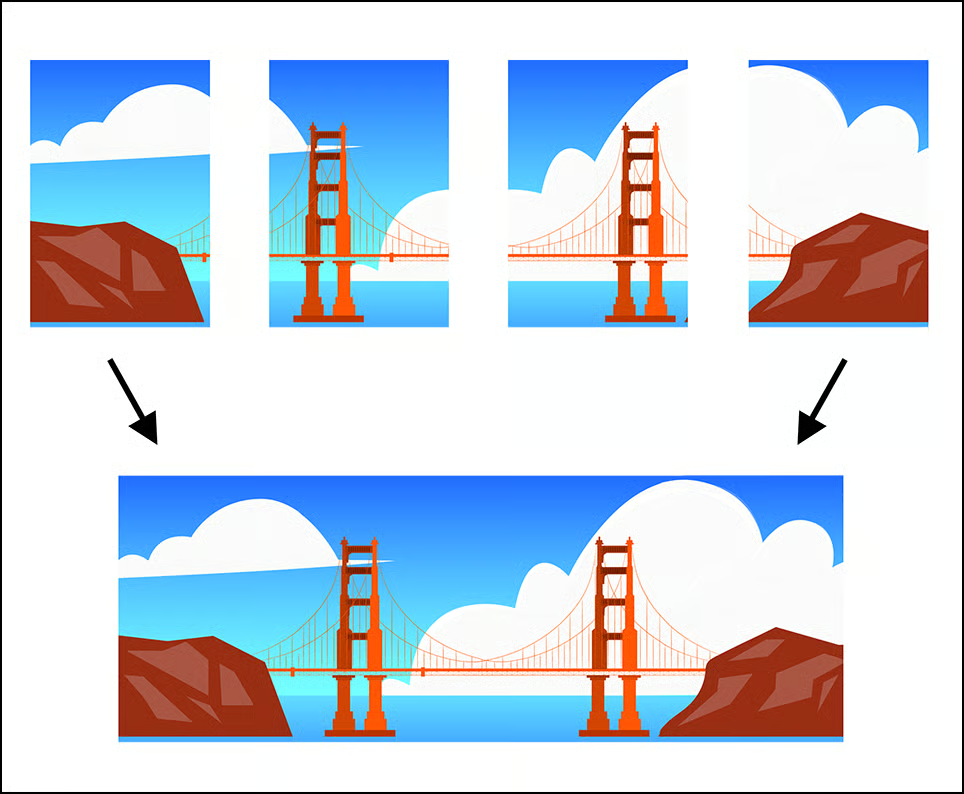
Import RAWs into Lightroom or your preferred RAW editor. Apply lens profiles lightly (avoid aggressive defish before stitching with fisheye), correct exposure/WB uniformly, and sync settings across the set. Export high-quality TIFFs or 16-bit files to your stitcher. PTGui is an industry favorite for fisheye-based 360s and handles exposure fusion, control points, and horizon leveling well. Hugin is a strong open-source alternative. Fisheye sequences typically stitch faster than rectilinear because fewer frames and a consistent mapping create robust control points. Aim for 25–35% overlap with fisheye. After stitching to an equirectangular, finish color and detail in Lightroom/Photoshop, and export for the web or VR platforms. For an in-depth review of PTGui’s strengths, see Fstoppers’ overview of the tool. PTGui review on Fstoppers
Cleanup & Enhancement
- Nadir patching: Use a captured nadir plate or clone/heal in Photoshop. Some AI tools speed tripod removal and floor repair.
- Color balance: Check for WB consistency around the seam line. Use a gradient map or localized adjustments if needed.
- Noise reduction: Apply moderate NR and selective sharpening; the A7R IV’s small pixels may show texture noise at higher ISOs.
- Level and straighten: Use the stitcher’s horizon or vertical lines to correct roll/pitch/yaw for a comfortable VR view.
- Export: Save a high-quality equirectangular JPEG (8–12k width for web) or TIFF (for archival/VR publishing). Follow platform specs when publishing VR (e.g., 2:1 aspect, correct metadata). For platform guidance, see Meta’s DSLR 360 photo guide. Using a mirrorless camera to shoot and stitch a 360 photo
Recommended Video: Panoramic Head Setup & Stitching Basics
Watch a practical walkthrough of setting up a pano head, capturing, and stitching for clean 360° results.
For a deeper dive into panoramic head theory and no-parallax alignment, this tutorial is a solid reference. Panoramic head tutorial and nodal point basics
Useful Tools & Resources
Software
- PTGui panorama stitching
- Hugin (open-source)
- Lightroom / Photoshop / Affinity Photo
- AI tools for tripod/nadir removal
Hardware
- Panoramic heads (Nodal Ninja, Leofoto, Sunwayfoto)
- Carbon fiber tripods with leveling base
- Wireless remote shutters or smartphone control
- Pole extensions / car mounts with safety tethers
Disclaimer: software/hardware names provided for search reference; check official sites for features and compatibility.
Common Mistakes & How to Avoid Them
- Parallax error → Carefully align the no-parallax point for each focal length and lock everything down before shooting.
- Exposure flicker → Use full manual exposure; disable Auto ISO; lock WB.
- Tripod shadows or visible legs → Capture a separate nadir, or use a patch later.
- Ghosting from moving subjects → Shoot rapid sequences and mask in post using alternate frames.
- High-ISO noise at night → Keep ISO low and use longer shutter on tripod; denoise selectively, then sharpen.
- Wind shake on poles → Shorten pole, increase shutter speed, and brace. Don’t shoot in unsafe wind.
Frequently Asked Questions
- Can I shoot handheld panoramas with the Sony A7R IV?
Yes, especially at 8–10mm where fewer frames are needed. Use high shutter speeds (1/250s+), IBIS on, and overlap generously. However, for critical work or near foreground objects, a tripod and pano head are strongly recommended to avoid parallax.
- Is the Laowa 8-15mm f/2.8 wide enough for single-row 360?
Absolutely. At 8–12mm, you can shoot a single row around plus zenith and nadir. At 8–10mm, 4 around often suffices; at 12mm, plan 6 around for robust stitching. At 15mm, 8 around (still single row) works reliably.
- Do I need HDR for interiors with bright windows?
Usually yes. Bracket ±2 EV (3–5 shots) to capture window highlights and interior shadows. The A7R IV’s DR helps, but true high-contrast interiors benefit from exposure fusion or HDR merge during or after stitching.
- How do I avoid parallax issues with this fisheye?
Use a panoramic head and calibrate the no-parallax point for each focal length. Align with near/far test objects and mark your rail settings. Keep foreground elements away from the camera when possible; fisheyes are forgiving but not magic without proper alignment. A solid nodal tutorial can help. No-parallax setup guide
- What ISO range is safe on the A7R IV in low light?
For best quality, stay at ISO 100–400 on tripod. ISO 800 remains clean; ISO 1600 is usable with modern denoising. Reserve ISO 3200+ for emergencies. Expose to protect highlights and lift shadows gently in post.
Real-World Scenarios with This Combo
Indoor Real Estate
Mount the A7R IV on a leveled pano head. Set f/8, ISO 100–200, and bracket ±2 EV. At 12mm, shoot 6 around + Z + N. Lock WB (e.g., 4000–4500K for mixed tungsten/LED). Stitch in PTGui with exposure fusion to keep window views without halos. The 61MP sensor provides crisp details for clients zooming into textures and fixtures.
Outdoor Sunset
At 10mm, shoot 4 around + Z + N quickly before the sky changes. Meter for the highlights near the sun and add a bracket for shadow lift. Use f/8, ISO 100, 1/100–1/200s. In post, blend exposures or recover highlights; the A7R IV at base ISO has excellent headroom for subtle gradations.
Event Crowd
Go wider at 8–10mm to minimize frames. Use 1/250s+, ISO 400–800, f/5.6–f/8. Shoot two passes to capture cleaner gaps and mask later. Avoid pointing directly at flickering LED screens if you must use silent shutter; use mechanical or EFCS.
Rooftop/Pole Shooting
Use 8–10mm to reduce frame count and exposure time. Keep shutter at 1/250s+ and ISO 400–800 if needed. Check wind, use tethers, and keep your body below the pole to reduce sway. Stitching fisheye frames is forgiving, but motion blur is not.
Visual Inspiration
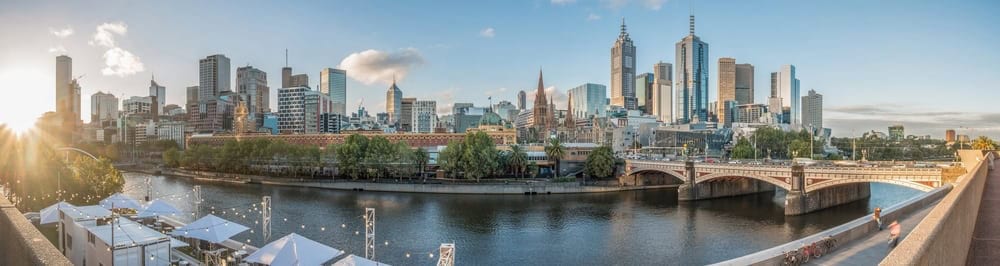
A few visuals aligned with the workflow and concepts above.
References & Further Reading
For an end-to-end production approach—from capture to VR publishing—Meta’s guide is a useful companion. DSLR/Mirrorless 360 capture and stitch guide
PTGui remains a premier stitcher; see a practical review and feature rundown here. Why PTGui is a top choice for panos