Why This Camera & Lens Are Great for Panoramas
The Sony A7R IV and the Fujifilm XF 8–16mm f/2.8 R LM WR are both outstanding pieces of kit for high-resolution panoramic work—one for its class-leading sensor, the other for its exceptionally sharp ultra‑wide rectilinear rendering. There is one critical caveat: the Fujifilm XF 8–16mm is an X‑mount APS‑C lens and cannot be mounted on a Sony E‑mount full‑frame body like the A7R IV with any commercially available adapter that preserves infinity focus and image quality. Because many photographers own both systems or need to plan the right equivalent setup, this guide explains:
- How to shoot panoramas with the Sony A7R IV using an equivalent ultra‑wide rectilinear zoom (e.g., Sony FE 12–24mm) while keeping all settings and workflow tuned to the A7R IV’s strengths.
- How the same techniques translate when using the Fujifilm XF 8–16mm on a Fuji X body (APS‑C), so you can match field of view and shot counts.
Why this pairing concept works for panoramas:
- Sensor strength (A7R IV): 61MP full‑frame BSI CMOS with ~3.76µm pixel pitch and ~14.8EV dynamic range at base ISO delivers enormous stitching latitude and clean shadows—ideal for HDR panoramas and large virtual tours.
- Lens performance (XF 8–16mm): flagship rectilinear UWA, equivalent to ~12–24mm on full‑frame, with low lateral CA and excellent center‑to‑corner sharpness from f/4–f/8. Rectilinear projection minimizes “fisheye” distortion, simplifying architectural lines during stitching.
- Operational control: both systems offer reliable manual focus, exposure locking, and easy use with panoramic heads. The rectilinear UWA approach is ideal for real estate, interiors, and scenes where straight lines must stay straight.
Mount compatibility note: if your goal is specifically to use the XF 8–16mm, plan to pair it with a Fujifilm X body. If your goal is to shoot with the Sony A7R IV, use an equivalent Sony FE ultra‑wide rectilinear zoom (e.g., FE 12–24mm f/4 G or f/2.8 GM). Everything else in this guide—shot counts, nodal alignment, exposure, stitching—applies directly.
Quick Setup Overview
- Camera: Sony A7R IV — Full‑Frame (35.7 × 23.8mm), 61MP, ~3.76µm pixel pitch, ~14.8EV DR at ISO 100, 5.5‑stop IBIS.
- Lens: Fujifilm XF 8–16mm f/2.8 R LM WR — Rectilinear APS‑C UWA (12–24mm full‑frame equivalent), constant f/2.8, weather‑sealed, low lateral CA, excellent sharpness from f/4–f/8, bulbous front element (no front filter threads).
- Estimated shots & overlap (rectilinear UWA, practical field-tested numbers):
- Full‑frame 12mm (e.g., FE 12–24 at 12mm): 8 shots around (30% overlap) + 1 zenith + 1–2 nadir. For higher quality: two rows (8 around at +30°, 8 around at −30°) + zenith + nadir.
- APS‑C 8mm (XF 8–16 at 8mm): 8–10 shots around + zenith + nadir. For premium results: two rows of 8 around + Z/N.
- At 16mm FF equiv (or 16mm on XF ≈ 24mm FF): 10–12 shots around + Z/N; or three rows (10 at +35°, 10 at 0°, 10 at −35°) + Z/N for gigapixel output.
- Difficulty: Intermediate (easy with a calibrated panoramic head, manageable for beginners following the steps below).
Planning & On-Site Preparation
Evaluate Shooting Environment
Before unpacking the tripod, scan the scene for moving elements (trees, people, vehicles), reflective surfaces (windows, polished floors), and problematic light sources (low sun, mixed LED/tungsten). If you’re shooting through glass, back off 10–30cm to reduce reflections, use a lens hood, and avoid acute angles to minimize flare and ghosting. Note wind exposure on rooftops and balconies; high winds can ruin sharpness and introduce misalignment between frames.
Match Gear to Scene Goals
For interiors and architecture, rectilinear UWA is ideal: it preserves straight lines and reduces barrel distortion headaches during stitching. The A7R IV’s deep dynamic range lets you hold window highlights while lifting shadows, and its files tolerate ±2EV brackets cleanly. In low‑light interiors, ISO 200–800 stays very clean on the A7R IV; on Fujifilm X bodies, ISO 160–800 is similarly safe with modern sensors. The XF 8–16mm’s wide f/2.8 helps focus and composition, but stopping to f/5.6–f/8 yields peak sharpness for stitching.
Pre-shoot Checklist
- Charge batteries and carry spares (A7R IV uses NP‑FZ100). Bring ample UHS‑II SD cards; uncompressed RAW on the A7R IV is large.
- Clean lens and sensor; dust shows across a 360 photo and is harder to retouch on gradients like sky.
- Level your tripod and verify panoramic head calibration (entrance pupil alignment) before critical shoots.
- Safety: on rooftops or near edges, use a safety tether for camera/pole, weigh down tripod, and set up wind screens if possible.
- Backup workflow: always shoot a second 360 pass. If one frame is soft or obstructed, you’ll be glad you did.
Essential Gear & Setup
Core Gear
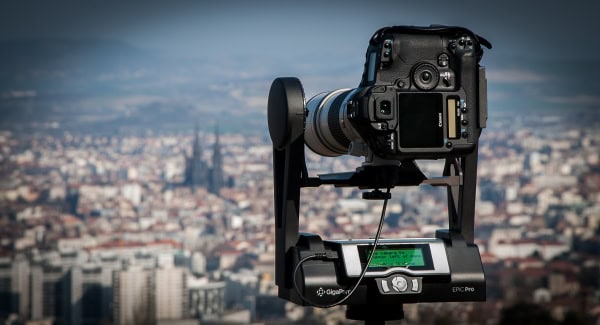
- Panoramic head: Ensures the lens rotates around its entrance pupil (often called the nodal point) to eliminate parallax. This is vital when foreground objects are near the camera—misalignment creates stitching ghosts and broken lines.
- Stable tripod + leveling base: A leveling base speeds setup, keeping your yaw axis true. Even slight tilt compounds into stitching errors, especially with rectilinear lenses.
- Remote trigger/app or 2‑sec timer: Trigger without touching the camera to avoid blur. On Sony, the Imaging Edge app or a simple wired remote works great.
Optional Add-ons
- Pole or car mount: Use a safety tether and assess wind loads. Carbon poles flex; keep exposures short and rotation deliberate.
- Lighting aids: For dark interiors, small LED panels or bounced speedlights can lift shadows. Keep lighting consistent across frames.
- Weather protection: Rain covers and microfiber cloths. The XF 8–16 is WR, but your pano head and remote may not be.
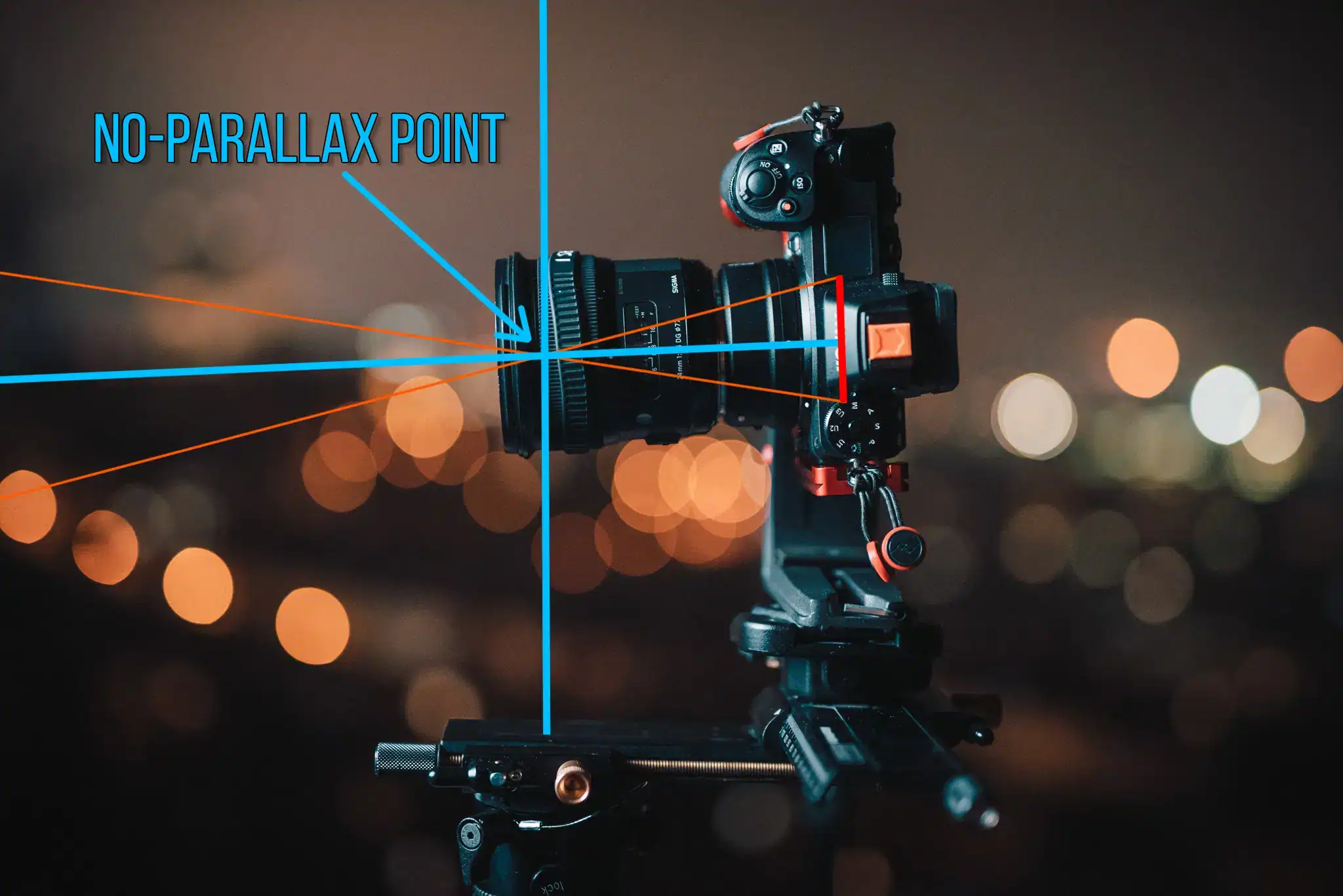
Need a refresher on pano head setup? This concise walkthrough covers the fundamentals of entrance pupil alignment and why it matters at every focal length. Panoramic head alignment tutorial
Step-by-Step Shooting Guide
Standard Static Scenes
- Level and lock: Level the tripod with a leveling base. Confirm the pano head’s yaw axis bubble is centered. Small errors multiply over 360°.
- Entrance pupil alignment: Slide the camera/lens along the rail until foreground and background points remain aligned while panning. Mark that rail position for 12mm (FF) or 8mm (APS‑C) for quick repeatability.
- Manual mode + locked WB: Meter the scene, then lock exposure (M mode) and set a fixed white balance (Daylight/Shade/Tungsten). This avoids exposure flicker and color shifts.
- Focus: Use manual focus. Set focus near the hyperfocal distance. At 12mm FF f/8, ~1m keeps infinity sharp. At 8mm APS‑C f/8, ~0.6m is a good start. Zoom in in live view to confirm.
- Capture sequence: For 12mm FF-equivalent, shoot 8 frames around (every 45°) with ~30% overlap. Then take a zenith (tilt up 90°) and 1–2 nadirs. For perfection, also shoot a clean nadir after moving the tripod and patch later.
HDR / High Dynamic Range Interiors
- Bracket ±2EV or ±3EV: For bright windows, 3–5 brackets per view covers most interiors. Keep WB locked and do not change aperture or focus between brackets.
- Consistency: Use the same bracket set for every view in the 360. This simplifies batch processing and yields uniform tonality.
Low-Light / Night Scenes
- Exposure: Use f/4–f/5.6, ISO 200–800 on A7R IV (clean files), and slow shutter on a sturdy tripod. Turn off IBIS when the camera is locked down to avoid micro‑jitters.
- Triggering: Use a remote or 2‑sec timer with EFCS (Electronic First Curtain Shutter) to minimize vibration and shutter shock.
Crowded Events
- Two-pass method: Do one fast pass for coverage, then a second pass while waiting for gaps to appear in key directions. You’ll mask the best regions later.
- Fast shutters: Use 1/200s or faster and ISO 400–800 to freeze motion and prevent ghosting.
Special Setups (Pole / Car / Drone)
- Pole work: Keep exposures short (<1/100s) to counter flex. Use a safety line. Rotate slowly and allow oscillations to damp between shots.
- Car-mounted capture: Stationary shoots are best. If moving, crank shutter speed (1/1000s+), pre‑plan minimal overlap, and expect stitching challenges from parallax changes.
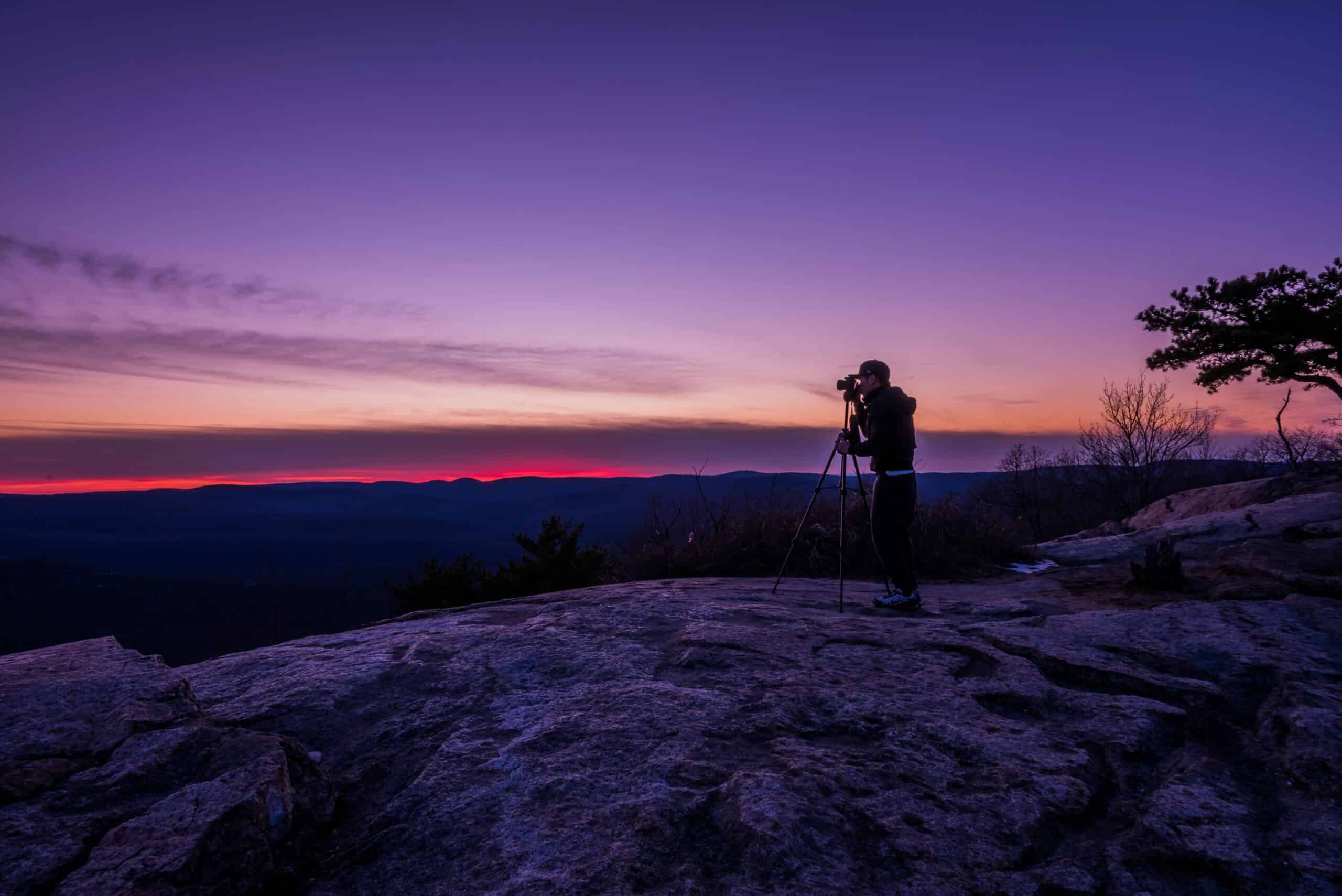
Video: Panorama Head Setup in Practice
Visual learners benefit from seeing a pano head calibration and shooting sequence end‑to‑end. The video below reinforces the alignment and capture flow.
For a detailed written primer on pro‑level 360 capture with a mirrorless or DSLR, see this workflow from Meta’s creator docs: Using a mirrorless camera to shoot and stitch a 360 photo
Recommended Settings & Pro Tips
Exposure & Focus
| Scenario | Aperture | Shutter | ISO | Notes |
|---|---|---|---|---|
| Daylight outdoor | f/8–f/11 | 1/100–1/250 | 100–200 | Lock WB (Daylight); keep 25–30% overlap |
| Low light/night | f/4–f/5.6 | 1/30–1/60 | 200–800 | Tripod + remote; IBIS off on tripod |
| Interior HDR | f/8 | Bracket ±2 EV | 100–400 | Keep aperture/focus constant across brackets |
| Action / moving subjects | f/5.6–f/8 | 1/200+ | 400–800 | Two-pass method; mask in post |
Critical Tips
- Hyperfocal focus: Prefocus at hyperfocal, then switch to MF. Confirm with magnified live view.
- Nodal calibration: Mark rail positions for key focal lengths (e.g., 12mm FF, 8mm APS‑C) on your pano head. Reuse them to save time.
- White balance lock: Mixed lighting can vary frame‑to‑frame. Lock WB to a preset to keep color consistent across the panorama.
- RAW always: Shoot RAW for maximum DR and color latitude, especially critical when blending HDR brackets.
- Stabilization: Turn IBIS/OSS off on tripod to avoid micro‑oscillations. Handheld panos benefit from IBIS, but expect more stitching work.
EEAT Case Studies
Indoor real estate
Use f/8, ISO 100–200, bracket ±2EV (3–5 frames), 8–10 shots around at 12–16mm FF‑equiv. Keep the camera height consistent room‑to‑room (typically 135–150cm) and the lens perfectly level to preserve verticals.
Outdoor sunset
Meter for highlights, then bracket; or expose to the right and keep ISO low. Watch flare—use your hand or the lens hood to flag the sun off the front element between frames.
Event crowds
Shoot two passes with faster shutter speeds. Keep overlap generous (30–40%) to give masking room later. Expect to paint in “clean” areas from the second pass.
Rooftop/pole
Wind is your enemy. Shorten exposures, stabilize the pole with a guy line, and allow vibrations to settle before each shot. Always use a safety tether.
Car-mounted capture
Prefer stationary capture for quality. If you must shoot while moving, use 1/1000s+, continuous drive, and preplan minimal yaw steps to reduce parallax changes between frames.
Stitching & Post-Processing
Software Workflow
Import all RAWs, apply lens corrections consistently (or disable them and let the stitcher handle projection), and sync WB/exposure across the set. For HDR, first merge bracketing per view to 32‑bit or TIFF, then stitch the merged set. PTGui remains the gold standard for speed, control point editing, and masking; Hugin offers a capable open‑source alternative; Lightroom/Photoshop can handle simple single‑row stitches. Rectilinear UWA images need more shots than fisheye but preserve straight lines better. Aim for ~25–30% overlap for fisheye and ~20–30% for rectilinear depending on scene complexity. For an in‑depth review of PTGui’s strengths, see Fstoppers’ PTGui review.
Cleanup & Enhancement
- Tripod/nadir patch: Shoot a clean nadir after moving the tripod or clone/AI patch in post for a seamless floor.
- Color and noise: Match tonality across frames, remove color casts from mixed lighting, and apply noise reduction sparingly.
- Leveling: Use the stitcher’s horizon/vertical guides; correct roll/yaw/pitch for a natural horizon in the equirectangular.
- Export: For VR players or web viewers, export an equirectangular JPEG/TIFF (2:1 aspect). Common sizes: 12000×6000 for web tours; go higher if your source resolution supports it.
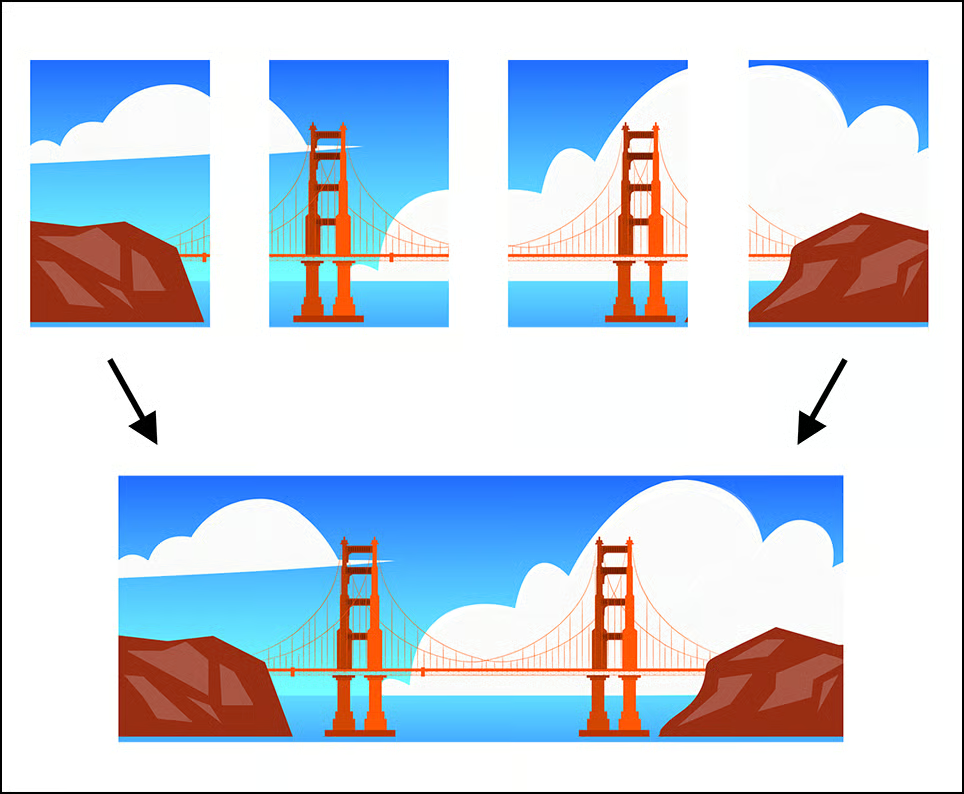
To refine your capture technique around a panoramic head and get repeatable, “no‑surprise” stitches, this hands‑on guide is excellent: Set up a panoramic head for high‑end 360 photos. For additional background on DSLR/mirrorless 360 setups and lens choices, see this overview: DSLR/mirrorless 360 virtual tour FAQ. Disclaimer: always check each software tool’s latest documentation for current features and optimal workflows.
Useful Tools & Resources
Software
- PTGui panorama stitching
- Hugin open source
- Lightroom / Photoshop
- AI tripod removal tools
Hardware
- Panoramic heads (Nodal Ninja, Leofoto)
- Carbon fiber tripods
- Leveling bases
- Wireless remote shutters
- Pole extensions / car mounts
Disclaimer: brand names are provided for search convenience; verify specifications on official sites.
Common Mistakes & How to Avoid Them
- Parallax error: Not rotating around the entrance pupil. Fix with a calibrated pano head and careful rail marks.
- Exposure flicker: Aperture priority or auto WB changes frame‑to‑frame. Use full manual exposure and fixed WB.
- Tripod shadows/footprints: Plan your nadir capture and patching; shoot a clean floor plate.
- Ghosting from movement: Use faster shutters, bigger overlap, and mask best takes in the stitcher.
- High ISO noise: Keep ISO low on tripod; expose to the right without clipping highlights.
Frequently Asked Questions
- Can I mount the Fujifilm XF 8–16mm directly on my Sony A7R IV?
No. The XF 8–16mm is Fujifilm X‑mount (APS‑C). There’s no practical adapter to use it on Sony E‑mount with infinity focus and full functionality. Use a Sony FE ultra‑wide (e.g., 12–24mm) on the A7R IV, or use the XF 8–16mm on a Fuji X body.
- Is a rectilinear 12–24mm equivalent wide enough for single‑row 360s?
Yes for coverage, but results improve with an extra row. A single row of 8 shots around at 12mm FF‑equiv plus zenith/nadir works, yet adding a ±30–35° row increases overlap and edge quality, especially in tight interiors.
- Do I need HDR for interiors with bright windows?
Usually yes. Bracket ±2EV (3–5 frames) to protect highlights and preserve interior detail. Merge brackets first, then stitch to avoid misalignment across exposures.
- How do I avoid parallax issues with this setup?
Use a panoramic head and align the entrance pupil at each focal length. Place a near object and a far object in frame; pan the camera and adjust the rail until their relative position doesn’t shift. Mark the rail so you can repeat it quickly.
- What ISO range is safe on the A7R IV for low‑light panoramas?
ISO 100–400 is ideal on tripod; ISO 800 remains very clean. For handheld or moving subjects, ISO 800–1600 is usable, but keep exposures consistent and apply noise reduction in post.
Technical Notes for Power Users
Resolution planning: With 61MP frames and a two‑row capture at 12mm FF‑equiv (16 frames + Z/N), expect stitched equirectangulars well beyond 150MP depending on overlap and crop. For extremely detailed scenes (e.g., murals or cityscapes), consider a 3‑row approach for ~250–350MP output. For reference on spherical resolution expectations and shot planning, consult the Panotools wiki: DSLR spherical resolution.
Lens behavior: Rectilinear UWAs stretch edges, so avoid placing critical detail at the far corners of each frame. Overlap a bit more (30–35%) in complex interior scenes with close foregrounds to give the stitcher robust control points along straight lines.