
Why This Camera & Lens Are Great for Panoramas
The Sony A7R IV paired with the AstrHori 12mm f/2.8 Fisheye is a powerful, affordable way to create ultra-detailed 360° panoramas and virtual tours. The A7R IV’s 61MP full‑frame sensor (approx. 35.7 × 23.8 mm) delivers rich detail and excellent dynamic range at base ISO, with a pixel pitch around 3.76 µm that captures fine textures without sacrificing tonal depth. In practical panorama work, that translates into cleaner stitch lines and more latitude for exposure and white-balance matching.
The AstrHori 12mm f/2.8 is a manual-focus, full-frame fisheye that provides an extremely wide field of view (diagonal coverage near 180°). For 360° panoramas, a diagonal fisheye means fewer shots, faster rotation, and simpler stitching versus a rectilinear ultra-wide. Expect characteristic fisheye distortion (later handled by your stitching software), but also robust corner coverage and good center sharpness stopped down. As a native E-mount lens, it balances well on the A7R IV and plays nicely with standard panoramic heads and rails.
Bottom line: if your goal is to learn how to shoot panorama with Sony A7R IV & AstrHori 12mm f/2.8 Fisheye, this combo gives you high-resolution files, manageable shot counts, and stable, repeatable results in both interiors and landscapes.
Quick Setup Overview
- Camera: Sony A7R IV — Full Frame, 61MP (approx. 9504 × 6336), excellent base-ISO dynamic range, 5.5-stop IBIS, robust bracketing options.
- Lens: AstrHori 12mm f/2.8 Fisheye — full-frame diagonal fisheye, manual focus, fast f/2.8 for low light, best sharpness around f/5.6–f/8, typical CA well-controlled when stopped down.
- Estimated shots & overlap (field-tested):
- Single-row 360°: 6 around at 60° yaw spacing + 1 zenith + 1 nadir (25–30% overlap).
- Lean-and-mean outdoor sets: 5 around at 72° + zenith + nadir (requires precise nodal alignment and careful overlap).
- High-quality interiors: 6 around + zenith + nadir, bracketed HDR (±2 EV, 3–5 frames) for windows and lamps.
- Difficulty: Intermediate (manual focus and nodal alignment required), but very repeatable once set up.
Planning & On-Site Preparation
Evaluate Shooting Environment
Before you unfold the tripod, scan the location. Strong backlight, mirrors and glossy floors increase the risk of flare and stitching artifacts. If you’re near windows or glass railings, keep at least 30–60 cm distance when possible and angle the camera slightly to avoid reflected tripod legs or your own reflection. In outdoor scenes, watch for moving foliage, water, or crowds; plan to shoot multiple passes to get clean plates for masking.
Match Gear to Scene Goals
The Sony A7R IV excels in dynamic range and detail at ISO 100–400, making it ideal for high-contrast scenes where you may blend exposures. Indoors, keep ISO between 100–800 when on a tripod for the cleanest results; the 61MP sensor rewards low ISO. The AstrHori 12mm fisheye reduces the shot count and speeds up capture—especially helpful in busy environments—while still delivering high-resolution stitches from the A7R IV. The trade-off is fisheye mapping, which your stitcher will model correctly; just ensure consistent overlap and accurate nodal alignment.
Pre-shoot Checklist
- Power and storage: fresh batteries, ample fast SD cards (61MP RAWs are large).
- Clean optics: blow dust off the sensor and lens; wipe the fisheye front element carefully.
- Tripod and pano head: level base, verify panoramic head calibration (nodal rail marks noted).
- Exposure and WB: manual exposure and locked white balance preset to match the ambient light.
- Safety: assess wind on rooftops, add a safety tether to poles or railings, and avoid edge loads.
- Backup workflow: shoot a second safety round, and for HDR, add at least one extra mid exposure.
Essential Gear & Setup
Core Gear
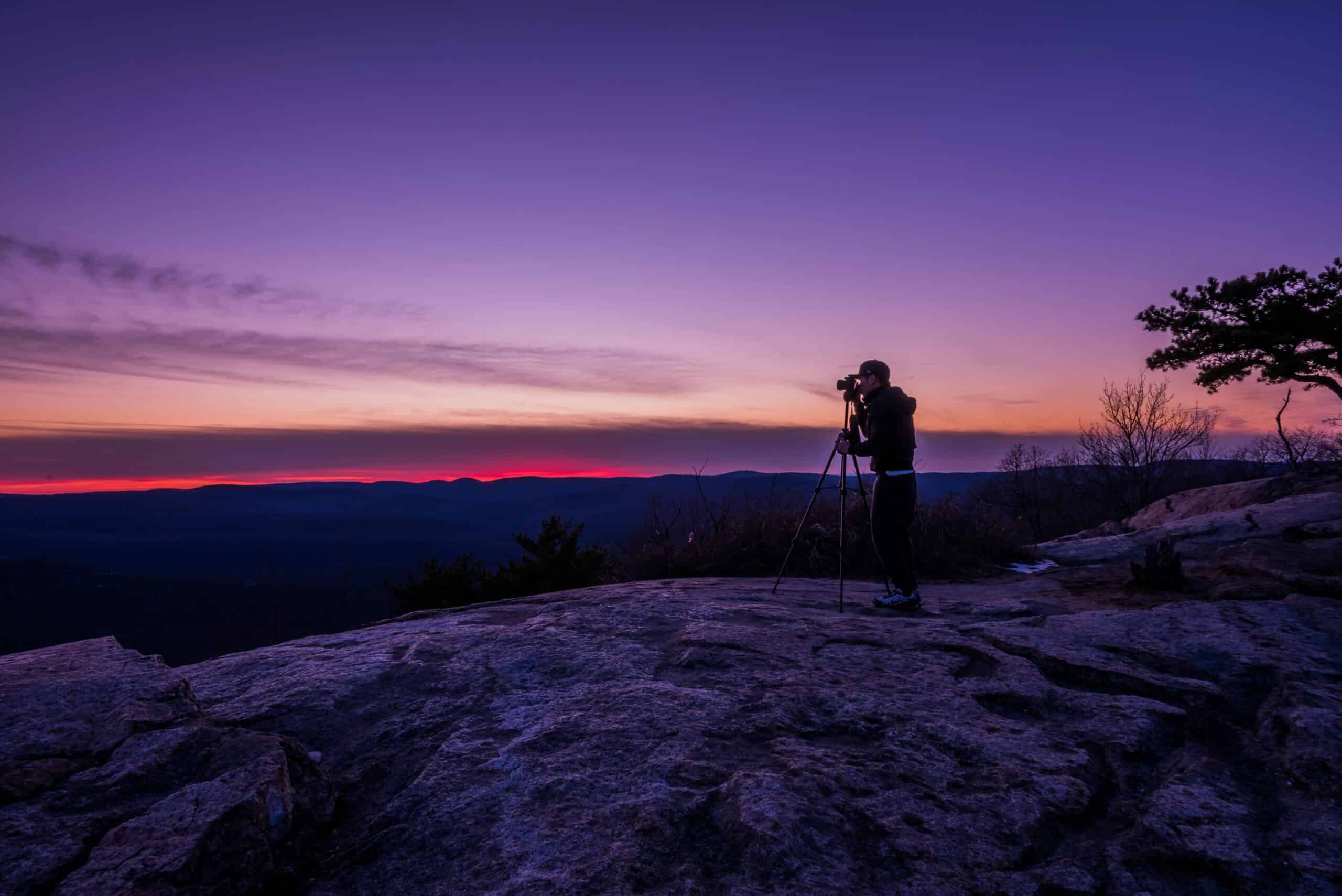
- Panoramic head: A proper panoramic head allows you to align the lens’ entrance pupil (nodal point) over the yaw axis to minimize parallax. This is crucial for close objects (e.g., furniture, railings).
- Stable tripod with leveling base: A leveling base speeds up setup and keeps the horizon consistent across frames.
- Remote trigger or app: Use a remote or Sony’s Imaging Edge Mobile app to avoid introducing vibrations.
Optional Add-ons
- Pole or car mount: Great for elevated or center-of-room vantage points. Always add a safety tether, beware of wind gusts, and keep speeds low if vehicle-mounted.
- Lighting aids: Small LED panels or bounced flash for dark interiors (keep lighting consistent across the sweep).
- Weather protection: Rain covers, microfiber cloths, and silica packs for humid environments.
Step-by-Step Shooting Guide
Standard Static Scenes
- Level and nodal alignment: Level the tripod using the base or a leveling head. Slide the camera on the panoramic rail until near and far objects do not shift relative to each other when you yaw the camera. Mark that rail position for the A7R IV + AstrHori 12mm combo.
- Manual exposure and white balance: Set Manual mode, expose for the midtones at ISO 100–200, and lock a white balance preset (Daylight/Tungsten). Avoid Auto WB and Auto ISO; exposure and color shifts make stitching harder.
- Focus: Switch to manual focus, use focus magnification and peaking, then set focus near the hyperfocal distance. At 12mm and f/8 on full-frame, hyperfocal is roughly 0.6 m; focused there, everything from ~0.3 m to infinity is acceptably sharp.
- Capture sequence: Shoot 6 frames around at 60° spacing. Add 1 zenith shot (tilt up ~60–90°) and 1 nadir shot (tilt down ~60–90°). Keep at least 25–30% overlap.
- Nadir optimization: If your head allows, offset the tripod and take a clean nadir plate to make tripod removal easier later.

HDR / High Dynamic Range Interiors
- Bracket exposures: Use ±2 EV across 3 or 5 frames to hold bright windows and interior shadows. The A7R IV supports multi-frame bracketing with consistent intervals—keep everything else locked.
- Consistency: Maintain identical aperture (typically f/8) and fixed WB to keep color uniform. If time allows, capture two full HDR sweeps for redundancy.
Low-Light / Night Scenes
- Long exposures: Use f/4–f/5.6 and slow shutter speeds on a sturdy tripod. Keep ISO conservative (100–800) for the cleanest 61MP detail; push to 1600–3200 only if motion must be frozen, and plan for noise reduction in post.
- Vibration control: Use a remote, delay timer, or electronic front-curtain shutter; turn IBIS off on a tripod to prevent stabilization micro-jitter.
Crowded Events
- Two passes: First pass quickly for coverage; second pass wait for gaps. Note frame numbers for easy masking later.
- Mask in post: Use the cleaner frames to patch moving people or flags that cross stitch boundaries.
Special Setups (Pole / Car / Drone)
- Pole: Secure the camera with a safety line and keep the rotation slower. Wind can create oscillations—use faster shutter speeds (1/125–1/250) and increase ISO if needed.
- Car mount: Drive slowly on smooth surfaces, use vibration-damping mounts, and consider capturing at stop points to reduce motion blur.
- Drone: The A7R IV is not drone-friendly; instead, adapt the same workflow to a drone system that supports bracketed panoramas.
For a deeper primer on panoramic head setup and theory, see this panoramic head tutorial. Panoramic head setup and tips
Recommended Settings & Pro Tips
Exposure & Focus
| Scenario | Aperture | Shutter | ISO | Notes |
|---|---|---|---|---|
| Daylight outdoor | f/8–f/11 | 1/100–1/250 | 100–200 | Lock WB (Daylight); avoid clipping highlights |
| Low light/night | f/4–f/5.6 | 1/30–1/60 (or slower on tripod) | 100–800 (1600–3200 if needed) | Remote trigger; IBIS off on tripod |
| Interior HDR | f/8 | Bracket ±2 EV (3–5 shots) | 100–400 | Balance windows vs. interior; fixed WB |
| Action / crowds | f/5.6–f/8 | 1/200+ | 400–800 | Freeze motion; shoot two passes |
Critical Tips
- Manual focus at hyperfocal: At 12mm f/8 on full-frame, focus around 0.6 m for near-to-infinity sharpness.
- Nodal calibration: Place a light stand near the camera and a vertical line in the distance. Rotate and adjust the rail until the two align with no relative shift; mark that position for repeatability.
- White balance lock: Mixed lighting can vary by frame; use a manual preset to avoid color banding after stitching.
- Shoot RAW: You’ll need the A7R IV’s dynamic range for clean window recoveries and consistent color grading.
- IBIS off on tripod: Stabilization can cause blur when the camera is perfectly still; switch it back on if shooting handheld.
Stitching & Post-Processing
Software Workflow
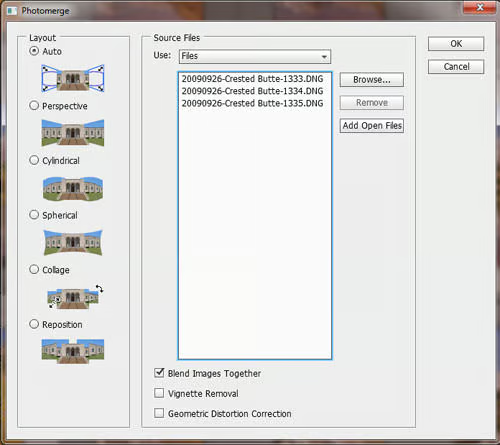
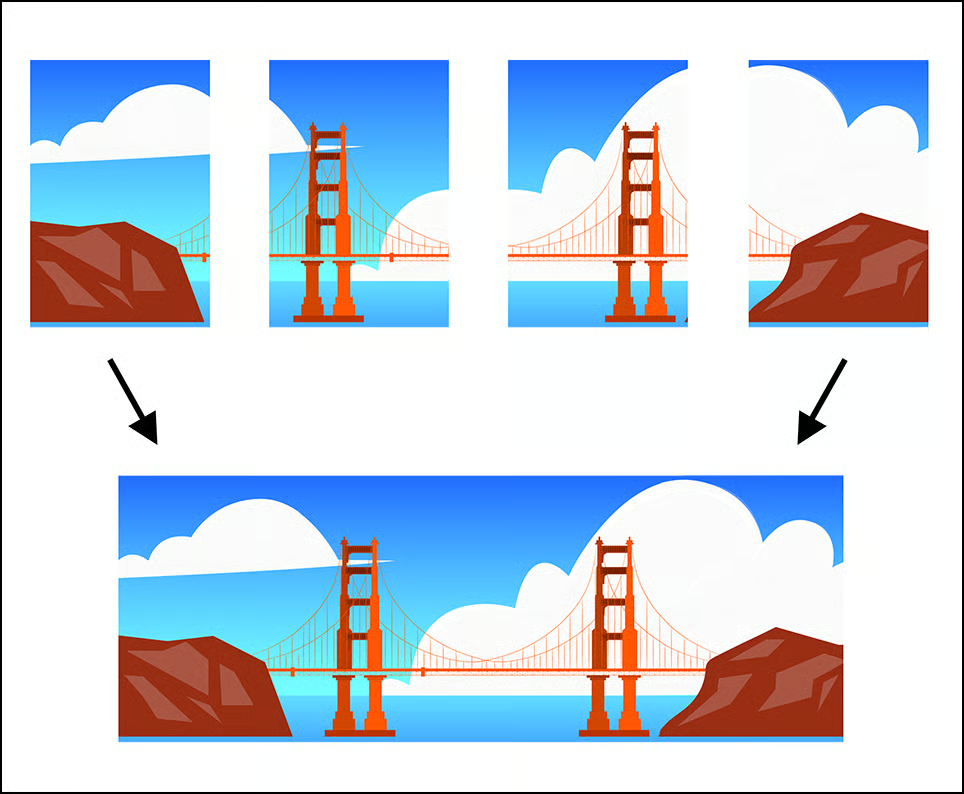
Load your series into a dedicated stitcher like PTGui or Hugin. For the AstrHori 12mm, set the lens type to full-frame fisheye and let the optimizer estimate lens parameters. Fisheye panoramas often need fewer images and stitch more reliably, but ensure consistent overlap and exposure. Industry norms: ~25–30% overlap for fisheye and ~20–25% for rectilinear lenses. After control-point generation, optimize yaw/pitch/roll and lens parameters, then level the horizon (often with “straighten” or vertical line constraints). PTGui offers fast templates and a clean nadir/zenith workflow; Hugin is a robust open-source alternative. For PTGui insights and comparisons, this review is helpful. PTGui review and best practices
Cleanup & Enhancement
- Nadir patch: Export a layered panorama or use PTGui’s Viewpoint correction. Clone in Photoshop, or patch with an AI tool for tripod removal.
- Color and noise: Apply a gentle contrast curve, uniform white balance tweaks, and noise reduction for high ISO shots.
- Leveling: Ensure the horizon is level and verify pitch/yaw alignment for VR viewers; fix any roll drift.
- Export: For VR platforms, export equirectangular 2:1 ratio JPEG or TIFF. Test at 12K–16K wide when your workflow allows; downsize for web if needed.
Want a step-by-step DSLR/mirrorless-to-360 pipeline? This platform guide walks through capture and stitching considerations. Mirrorless 360 capture and stitching guide
Learn more about spherical resolution trade-offs for different lenses and shot counts here. DSLR spherical resolution reference
Disclaimer: software evolves—always check the latest documentation for current features and hotfixes.
Useful Tools & Resources
Software
- PTGui panorama stitching
- Hugin open-source panorama toolkit
- Adobe Lightroom / Photoshop for RAW and cleanup
- AI tools for tripod/nadir removal
Hardware
- Panoramic heads: Nodal Ninja, Leofoto, or equivalent with fore–aft rails
- Carbon-fiber tripod with a leveling base
- Wireless remote or intervalometer
- Pole extensions and vehicle mounts with safety tethers
Disclaimer: Product names are for research reference—verify specs and compatibility on official sites.
Field-Proven Scenarios
Indoor Real Estate
Use 6-around + zenith + nadir with HDR bracketing of ±2 EV (3–5 frames). At f/8 and ISO 100–200, the A7R IV files give clean window pulls and crisp fine detail in fixtures. Avoid facing bright windows for too many frames in a row to minimize flare; flag strong lights with a hand or lens hood between frames if needed.
Outdoor Sunset
Expose for highlights first to protect color in the sky, then add one darker and one brighter bracket if necessary. The A7R IV’s base-ISO dynamic range is strong—many scenes stitch well with a single exposure if you preserve the sky. Watch for moving clouds; shoot faster around the sun to equalize cloud motion.
Event Crowds
Capture two complete rotations: one quickly for coverage, then a second pass waiting for gaps where you need clean stitch lines. In post, mask in patches from the second set to remove ghosting. Keep shutter speed at 1/200 or faster if people are moving quickly; raise ISO to 400–800 as needed.
Rooftop / Pole Capture
Elevate the rig with a pole for a “floating” perspective. Lock focus, shoot at f/8, and keep shutter at 1/125–1/250 to reduce sway blur. Always use a safety line and avoid windy conditions. If using a car mount, capture at stops to avoid vibration and rolling-shutter skew.
Common Mistakes & How to Avoid Them
- Parallax error: Calibrate and use the marked nodal position on your pano head for the AstrHori 12mm.
- Exposure or color flicker: Manual exposure and locked WB only—no auto across the sweep.
- Tripod shadows: Take a dedicated nadir plate or plan to patch it later.
- Ghosting from motion: Shoot two passes and mask moving subjects in post.
- High-ISO noise: Keep ISO low on the 61MP sensor; prioritize tripod stability over ISO.
Frequently Asked Questions
-
Can I shoot handheld panoramas with the Sony A7R IV?
Yes, for quick multi-row or single-row panos outdoors, but stitching reliability drops without nodal alignment. Use higher shutter speeds (1/250+), lock exposure/WB, and expect more cleanup. For pro 360° work, a tripod and pano head are strongly recommended.
-
Is the AstrHori 12mm f/2.8 wide enough for single-row 360°?
Yes. A typical spherical set is 6 frames around + zenith + nadir with 25–30% overlap. Skilled operators can sometimes manage 5 around, but 6 is safer, especially for interiors and near objects.
-
Do I need HDR for interiors with bright windows?
Often yes. Bracket ±2 EV with 3–5 frames to balance window highlights and interior shadows. The A7R IV’s dynamic range helps, but HDR brackets ensure clean, natural-looking windows and reduce noise in dark areas.
-
How do I avoid parallax issues with this lens?
Use a panoramic head and calibrate the nodal point: align near and far objects, rotate, and adjust the rail until there’s no relative shift. Mark the rail position so you can repeat it for the A7R IV + AstrHori 12mm combo on every shoot.
-
What ISO range is safe on the A7R IV for low light panoramas?
On a tripod, stick to ISO 100–800 for the cleanest 61MP results. If motion demands it, ISO 1600–3200 is usable with careful noise reduction, but prioritize stable support and longer exposures whenever possible.
Further Reading
For a practical, end-to-end DSLR/mirrorless 360 workflow, see this capture and stitching primer. Set up a panoramic head for high-end 360 photos
For community wisdom on panorama techniques and pitfalls, this Q&A is a useful resource. Techniques to take 360 panoramas
