
Why This Camera & Lens Are Great for Panoramas
The Sony A7R III paired with the Sony FE 16–35mm f/2.8 GM is a powerhouse for high-resolution panoramas and 360 photos. The A7R III’s 42.4MP full-frame BSI sensor (35.9 × 24mm, pixel pitch ~4.5µm) delivers superb detail, low noise at base ISO, and roughly 14.5–15 stops of dynamic range at ISO 100—ideal for stitching clean, flexible files. Its 5-axis in-body stabilization helps when you must shoot handheld, while the electronic first-curtain shutter minimizes vibration on a tripod. The 16–35mm GM is a rectilinear zoom with excellent corner sharpness stopped down (best around f/5.6–f/8), low lateral chromatic aberration, and well-controlled distortion for an ultra-wide—exactly what you want for multi-row panoramas, architectural work, and clean horizons. Together, this kit is fast to operate, easy to manually control exposure and white balance, and compatible with common panoramic heads and nodal rails via the E-mount.
Because this is a rectilinear lens (not fisheye), you’ll capture more frames than a fisheye-based workflow, but you gain straighter lines and more natural-looking edges—especially important for interiors and real estate. If you’re learning how to shoot panorama with Sony A7R III & Sony FE 16–35mm f/2.8 GM, this setup offers an excellent balance of field of view, resolution, and optical quality.
Quick Setup Overview
- Camera: Sony A7R III — Full-frame, 42.4MP, ~14.7 EV dynamic range at ISO 100, 14-bit RAW, 5-axis IBIS.
- Lens: Sony FE 16–35mm f/2.8 GM — Rectilinear ultra-wide zoom; very sharp by f/5.6–f/8; minimal CA; barrel distortion at 16mm is easily corrected.
- Estimated shots & overlap (tested, rectilinear):
- 16mm full 360×180: 3 rows × 6 shots (−45°, 0°, +45°) + 1 zenith + 1 nadir ≈ 20 frames at ~30% overlap.
- 20–24mm full 360×180: 3 rows × 8 shots + zenith + nadir ≈ 26 frames at ~30% overlap.
- 35mm high-res/gigapixel: 4 rows × 12 shots + zenith + nadir ≈ 50–54 frames at ~25–30% overlap.
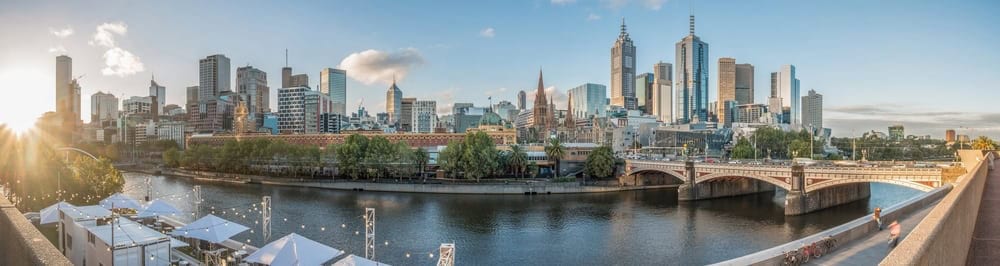
- Single-row cylindrical at 16mm: 6–8 shots around with ~30% overlap (no zenith/nadir coverage).
- Difficulty: Intermediate (easier for cylindrical; full 360×180 requires nodal alignment and multi-row technique).
Planning & On-Site Preparation
Evaluate Shooting Environment
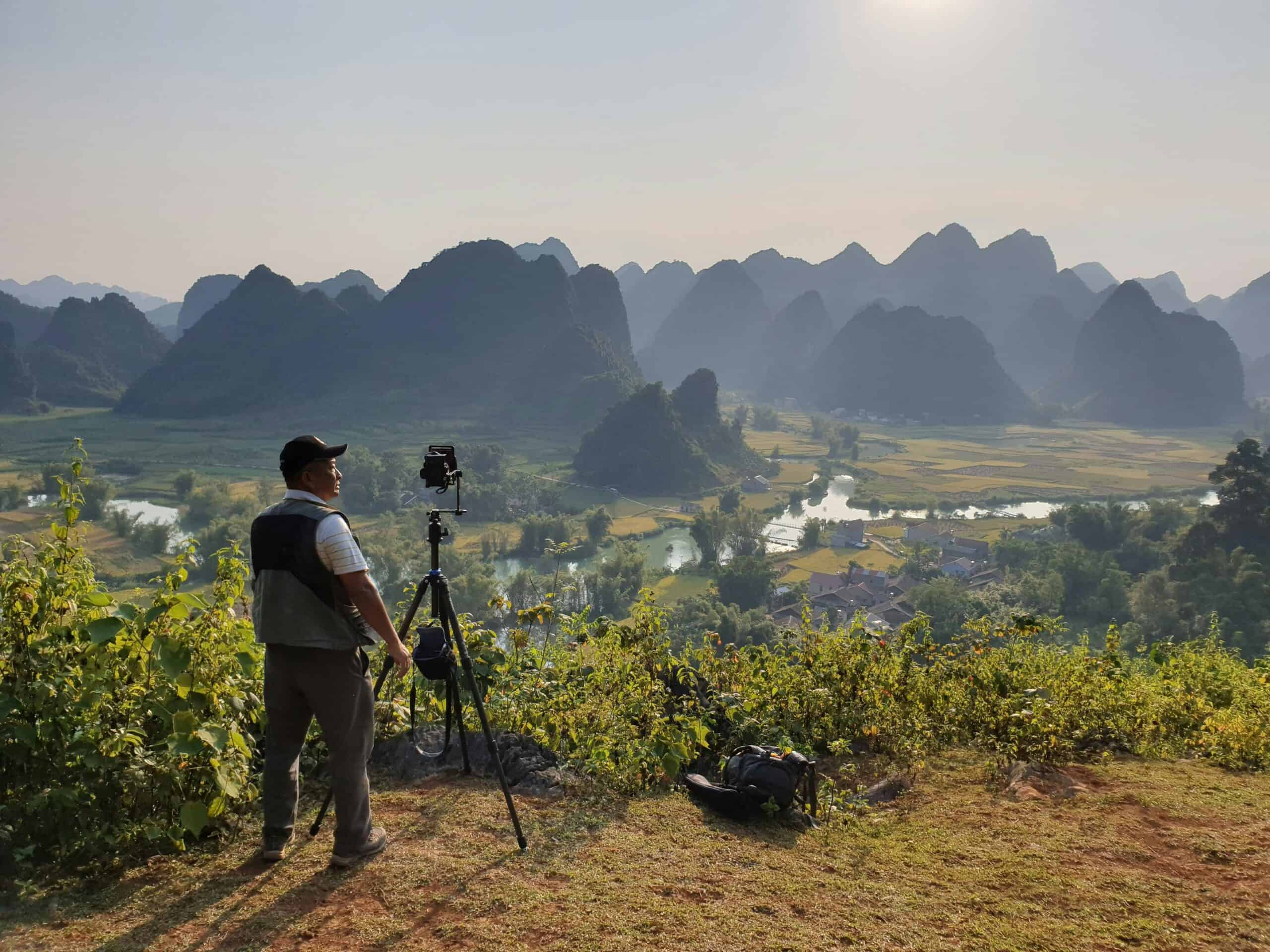
Start by assessing light direction and range, reflective surfaces (glass, polished floors), and any moving elements (people, trees, cars). For glass, get the lens hood as close to the pane as possible to reduce reflections; a rubber hood or black cloth helps. Avoid shooting directly into intense point light from a very short distance to reduce flare. If you must shoot near glass, keep at least 30–60 cm from the surface when you cannot press the hood to glass—this limits ghosting across overlapping frames and makes masking easier later.
Match Gear to Scene Goals
The A7R III’s robust dynamic range lets you preserve highlight detail at sunset while keeping shadows workable. For interiors and real estate, its ISO performance is solid up to ISO 800–1600, but if you’re on a tripod, stay at ISO 100–400 for the cleanest files. The 16–35mm GM at 16–20mm lets you keep shot count manageable while maintaining rectilinear geometry—important if you want straight walls and accurate proportions. For extremely tight spaces, 16mm is your friend; for exteriors or gigapixel detail, zoom toward 35mm and add rows.
Pre-shoot Checklist
- Power & media: Fully charge NP-FZ100 batteries; bring spares. Use fast, high-capacity SD cards.
- Optics: Clean front/rear elements and the sensor (if needed). Dust shows up across the entire panorama.
- Tripod & pano head: Leveling base, calibrated nodal rail, solid clamps. Confirm your nodal marks for 16, 20, 24, and 35mm.
- Safety: Check wind, rooftop edges, pedestrian traffic. Tether gear if working above crowds or on a pole.
- Backup workflow: Shoot an extra safety round for each row, especially with crowds or variable light.
Essential Gear & Setup
Core Gear
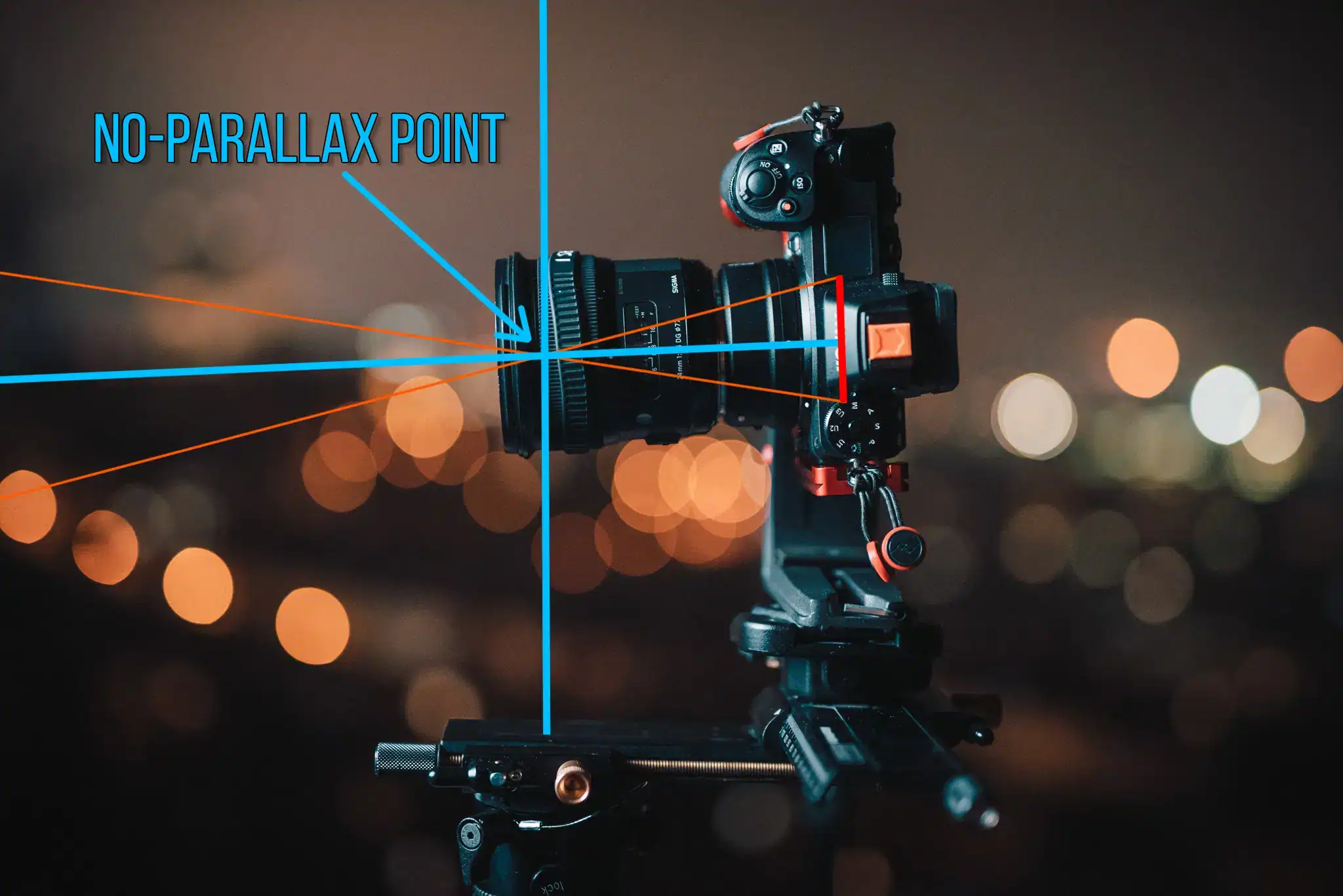
- Panoramic head: A rotator plus vertical arm and nodal rail lets you align the lens’ entrance pupil (nodal point) over the pivot for parallax-free stitching. This is critical when foreground elements are near the lens.
- Stable tripod with leveling base: A leveling base or half-ball makes it easy to keep the rotator perfectly level, ensuring even row spacing and fewer stitching corrections.
- Remote trigger or Sony Imaging Edge Mobile: Fire the shutter without touching the camera to avoid vibrations and to keep your body out of reflective surfaces.
Optional Add-ons
- Pole or car mount: For elevated views or car-mounted panoramas. Always use a safety tether, check clamp torque, and avoid high winds; vibrations can ruin alignment.
- Lighting aids: Small LEDs or flash for interior fill in deep shadows. Keep lighting consistent across frames.
- Weather protection: Rain covers, silica gel, and microfiber towels for unexpected weather shifts.
Step-by-Step Shooting Guide
Standard Static Scenes
- Level the tripod and align the nodal point. Mount the 16–35mm GM on a calibrated panoramic head. As a starting estimate at 16mm, the entrance pupil often sits roughly 70–80 mm forward of the sensor plane—fine-tune with a simple parallax test (see below).
- Set manual exposure and lock white balance. Disable Auto ISO and set a fixed WB (Daylight, Cloudy, or custom Kelvin). This prevents flicker and color shifts during stitching.
- Choose focal length and overlap. At 16mm, shoot 3 rows of 6 shots with about 30% overlap: yaw increments ~60° per frame. Capture rows at −45°, 0°, and +45° tilt. Add a zenith frame straight up, then a nadir frame for tripod removal.
- Take a clean nadir. After the main set, move the tripod slightly, shoot a handheld nadir at the same nodal position if possible, or use a nadir adapter plate to offset the camera.
HDR / High Dynamic Range Interiors
- Bracket exposures. Use 3 or 5 frames at ±2 EV to balance bright windows and interior shadows. The A7R III supports up to 5 frames at up to 3 EV intervals; 5 × 2 EV is a solid starting point.
- Lock WB and keep aperture fixed (e.g., f/8). Shoot in continuous bracketing with a remote for speed and consistency.
- Mind moving elements (fans, curtains, people). If something moves between brackets, consider shorter shutter times or ask for a brief pause.
Low-Light / Night Scenes
- Use a tripod, turn off IBIS, and lengthen the shutter. Keep ISO in the A7R III’s sweet spot (ISO 100–800). ISO 1600–3200 is usable but expect more noise—shoot RAW for better cleanup.
- Enable electronic first-curtain shutter and use a remote or 2s timer. Silent shutter can cause banding under LED/artificial lights; use cautiously.
- Consider multiple shorter exposures to avoid star trails if including the sky; blend if needed.
Crowded Events
- Two passes: First, shoot a full set for background alignment. Second, wait for gaps and re-shoot frames with the cleanest foregrounds.
- In post, mask people between passes. Use shorter shutter speeds (1/200s+) at ISO 400–800 to freeze motion if light allows.
Special Setups (Pole / Car / Drone)
- Secure all gear and tether. Wind and speed amplify vibrations. Keep rotation slow and deliberate.
- Use higher overlap (35–40%) to give the stitcher more data when alignment is imperfect.
- Expect to fix more seams. Shoot an extra safety row at a different tilt if feasible.
Recommended Settings & Pro Tips
Exposure & Focus
| Scenario | Aperture | Shutter | ISO | Notes |
|---|---|---|---|---|
| Daylight outdoor | f/8–f/11 | 1/100–1/250 | 100–200 | Lock WB (Daylight); use EFCS; IBIS off on tripod |
| Low light/night | f/4–f/5.6 | 1/30–multiple seconds | 100–800 (1600 possible) | Remote release; avoid silent shutter under LEDs |
| Interior HDR | f/8 | Bracket ±2 EV (3–5 frames) | 100–400 | Balance windows vs lamps; constant WB |
| Action / moving subjects | f/5.6–f/8 | 1/200+ | 400–800 | Two-pass method to reduce ghosts |
Critical Tips
- Manual focus near hyperfocal. At 16mm on full frame, hyperfocal is roughly 1.1 m at f/8 (≈0.8 m at f/11). Use focus magnification, then switch AF/MF to avoid focus shifts.
- Nodal point calibration. Mount two vertical objects (one close, one far). Pan the head; if their relative position shifts, slide the camera along the rail. Repeat per focal length (16, 20, 24, 35mm) and mark the rail for quick recall.
- White balance lock. Mixed lighting can cause headaches. Use Kelvin or a custom preset so frames stitch consistently.
- RAW over JPEG. You’ll recover more highlights/shadows and control color better, especially in HDR panoramas.
- IBIS off on tripod. Stabilization can introduce micro-blur when the camera is locked down.
- Use uncompressed RAW for critical work. It increases file size but minimizes compression artifacts in high-contrast seams.
Stitching & Post-Processing
Software Workflow
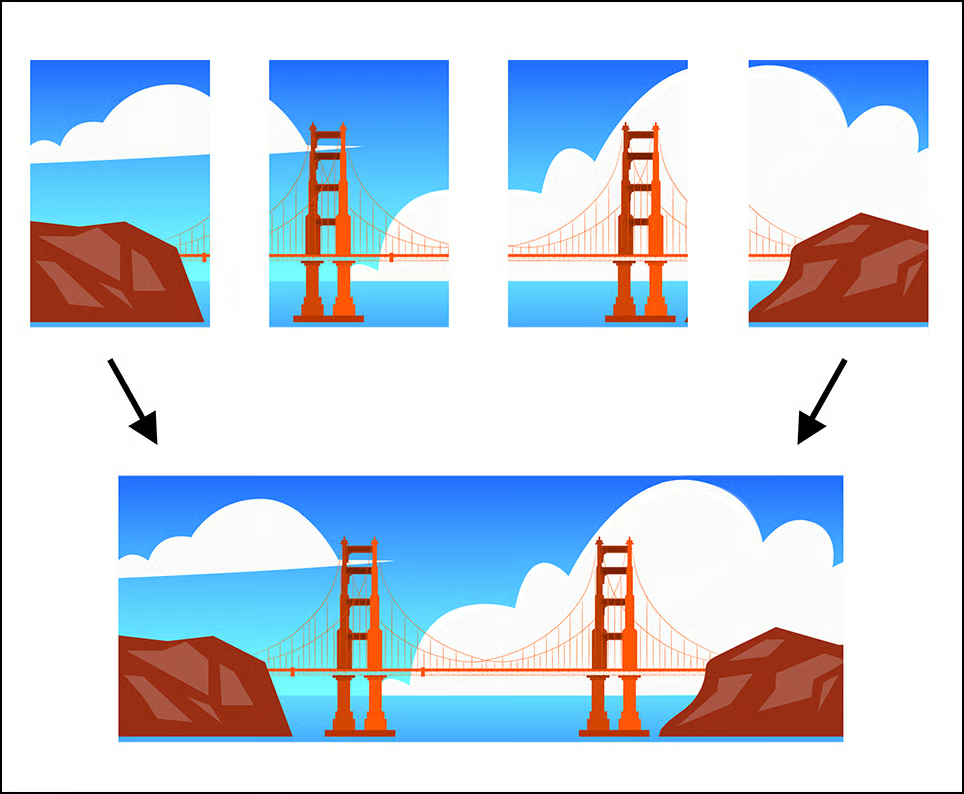
Load your files into a dedicated stitcher like PTGui (industry workhorse), Hugin (open-source), or Photoshop/Lightroom for simpler panoramas. Rectilinear shots at 16–35mm typically need ~25–35% overlap. Keep rows consistent and level for faster, cleaner stitching. PTGui handles multi-row 360×180 with strong control point generation, masking for moving objects, and nadir/zenith optimization. For first-time users, PTGui’s templates and optimizer reduce guesswork, while Hugin is excellent if you prefer open-source with powerful controls.
Export a 2:1 equirectangular TIFF or high-quality JPEG for VR players and virtual tours. For the A7R III, a 16K equirect output is attainable when you shoot enough frames at 24–35mm; this provides excellent zoom potential in tours. For guidance on panoramic head setup for perfect 360s, see Oculus Creator’s DSLR panorama guide and principles. Using a DSLR or mirrorless to shoot and stitch a 360 photo. Set up a panoramic head for high-end 360 photos.
Cleanup & Enhancement
- Nadir patch: Use PTGui’s Viewpoint optimization or clone/heal in Photoshop. You can also shoot a clean handheld nadir and blend it in.
- Color balance: Match color temperature across brackets; use local corrections to remove casts from mixed lighting.
- Noise reduction: Apply mild NR to shadows in low-light/HDR images; avoid over-smoothing fine detail.
- Leveling: Use the stitcher’s horizon tools; correct yaw/roll/pitch for a stable viewer experience.
- Export formats: 16-bit TIFF for archiving and edits, JPEG for web/VR (quality 90–95%).
Disclaimer: Always verify your chosen software’s latest documentation for updated features and workflows.
Recommended Deep Dives
PTGui continues to be a favorite among professionals for complex multi-row panos. For a practical overview of its strengths, see this review: PTGui review: fast, reliable stitching for incredible panoramas.
Useful Tools & Resources
Software
- PTGui panorama stitching
- Hugin (open source)
- Lightroom / Photoshop
- AI tripod/nadir removal tools
Hardware
- Panoramic heads (Nodal Ninja, Leofoto, Sunwayfoto)
- Carbon fiber tripods with leveling base
- Wireless remote shutters
- Pole extensions / car suction mounts with safety tethers
Disclaimer: Names provided for search reference; check official sites for specifications and compatibility.
Video: Panoramic Head Basics
Understanding how to set up your panoramic head and nodal point will transform your results. Watch a solid walkthrough below.
For a written overview with diagrams, this tutorial is helpful: Panoramic head tutorial and nodal alignment. For community-tested tips on 360 techniques, see this Q&A: Best techniques to take 360 panoramas.
Common Mistakes & How to Avoid Them
- Parallax error: Always align the entrance pupil using a nodal rail, especially at 16mm with near foreground.
- Exposure flicker: Use full manual exposure and fixed WB; disable Auto ISO, AE, and AWB.
- Tripod shadows and footprints: Capture a dedicated nadir frame and patch in post.
- Ghosting from moving subjects: Shoot two passes or use the mask tool in PTGui/Hugin to select the cleanest regions.
- Noise and color banding at night: Keep ISO as low as practical; shoot RAW; avoid silent shutter under problematic lighting.
Field Case Studies
Indoor Real Estate (Bright Windows)
At 16mm, shoot three rows of six shots and bracket 5 × 2 EV. Set f/8, ISO 100–200, and lock WB at 4000–4500K if the property has cool LEDs, or 5000–5500K for daylight-balanced interiors. Use continuous bracketing with a remote. In PTGui, first merge exposures (or pre-merge to 32-bit HDR in Lightroom), then stitch. Use masks to keep window views from the −2EV set. The result: a clean, natural dynamic range without blown highlights.
Outdoor Sunset (High DR, Moving Clouds)
Shoot fast: lock exposure for the sky (ETTR if possible), then capture rows quickly to limit cloud deformation across frames. If bracketing, use 3 × 2 EV to reduce total frames. In post, prioritize a base exposure that preserves highlight color, and blend darker/brighter frames selectively.
Crowded Event (People Flow)
Use 1/200s–1/400s, f/5.6–f/8, ISO 400–800. Do a quick full set to lock background, then a second pass for cleaner foreground. In PTGui, mask out ghosts and choose the best frame per region. If someone stands in front of the tripod, politely ask for a moment and reshoot that frame.
Rooftop / Pole Shooting (Wind Risk)
Increase overlap to ~35–40% and use a slightly faster shutter to counter sway. Tether the rig, keep body weight below the pole’s center, and avoid sudden movements. Expect to fix small misalignments; shoot an extra safety row if time allows.
Visual Inspiration
Frequently Asked Questions
-
Can I shoot handheld panoramas with the Sony A7R III?
Yes, for cylindrical or quick stitches—use 16–20mm, high overlap (40%), and fast shutter speeds. However, for full 360×180 with near foreground or interiors, use a tripod and nodal rail to avoid parallax errors.
-
Is the Sony FE 16–35mm f/2.8 GM wide enough for a single-row 360?
Not for a full spherical 360×180. Single-row at 16mm covers a cylindrical pano (no zenith/nadir). For full spheres, plan multi-row: at 16mm, 3 rows × 6 shots + zenith + nadir is a proven baseline.
-
Do I need HDR for interiors with bright windows?
Usually yes. Bracket ±2 EV (3–5 frames) to capture both window views and interior detail. The A7R III’s dynamic range is excellent, but HDR brackets make window retention far more reliable.
-
How do I avoid parallax issues with this lens?
Use a panoramic head with a nodal rail and calibrate per focal length. Start around 70–80 mm forward from the sensor plane at 16mm, then fine-tune with the near/far object test and mark the rail for quick setup.
-
What ISO range is safe on the A7R III for low light?
On a tripod, stay ISO 100–400 for best quality; ISO 800 is still very clean. ISO 1600–3200 is usable when shutter speed must be kept short, but expect more noise and plan on NR in post.
-
Can I save a preset for panos on the A7R III?
Yes. Use the Memory (MR) modes to store manual exposure, fixed WB, EFCS on, IBIS off, drive mode, and bracketing settings. This speeds up setup dramatically.
-
Any tips to reduce flare at 16mm?
Use the hood, avoid letting the sun skim the front element, and shade the lens with your hand if needed (keep your hand out of frame). Slightly reframe to keep strong sources away from edges.
-
Best tripod head choice for this setup?
A panoramic head with independent vertical arm and calibrated rotator (e.g., Nodal Ninja or Leofoto) plus a leveling base. Ensure it supports the A7R III + 16–35GM weight with minimal flex.
Safety, Limitations & Trustworthy Workflow
High places and crowds require caution: tether your camera on rooftops, avoid obstructing walkways, and never leave a rig unattended. In wind, lower the center column, widen the stance, and consider adding weight to the tripod. The A7R III’s IBIS is great handheld but switch it off on a tripod to avoid micro-movements. The 16–35mm GM is robust, but use the hood to protect the front element—especially when working close to glass or in light rain.
For a thorough DSLR/mirrorless 360 workflow overview—including stitching notes and viewer export—this guide is a solid reference: DSLR virtual tour camera & lens guide.