Why This Camera & Lens Are Great for Panoramas
If you want to know how to shoot panorama with Sony A7R III & Sony FE 12-24mm f/4 G, you’re starting with a very capable pairing. The Sony A7R III is a 42.4MP full-frame, back-illuminated mirrorless body delivering excellent detail, roughly 14.5–14.7 stops of dynamic range at base ISO, and a pixel pitch around 4.5 µm. That means extremely fine texture rendition in landscapes, interiors, and architectural lines—crucial when stitching high-resolution 360 photos. The 5-axis IBIS is helpful handheld, but we’ll typically disable stabilization for tripod-based panoramas to avoid micro-corrections during exposure.
The Sony FE 12-24mm f/4 G is a rectilinear ultra-wide zoom, not a fisheye. Rectilinear geometry preserves straight lines—great for architecture and real estate—but it does require more frames than a fisheye to cover a full 360×180 sphere. At 12mm you get a huge field of view (about 122° diagonal, ~112° horizontal, ~90° vertical), manageable distortion, and very good center sharpness even wide open. Stop down to f/8–f/11 for uniform edge-to-edge sharpness and lower chromatic aberration. Together, this combo produces clean, crisp tiles that stitch reliably in PTGui or Hugin.
Quick Setup Overview
- Camera: Sony A7R III — Full-frame 35.9×24mm sensor, 42.4MP, ~14.7 EV DR at ISO 100, 5-axis IBIS.
- Lens: Sony FE 12-24mm f/4 G — Rectilinear ultra-wide zoom; best sharpness near f/8–f/11; moderate vignetting at 12mm (correctable); good control of lateral CA when stopped down.
- Estimated shots & overlap (tested):
- At 12mm:
- Efficient multi-row: 6 shots at +30°, 6 shots at −30°, plus 1 zenith, 1 nadir (≈14 frames, ~30% overlap).
- Safer overlap/complex scenes: 8 shots at +30°, 8 at −30°, plus zenith + nadir (≈18 frames).
- At 18mm:
- 7–8 shots around at 0°, 6 at +50°, 6 at −50°, plus zenith + nadir (≈21–22 frames).
- At 24mm:
- 3-row pattern (7×3) plus zenith + nadir (≈23 frames) with ~25% overlap.
- At 12mm:
- Difficulty: Intermediate (rectilinear ultrawide needs careful nodal alignment and multi-row workflow).
Planning & On-Site Preparation
Evaluate Shooting Environment
Walk the space and anticipate stitching challenges. Look for near-to-camera objects (chairs, railings, foliage) that can cause parallax errors if your nodal point isn’t perfectly aligned. Note reflective surfaces (glass, polished floors, cars), and plan angles to minimize flare or capture with bracketing for ghost-free blends. If shooting through glass, get the lens as close as safely possible (1–3 cm) and angle slightly to avoid your own reflections; use a rubber hood if available.
Match Gear to Scene Goals
The A7R III’s dynamic range and 14-bit RAW are ideal for HDR panoramas of interiors with bright windows. For indoor work, ISO 100–400 is optimal; 800–1600 is still very usable with careful noise reduction. Outdoors at sunset, use ISO 100–200 and bracket ±2 EV to protect highlights. The 12–24mm rectilinear lens preserves straight lines, which is beneficial for architecture and real estate tours. Unlike a fisheye, you’ll shoot more frames, but your edges won’t look stretched or bulged, making the final view more natural and easier to present to clients.
Pre-shoot Checklist
- Charge batteries and bring spares; format fast, reliable cards.
- Clean the lens and sensor; any dust becomes very visible across stitched tiles.
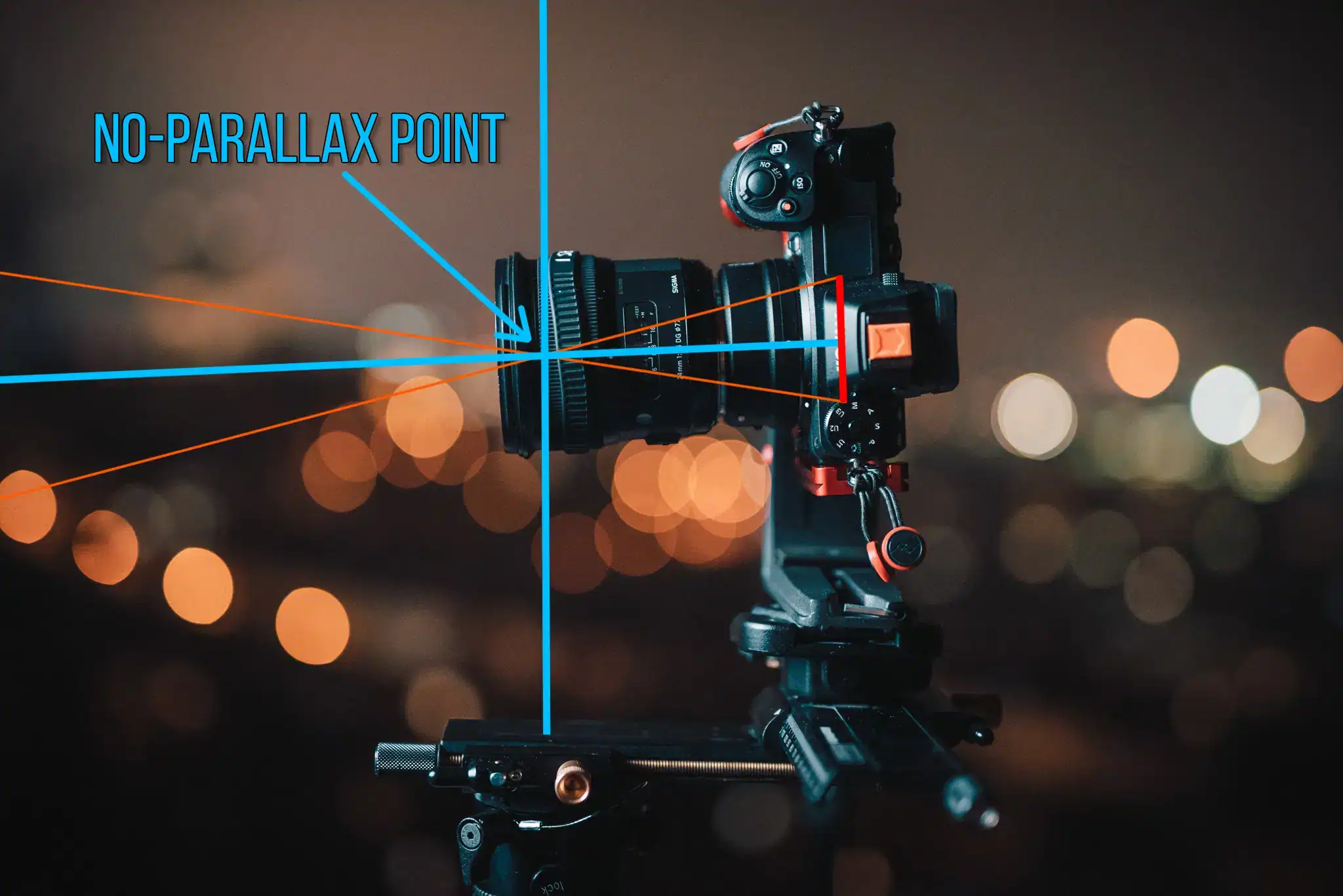
- Level the tripod, verify panoramic head is calibrated to the lens’ entrance pupil (nodal point) at the chosen focal length.
- Safety checks: weigh down the tripod in wind; use a safety tether on rooftops or over crowds; verify pole/car mounts are rated for your payload and speed.
- Backup workflow: after the first complete capture, shoot a second “safety” rotation in case of motion or missed frames.
Essential Gear & Setup
Core Gear
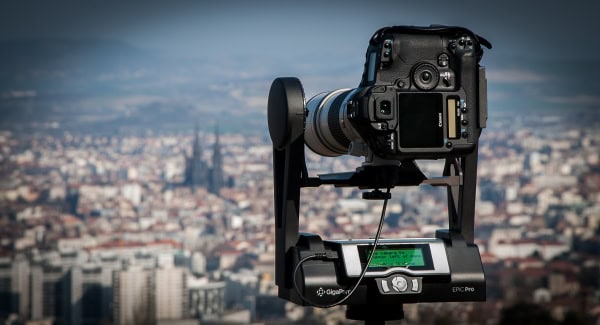
- Panoramic head: A multi-row panoramic head lets you rotate the camera around the lens’ entrance pupil to eliminate parallax between near and far objects. Calibrate once per focal length and mark your rails.
- Stable tripod with a leveling base: Keeps horizons consistent and reduces the need for aggressive post-straightening.
- Remote trigger or Sony Imaging Edge Mobile: Trigger without touching the camera to minimize vibration.
Optional Add-ons
- Pole or car mount: For elevated or moving shots. Use guy lines or tethers, respect wind limits, and keep speeds conservative to reduce vibration.
- Continuous lighting or small flashes: For low-light interiors, especially if HDR ghosts due to people moving.
- Rain cover, lens hood, and microfiber cloths: Protect glass from spray, drizzle, or sea mist.
For an excellent primer on panoramic heads and techniques, see this panoramic head tutorial for more diagrams and troubleshooting. Read the panoramic head tutorial.
Step-by-Step Shooting Guide
Standard Static Scenes
- Level tripod and align the nodal point. On the A7R III + FE 12–24mm, calibrate at your chosen focal length (12mm differs from 18mm or 24mm). Use a near object (1–2 m) and a far object (10–30 m) in the frame; rotate the camera. Adjust fore-aft on the nodal rail until the near and far objects don’t shift relative to each other.
- Set manual exposure and lock white balance. Use M mode, fixed ISO, and a Kelvin WB (e.g., 5600K daylight or 3200–4000K tungsten interior). This prevents brightness and color mismatches across tiles that can cause visible seams.
- Focus and disable stabilization. Manual focus using magnification; focus near the hyperfocal distance for your aperture. Turn IBIS off on the A7R III for tripod shots to avoid micro-blur.
- Capture with the tested overlap. At 12mm, try 6 frames at +30°, 6 at −30°, then a zenith and nadir. Rotate evenly using the head’s detents and shoot smoothly to keep time-consistent lighting.
- Take a dedicated nadir (ground) frame. After the main sequence, tilt down and shoot one or two clean ground shots to patch out the tripod later.
HDR / High Dynamic Range Interiors
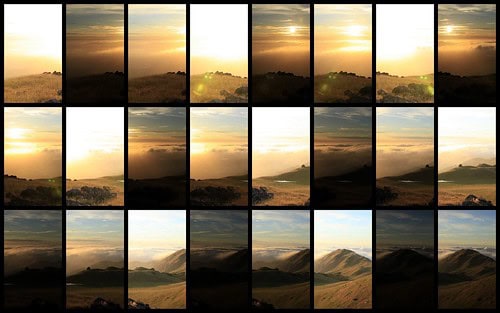
- Bracket ±2 EV (3 or 5 frames). The A7R III’s 14-bit RAW gives you flexibility, but bracketing protects window highlights while keeping shadow detail clean.
- Lock WB across brackets. Changing color between exposures makes tone mapping inconsistent and harder to stitch.
- Keep the sequence order consistent. For example, always shoot 0 EV, then −2, then +2; or use AEB with a remote to avoid bumping the camera.
Low-Light / Night Scenes
- Use longer shutter speeds on a solid base. f/4–f/5.6 at ISO 200–800 is a good start; expose to the right without clipping highlights.
- Enable electronic front curtain shutter (EFCS). It reduces shutter shock. Avoid full silent shutter under LED lights to prevent banding.
- Use a remote trigger and delay (2s) to eliminate vibrations. Make sure wind is manageable or weight your tripod.
Crowded Events
- Shoot two passes per row. First pass quickly for coverage; second pass slower, timing gaps to minimize people overlap between frames.
- In post, blend the clean areas to reduce ghosting, or use PTGui’s masking tools to prioritize one frame where people look best.
Special Setups (Pole / Car / Drone)
- Secure everything. Use clamps rated above your total payload; add a safety tether. For pole work, keep the camera above head height and use a wireless trigger.
- Mitigate vibration. Use higher shutter speeds (1/250–1/500) if mounted on a moving platform. Consider gimbal isolation or foam dampers.
- Rotate slower. Give the system time to settle between shots and review quickly for missed frames before moving on.
Field-Tested Scenarios
Indoor Real Estate (Windows + Mixed Light)
Use 12mm at f/8, ISO 100–200, with ±2 EV bracketing. Turn off ceiling fans and ask people to step out during the capture to avoid ghosting. A 6×2 row plus zenith/nadir pattern balances efficiency and coverage.
Outdoor Sunset Landscape
At 12mm, f/8, ISO 100–200, shoot a single exposure if dynamic range is tame; otherwise, bracket 3 shots. Rotate quickly to keep sky gradients consistent. If wind is strong, lower the center column and add weight.
Rooftop Pole Shot
Mount the camera on a sturdy pole with guy lines. Shoot at 12–14mm for maximum coverage, keep shutter 1/250–1/500, and aim for fewer frames (6×2 rows + zenith) to minimize time aloft.
Recommended Settings & Pro Tips
Exposure & Focus
| Scenario | Aperture | Shutter | ISO | Notes |
|---|---|---|---|---|
| Daylight outdoor | f/8–f/11 | 1/100–1/250 | 100–200 | Lock WB to Daylight or 5600K |
| Low light/night | f/4–f/5.6 | 1/30–1/60 (tripod) | 200–800 | Remote trigger; IBIS off; EFCS on |
| Interior HDR | f/8 | Bracket ±2 EV | 100–400 | Balance windows and lamps; keep WB fixed |
| Action / moving subjects | f/5.6–f/8 | 1/200+ | 400–800 | Freeze motion; consider two-pass strategy |
Critical Tips
- Manual focus near the hyperfocal distance (e.g., at 12mm and f/8, focus a couple of meters out) to keep everything sharp.
- Nodal calibration: Zoom to your working focal length, align using near/far objects, and mark the rail. Each focal length needs its own mark.
- White balance lock: Use Kelvin values to neutralize mixed lighting and keep colors consistent across all frames and brackets.
- RAW always beats JPEG for panoramas. Use uncompressed 14-bit RAW if shooting HDR or extreme grading to preserve highlight and shadow latitude.
- Disable IBIS on tripod. The A7R III’s stabilization can introduce micro-blur when the camera is perfectly still.
- Use EFCS. It reduces shutter shock without the LED banding risks of fully silent shutter.
Stitching & Post-Processing
Software Workflow
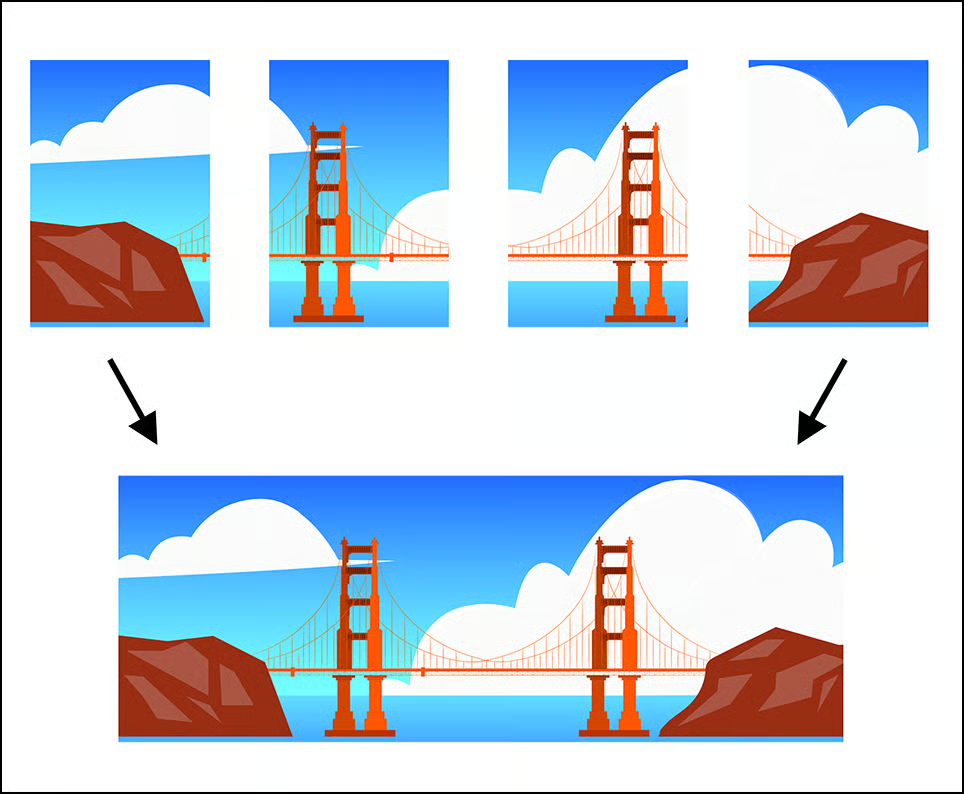
Import RAWs into Lightroom/Camera Raw or Capture One. Apply consistent white balance, lens corrections (vignetting/CA), and mild sharpening. Then export 16-bit TIFFs for stitching in PTGui or Hugin. Rectilinear lenses like the 12–24mm need more tiles than fisheyes but keep lines straight and reduce edge distortion. Aim for ~25–30% overlap between adjacent frames for reliable control point matching. PTGui’s masking and viewpoint correction are especially useful for nadir patching and moving subjects. Why PTGui is a top choice for high-end panoramas.
Cleanup & Enhancement
- Nadir patch: Use PTGui’s Viewpoint Correction or export to Photoshop for content-aware fill and cloning.
- Color and noise: Apply global color balance; use selective noise reduction if you pushed ISO (800–1600); avoid over-sharpening seams.
- Level horizon: Use pitch/roll/yaw tools to set a level horizon, especially for architectural scenes.
- Export: Save as 16-bit TIFF master and a high-quality JPEG equirectangular (2:1 aspect) for web/VR viewers.
For alternative step-by-step stitching approaches and VR publishing requirements, see this DSLR/mirrorless 360 pipeline overview. Using a mirrorless to shoot and stitch a 360 photo
Useful Tools & Resources
Software
- PTGui panorama stitching
- Hugin (open source)
- Lightroom / Photoshop / Affinity Photo
- AI tripod removal tools (Content-Aware Fill, Generative Expand)
Hardware
- Panoramic heads (Nodal Ninja, Leofoto, Sunwayfoto)
- Carbon fiber tripods and leveling bases
- Wireless remote shutters or smartphone apps
- Pole extensions / car suction mounts with safety tethers
Disclaimer: product names are for reference; verify specifications with the manufacturer. For a fundamentals refresher on focal lengths and panoramas, this explainer is helpful. Panoramas, focal lengths, and Photoshop
Common Mistakes & How to Avoid Them
- Parallax error → Calibrate the nodal point for 12mm (and any other focal length you’ll use). Re-check if you move the camera or change zoom.
- Exposure flicker → Manual exposure and fixed WB; avoid auto ISO and auto WB when shooting a multi-tile panorama.
- Tripod shadows → Plan sun position; capture a dedicated nadir to patch the ground.
- Ghosting from moving subjects → Time shots between movements, shoot a second pass, and use masks in PTGui.
- Noise at night → Keep ISO 100–800 when possible on the A7R III; lengthen shutter on a stable tripod instead of pushing ISO too far.
- Shutter shock → Enable EFCS; avoid fully silent shutter under artificial lighting with PWM/LEDs.
Frequently Asked Questions
-
Can I shoot handheld panoramas with the Sony A7R III?
Yes, for casual multi-shot panoramas. Use faster shutter speeds (1/250+) and high overlap (40–50%). However, for 360×180 VR-quality work, use a tripod and a panoramic head to align the entrance pupil and avoid parallax.
-
Is the Sony FE 12–24mm f/4 G wide enough for a single-row 360?
Not for full 360×180 coverage. At 12mm (rectilinear), a single row misses the zenith and nadir. Use at least two rows (+30° and −30°) plus separate zenith/nadir shots for complete coverage.
-
Do I need HDR for interiors with bright windows?
Often yes. Bracket ±2 EV (3 or 5 frames) to preserve window detail and clean shadows. The A7R III has strong dynamic range, but HDR reduces noise in deep shadows and keeps highlight texture.
-
How do I avoid parallax issues with this setup?
Use a multi-row panoramic head and calibrate the entrance pupil at your chosen focal length. Keep nearby objects out of extreme corners if possible, and maintain consistent nodal alignment between rows.
-
What ISO range is safe on the A7R III in low light?
ISO 100–800 is the sweet spot for image quality. ISO 1600–3200 can work with noise reduction, but expect reduced dynamic range and finer stitching tolerances.
-
Can I set up custom modes for pano shooting?
Yes. Save Manual exposure, fixed WB (Kelvin), single-shot drive, EFCS on, IBIS off, and RAW to C1/C2. This makes switching to a panorama workflow fast and consistent.
-
How do I reduce flare at 12mm?
Avoid strong light sources near the frame edge, use your hand or a flag to shade the lens, and keep the front element spotless. Slightly recompose to keep the sun off-axis when possible.
-
What’s the best tripod head for this combo?
A sturdy multi-row panoramic head with a nodal rail (e.g., Nodal Ninja, Leofoto) and a leveling base. Make sure it supports the height/weight of the A7R III + 12–24mm and offers precise click-stops.
Bonus: Watch a Head Setup Walkthrough
If you’re new to nodal alignment and multi-row capture, this quick video walkthrough makes the concepts click in minutes.
For a broader guide to mirrored/DSLR 360 workflows and best practices, this comprehensive overview is also useful. Set up a panoramic head to shoot high-end 360 photos
Safety, Quality, and Workflow Insurance
Always prioritize stability and safety over speed. On rooftops or crowded events, use a tether and avoid extending gear over edges. In wind, lower the center column and add weight. For car-mounted work, use redundant clamps and stay well under the mount’s rated speed. Quality-wise, shoot a second full rotation as a safety set, especially if your first pass had moving subjects or changing light.
If you want a concise checklist of best techniques from multiple experienced shooters, this community Q&A thread is a solid complement to this guide. Best techniques for 360 panoramas