Why This Camera & Lens Are Great for Panoramas
If you’re wondering how to shoot panorama with Sony A7R III & Sigma 15mm f/1.4 DG DN Diagonal Fisheye Art, you’ve picked a powerhouse combo. The Sony A7R III’s 42.4MP full‑frame BSI sensor (approx. 36×24 mm, ~4.5 µm pixel pitch) delivers superb detail and dynamic range (around 14+ stops at base ISO), which lets you retain highlight detail in windows and skies while keeping shadows clean. The 5‑axis in‑body stabilization is handy off‑tripod but can be disabled on a tripod for maximal sharpness. Dual card slots, robust battery life (NP‑FZ100), and reliable USB‑C tethering make it a safe choice for client work.
The Sigma 15mm f/1.4 DG DN Diagonal Fisheye Art is a 180° diagonal fisheye designed for mirrorless. As a diagonal fisheye, it reaches 180° across the frame diagonal, with very wide horizontal/vertical coverage. For 360° work, that means you need fewer photos per panorama, which speeds up field work and reduces ghosting from moving subjects. Stopped down (f/5.6–f/8), it’s critically sharp with well‑controlled CA for a fisheye, and its projection geometry stitches cleanly in PTGui/Hugin. Distortion is expected (and desirable) at capture; your stitcher will remap it into an equirectangular 360 image.
In short: the A7R III provides resolving power and dynamic range; the Sigma 15mm fisheye gives speed and coverage. Together they produce high‑quality 360 photos with fewer frames and fewer stitching headaches than rectilinear wide‑angles.
Quick Setup Overview
- Camera: Sony A7R III — Full‑Frame, 42.4MP BSI CMOS (approx. 7952×5304), strong DR at ISO 100–200, excellent color depth.
- Lens: Sigma 15mm f/1.4 DG DN Diagonal Fisheye Art — diagonal fisheye (approx. 180° across diagonal), fast aperture for night/HDR capture; lateral CA is easily corrected in stitchers.
- Estimated shots & overlap (tested guidance):
- Safe one‑row: 6 around at 60° yaw steps (0° tilt) + 1 zenith + 1 nadir (≈30% overlap).
- Speed run: 4 around at 90° yaw (tilt up ~10–15°) + zenith + nadir — works outdoors with distant subjects; not ideal near foreground.
- High‑precision/near‑subject: 8 around at 45° yaw + zenith + nadir for generous overlap and cleaner seams.
- Difficulty: Intermediate (easy capture, but nodal alignment and nadir handling require care).
Expect stitched equirectangular outputs in the 100–150MP range (depending on overlap and how much of each frame is used). For theory on spherical resolution vs. FOV, see the community‑validated notes on the panotools wiki. Read more on spherical resolution.
Planning & On-Site Preparation
Evaluate Shooting Environment
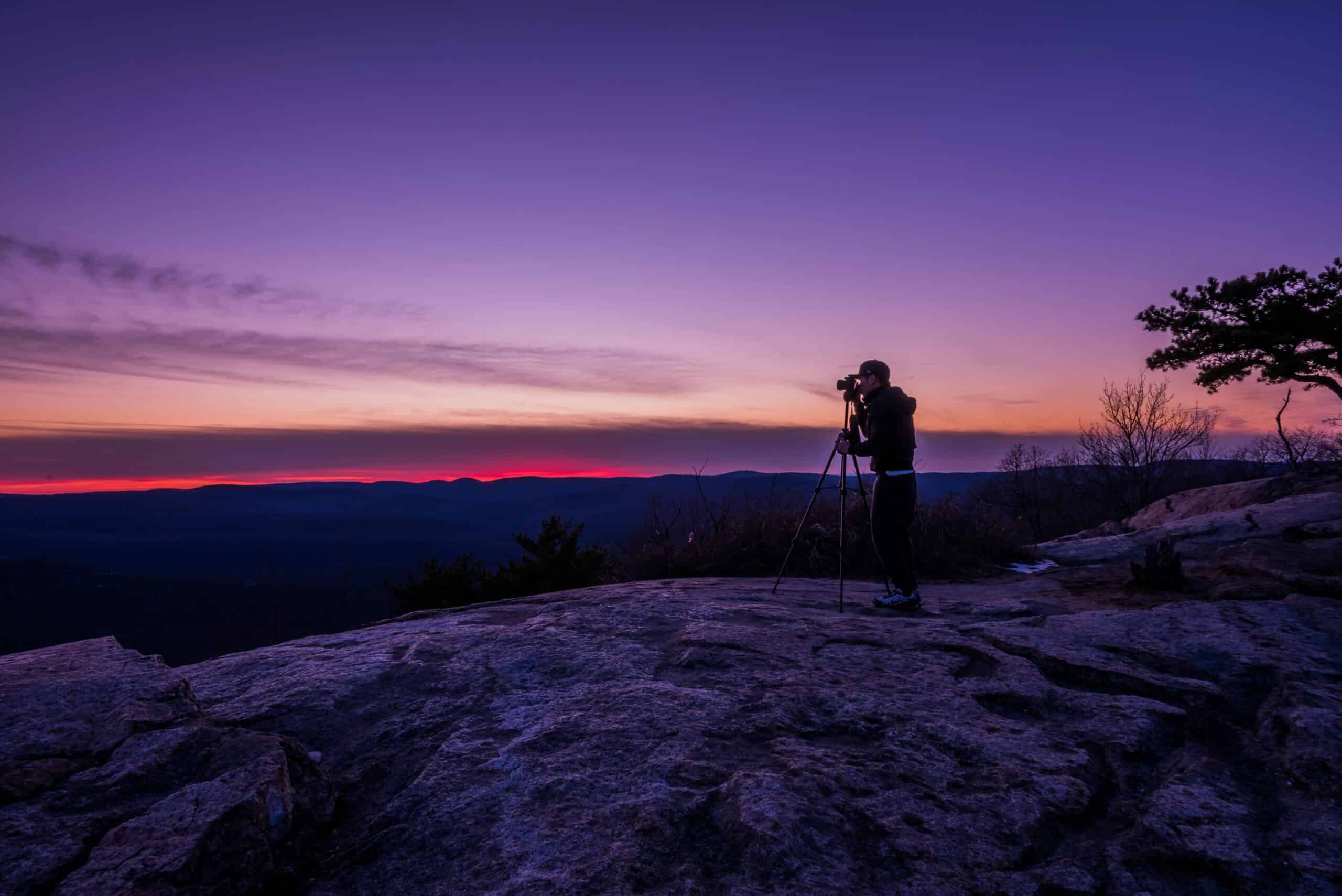
Scan for light direction, specular highlights, and movement. Indoors, note mixed lighting (tungsten/LED/daylight) and reflective surfaces (glass, polished metal). If shooting through glass, get the front element as close as safely possible (1–3 cm) and shoot at a slight angle to minimize reflections and flare. Outdoors, consider the sun’s position; fisheyes can easily catch the sun in the frame, which increases flare and lowers contrast.
Match Gear to Scene Goals
The A7R III’s dynamic range lets you tame bright windows and sunsets; it’s clean at ISO 100–400, and still very usable at ISO 800–1600 with careful exposure. Indoors, that means you can often shoot base ISO with longer exposures on a tripod; for scenes with extreme DR (interiors with windows), bracket ±2 EV for an HDR panorama. The Sigma 15mm fisheye reduces shot count—great for crowds or wind—though its projection exaggerates nearby objects. Keep important lines away from the extreme frame edges to avoid tricky seam placement.
Pre-shoot Checklist
- Power & storage: Fully charge NP‑FZ100 batteries; carry spares. Use fast, reliable UHS‑II cards in both slots.
- Optics: Clean lens and sensor; check for dust (it shows up on skies and walls in 360s).
- Support: Level your tripod and calibrate the panoramic head for the lens’s no‑parallax point.
- Safety: Check wind loads on rooftops and poles. Use tethers on car mounts. Keep the fisheye’s bulbous front element protected when moving.
- Backup capture: Shoot an extra safety round after your main pass in case of blinking lights/people movement.
Essential Gear & Setup
Core Gear
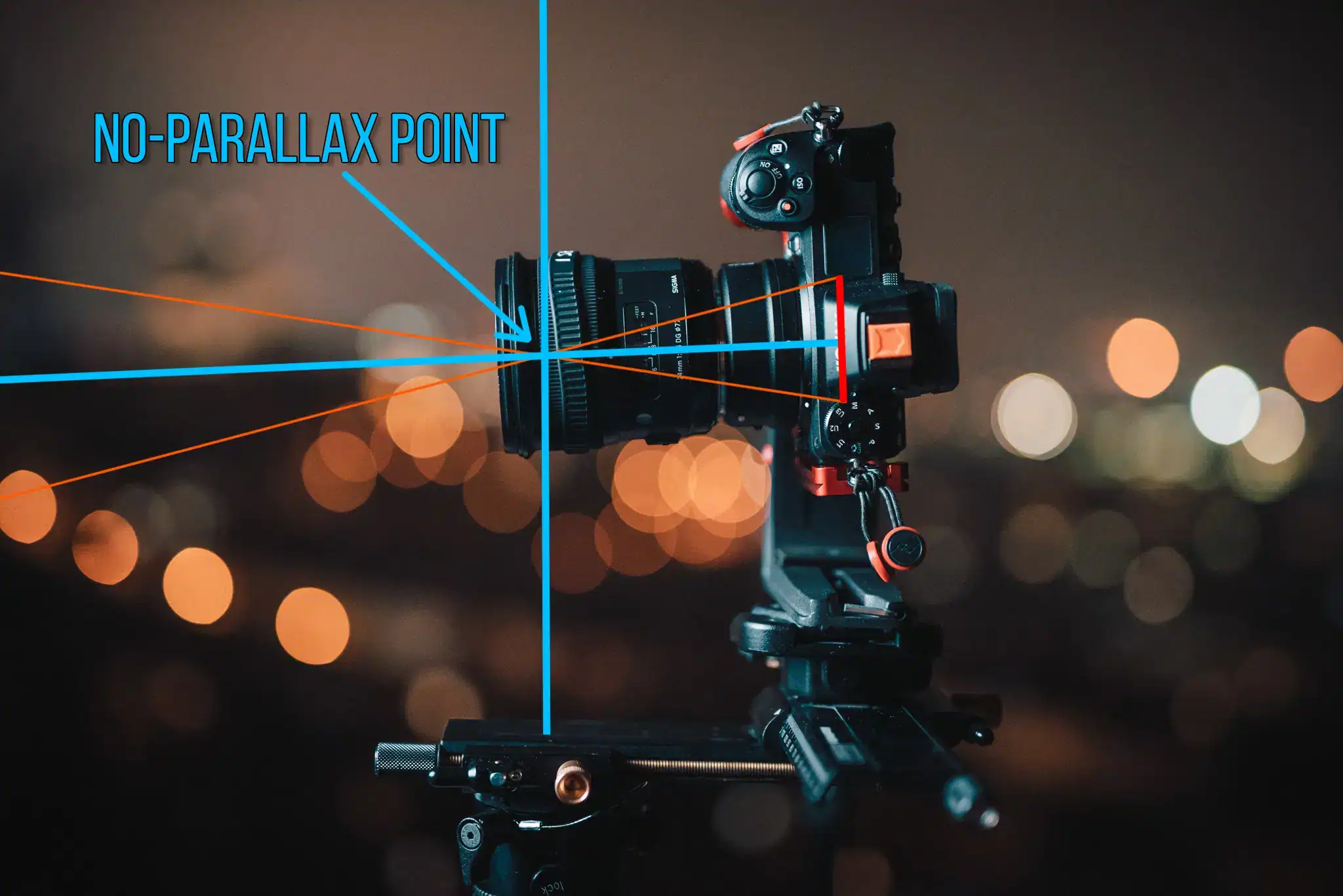
- Panoramic head: Lets you rotate the camera/lens around the no‑parallax (entrance pupil) point so foreground and background align across frames. This is crucial for clean stitches with near objects.
- Stable tripod with leveling base: A leveling base speeds setup—level once, then pan without the horizon drifting.
- Remote trigger or app: Use a wireless remote or Sony Imaging Edge Mobile to eliminate vibrations and speed shooting.
Optional Add-ons
- Pole or car mount: Great for elevated or vehicle‑based views. Use a safety tether, watch wind, and avoid high speeds or gusts.
- Lighting aids: Small LED panels or off‑camera flash for dark corners in interiors (used carefully to avoid hotspots across frames).
- Weather gear: Rain cover for the camera, and weight the tripod in wind. Keep a microfiber cloth ready for spray or mist.
For a deeper primer on panoramic head concepts and setup best practices, this illustrated guide is helpful. Panoramic head setup tutorial
Step-by-Step Shooting Guide
Standard Static Scenes
- Level and align: Level the tripod using the leveling base. Slide the camera on the pano head until rotating left/right shows no shift between near and far alignment (this is your no‑parallax point). Mark the rail scale for the Sigma 15mm so you can repeat it quickly next time.
- Lock exposure and white balance: Set Manual mode. Start with ISO 100, f/8, and adjust shutter for a mid‑tone histogram without clipping highlights. Set a fixed white balance (Daylight or a specific Kelvin) to keep colors consistent.
- Focus: Switch to manual focus, use focus magnifier, and set near the hyperfocal distance (with 15mm at f/8 on full frame, infinity to about 0.7–1 m stays sharp). Then disable AF to prevent refocusing between frames.
- Capture sequence:
- Safe pattern: 6 shots around at 60° yaw increments, level horizon (0° tilt).
- Then 1 zenith (+90°) and 1 nadir (−90°). For nadir, you can offset the tripod slightly, or shoot a handheld patch.
- Check overlaps: Review edges for at least 25–35% overlap. If in doubt, add a frame.
HDR / High Dynamic Range Interiors
- Bracketed exposures: Use AEB to capture ±2 EV (3 or 5 frames). Keep white balance locked and focus unchanged.
- Sequence: Shoot the entire rotation at each exposure level, or let PTGui merge brackets per position. Avoid changing aperture; vary shutter speed only.
Low-Light / Night Scenes
- Exposure: Use f/4–f/5.6 to limit diffraction and keep stars/point light sources crisp; set shutter as needed (e.g., 1–10 s) and raise ISO only as needed (ISO 400–1600 on A7R III remains quite clean).
- Stability: Turn IBIS off on a tripod, use a 2‑s self‑timer or remote, and enable EFCS to minimize shutter shock.
- Avoid light flicker: Steer clear of electronic shutter under certain LED/fluorescent lights to prevent banding.
Crowded Events
- Two passes: Do a fast pass to capture a clean base, then a second pass to catch gaps in foot traffic.
- Shutter priority: Aim for 1/200–1/500 s to freeze motion; ISO 400–800 is safe on the A7R III.
- Post blend: In PTGui or Photoshop, mask frames to remove ghosting and duplicate subjects.
Special Setups (Pole / Car / Rooftop)
- Pole: Keep rotations slow and deliberate. Use a strap/tether. With the fisheye, 4–6 around often suffices; prioritize fast shutter (1/250 s+) and slightly higher ISO for stability.
- Car‑mounted: Shoot while stopped; vibrations and parallax make moving shots tricky. Use a suction mount with a backup tether and quick safety checks between takes.
- Rooftop/windy locations: Hang a weight from the tripod, lower the center column, and increase overlap (8 around) to cover any flex.
Watch: A concise capture-to-stitch walkthrough
Short on time? This practical video overview is a good companion to the steps above:
Recommended Settings & Pro Tips
Exposure & Focus
| Scenario | Aperture | Shutter | ISO | Notes |
|---|---|---|---|---|
| Daylight outdoor | f/8–f/11 | 1/100–1/250 | 100–200 | Lock WB (Daylight/Kelvin). Avoid clipping the sky. |
| Low light / night | f/4–f/5.6 | 1/30–1 s+ | 400–1600 | Tripod + remote; IBIS off on tripod; EFCS on. |
| Interior HDR | f/8 | Bracket ±2 EV | 100–400 | Balance windows and lamps; keep aperture constant. |
| Action / moving crowds | f/5.6–f/8 | 1/200+ | 400–800 | Two-pass capture; mask in post. |
Critical Tips
- Manual focus near hyperfocal at f/8 to keep everything from ~1 m to infinity sharp with the 15mm.
- Find and mark the no‑parallax point on your pano head rail for the Sigma 15mm; repeatability saves time.
- Lock white balance to avoid color shifts between frames and brackets. Shoot RAW for maximal DR and color latitude.
- Stabilization: Turn IBIS off on a tripod. Use EFCS; avoid full electronic shutter under LED lighting to prevent banding.
- Drive mode: Use 2‑s timer or a remote. On the A7R III, Sony Imaging Edge Mobile can trigger captures without touching the camera.
- File handling: RAW or RAW+JPEG. Keep noise reduction off in‑camera; do NR in post for consistent results across the pano.
Stitching & Post-Processing
Software Workflow
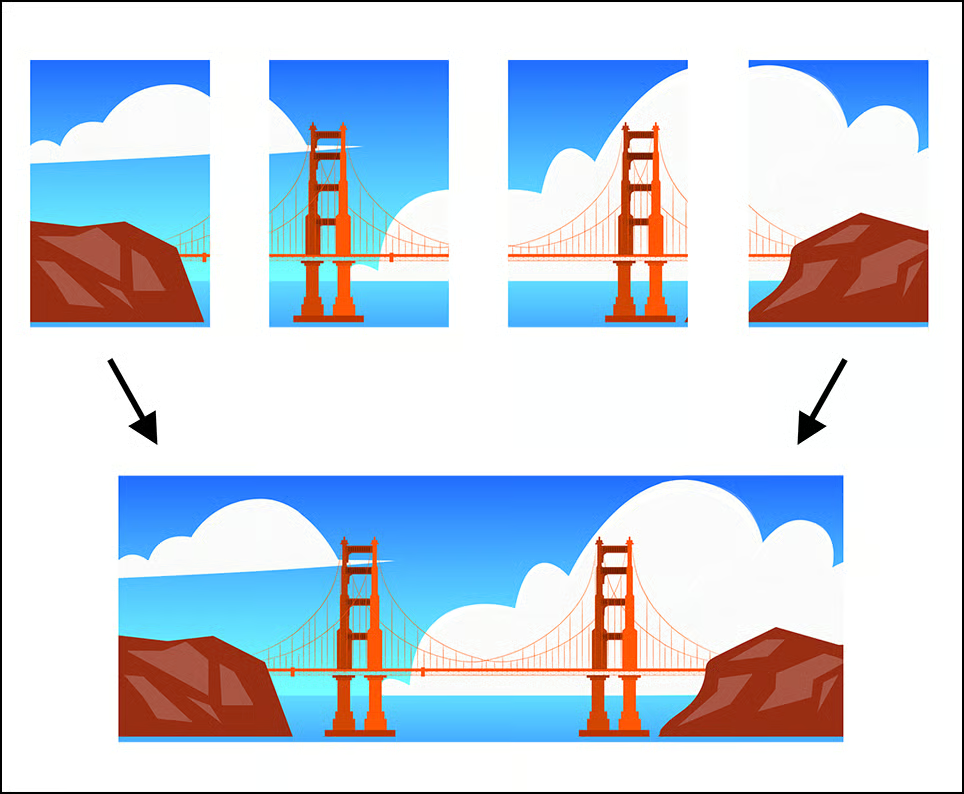
Import your RAW files into Lightroom or Capture One for basic exposure normalization and chromatic aberration correction (do not “defish” before stitching). Export 16‑bit TIFFs and stitch in PTGui or Hugin. With a fisheye, fewer control points are needed and overlaps are generous; aim for ~25–35% overlap. Mark the lens as a “diagonal fisheye” and let the stitcher estimate FOV if unknown. PTGui’s template system makes repeat jobs fast. For a broader platform perspective, Oculus’s guide on DSLR/mirrorless 360 pipelines is a good reference. Using a mirrorless camera to shoot and stitch a 360 photo
If you’re deciding on software, this review summarizes why PTGui remains a top choice for reliability and speed on large pano sets. PTGui review and workflow insights
Cleanup & Enhancement
- Nadir patching: Use PTGui’s Viewpoint Correction with a handheld nadir shot, or patch later in Photoshop using Clone/Content‑Aware Fill.
- Color and noise: Match global white balance, then apply gentle NR to shadows, especially for ISO 800–1600 frames.
- Leveling: Set horizon via verticals/yaw‑pitch‑roll controls in your stitcher to ensure a natural look in VR.
- Export: Deliver a 2:1 equirectangular JPG/TIFF in 8K–16K on the long edge depending on client needs and platform limits.
Want a second take on capture theory and lens choice for virtual tours? This explainer dives into field‑proven combos and techniques. DSLR/ML virtual tour FAQ and lens guide
Disclaimer: software features evolve—always consult the latest documentation for PTGui, Hugin, and your RAW editor.
Useful Tools & Resources
Software
- PTGui — fast, accurate stitching of fisheye 360s
- Hugin — open source alternative with robust control
- Lightroom / Photoshop — RAW prep, nadir patch, retouch
- AI tripod removal tools — speed up nadir cleanup
Hardware
- Panoramic heads — Nodal Ninja / Leofoto with fore‑aft rails
- Carbon fiber tripods — stiffer, lighter for travel and rooftops
- Leveling bases — quick horizon leveling
- Wireless remotes — reliable triggering without touch
- Pole extensions / car mounts — elevated and vehicle shots; always tether for safety
Disclaimer: brand names are for research convenience; verify specs and compatibility before purchase.
Common Mistakes & How to Avoid Them
- Parallax error → Recalibrate the no‑parallax point with the Sigma 15mm and lock that rail position for repeatability.
- Exposure flicker → Use full Manual exposure and a locked white balance across all frames/brackets.
- Tripod shadows and footprints → Capture a proper nadir shot and patch; reposition for a clean handheld nadir.
- Ghosting from moving subjects → Shoot multiple passes and mask selectively during blending.
- High ISO noise at night → Prefer longer shutter on a tripod; keep ISO near 100–800 if possible (1600 acceptable with careful NR).
- Using electronic shutter under LED lights → May cause banding. Prefer mechanical or EFCS.
Frequently Asked Questions
- Can I shoot handheld panoramas with the Sony A7R III?
Yes, but results vary. The A7R III’s IBIS helps, yet parallax sneaks in without a pano head—especially with near objects. Handheld is fine for quick outdoors scenes with distant subjects; keep overlap high (35–40%), shoot fast (1/250 s+), and expect more cleanup in post.
- Is the Sigma 15mm f/1.4 DG DN Diagonal Fisheye Art wide enough for a single-row full 360?
For spherical 360×180, a single horizontal row needs a zenith and a nadir. A reliable pattern is 6 around + zenith + nadir. In very open spaces you can do 4 around + zenith + nadir, but interiors or scenes with nearby foregrounds stitch more cleanly with 6–8 around.
- Do I need HDR for interiors with bright windows?
Often yes. Even with the A7R III’s excellent dynamic range, bracket ±2 EV to retain window detail without crushing interior shadows. Keep aperture fixed and vary shutter only; lock WB to avoid stitching color shifts.
- How do I avoid parallax issues with this fisheye?
Mount the camera on a proper panoramic head and slide it until near/far objects don’t shift when you pan. Mark that rail setting for the Sigma 15mm. Increase overlap (8 around) in tight spaces or when elements are within 1–2 m of the lens.
- What ISO range is safe on the A7R III for low‑light panos?
On a tripod, aim for ISO 100–400 and lengthen shutter for best quality. ISO 800–1600 remains very usable if you need a faster shutter for wind or crowds. Apply gentle noise reduction during post‑processing.
Practical Case Studies
Indoor Real Estate
Mount the A7R III on a pano head at the room’s natural focal point (corner or center). Use f/8, ISO 100–200, and bracket ±2 EV to handle windows and dark corners. Shoot 6 around + zenith + nadir. Keep the camera away from mirrors and glass, or shoot at a slight angle and patch reflections later. Color‑match mixed lighting (set WB to a fixed Kelvin, e.g., 4000–5000K for warm interiors).
Outdoor Sunset
Sun in frame can cause flare with any fisheye. Shade the lens with your hand just outside the frame if needed. Expose for highlights (to protect the sun edge) and consider a 3‑ or 5‑shot bracket. Windy? Add overlap (8 around) and weight the tripod. The A7R III’s DR lets you pull shadows cleanly if you keep ISO low.
Crowded Event
Increase shutter to 1/200–1/500 s, ISO 400–800, f/5.6–f/8. Do two rotations: one quick pass for a base pano and a second for alternate frames where people have moved. Blend in post to reduce ghosting.
Rooftop/Pole Shooting
On a pole, stability is everything. Keep rotations smooth and shutter fast; 4–6 around often covers with the fisheye. Always tether the pole, avoid strong gusts, and review coverage before coming down. On rooftops, lower the center column, use a wider stance, and consider 8 around for extra overlap in wind.
Visual Examples