Why This Camera & Lens Are Great for Panoramas
The Sony A7R III and the Olympus M.Zuiko 8mm f/1.8 PRO Fisheye are both outstanding pieces of kit—for different ecosystems. The A7R III is a 42.4MP full-frame mirrorless body with excellent dynamic range (~14.7 EV at base ISO), a large 35.9×24.0 mm sensor with ~4.5 µm pixel pitch, 5-axis IBIS, and reliable focus peaking for manual work—ideal traits for high-quality panoramic and 360 photo capture. The Olympus 8mm f/1.8 PRO is one of the sharpest diagonal fisheyes in the Micro Four Thirds (MFT) world with a bright aperture for low light.
Important compatibility note: the Olympus 8mm f/1.8 PRO is an MFT lens and is not natively or practically adaptable to Sony E-mount full frame (A7R III). The flange distance and fully electronic aperture/focus design mean there is no simple mechanical or smart adapter that maintains infinity focus and aperture control. Also, the MFT image circle will not cover full-frame. If your goal is a working A7R III fisheye setup, consider a Sony-compatible circular/diagonal fisheye (e.g., Sigma 8mm F3.5 EX DG via EF–E adapter for circular fisheye, or Samyang/Rokinon 12mm f/2.8 diagonal fisheye in E-mount).
That said, the shooting techniques in this guide remain the same. We’ll explain how to shoot panorama with Sony A7R III & Olympus 8mm f/1.8 PRO Fisheye in principle, including what changes when you use a Sony-compatible fisheye of equivalent field of view. You’ll get exact shot counts, nodal-point tips, HDR workflow, and stitching methods for producing clean, high-resolution 360 photos.
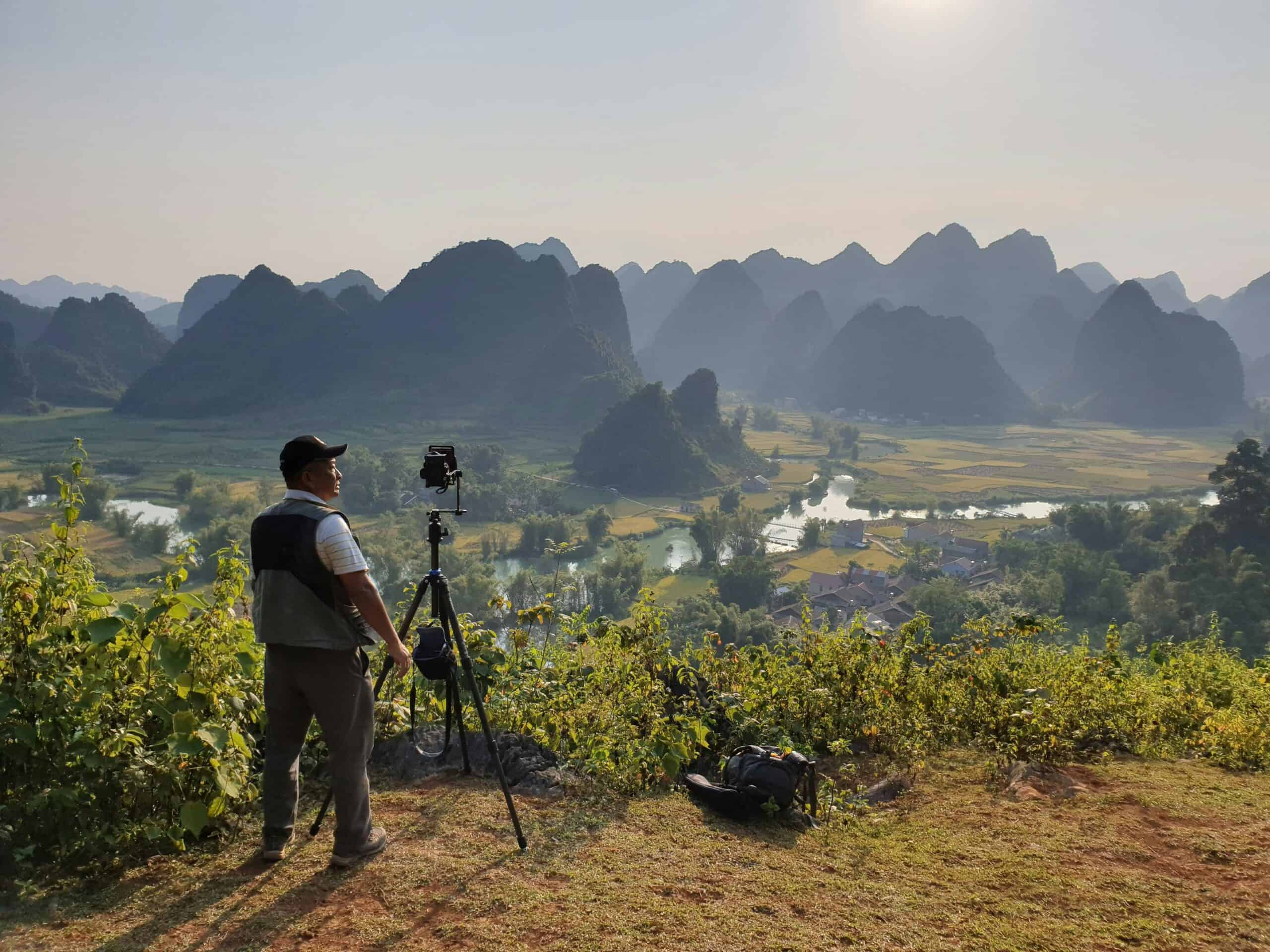
Quick Setup Overview
- Camera: Sony A7R III — Full-frame 42.4MP BSI sensor; ~14.7 EV DR at ISO 100; pixel pitch ~4.5 µm; 5-axis IBIS (disable on tripod).
- Lens: Olympus 8mm f/1.8 PRO Fisheye — MFT diagonal fisheye (approx. 180° diagonal FOV on MFT), renowned for sharpness and bright f/1.8, but not physically compatible with A7R III. Use a Sony-compatible fisheye with equivalent FOV for the workflow below.
- Estimated shots & overlap (with 8mm circular fisheye on full frame): 4 shots around at 90° yaw with 25–30% overlap + optional zenith + nadir. With a 12mm diagonal fisheye (FF): 6–8 around + zenith + nadir.
- Difficulty: Moderate. With a calibrated panoramic head and a circular fisheye, it becomes beginner-friendly.
Planning & On-Site Preparation
Evaluate Shooting Environment
Scan for moving subjects, reflective surfaces, bright windows, and tight spaces. Glass walls and polished floors can complicate stitching with ghosting and glare—try to keep the lens front element 30–60 cm away from glass and shoot at a slight angle to reduce flare. For sunsets and night cityscapes, watch for intense point light sources that can cause fisheye flare; plan bracketed exposures to preserve highlights.
Match Gear to Scene Goals
The A7R III’s high resolution and dynamic range let you pull clean shadows and keep highlights intact—great for HDR panoramas. Safe ISO ranges are typically ISO 100–400 for optimal quality; ISO 800–1600 is still very usable at night with careful exposure. A circular or diagonal fisheye minimizes the number of shots needed, reducing parallax issues and speeding up capture in crowds. That’s why many pros favor an 8mm circular fisheye on full frame for 360 work.
Pre-shoot Checklist
- Charge batteries, format dual cards, clean lens/sensor (fisheyes are unforgiving of dust).
- Level your tripod; calibrate your panoramic head’s nodal point for the body/lens combo.
- Safety: assess wind (especially for rooftop/pole work), secure tethers, and check traffic if shooting car-mounted.
- Backup workflow: capture a second full round of the panorama in case of motion/ghosting in the first.
Essential Gear & Setup
Core Gear
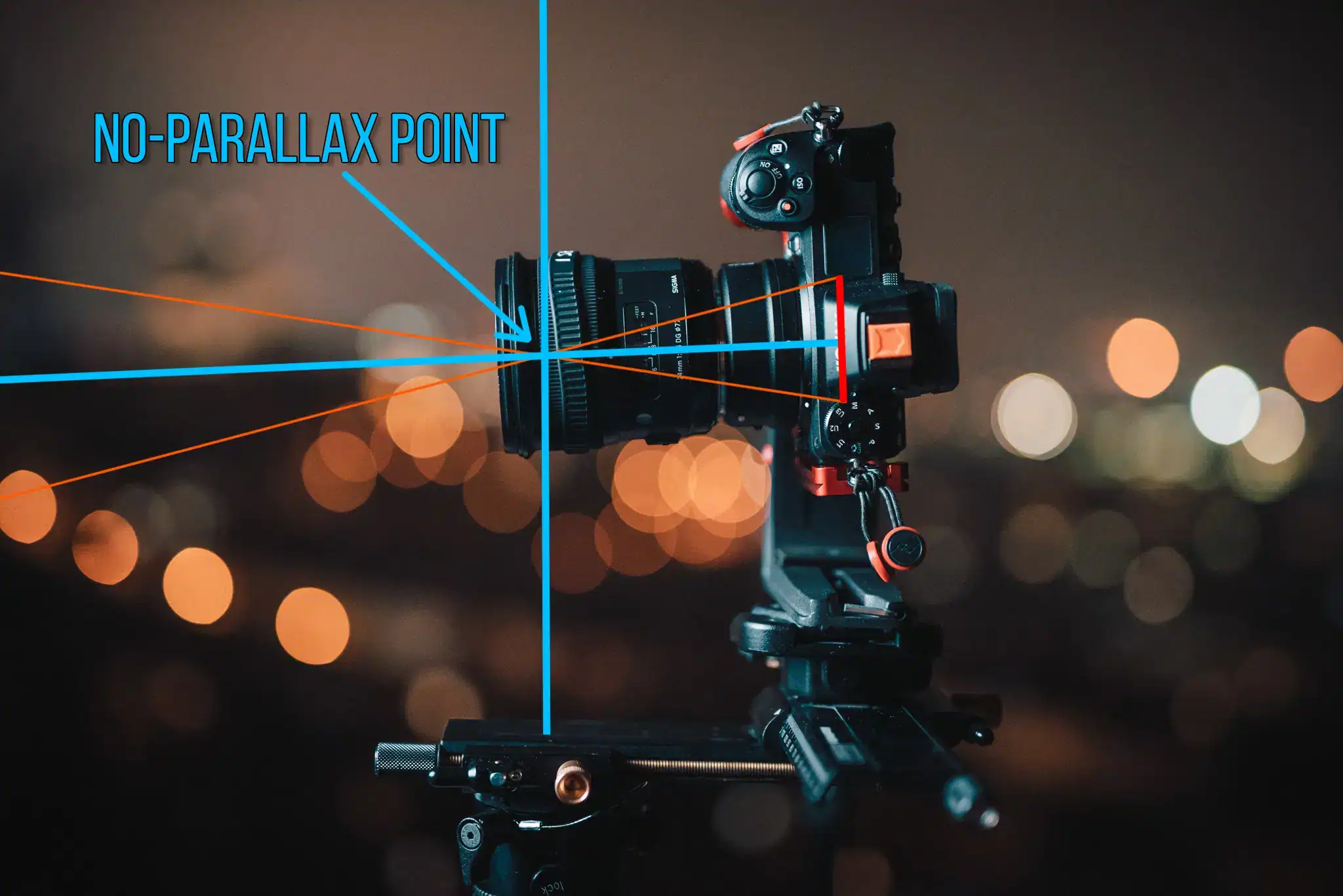
- Panoramic head: Enables rotation around the lens’s no-parallax (nodal) point, eliminating near/far object shifts. This is critical for clean stitches in interiors and scenes with foreground detail.
- Stable tripod with a leveling base: Speeds up leveling so your yaw rotations stay true. A bowl-leveling base is a time-saver.
- Remote trigger or mobile app: Fire the shutter without touching the camera to avoid micro-shake at slower speeds.
Optional Add-ons
- Pole or car mount: Great for elevated or moving perspectives. Always use safety lines and avoid high winds; plan slower rotation to mitigate vibration.
- Lighting aids: Small LED panels to fill dark corners in interiors; use sparingly to maintain natural ambience.
- Weather protection: Rain covers and lens hoods (even for fisheye) to reduce flare and protect the front element.
Step-by-Step Shooting Guide
Standard Static Scenes
- Level the tripod and align the nodal point. Use the panoramic head to position the camera so that as you yaw the rig, foreground and background elements don’t shift relative to each other. Mark the rail positions for your A7R III plus your chosen fisheye and tape them for repeatability.
- Set manual exposure and lock white balance. For outdoor daylight, start at ISO 100, f/8, 1/125 s, WB Daylight. Use the histogram and expose to protect highlights. Locking WB avoids color variation across frames.
- Capture with tested overlap. With an 8mm circular fisheye on full-frame, shoot 4 frames around at 90° yaw intervals with slight down-tilt (-5°) to better cover the nadir, then add a zenith if needed. With a 12mm diagonal fisheye, shoot 6–8 frames around, then zenith and nadir.
- Take a nadir (ground) shot. Shift the tripod out of the way or shoot a handheld nadir at the same nodal position to patch the tripod later.
HDR / High Dynamic Range Interiors
- Bracket ±2 EV (3–5 frames) per angle to hold bright windows and dark corners. Keep ISO 100–200 when possible.
- Lock WB (e.g., 4000–4500 K in warm interiors) across the entire bracket and panorama. Consistency makes stitching and color grading easier.
Low-Light / Night Scenes
- Use longer exposures on tripod; disable IBIS to prevent micro-jitters. On the A7R III, ISO 100–800 is ideal; 1600–3200 is workable for night cityscapes if you expose carefully and use noise reduction in post.
- Use a remote or 2 s self-timer. Avoid electronic silent shutter under LED lighting—it can cause banding.
Crowded Events
- Do two passes: a quick primary pass for coverage and a second pass to fill gaps when people move. Keep shutter speeds at 1/200 s+ if you want to freeze motion.
- In post, mask or blend the frames with fewer moving subjects for the cleanest result.
Special Setups (Pole / Car / Drone)
- Secure gear and use a safety tether. Balance your pole; avoid gusty conditions. For car rigs, stick to smooth surfaces and slower speeds.
- Plan slower, deliberate rotations. Use higher shutter speeds (1/500 s+) to offset vibration when shooting from a pole or moving platform.
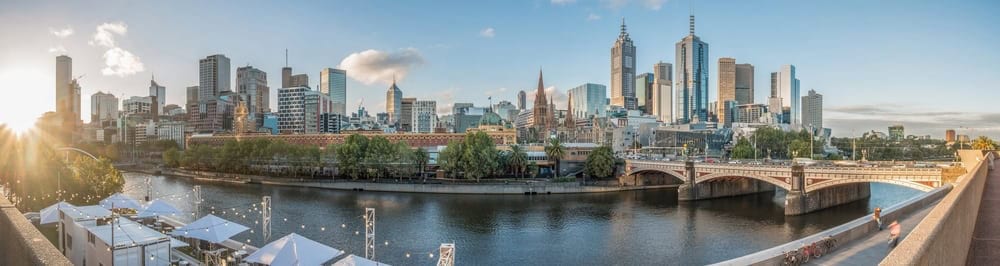
Recommended Settings & Pro Tips
Exposure & Focus
| Scenario | Aperture | Shutter | ISO | Notes |
|---|---|---|---|---|
| Daylight outdoor | f/8–f/11 | 1/100–1/250 | 100–200 | Lock WB to Daylight; expose for highlights |
| Low light/night | f/4–f/5.6 | 1/30–1/60 (tripod) | 400–800 (1600 if needed) | Disable IBIS on tripod; remote trigger |
| Interior HDR | f/8 | Bracket ±2 EV | 100–400 | Balance windows vs lamps; keep WB locked |
| Action / moving subjects | f/5.6–f/8 | 1/200+ | 400–800 | Freeze motion; do two passes if needed |
Critical Tips
- Manual focus at the hyperfocal distance. Use magnified view and focus peaking; for a fisheye at f/8, set focus slightly short of infinity to keep near objects crisp.
- Nodal point calibration: Place a near vertical object and a far background object; rotate the rig. Adjust the rail until their relative position doesn’t shift. Mark the exact rail positions for your body and fisheye combo.
- White balance lock: Mixed lighting can wreak havoc. Pick a fixed WB value rather than Auto to avoid cross-frame shifts.
- RAW over JPEG: Maximizes dynamic range for HDR blending and better color consistency across frames.
- IBIS off on tripod: The A7R III’s stabilization is excellent handheld, but on a tripod it can introduce micro-blur at long exposures. Turn it off.
Stitching & Post-Processing
Software Workflow
For professional control and speed, PTGui remains a staple. Fisheye images are easy for it to match; you’ll set lens type to “fisheye,” choose equirectangular output, and let it auto-detect control points. Hugin is a reliable open-source alternative. Aim for ~25–30% overlap with fisheye and 20–25% with rectilinear lenses. After stitching, export a 16-bit TIFF or high-quality JPEG equirectangular (2:1 aspect) for VR viewers or web platforms. For PTGui pros/cons and speed comparisons, see this review from Fstoppers at the end of this paragraph. Why PTGui is often the fastest pro pano tool.
Cleanup & Enhancement
- Nadir patch: Use a clean handheld nadir frame, or patch with AI tools or a cloned texture.
- Color and contrast: Apply subtle color balance per quadrant if lighting varies; do global noise reduction for night scenes.
- Leveling: Use pitch/roll/yaw tools to set a perfect horizon and verticals; a fisheye’s curves are normal, but vertical lines should still look upright in the equirectangular projection.
- Export for VR: 8K equirectangular (7680×3840) is a good balance for the A7R III’s detail; go higher for gigapixel panoramas built from more frames.
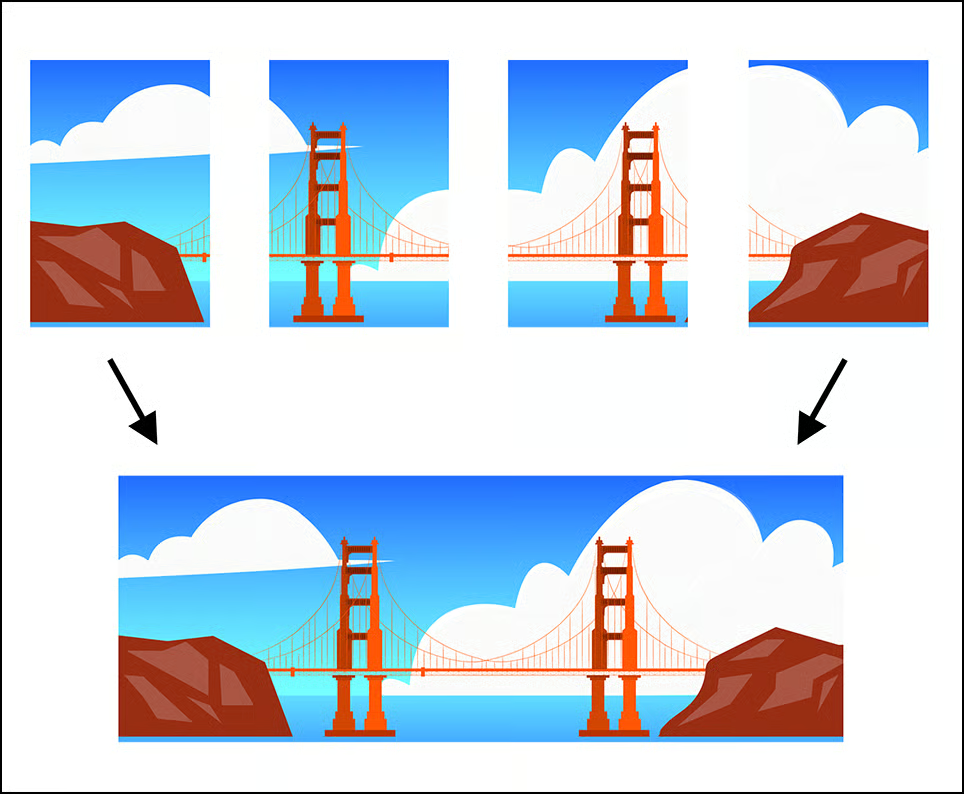
For a solid primer on using a mirrorless camera to shoot and stitch a 360 photo, the Oculus Creator documentation provides clear, platform-agnostic guidance. Read the official 360 photo workflow overview.
Useful Tools & Resources
Software
- PTGui panorama stitching
- Hugin open source panorama tool
- Lightroom / Photoshop for RAW and retouching
- AI tripod removal tools (content-aware fill, generative AI)
Hardware
- Panoramic heads: Nodal Ninja, Leofoto geared pano heads
- Carbon fiber tripods with leveling bases
- Wireless remote shutters and L-brackets
- Pole extensions and car mounts with safety tethers
If you’re new to panoramic heads and nodal-point alignment, this illustrated tutorial is a great start. Panoramic head and no-parallax point tutorial.
Disclaimer: software/hardware names provided for search reference; check official sites for details.
Common Mistakes & How to Avoid Them
- Parallax error → Always rotate around the nodal point using a calibrated pano head.
- Exposure flicker → Use Manual mode, fixed ISO, and locked WB.
- Tripod shadows/footprint → Capture a nadir and patch it in post.
- Ghosting from movement → Shoot two passes; mask the clean frames in post.
- Night noise → Keep ISO low and use longer exposures on a stable tripod; turn off IBIS.
Real-World Scenarios & Field Advice
Indoor Real Estate
Use HDR bracketing ±2 EV at f/8, ISO 100–200. Keep WB consistent around 4000–4500 K for mixed tungsten/LED lighting. Watch for mirrors and glass—position yourself and the camera so you’re not visible, and take an extra “clean” frame to patch reflections.
Outdoor Sunset
Expose for the sky highlights first; capture a second exposure for the foreground if needed and blend. A circular fisheye saves time as the light changes quickly. Consider 1–2 extra frames around the sun to mitigate flare.
Event Crowds
Raise shutter to 1/200–1/500 s and shoot two passes. Ask people to hold still briefly if possible. A fisheye minimizes total frames, reducing the chance of inconsistent subject positions.
Rooftop / Pole Shooting
Check wind, secure tethers, wear a harness if required by site rules. Use 1/500 s+ and avoid very long poles in gusty conditions. If your nadir is inaccessible, plan a graphics patch (brand logo or neutral texture) in post.
Car-Mounted Capture
Use vibration-damped suction mounts, redundant safety lines, and short routes at low speed. Shutter 1/1000 s in bright daylight can help freeze micro-vibrations. Take extra frames to cover stitch breaks caused by moving objects.
Using the Olympus 8mm f/1.8 PRO with the A7R III: Honest Limitations & Alternatives
To be transparent: the Olympus 8mm f/1.8 PRO is designed for Micro Four Thirds and is not practically adaptable to the Sony A7R III. The flange distance difference prevents a simple adapter from maintaining infinity focus, and the lens requires electronic control of focus and aperture. Even if adapted with optics, the lens’s smaller image circle would vignette heavily on full-frame.
Recommended Sony-Compatible Fisheye Options
- Circular fisheye (fastest 360 workflow): Sigma 8mm F3.5 EX DG (via EF–E smart adapter). Expect 4 shots around + nadir/zenith.
- Diagonal fisheye (higher edge resolution): Samyang/Rokinon 12mm f/2.8 Fisheye (E-mount). Expect 6–8 around + nadir/zenith.
- Alternative ultra-wide rectilinear: Laowa 10–12mm Zero-D for minimal distortion lines, but more shots required (10–14 around).
If you own the Olympus 8mm and love its look, pair it with an OM System/ Olympus MFT body for 360 work; the techniques, shot counts (typically 6–8 around on MFT diagonal fisheye), and post steps in this guide still apply.
For a broader overview of DSLR/mirrorless 360 workflows and lens choices, see this in-depth guide. Mirrorless 360 virtual tour camera/lens guide.
Frequently Asked Questions
-
Can I shoot handheld panoramas with the Sony A7R III?
Yes, for casual results. Use high shutter speeds (1/250 s+), lock exposure/WB, and maintain 30% overlap. However, for professional 360s—especially interiors—use a tripod and a panoramic head to eliminate parallax.
-
Is the Olympus 8mm f/1.8 PRO wide enough for single-row 360 on the A7R III?
The lens is not practically compatible with the A7R III. With an equivalent full-frame circular fisheye (8mm), you can do 4 shots around + nadir/zenith. With a 12mm diagonal fisheye, plan on 6–8 around + zenith/nadir.
-
Do I need HDR for interiors with bright windows?
Usually yes. Bracket ±2 EV (3–5 frames) to retain window detail and clean shadows. The A7R III’s dynamic range helps, but bracketing ensures consistent quality across rooms.
-
How do I avoid parallax issues?
Calibrate the no-parallax point on your panoramic head for the specific body and lens. Keep the rig level, rotate only around the nodal point, and avoid moving the tripod between frames.
-
What ISO range is safe on the A7R III in low light?
ISO 100–800 is ideal on a tripod; ISO 1600–3200 is still workable with careful exposure and noise reduction. For critical commercial work, favor lower ISO and longer shutter times.
-
Can I use Custom Shooting Modes for pano on the A7R III?
Yes. Save your pano setup (Manual mode, fixed WB, single-shot, IBIS off, RAW, bracketing on/off) to MR1/MR2 for instant recall.
-
How can I reduce flare with a fisheye?
Avoid direct light sources near the frame edges, shade with your hand just out of frame, and consider a slight rotation or an extra frame to mask flare during stitching.
-
What tripod head is best for this setup?
A dedicated panoramic head with fore-aft and left-right rails for nodal alignment (e.g., Nodal Ninja, Leofoto). For heavy rigs or gigapixels, consider a geared panoramic head.
Advanced Notes: Resolution, Shot Count, and Output
With a full-frame circular fisheye, a 4-around capture produces high coverage with minimal frames. On the 42.4MP A7R III, a well-stitched 4-around + zenith/nadir set typically yields an 8K–12K equirectangular. If you need higher detail (e.g., gigapixel), switch to a diagonal fisheye or rectilinear lens, add rows, and increase overlap. For theoretical resolution planning by lens and sensor, consult the PanoTools wiki. DSLR spherical resolution reference.
Safety & Trust: Don’t Skip This
- Wind and edges: On rooftops or cliffs, anchor your tripod, use a weight bag, and keep a safe perimeter. Never leave the rig unattended.
- Pole/car work: Use redundant safety lines and avoid busy traffic. Do not extend poles near power lines.
- Data integrity: Shoot a backup round. Keep dual-card recording on. After the session, back up to two locations.
- Lens care: Fisheye fronts are exposed. Use a microfiber cloth and a silicone air blower; never rub grit across the element.
Extra Media & Further Study
Want to see another take on panoramic head setup and theory from a different perspective? The Oculus panoramic head setup principles are worth a read. Panoramic head setup principles.