Why This Camera & Lens Are Great for Panoramas
If you’re wondering how to shoot panorama with Sony A7R III & Laowa 8–15mm f/2.8 FF Zoom Fisheye, you’ve picked a powerhouse combo. The Sony A7R III’s 42.4MP full-frame BSI CMOS sensor (7952×5304 px, ~4.5 µm pixel pitch) delivers excellent detail and dynamic range (around 14+ stops at base ISO). Its 5-axis IBIS helps for handheld frames and windy days, while robust bracketing and reliable battery life support longer sessions. The Laowa 8–15mm is a manual-focus, manual-aperture fisheye zoom that can switch from an 8mm circular fisheye (~180–185° coverage) to a 15mm diagonal fisheye (~180° diagonal). That flexibility lets you choose between fast capture (fewer shots at 8–10mm) and higher resolution (more shots at 12–15mm). On Sony FE mount, it’s a native fit; no adapters, no hassle.
Fisheye distortion is expected, but for 360 photo stitching it’s actually a benefit: you need fewer frames and get robust control points. Edge sharpness improves stopped down to f/5.6–f/8. Lateral chromatic aberration is present (as with most fisheyes) but easily corrected in post. With the A7R III’s clean ISO 100–800 range and excellent RAW latitude, this setup works for real estate, travel, events, and even pole/rooftop shots where you want a complete 360×180° sphere quickly and reliably.
Quick Setup Overview
- Camera: Sony A7R III (ILCE-7RM3) — Full-frame 35mm sensor, 42.4MP; base ISO 100–ISO 32000; ~14.7 EV dynamic range at ISO 100; 5-axis IBIS.
- Lens: Laowa 8–15mm f/2.8 FF Zoom Fisheye — manual focus/aperture fisheye zoom; circular fisheye at 8mm (~180–185°), diagonal fisheye at 15mm (~180° diagonal). Best sharpness at f/5.6–f/8; moderate lateral CA typical for fisheye.
- Estimated shots & overlap (tested, 30–35% overlap):
- 8mm (circular): 3 around (120° apart) + 1 zenith + 1 nadir. For safer coverage, 4 around (90°) + Z + N.
- 10–12mm: 4–5 around + Z + N.
- 15mm (diagonal): 6 around (60°) + Z + N.
- Difficulty: Medium (easy capture with fisheye; moderate post for nadir cleanup).
Planning & On-Site Preparation
Evaluate Shooting Environment
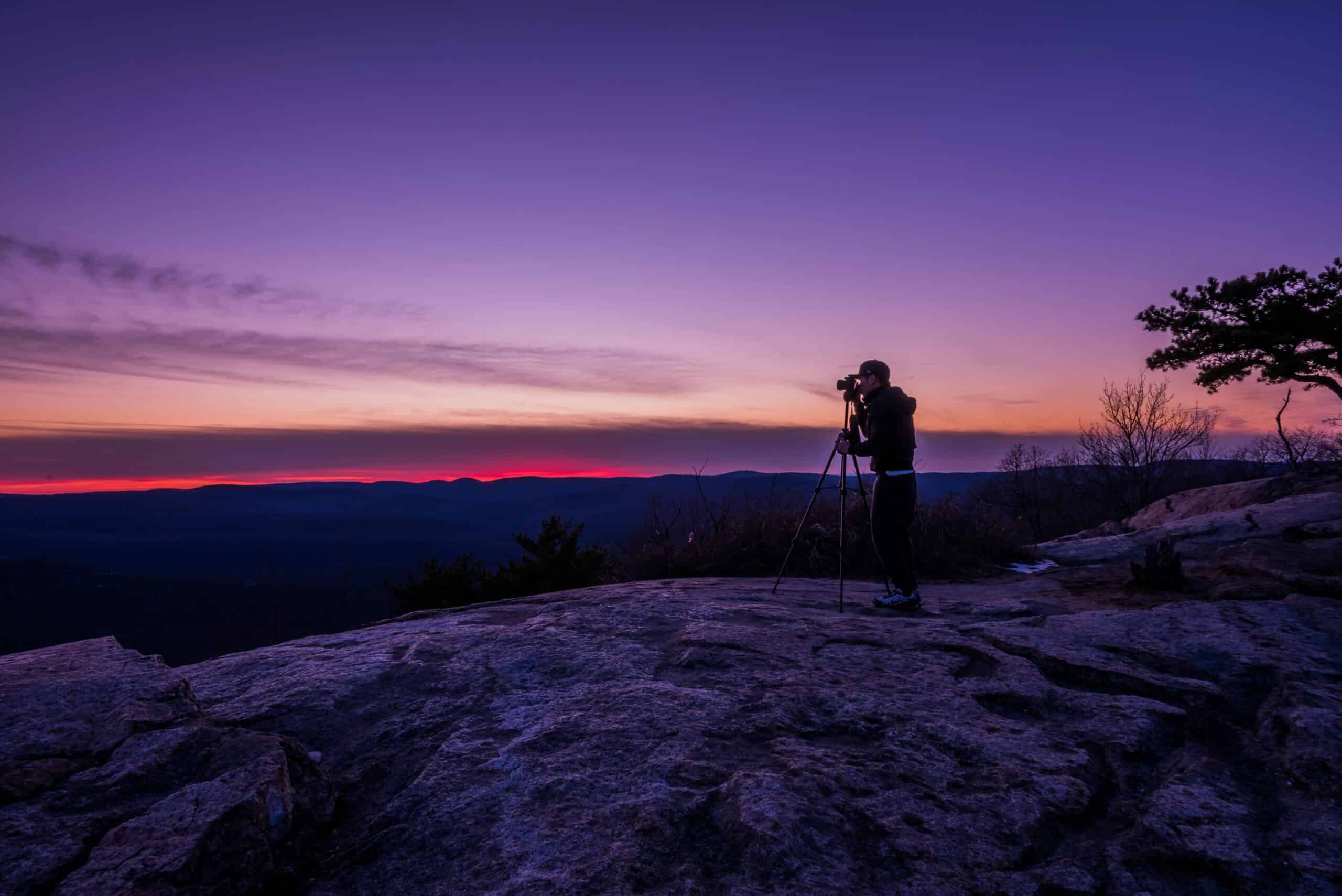
Walk the scene and note light direction, moving elements (people, trees, traffic), reflective surfaces (glass, polished floors), and potential flare sources (sun, street lamps). If shooting through glass, keep the front element as close as safely possible (within a few centimeters) to reduce reflections; use a rubber lens hood only if it doesn’t vignette the fisheye view. For sunsets or night cityscapes, plan for bracketing to balance highs and lows, and ensure your tripod is on solid ground, away from vibration sources.
Match Gear to Scene Goals
The A7R III’s RAW files tolerate pushing shadows and pulling highlights, so you can safely shoot at ISO 100–400 outdoors and 400–800 in dim interiors without banding or heavy chroma noise. The Laowa fisheye reduces shot count, making it ideal for crowds or windy rooftops, but be mindful of lens flares; fisheyes see everything. When you need more resolution (architecture, print work), zoom toward 15mm and shoot more frames; when speed is critical (events, pole shots), favor 8–10mm.
Pre-shoot Checklist
- Charge batteries; carry spares. Use fast, high-capacity UHS-II SD cards.
- Clean lens front element and camera sensor. Fisheyes magnify dust and smudges.
- Level tripod and calibrate your panoramic head’s nodal/entrance pupil for the chosen focal length.
- Safety: secure straps on rooftops; use windswept precautions on poles; double-check car mounts and tethers.
- Backup workflow: shoot a second full round if time permits; it saves projects when a frame is soft or missed.
Essential Gear & Setup
Core Gear
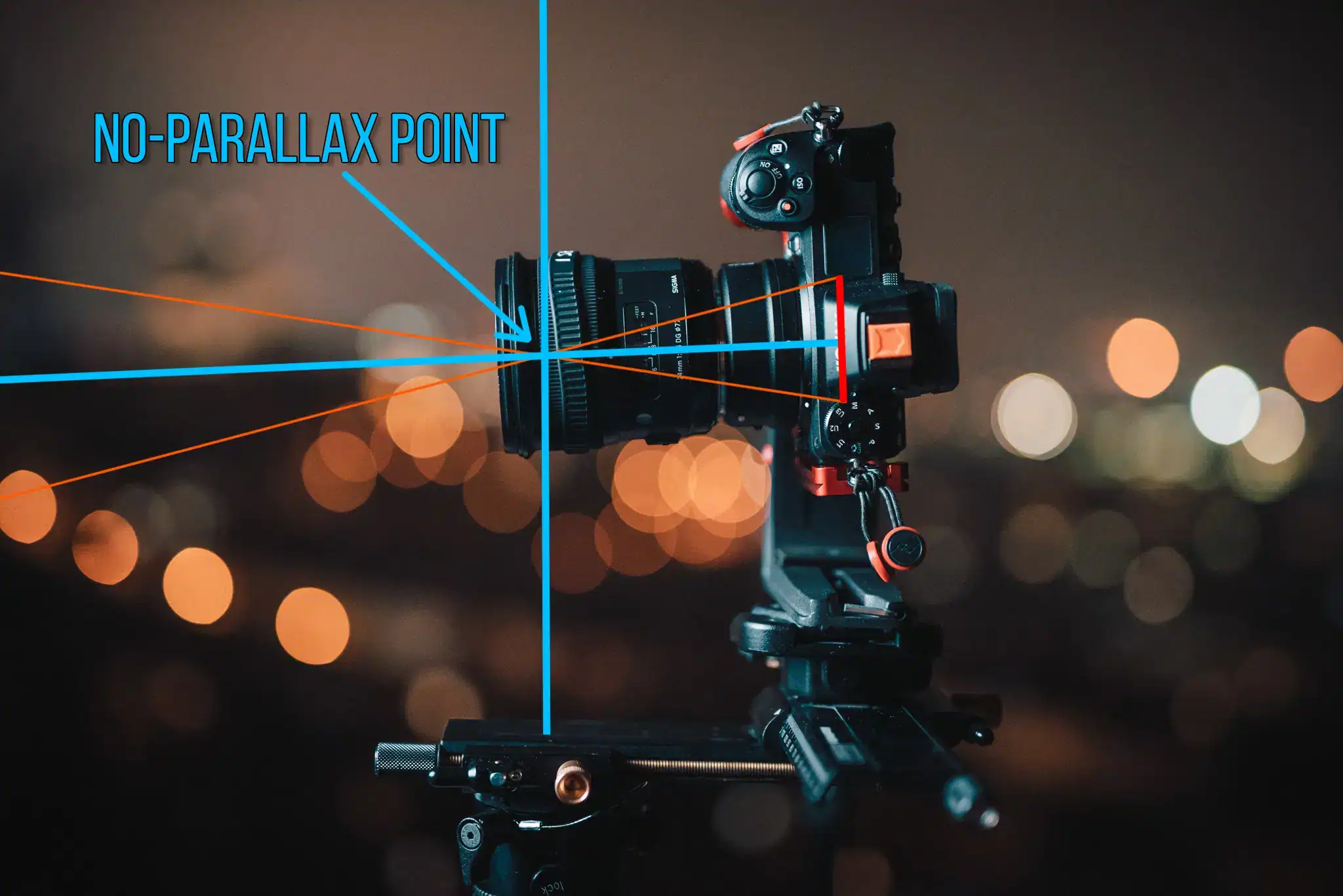
- Panoramic head: Lets you rotate around the lens’s entrance pupil (nodal point). This removes parallax so foreground/background lines stitch cleanly. Calibrate once for 8mm, 10/12mm, and 15mm, and mark the rails.
- Stable tripod with leveling base: A bubble level or half-ball base speeds setup and keeps horizons level.
- Remote trigger or app: Use Sony Imaging Edge Mobile, a wired release, or the 2s/5s self-timer to avoid vibrations.
Optional Add-ons
- Pole or car mount: Use stainless safety cables, redundant suction mounts, and wind awareness. Fisheyes magnify motion blur; keep shutter speeds high.
- Lighting aids: Small LED panels for dim interiors; avoid mixing color temperatures or lock WB and correct later.
- Weather protection: Rain cover, microfiber cloths; fisheyes catch drizzle spots fast.
Want a deeper primer on aligning a panoramic head correctly? See this excellent step-by-step guide on setting up a panoramic head for high-end 360 photos. How to set up a panoramic head for perfect 360 photos
Video walkthrough
Prefer to learn visually? Here’s a concise video overview of panoramic shooting workflow:
Step-by-Step Shooting Guide
Standard Static Scenes
- Level the tripod and align the nodal point. Use two light stands or a simple “near/far” test: place a light stand 0.5–1 m in front, align it with a distant vertical edge, and rotate the camera. Adjust the fore-aft rail until the two stay aligned during rotation.
- Switch to Manual mode. Set aperture (often f/8 for best sharpness), shutter for proper exposure, and ISO 100–200 outdoors or 400–800 indoors. Turn off Auto ISO and lock white balance (Daylight, Tungsten, or custom K value).
- Focus: The Laowa is manual. Enable focus peaking and use magnified live view. For 8–10mm at f/8, set focus around 0.5–1 m (hyperfocal) to hold everything sharp. For 15mm at f/8, ~1 m is a great set-and-forget point.
- Capture the round. At 8mm, shoot 3–4 images around at 120°/90° spacing. At 12–15mm, capture 5–6 around at 60–72° spacing. Keep at least 30% overlap.
- Zenith and nadir: Tilt up for a clean sky/ceiling frame and down for the ground. Take an extra nadir after shifting the tripod out of the frame if your pano head allows (or plan to patch).
HDR / High Dynamic Range Interiors
- Bracket for windows vs shadows. Use ±2 EV with 3–5 frames or Sony’s 5–9 frame bracketing for complex lighting. Keep exposure consistent across the round.
- Lock WB and focus. Do not change aperture between brackets; avoid aperture-induced focal shifts.
- For speed, shoot one bracketed series per yaw position before rotating.
Low-Light / Night Scenes
- Use a solid tripod and remote release. On the A7R III, turn IBIS off when on a tripod to prevent micro-blur; use Electronic First Curtain Shutter to reduce shock.
- ISO: 100–400 for maximum quality if shutter can be slowed; 800–1600 is acceptable with careful noise reduction. Avoid very high ISO unless motion requires it.
- Watch for light flicker. Avoid Silent Shutter under PWM lighting to prevent banding; stick with EFCS.
Crowded Events
- Favor wider focal lengths (8–10mm) to minimize frame count. Use 1/200–1/250s shutter to freeze motion.
- Shoot two passes: one quick for coverage, another while waiting for gaps. Later, mask moving people between passes.
Special Setups (Pole / Car / Drone)
- Pole: Safety first. Use a tethered pole and secure at least one strap to your harness. Rotate more slowly to avoid sway; pick 8–10mm to reduce total frames.
- Car-mounted: Use multiple suction cups and safety cables. Shutter speeds 1/1000s+ if moving. Plan a clean background area to reduce parallax complexity.
- Drone: This lens is not drone-friendly due to weight and form factor; consider native drone panoramas or lighter primes.
Recommended Settings & Pro Tips
Exposure & Focus
| Scenario | Aperture | Shutter | ISO | Notes |
|---|---|---|---|---|
| Daylight outdoor | f/8–f/11 | 1/100–1/250 | 100–200 | Lock WB (Daylight); IBIS off on tripod |
| Low light/night | f/4–f/5.6 | 1/30–1/60 (tripod) | 400–800 (up to 1600) | Use remote; EFCS; avoid Silent Shutter under PWM lights |
| Interior HDR | f/8 | Bracket ±2 EV | 100–400 | Consistent WB across the round; merge HDR before stitching |
| Action / moving subjects | f/5.6–f/8 | 1/200+ | 400–800 | Fast pass; mask motion in post |
Critical Tips
- Manual focus at hyperfocal: Around 0.5–1 m at 8–10mm f/8; ~1 m at 15mm f/8 covers to infinity.
- Nodal calibration: For the Laowa, the entrance pupil sits roughly near the aperture plane; calibrate precisely by near/far alignment and mark your rails for 8/10/12/15mm.
- White balance lock: Prevent color shifts across frames. Shoot a gray card and set a custom Kelvin if the light is mixed.
- RAW over JPEG: The A7R III’s RAW files give you far more latitude for HDR and color work.
- IBIS off on tripod: In-body stabilization can introduce blur when the camera is already stable.
- Avoid polarizers: With ultra-wide FOV, uneven skies are common; better to balance in post.
Stitching & Post-Processing
Software Workflow
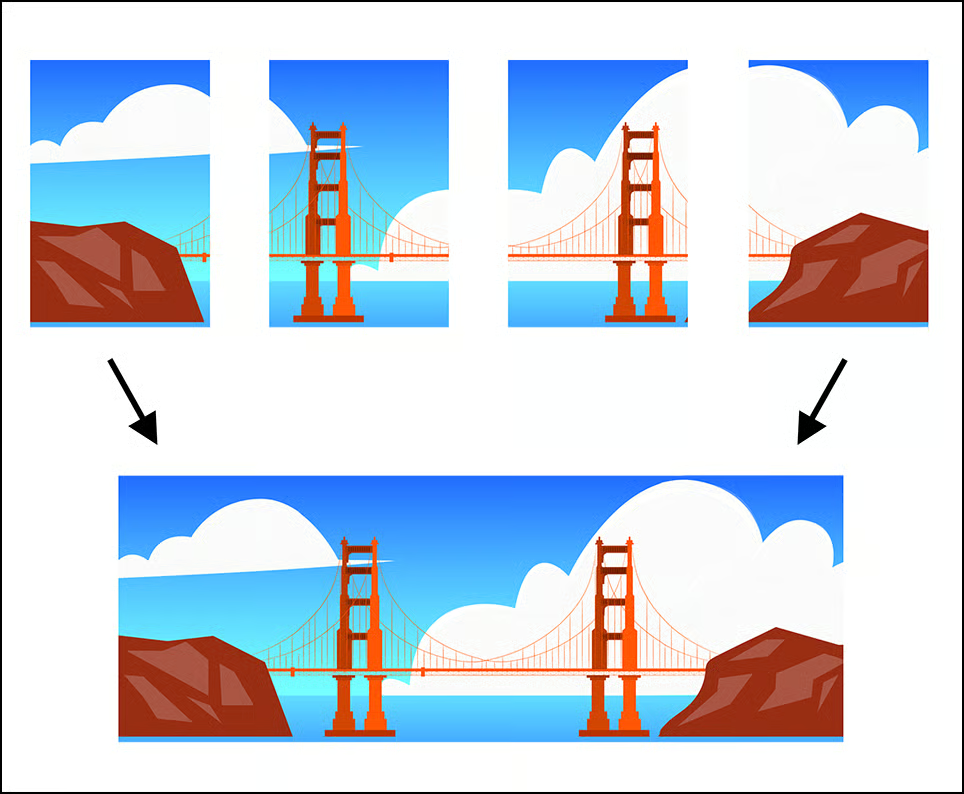
For this fisheye combo, PTGui and Hugin are top choices. Import all frames and set lens type to Fisheye; PTGui can auto-detect projection but try Equidistant or Equisolid Angle if needed. Ensure your EXIF focal length matches your zoom position (8, 10, 12, 15mm). Create and optimize control points; fisheyes make this easy with strong overlaps. For HDR sequences, either pre-merge HDR per yaw angle in Lightroom/Adobe Camera Raw, then stitch, or use PTGui’s built-in exposure fusion/true HDR. Industry guidelines: use ~25–35% overlap for fisheyes; 20–25% for rectilinear lenses. After optimization, use the “Level horizon” and “Viewpoint correction” tools as needed, then render an equirectangular output (2:1 ratio) for VR or web viewers. A thorough review of PTGui’s capabilities can help you choose settings smartly. PTGui review and workflow insights
Cleanup & Enhancement
- Nadir cleanup: Patch the tripod using a separate nadir shot or clone/heal in Photoshop. AI tools can speed this up.
- Color and noise: Balance white balance across the pano, apply subtle noise reduction for high ISO frames.
- Leveling: Use the pitch/roll/yaw sliders to keep horizons true; ensure straight verticals for architecture.
- Export: For web, 8K equirect (8000×4000) is a great balance; for print or high-end tours, 12K+ if your coverage supports it.
To understand how focal length and sensor resolution affect final spherical resolution, see the PanoTools wiki. Estimate spherical/equirectangular resolution
Useful Tools & Resources
Software
- PTGui panorama stitching
- Hugin (open source)
- Lightroom / Photoshop / Affinity Photo
- AI tripod/nadir removal tools
Hardware
- Panoramic heads (Nodal Ninja, Leofoto, Really Right Stuff)
- Carbon fiber tripods with leveling base
- Wireless remote shutters (or Sony Imaging Edge Mobile)
- Pole extensions / car mounts (with safety tethers)
For a visual primer on pano heads and nodal alignment, this walkthrough is helpful. Panoramic head tutorial
Common Mistakes & How to Avoid Them
- Parallax error → Align the entrance pupil carefully and use a proper panoramic head.
- Exposure flicker → Shoot full manual, lock WB, and keep settings constant across the round.
- Tripod in the frame → Capture an offset nadir frame or plan to patch the nadir in post.
- Ghosting from movement → Take a second pass and mask moving subjects during stitching.
- Night noise → Use lower ISO with longer exposures on tripod and apply gentle noise reduction.
- Flare with fisheye → Shield the lens from direct sun with your hand (outside frame) and avoid strong backlights when possible.
Real-World Use Cases
Indoor Real Estate (Tight Rooms)
Use 8–10mm for minimal frames. Shoot 4 around + Z + N with ±2 EV bracketing for windows. WB locked to a custom Kelvin (e.g., 4000K if mixed tungsten/LED). Manual focus ~0.7 m at f/8 keeps furniture and walls sharp. Nadir patch later to remove tripod.
Outdoor Sunset Cityscape
Go 12–15mm for more resolution. 6 around + Z + N, bracket ±2 EV. ISO 100–200 with 1/100–1/250s if wind is calm; otherwise increase ISO to 400. Watch flare; shade the lens between frames if the sun is near the edge.
Event with Crowds
Pick 8–10mm to limit frames. 1/250s, ISO 400–800, f/5.6–f/8. Do a quick sweep for coverage, then slow pass to catch moments with fewer people between frames. Later, blend best pieces for a cleaner stitch.
Rooftop/Pole Shooting
Use a carbon pole and tether. Shoot 8–10mm to reduce total frames at height. Increase shutter speed (1/250–1/500s), ISO 400–800. Rotate slowly and evenly to avoid sway; keep your body as a wind damper.
Car-Mounted Capture
Redundant suction cups plus a leash; test at low speed first. Use 8mm circular to minimize shots during stops. If moving, push shutter to 1/1000s+ and set continuous drive; stitch only when the car is stationary or use stabilized rigs.
Field Visuals
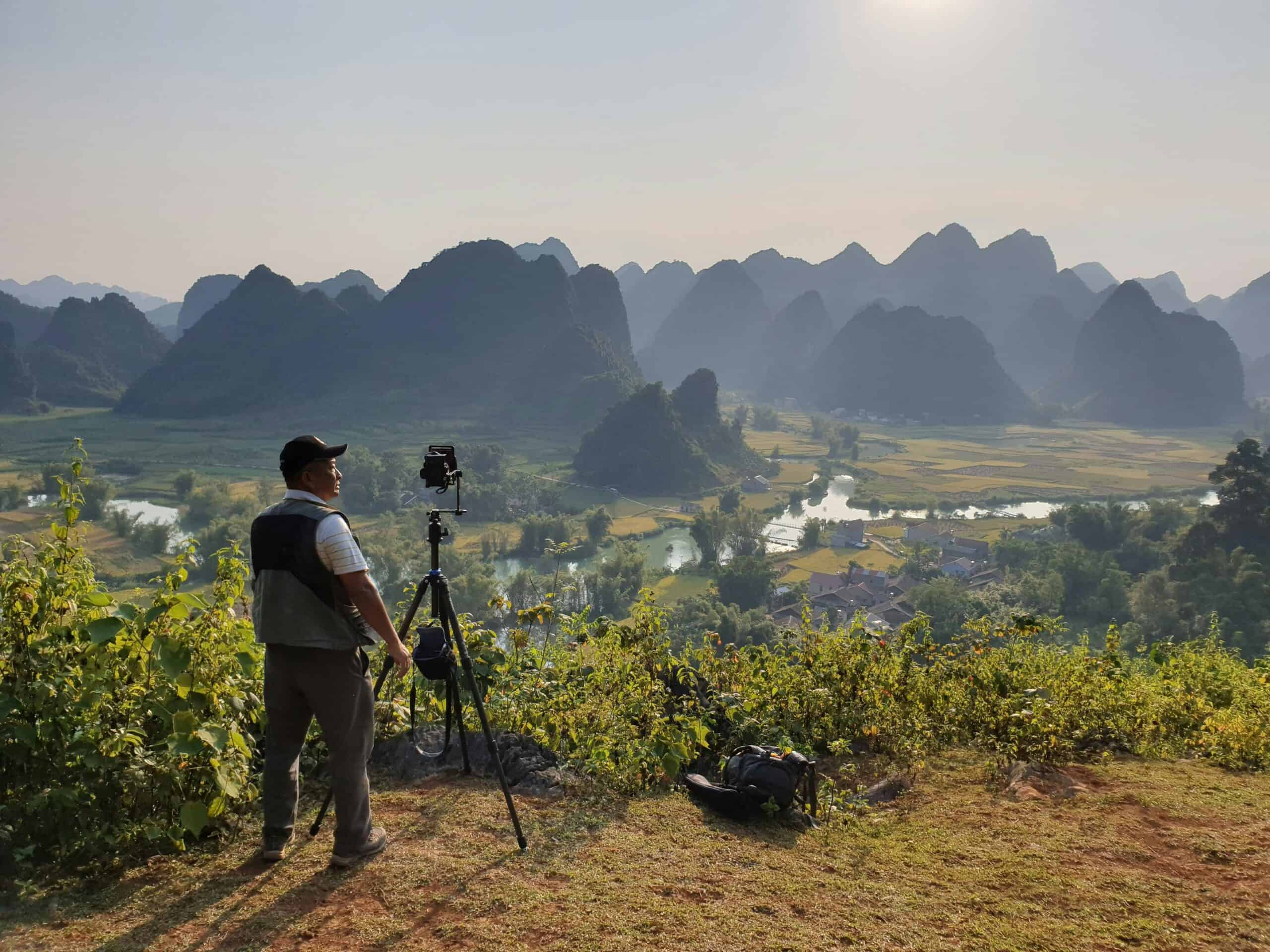
Safety, Quality, and Backup
Always prioritize stability and safety. On rooftops, clip in; on poles, use wrist straps and tethers; with car mounts, double up on suction and lines. The A7R III is weather resistant, but the fisheye’s bulbous front element is exposed—keep a microfiber handy and avoid rain droplets at all costs.
For data safety, use dual card slots (slot 1: RAW, slot 2: JPEG or RAW backup), and back up to a laptop or portable SSD after each location. When time allows, run a second capture round to cover any missed frames or soft shots—this is a professional lifesaver.
Frequently Asked Questions
- Can I shoot handheld panoramas with the Sony A7R III?
Yes, but expect more alignment work. Use 8–10mm, keep 30–40% overlap, and maintain a steady pivot from your waist. IBIS helps a little, but a tripod with a pano head is strongly recommended for clean nadir/zenith and parallax-free stitches.
- Is the Laowa 8–15mm wide enough for a single-row 360?
Absolutely. At 8–10mm, you can do 3–4 frames around plus zenith and nadir. At 15mm, plan for ~6 around plus Z/N. Fisheye coverage simplifies 360 capture compared to rectilinear lenses.
- Do I need HDR for interiors with bright windows?
In most real estate interiors, yes. Bracket ±2 EV (3–5 frames) to retain window views and clean shadows. Merge HDR per yaw position before stitching for consistent tonality.
- How do I avoid parallax issues with this lens?
Use a panoramic head and align the entrance pupil. Calibrate by aligning a near object with a far object and adjusting the fore-aft rail until there’s no relative shift while rotating. Save positions for 8/10/12/15mm on your rail.
- What ISO range is safe on the A7R III in low light?
ISO 100–400 is ideal for maximum dynamic range. ISO 800–1600 remains very usable with mild noise reduction. For critical work on a tripod, prefer longer shutter times rather than pushing ISO above 1600.
Wrap-up: Mastering How to Shoot Panorama with Sony A7R III & Laowa 8–15mm
This combo shines because it’s versatile and dependable: the A7R III delivers high-resolution, flexible RAWs, while the Laowa fisheye minimizes shot count or boosts detail as needed. Lock your exposure, white balance, and focus; nail nodal alignment; and capture consistent overlap. In post, rely on PTGui/Hugin and a careful nadir patch to produce seamless equirectangular images. For more DSLR/mirrorless 360 guidance, this overview from Meta’s Creator portal is a solid complement to your workflow. Using a DSLR/mirrorless to shoot and stitch a 360 photo