Why This Camera & Lens Are Great for Panoramas
The Sony A7R III paired with the 7Artisans 10mm f/2.8 II Fish-Eye is a powerful, budget-friendly setup for 360° panoramas and VR photos. The A7R III’s 42.4MP full-frame back-illuminated CMOS sensor (approx. 35.9×24mm) delivers excellent detail and dynamic range (about 14.7 EV at base ISO), while 14-bit RAW and a strong color pipeline preserve subtle tones across a stitch. Pixel pitch is around 4.5 µm, which means very fine detail is captured — handy for high-resolution equirectangular outputs (8K–16K wide) and clean sky gradients.
The 7Artisans 10mm f/2.8 II is a manual, full-frame diagonal fisheye designed to cover 180° diagonally (approx. 150° horizontal). As a fisheye, it dramatically reduces the number of shots needed versus rectilinear ultrawides, speeding up capture and lowering seam risk in moving scenes. It’s sharpest around f/5.6–f/8, with some typical fisheye characteristics to manage: strong curvature, susceptibility to flare near the sun, and lateral CA at the edges. On a calibrated panoramic head, this combo can produce clean, high-res 360 photos with fewer frames, faster shooting, and robust stitching in PTGui or Hugin. If you’re searching how to shoot panorama with Sony A7R III & 7Artisans 10mm f/2.8 II Fish-Eye, this guide covers end-to-end setup, shooting, and post.
Quick Setup Overview
- Camera: Sony A7R III — Full-frame 42.4MP BSI sensor; 14-bit RAW; effective IBIS (5-axis). Excellent DR at ISO 100–200, usable up to ISO 1600 for static tripod panoramas.
- Lens: 7Artisans 10mm f/2.8 II Fish-Eye — Full-frame diagonal fisheye with manual focus/aperture. Best across frame at f/5.6–f/8. Expect mild CA and flare; hood helps.
- Estimated shots & overlap:
- Safe: 6 shots around (every 60°) + 1 zenith + 1 nadir (≈30% overlap).
- Fast pass (open skies/clean lines): 4 shots around (every 90°) + zenith + nadir (higher risk of stitching stress indoors).
- Difficulty: Easy–Intermediate. Fisheye simplifies coverage; nodal alignment and nadir patching add moderate complexity.
Planning & On-Site Preparation
Evaluate Shooting Environment
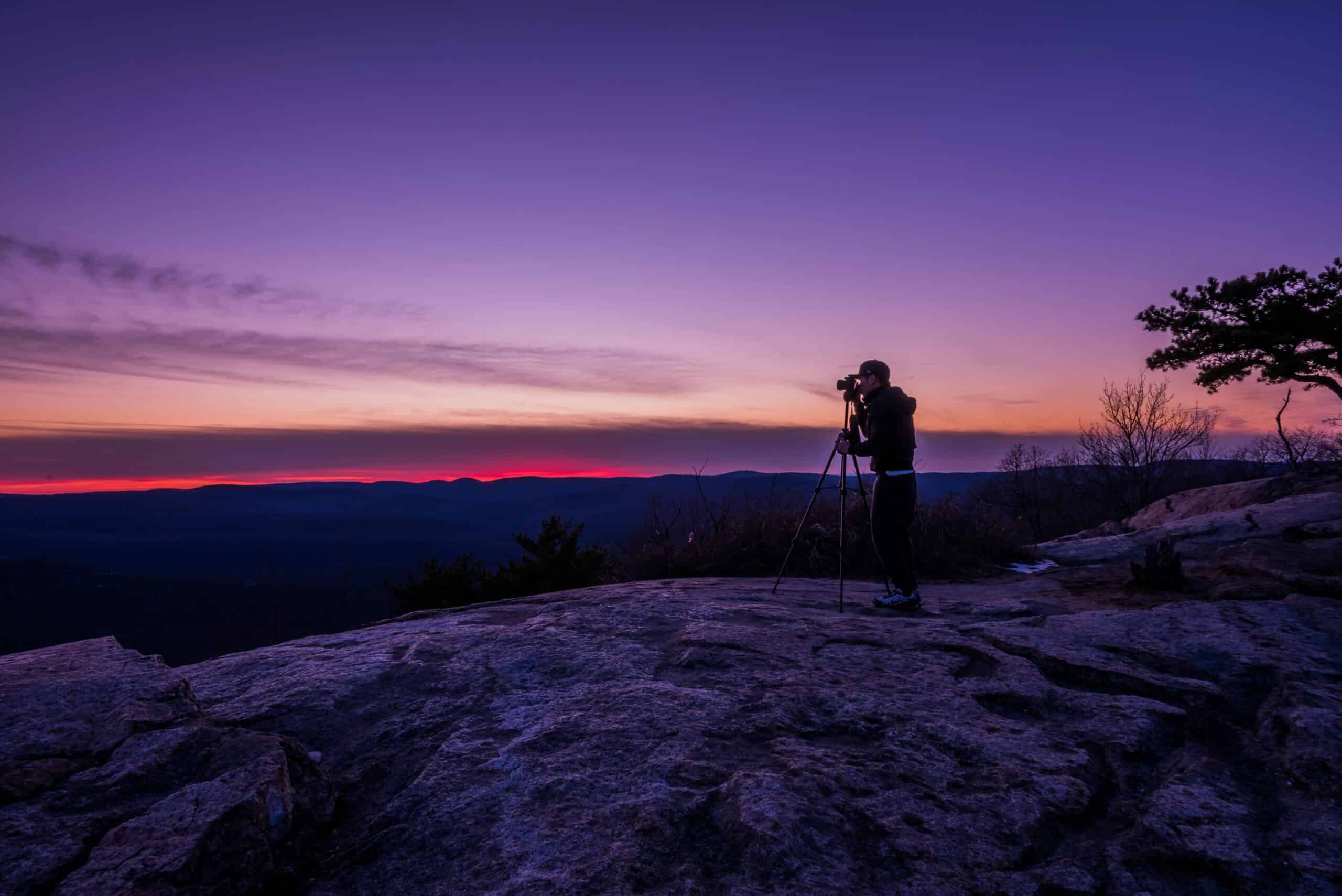
Look for moving elements (crowds, traffic, trees in wind), reflective surfaces (glass, polished floors), and bright light sources that can cause flare. If shooting through glass, get the lens close (1–2 cm) and use a cloth hood to block reflections. Check for obstacles that might intrude into the fisheye field. For sunsets or interiors with windows, note the wide dynamic range: plan bracketing to preserve highlights while keeping shadows clean.
Match Gear to Scene Goals
The A7R III’s dynamic range and color depth excel at sunsets, night cityscapes, and real estate interiors. You can confidently bracket ±2 EV (3–5 frames) for HDR panoramas without banding or color shifts when processed in 14-bit RAW. The 7Artisans 10mm fisheye minimizes shot count — perfect for time-critical scenarios (busy streets, events). The tradeoff is distortion at the edges, but a good stitcher handles fisheye projection natively. Indoors, stick to 6-around to ensure enough overlap around furniture and corners; outdoors you can attempt 4-around for speed.
Pre-shoot Checklist
- Power & storage: 2–3 full batteries; high-speed, large-capacity SD cards (UHS-II recommended).
- Optics: Clean lens and sensor; pack a blower and microfiber cloth.
- Support: Leveling base on tripod; panoramic head calibrated for nodal point with this lens.
- Camera setup: Manual exposure, manual white balance, manual focus; IBIS OFF on tripod.
- Safety: Wind forecast; rooftop edges; secure tethers on poles/car mounts; traffic awareness.
- Backup workflow: Shoot a second pass or an extra ring as insurance, especially in client work.
Essential Gear & Setup
Core Gear
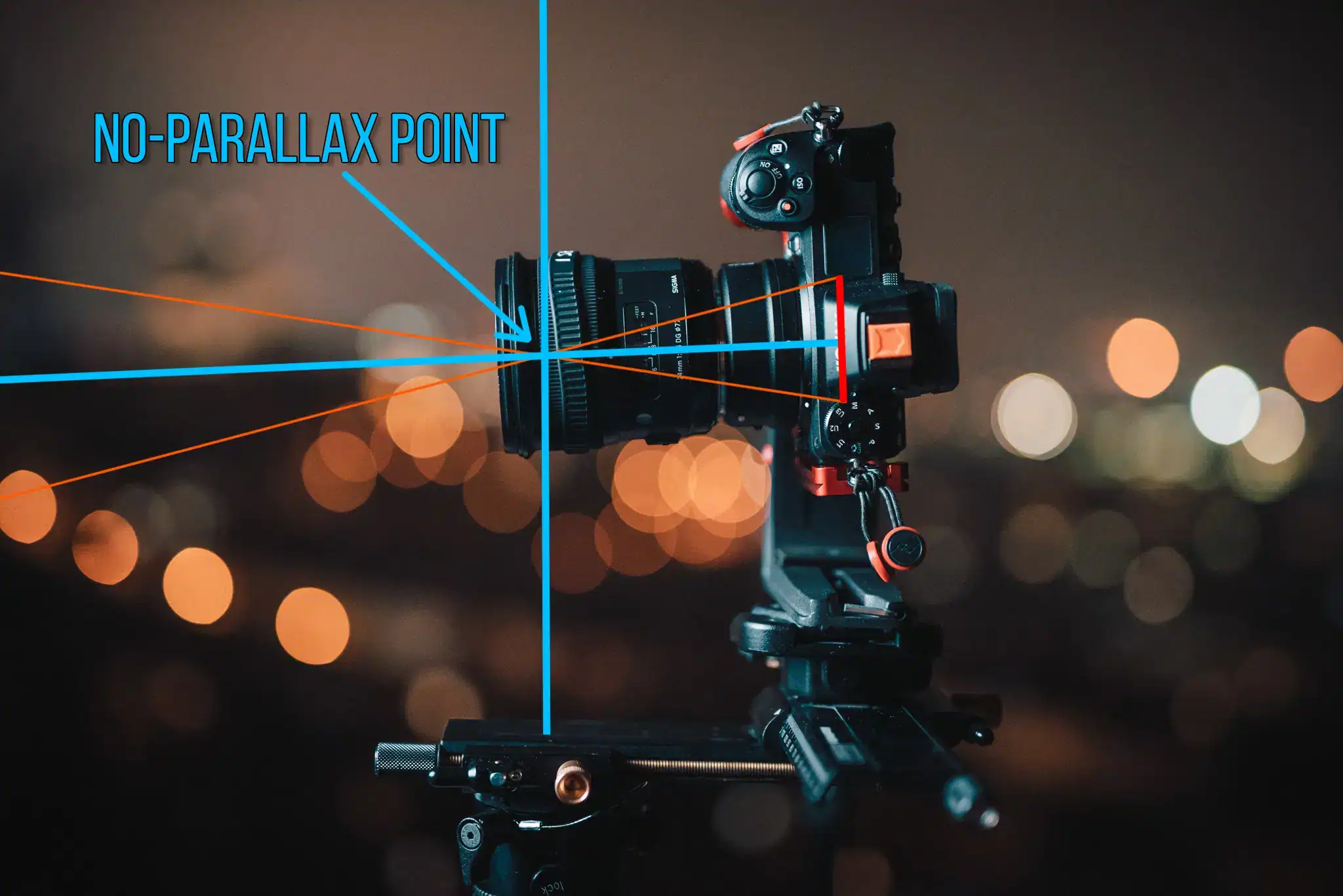
- Panoramic head: Enables precise yaw rotation around the lens’s entrance pupil (nodal point) to eliminate parallax. This is vital when foreground elements are within a few meters.
- Stable tripod with leveling base: Level the base, not the head, so the camera stays level through the entire rotation.
- Remote trigger or app: Use the Sony Imaging Edge app or a wired remote to avoid touching the camera and introducing vibrations.
Optional Add-ons
- Pole or car mount: For elevated or moving shots. Always tether gear, minimize rotations, and account for wind flex and vibrations.
- Lighting aides: LED panels for interior shadows; gels to balance mixed color temperatures.
- Weather protection: Rain covers, silica gel packs, and lens hoods to manage flare and drizzle.
Nodal Alignment, Practically
Place a light stand 0.5–1.0 m in front of the lens and a vertical line (door frame, window edge) several meters behind. Rotate the camera on the pano head and adjust the fore-aft slider until the front object doesn’t shift relative to the background. Mark that position on your rail for the 7Artisans 10mm. Because this lens is manual, the entrance pupil varies slightly with focus; calibrate at the focusing distance you typically use (for 360s, set the lens at hyperfocal and calibrate there).
Want a visual deep dive into panoramic heads and NPP? See this illustrated panoramic head tutorial at 360Rumors for additional techniques and diagrams. Panoramic head tutorial by 360Rumors
Step-by-Step Shooting Guide
Standard Static Scenes
- Level tripod and head: Level the base with your leveling bowl or base. Confirm with the virtual horizon in the A7R III if needed.
- Set exposure and WB manually: Meter the brightest side of the scene you want to keep detail in. Example daylight: ISO 100, f/8, 1/200s. Set WB to Daylight or a fixed Kelvin value (e.g., 5200K) to prevent color shifts across frames.
- Focus: Set the 7Artisans to f/8, then focus at the hyperfocal distance (~0.5 m). Switch to manual focus and don’t touch it afterward.
- Capture sequence:
- 6-around: Start at 0°, then 60°, 120°, 180°, 240°, 300°.
- Zenith: Tilt up 90° for the ceiling/sky shot.
- Nadir: Tilt down 90°; shoot one centered shot, plus a second offset shot if you plan to patch out the tripod.
- Use a 2s timer or remote: The A7R III’s EFCS minimizes shutter shock; avoid Silent Shutter under flickering lights to prevent banding.
HDR / High Dynamic Range Interiors
- Bracket ±2 EV (3–5 frames): The A7R III supports up to 9-frame bracketing; 3–5 is usually sufficient for interiors with windows. Keep WB locked.
- Capture method: Use continuous bracket with a remote to step through each yaw position without touching the camera.
- Stitching consideration: You can either merge HDR first per angle and then stitch, or stitch first and blend exposures in the stitcher (PTGui supports exposure fusion and HDR).
Low-Light / Night Scenes
- Exposure: f/4–f/5.6, ISO 400–800, and longer shutters (1–8 seconds) depending on ambient light. The A7R III handles ISO 800–1600 well; prefer lower ISO on tripod to keep stitching noise uniform.
- Stability: Turn OFF IBIS on tripod. Use a remote or 2s timer. Wind can move trees; shoot during lulls to reduce ghosting.
- Noise control: Keep Long Exposure NR off and handle noise in post so bracketed frames stay consistent.
Crowded Events
- Two-pass strategy: First pass quickly captures the full coverage; second pass repeats frames when gaps in the crowd appear.
- Shutter speed: Use 1/200s+ at f/5.6–f/8, ISO 400–800 to reduce motion blur of people.
- Masking: In PTGui, use masks to favor frames with fewer people in overlapping regions.
Special Setups (Pole / Car / Elevated)
- Secure gear: Use a safety tether and a rigid pole or suction-cup system rated for your load. Keep rotations slow and deliberate.
- Vibration control: On vehicles, increase shutter speed (1/500s+) and consider higher ISO (800–1600). Avoid IBIS on a rigid mount but consider it handheld if no rigid stabilization is feasible.
- Aim and sweep: With fisheye coverage, maintain consistent overlap even if slight sway occurs. Review for gaps and reshoot if necessary.
A concise, visual walkthrough of setting up a panoramic head and capturing clean 360° frames helps cement the steps above.
Recommended Settings & Pro Tips
Exposure & Focus
| Scenario | Aperture | Shutter | ISO | Notes |
|---|---|---|---|---|
| Daylight outdoor | f/8–f/11 | 1/100–1/250 | 100–200 | Lock WB (Daylight ~5200K) |
| Low light/night | f/4–f/5.6 | 1/30–8s | 400–800 | Tripod & remote; IBIS OFF on tripod |
| Interior HDR | f/8 | Bracket ±2 EV | 100–400 | Expose to protect window highlights |
| Action/motion | f/5.6–f/8 | 1/200+ | 400–800 | Double-pass and mask in post |
Critical Tips
- Manual focus at hyperfocal: With 10mm at f/8, hyperfocal ≈ 0.5 m. Focus there and tape the ring.
- Nodal calibration: Calibrate at your working focus distance; mark the rail for the 7Artisans 10mm so you can return to it quickly.
- White balance lock: Avoid AWB shifts across frames. Choose Kelvin or a fixed preset and keep it consistent.
- RAW over JPEG: Shoot 14-bit RAW to maximize dynamic range and color uniformity in stitching.
- IBIS and shutter mode: Turn OFF IBIS on tripod; use EFCS to reduce shutter shock; avoid silent shutter under artificial light to prevent banding.
- Custom modes: Store pano settings on the A7R III’s Recall Custom Hold or Memory (1/2) for faster setup.
Stitching & Post-Processing
Software Workflow
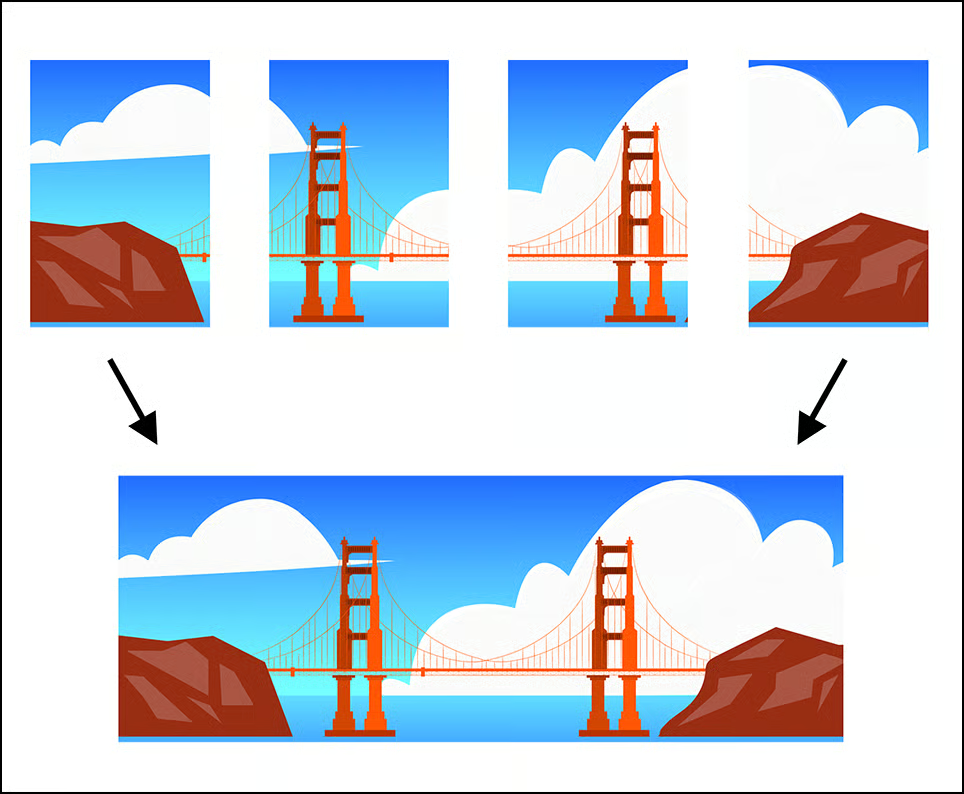
Import RAWs into Lightroom for initial culling, lens corrections off (for fisheye), and global white balance. Then export 16-bit TIFFs to a stitcher. In PTGui, set lens type to “Full-frame fisheye,” focal length 10mm, and let the optimizer estimate FOV if needed. Add control points (auto CPs usually suffice), then check the optimizer report; aim for mean CP error below ~1 pixel. Hugin can achieve similarly excellent results with careful CP placement and optimizer settings; Lightroom/Photoshop can stitch but give you fewer fisheye-specific controls. For fisheye panoramas, 25–35% overlap is a good starting point, whereas rectilinear lenses often prefer 20–25% overlap due to less distortion. For a practical overview of why PTGui excels for complex fisheye stitches, see this review. Why PTGui is the go-to for complex panoramas
Cleanup & Enhancement
- Nadir patch: Use PTGui’s Viewpoint correction or export a patchable layer to Photoshop. Heal/clone or insert a branded patch.
- Color and tone: Balance WB, match exposure across frames if needed, and apply gentle global contrast. Apply noise reduction on shadows for night shots.
- Horizon leveling: Use the stitcher’s horizon tool to correct roll/yaw/pitch and ensure a comfortable viewer experience in VR.
- Output: Export 8K (8192×4096) for the web; 12–16K for premium tours/printing. Use JPEG (quality 10–12) for web and 16-bit TIFF/EXR if further grading is planned.
Publishing for VR? Oculus’s creator guide explains DSLR/mirrorless 360 pipelines and export considerations for immersive platforms. Using a mirrorless camera to shoot and stitch a 360 photo (Oculus)
Note: Always check the latest versions of your software for updated features and workflows.
Useful Tools & Resources
Software
- PTGui panorama stitching
- Hugin (open source)
- Lightroom / Photoshop for RAW development and retouch
- AI tripod/nadir removal tools
Hardware
- Panoramic heads (Nodal Ninja, Leofoto, Sunwayfoto)
- Carbon fiber tripods with leveling base
- Wireless remote shutters (Sony or third-party)
- Pole extensions and vehicle mounts with safety tethers
Disclaimer: product names are for reference — check the official sites or manuals for specs and compatibility.
For broader context on DSLR/virtual-tour gear choices and techniques, this guide is a helpful overview. DSLR & lens guide for virtual tours
Common Mistakes & How to Avoid Them
- Parallax error → Always align the entrance pupil over the rotation axis and lock it down.
- Exposure flicker → Manual exposure and fixed white balance; avoid auto ISO and AWB.
- Tripod shadows and footprints → Capture a clean nadir or plan a viewpoint-corrected patch.
- Ghosting from moving subjects → Use faster shutter speeds, double-pass capture, and apply masks in the stitcher.
- Night noise seams → Keep ISO consistent and as low as practical; shoot on a solid tripod with IBIS off.
- Coverage gaps → Stick to tested patterns: 6-around for this fisheye, or be extremely careful with 4-around outdoors.
Field-Tested Scenarios with the A7R III + 7Artisans 10mm II
Indoor Real Estate
With windows and mixed lighting, bracket 5 shots at ±2 EV centered around a base exposure that just holds window highlights. Shoot 6-around + Z + N to ensure coverage around furniture and doorways. Keep WB fixed (e.g., 4000–4500K for warm interiors) and consider LED fill for dark corners. The A7R III’s files blend smoothly in PTGui’s exposure fusion, reducing haloing around bright windows.
Outdoor Sunset
Use base ISO 100–200 at f/8, 6-around with 1–2 extra frames bracketing the sun direction. Beware flare with fisheyes; shade the lens with your hand just out of frame or compose the sun near the edge for easier masking. The camera’s dynamic range will let you preserve gradients; keep color consistent by sticking to a fixed Kelvin (5200–5500K).
Crowded Event
Work fast with 4-around + Z + N if you must, but test overlap on-site. Increase shutter speed (1/200s+), ISO 400–800, and keep f/5.6–f/8. Do a second pass to fill gaps and reduce ghosting in post via masks.
Rooftop/Pole
Wind is the enemy: tether everything and limit time at full height. Use 1/500s+ if there’s sway, accepting ISO 800–1600 if necessary. Shoot an extra safety ring. Elevated views benefit greatly from the fisheye’s fewer frames — less time aloft equals safer shooting.
Bonus: Visuals That Reinforce the Workflow
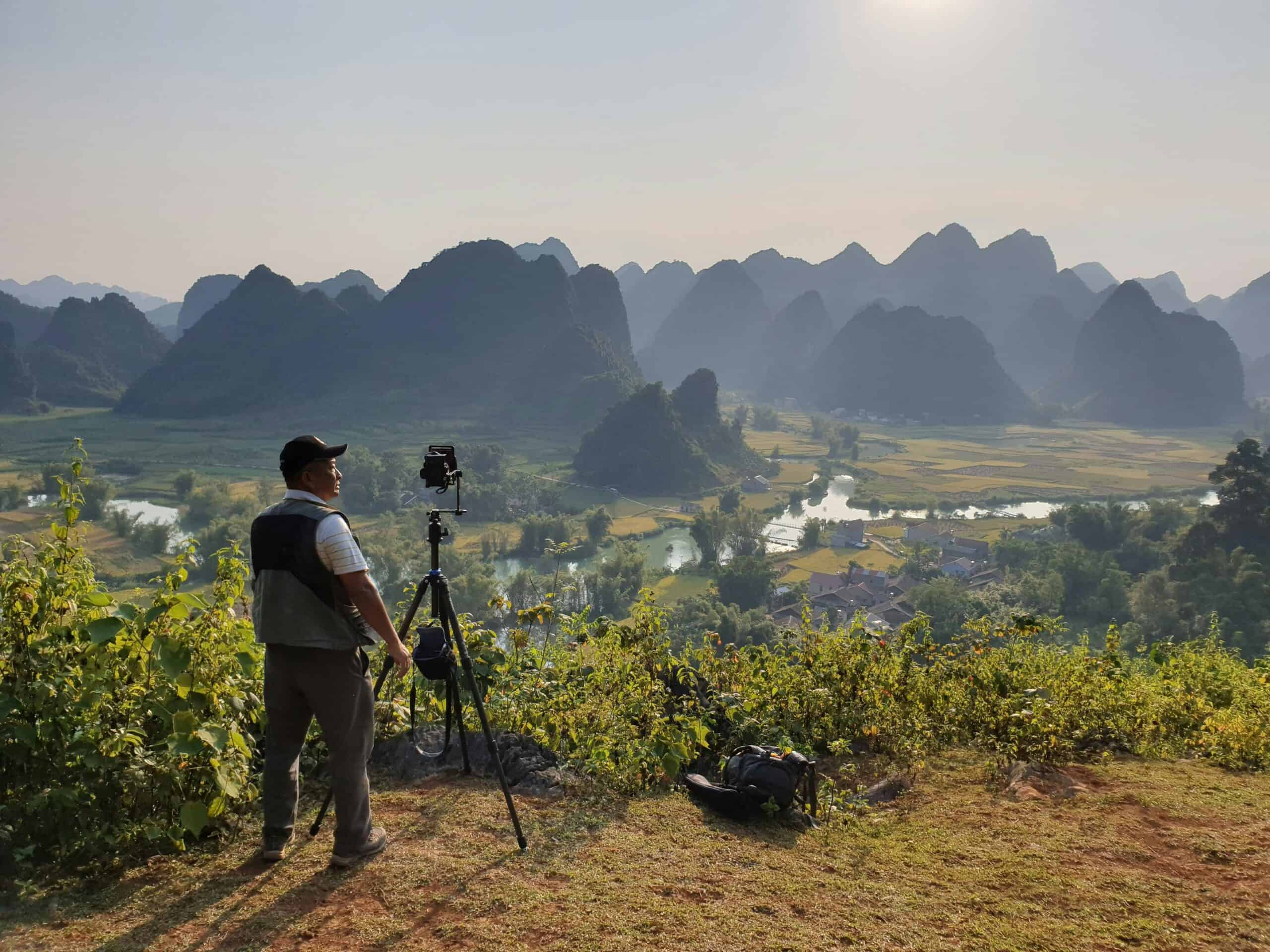
Frequently Asked Questions
- Can I shoot handheld panoramas with the Sony A7R III?
Yes, but expect more stitching errors, especially with nearby objects. For distant landscapes, a careful handheld 4–6-around sweep can work. For interiors or tight spaces, use a tripod and panoramic head to eliminate parallax.
- Is the 7Artisans 10mm f/2.8 II wide enough for a single-row 360?
For a full 360×180 panorama, you’ll still need a zenith and a nadir beyond the single horizontal ring. A robust pattern is 6-around + Z + N. Outdoors, 4-around + Z + N can work if overlap is generous and lines are simple.
- Do I need HDR for interiors with bright windows?
Usually yes. Bracket ±2 EV (3–5 frames). The A7R III handles exposure bracketing well, and PTGui can fuse or HDR-merge per angle so windows retain highlight detail without crushing shadows.
- What ISO range is safe on the A7R III for low-light panos?
On tripod, aim for ISO 100–400 whenever possible. ISO 800–1600 remains very usable, but minimize it to avoid seam noise differences, especially in featureless skies.
- How do I avoid parallax with this lens?
Calibrate the entrance pupil on your panoramic head: align near/far objects and adjust the fore-aft slider until there’s no relative shift when rotating. Mark that rail position and keep your focusing distance consistent when you shoot.
Further Learning
If you’re new to panoramas, these curated Q&A and technique resources provide practical tips and community-tested answers you can apply immediately. Best techniques to take 360 panoramas (StackExchange)