Why This Camera & Lens Are Great for Panoramas
The Sony A7 IV paired with the Tamron 17–28mm f/2.8 Di III RXD is a versatile, lightweight full-frame combo that excels at multi-row panoramas and high-resolution 360 photos. The A7 IV’s 33MP full-frame sensor (approx. 35.9 × 23.9 mm; ~14 stops of dynamic range at base ISO) provides clean, detailed files with generous recovery in shadows and highlights—crucial for stitching and HDR panorama work. Its 5-axis in-body stabilization is helpful for handheld tests, though you should switch IBIS off on a locked tripod to avoid micro-shifts during stitching.
The Tamron 17–28mm is a rectilinear ultra-wide zoom with a constant f/2.8 aperture. At 17mm, you get a broad field of view without fisheye distortion, making it ideal for architectural lines and interior real estate panoramas. Stopping down to f/5.6–f/8 yields sharp corners and minimal chromatic aberration. Distortion is present (barrel at 17mm, mild pincushion toward 28mm) but is predictable and easily corrected. The lens focuses quickly and quietly; manual focus (focus-by-wire) is precise with magnification/peaking on the A7 IV.
In short: this setup balances portability, optical quality, and ease of use for anyone learning how to shoot panorama with Sony A7 IV & Tamron 17–28mm f/2.8 Di III RXD—whether you’re tackling interior HDR 360s or dramatic outdoor multi-row stitches.
Quick Setup Overview
- Camera: Sony A7 IV — Full-Frame 33MP, strong dynamic range (~14 stops), excellent color depth, 5-axis IBIS.
- Lens: Tamron 17–28mm f/2.8 Di III RXD — rectilinear ultra-wide zoom; best sharpness at f/5.6–f/8; low flare when shaded; moderate, correctable distortion.
- Estimated shots & overlap (tested guides):
- At 17mm (FF): for a full 360×180 multi-row, 8 shots around at -45°, 8 around at 0°, 8 around at +45° + 1 zenith + 1 nadir (≈26 frames) with ~30% overlap.
- At 28mm (FF): 12 shots around per row (3 rows) + zenith + nadir (≈38–38+2 frames) with ~30% overlap.
- Single-row cylindrical at 17mm (non-360): 6–8 shots around with 25–30% overlap.
- Difficulty: Moderate. Easy once the nodal point is calibrated and exposure/WB are locked.
Planning & On-Site Preparation
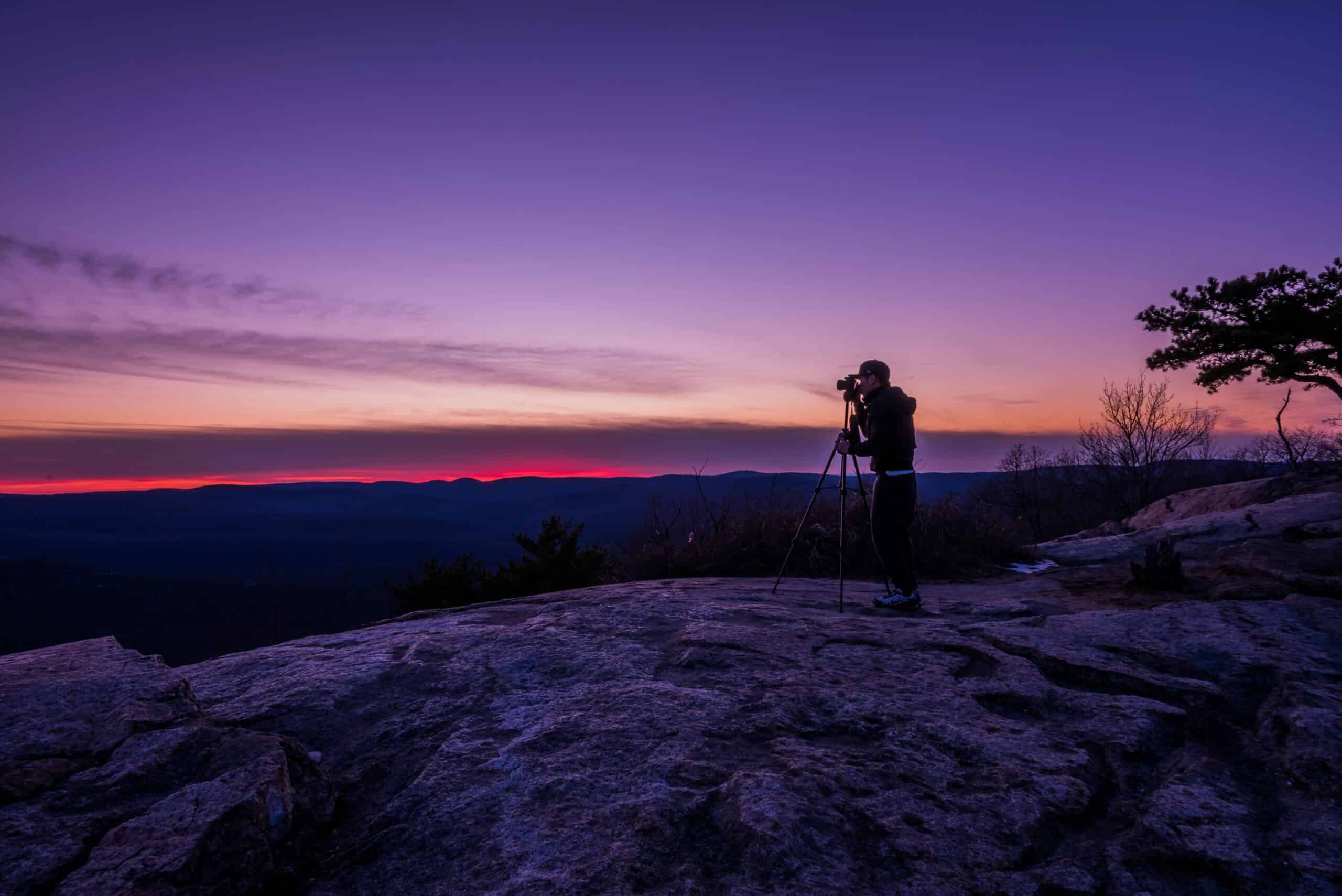
Evaluate Shooting Environment
Before you unfold the tripod, scan the scene. Identify bright windows, reflective glass, or mirrors that could produce flare or ghosting; move a bit or use a flag/hand/hood to shade the front element. Note moving elements—people, trees, vehicles, water—and plan to shoot extra frames for later masking. If shooting through glass, place the lens hood as close as possible (1–3 cm) to reduce reflections; avoid diagonal angles that catch ceiling lights. In windy outdoor locations, weigh down your tripod and reduce your camera’s surface area by removing dangling straps.
Match Gear to Scene Goals
The A7 IV’s dynamic range and clean low ISOs make it ideal for HDR panorama interiors and sunsets. Indoors, keep ISO 100–400 if possible; ISO 800–1600 remains usable with careful noise reduction. Outdoors in daylight, stay at ISO 100–200 for maximum detail. The Tamron 17–28 is rectilinear, so you’ll shoot more frames than a fisheye, but architectural lines remain straight—perfect for real estate or cityscapes. At 17mm, three rows plus zenith/nadir give full coverage with enough overlap for robust control points in PTGui or Hugin.
Pre-shoot Checklist
- Charge batteries; bring a spare. Format fast UHS-II cards.
- Clean lens front/rear and camera sensor; smudges multiply in a stitched pano.
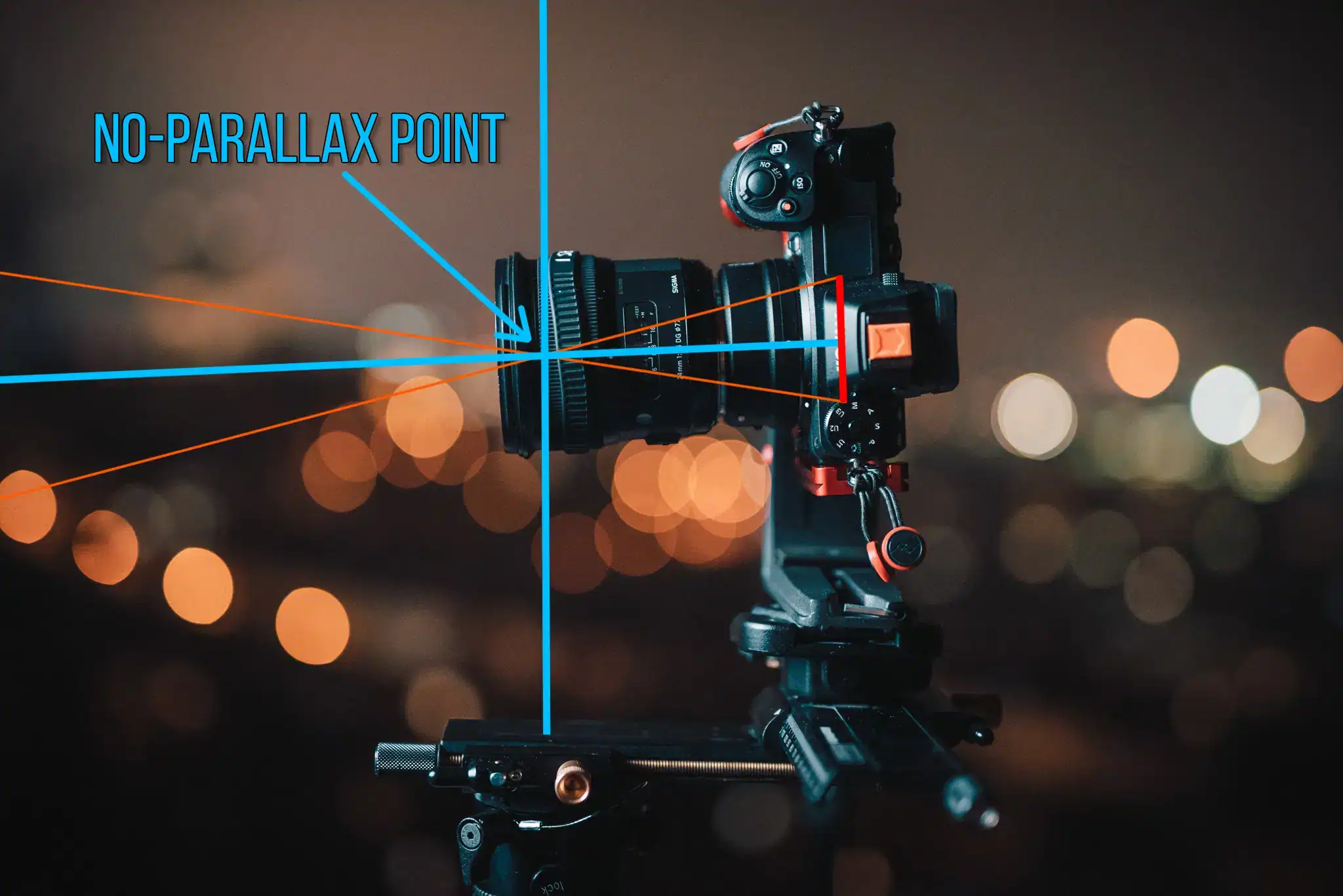
- Level the tripod; calibrate your panoramic head to the lens’s no-parallax point.
- Safety: add a tether on rooftops/poles; beware of wind loads and crowds.
- Backup workflow: after your main pass, shoot a quick second pass for safety.
Essential Gear & Setup
Core Gear
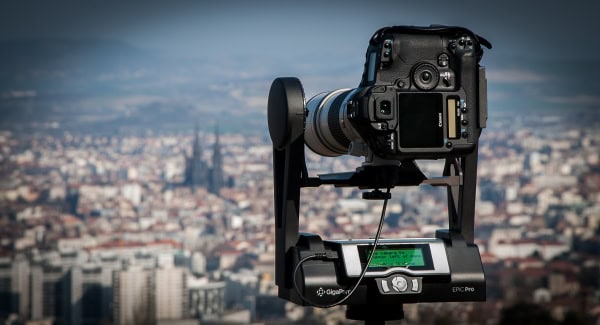
- Panoramic head: Lets you rotate around the lens’s entrance pupil (no-parallax point) to eliminate parallax between near/far subjects. This is vital for clean stitches in interiors and architectural scenes.
- Stable tripod with leveling base: A leveling base speeds setup and keeps the horizon true as you rotate.
- Remote trigger or app control: Use Sony Imaging Edge Mobile or a wired remote to prevent vibrations during long exposures.
Optional Add-ons
- Pole or car mount: Great for elevated viewpoints or drive-by scenes. Add safety tethers, use lower shutter speeds cautiously, and account for vibration and wind loads.
- Small LED panels or flash for low-light interiors: Balance ambient and add fill for deep shadows.
- Weather protection: Rain cover, microfiber cloths, and a lens hood to reduce flare and protect the front element.
Step-by-Step Shooting Guide
Standard Static Scenes
- Level tripod & align the nodal point: Adjust your panoramic head so the rotation axis passes through the lens’s entrance pupil. Test by aligning a near object with a distant object at frame edges; if alignment shifts when you pan, adjust fore-aft and vertical sliders until it does not.
- Manual exposure & locked white balance: Set manual mode. Meter the brightest part you need to preserve, then adjust shutter/aperture to hold highlights. Set WB to a fixed value (e.g., Daylight or a Kelvin value) to avoid color shifts between frames.
- Capture with proper overlap: At 17mm, use ~30% overlap. For full 360×180, plan three rows (-45°, 0°, +45°), 8 shots each around, plus zenith and nadir. At 28mm, increase frames to maintain overlap.
- Nadir shot: Tilt down to capture the ground for tripod removal. If necessary, shift the tripod slightly and shoot a handheld nadir plate at the same exposure/WB to patch later.
HDR / High Dynamic Range Interiors
- Bracket ±2 EV: The A7 IV offers reliable exposure bracketing. For real estate with bright windows, use 3–5 shots per angle (e.g., -2, 0, +2 EV; or -3, -1, +1, +3 EV) at fixed aperture and ISO.
- Lock WB: Use a fixed Kelvin (e.g., 4000–5000K indoors) to avoid color variance across brackets that complicates stitching.
- Keep overlap consistent: Each bracketed set should be identical in framing; use a remote to avoid nudging the camera.
Low-Light / Night Scenes
- Use a sturdy tripod and remote: Long exposures (1–8 s or more) are fine; just ensure the setup is rock-solid. Turn IBIS off on tripod to avoid micro-vibrations.
- Safe ISO ranges: ISO 100–400 produces the cleanest files; ISO 800–1600 remains usable with careful noise reduction. Avoid pushing beyond ISO 3200 unless necessary.
- Open aperture where needed: f/4–f/5.6 strikes a balance between depth of field and exposure time at night.
Crowded Events
- Two passes: First, shoot a fast pass to lock the scene. Second, wait for gaps in the crowd to capture cleaner frames for areas where motion matters.
- Higher shutter speeds: Target 1/200 s or faster to freeze motion when necessary. You may bump ISO to 800–1600.
- Mask in post: Blend the “clean” pass into busy areas during stitching/retouching.
Special Setups (Pole / Car / Elevated)
- Secure everything: Use a safety tether and test the mount. For pole work, keep the rig balanced and rotate slowly to minimize sway.
- Account for vibrations: Use faster shutter speeds (1/250 s+) and slightly higher ISO to counter movement. Shoot extra frames for safety.
- Wind management: Shorten pole length in gusts; consider guy-lines or a stabilizing assistant.
Recommended Settings & Pro Tips
Exposure & Focus
| Scenario | Aperture | Shutter | ISO | Notes |
|---|---|---|---|---|
| Daylight outdoor | f/8–f/11 | 1/100–1/250 | 100–200 | Lock WB (Daylight/Kelvin); maximize corner sharpness |
| Low light/night | f/4–f/5.6 | 1/30–2 s+ | 400–800 | Tripod + remote; turn off IBIS on tripod |
| Interior HDR | f/8 | Bracket ±2 EV | 100–400 | Balance windows & lamps; keep WB fixed |
| Action / moving subjects | f/5.6–f/8 | 1/200+ | 400–800 | Freeze motion; shoot a second, cleaner pass |
Critical Tips
- Manual focus at hyperfocal: At 17mm and f/8 on full frame, the hyperfocal distance is roughly ~1.2–1.3 m. Prefocus there to keep near-to-infinity acceptably sharp.
- Nodal calibration: Mark your panoramic rail settings for 17mm and 28mm. A silver marker on the clamp/rail saves time on every job.
- White balance lock: Set a Kelvin value or custom WB; avoid Auto WB which can shift between frames and complicate blending.
- RAW capture: Shooting RAW maximizes dynamic range and color latitude for HDR panorama and complex lighting.
- Stabilization: Turn IBIS off when the camera is firmly tripod-mounted to prevent micro-shifts; enable IBIS for handheld scouting shots only.
Real-World Scenarios & Settings
Indoor Real Estate (Bright Windows)
Lens at 17mm; three rows (-45°, 0°, +45°), 8 around each, + zenith/nadir. Use f/8, ISO 100–200, and bracket -2/0/+2 EV. Lock WB around 4500–5000K to keep whites consistent. Shade the lens from downlights to reduce flare. Expect 26 images × 3 exposures if bracketing (78 frames); the A7 IV handles this effortlessly with a fast card.
Outdoor Sunset Cityscape
At 17–24mm, aim for f/8, ISO 100, and bracket ±2 EV if the sun is in frame. Capture a full multi-row for skyline detail. Consider a second set 10 minutes later for blended city lights.
Crowded Event Hall
Set 17mm, f/5.6–f/8, ISO 800–1600, 1/200 s. Shoot two passes: one for coverage, one for cleaner gaps. Keep an eye on security/safety with your tripod placement.
Rooftop or Pole Capture
Use a compact panoramic head and light carbon tripod or pole. Keep 17mm to reduce the number of shots. Shutter at 1/250 s+, ISO 400–800, and take extra overlapping frames. Always tether the rig and avoid strong winds.
Stitching & Post-Processing
Software Workflow
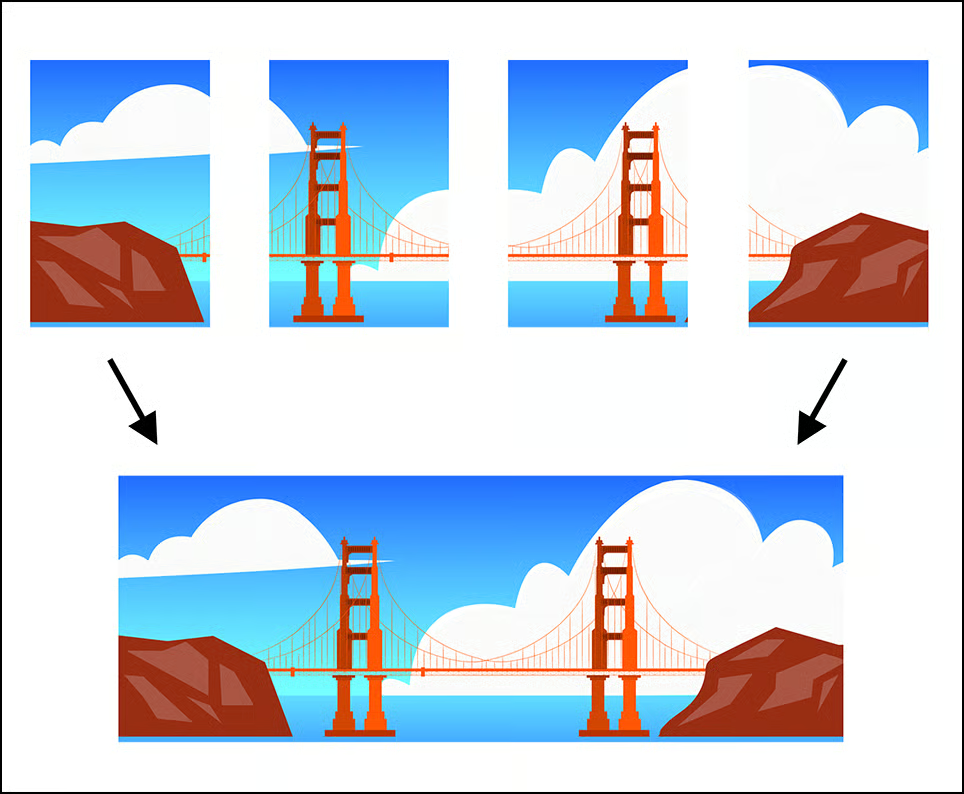
Import RAW files into Lightroom/Camera Raw for basic white balance and exposure harmonization. Then stitch with a dedicated panorama tool like PTGui (fast and robust control points), Hugin (open-source), or Photoshop/Affinity Photo for simpler merges. For rectilinear ultra-wide sequences, maintain ~25–30% overlap horizontally and vertically for reliable control point generation. PTGui offers powerful masking, viewpoint correction, and nadir patch helpers. See a comprehensive PTGui review and why many pros prefer it for complex HDR 360s at the high end. Fstoppers: PTGui for complex panoramas
Cleanup & Enhancement
- Nadir patch: Patch the tripod using a handheld nadir plate or content-aware/clone tools. Many VT platforms support quick nadir logos.
- Color correction & noise reduction: Normalize exposure between rows, remove color casts, and apply conservative noise reduction for high-ISO frames.
- Horizon leveling: Use pitch/roll/yaw corrections; PTGui’s panorama editor makes this quick.
- Export: For VR, render equirectangular 2:1 JPEG/TIFF at your target resolution. The A7 IV multi-row at 17mm can yield very high-resolution (even gigapixel) panoramas depending on rows/frames. Reference resolution planning here: Panotools: DSLR spherical resolution
For step-by-step 360 workflows and panoramic head setup, see these industry resources: Panoramic head setup principles and 360 Rumors: panoramic head tutorial.
Video: A solid panorama workflow primer
Prefer learning by watching? This video is a practical overview of shooting and stitching panoramas. Watch it, then adapt the steps to your Sony A7 IV + Tamron 17–28 workflow.
Useful Tools & Resources
Software
- PTGui panorama stitching
- Hugin open source
- Lightroom / Photoshop
- AI tripod/nadir removal tools
Hardware
- Panoramic heads (Nodal Ninja, Leofoto, Sunwayfoto)
- Carbon fiber tripods with leveling bases
- Wireless remote shutters (Sony or third-party)
- Pole extensions / car mounts with safety tethers
Disclaimer: software/hardware names provided for search reference; check official sites for details.
Common Mistakes & How to Avoid Them
- Parallax error → Always rotate around the lens’s entrance pupil (no-parallax point) using a panoramic head.
- Exposure flicker → Manual exposure and fixed WB; avoid auto exposure and AWB between frames.
- Tripod in shot → Capture a dedicated nadir frame for patching or logo placement.
- Ghosting from moving subjects → Shoot two passes and mask during stitching.
- High-ISO noise → Use a tripod, keep ISO low, and leverage A7 IV dynamic range and RAW for clean results.
- Not enough overlap → Stick to 25–30% at this focal length for reliable control points.
Advanced Notes for This Combo
- Focal length choice: Use 17mm to reduce total frames and ensure ample overlap. Switch to 24–28mm if you need higher overall resolution (accepting more frames).
- Lens profiles: Enable lens corrections (distortion/vignetting/CA) in RAW processing before stitching, or apply them in the stitcher if supported.
- Anti-flicker: Indoors under LED/fluorescent lights, consider the A7 IV’s anti-flicker setting to stabilize exposure across frames.
- Custom buttons/modes: Assign AF/MF toggle, focus magnifier, and bracket settings to custom buttons. Save a “Pano” setup to a memory recall (MR) slot for rapid deployment.
Frequently Asked Questions
-
Can I shoot handheld panoramas with the Sony A7 IV?
For quick cylindrical pans, yes—use 17mm, IBIS on, 1/250 s+, and ~30% overlap. For full 360×180 and interiors, use a tripod and panoramic head to avoid parallax and stitching issues.
-
Is the Tamron 17–28mm wide enough for a single-row 360?
Single-row at 17mm won’t cover 180° vertically; you’ll need multi-row to capture zenith and nadir. Plan on three rows plus zenith/nadir for a complete 360×180.
-
Do I need HDR for interiors with bright windows?
Usually yes. Bracket ±2 EV (3–5 frames) to retain exterior detail and clean interior shadows. The A7 IV’s dynamic range helps, but bracketing is the safest approach for real estate-level results.
-
How do I avoid parallax issues with this lens?
Use a panoramic head and calibrate the entrance pupil at 17mm. Mark your rail setting once, and always return to it. Keep the camera level and rotate only around the vertical axis of the head.
-
What ISO range is safe on the A7 IV in low light?
On tripod, ISO 100–400 is ideal; ISO 800–1600 remains very usable with moderate noise reduction. Only push higher when shutter speed constraints demand it.
Safety, Limitations & Trust Tips
On rooftops, poles, or near crowds, secure your rig with a tether and keep a low profile. The Tamron 17–28 lacks optical stabilization, so rely on faster shutter speeds for handheld tests. On tripod, disable IBIS. In strong winds, lower your camera height, shorten the center column, and consider adding weight to the tripod. Always shoot a backup pass, especially if people or clouds are moving quickly. For a deeper reference on DSLR/mirrorless 360 workflow, see this concise guide: Using a mirrorless camera to shoot and stitch a 360 photo.